Japanese maple
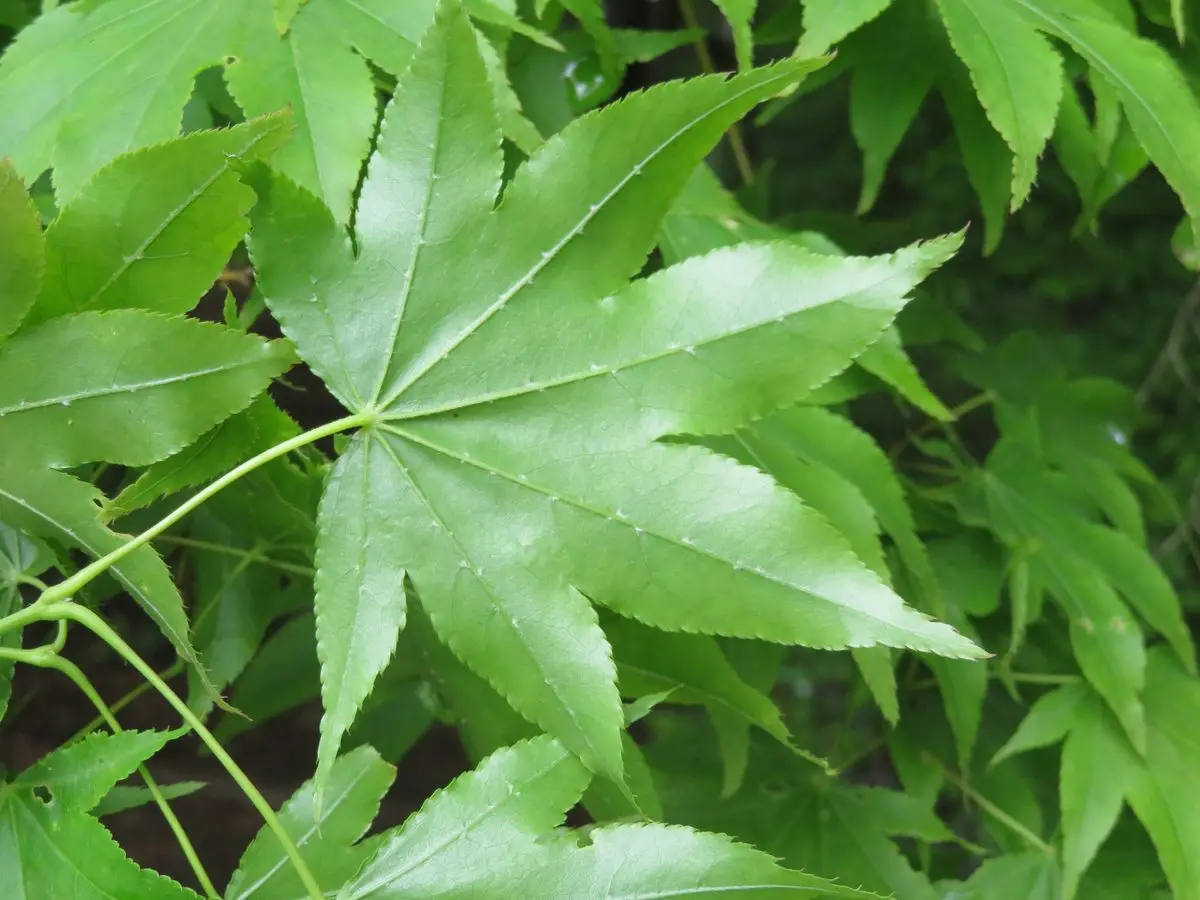
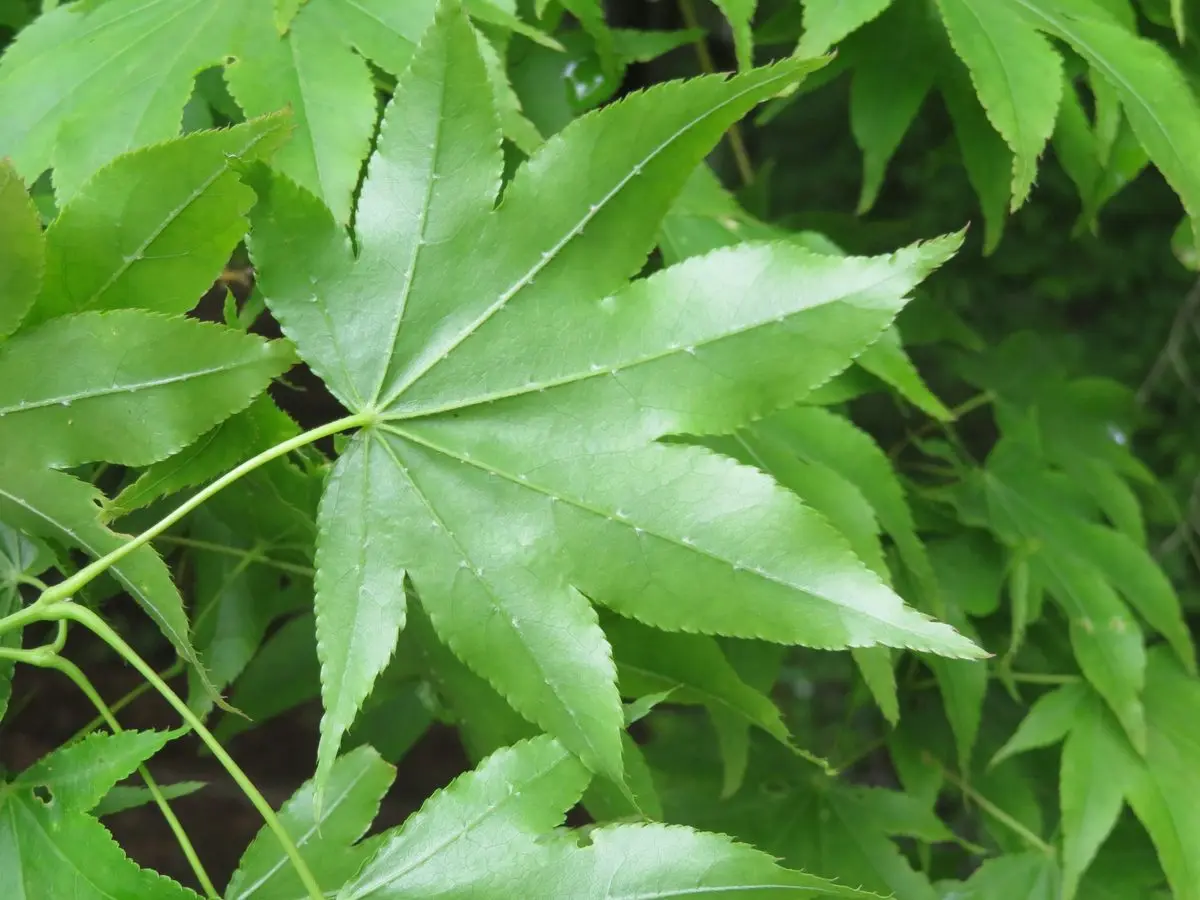
Acer palmatumJapanese maple is a small, rounded tree, often wider than it is tall. Its leaves are cut deeply into five or seven pointed lobes, each with fine, sharp teeth.
How to identify Japanese maple →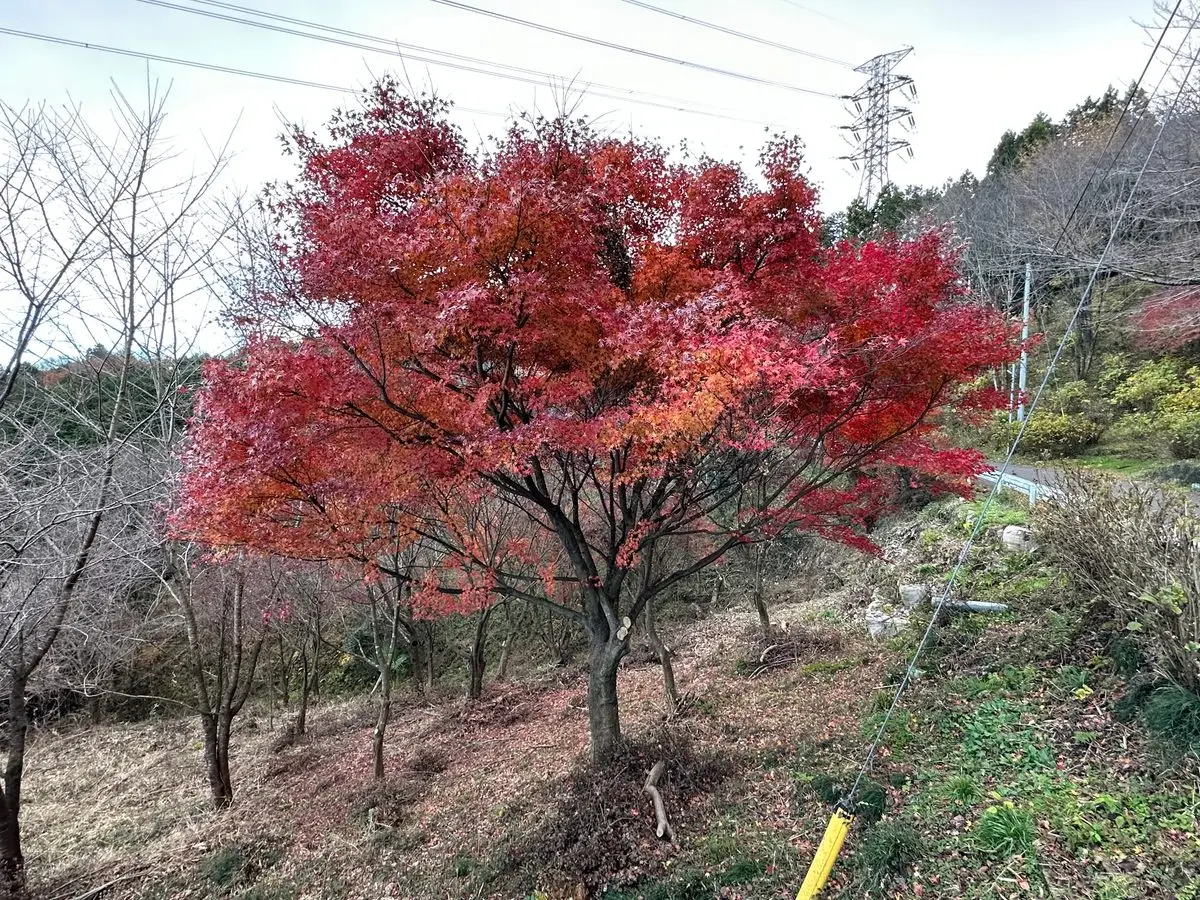 Yoshihiro Tokue, CC BY 4.0
Both are planted for their purple leaves.
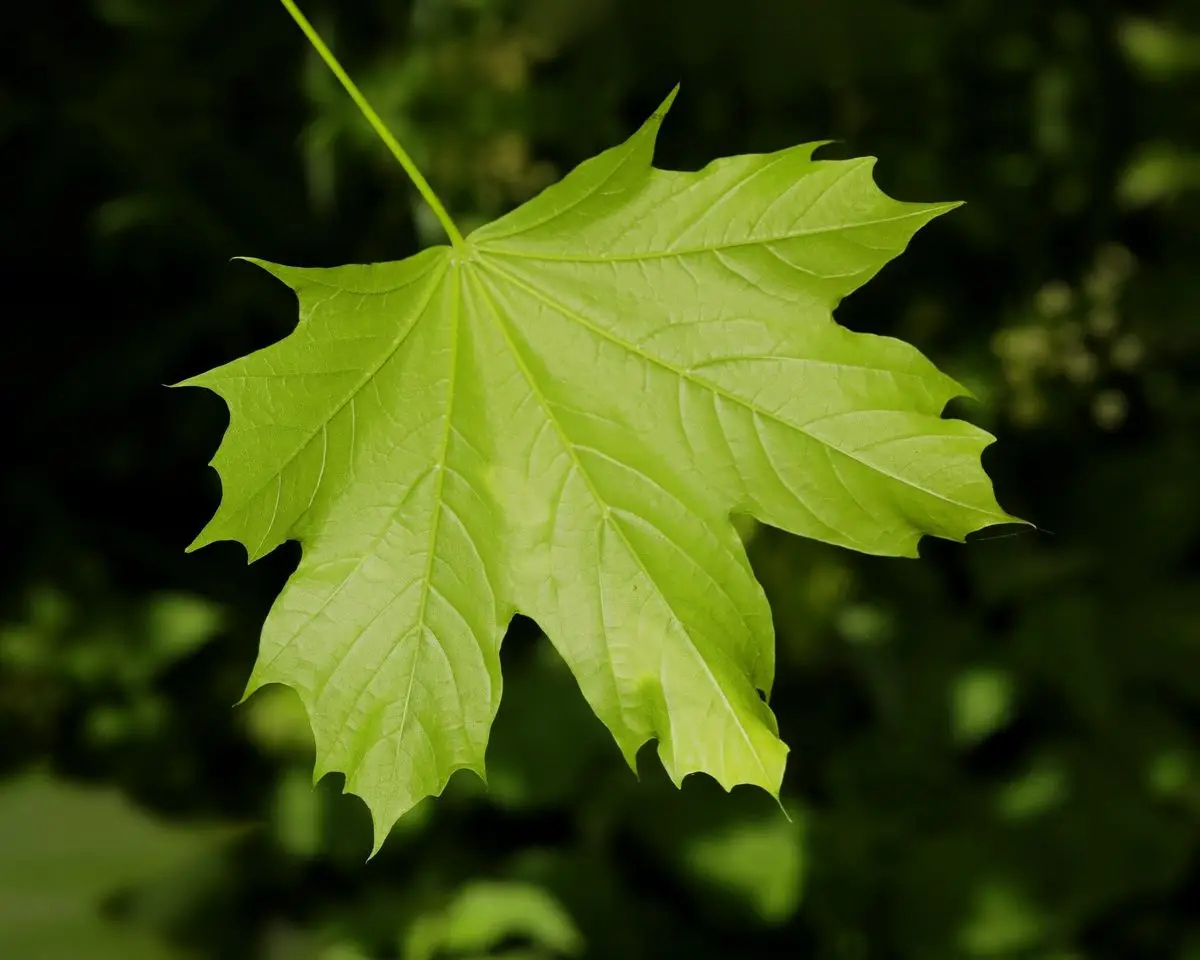
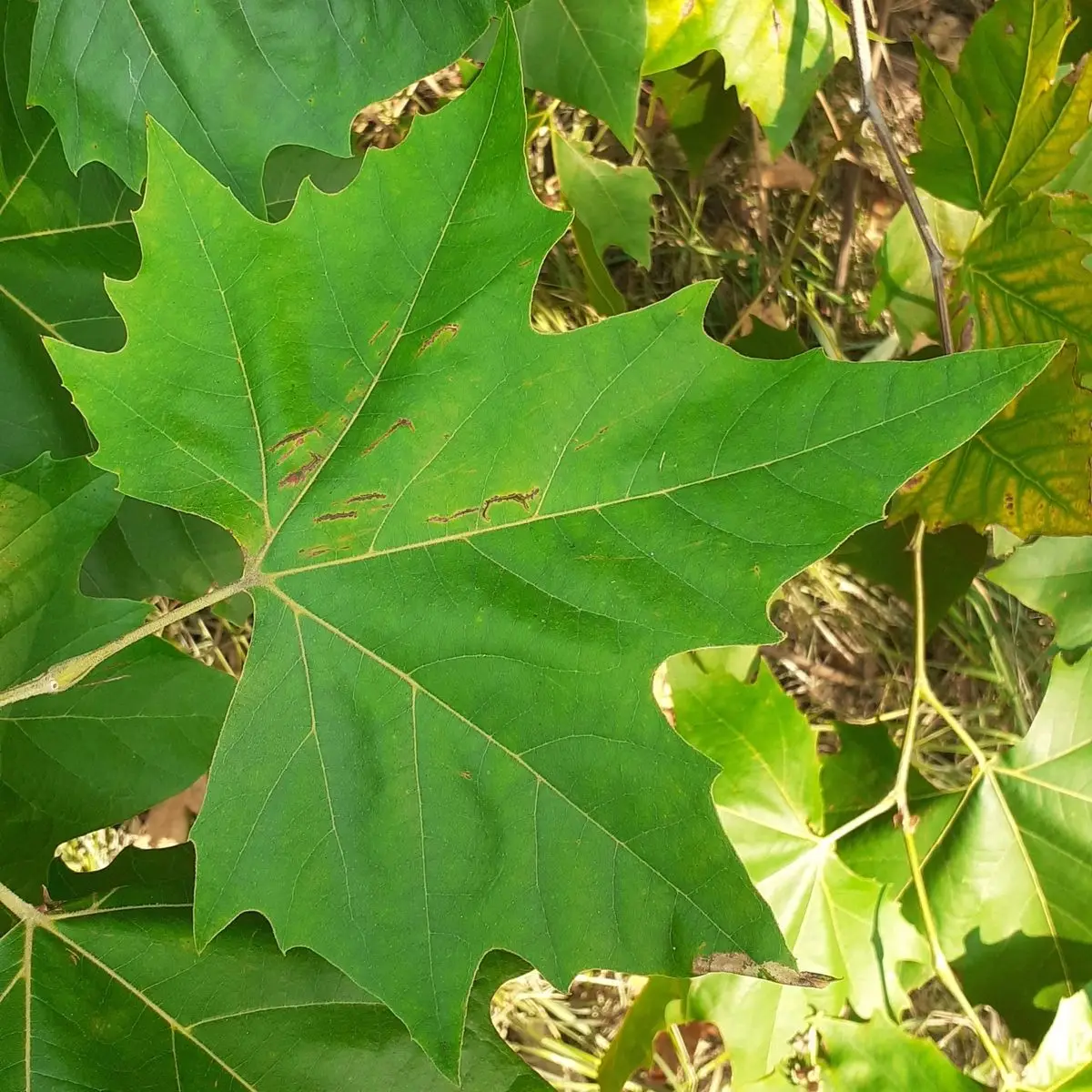
The quickest check is the leaf edge. Japanese maple: fine sharp teeth all round every lobe. Norway maple: only a few long teeth, tipped with hairs. No leaves on the tree? Check the whole tree.
| Look at | Japanese maple | Norway maple |
|---|---|---|
| Leaf edge | Fine sharp teeth all round every lobe | Only a few long teeth, tipped with hairs |
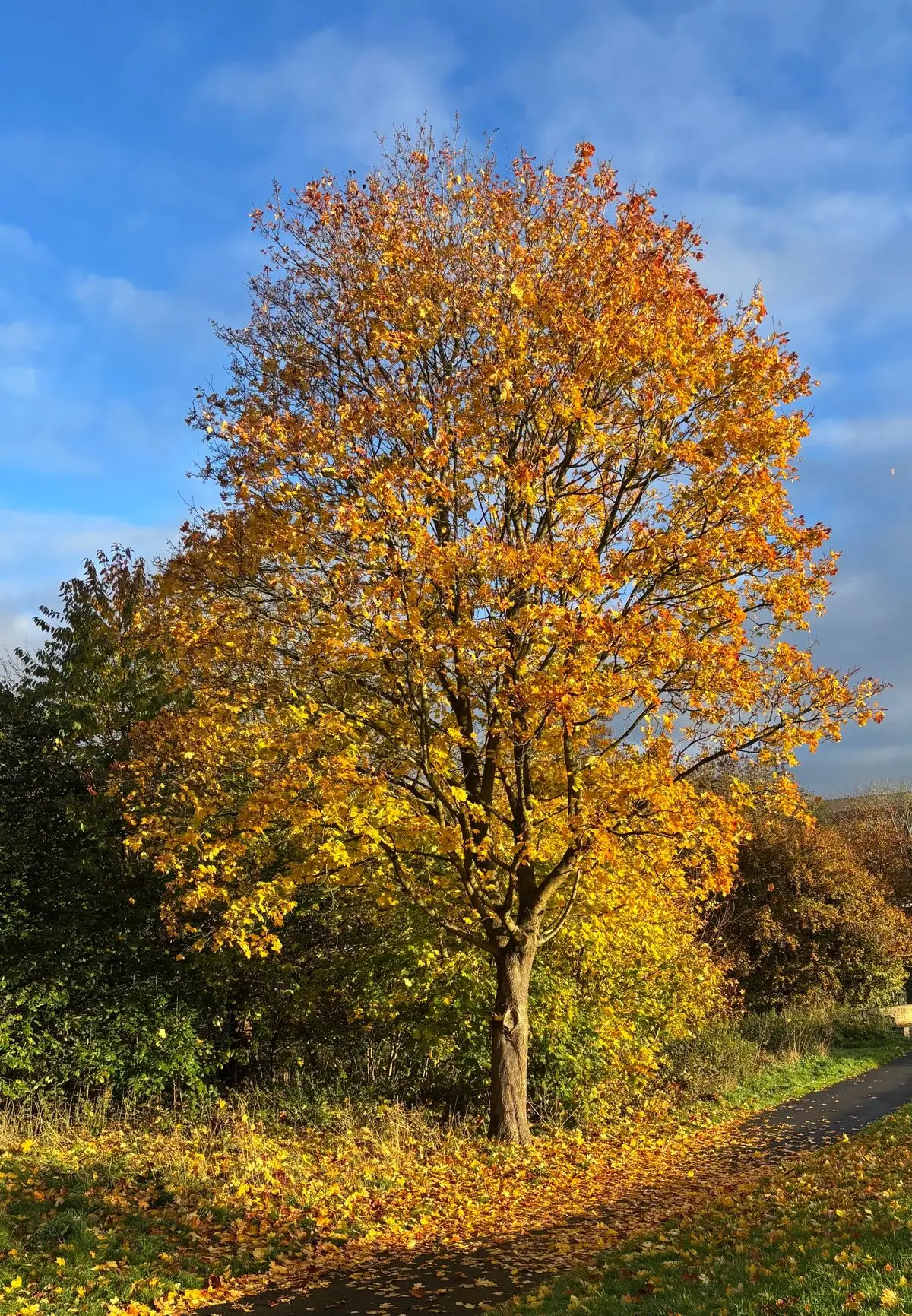
| Whole tree | A low dome, 6 to 10 m, often wider | A neat rounded dome, to 30 m |
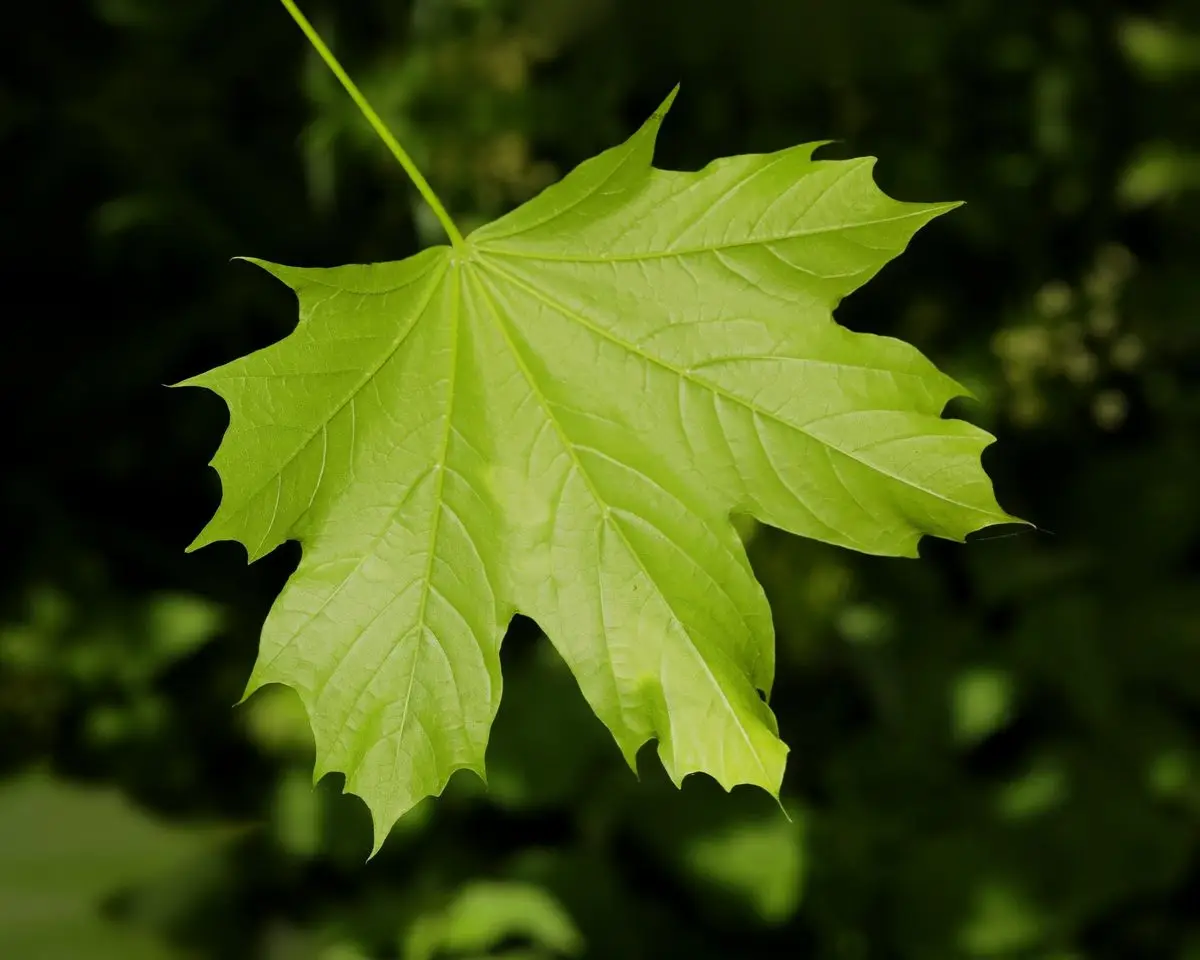
Japanese maple is a small, rounded tree, often wider than it is tall. Its leaves are cut deeply into five or seven pointed lobes, each with fine, sharp teeth.
How to identify Japanese maple →Norway maple grows into a neat dome. Its leaves have a few long teeth drawn out into fine hairs, and acid yellow flowers cover the crown in March or April, just before the leaves.
How to identify Norway maple →Free to download.
Every fact on this page is checked against the Collins Tree Guide, last in November 2026. Spotted something that looks wrong in front of a real tree? Tell us. How we check.
Photographs: Yoshihiro Tokue (CC BY 4.0), Leon Cross (CC BY 4.0), Marco Mussita (CC BY 4.0), steve_mcwilliam (CC0). With thanks to everyone who shares their photographs on iNaturalist and Wikimedia Commons.