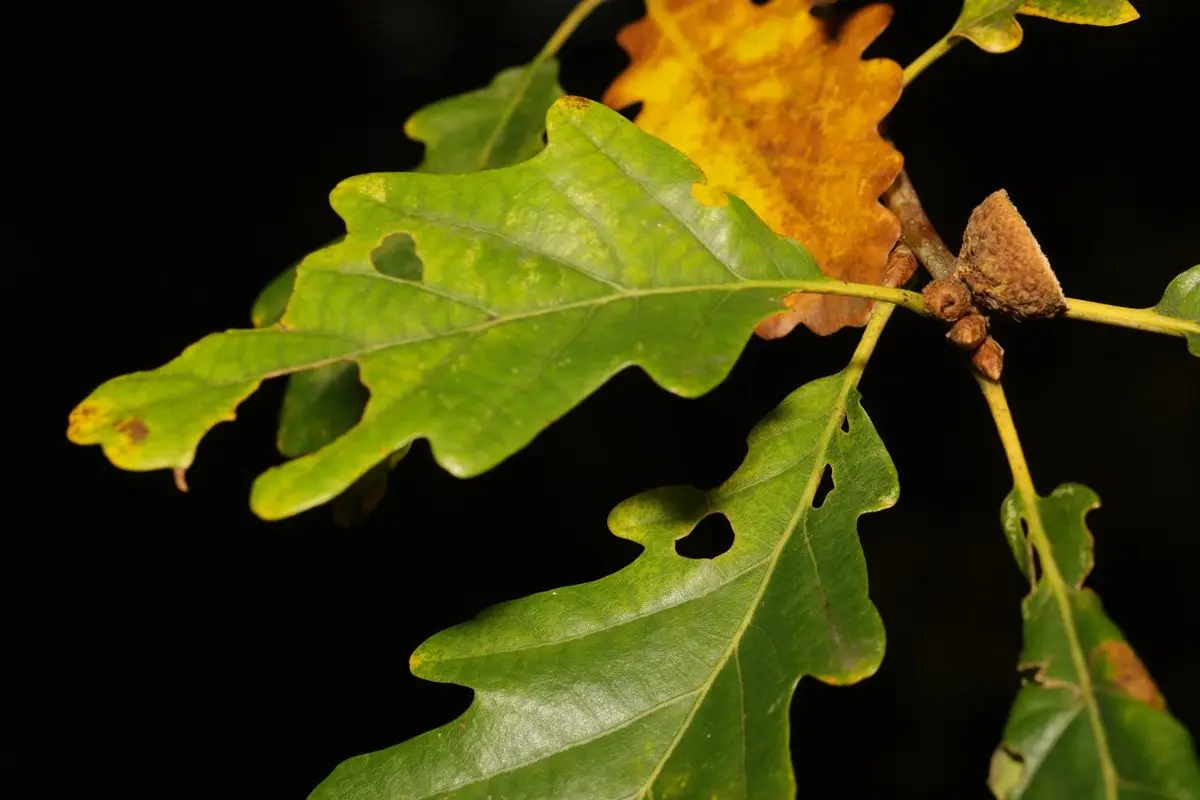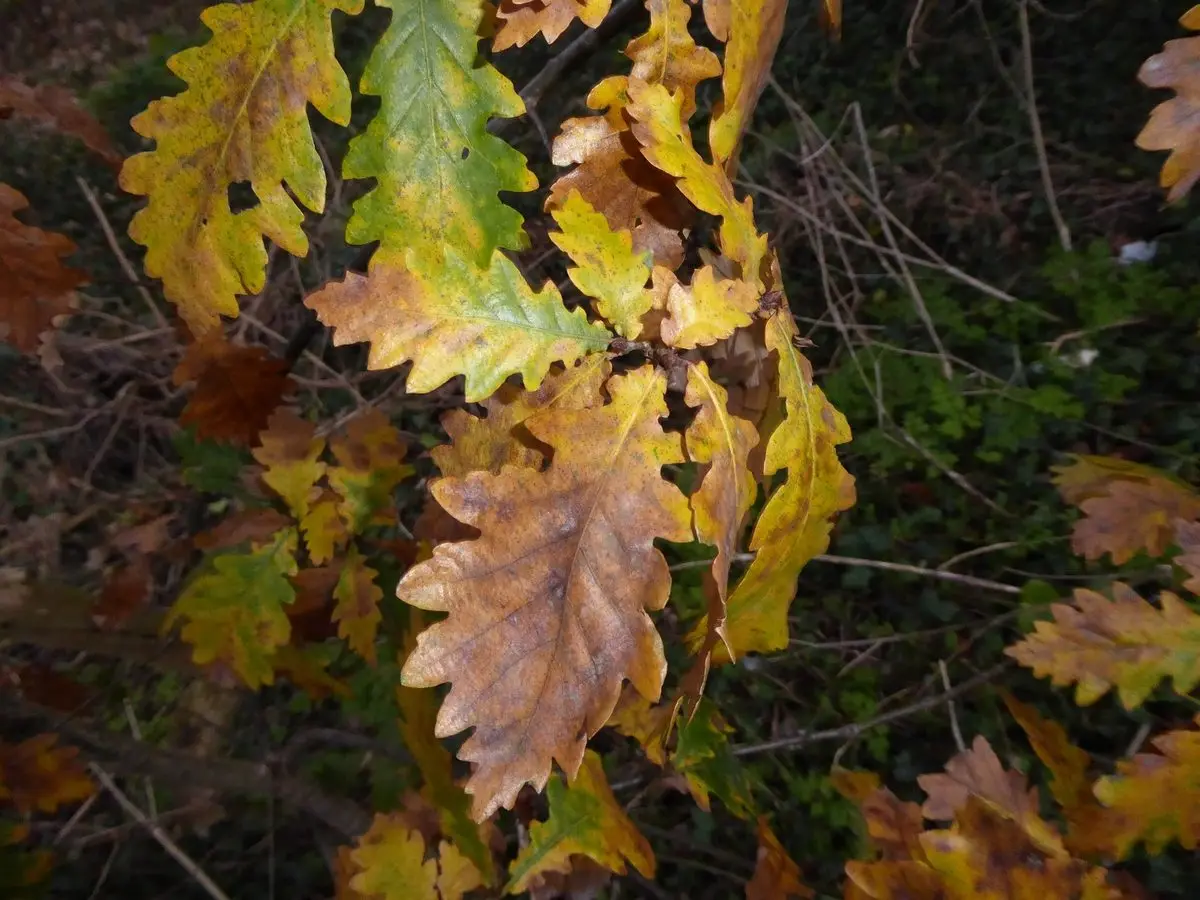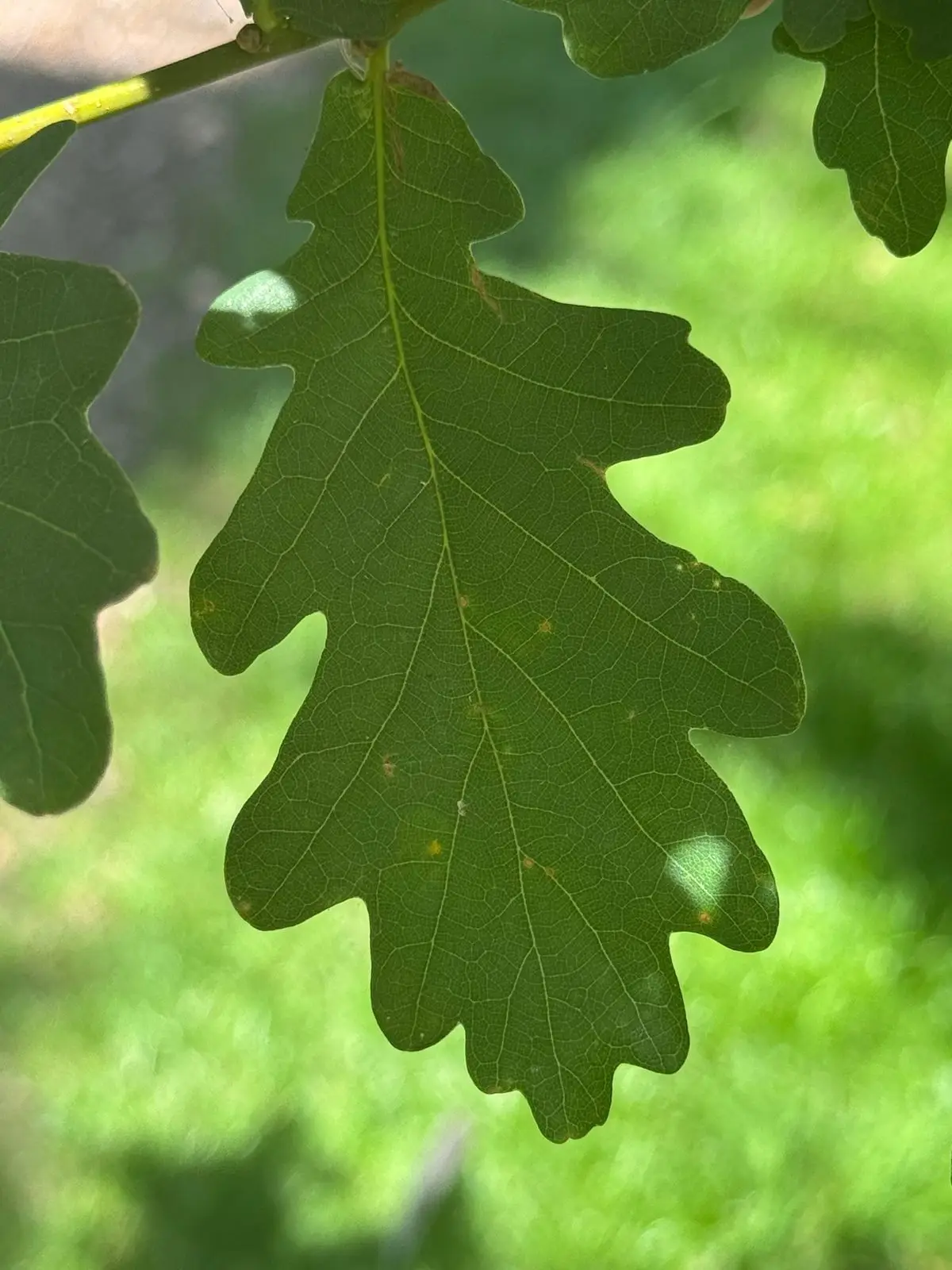
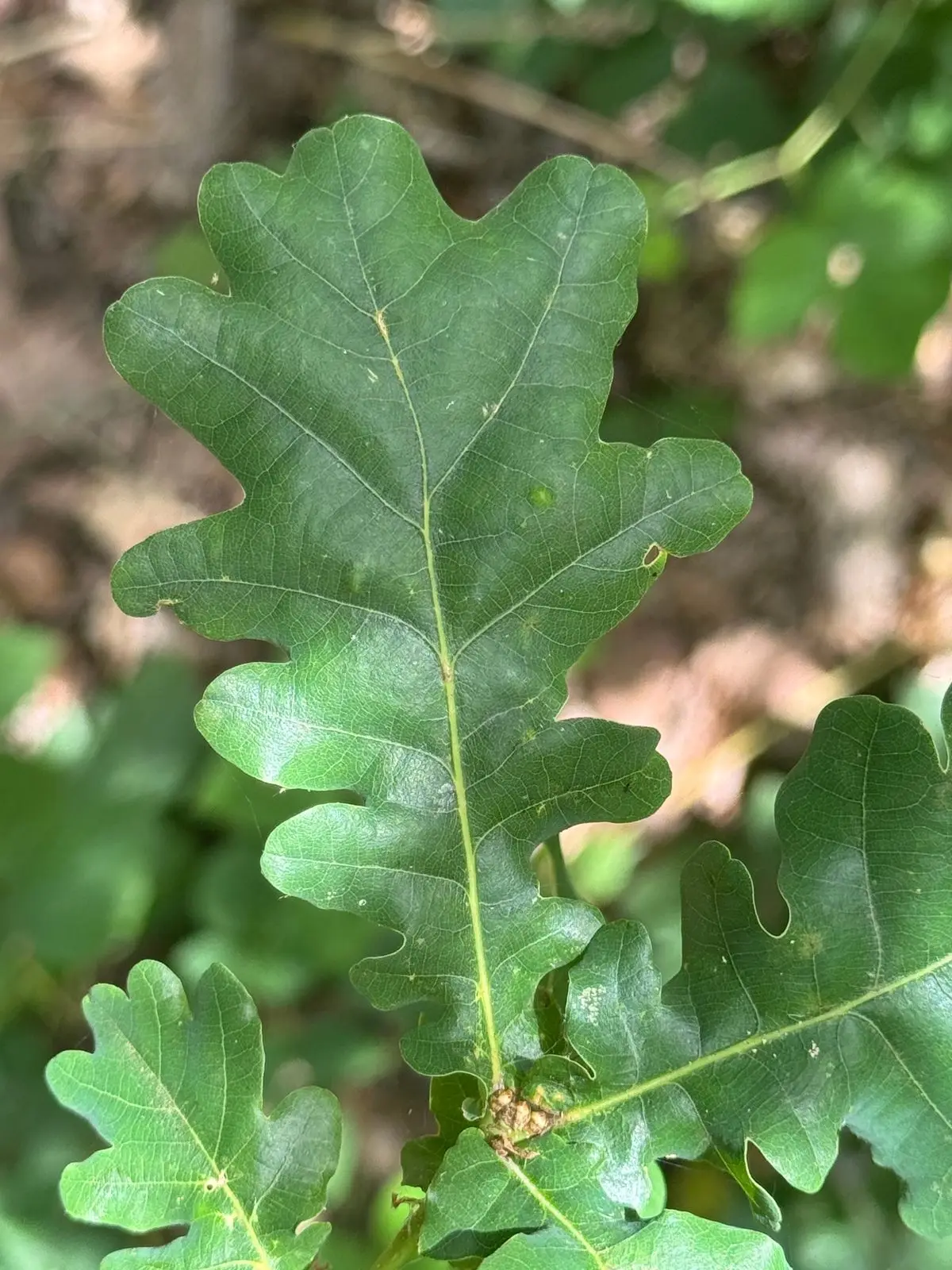
Oak leaves have deep, rounded lobes down both sides, two small ear-like flaps at the base, and a stalk so short you can hardly see it.
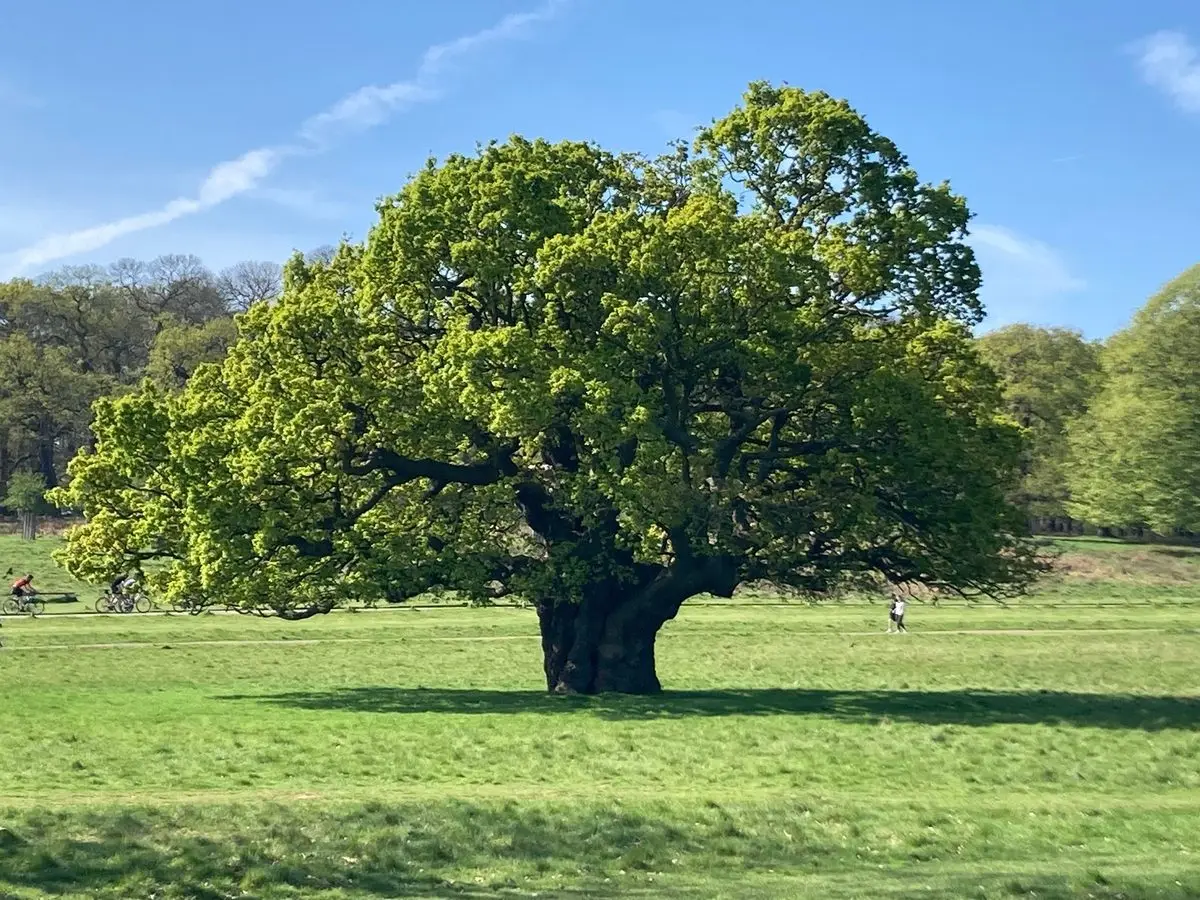
Quercus robur · Fagaceae
Also called pedunculate oak or common oak
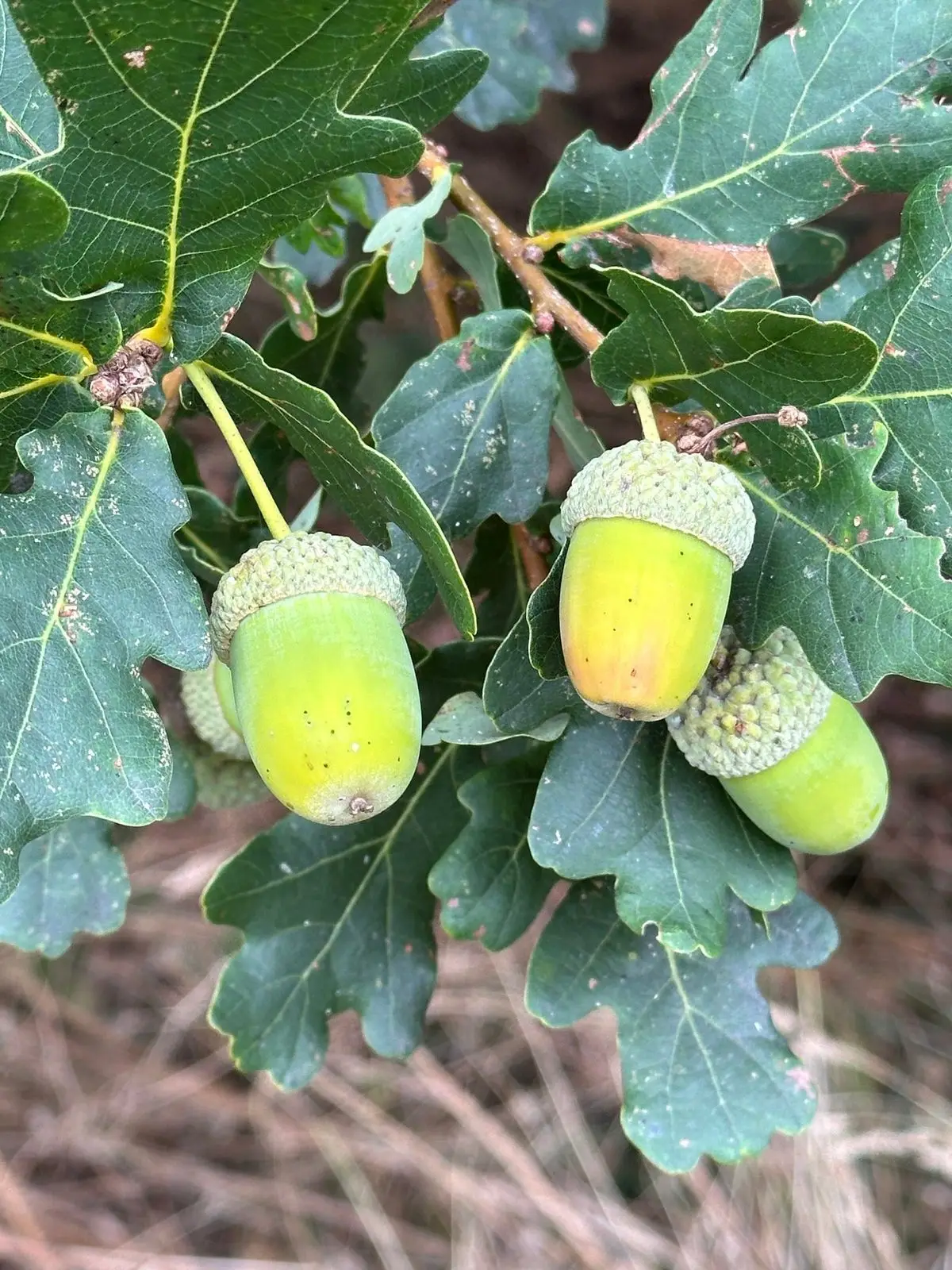
English oak is a broad, spreading tree with heavy, twisting branches. Its leaves have deep rounded lobes and a very short stalk. The acorns hang on long stalks, often in pairs.
Often mistaken for sessile oak. How to tell them apart →LeavesDeep, rounded lobes down both sides of the leaf.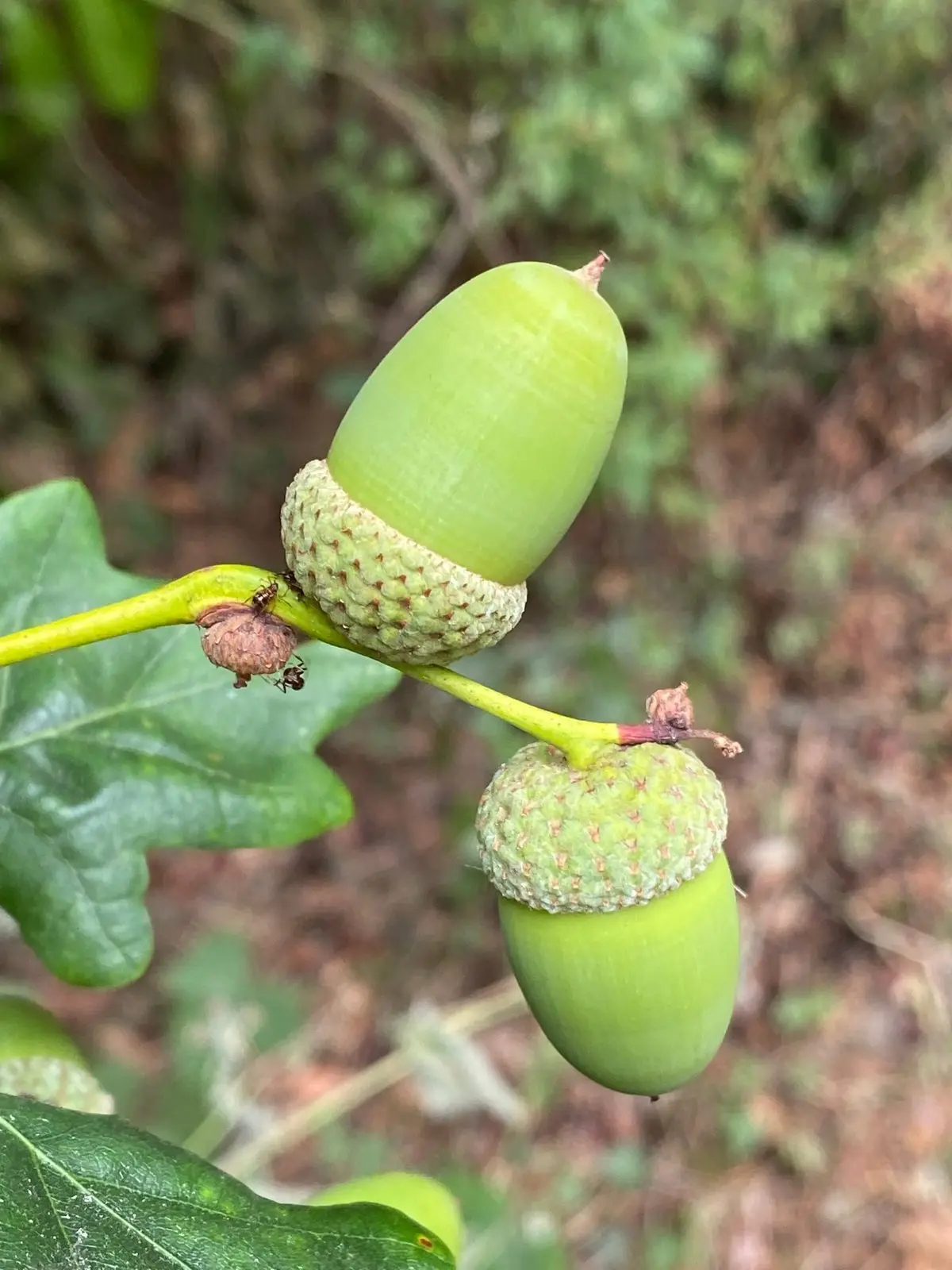 AcornsAcorns in a shallow, scaly cup, on a long stalk.
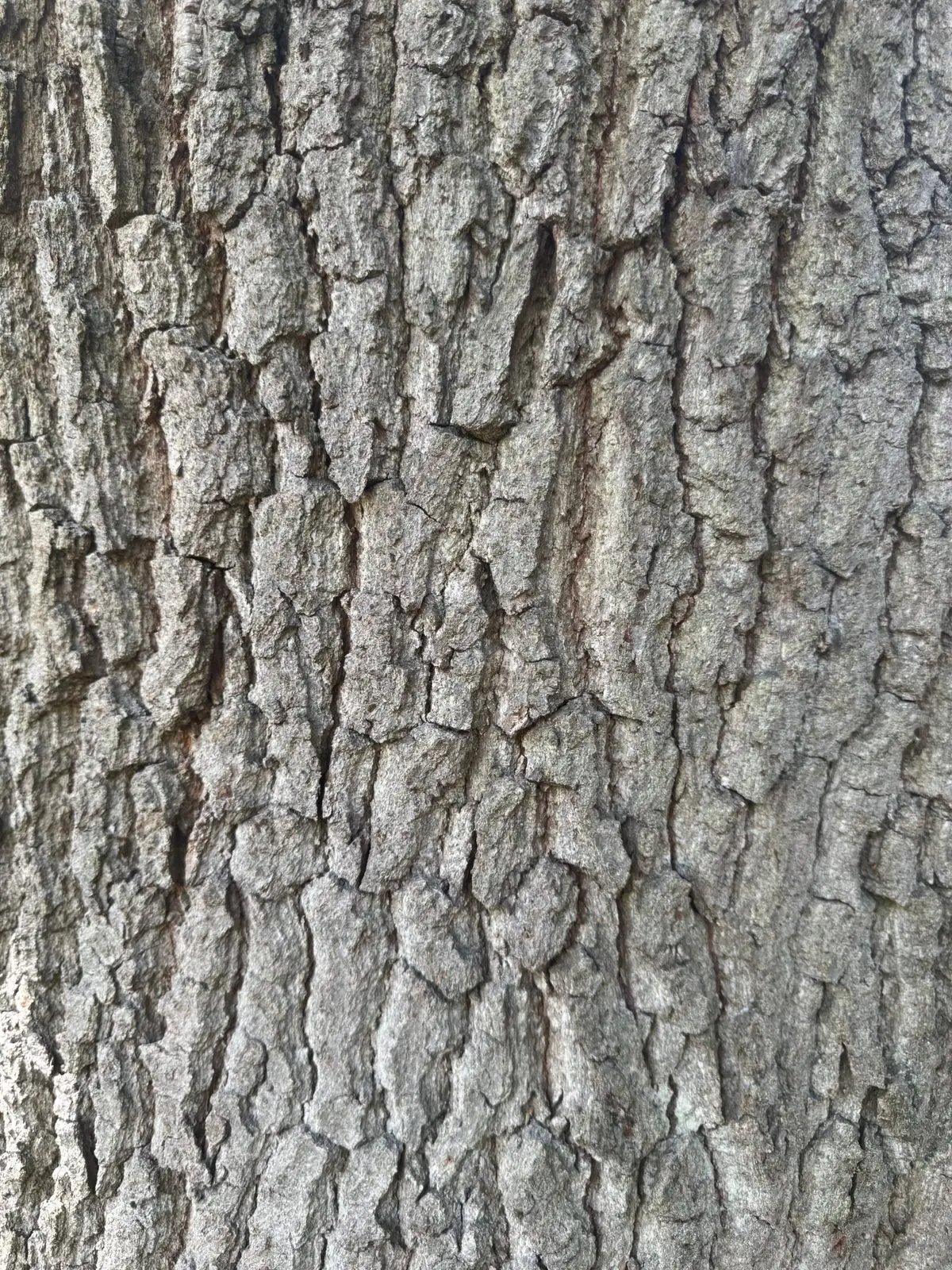
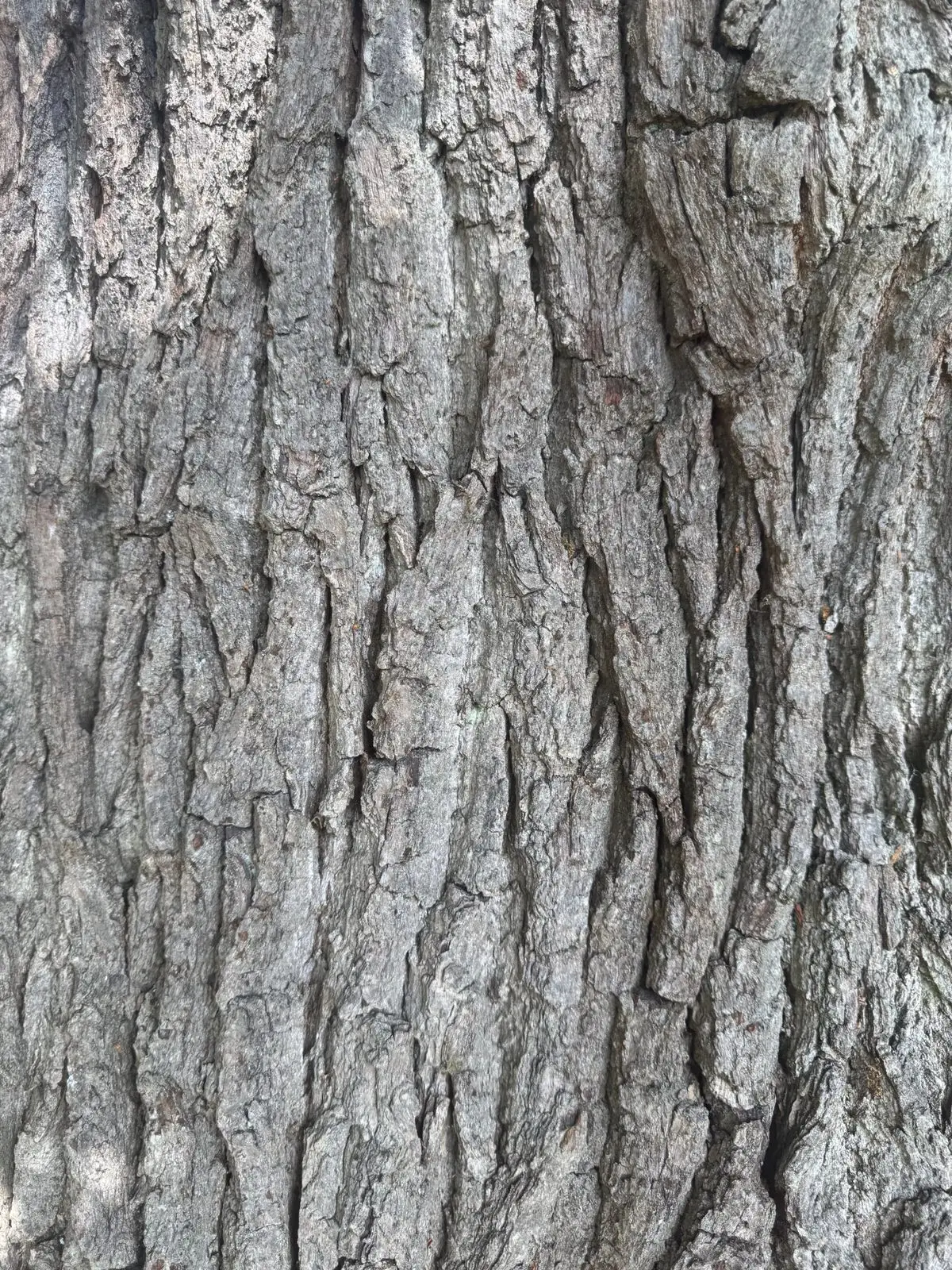 BarkGrey, with short, deep, knobbly ridges on an older tree.
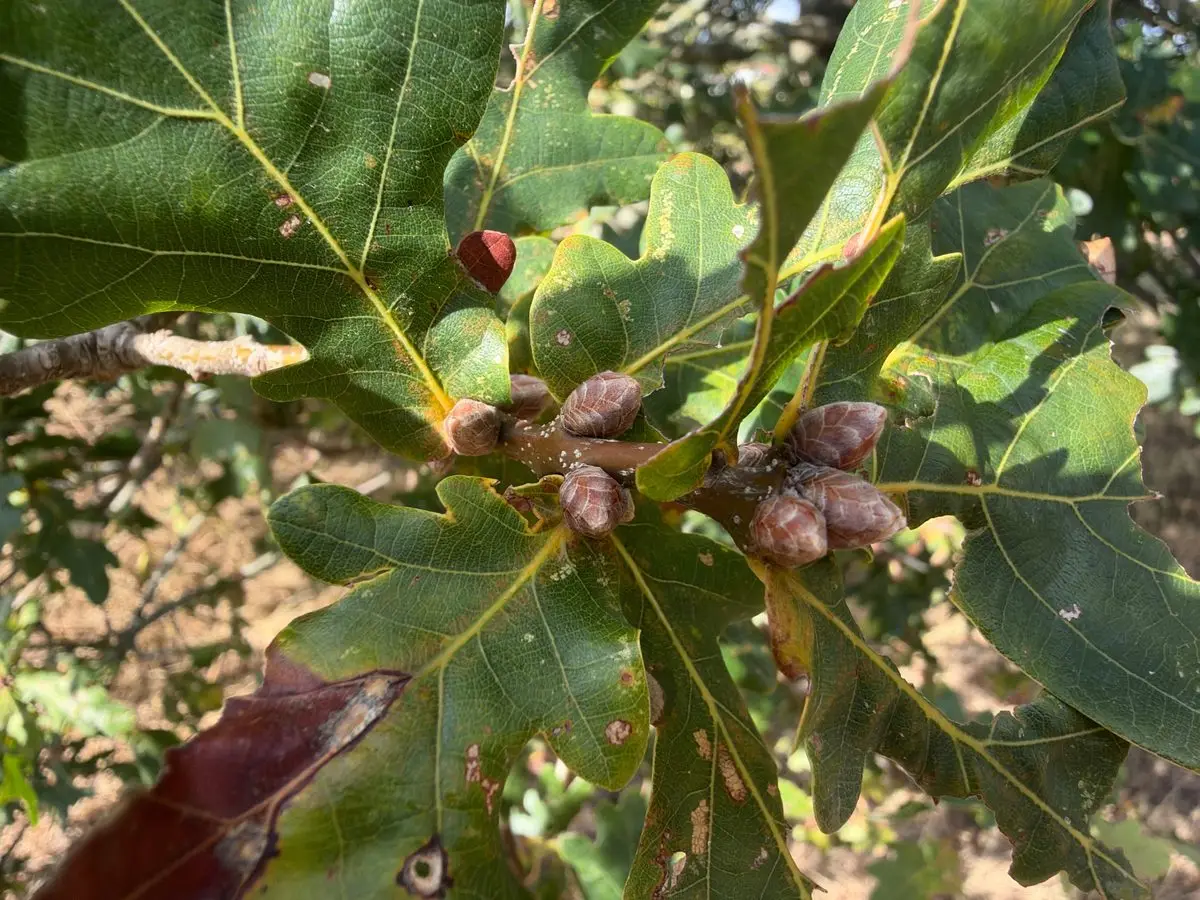
Then check · TwigsIn winter, silvery grey and smooth, with small light brown buds gathered in a cluster at the tip of every shoot.
Oak leaves have deep, rounded lobes down both sides, two small ear-like flaps at the base, and a stalk so short you can hardly see it.
The acorns hang on long stalks, each one sitting in a shallow, scaly cup, and turn brown as they ripen.
On an older oak the bark is grey and cut into short, deep, knobbly ridges with close grooves between them. Young oaks are still smooth.
 Learn the English oak in TreelyEvery part through the year, and a short round each day until you know it.Get Treely
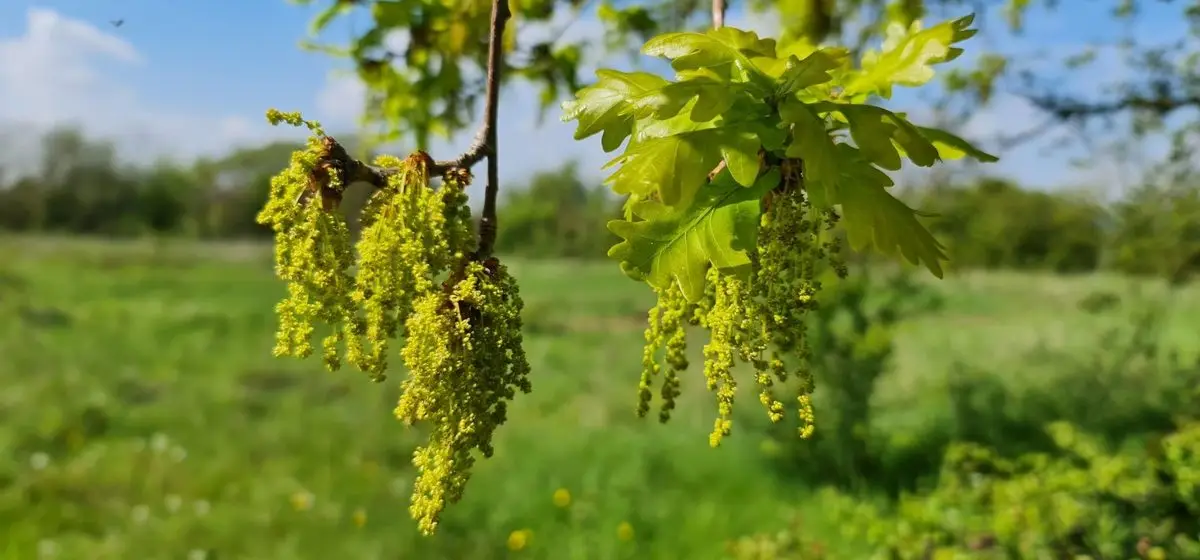
In leaf: March to November · Catkins: March to May · Acorns: June to October
Every tree on the calendar · How to identify trees in winter
Woods, deer parks, hedgerows, parkland and scrub, on heavy, rich soils and clay. It is common across southern, central and eastern England, and less so in Scotland and northern England. It is scarce on thin chalky soils.
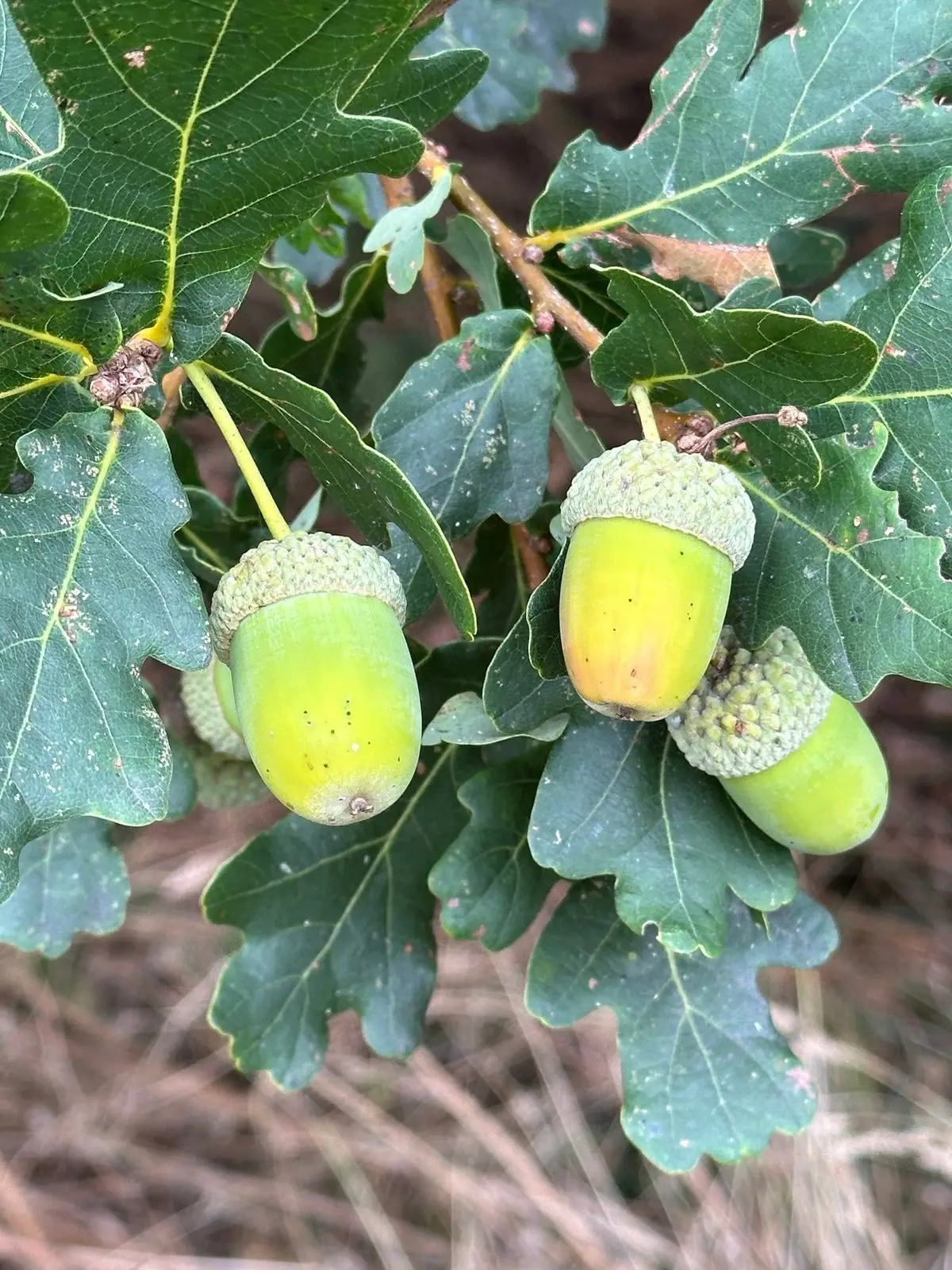
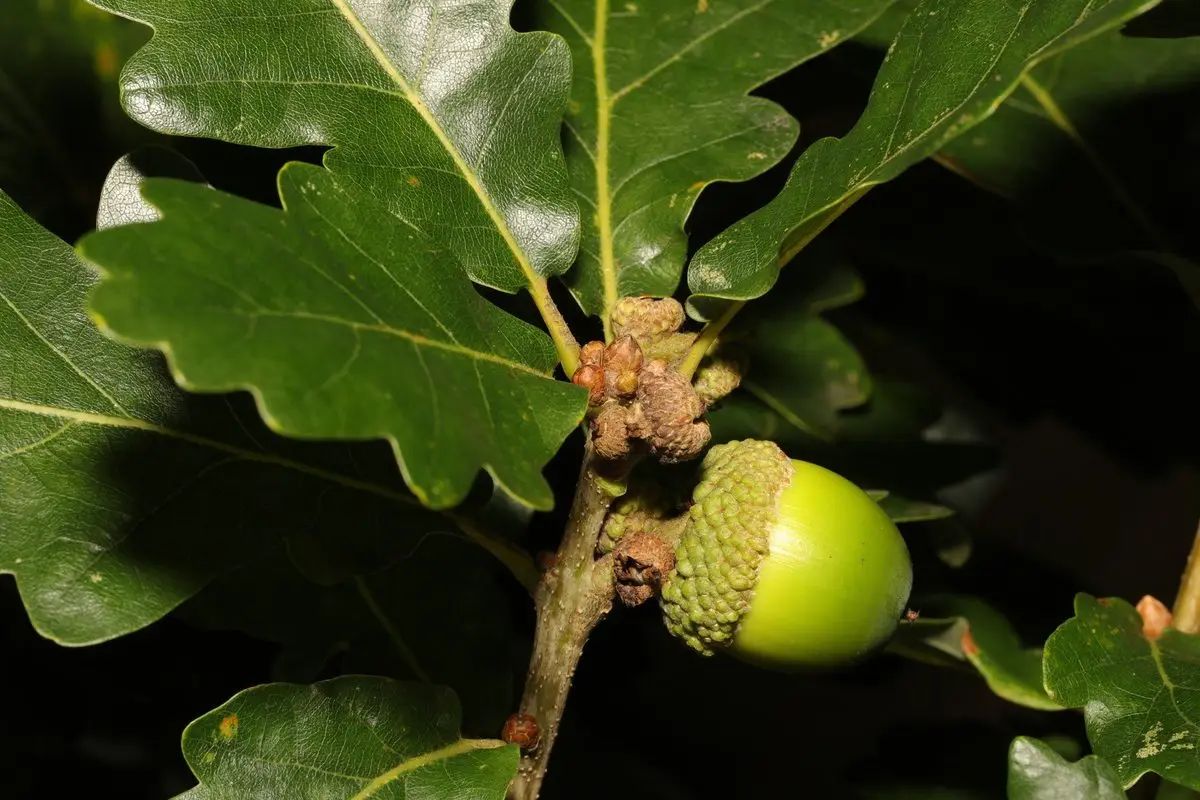 English oak or sessile oak?Both are native oaks with much the same bark and twigs.Acorn stalk→
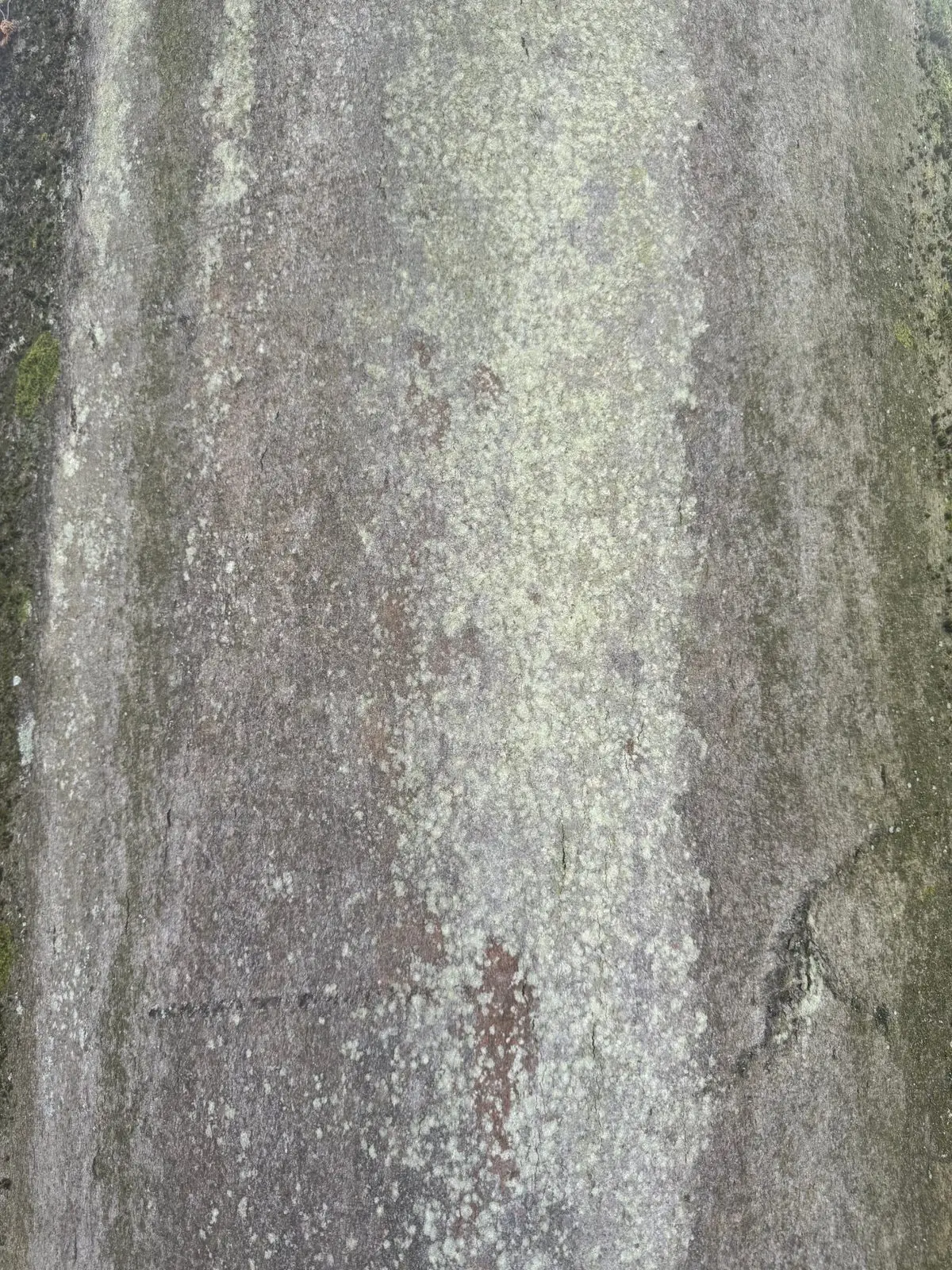 English oak or common beech?Both are large grey-barked woodland trees.Older trunk→
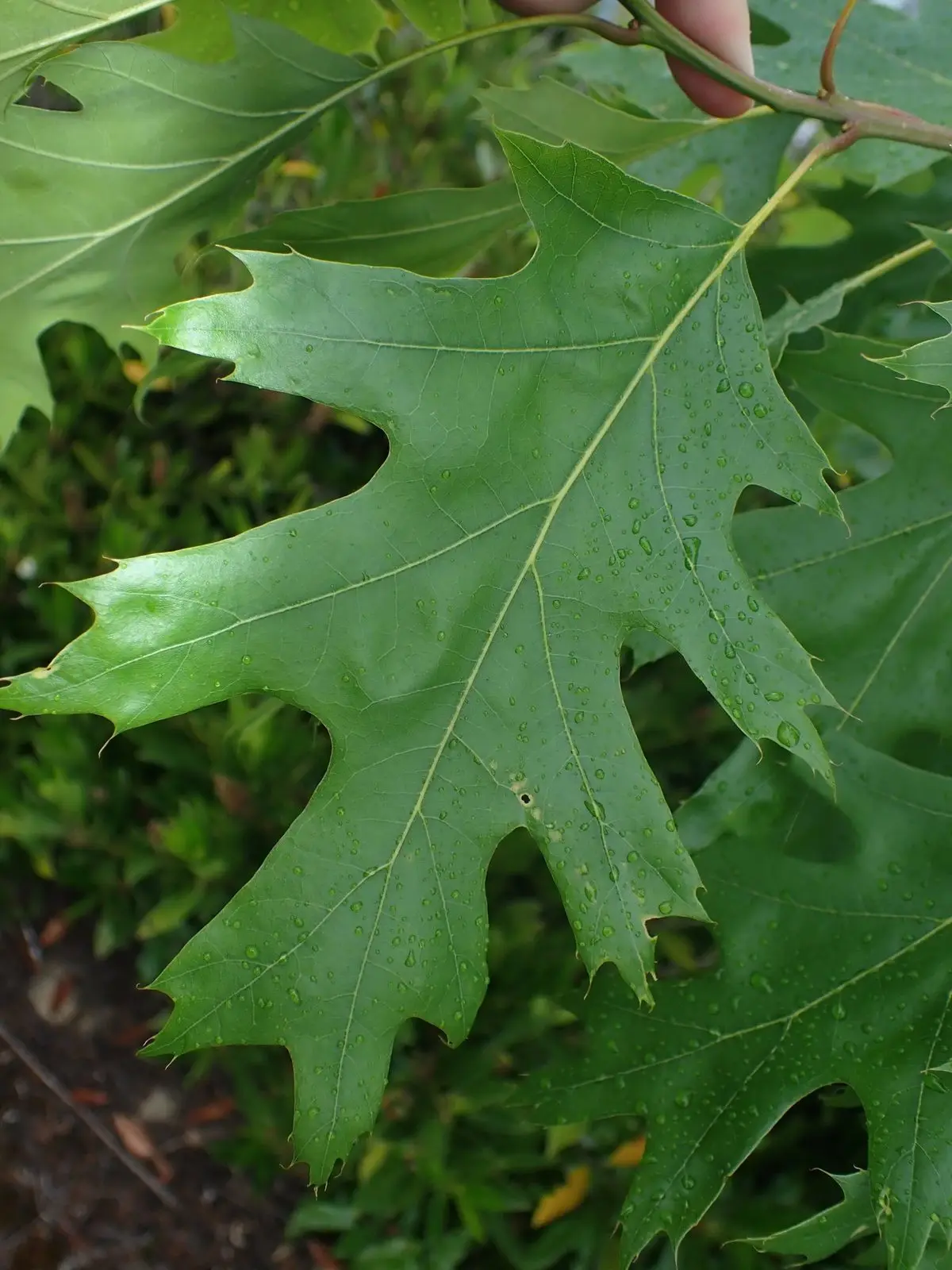 English oak or red oak?A big oak of the same parks, with lobed leaves and acorns.Ends of the lobes→
Free to download.
Every fact on this page is checked against the Collins Tree Guide, last in November 2026. Spotted something that looks wrong in front of a real tree? Tell us. How we check.
Photographs: empressmoth (CC0), Leon Cross (CC BY 4.0), Wendy Herniman (CC BY 4.0), chrisgannaway (CC0), cjoynson (CC0), steve_mcwilliam (CC0), Jarro Nevsbaru (CC BY 4.0). With thanks to everyone who shares their photographs on iNaturalist and Wikimedia Commons.