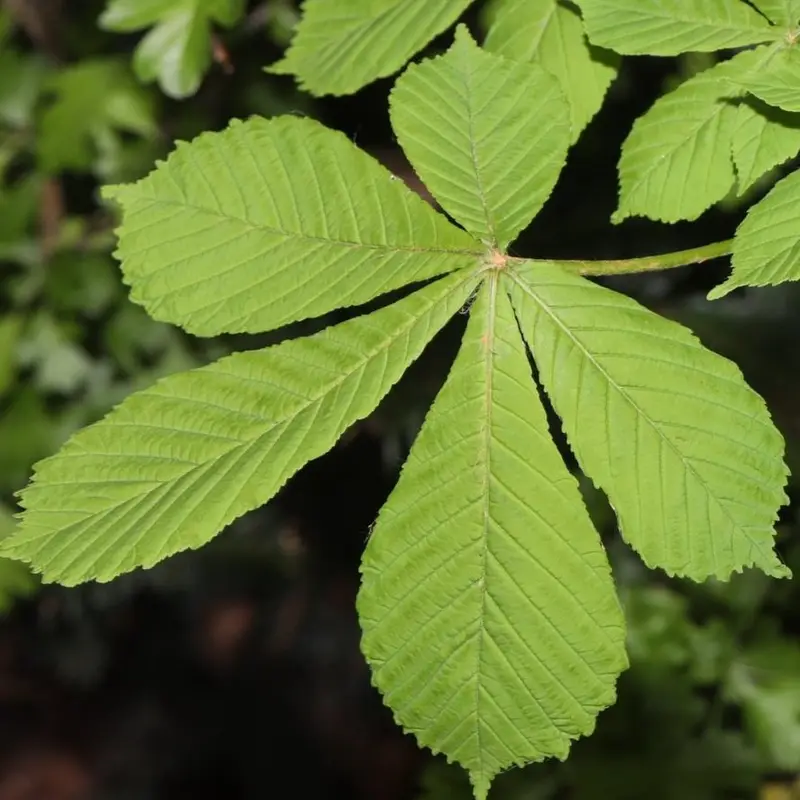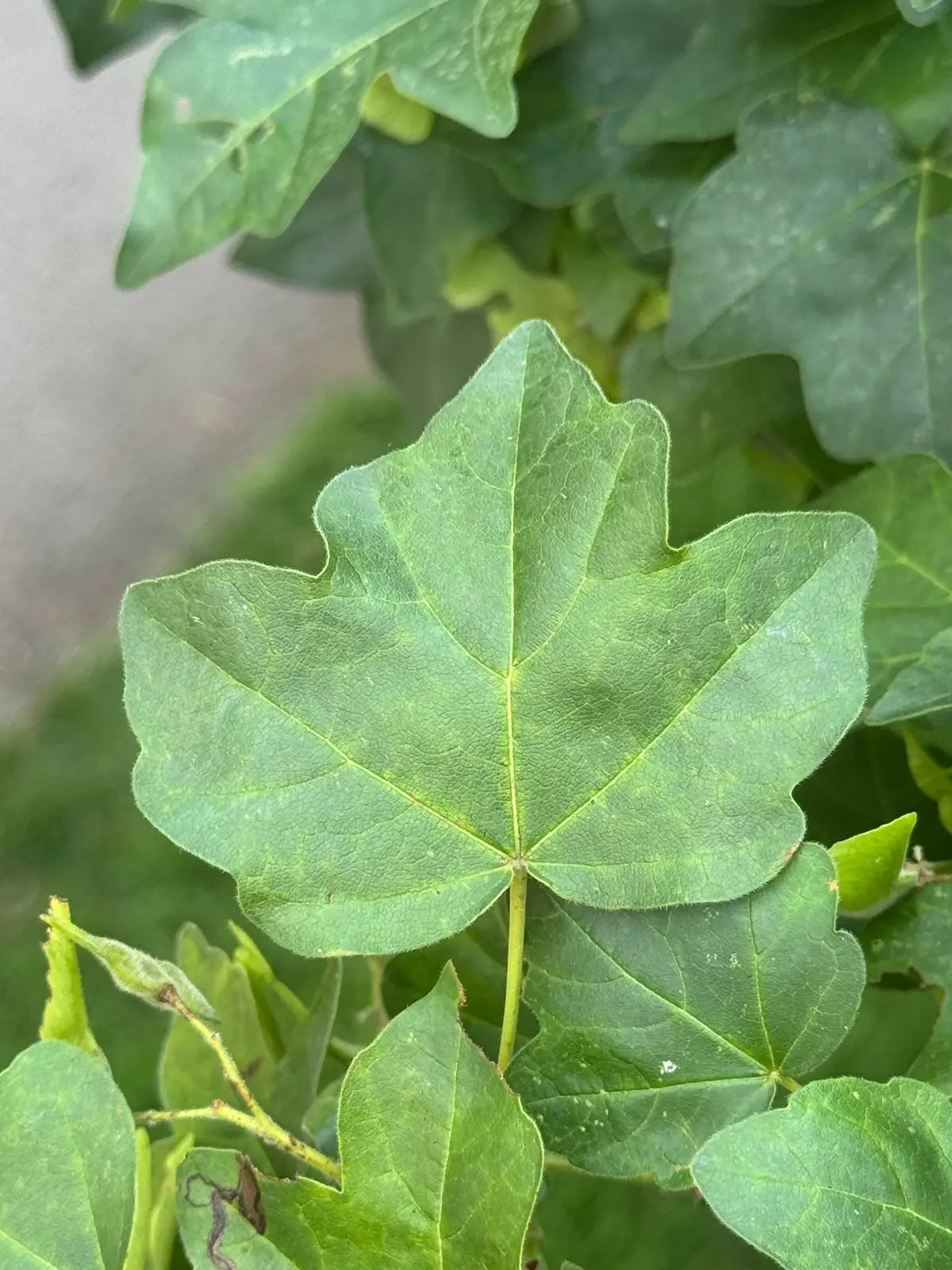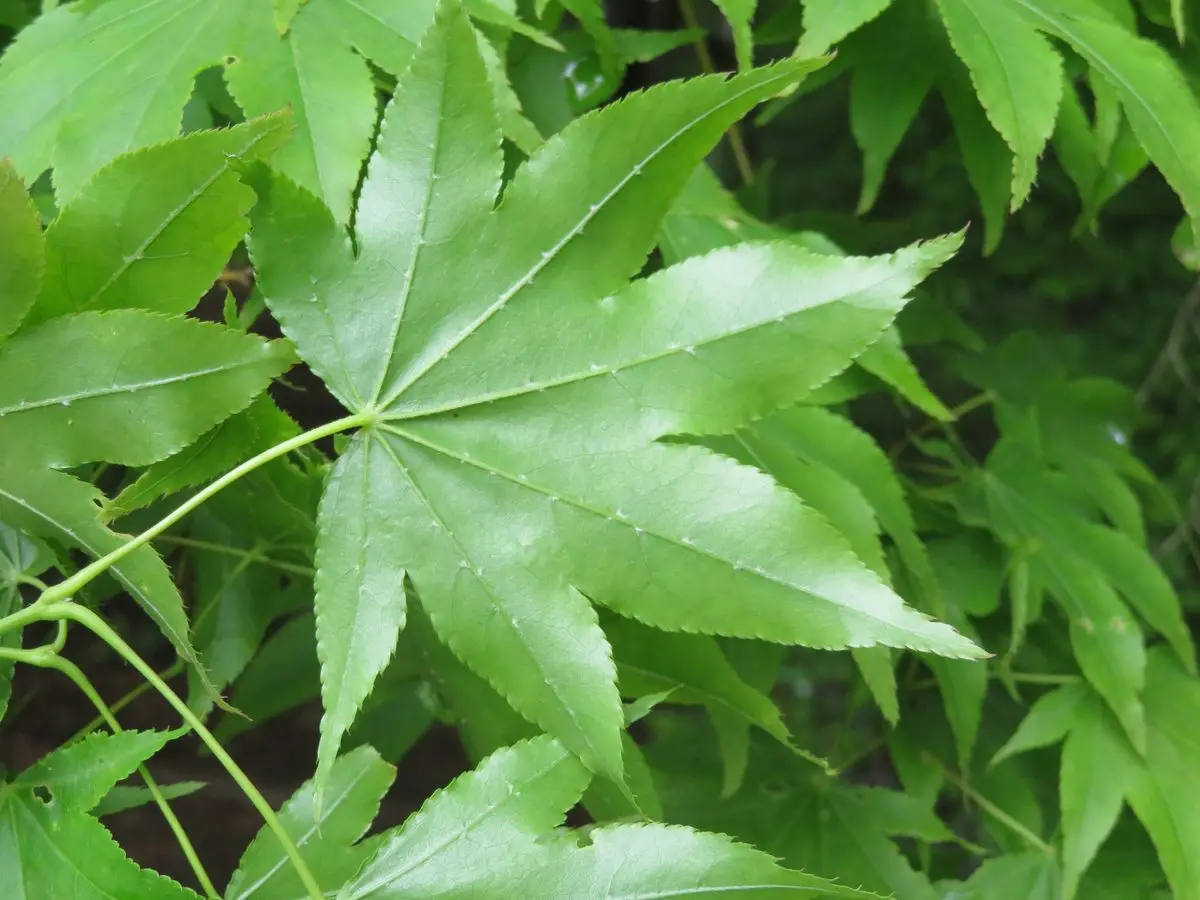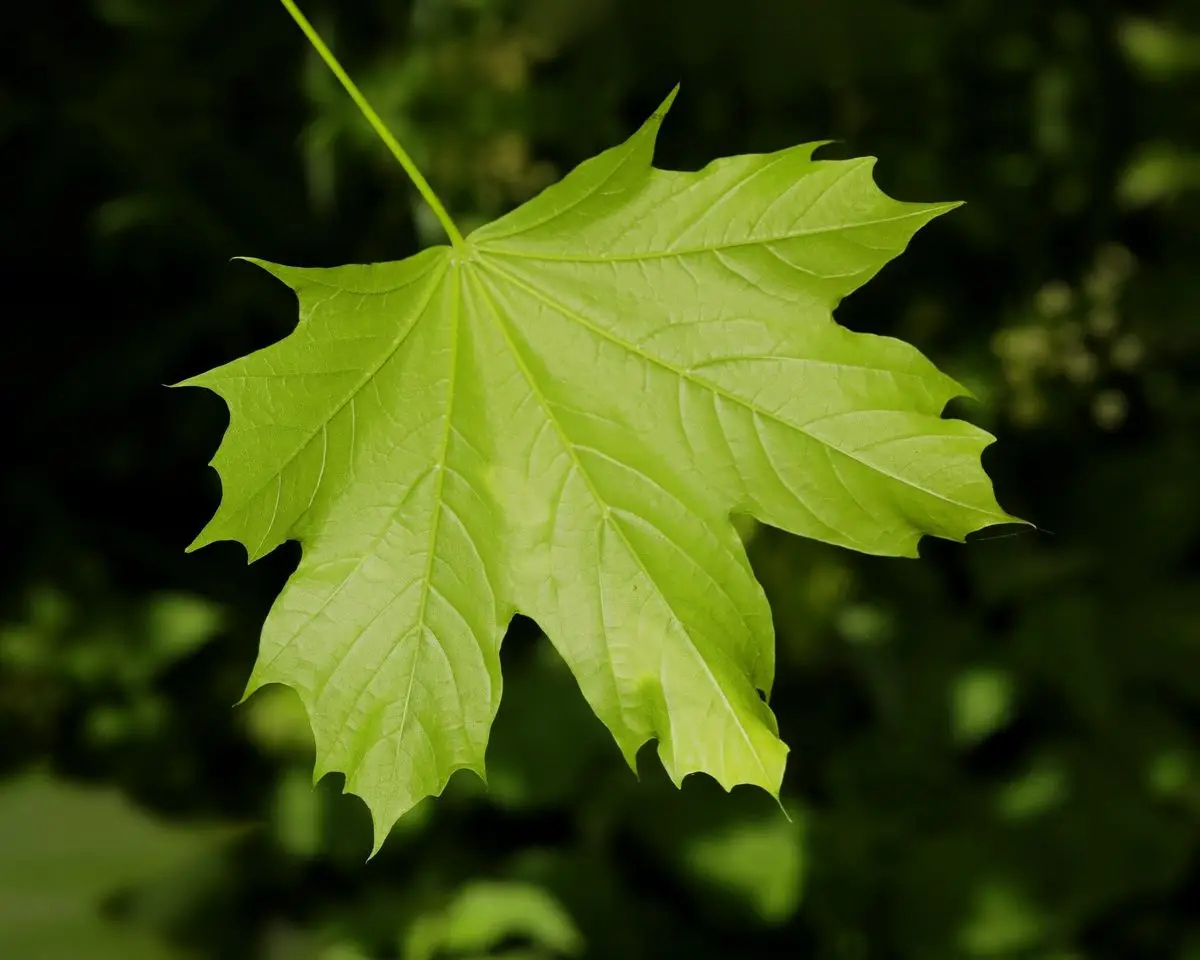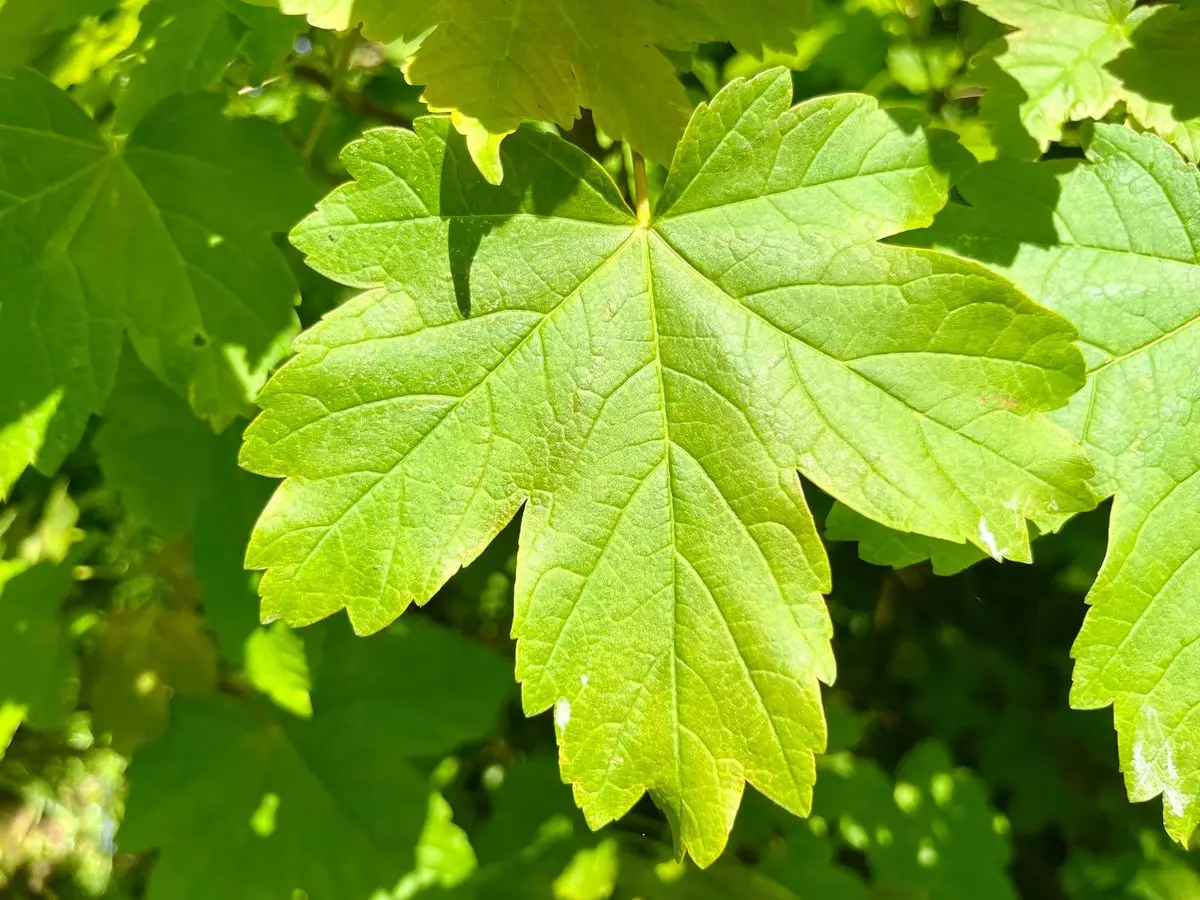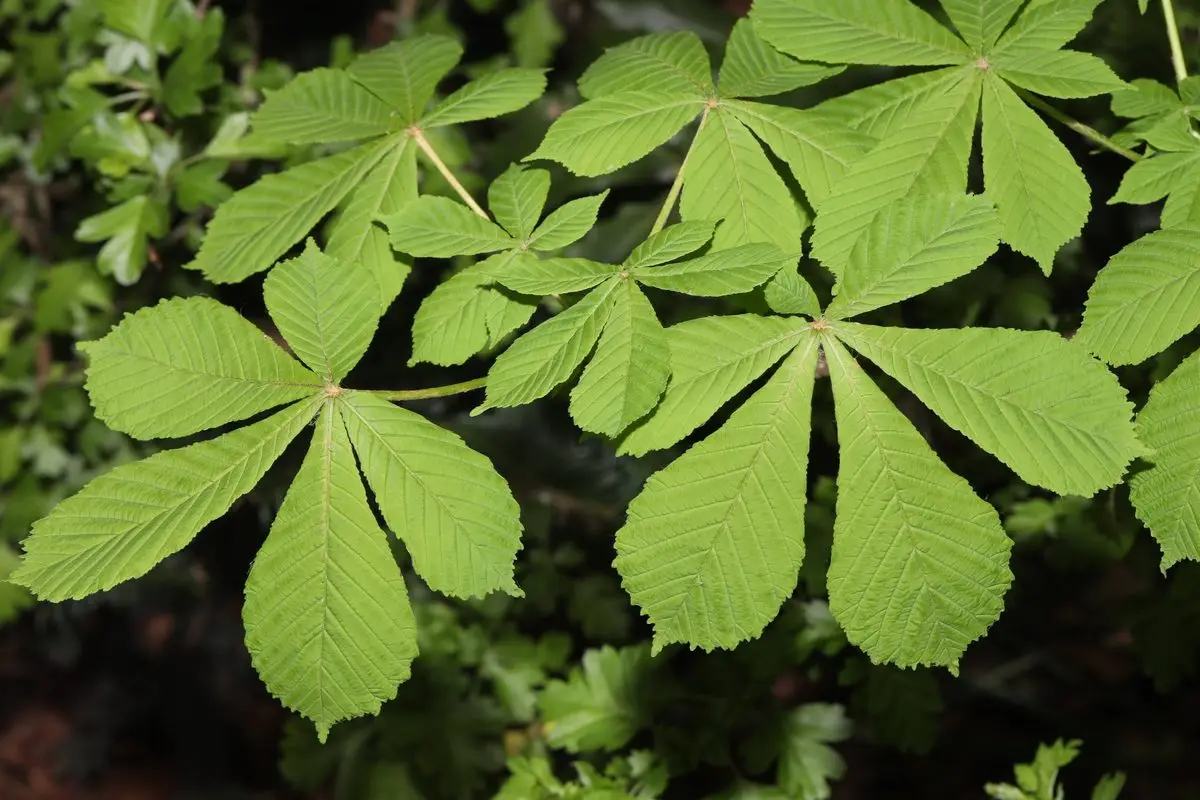
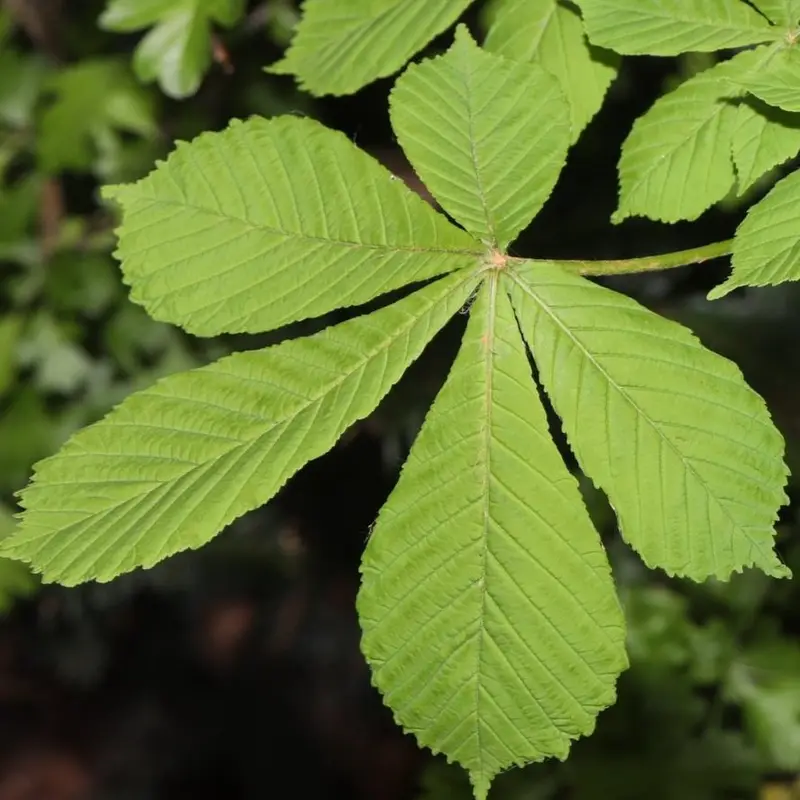
Each leaf is split into big, toothed leaflets, five to seven, all meeting at one point at the end of the stalk. Each leaflet is broadest near its tip.
Aesculus hippocastanum · Sapindaceae
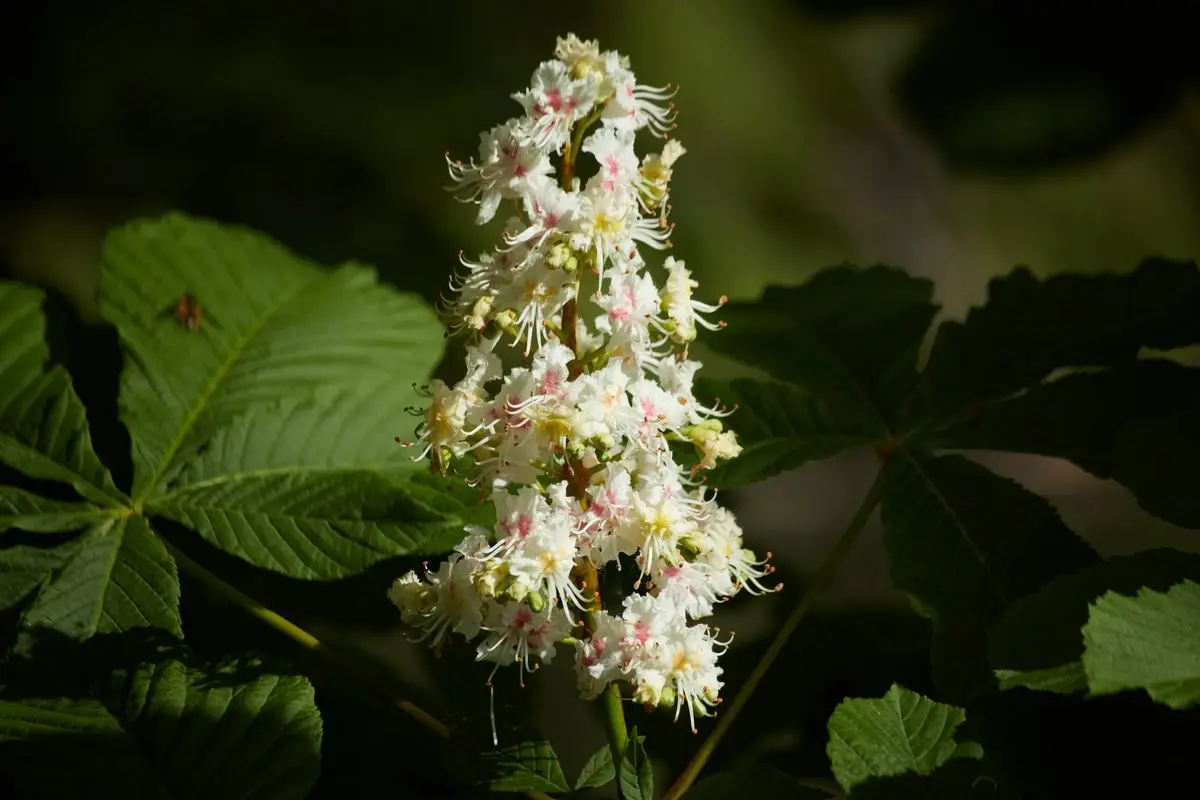
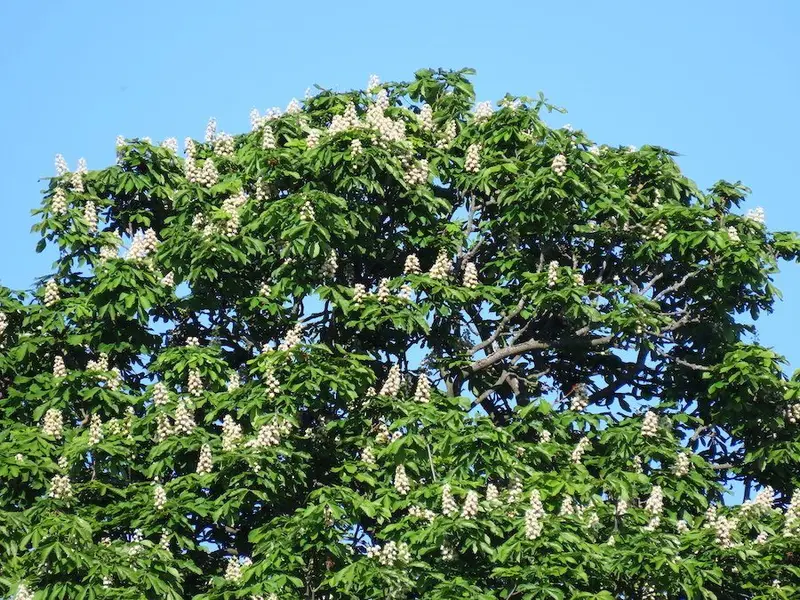
Horse chestnut grows into a massive dome. Its big leaves have five to seven leaflets joined straight to the end of one long stalk. White flower candles cover it in May.
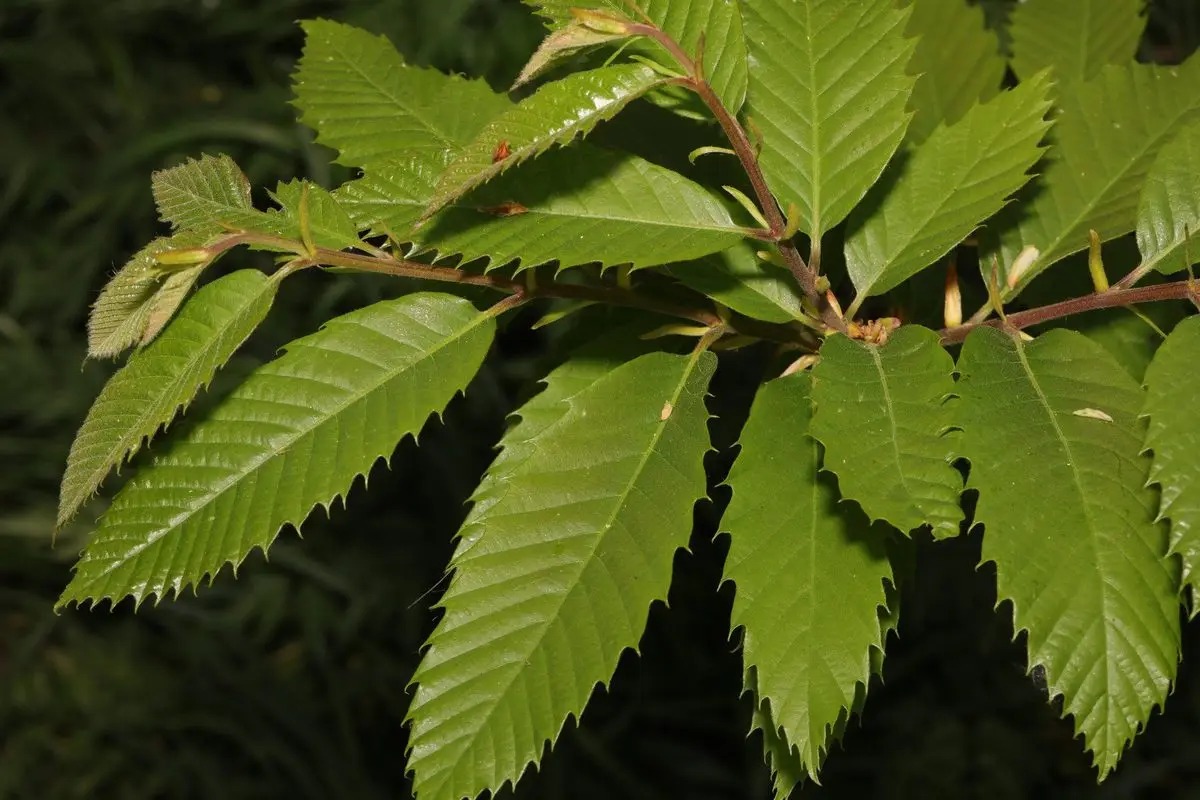
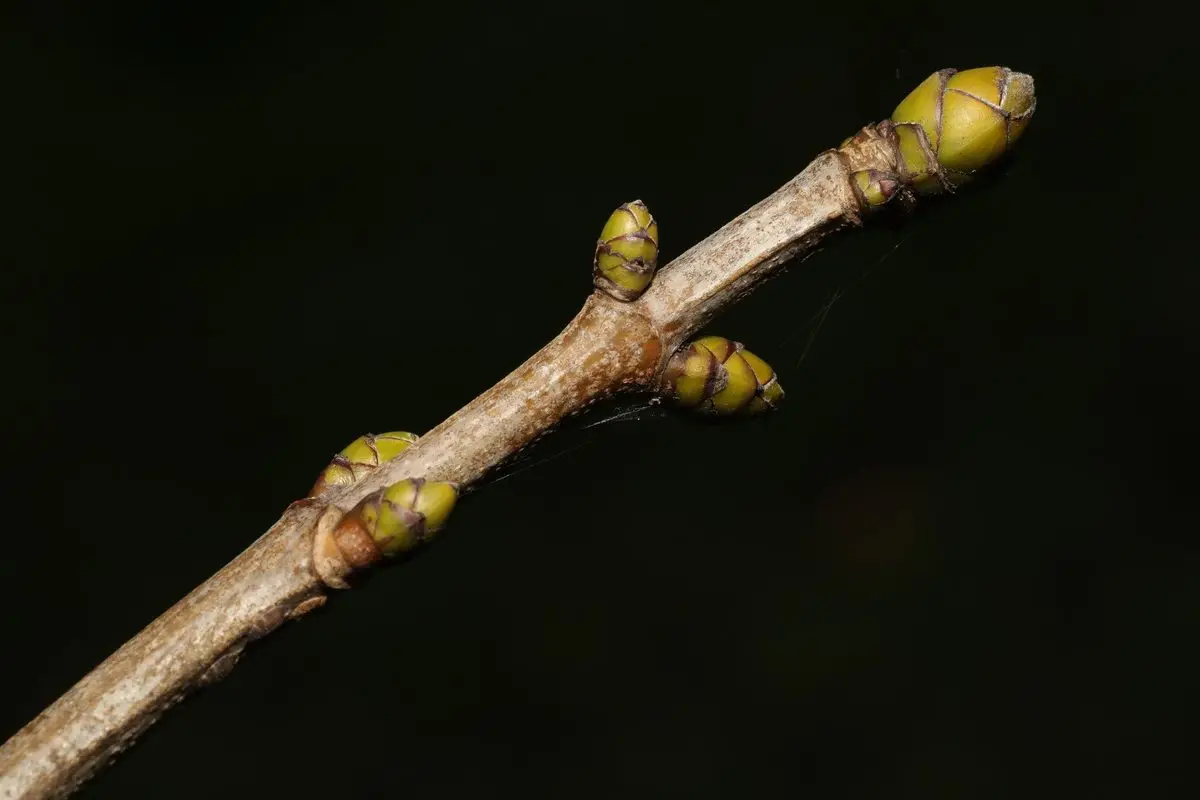
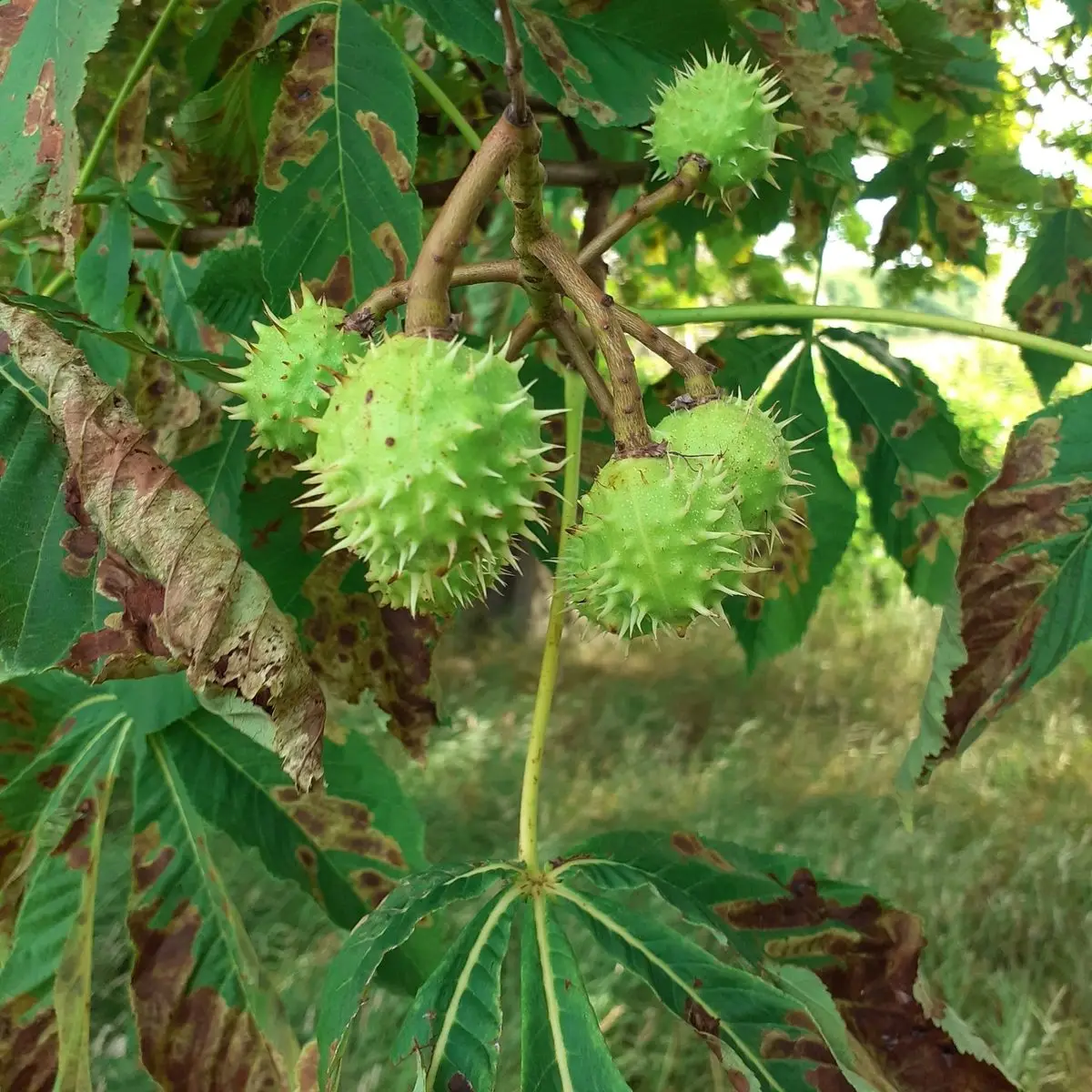
Often mistaken for sweet chestnut. How to tell them apart →LeavesFive to seven toothed leaflets, all from one point.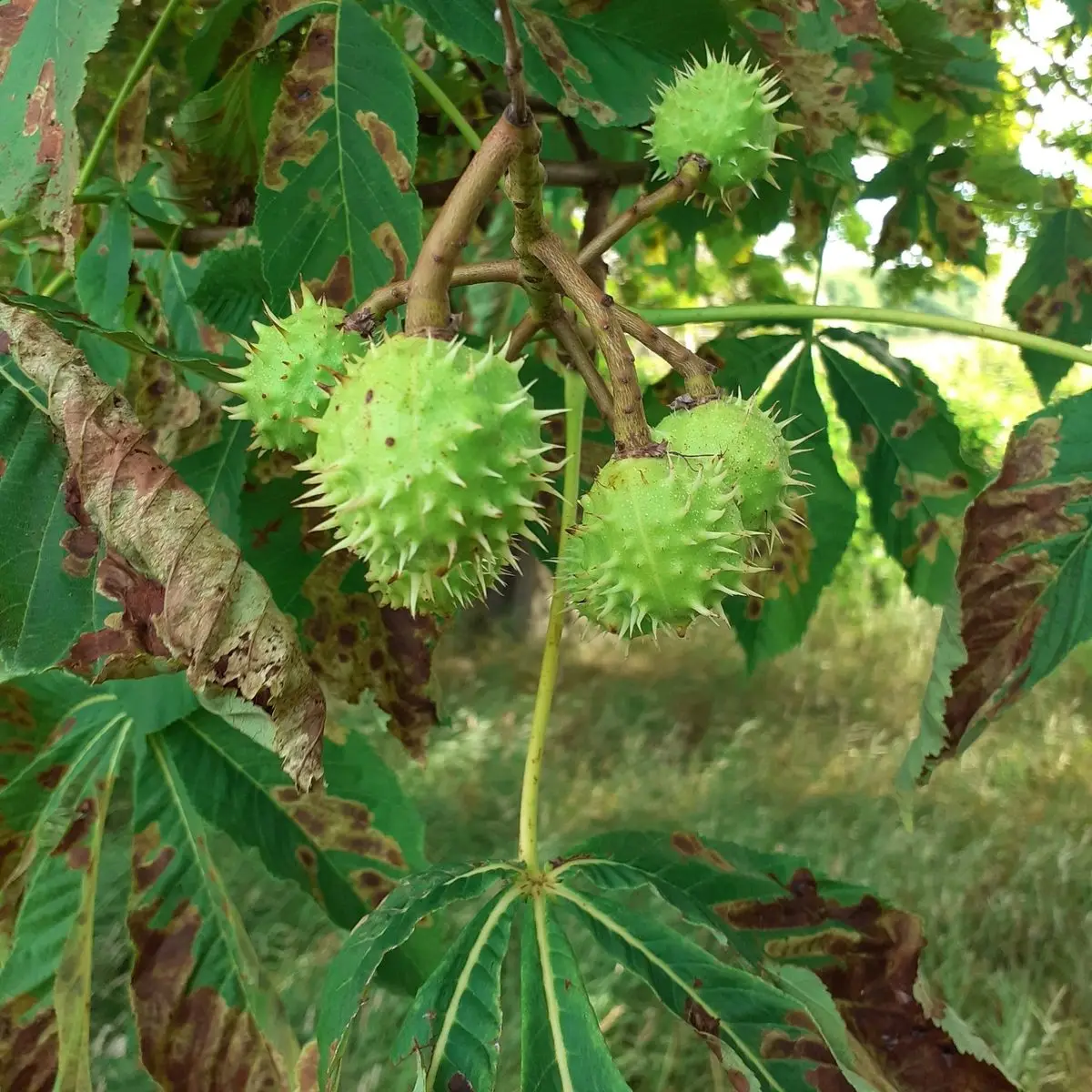 ConkersSpiny husks, usually with one conker in each.
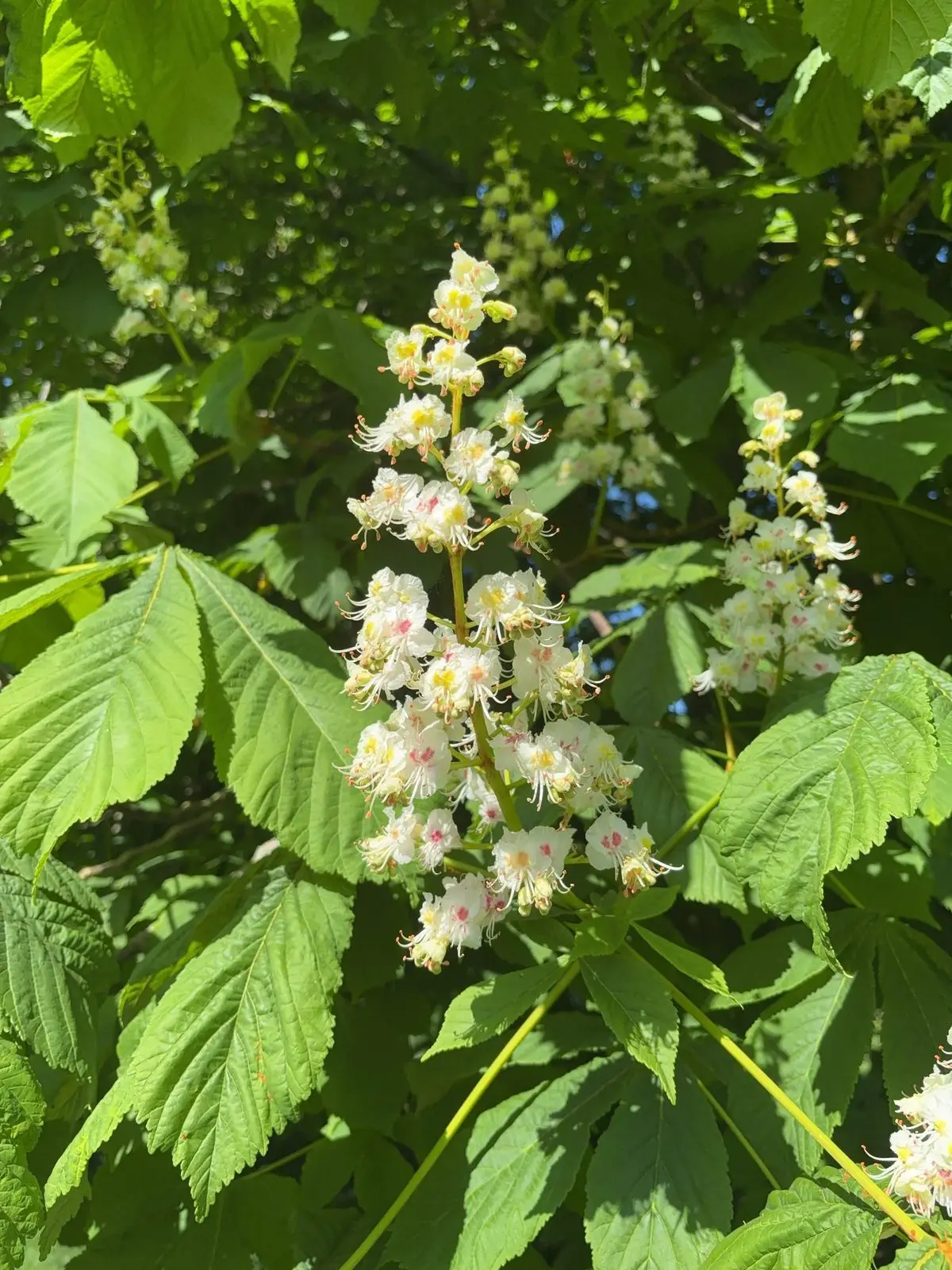 CandlesUpright white spikes in May, each flower with a yellow or red patch.
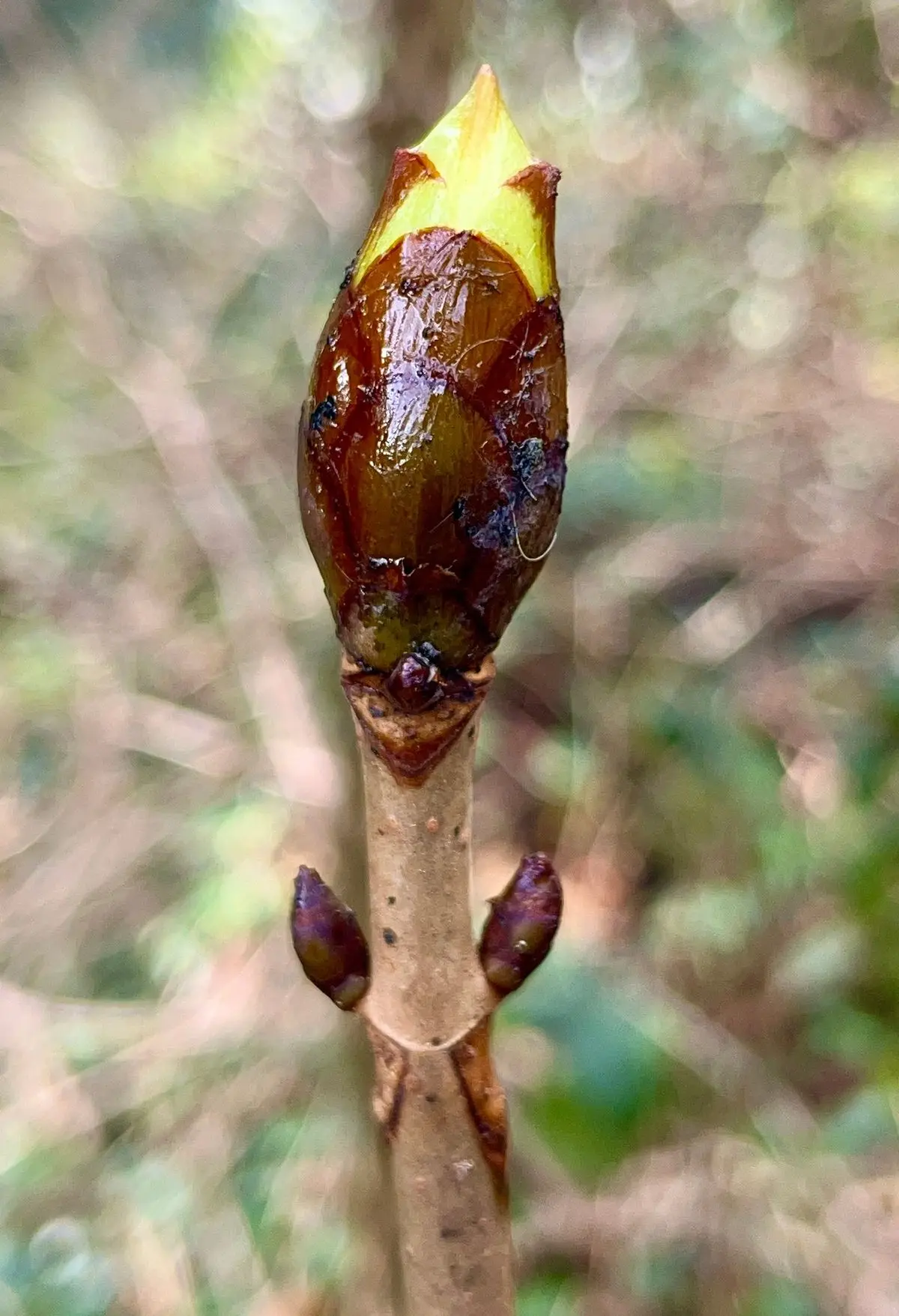
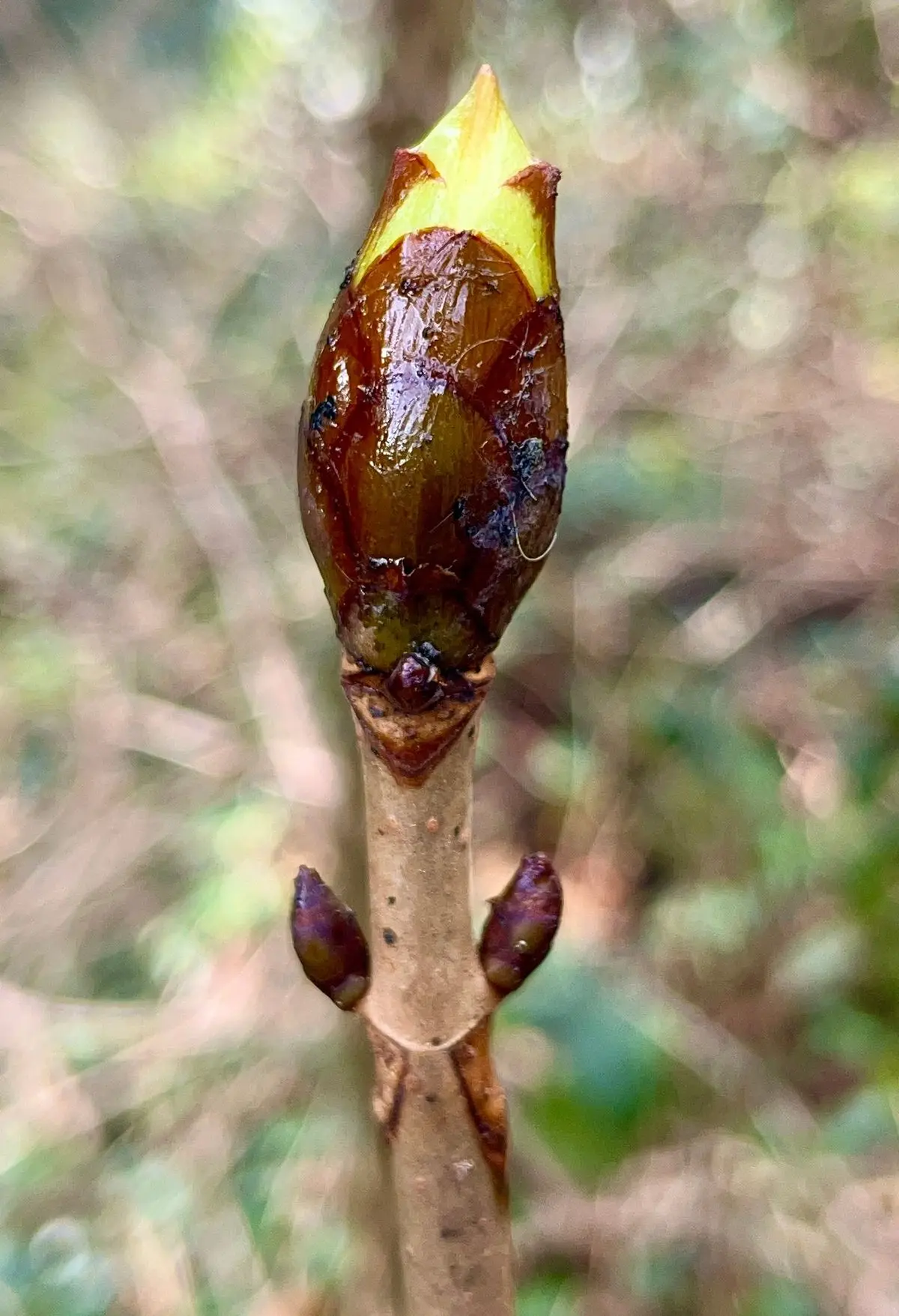
Then check · Sticky budsIn winter, stout shoots carry big, sticky, reddish brown buds, and under each side bud is a pale horseshoe-shaped mark where a leaf fell, with seven small dots round it.
Each leaf is split into big, toothed leaflets, five to seven, all meeting at one point at the end of the stalk. Each leaflet is broadest near its tip.
In summer, green husks covered in sharp spines hang from the tree. In autumn they split open to show a pale lining and, usually, a single glossy brown conker.
In May the tree carries upright spikes of white flowers, called candles. Each flower has a yellow patch at the base of its petals that turns red once it has been pollinated.
 Learn the horse chestnut in TreelyEvery part through the year, and a short round each day until you know it.Get Treely
 oliverc29, CC BY 4.0
 Kieran Roy Powell, CC BY 4.0
 Florin Feneru, CC BY 4.0
In leaf: March to November · Flowers: April to May · Conkers: June to October
Every tree on the calendar · How to identify trees in winter
Parks, streets, avenues, village greens and churchyards throughout Britain and Ireland, growing best in eastern and south-eastern England. Seldom found in woodland, though it sometimes seeds itself into scrub and hedges.
Free to download.
Every fact on this page is checked against the Collins Tree Guide, last in November 2026. Spotted something that looks wrong in front of a real tree? Tell us. How we check.
Photographs: Florin Feneru (CC BY 4.0), steve_mcwilliam (CC0), oliverc29 (CC BY 4.0), yunruse (CC0), outdoorsyduck21 (CC0), Leon Cross (CC BY 4.0), Kieran Roy Powell (CC BY 4.0). With thanks to everyone who shares their photographs on iNaturalist and Wikimedia Commons.