Each leaf has 5 to 13 oval leaflets, usually 7, thick, shiny and smooth-edged, with the biggest at the tip.
Introduced, naturalised · Up to 30 m
Walnut
Juglans regia · Juglandaceae
Walnut is a broad-crowned tree, planted in parks and large gardens. Each leaf has about seven smooth-edged leaflets, the biggest at the tip. A crushed leaf smells of shoe polish.
Know it by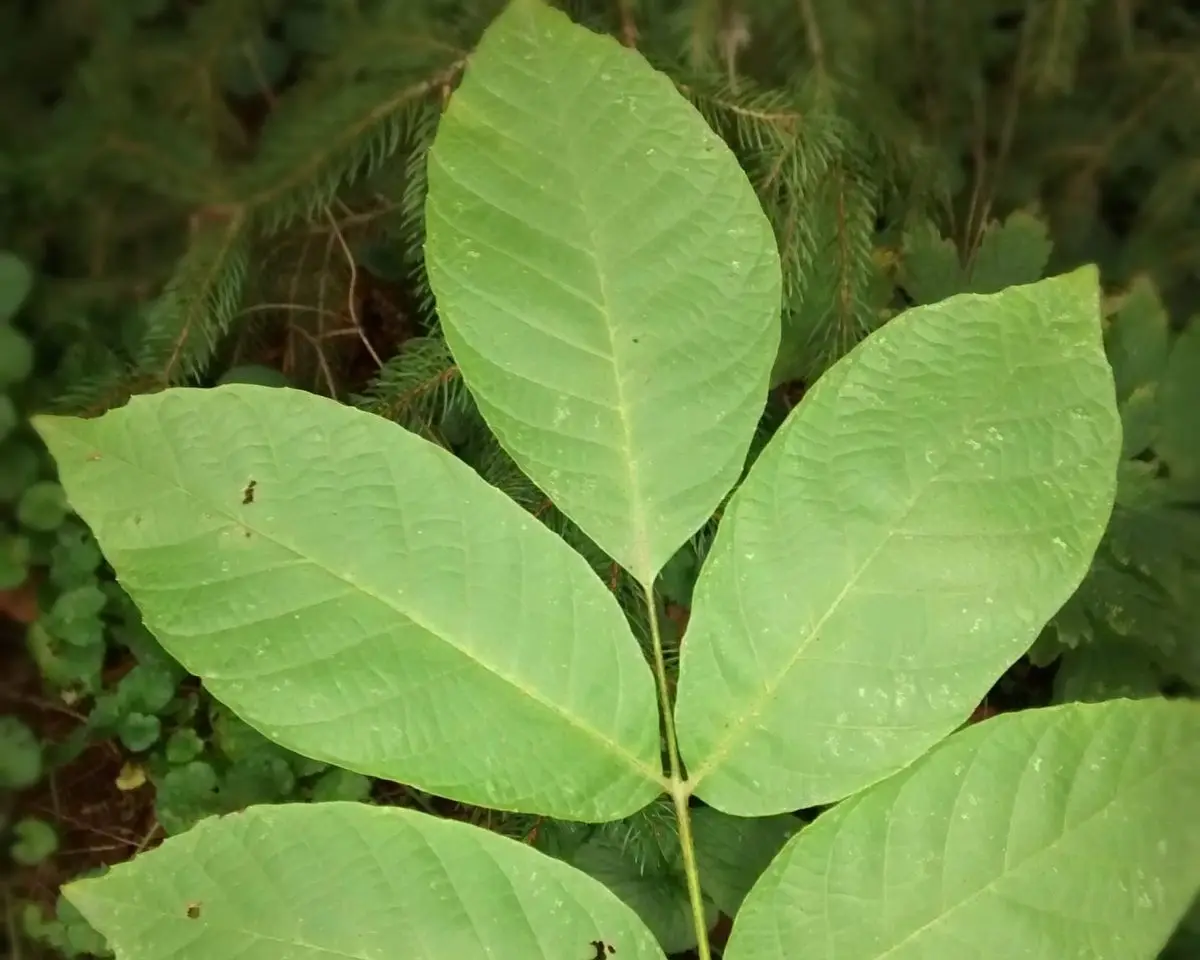 Leaves5 to 13 in all, thick and smooth-edged, the biggest at the tip.
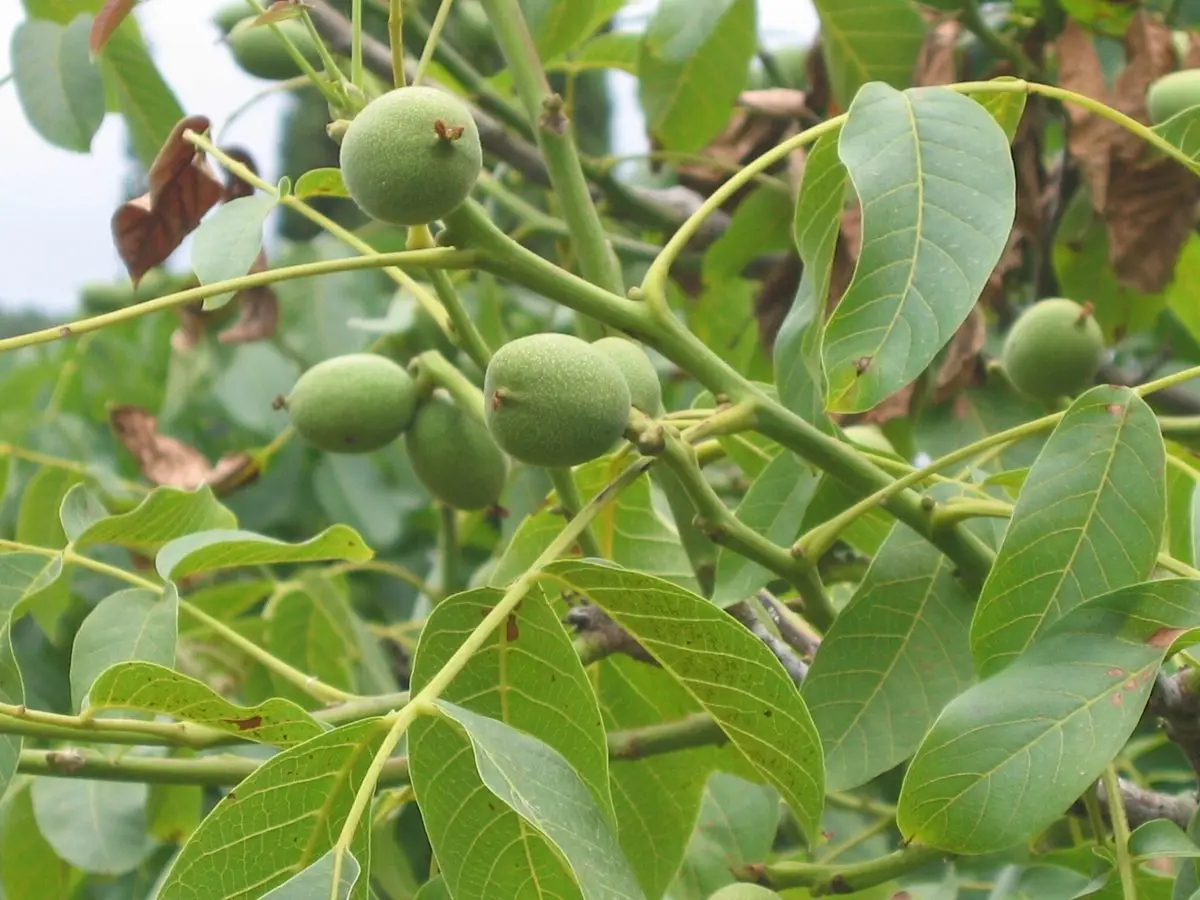 WalnutsRound, up to 5 cm, the fleshy husk splitting open.
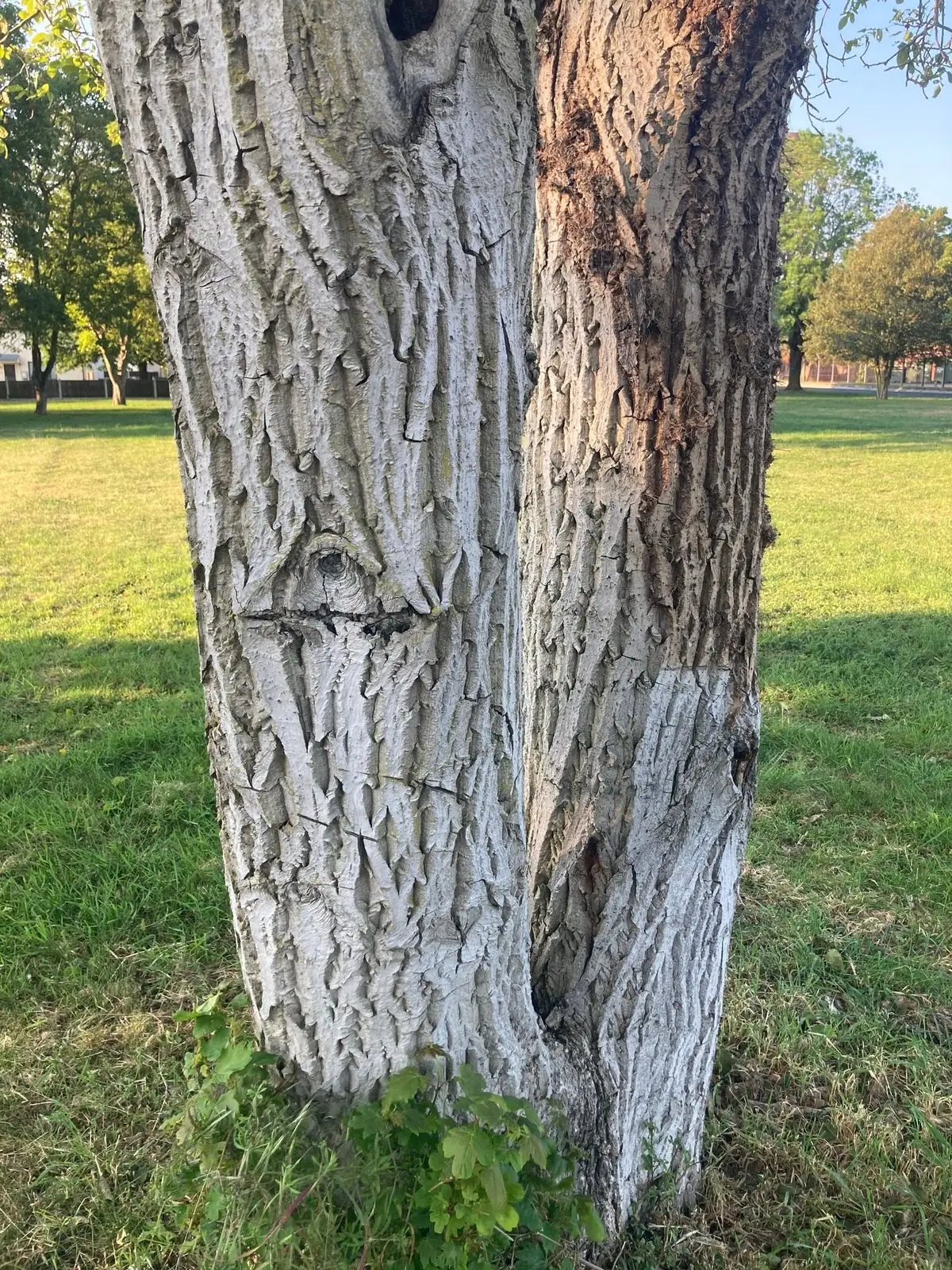 BarkRougher on old trees, smooth and brown on young ones.
Leaves5 to 13 in all, thick and smooth-edged, the biggest at the tip.WalnutsRound, up to 5 cm, the fleshy husk splitting open.BarkRougher on old trees, smooth and brown on young ones.Then check · TwigsStout, curving shoots with squat purplish brown buds, each sitting above a horseshoe-shaped scar where last year's leaf fell.
How to identify a walnut
Round and green, up to 5 cm, with a fleshy husk that splits open around a wrinkled brown nut.
Silvery grey with shallow, rounded ridges, darker and rougher on old trees and smooth and brown on young ones.
 Learn the walnut in TreelyEvery part through the year, and a short round each day until you know it.Get Treely
Every part, in photographs
Alexis Tinker-Tsavalas, CC BY 4.0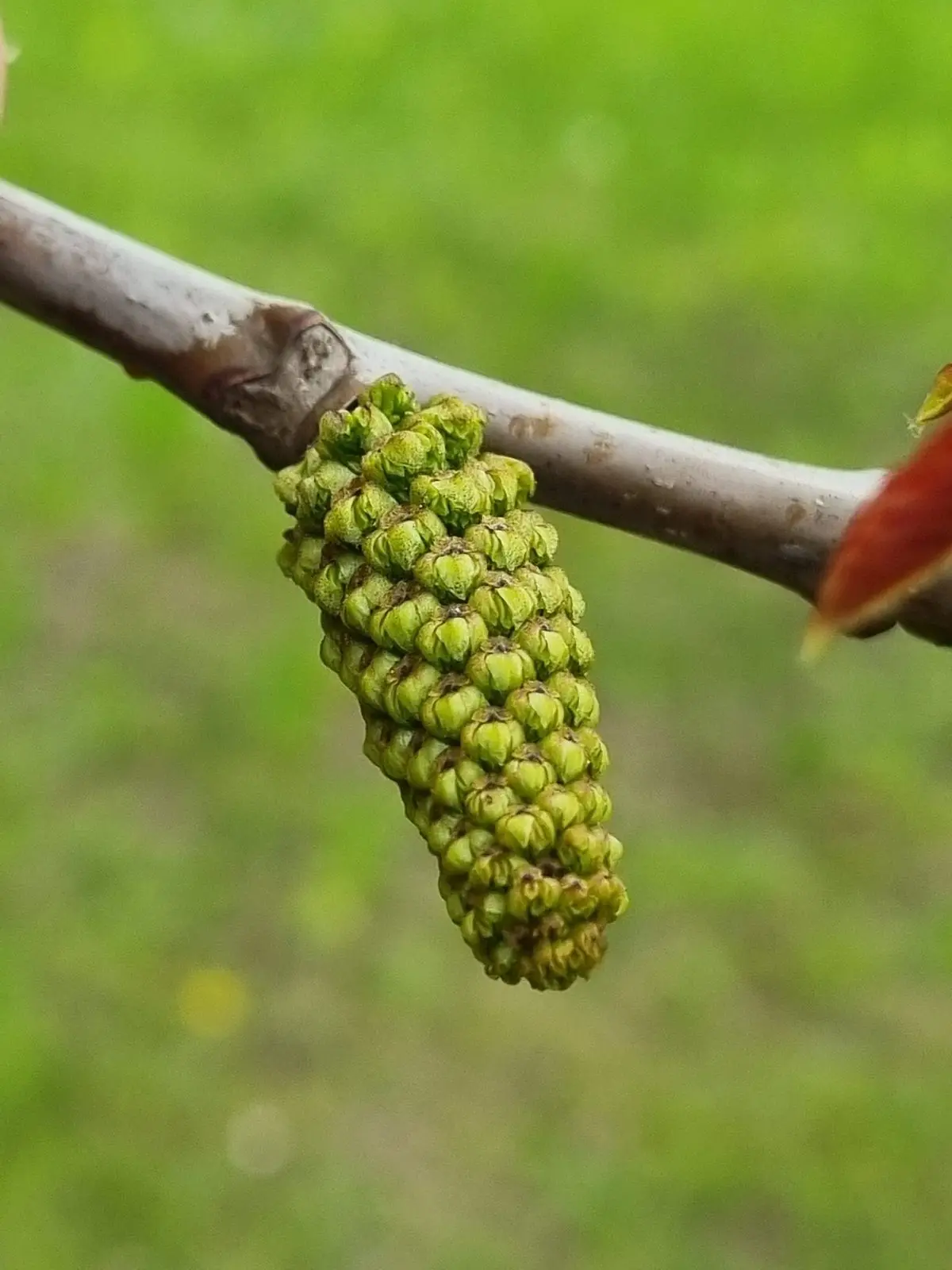 Mateusz Bronikowski, CC BY 4.0zebedeugalinha, CC BY 4.0
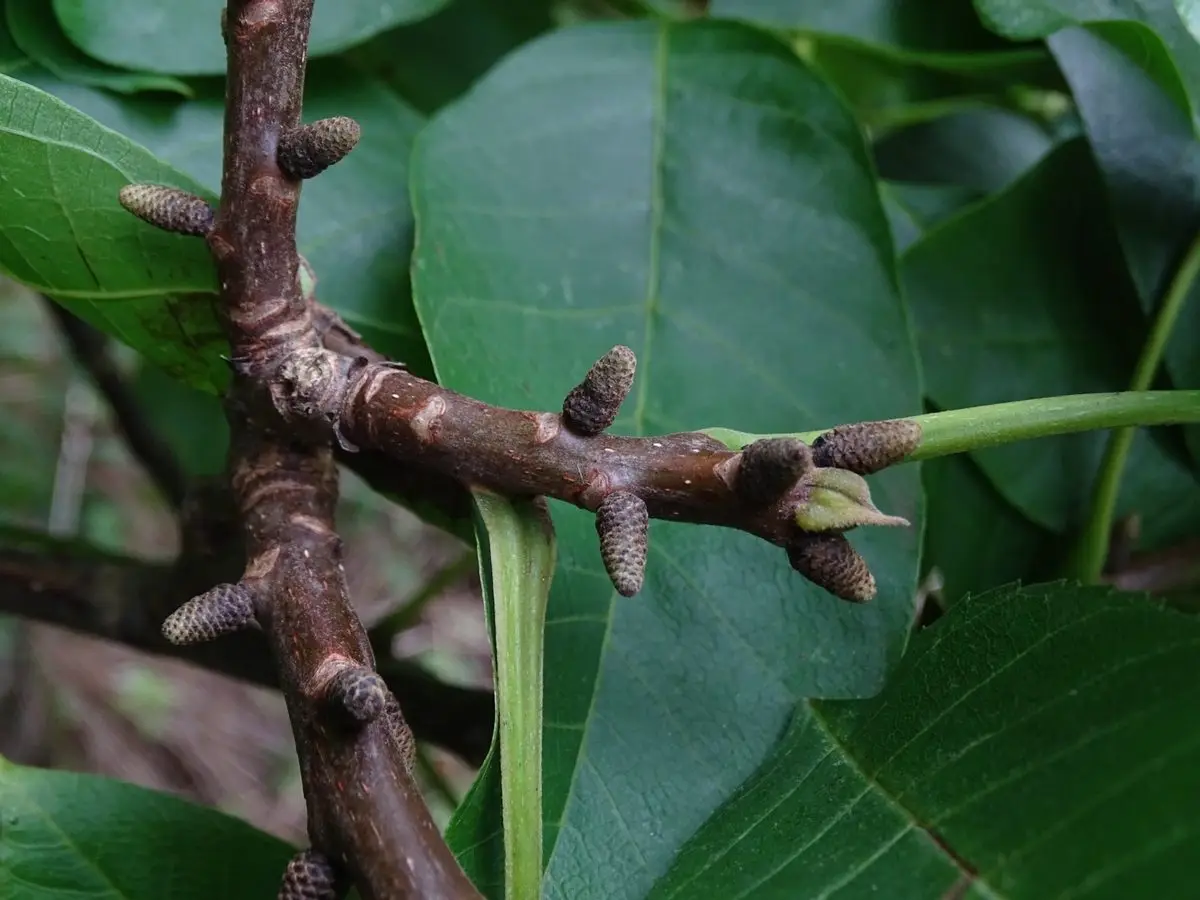 Zeke Marshall, CC BY 4.0
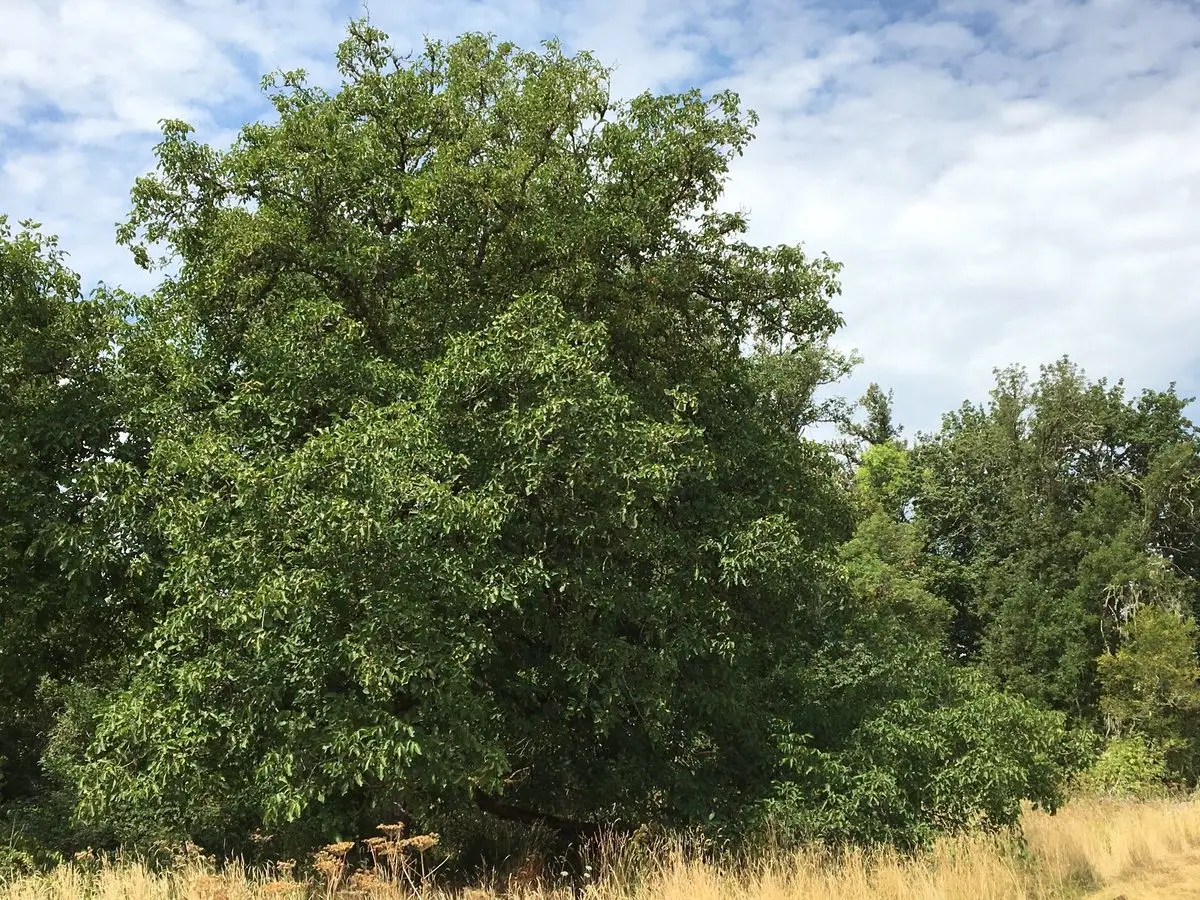 Ed Alverson, CC BY 4.0
When to look
JFMAMJJASOND
In leaf
Catkins
Walnuts
In leaf: May to November · Catkins: April to May · Walnuts: May to October
Every tree on the calendar · How to identify trees in winter
Where you’ll find it
Mostly planted, in large gardens and parks, more often in the countryside than in towns. Wild walnuts are rare. Those there are grow mostly on limestone in southern England, in woods and hedges, often from nuts that squirrels buried.
What it’s mistaken for
- Common ashBoth are big trees with feathered leaves. Leaf. Walnut: smooth, odd small teeth low down only. Common ash: toothed all the way along.
- ElderBoth have feathered leaves, though elder is a much smaller plant. Leaf. Walnut: one at a time along the twig. Elder: in opposite pairs, one each side.
- RowanBoth have feathered leaves, set one at a time along the twig. Leaf. Walnut: usually 7, the end one biggest. Rowan: 13 to 15, all much the same size.
- Tree of heavenBoth have big feathered leaves, and their stout bare shoots look much the same in winter. Bark. Walnut: silvery grey, in shallow rounded ridges. Tree of heaven: smooth and dark grey, with fine pale streaks.
- False acaciaBoth are big trees with feathered leaves of oval, blunt leaflets. Catkins. Walnut: yellowish catkins, up to 15 cm, April and May. False acacia: white pea flowers in sprays to 20 cm, in June.
- Horse chestnutBoth carry a horseshoe scar under the bud on bare winter wood. Twig. Walnut: squat and purplish brown, the end one fuzzy. Horse chestnut: big, reddish brown and sticky to the touch.
In the app
There’s more of the walnut in Treely
- Every part, through the yearLeaves, bark, buds, flowers and fruit, photographed in every season
- Its lookalikes, side by sideThe checks that settle it, part by part
- A short round each dayUntil you know the walnut on sight, from any side
- Name it from a photoA leaf, the bark or a flower, and Treely tells you which tree
Free to download.
Every fact on this page is checked against the Collins Tree Guide, last in November 2026. Spotted something that looks wrong in front of a real tree? Tell us. How we check.
Photographs: Ed Alverson (CC BY 4.0), Alexis Tinker-Tsavalas (CC BY 4.0), zebedeugalinha (CC BY 4.0), duzzilives (CC0), Mateusz Bronikowski (CC BY 4.0), Zeke Marshall (CC BY 4.0). With thanks to everyone who shares their photographs on iNaturalist and Wikimedia Commons.