Cherry laurel
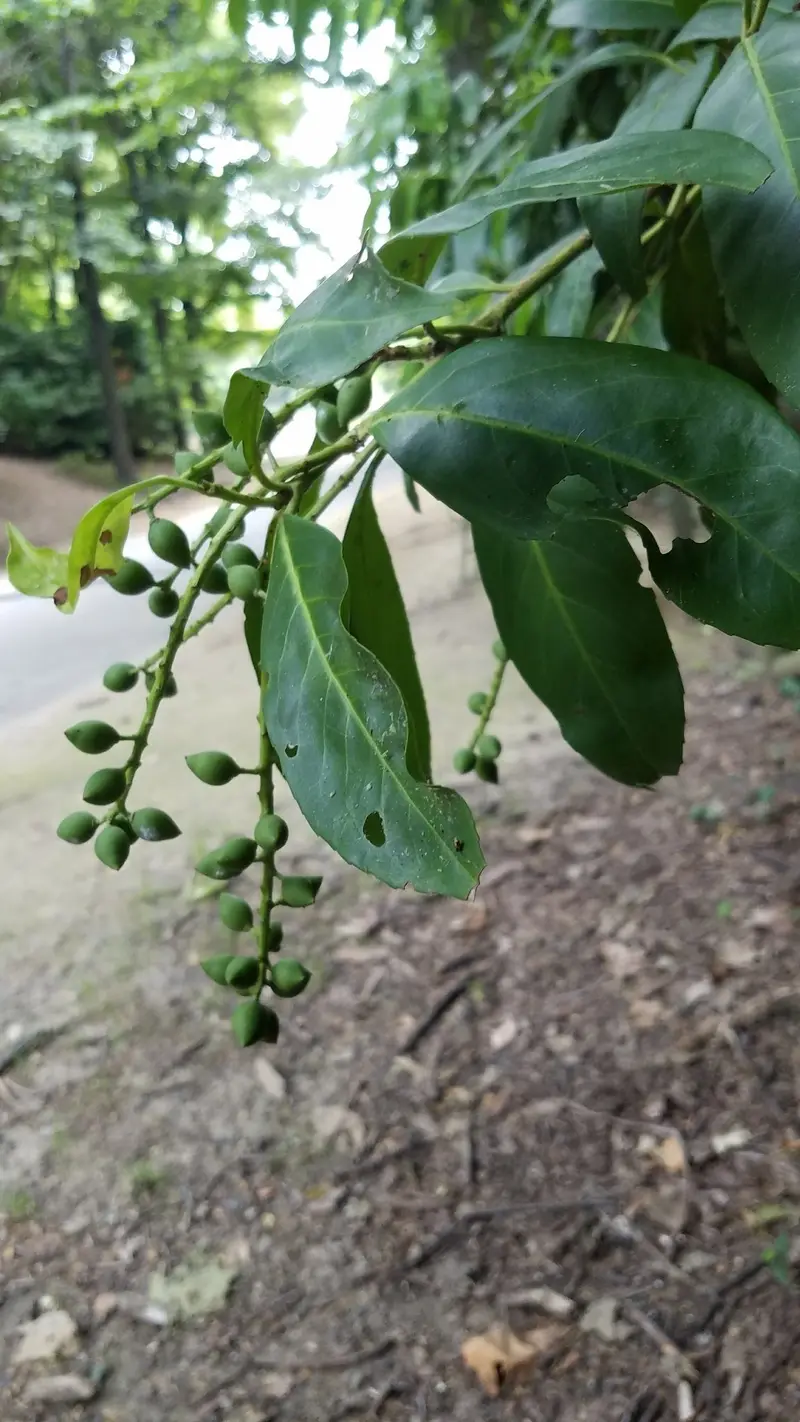
Prunus laurocerasusCherry laurel is an evergreen shrub, common as a clipped hedge across Britain. Its big, shiny leaves are thick and leathery, up to 20 cm long. A crushed leaf smells of almonds.
How to identify cherry laurel →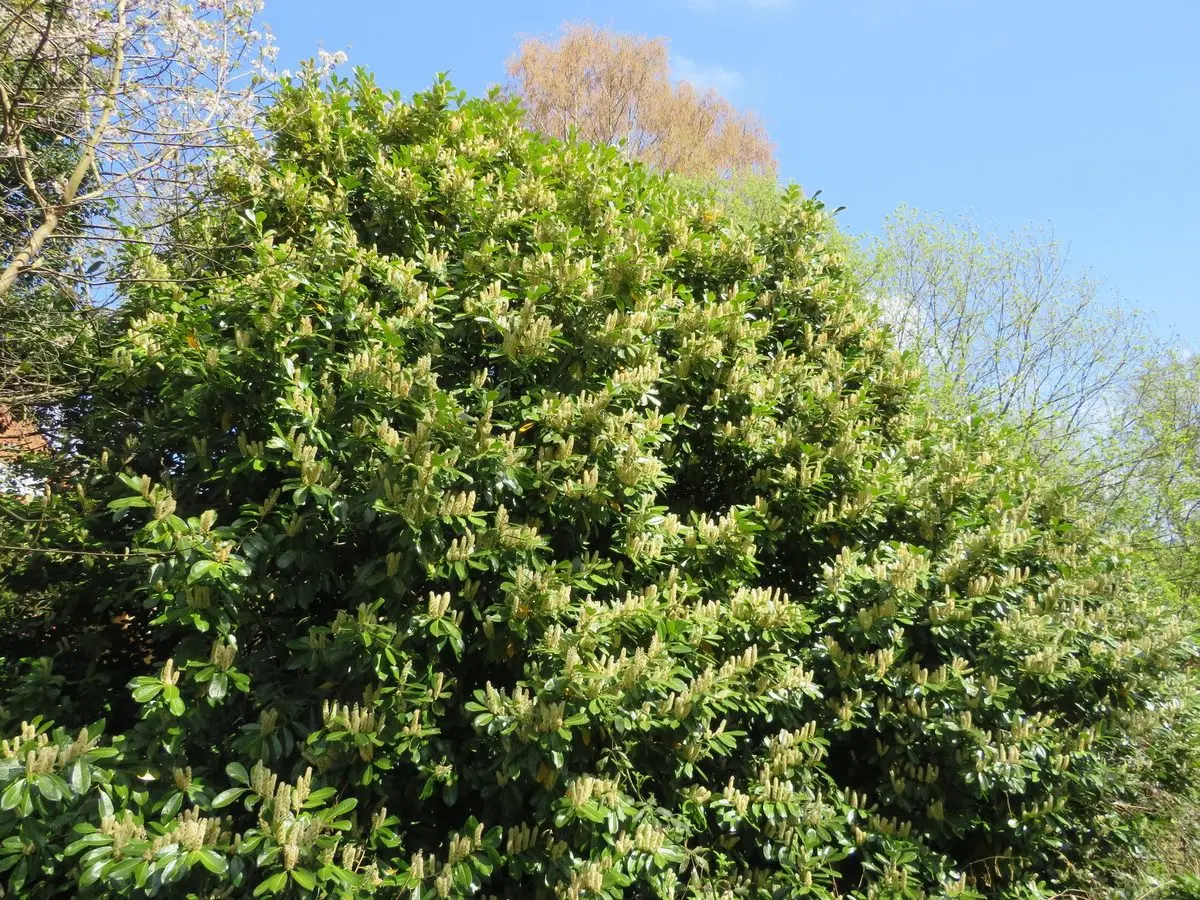 R Clarke, CC BY 4.0
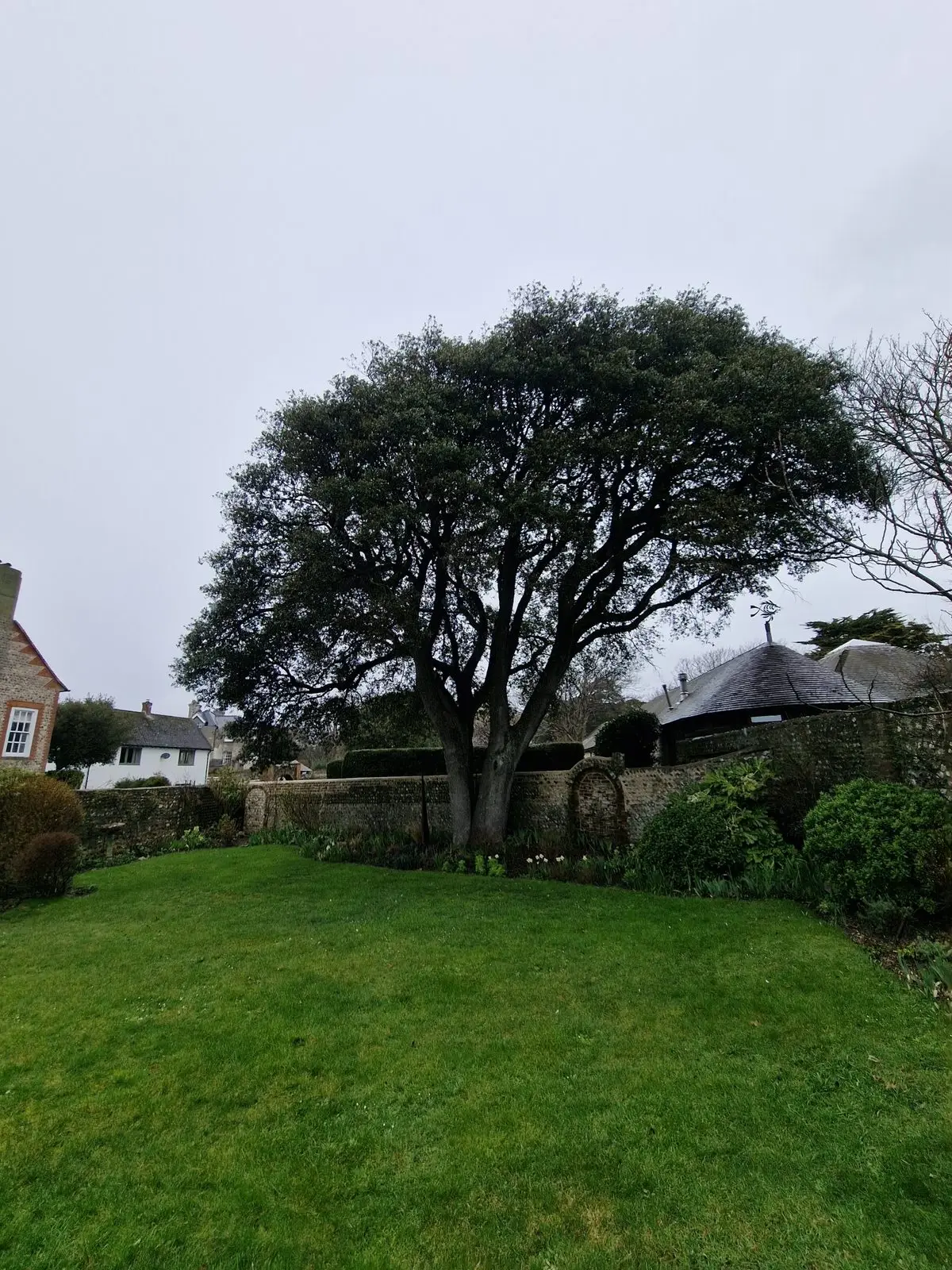
Both make dark evergreen masses in parks and shelter belts.
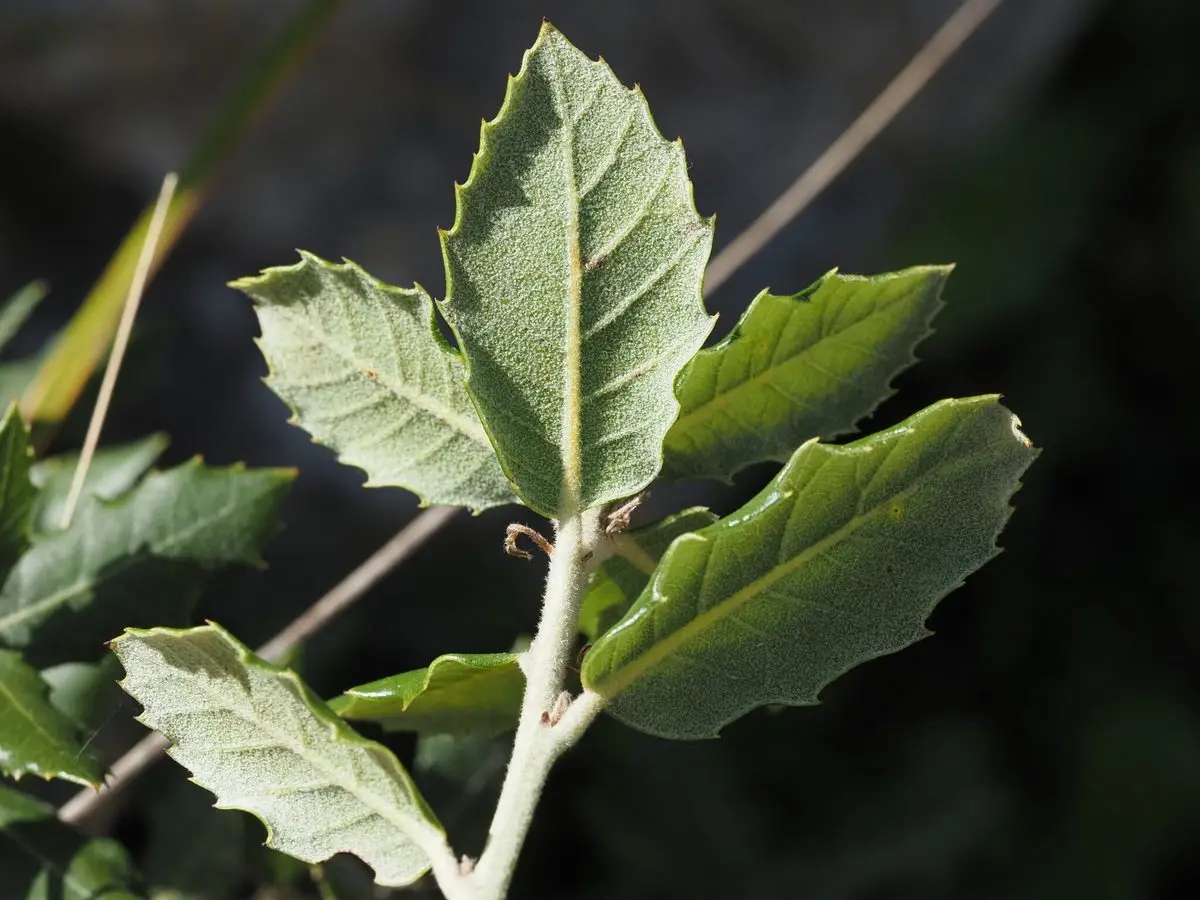
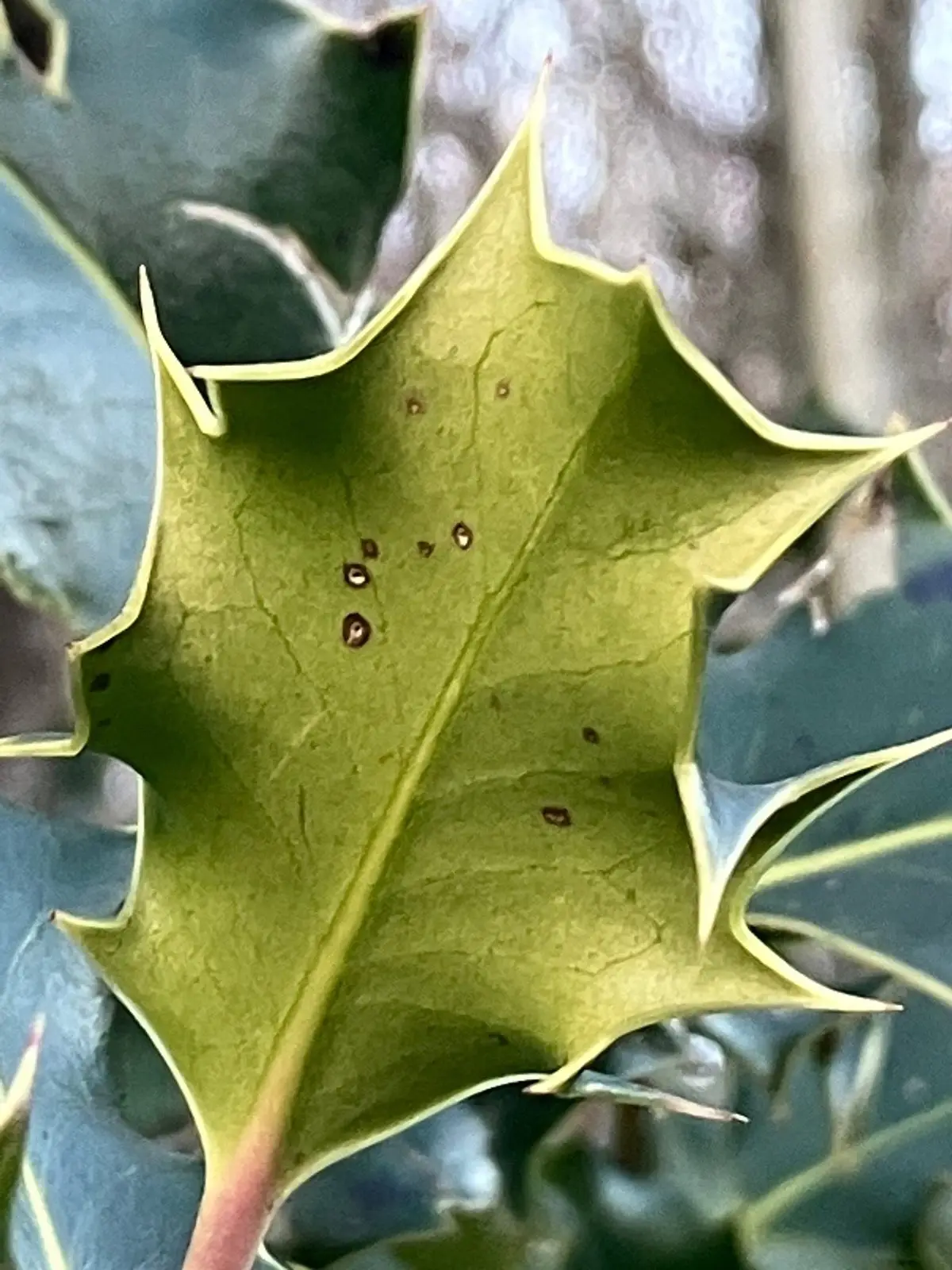
The quickest check is the leaf underside. Cherry laurel: hairless, small dark spots near the base. Holm oak: greyish fawn hairs, the leaf often cupped. No leaves on the tree? Check the fruit in autumn.
| Look at | Cherry laurel | Holm oak |
|---|---|---|
| Leaf underside | Hairless, small dark spots near the base | Greyish fawn hairs, the leaf often cupped |
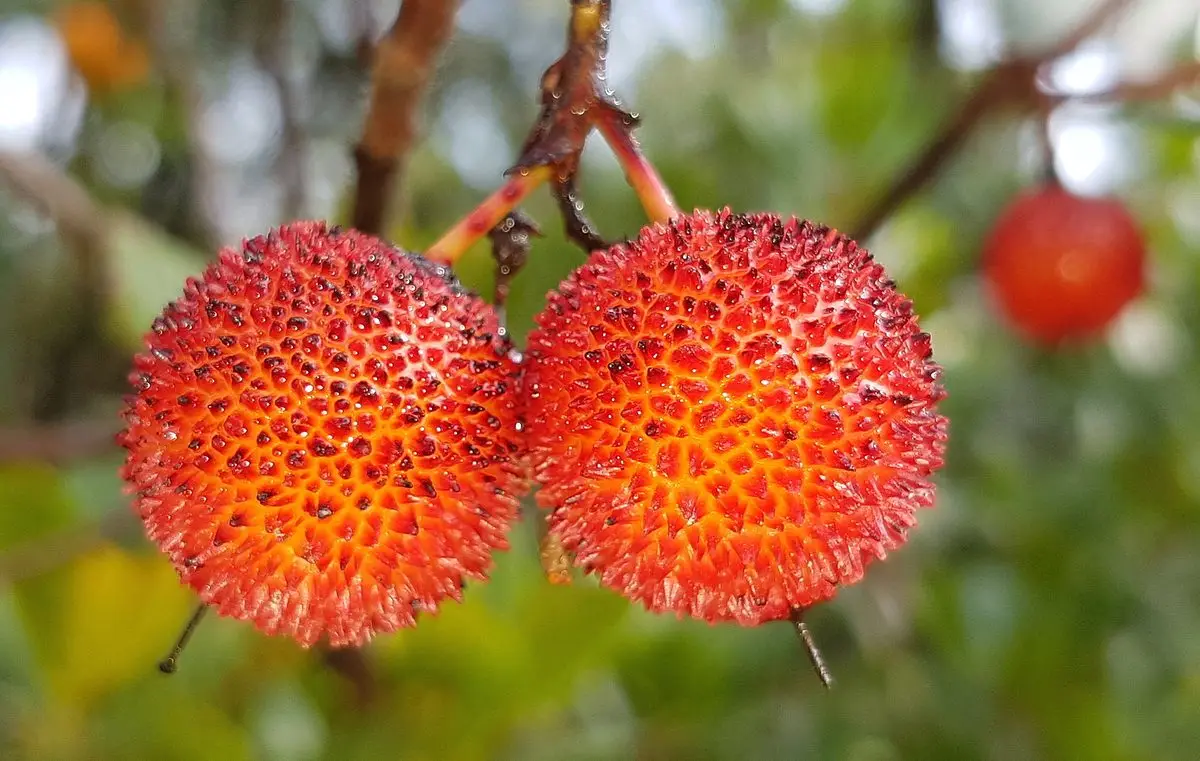
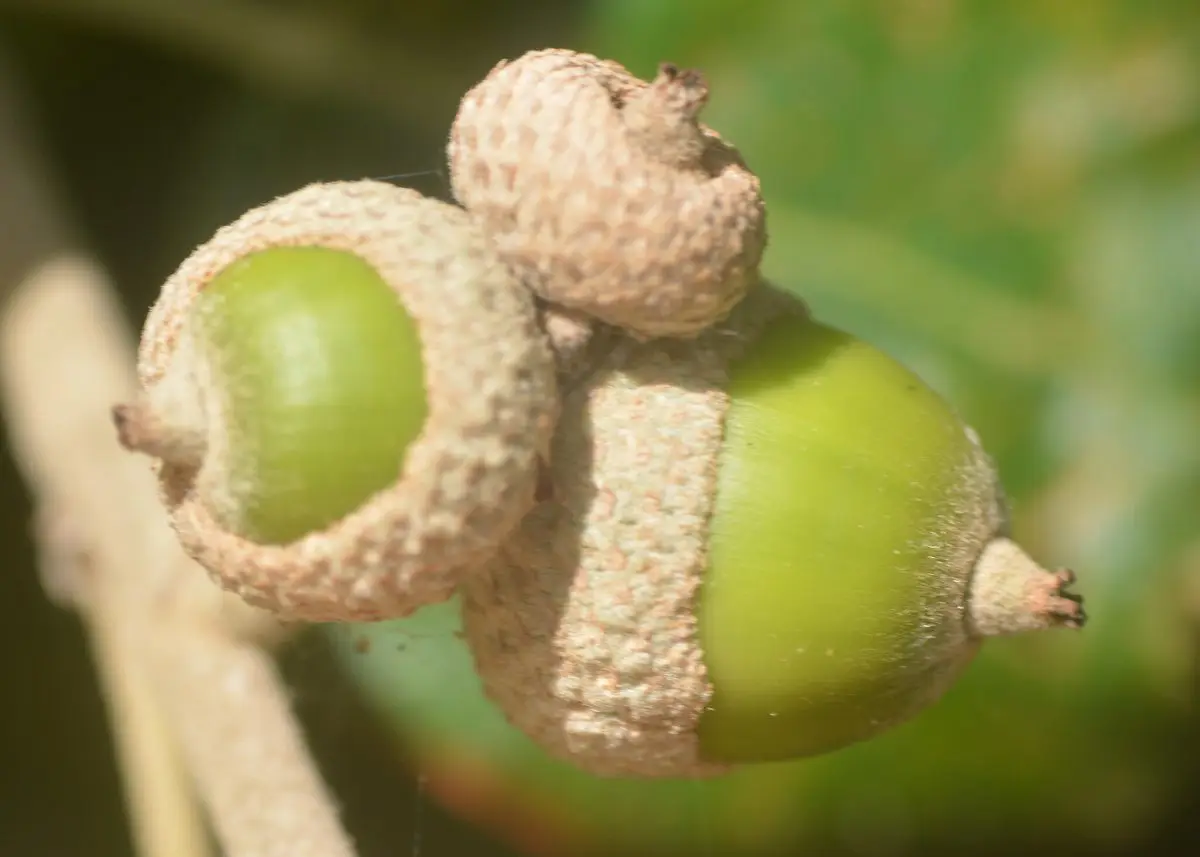
| Fruit in autumn | Cherries strung down the old flower spike | Small pointed acorns deep in hairy cups |
| Where the plant meets the ground | Many sprawling stems, wider than tall | A dense dome on a curving trunk |
Cherry laurel is an evergreen shrub, common as a clipped hedge across Britain. Its big, shiny leaves are thick and leathery, up to 20 cm long. A crushed leaf smells of almonds.
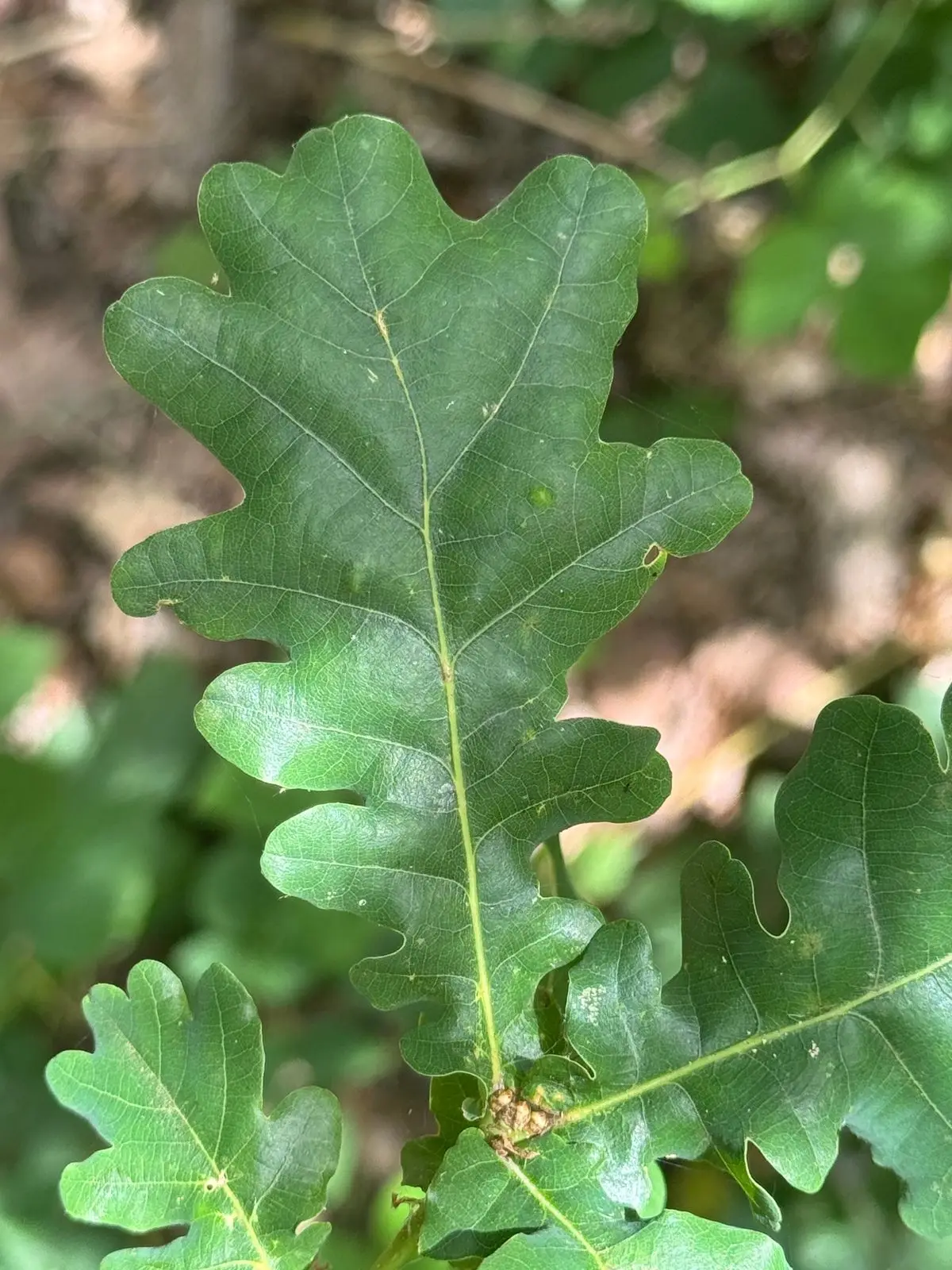
How to identify cherry laurel →Holm oak is an evergreen tree with a huge, dense, rounded crown. Its oval leaves are glossy blackish green on top and fuzzy greyish fawn underneath.
How to identify holm oak →Free to download.
Every fact on this page is checked against the Collins Tree Guide, last in November 2026. Spotted something that looks wrong in front of a real tree? Tell us. How we check.
Photographs: R Clarke (CC BY 4.0), sim_elliott (CC0), Erin Lalime (CC BY 4.0), Matthew Vosper (CC BY 4.0). With thanks to everyone who shares their photographs on iNaturalist and Wikimedia Commons.