Thick, shiny and deep green, up to 20 cm long, with two or more tiny dark spots (glands) underneath near the stalk. This year's shoots are smooth and pale green, and the leaf stalks on them are green too.
Introduced, naturalised · Up to 18 m
Cherry laurel
Prunus laurocerasus · Rosaceae
Cherry laurel is an evergreen shrub, common as a clipped hedge across Britain. Its big, shiny leaves are thick and leathery, up to 20 cm long. A crushed leaf smells of almonds.
Know it by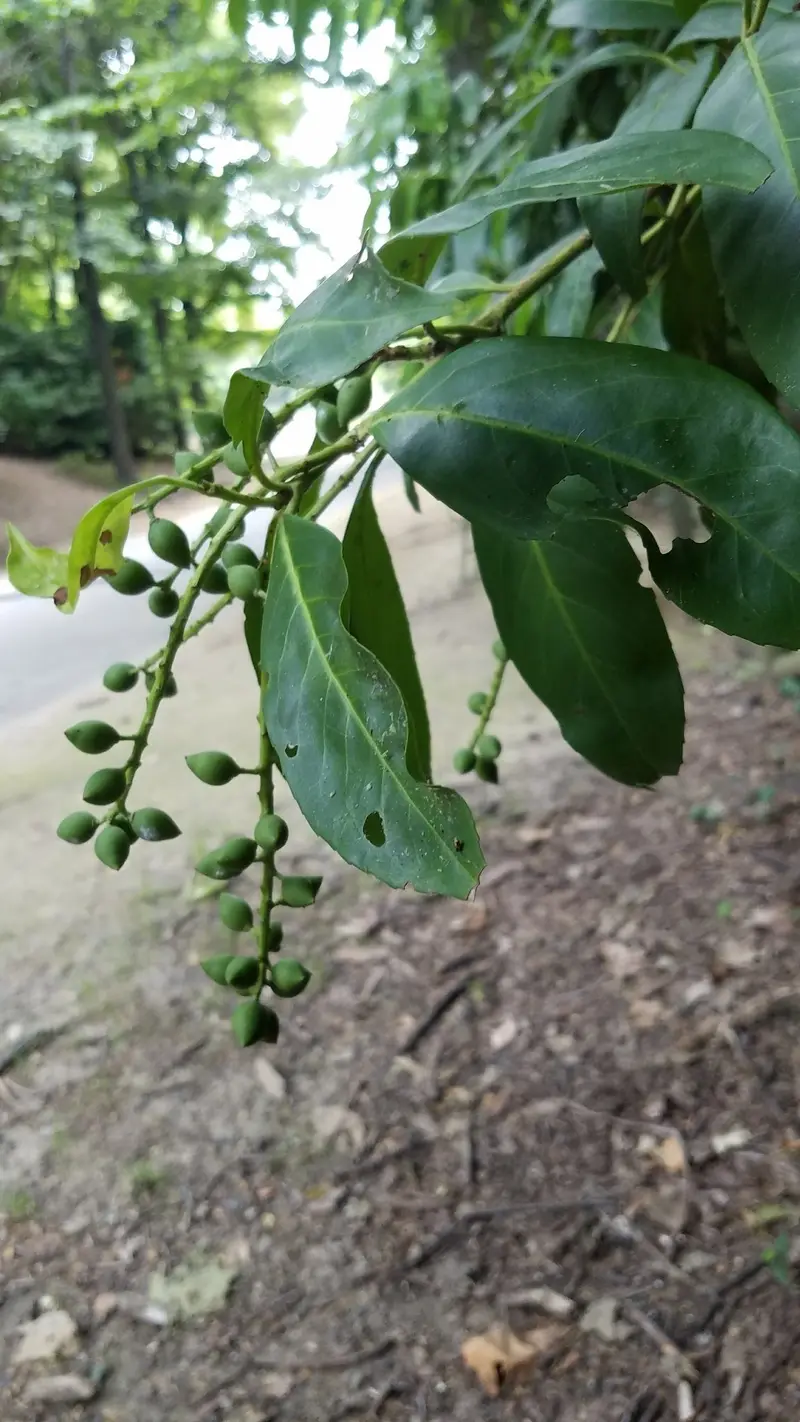 LeavesUp to 20 cm, with two or more tiny dark spots beneath near the stalk.
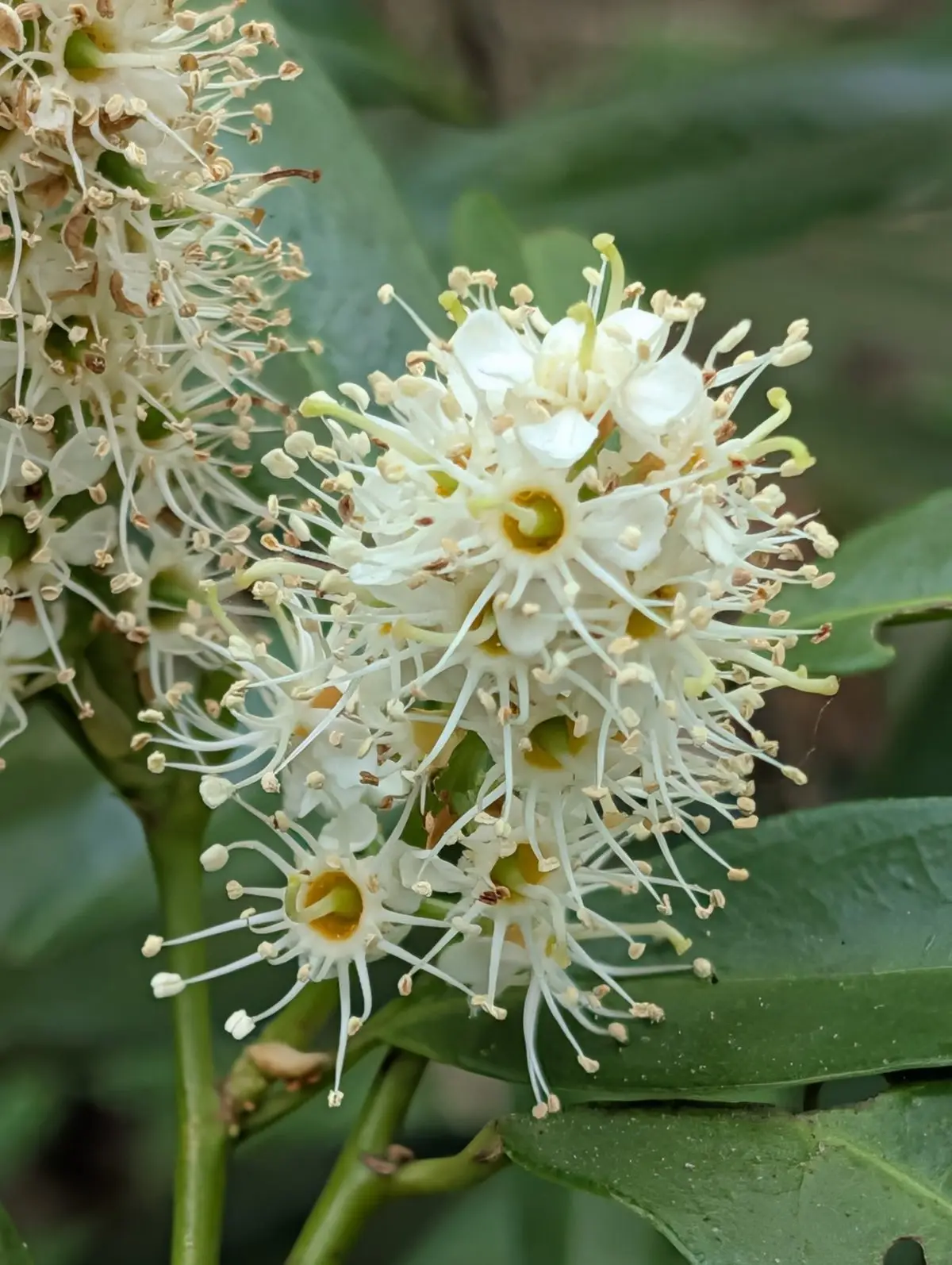 Flower spikesUp to 12 cm, packed with 30 to 40 small, fragrant flowers.CherriesRound, about 15 mm long, along the old flower spike.
LeavesUp to 20 cm, with two or more tiny dark spots beneath near the stalk.Flower spikesUp to 12 cm, packed with 30 to 40 small, fragrant flowers.CherriesRound, about 15 mm long, along the old flower spike.Then check · ShapeA dense evergreen mass on many sprawling stems, broader than tall.
How to identify a cherry laurel
Upright spikes up to 12 cm long, packed with 30 to 40 small, fragrant, white flowers.
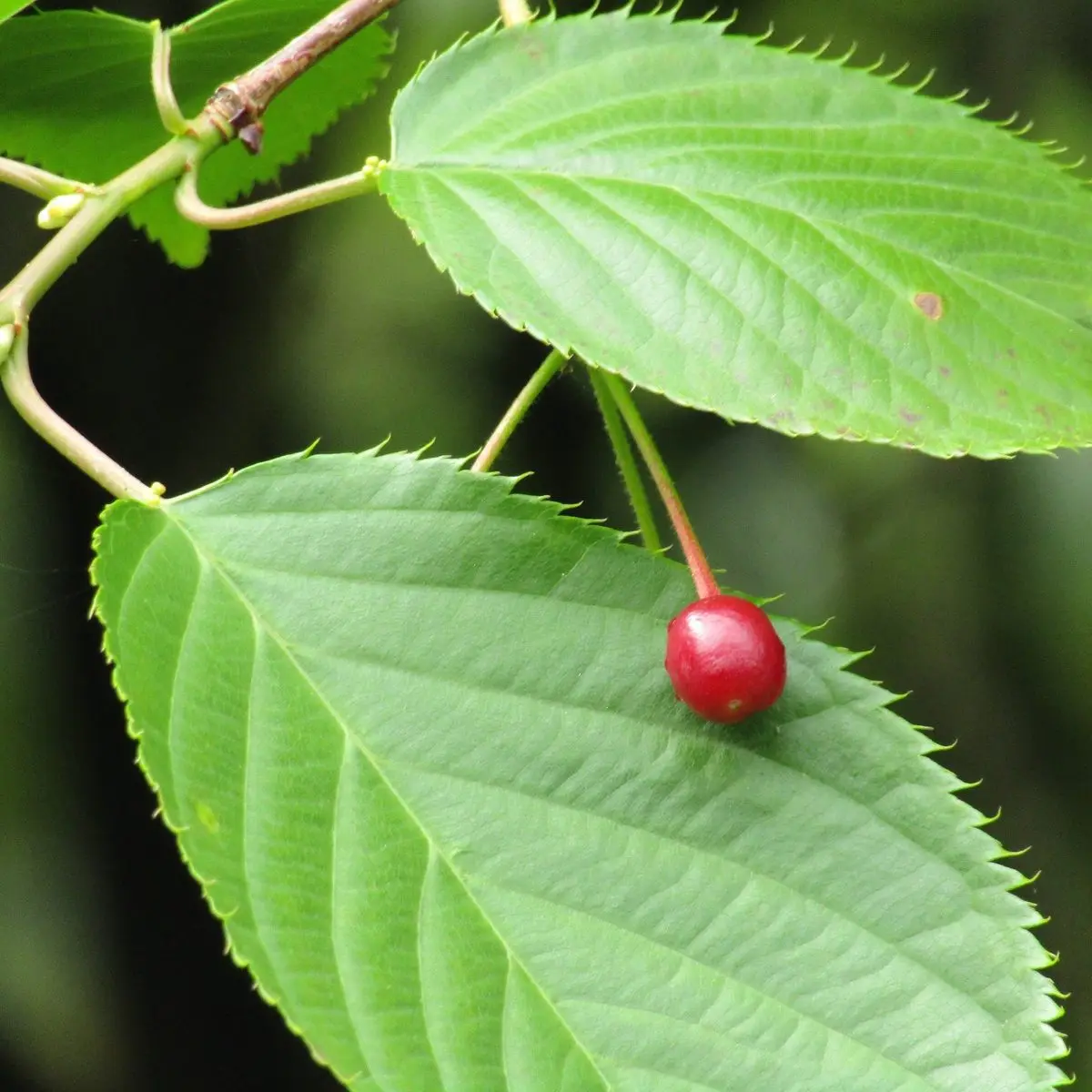
Round and about 15 mm long, turning from green to red and then blackish purple along the old flower spike.
 Learn the cherry laurel in TreelyEvery part through the year, and a short round each day until you know it.Get Treely
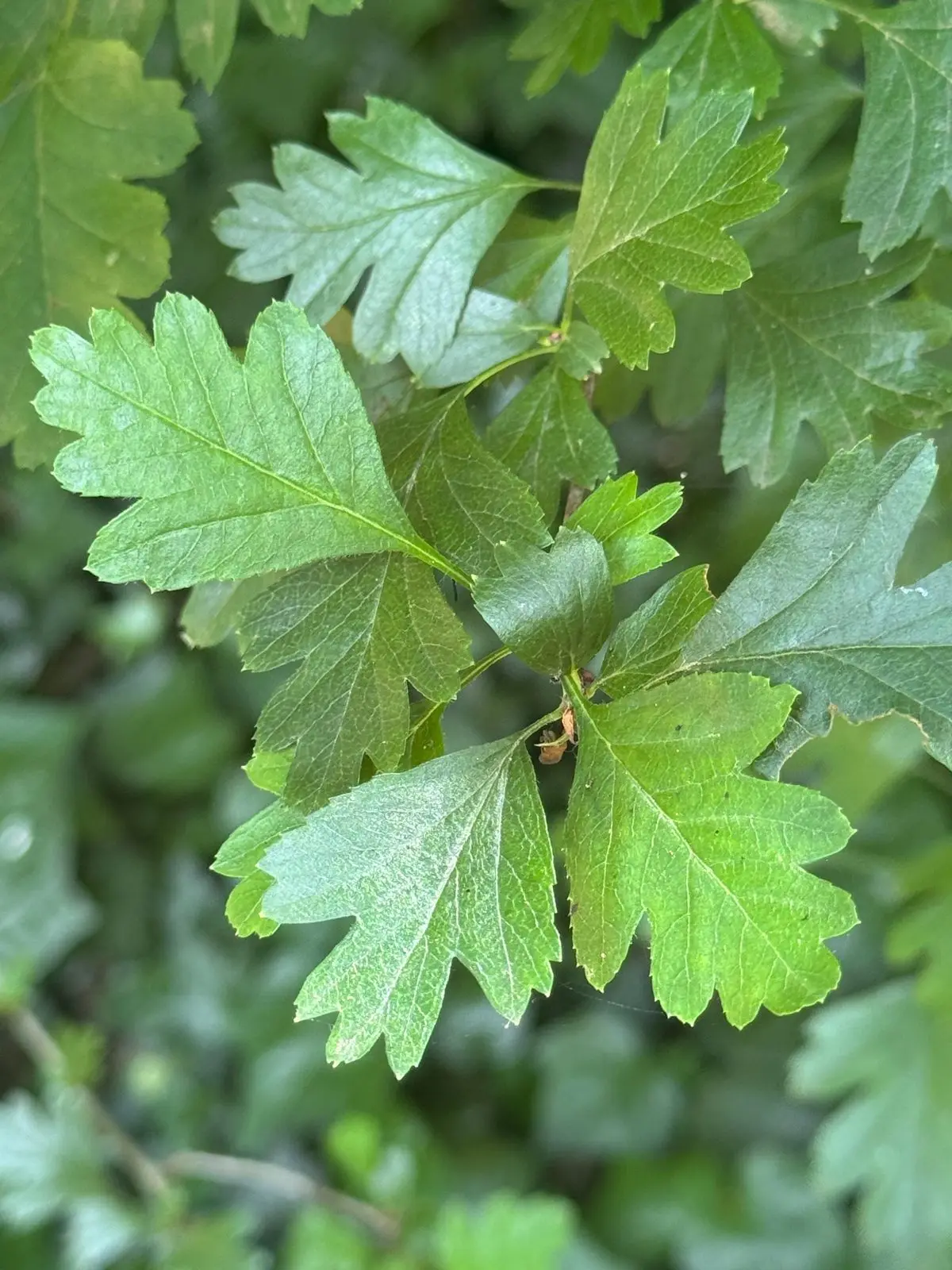
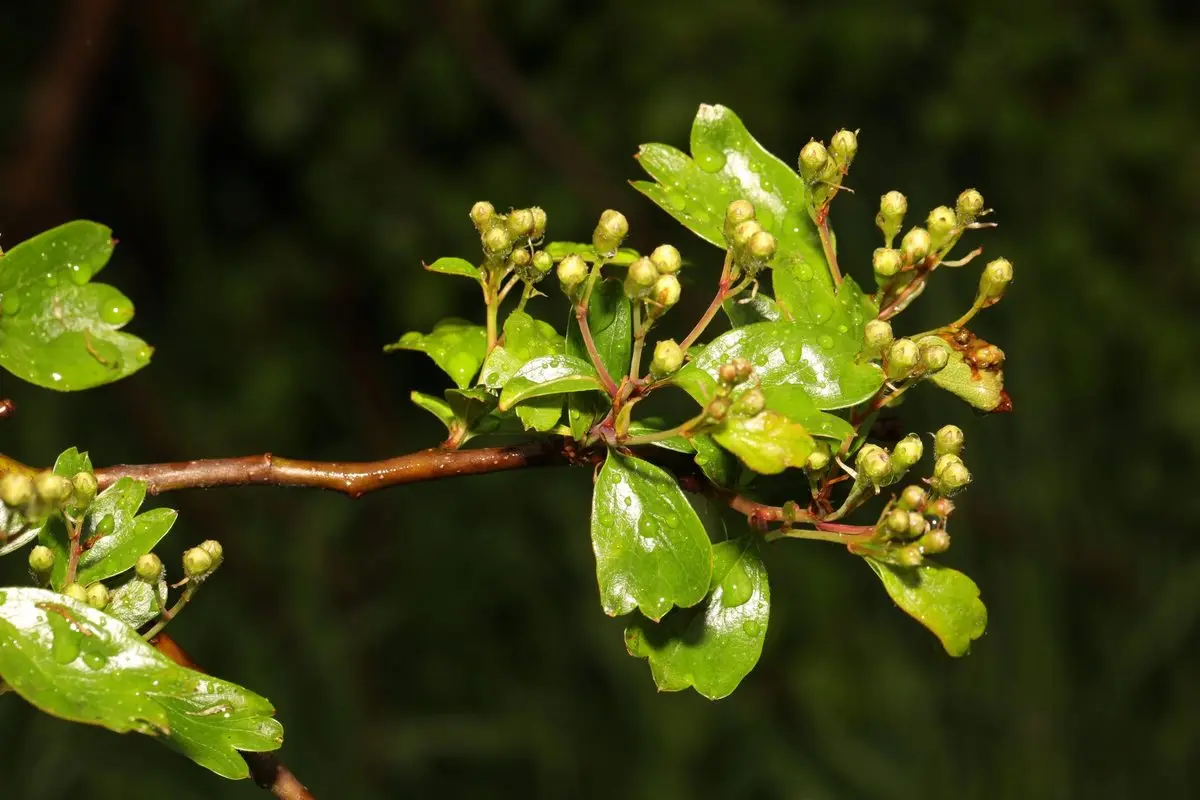
Every part, in photographs
Erin Lalime, CC BY 4.0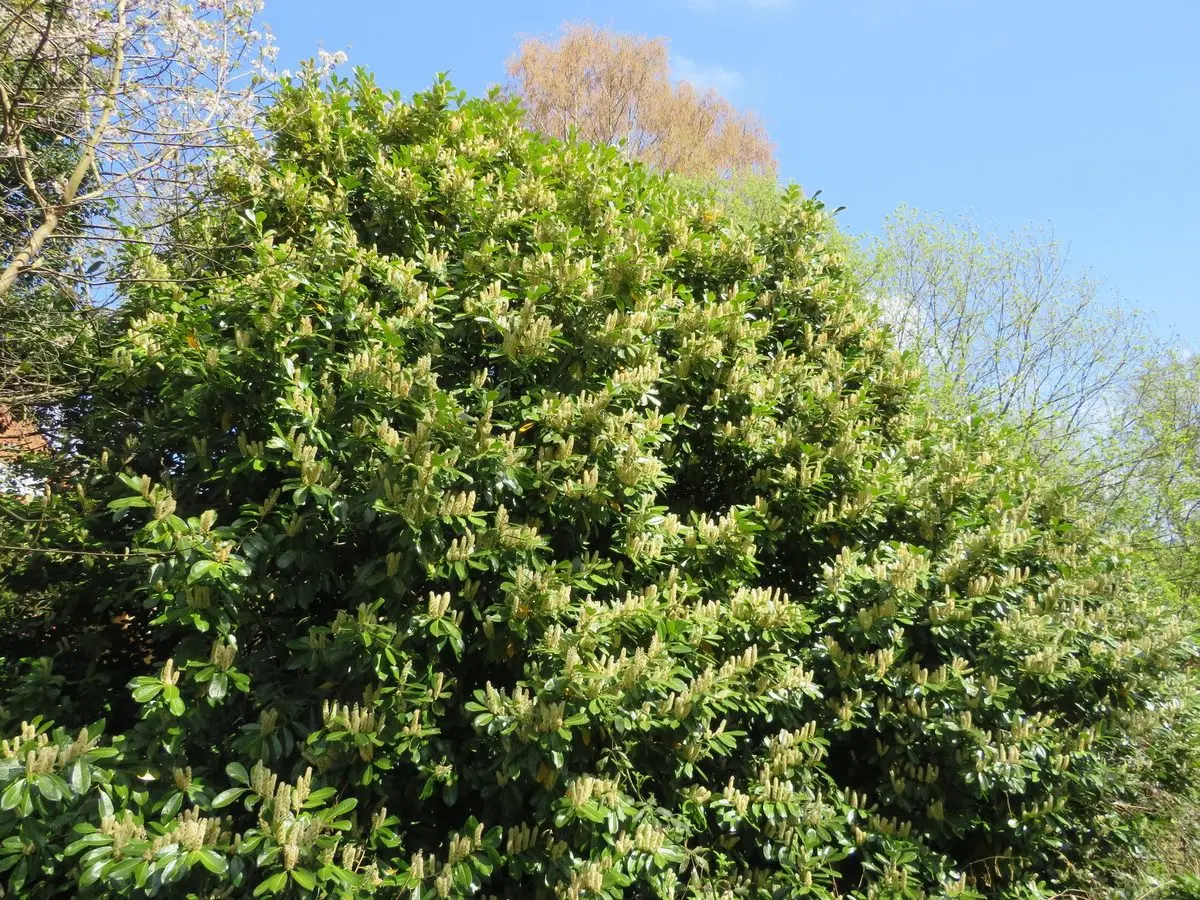 R Clarke, CC BY 4.0
When to look
JFMAMJJASOND
In leaf
Flowers
Cherries
In leaf: all year · Flowers: March to May · Cherries: June to September
Where you’ll find it
Mostly planted, in hedges, shrubberies, parks and gardens, often in masses as a screen. Wild ones grow in woods, from seed that birds carry there, and spread fastest on moist, heavy soils.
What it’s mistaken for
- HollyBoth are glossy evergreens of hedges and gardens, with hard leaves. Leaf. Cherry laurel: nearly plain, a few tiny teeth. Holly: spiny low down, almost smooth higher up.
- Holm oakBoth make dark evergreen masses in parks and shelter belts. Leaf. Cherry laurel: hairless, small dark spots near the base. Holm oak: greyish fawn hairs, the leaf often cupped.
- Bird cherryBoth are cherries, with white flowers in spikes. Leaf. Cherry laurel: nearly plain, a few tiny teeth. Bird cherry: fine sharp teeth, about 1 mm deep.
- Strawberry treeBoth are evergreens of gardens and shrubberies with leathery leaves and round fruit. Leaf. Cherry laurel: green, on a smooth pale green shoot. Strawberry tree: red and hairy, about 1 cm.
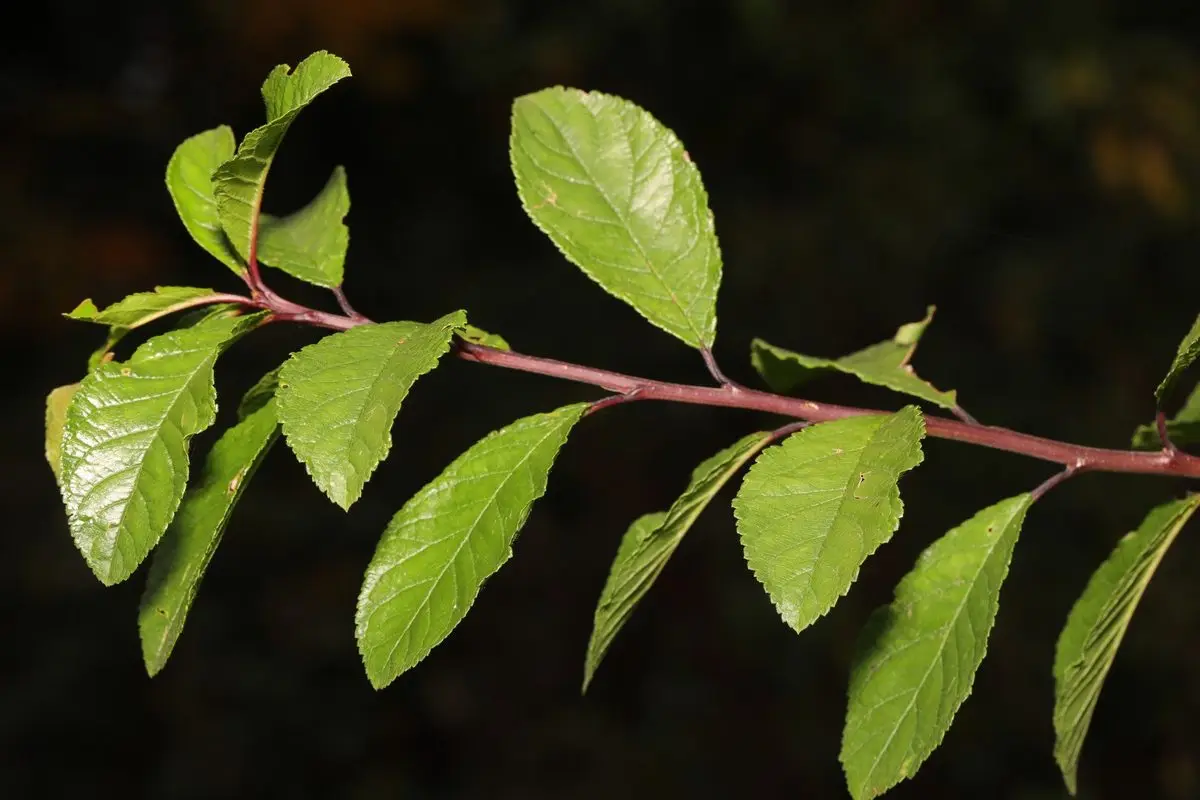
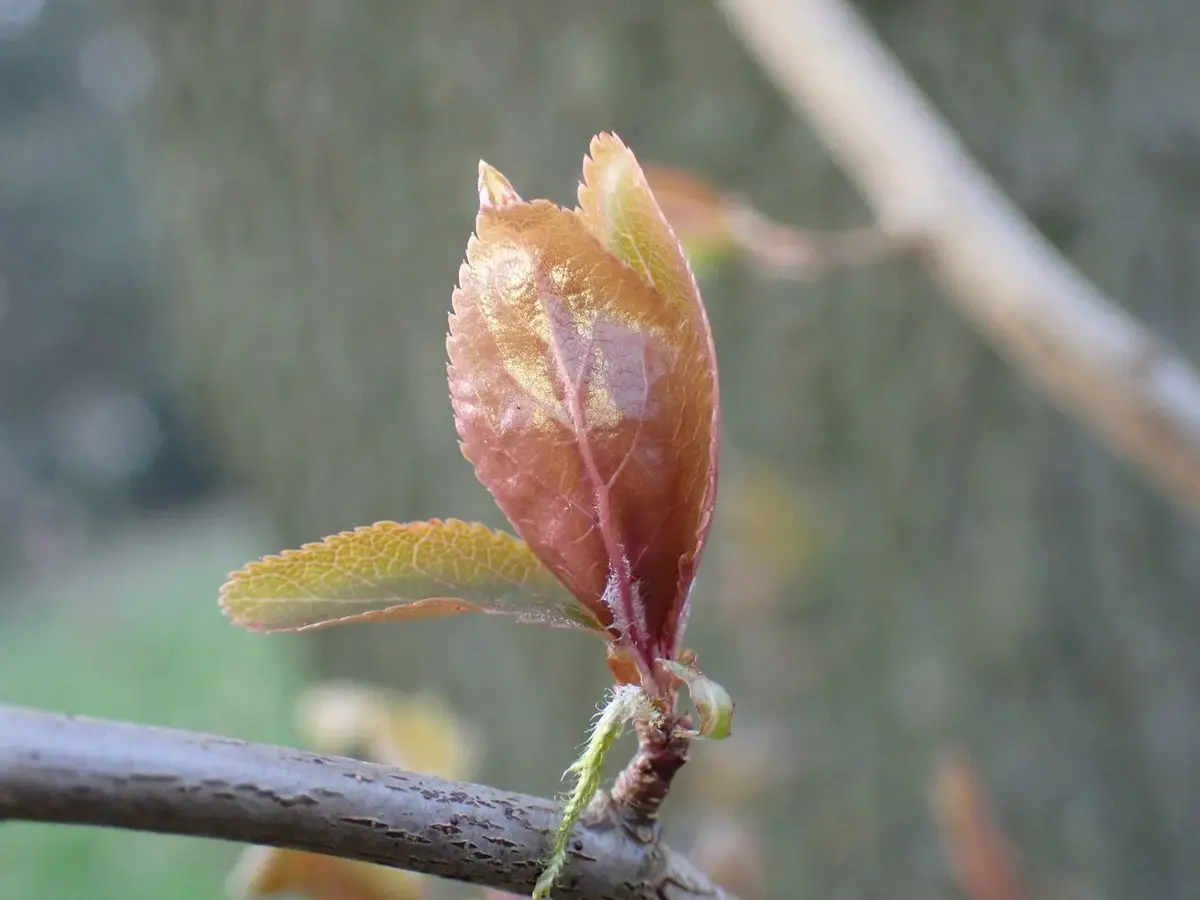
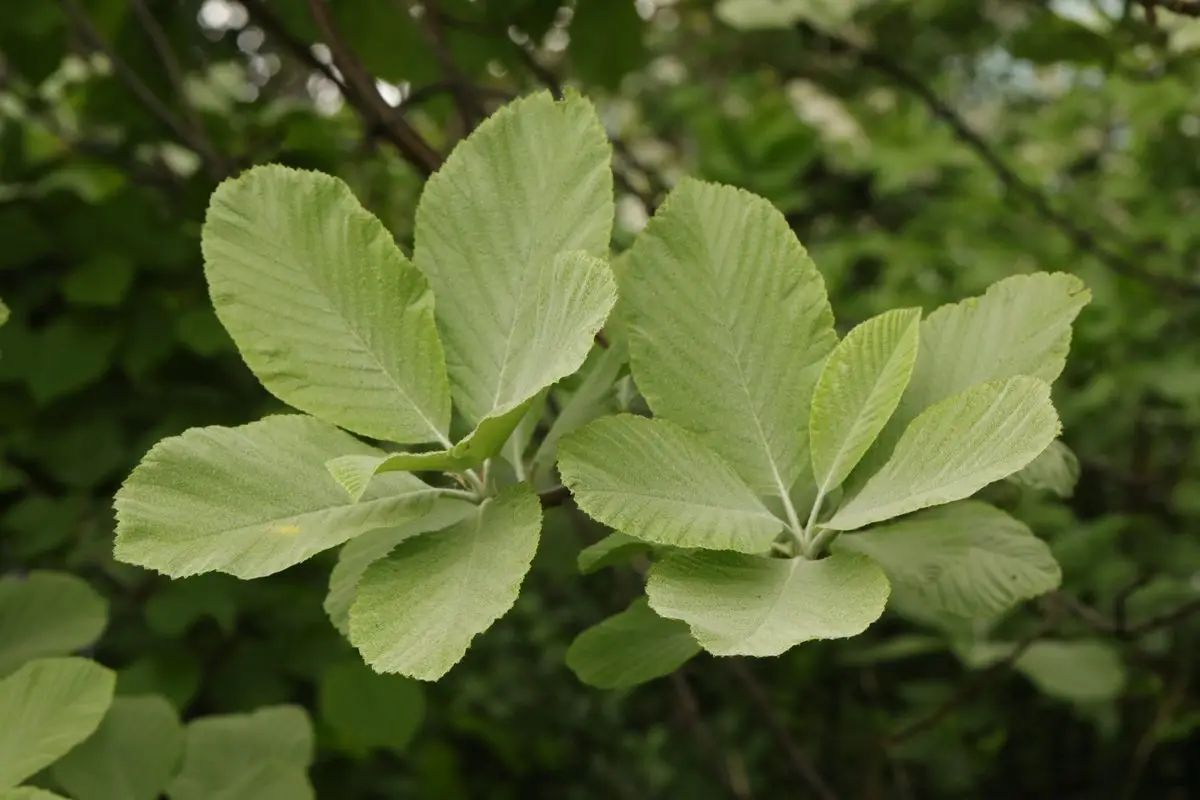
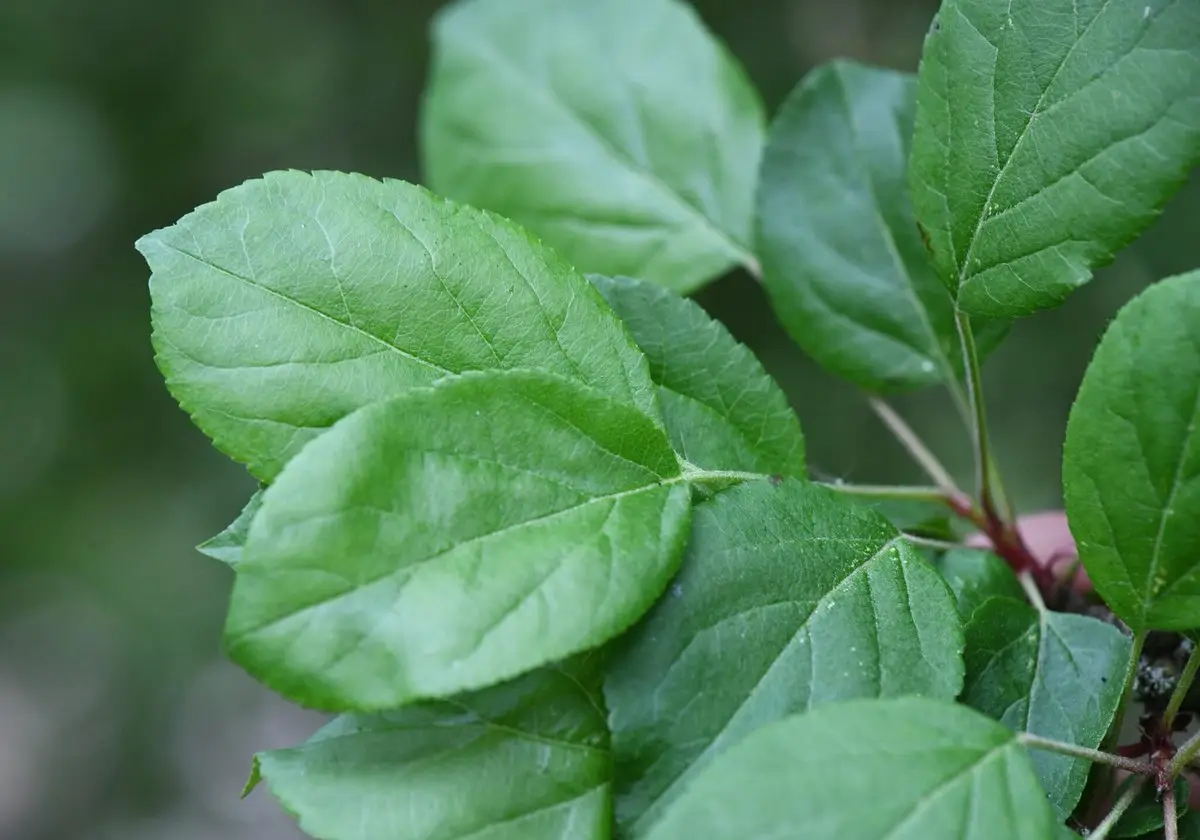
In the app
There’s more of the cherry laurel in Treely
- Every part, through the yearLeaves, bark, buds, flowers and fruit, photographed in every season
- Its lookalikes, side by sideThe checks that settle it, part by part
- A short round each dayUntil you know the cherry laurel on sight, from any side
- Name it from a photoA leaf, the bark or a flower, and Treely tells you which tree
Free to download.
Every fact on this page is checked against the Collins Tree Guide, last in November 2026. Spotted something that looks wrong in front of a real tree? Tell us. How we check.
Photographs: R Clarke (CC BY 4.0), Erin Lalime (CC BY 4.0), pilmar (CC0). With thanks to everyone who shares their photographs on iNaturalist and Wikimedia Commons.