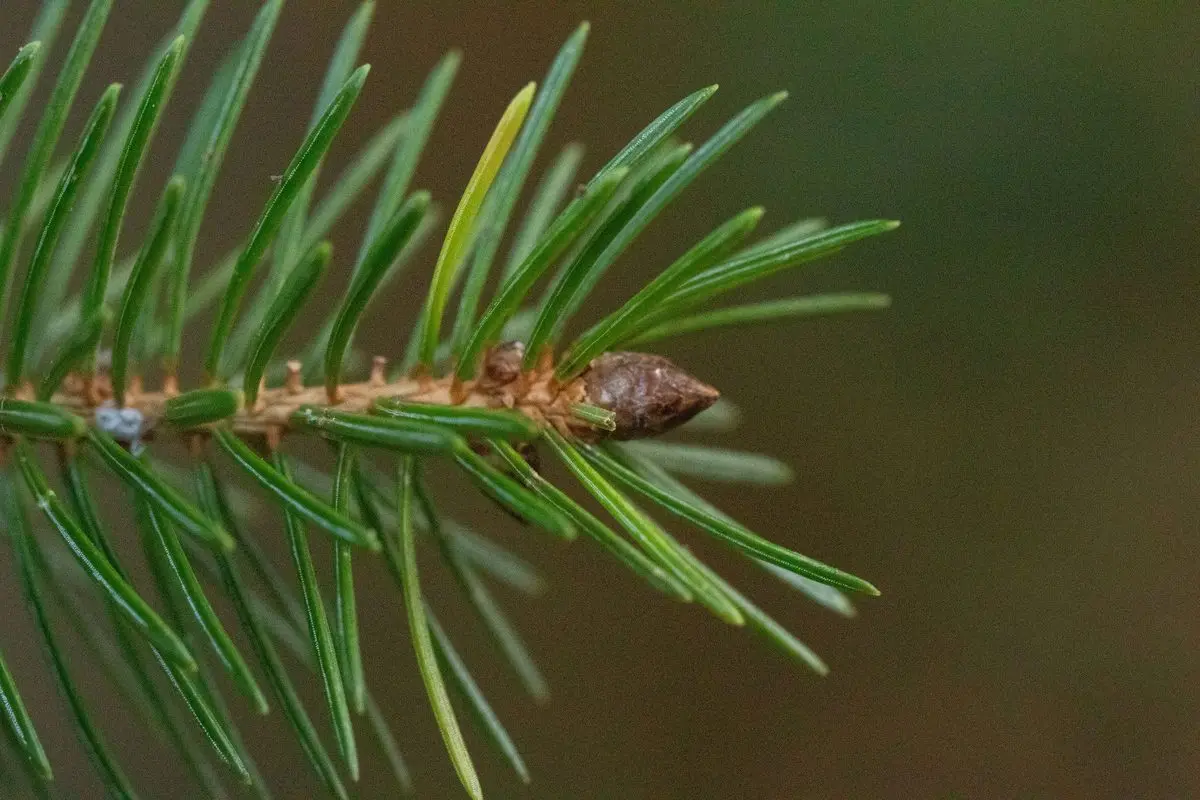
European larch
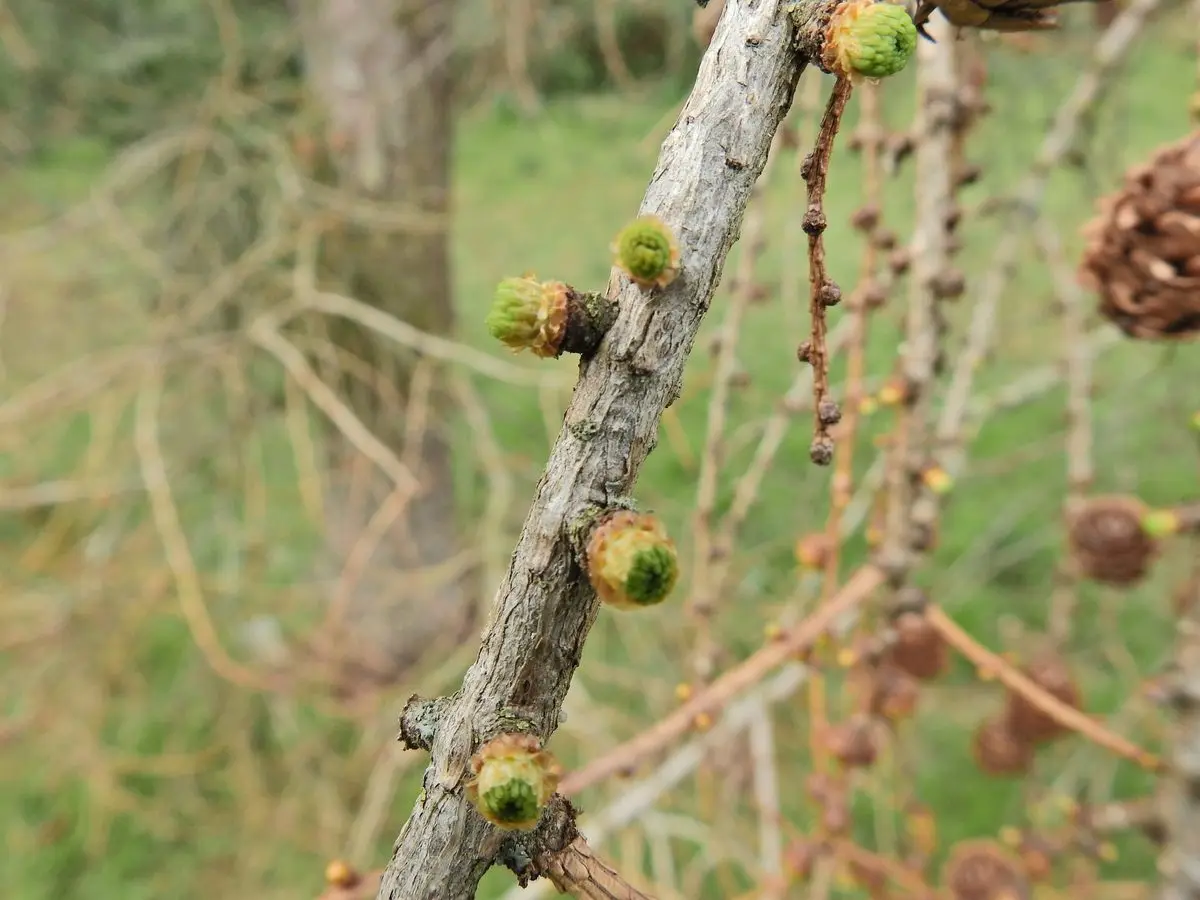
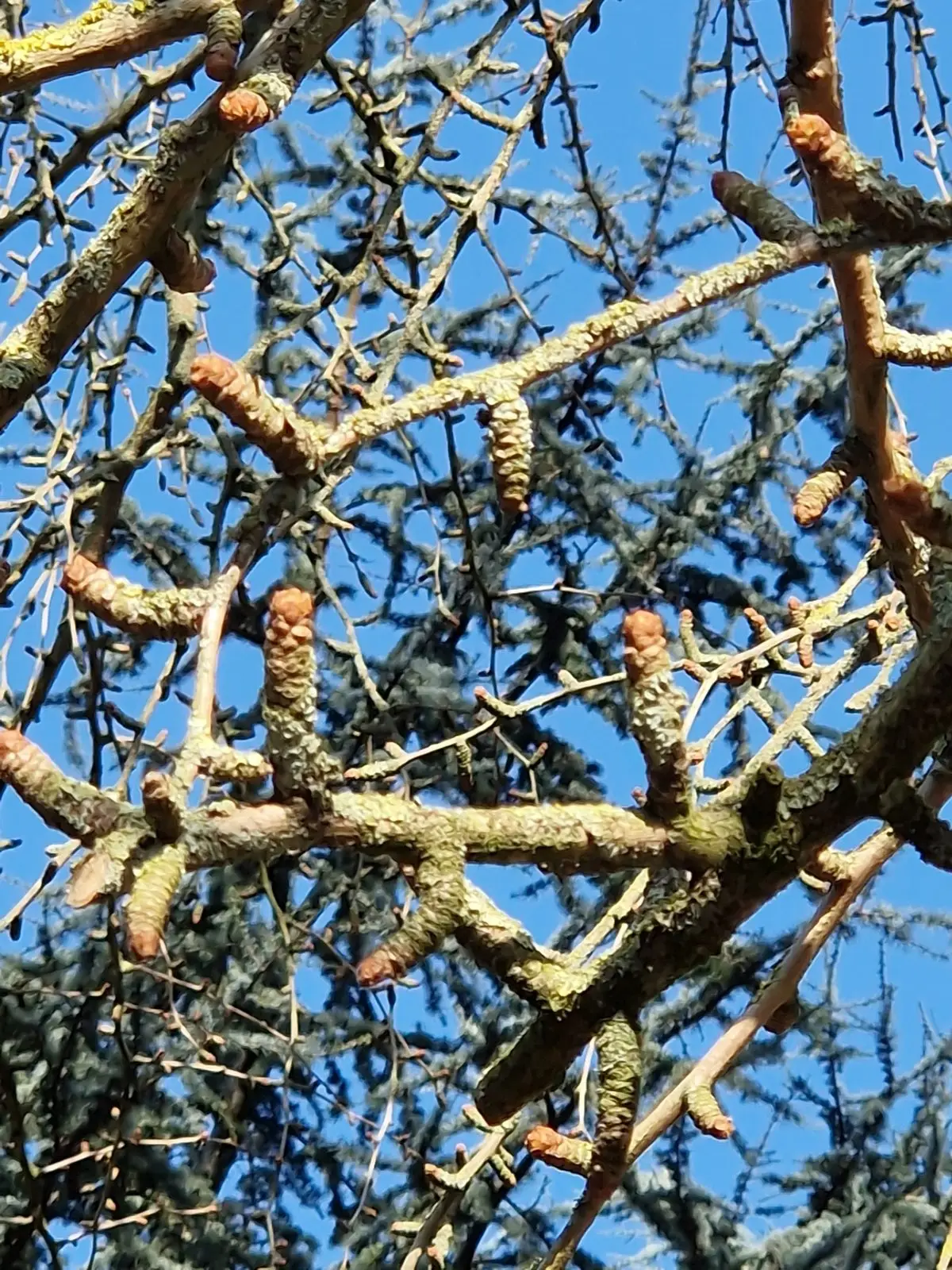
Larix deciduaEuropean larch is a conifer that sheds its needles in autumn. Soft needles grow in tufts from small woody knobs on the twigs. Old cones stay on the bare branches all winter.
How to identify European larch →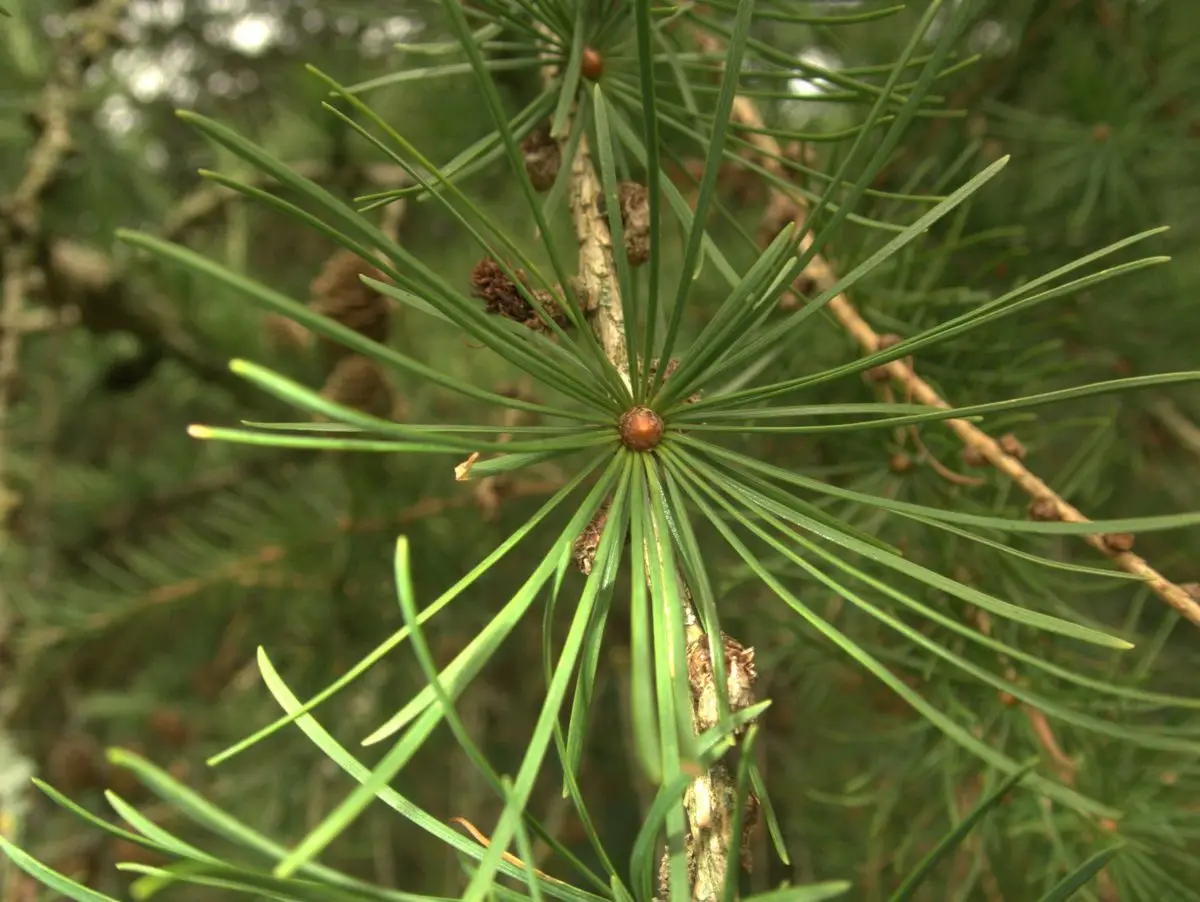 Jarro Nevsbaru, CC BY 4.0
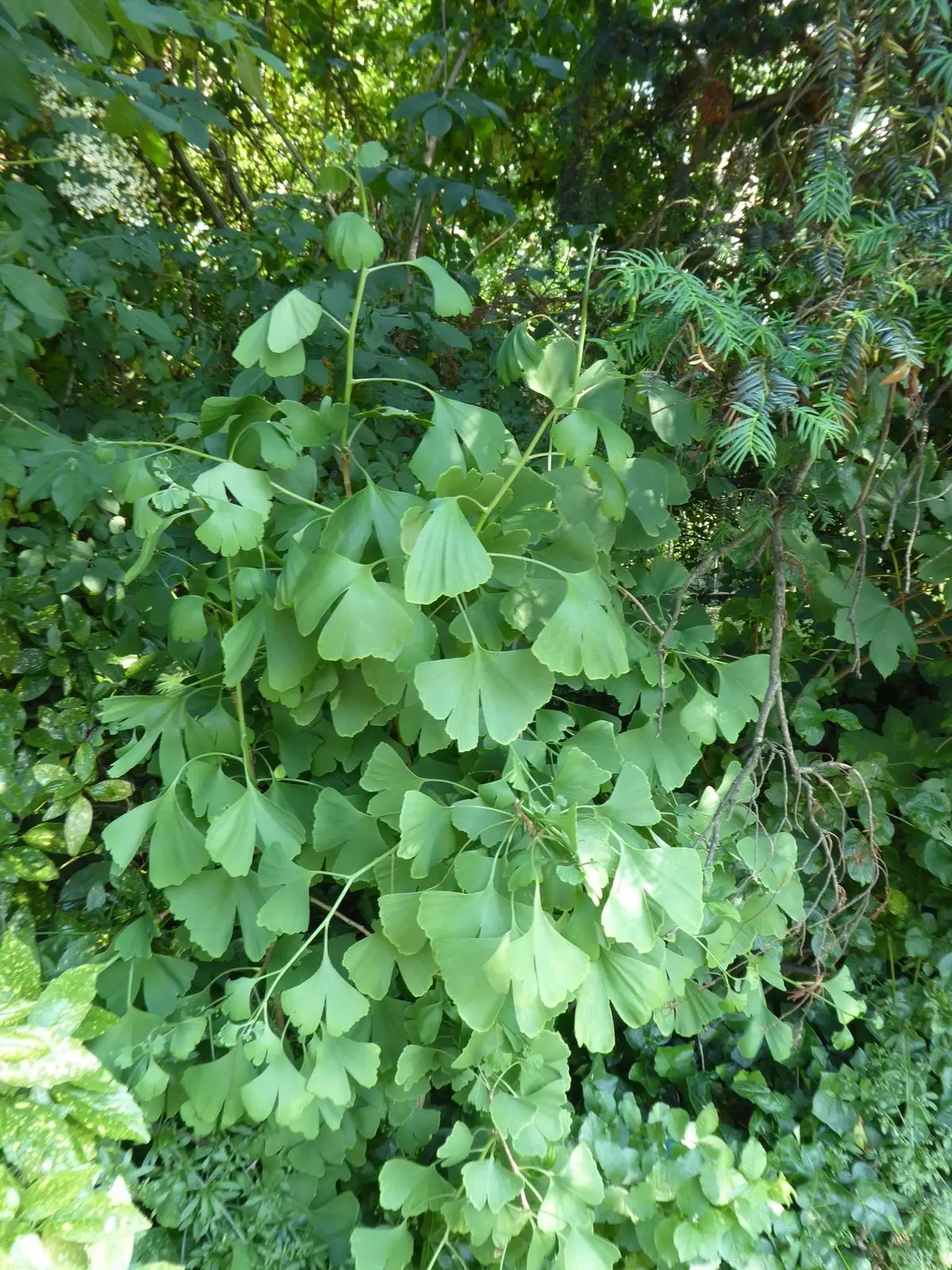 jamie-aa, CC BY 4.0
Both drop every leaf in autumn, and both hold their leaves in tufts on short spurs.
The quickest check is the leaf from a tuft. European larch: slender soft needle, up to 3 cm. Ginkgo: flat fan, 5 to 10 cm, on a long stalk. No leaves on the tree? Check the spurs on a bare branch.
| Look at | European larch | Ginkgo |
|---|---|---|
| Leaf from a tuft | Slender soft needle, up to 3 cm | Flat fan, 5 to 10 cm, on a long stalk |
| Spurs on a bare branch | Low woody knobs, a millimetre or two long | Stubby knobs at regular spacings, to 3 cm |
European larch is a conifer that sheds its needles in autumn. Soft needles grow in tufts from small woody knobs on the twigs. Old cones stay on the bare branches all winter.
How to identify European larch →Ginkgo is a tree planted in parks, large gardens and city streets. Its leaves are flat green fans on long stalks, notched or split in the middle. In autumn they turn gold.
How to identify ginkgo →Free to download.
Every fact on this page is checked against the Collins Tree Guide, last in November 2026. Spotted something that looks wrong in front of a real tree? Tell us. How we check.
Photographs: Jarro Nevsbaru (CC BY 4.0), jamie-aa (CC BY 4.0), Susan Marley (CC BY 4.0), Clive Freedman (CC BY 4.0). With thanks to everyone who shares their photographs on iNaturalist and Wikimedia Commons.