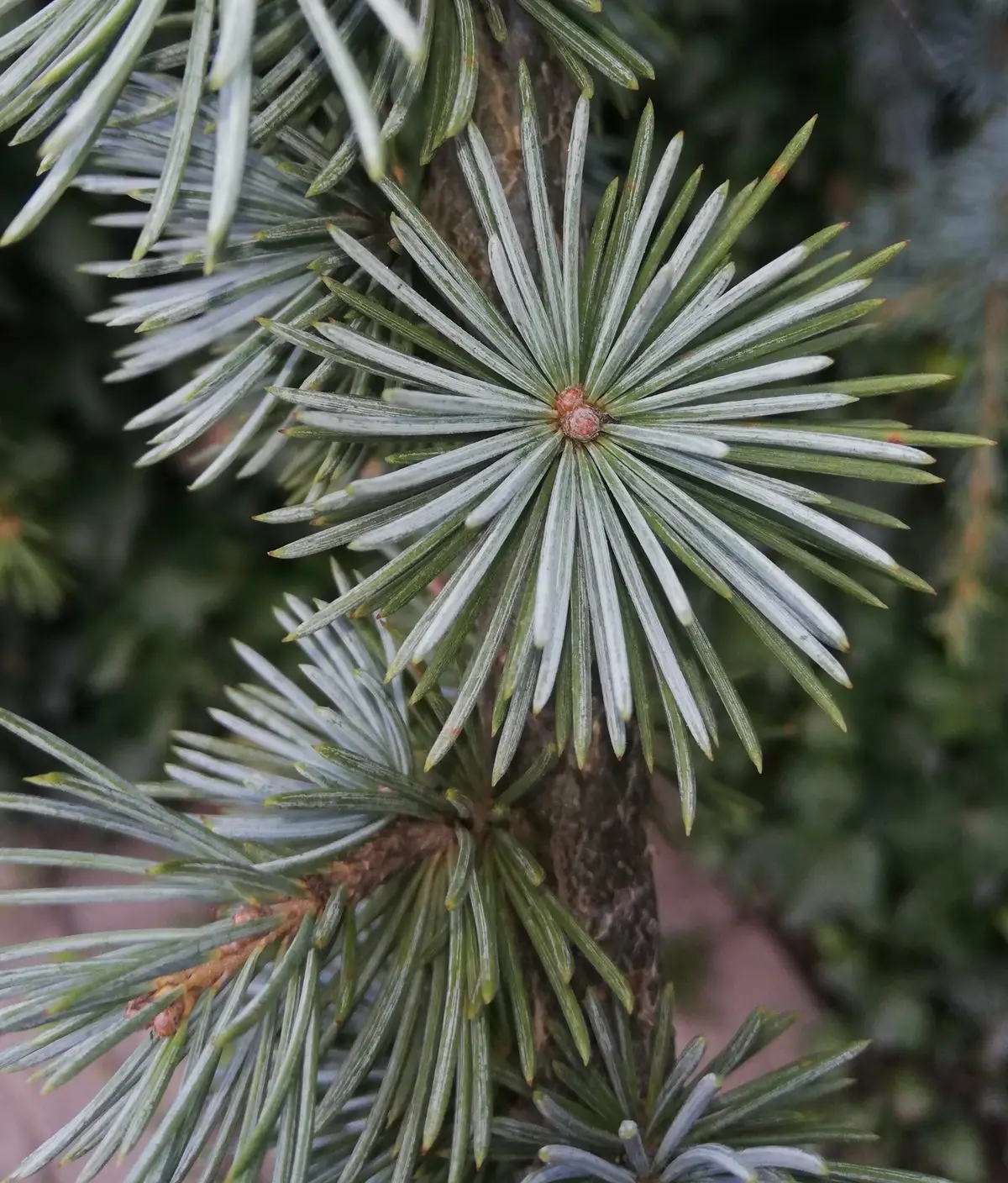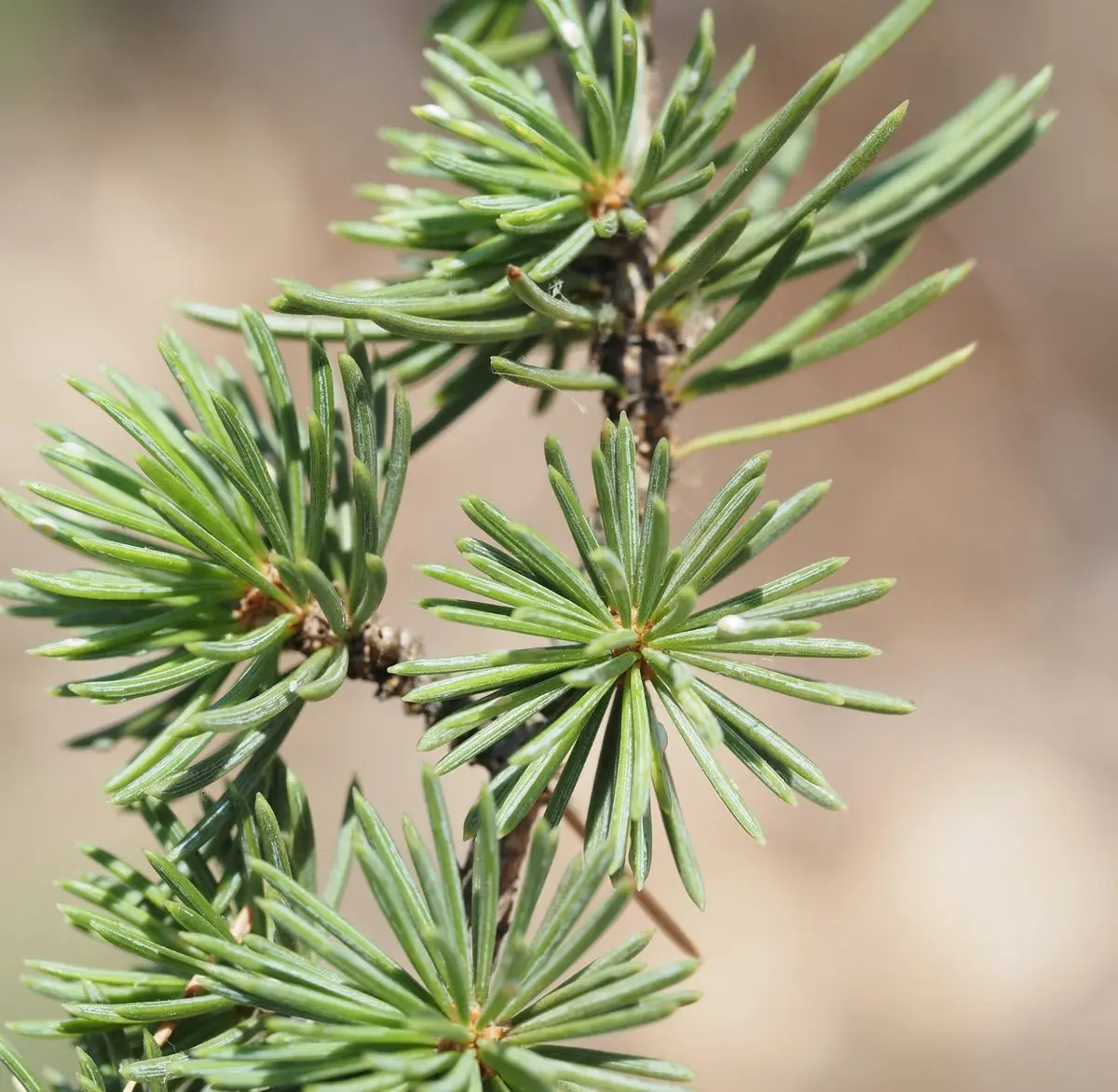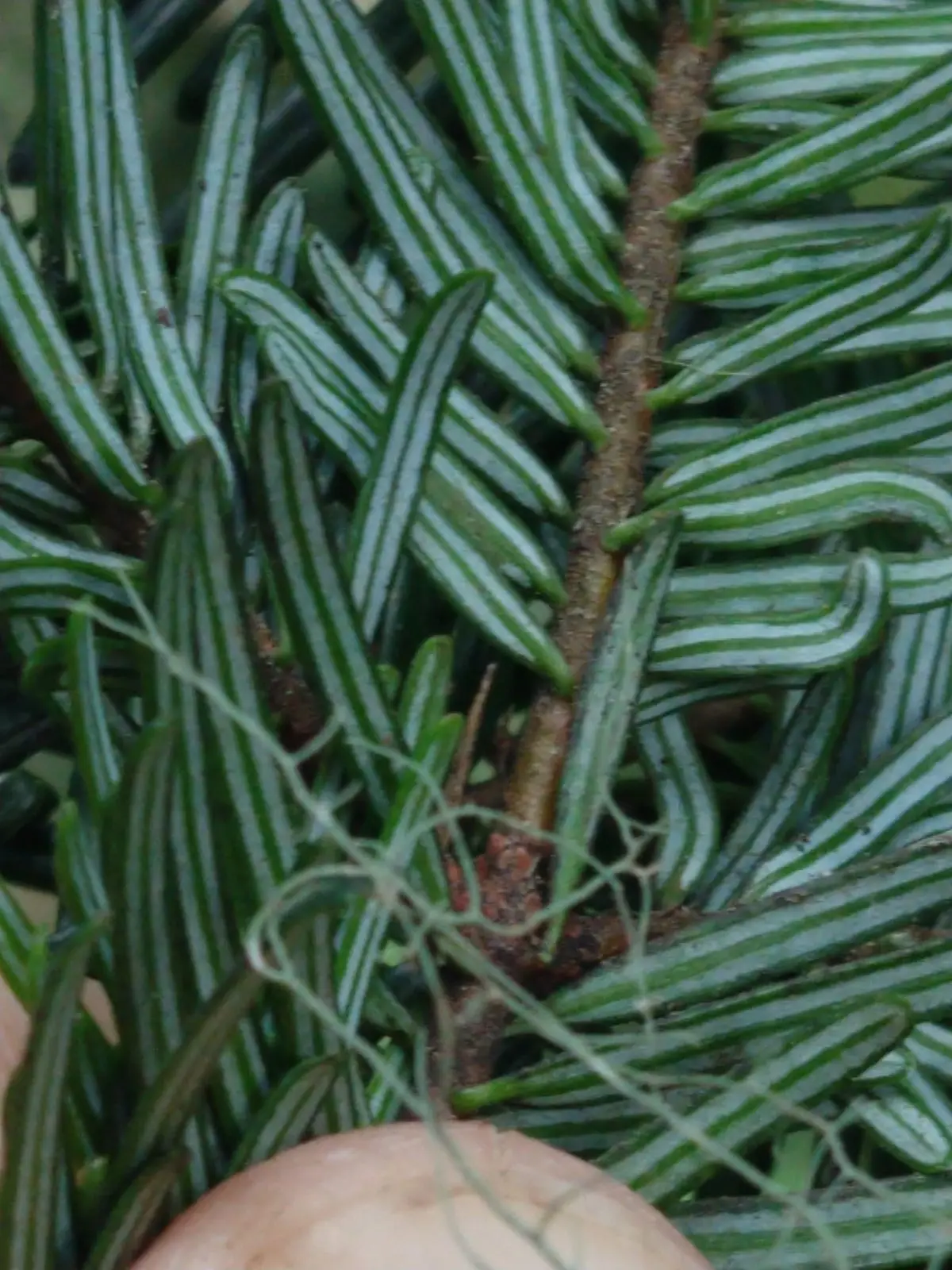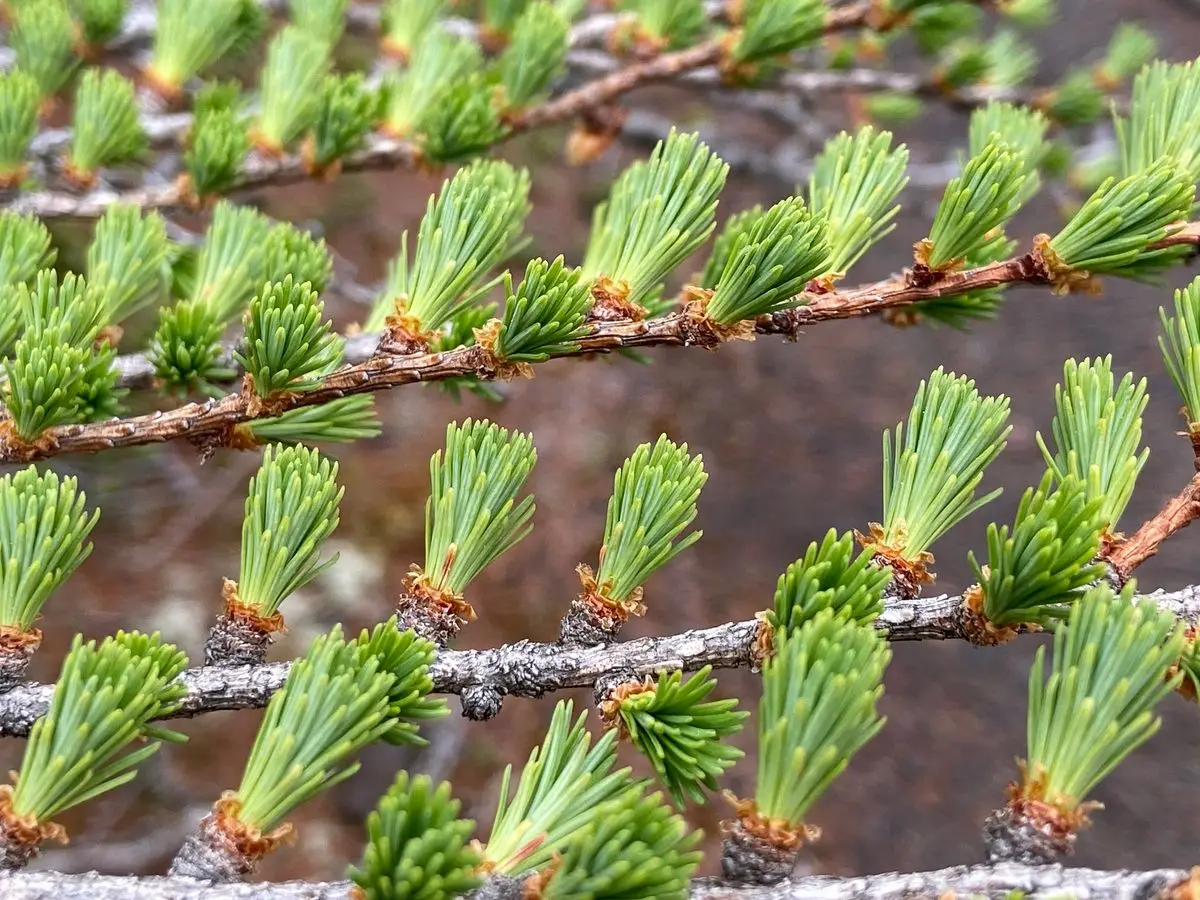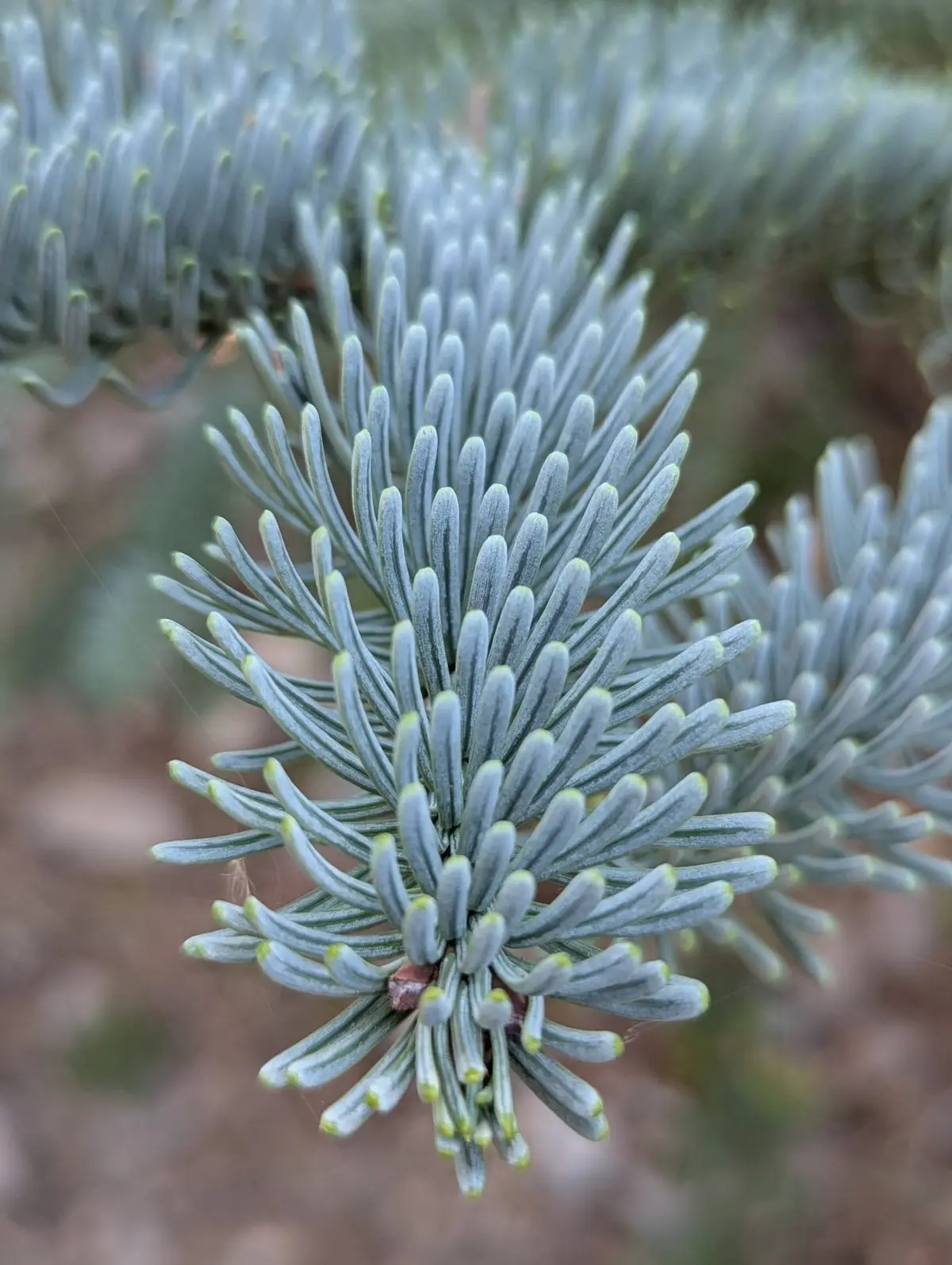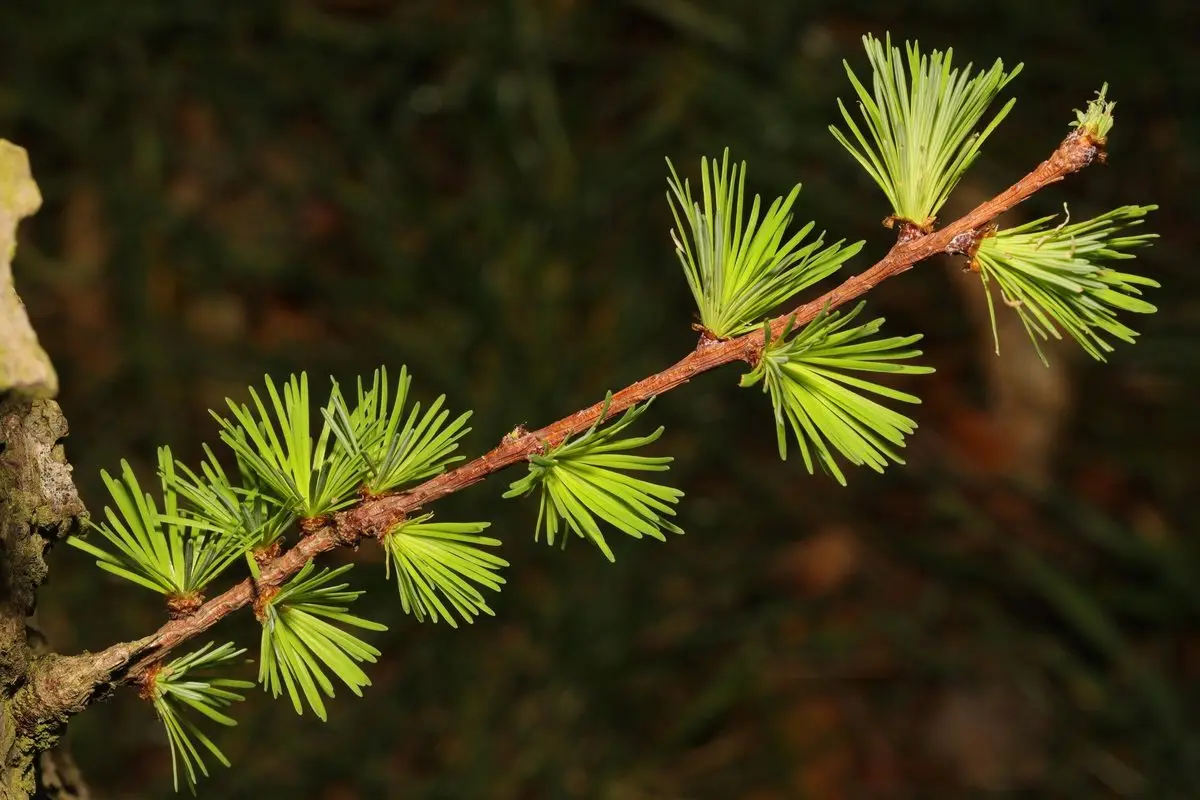
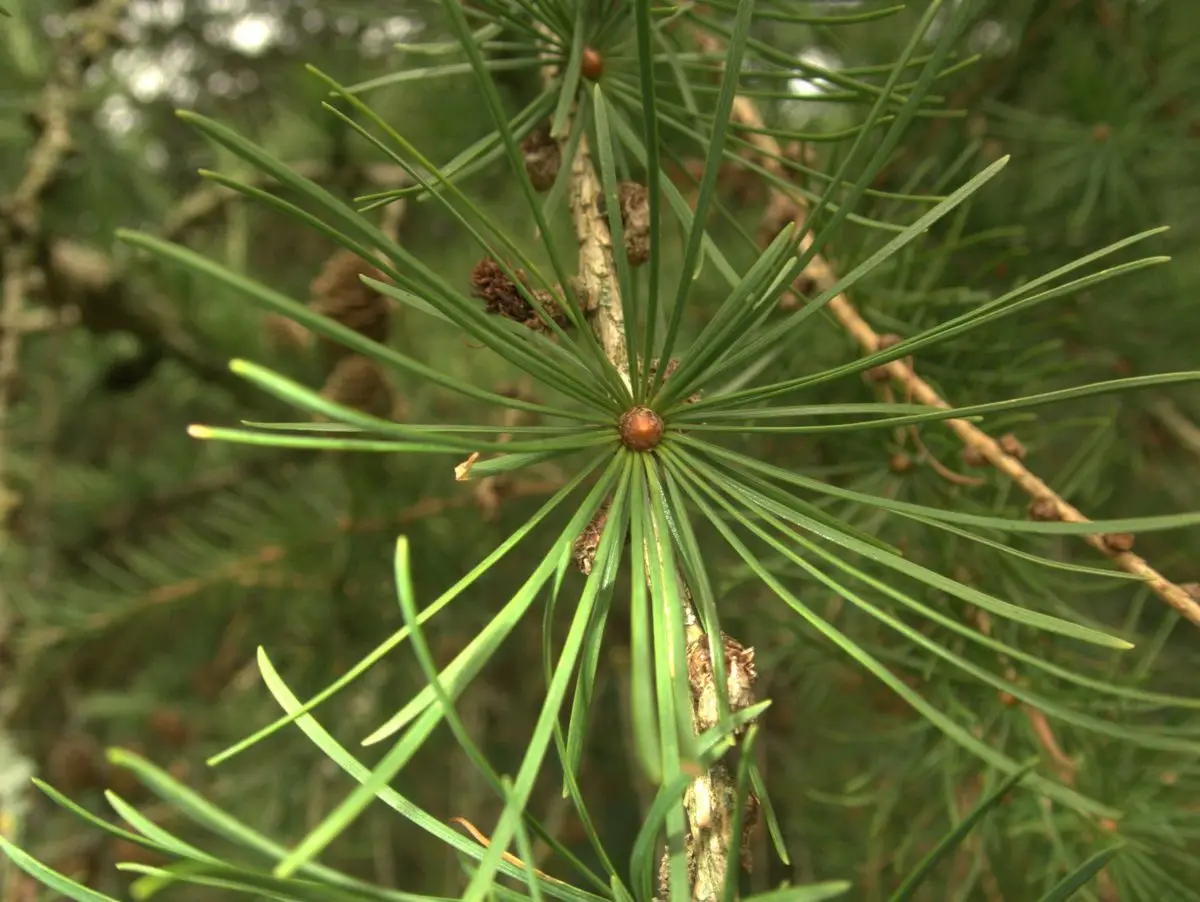
Larch needles are soft and bright green, and grow in tufts, with many springing together from each short woody knob on the twig.
Larix decidua · Pinaceae
European larch is a conifer that sheds its needles in autumn. Soft needles grow in tufts from small woody knobs on the twigs. Old cones stay on the bare branches all winter.
Often mistaken for Norway spruce. How to tell them apart →Needle tuftsSoft, bright green needles in tufts, a tuft to each knob.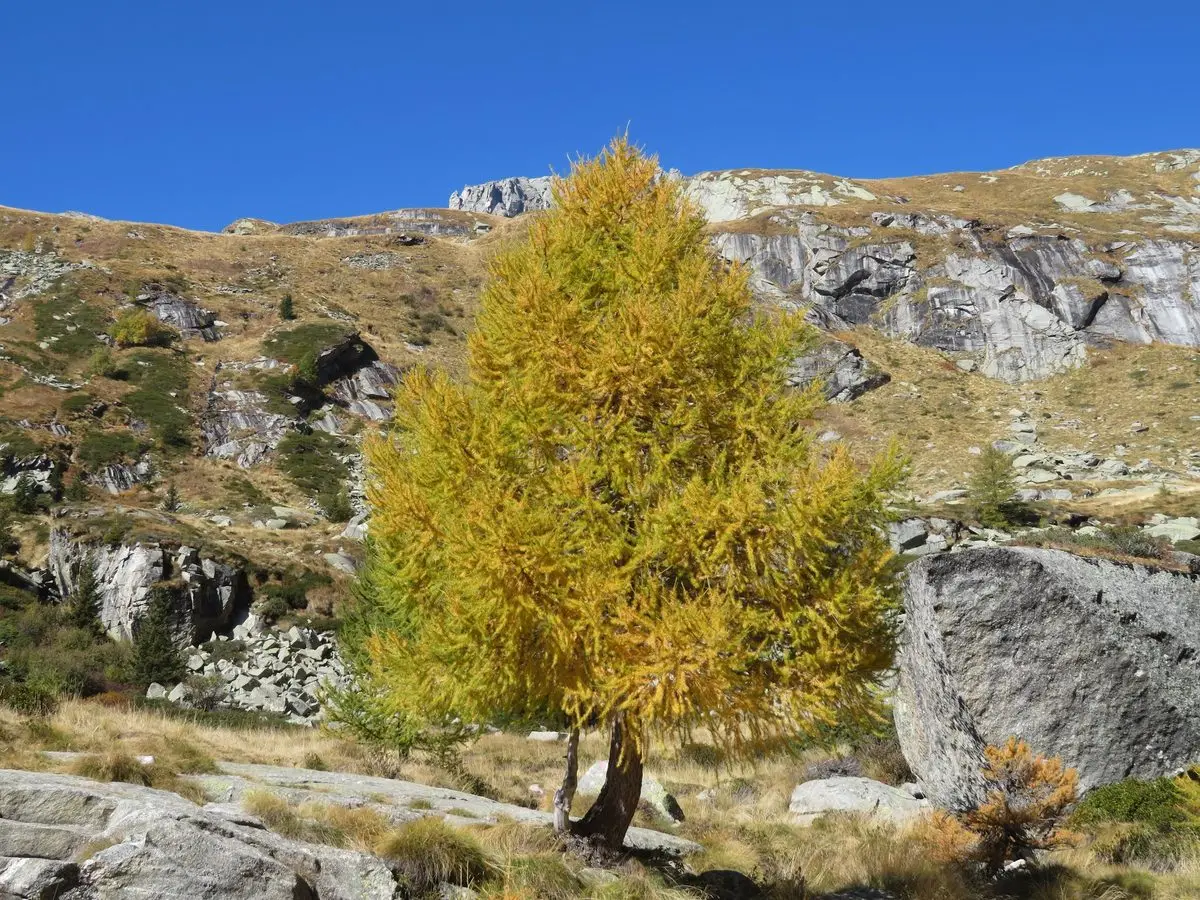 Whole treeA needled tree that turns yellow, then goes bare all winter.
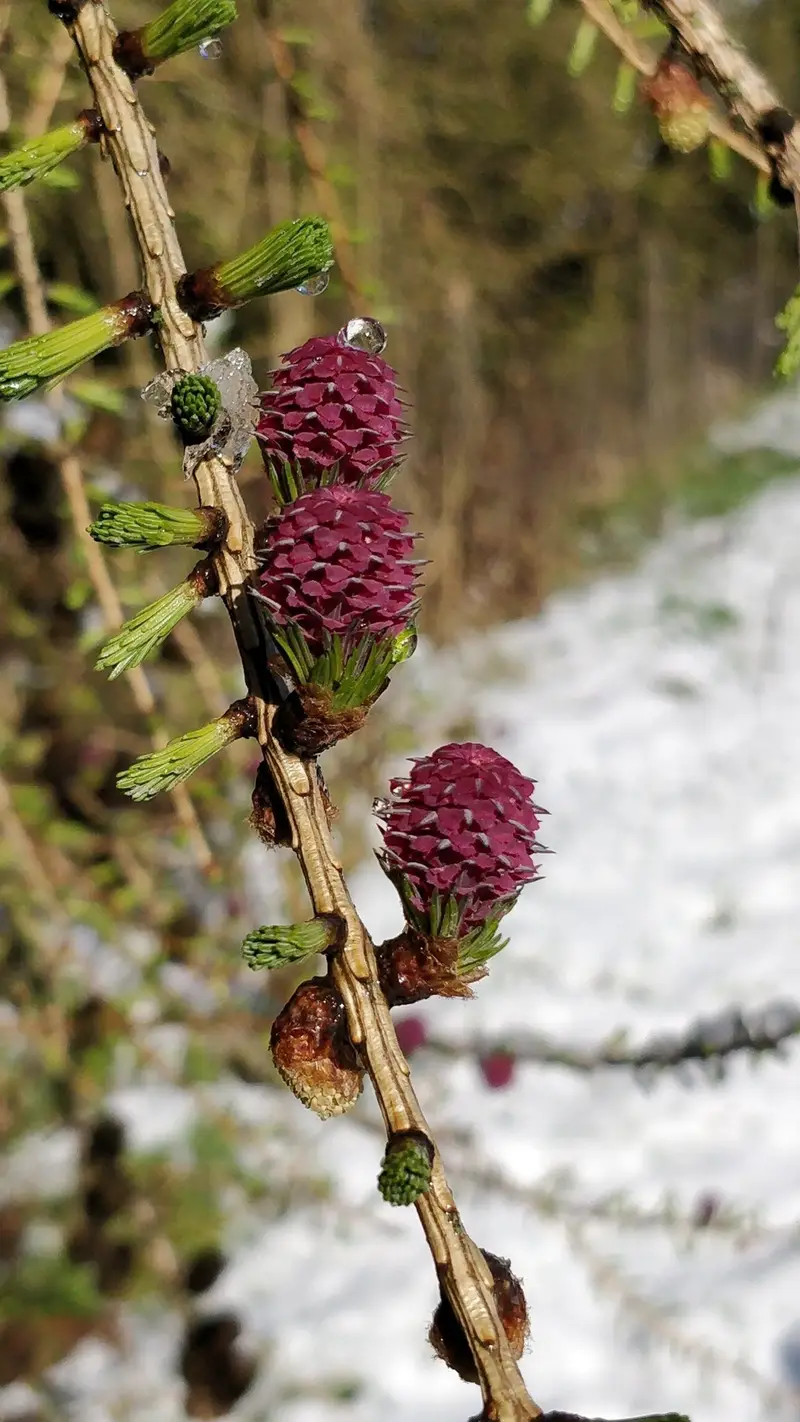
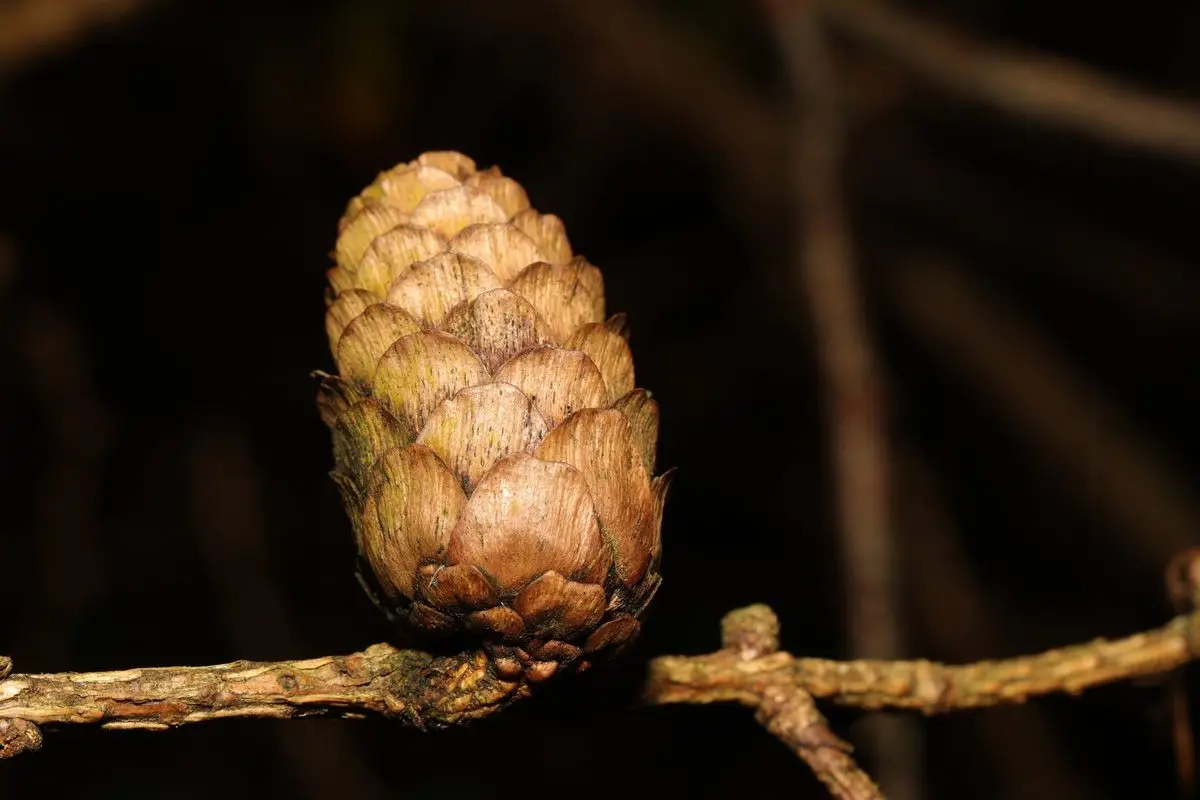
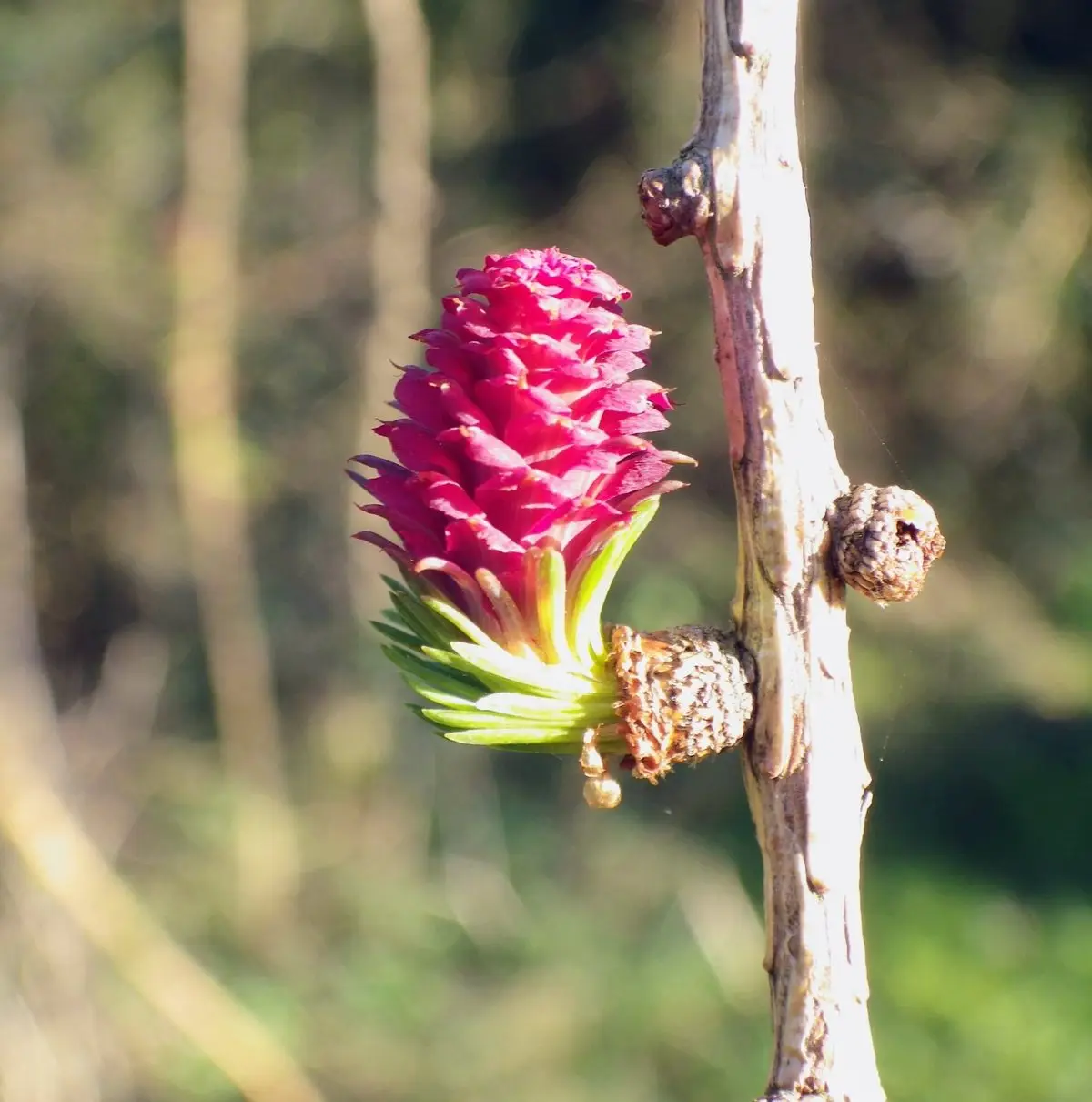 ConesRed in spring, then small brown cones with straight scales.
Then check · TwigsIn winter the shoots are amber or pale pink with rows of short woody knobs. Japanese larch has reddish shoots with a waxy white bloom.
Larch needles are soft and bright green, and grow in tufts, with many springing together from each short woody knob on the twig.
Larch is a needled tree that loses every needle. It turns yellow in October and stands bare from late November until the new needles open in spring.
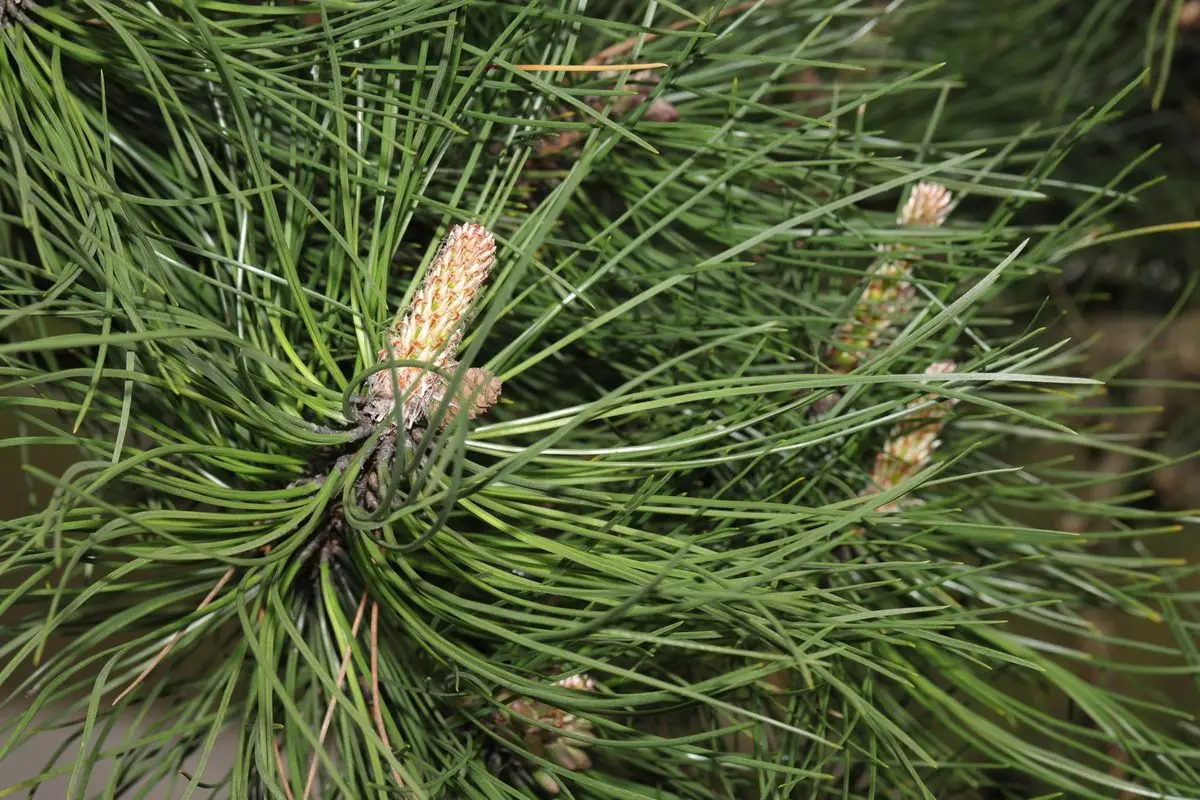
In spring, small red cones sit among the new needles. They ripen into small, oval brown cones with straight scales, and old ones stay on the bare branches for years.
 Learn the European larch in TreelyEvery part through the year, and a short round each day until you know it.Get Treely
 Jarro Nevsbaru, CC BY 4.0
 Hazza, CC BY 4.0
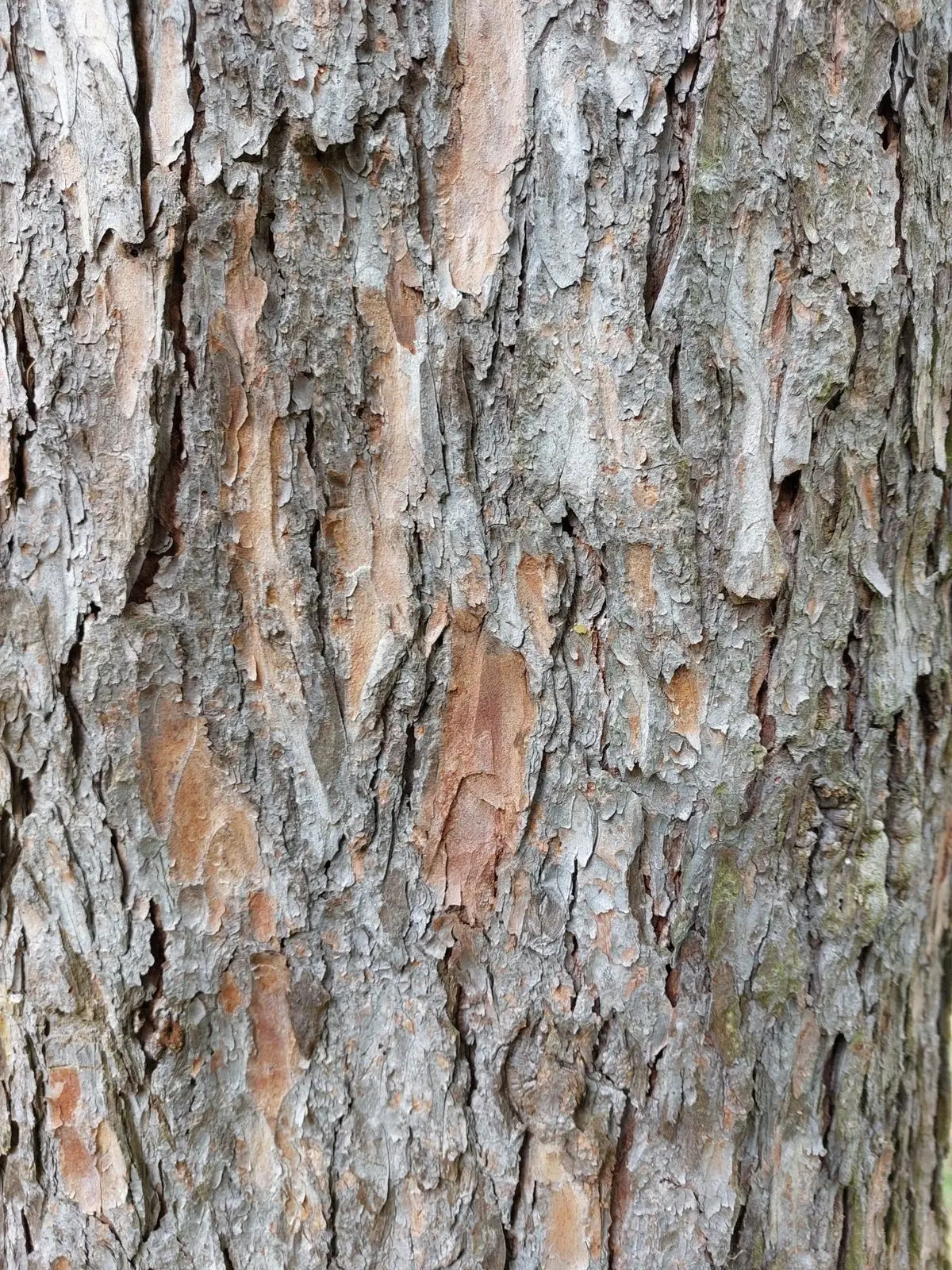
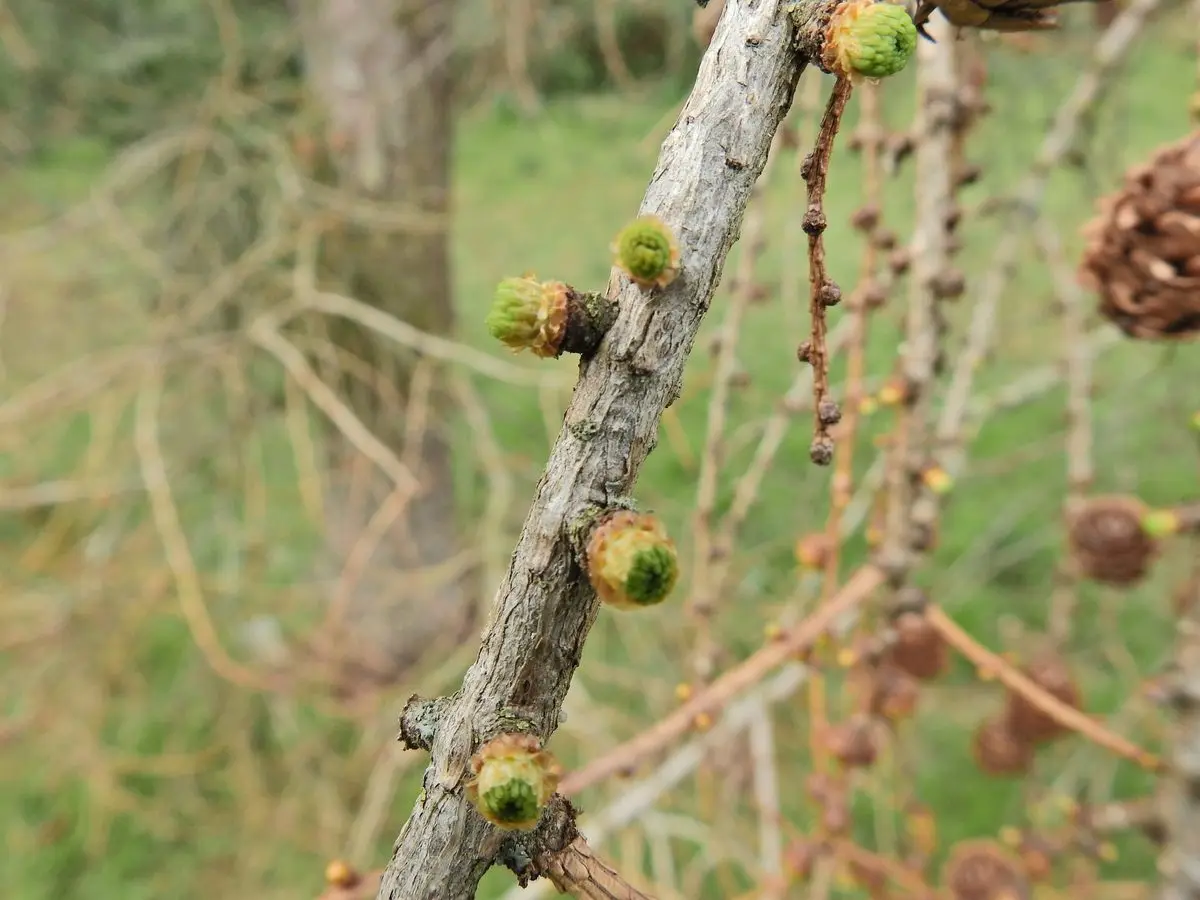 Susan Marley, CC BY 4.0
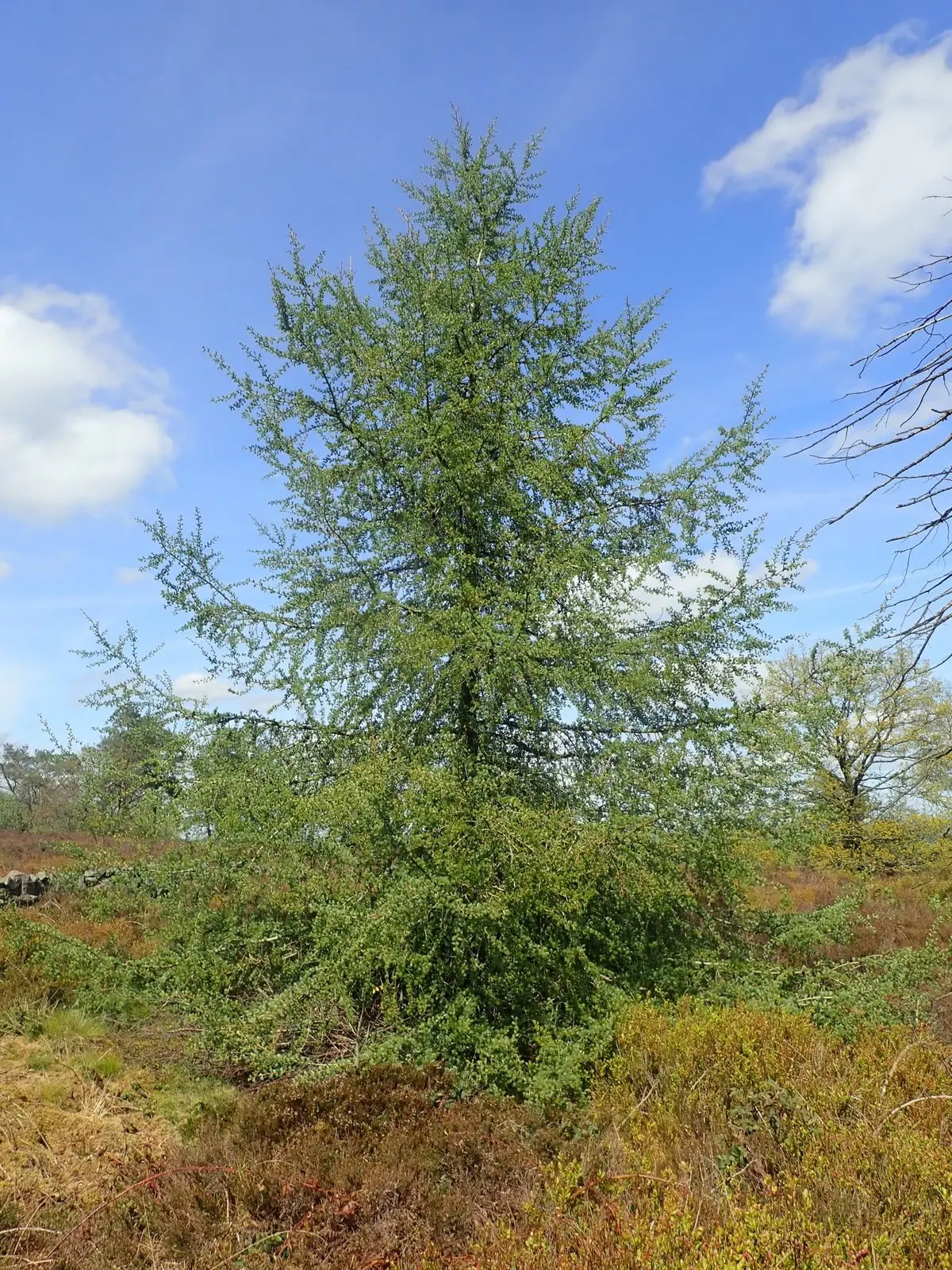 rory_middleton, CC BY 4.0
In leaf: March to November · Flowers: March to May · Cones: all year
Every tree on the calendar · How to identify trees in winter
Older forestry plantations, shelterbelts, parks and estate woods. It is common in places in Scotland, northern England and Wales. It often struggles in the warm, wet west. It rarely seeds itself in Britain, though it often does in the Lake District.
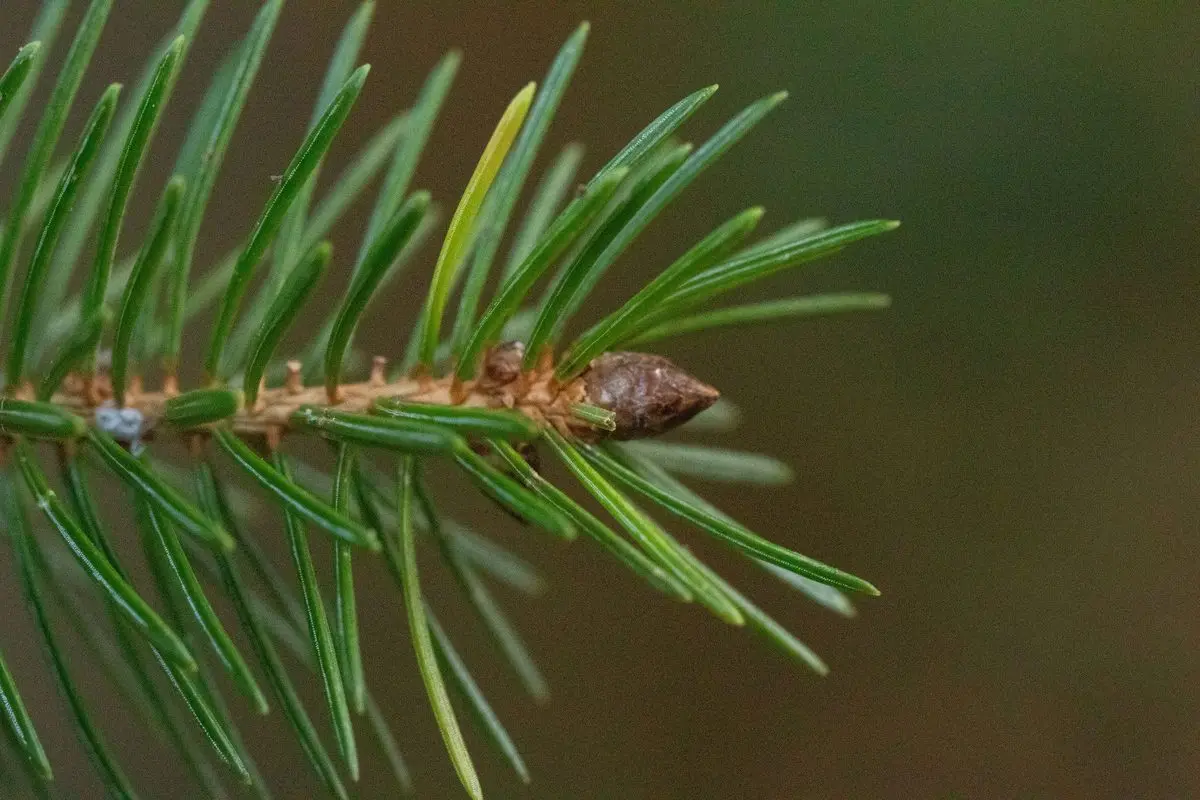 European larch or Norway spruce?Both stand as green spires in the same plantations.How the needles sit→
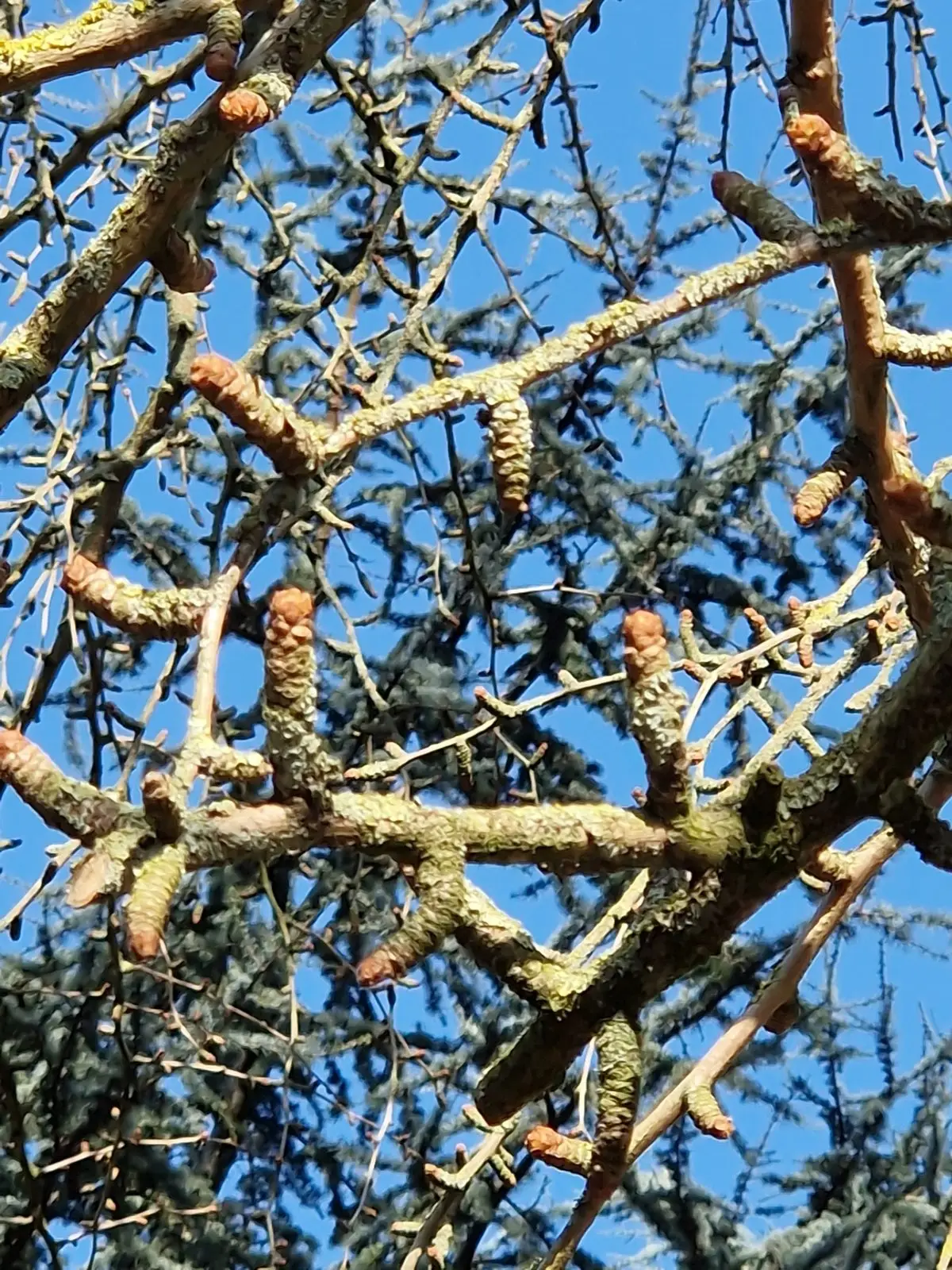 European larch or ginkgo?Both drop every leaf in autumn, and both hold their leaves in tufts on short spurs.Spurs on a bare branch→
Free to download.
Every fact on this page is checked against the Collins Tree Guide, last in November 2026. Spotted something that looks wrong in front of a real tree? Tell us. How we check.
Photographs: rory_middleton (CC BY 4.0), steve_mcwilliam (CC0), Marco Mussita (CC BY 4.0), Jeff Jones (CC BY 4.0), Jarro Nevsbaru (CC BY 4.0), Hazza (CC BY 4.0), johnt77 (CC0), Susan Marley (CC BY 4.0), dawn2022 (CC BY 4.0), Clive Freedman (CC BY 4.0). With thanks to everyone who shares their photographs on iNaturalist and Wikimedia Commons.