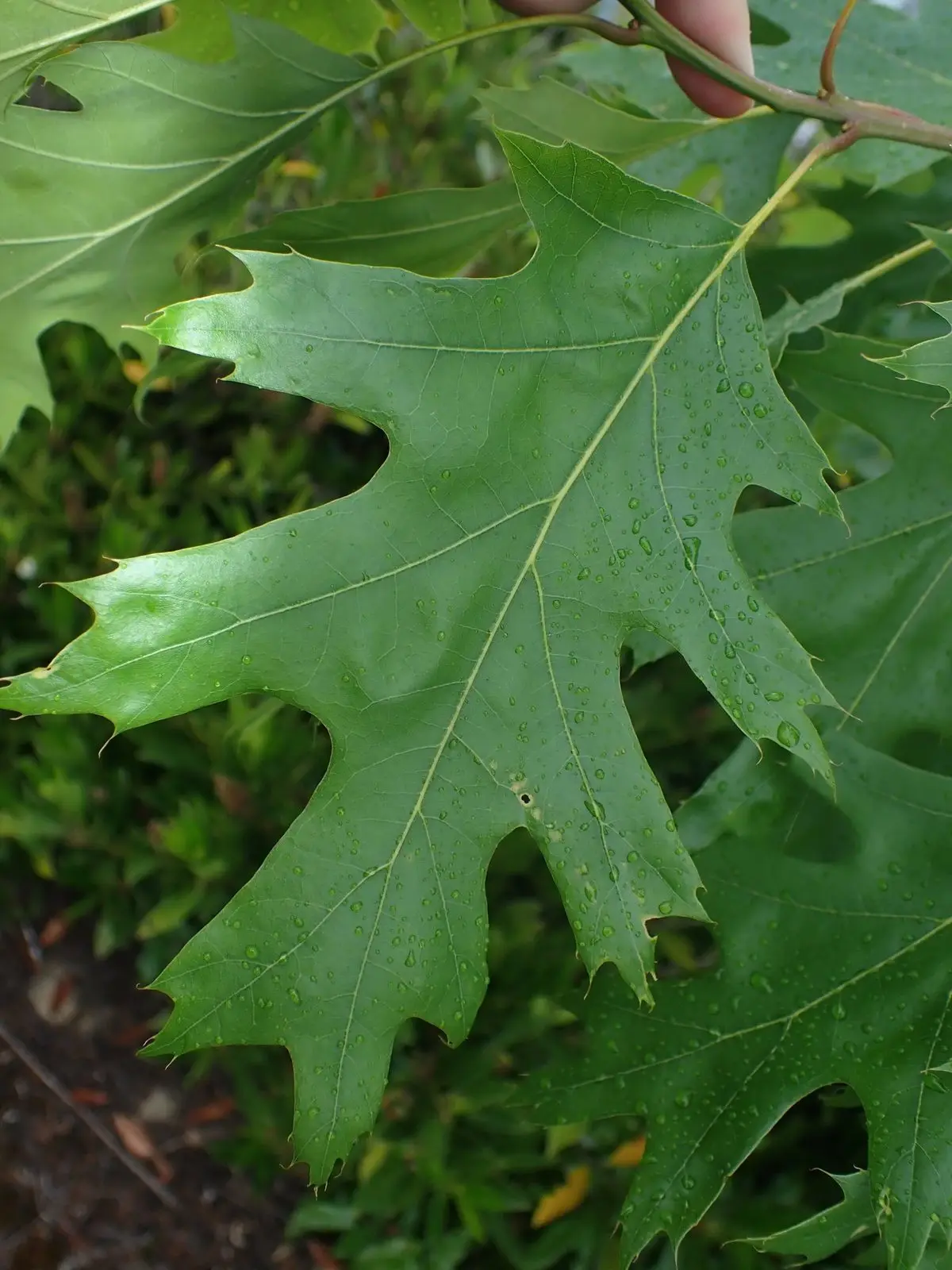
Red oak
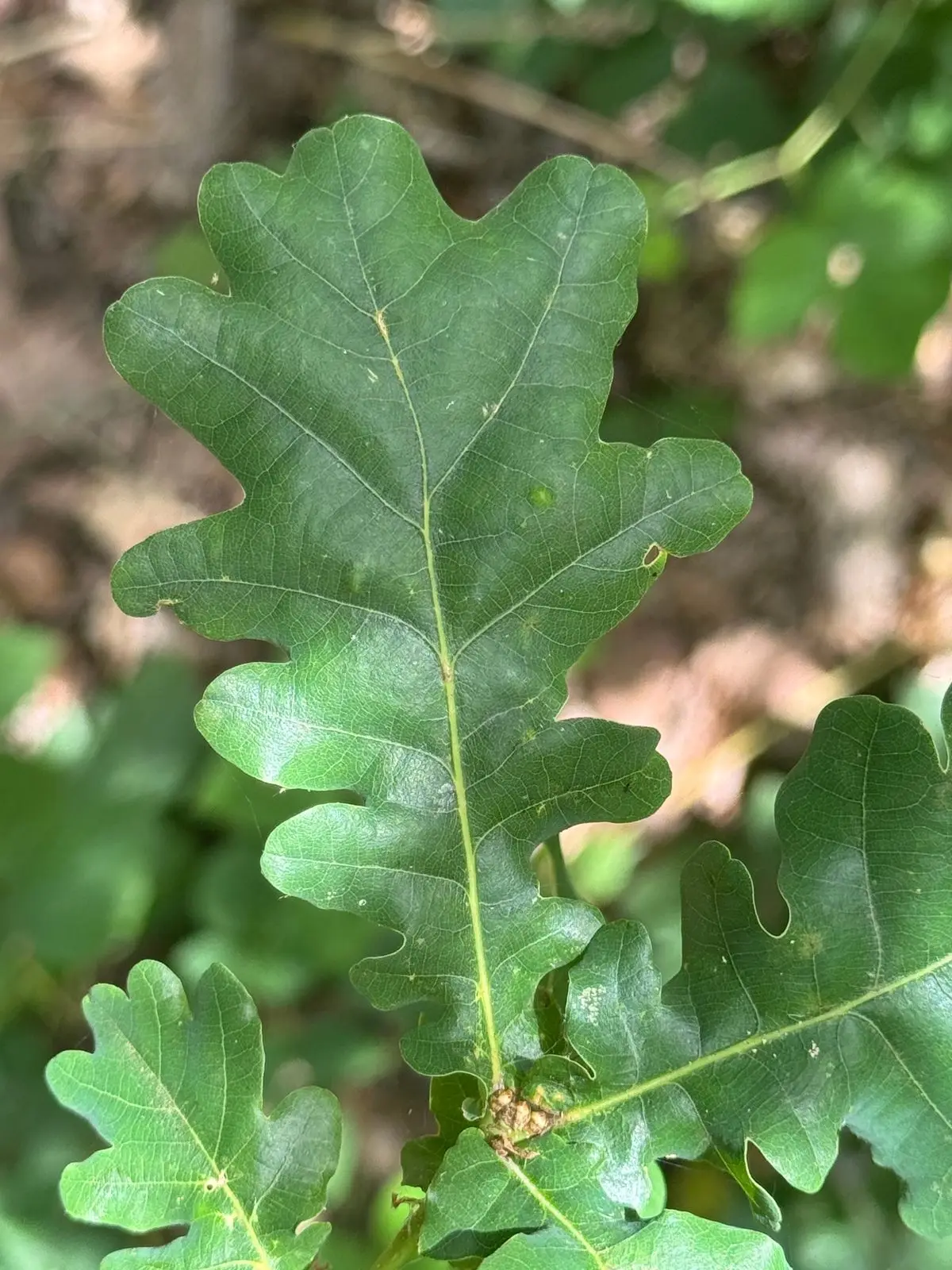
Quercus rubraRed oak is a broad-crowned tree, planted in parks for its autumn colour. Its large, matt leaves have pointed lobes, and each tooth ends in a fine bristle.
How to identify red oak →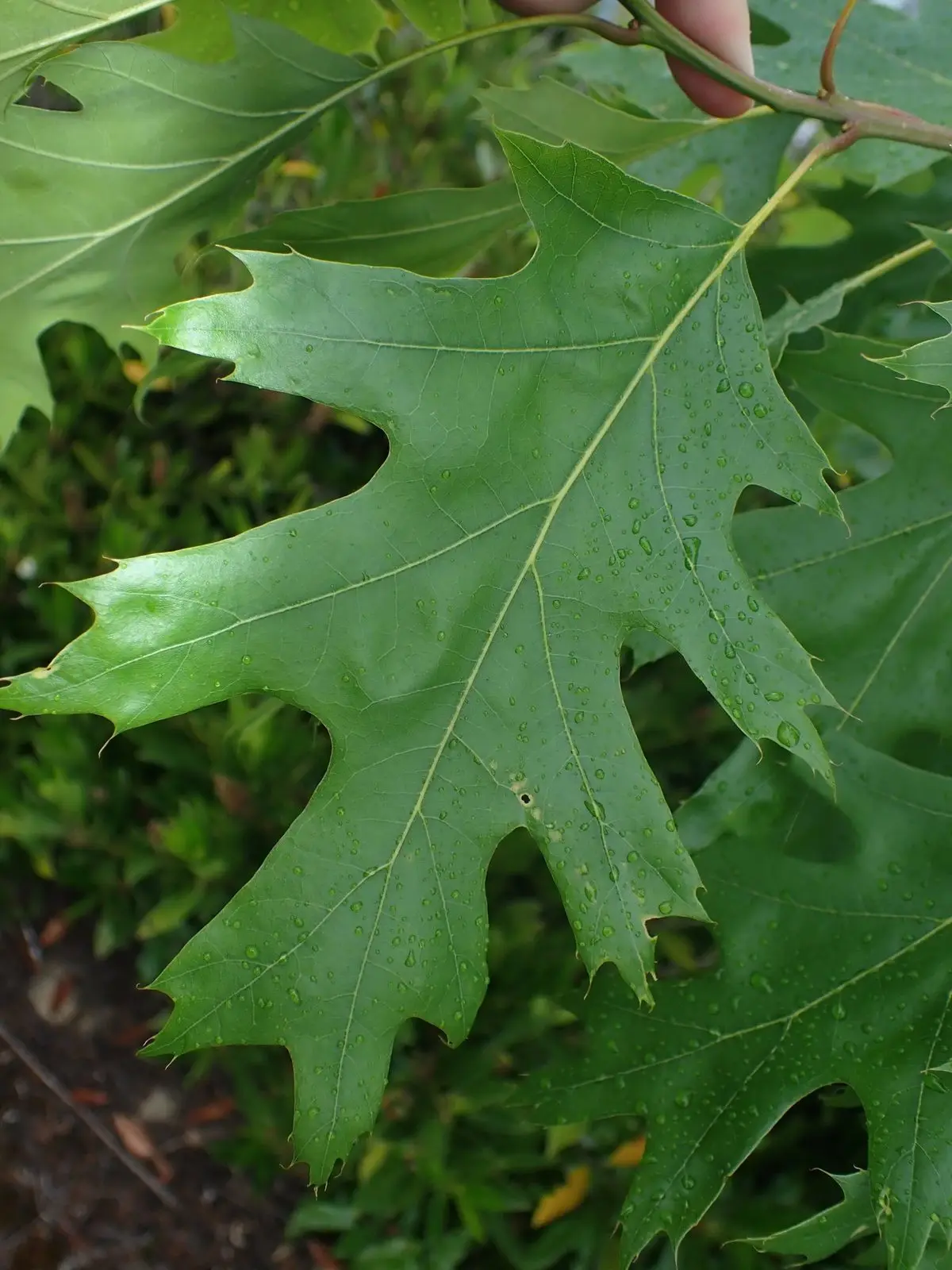 Jarro Nevsbaru, CC BY 4.0
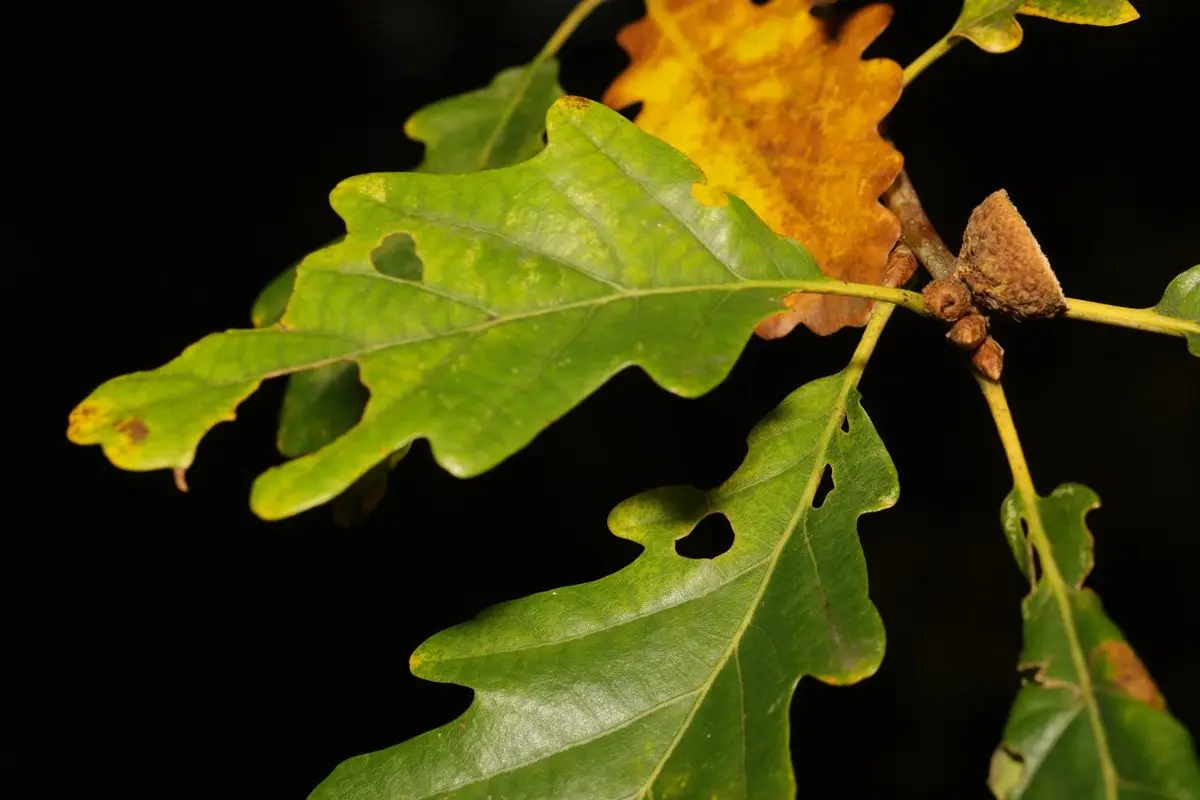
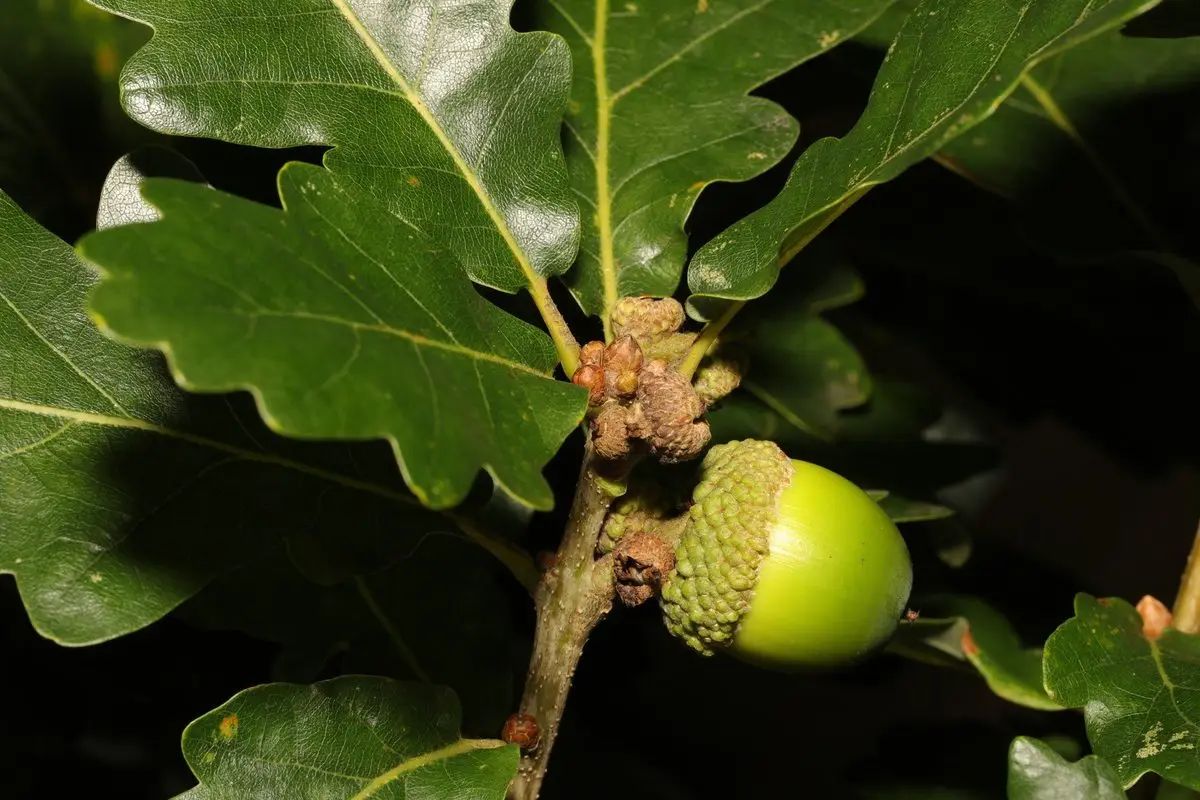
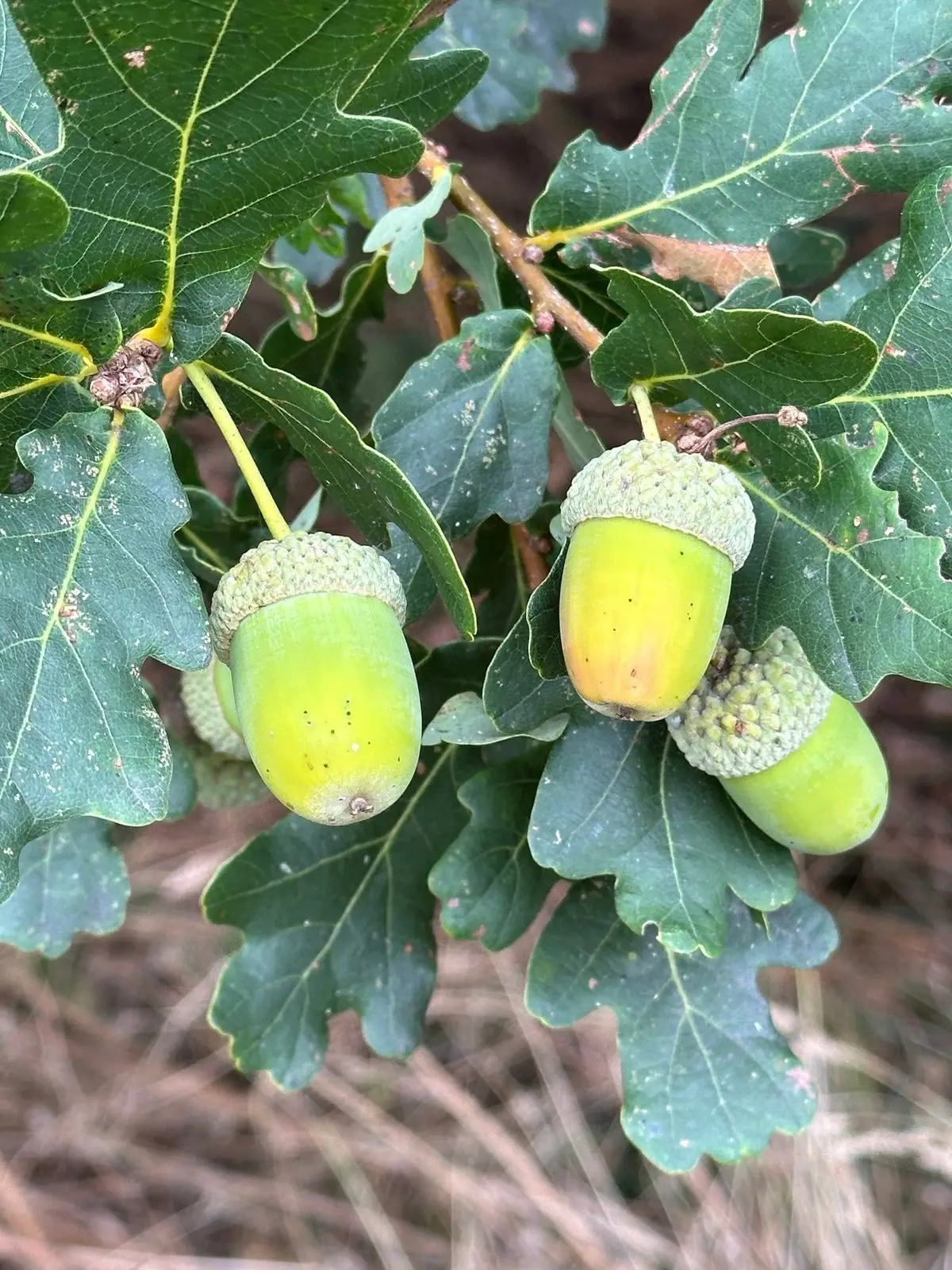
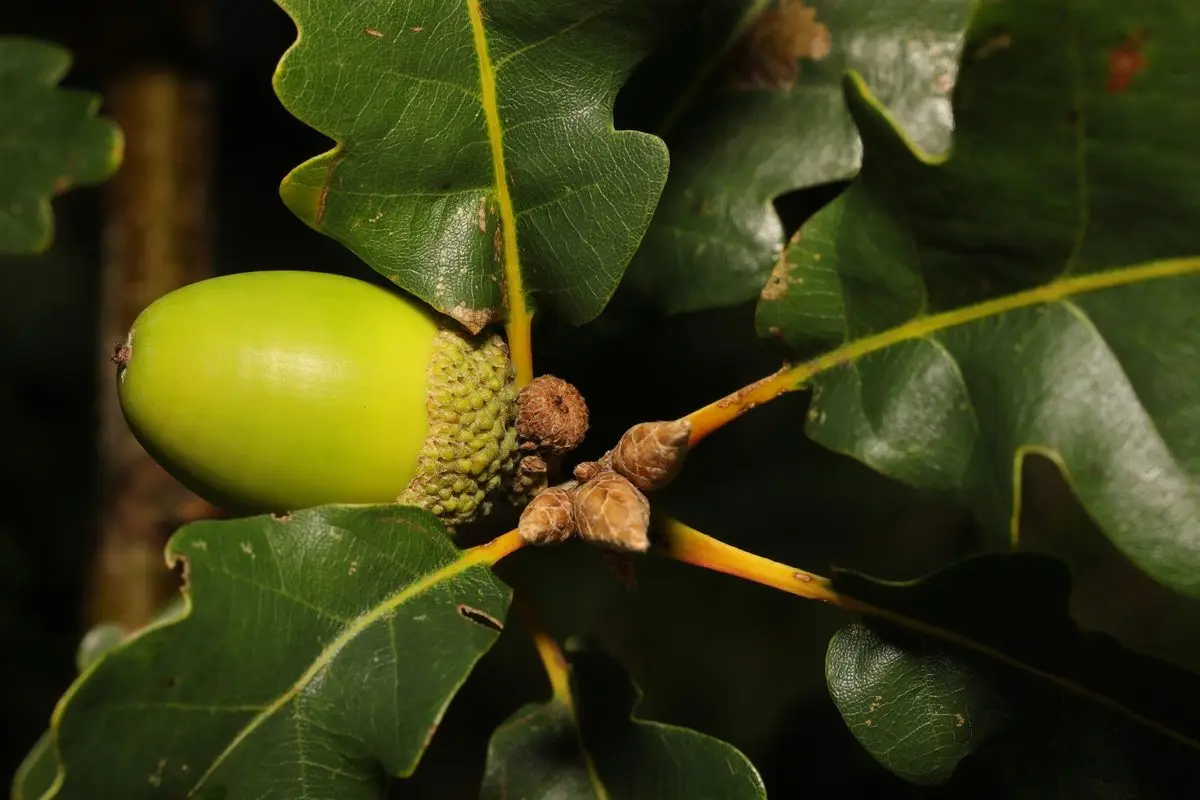
Both have acorns that sit against the twig, on a very short stalk or none at all.
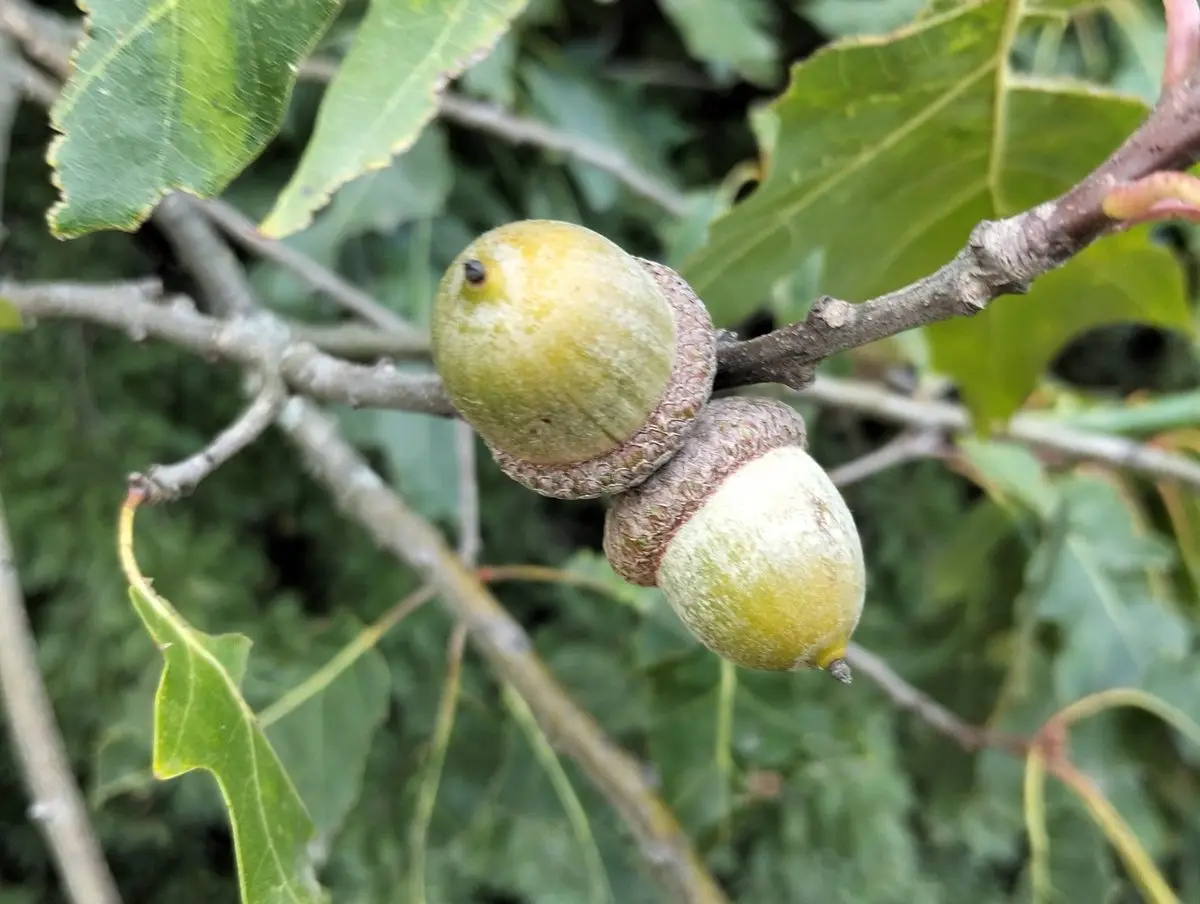
The quickest check is the acorn and its cup. Red oak: squat, in a cup like a shallow saucer. Sessile oak: egg-shaped, in a scaly wooden cup. No acorns on the tree? Check the lobes along the edge.
| Look at | Red oak | Sessile oak |
|---|---|---|
| Acorn and its cup | Squat, in a cup like a shallow saucer | Egg-shaped, in a scaly wooden cup |
| Lobes along the edge | Pointed, every tooth ending in a fine bristle | Shallow and regular, five or six a side |
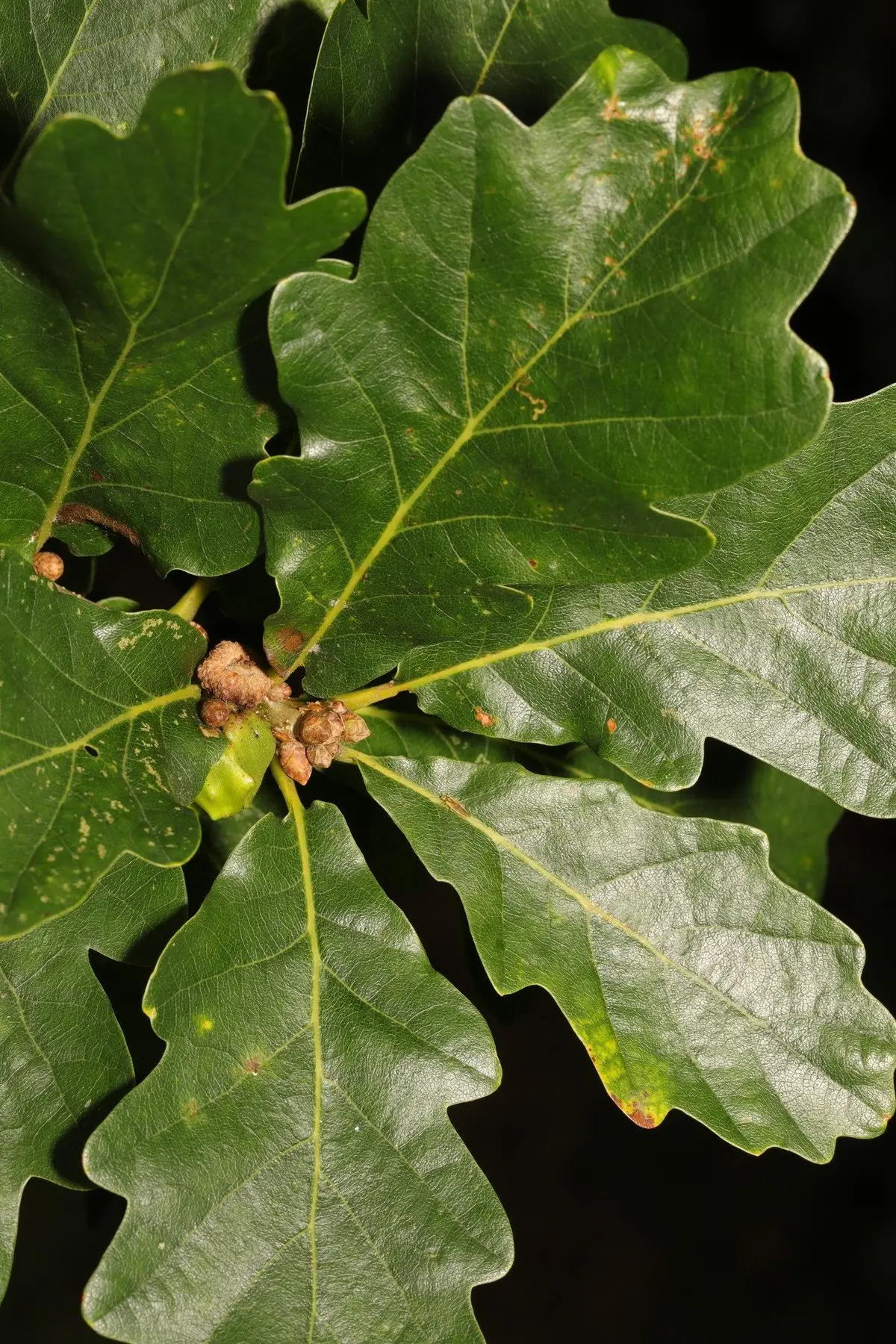
Red oak is a broad-crowned tree, planted in parks for its autumn colour. Its large, matt leaves have pointed lobes, and each tooth ends in a fine bristle.
How to identify red oak →Sessile oak is a tall, straight tree, common in the hills and the west. Its trunk runs far up into the crown. The acorns sit on the twig, on a very short stalk or none.
How to identify sessile oak →Free to download.
Every fact on this page is checked against the Collins Tree Guide, last in November 2026. Spotted something that looks wrong in front of a real tree? Tell us. How we check.
Photographs: Jarro Nevsbaru (CC BY 4.0), steve_mcwilliam (CC0), Maksymilian Bobko (CC BY 4.0). With thanks to everyone who shares their photographs on iNaturalist and Wikimedia Commons.