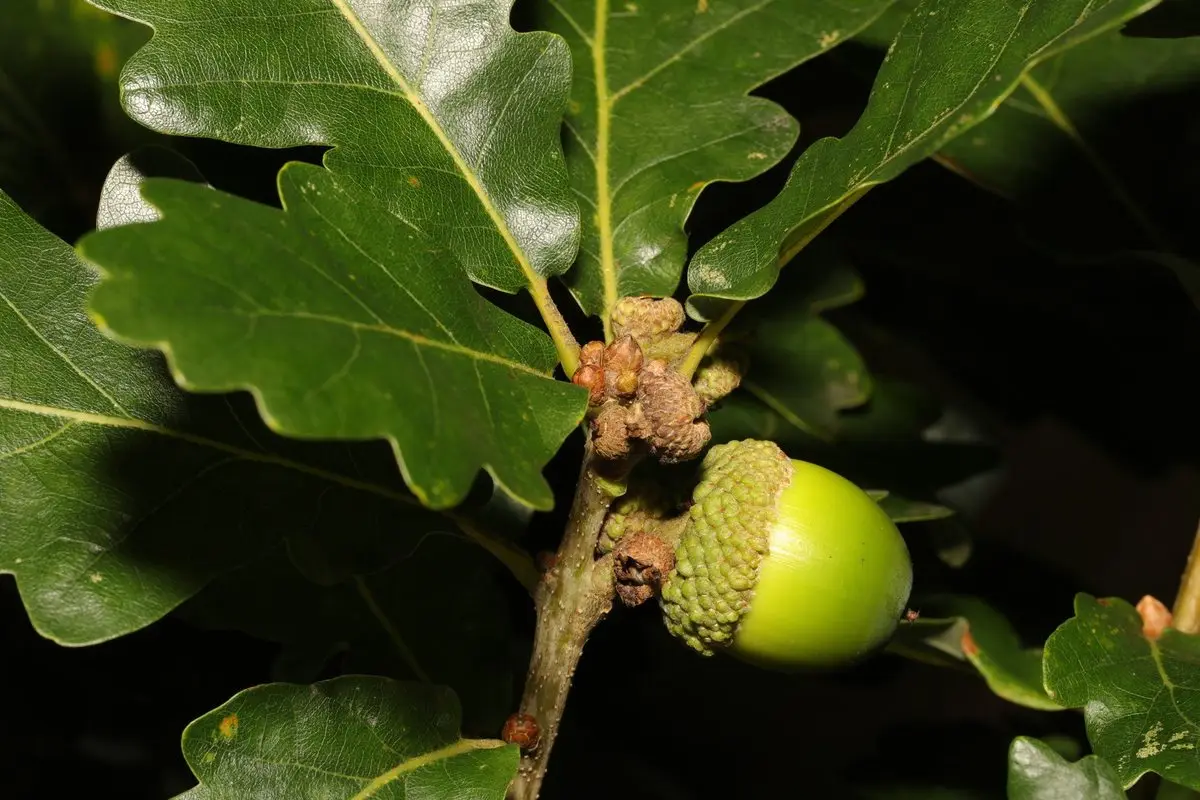
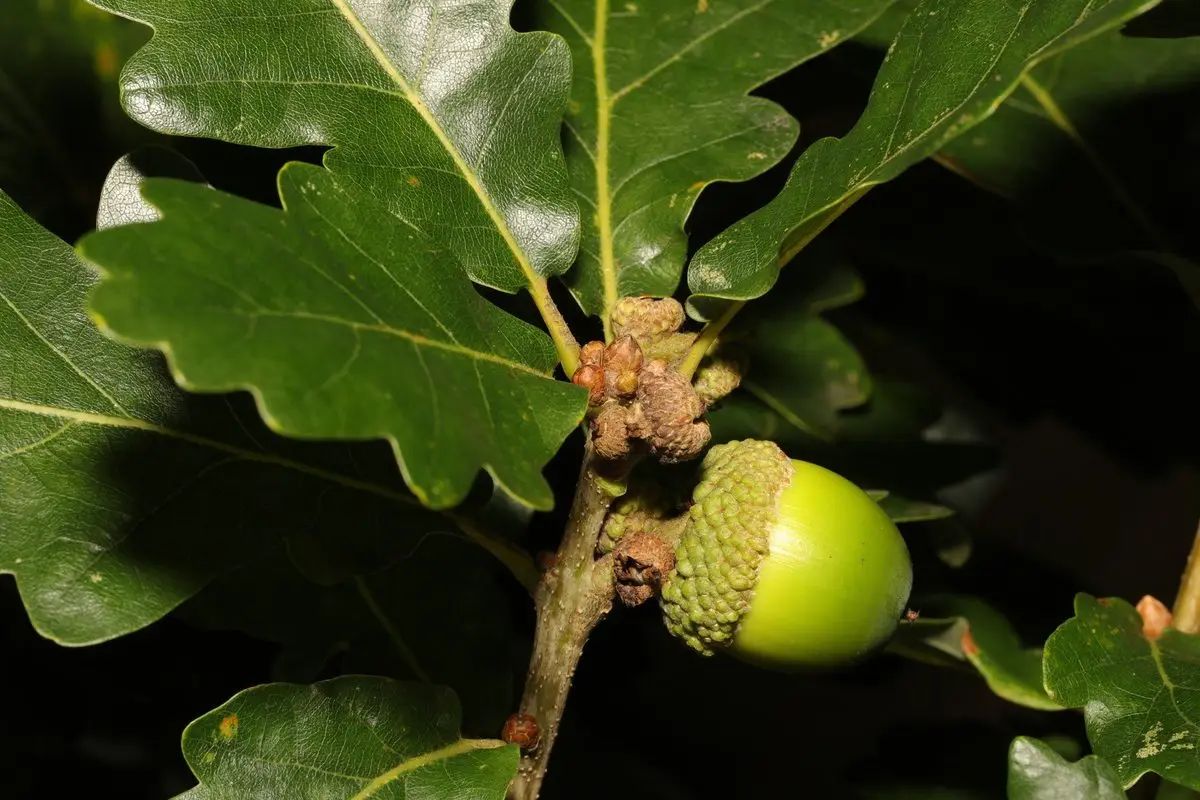
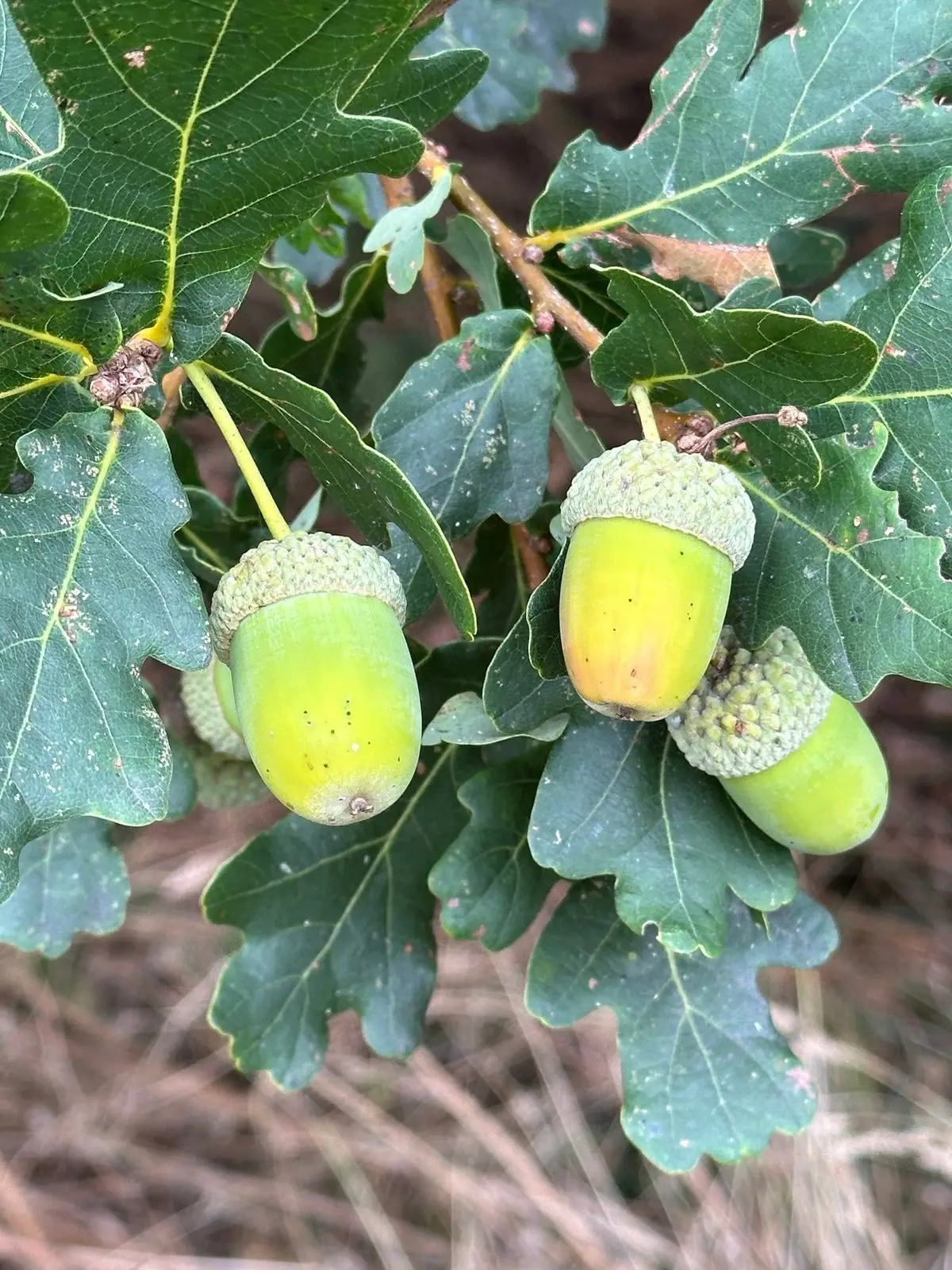
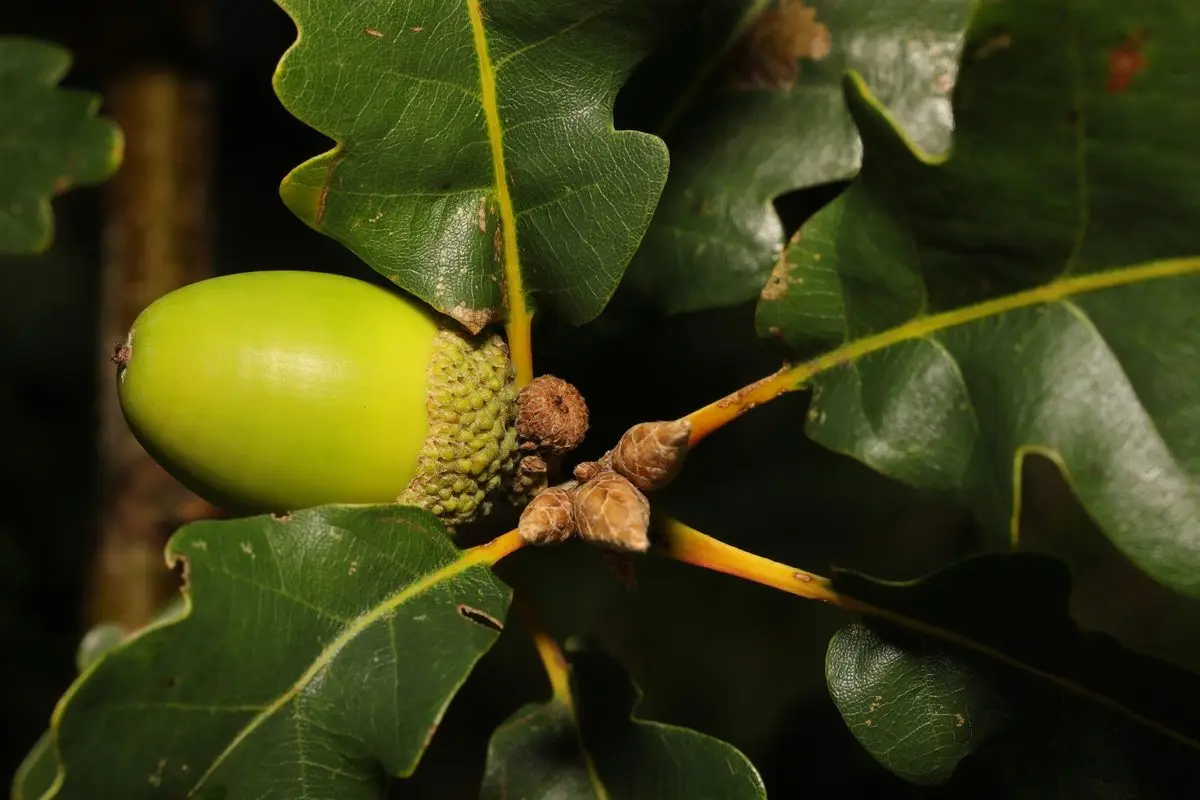
Egg-shaped and 2 to 3 cm long, each in a scaly cup, in small clusters sitting right against the twig.
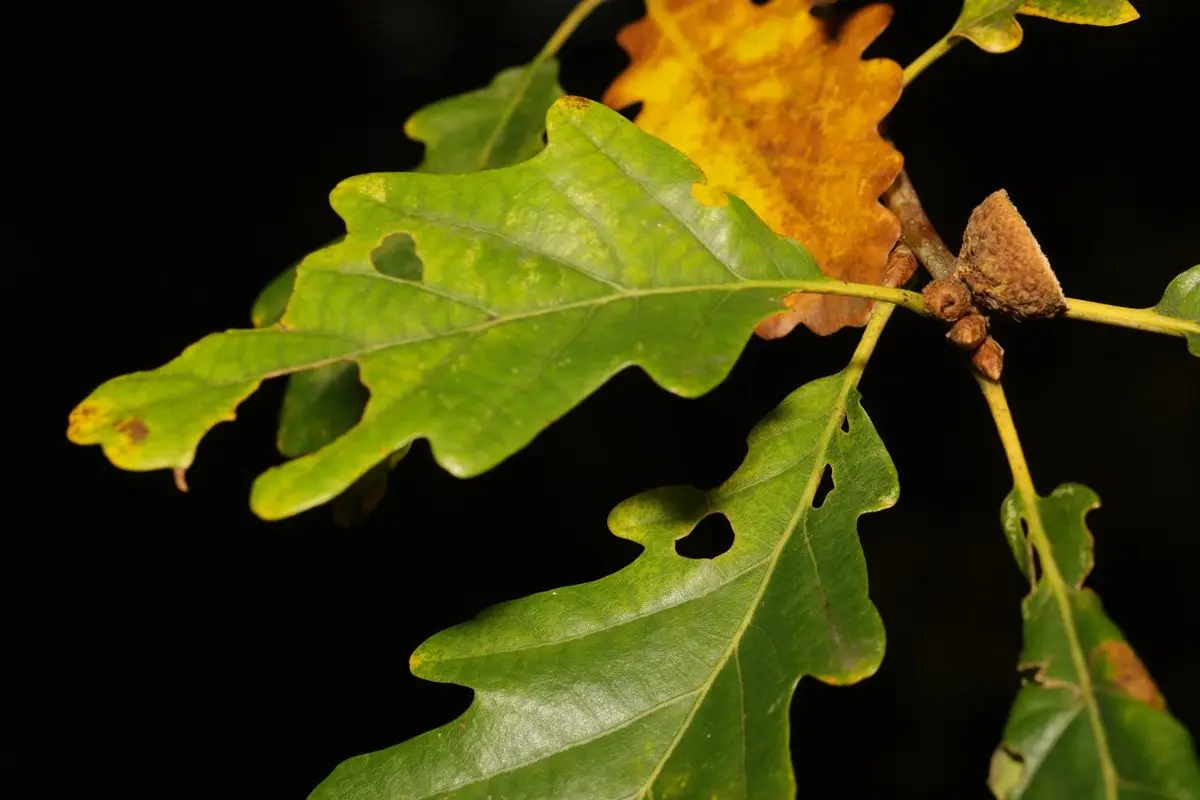
Quercus petraea · Fagaceae
Also called durmast oak
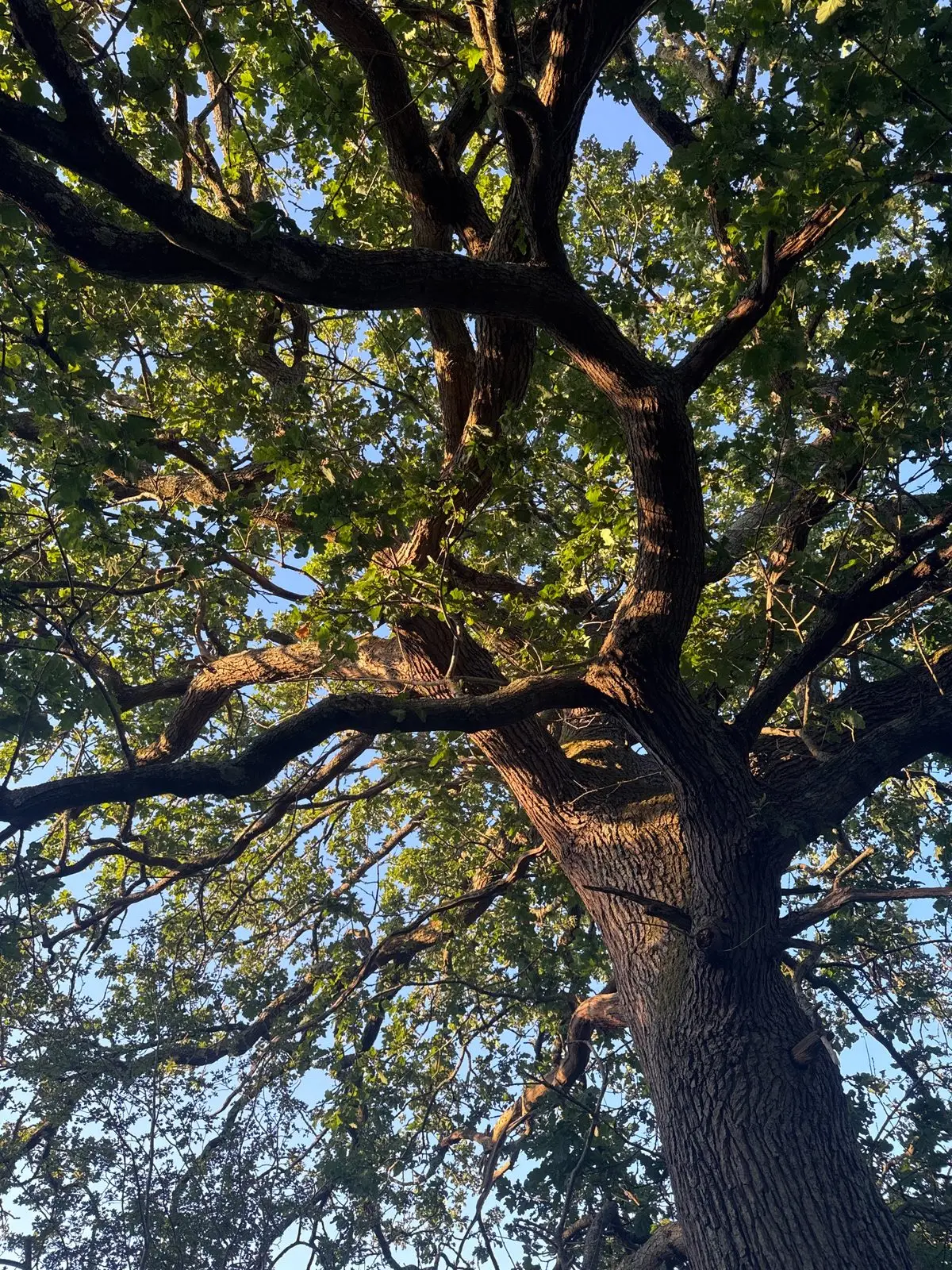
Sessile oak is a tall, straight tree, common in the hills and the west. Its trunk runs far up into the crown. The acorns sit on the twig, on a very short stalk or none.
Often mistaken for English oak. How to tell them apart →AcornsEgg-shaped, 2 to 3 cm, in a scaly cup, in small clusters.LeavesLeathery, five or six shallow lobes a side, stalk 12 to 20 mm.ShapeTall and straight, with a domed crown.Then check · BarkGreyish brown with deep cracks running up and down the trunk, often covered in moss and lichen in the wet west.
Egg-shaped and 2 to 3 cm long, each in a scaly cup, in small clusters sitting right against the twig.
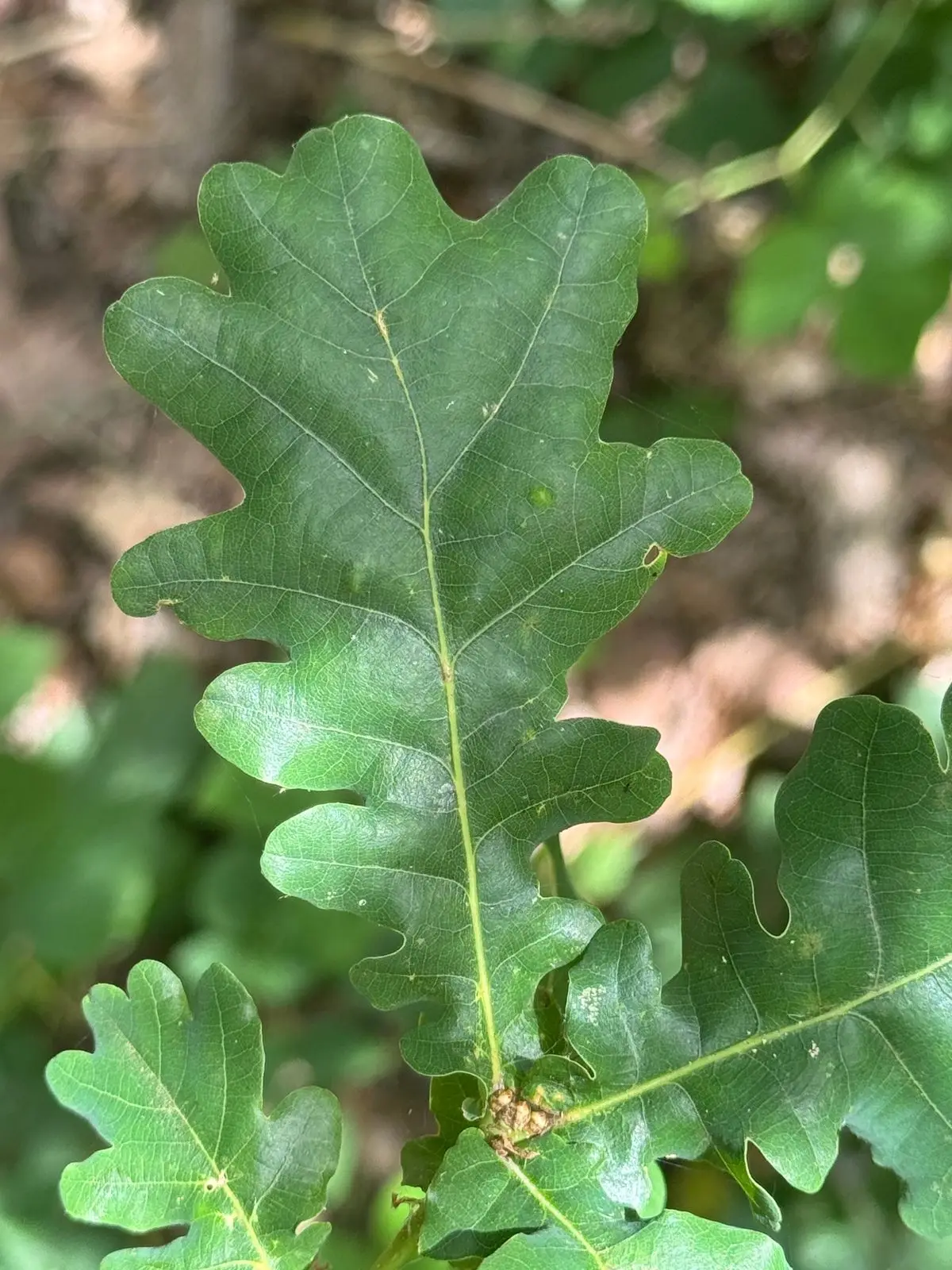
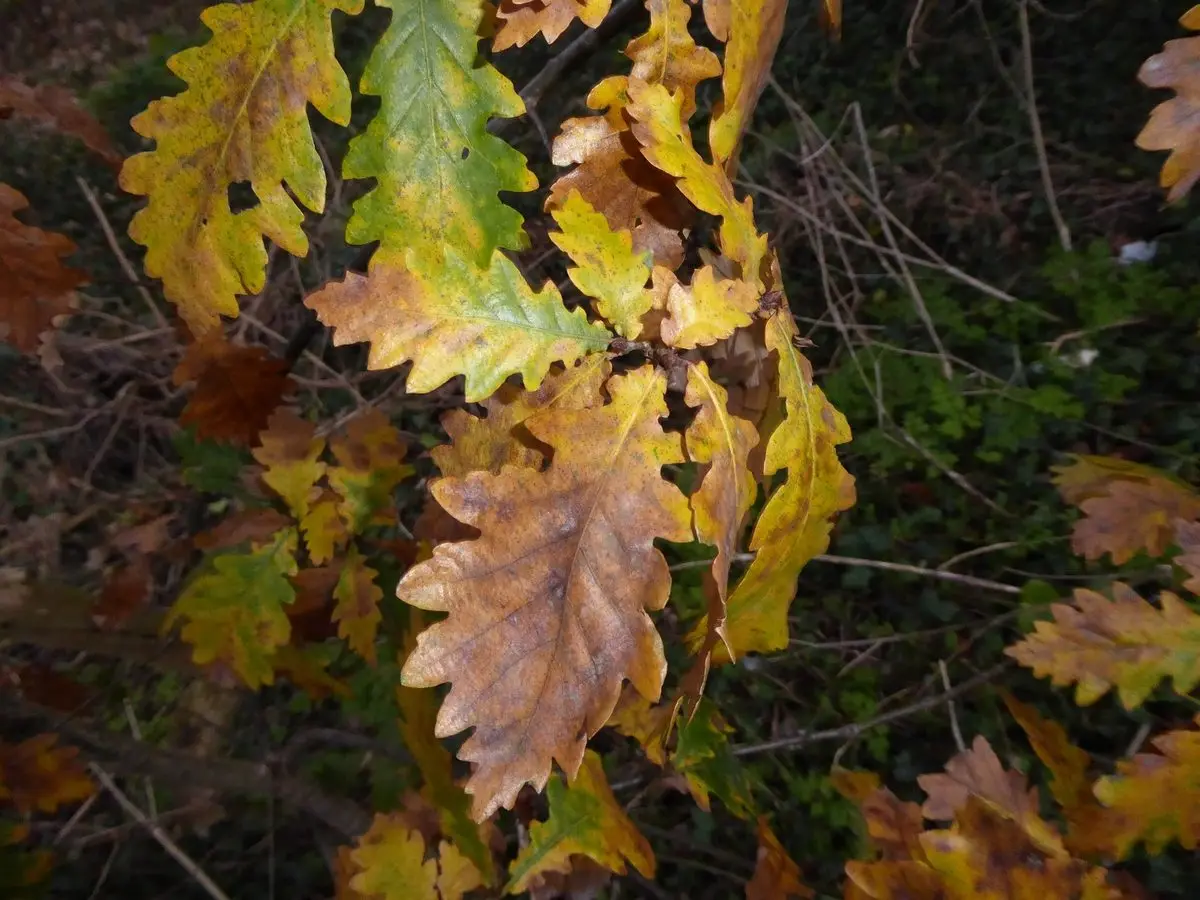
Dark green and leathery, with shallow, regular lobes, five or six a side, on a yellow stalk 12 to 20 mm long.
Tall and straight, with a domed crown and a long trunk that runs far up into it before branching.
 Learn the sessile oak in TreelyEvery part through the year, and a short round each day until you know it.Get Treely
In leaf: April to November · Catkins: May · Acorns: July to October
Wild ones grow mostly in upland and western woods where rainfall is highest, often above 300 m, on shallow, acid, sandy soils. Many of the best grow on steep hillsides. It grows on light soils in southern England too, but avoids heavy clay. It is missing from many lowland areas, and is seldom planted.
 Sessile oak or English oak?Both are native oaks with similar bark and shoots. English oak has long stalks on its acorns, and sessile oak has them on its leaves.Acorn stalk→
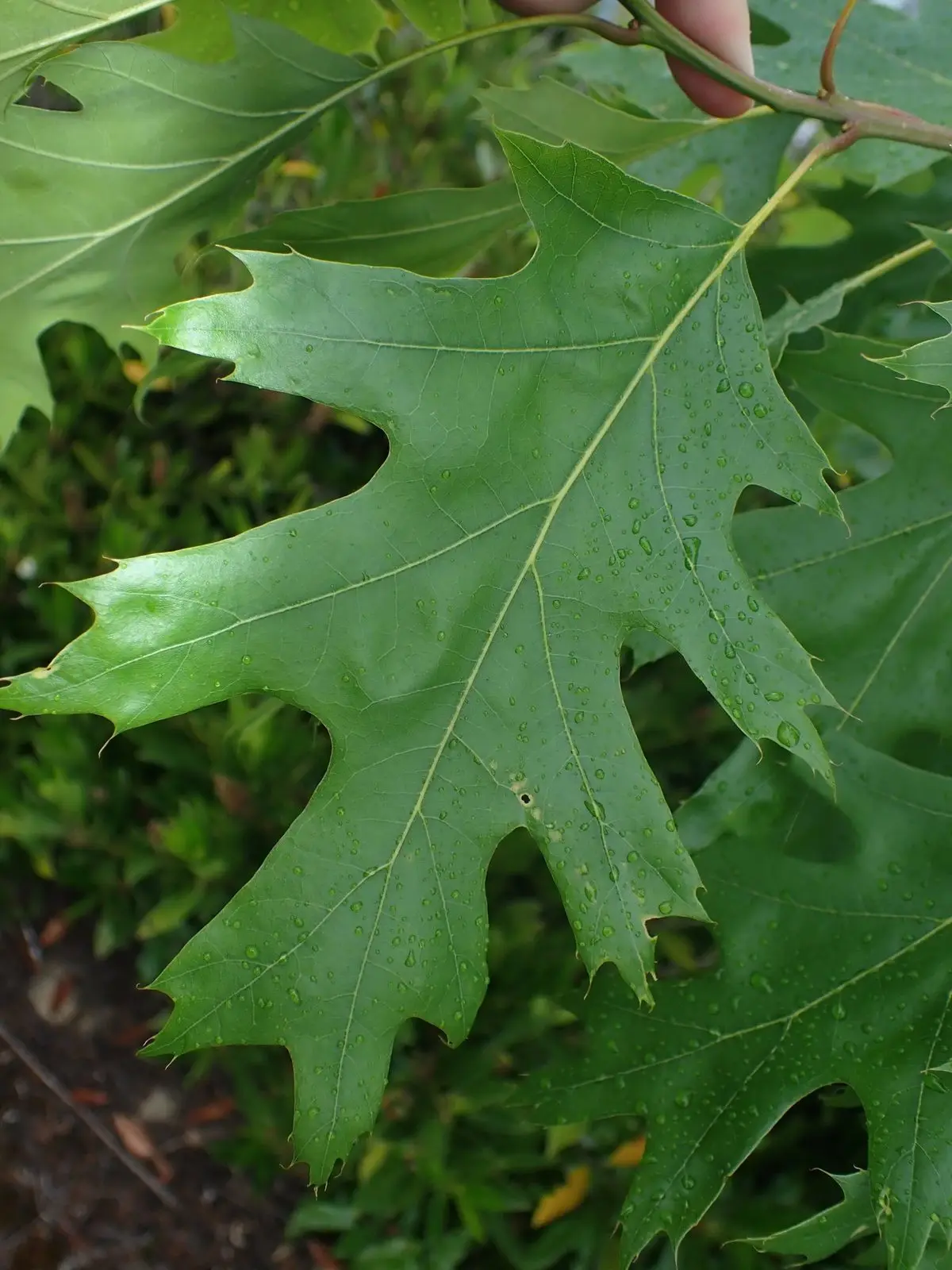
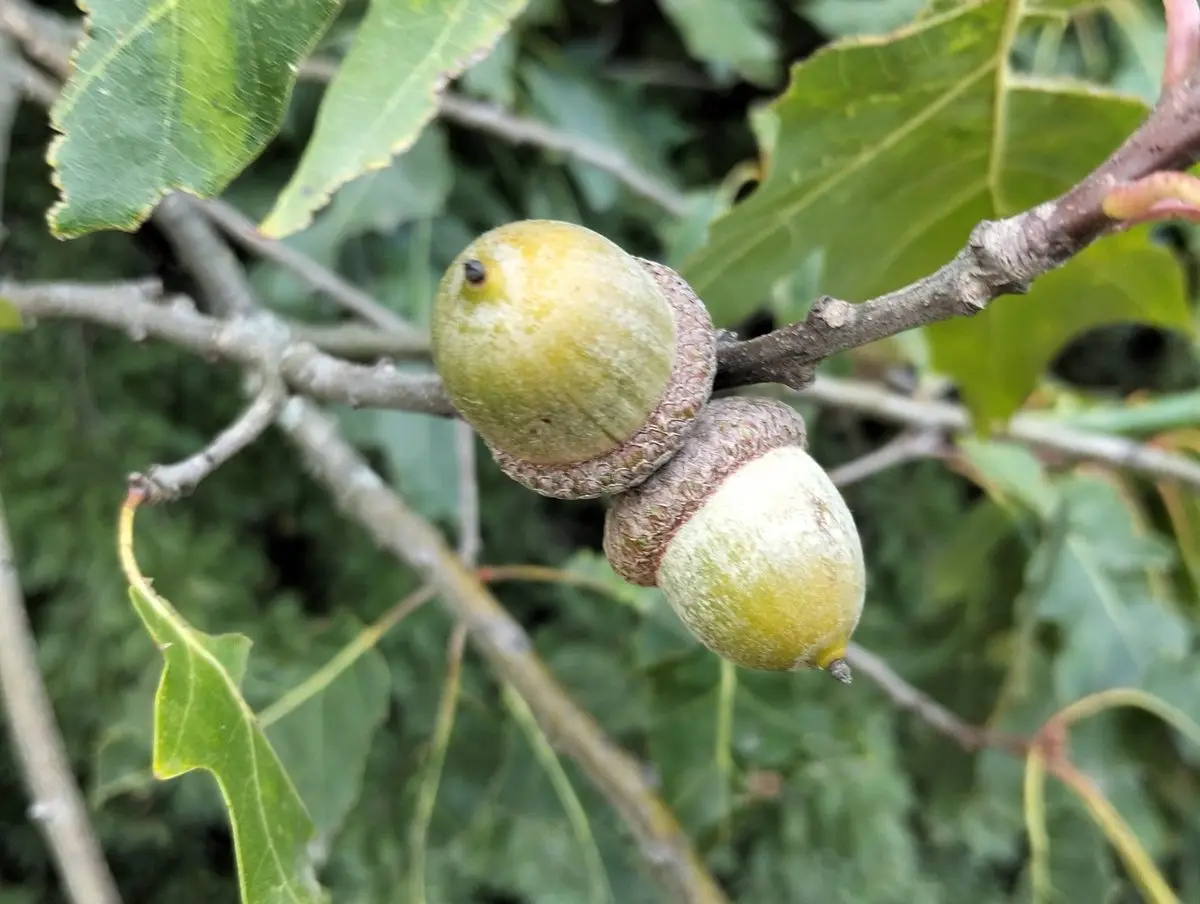 Sessile oak or red oak?Both are big oaks with lobed leaves and acorns.Acorn and its cup→
Free to download.
Every fact on this page is checked against the Collins Tree Guide, last in November 2026. Spotted something that looks wrong in front of a real tree? Tell us. How we check.
Photographs: steve_mcwilliam (CC0), Leon Cross (CC BY 4.0), cjoynson (CC0), Maksymilian Bobko (CC BY 4.0). With thanks to everyone who shares their photographs on iNaturalist and Wikimedia Commons.