Thin and brown when ripe, 20 to 40 cm long, hanging from the bare branches through winter after a hot summer.
Introduced · Up to 18 m
Indian bean tree
Catalpa bignonioides · Bignoniaceae
Also called southern catalpa
Indian bean tree is a broad, open tree with big, pale green leaves. After hot summers, long, thin pods up to 40 cm hang from its bare branches in winter.
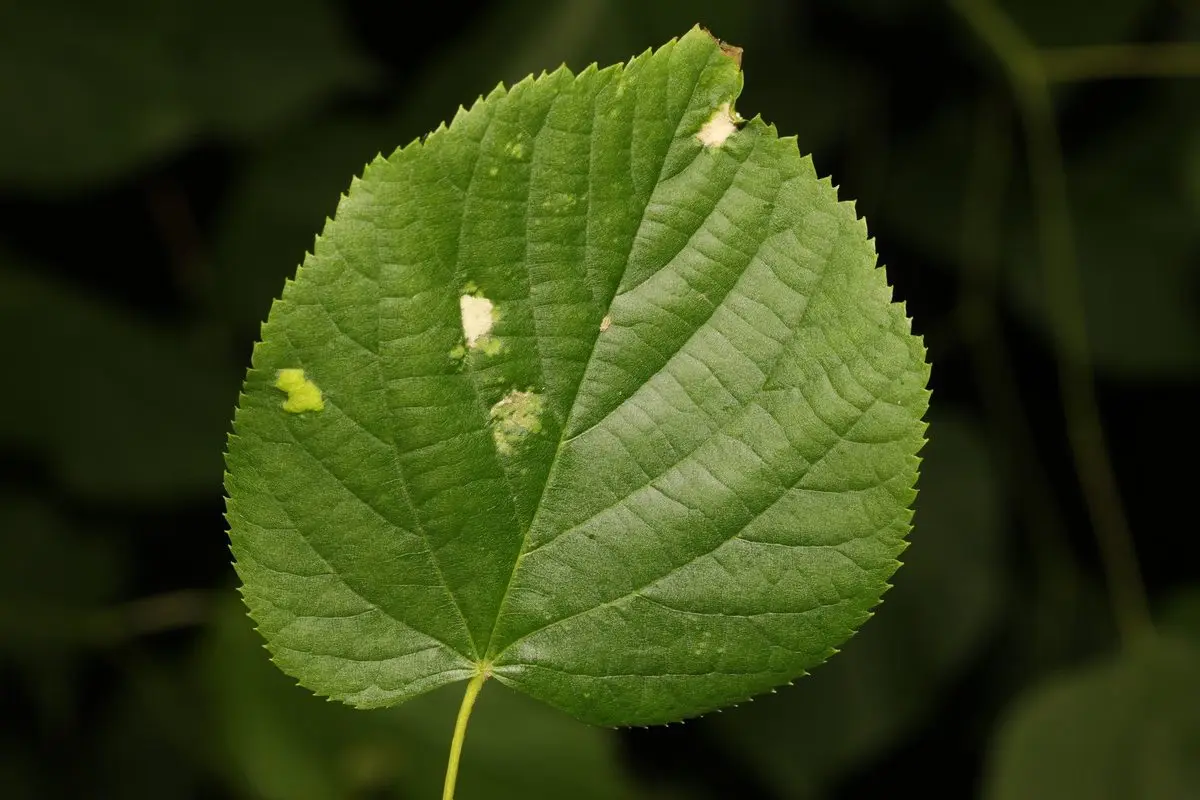
Often mistaken for common lime. How to tell them apart →Know it byPodsBrown when ripe, hanging from bare branches through winter.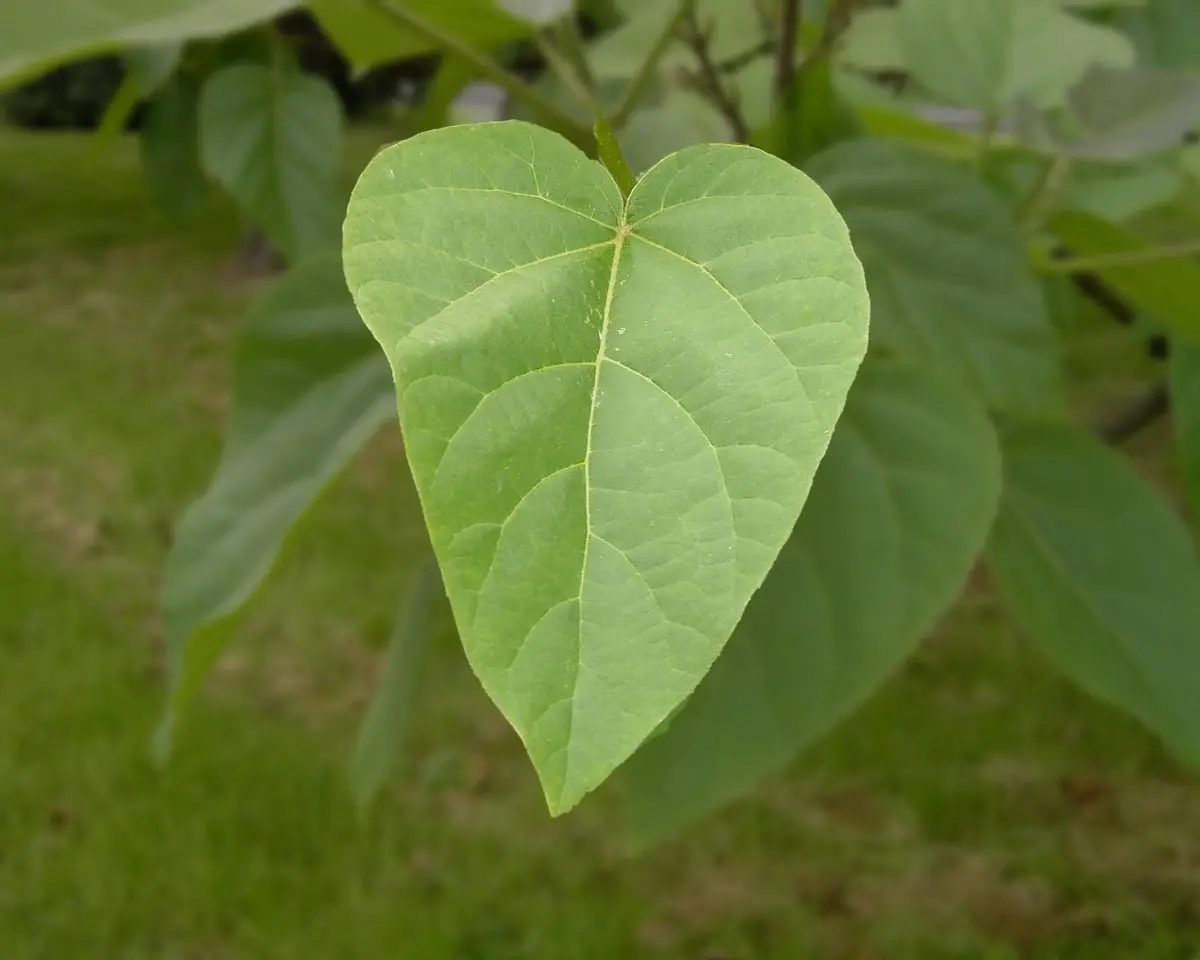 Leaves15 to 30 cm, smooth-edged, and foul-smelling when bruised.
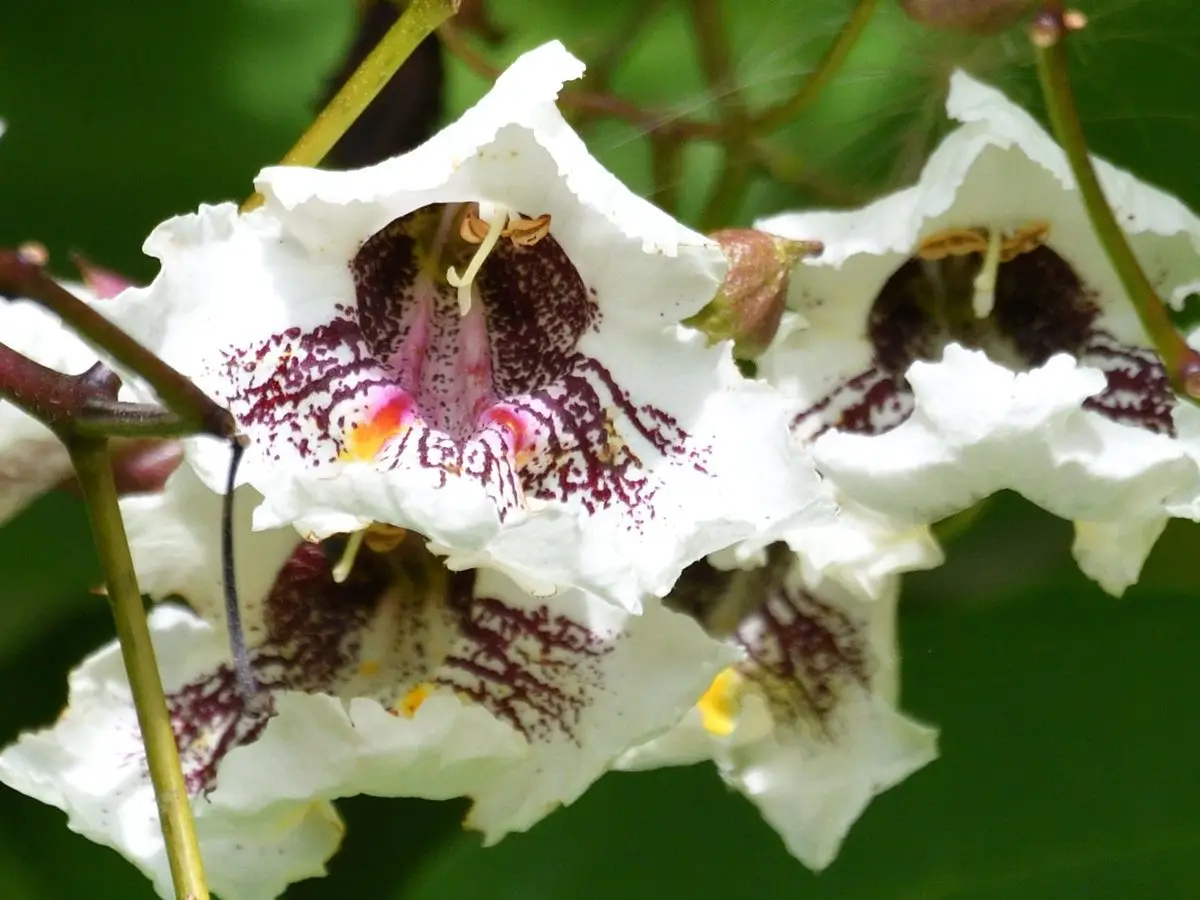 FlowersAbout 5 cm long, spotted yellow and purple, in July and August.
Leaves15 to 30 cm, smooth-edged, and foul-smelling when bruised.FlowersAbout 5 cm long, spotted yellow and purple, in July and August.Then check · BarkPinkish orange, cracked into shallow square scales, on a short trunk that often leans.
How to identify an Indian bean tree
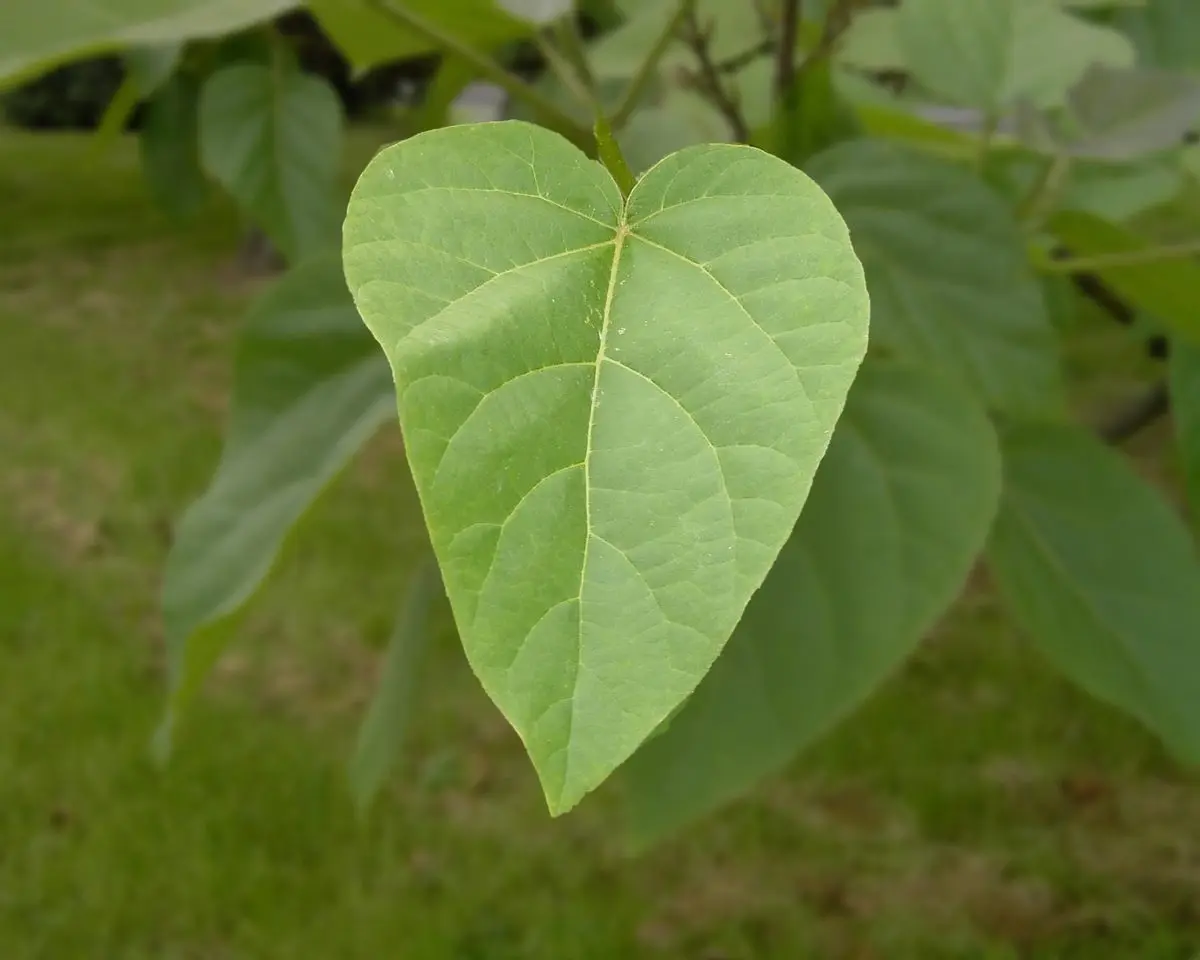
Big, 15 to 30 cm, pale green and smooth-edged with a sudden point at the tip, often three at one spot, and foul-smelling when bruised.
Upright heads of white bells about 5 cm long, spotted yellow and purple inside, in July and August.
 Learn the Indian bean tree in TreelyEvery part through the year, and a short round each day until you know it.Get Treely
Every part, in photographs
portioid, CC BY 4.0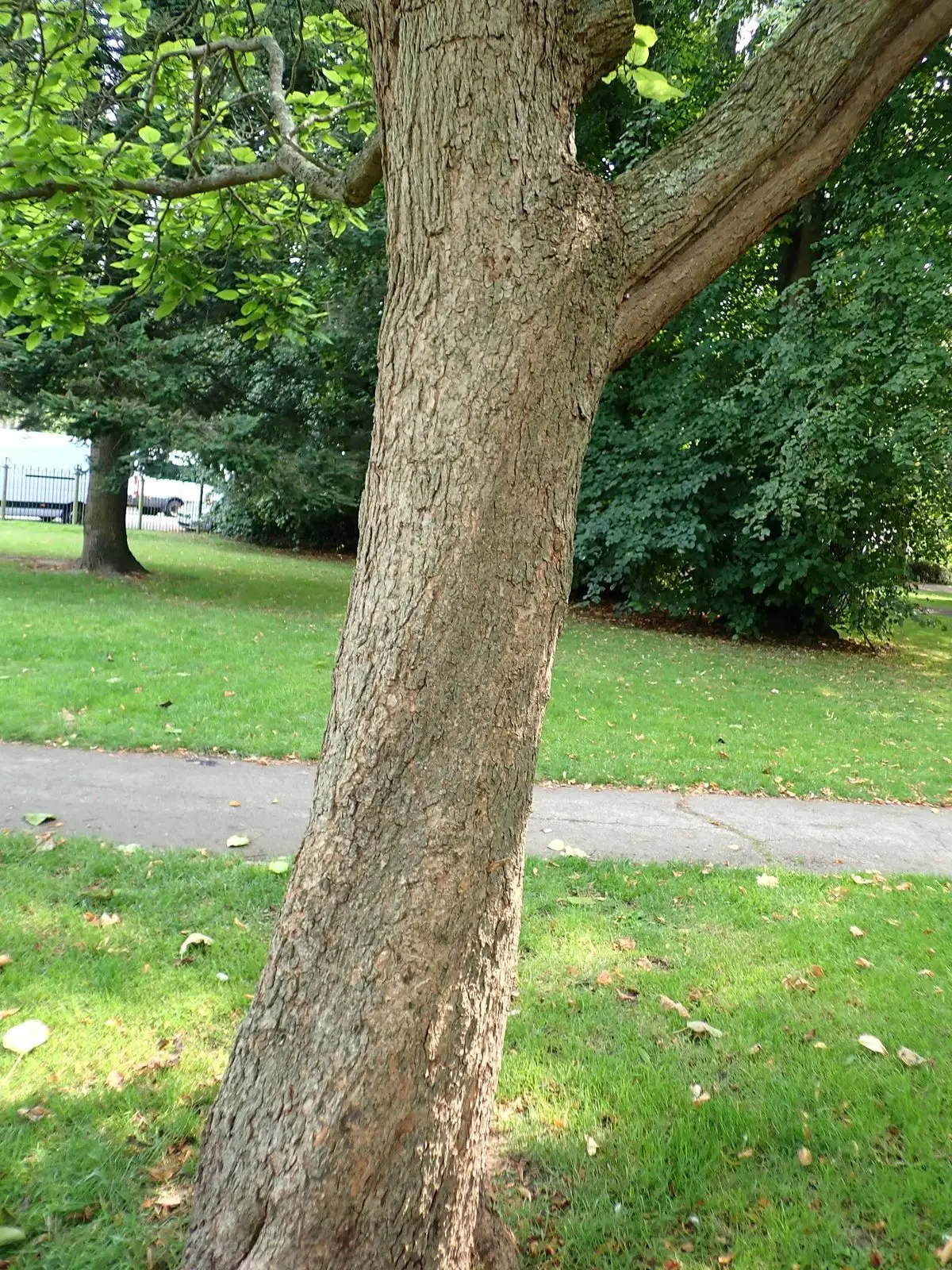
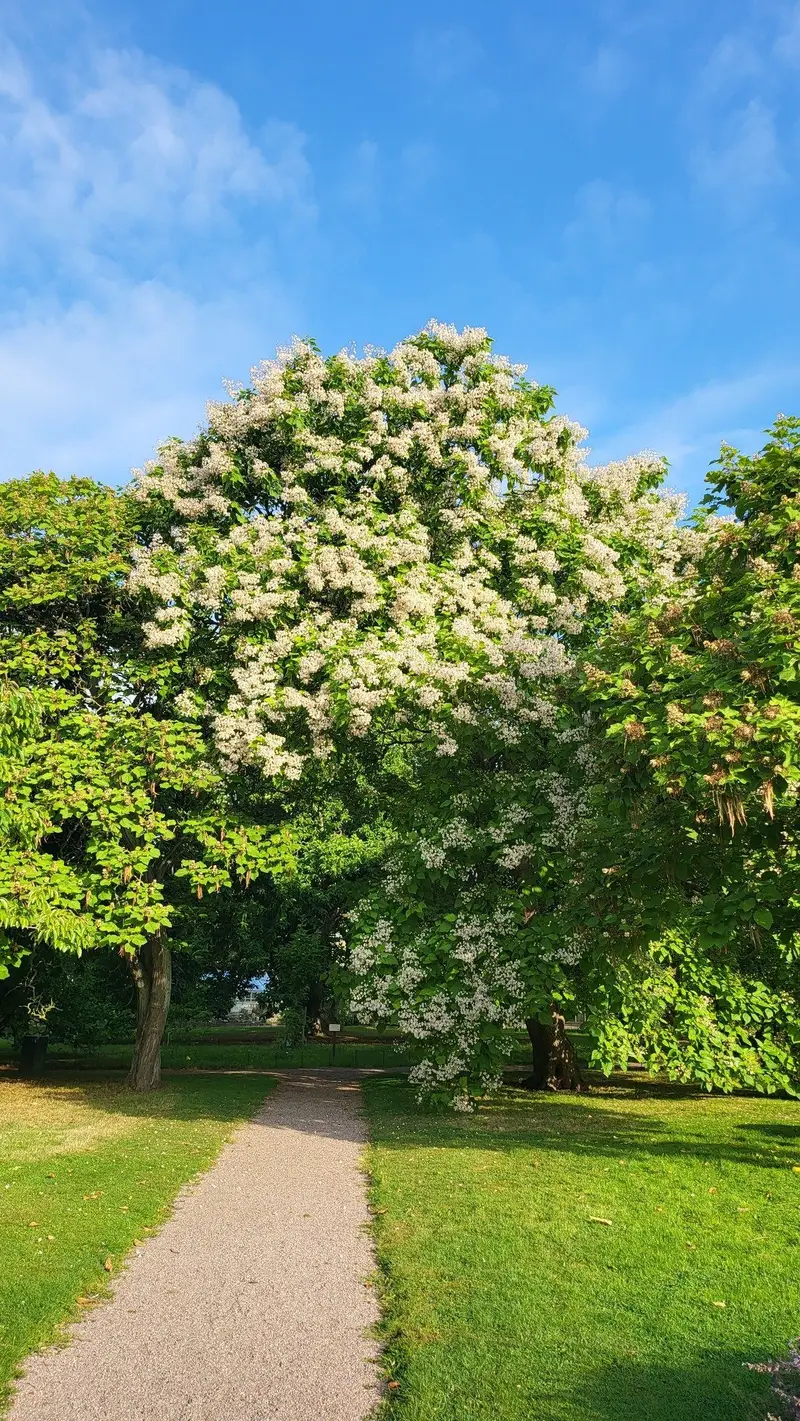 Cheongweei Gan, CC BY 4.0
When to look
JFMAMJJASOND
In leaf
Flowers
Pods
In leaf: June to October · Flowers: June to August · Pods: July to March
Where you’ll find it
Planted in parks, gardens and city streets, most often in the warmer parts of the country. It is quite common in many large cities, London among them. In its native range it grows in rich, moist soil beside streams and rivers.
In the app
There’s more of the Indian bean tree in Treely
- Every part, through the yearLeaves, bark, buds, flowers and fruit, photographed in every season
- Its lookalikes, side by sideThe checks that settle it, part by part
- A short round each dayUntil you know the Indian bean tree on sight, from any side
- Name it from a photoA leaf, the bark or a flower, and Treely tells you which tree
Free to download.
Every fact on this page is checked against the Collins Tree Guide, last in November 2026. Spotted something that looks wrong in front of a real tree? Tell us. How we check.
Photographs: Cheongweei Gan (CC BY 4.0), portioid (CC BY 4.0), nikonbird007 (CC0), bobwardell (CC0), steve_mcwilliam (CC0). With thanks to everyone who shares their photographs on iNaturalist and Wikimedia Commons.