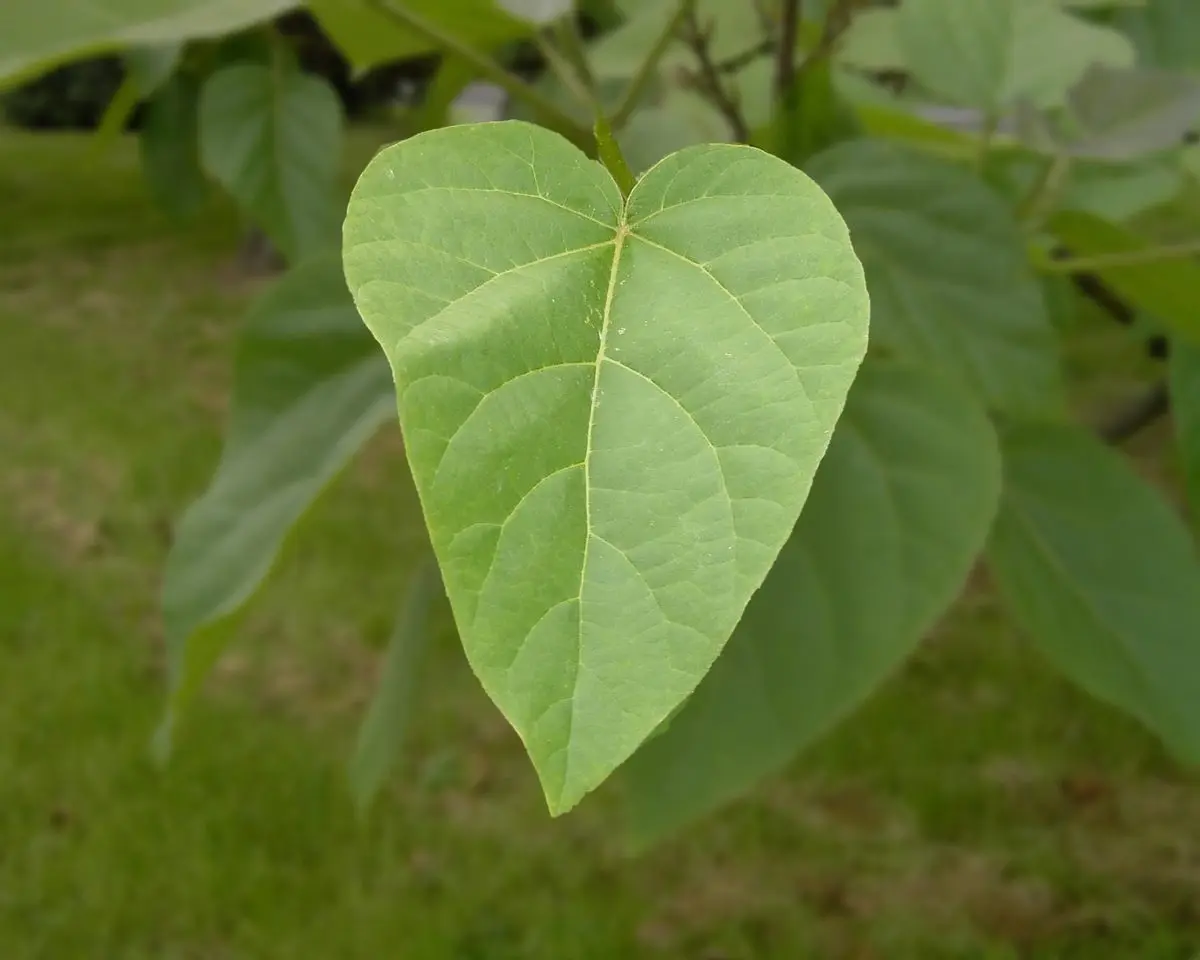
Common lime
Tilia × europaeaCommon lime is a tall, domed tree planted in streets and parks, often with a mass of twiggy shoots round its foot. Its heart-shaped leaves are lopsided at the base.
How to identify common lime →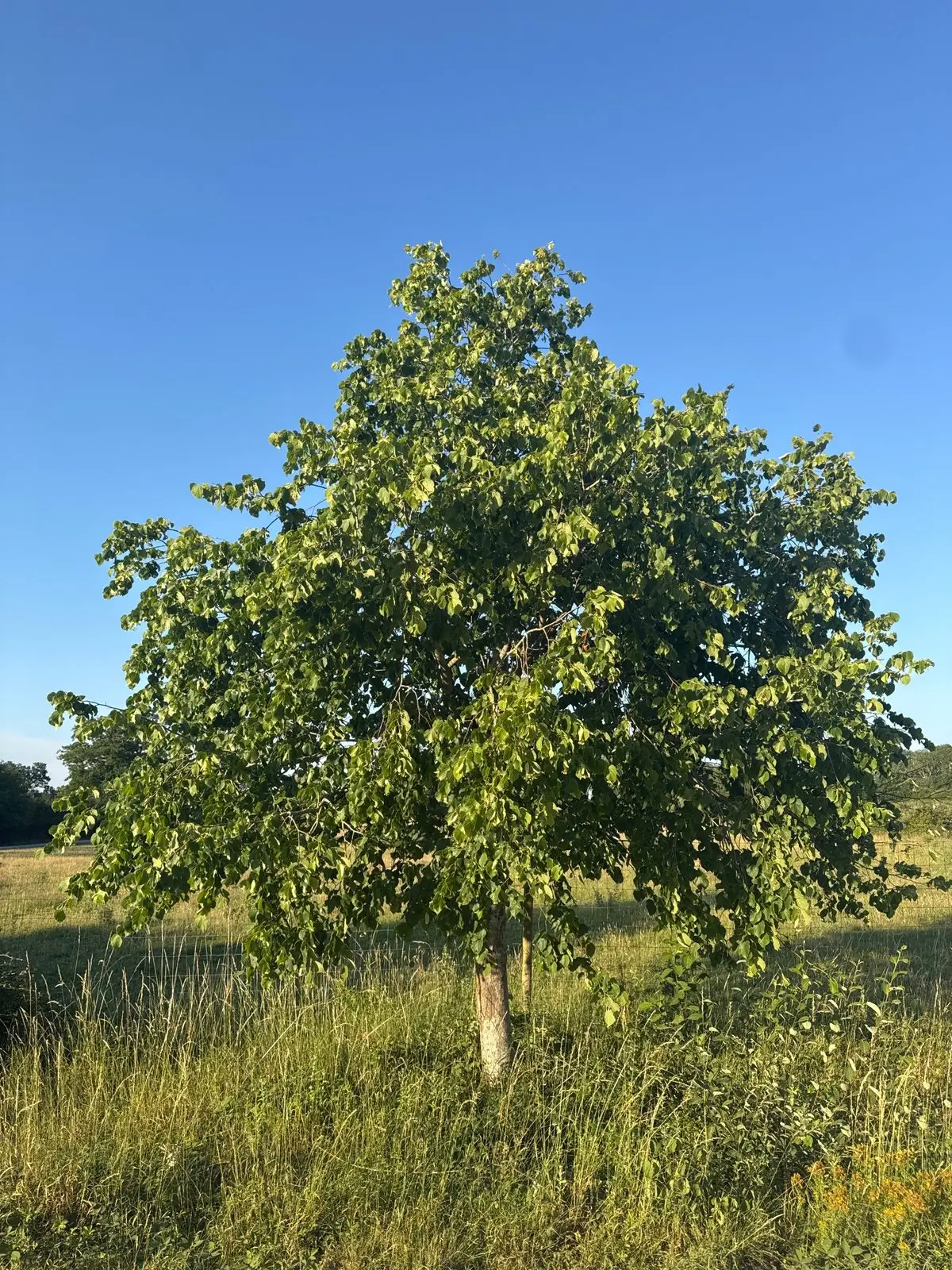
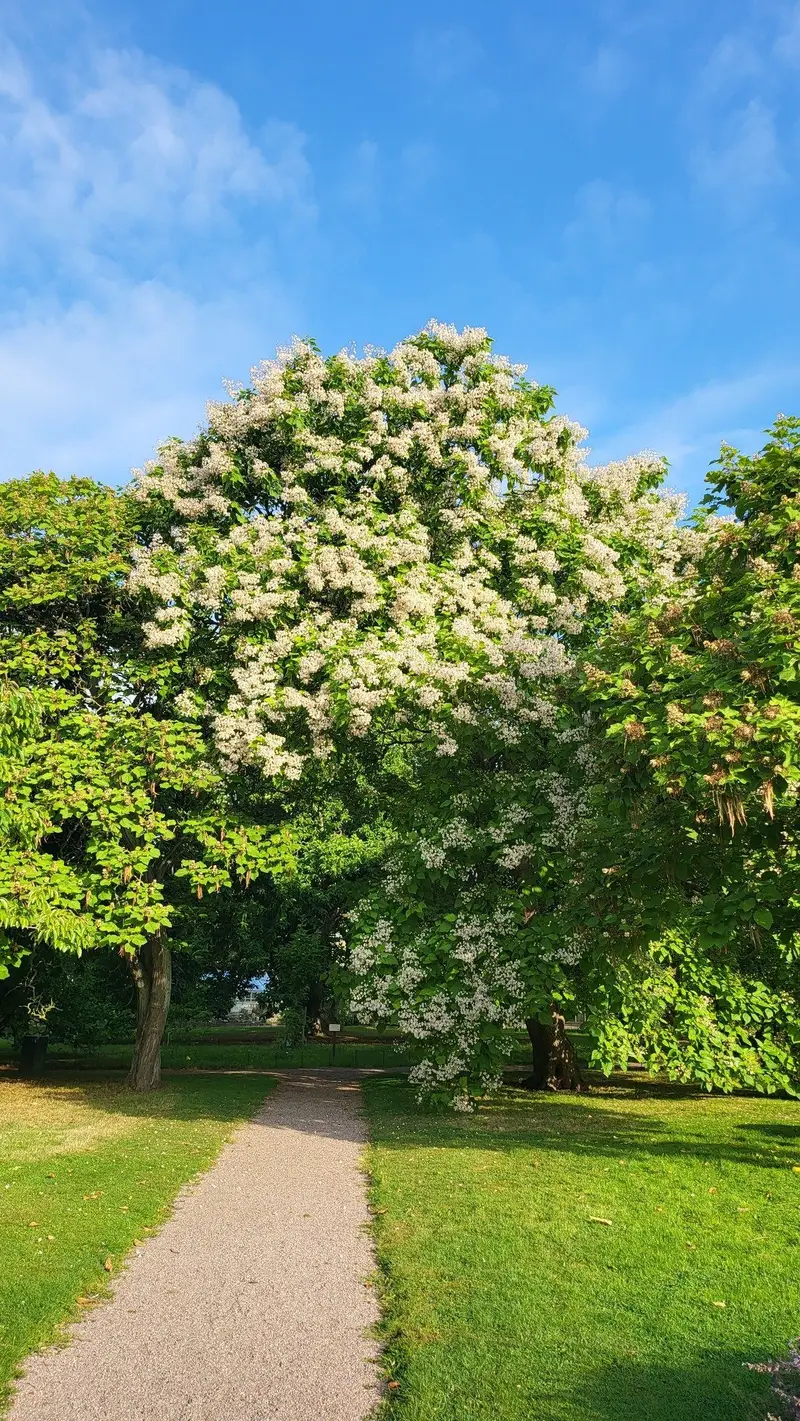 Cheongweei Gan, CC BY 4.0
Both are big planted trees with broad leaves, rounded or heart-shaped at the base.
The quickest check is the leaf's size and edge. Common lime: about 10 cm, finely toothed, lopsided at the base. Indian bean tree: 15 to 30 cm, smooth-edged, with a sudden point. No leaves on the tree? Check the flower cluster in summer.
| Look at | Common lime | Indian bean tree |
|---|---|---|
| Leaf's size and edge | About 10 cm, finely toothed, lopsided at the base | 15 to 30 cm, smooth-edged, with a sudden point |
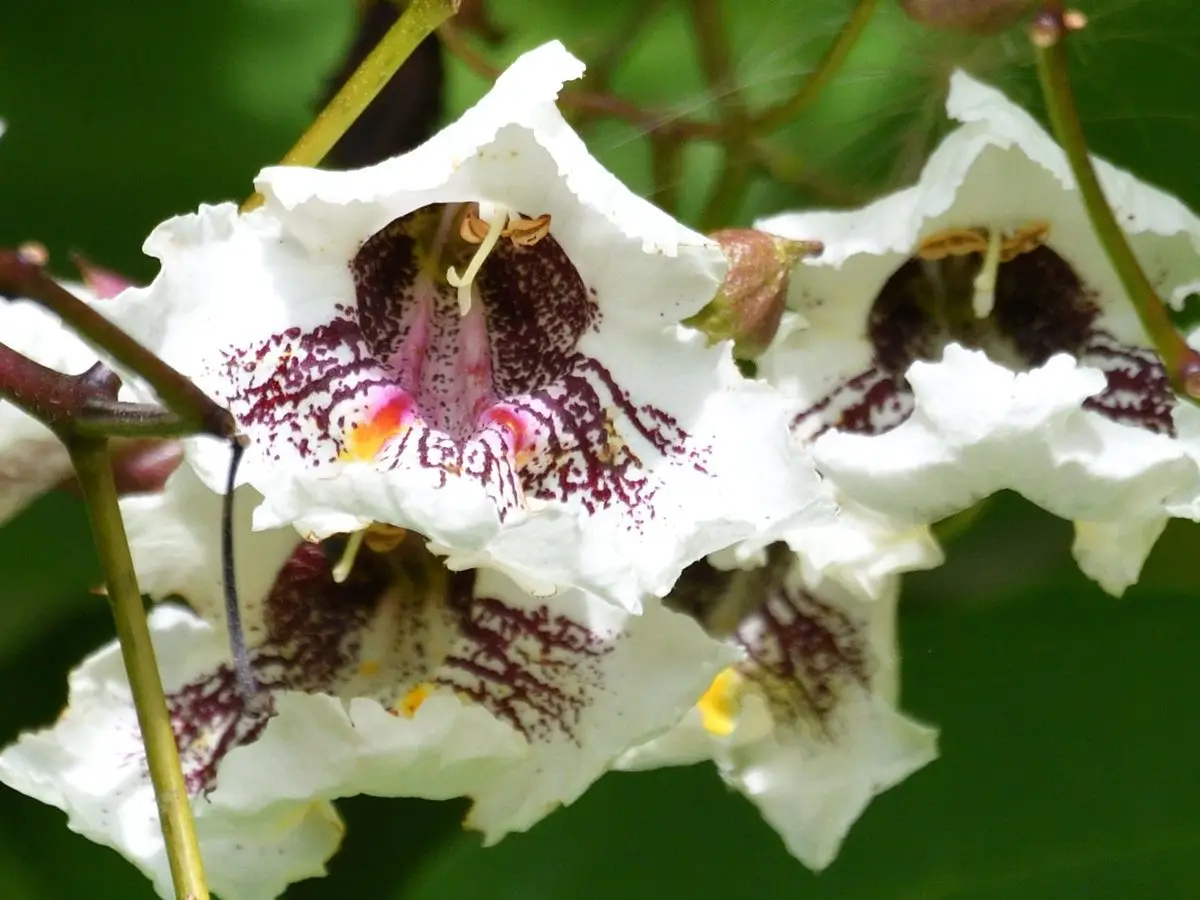
| Flower cluster in summer | Small pale yellow flowers hanging under a leafy strap | White bells about 5 cm long, in upright heads |
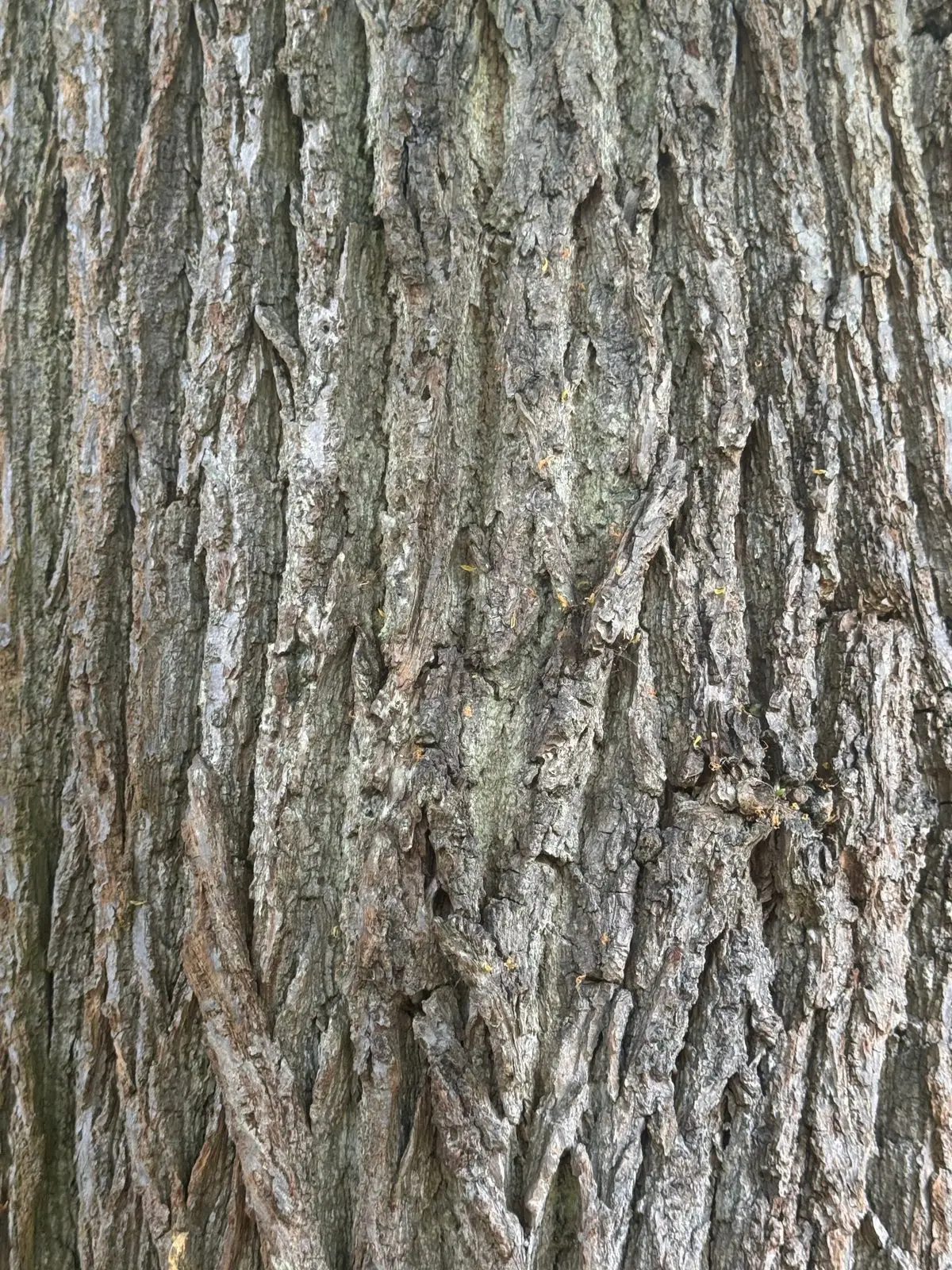
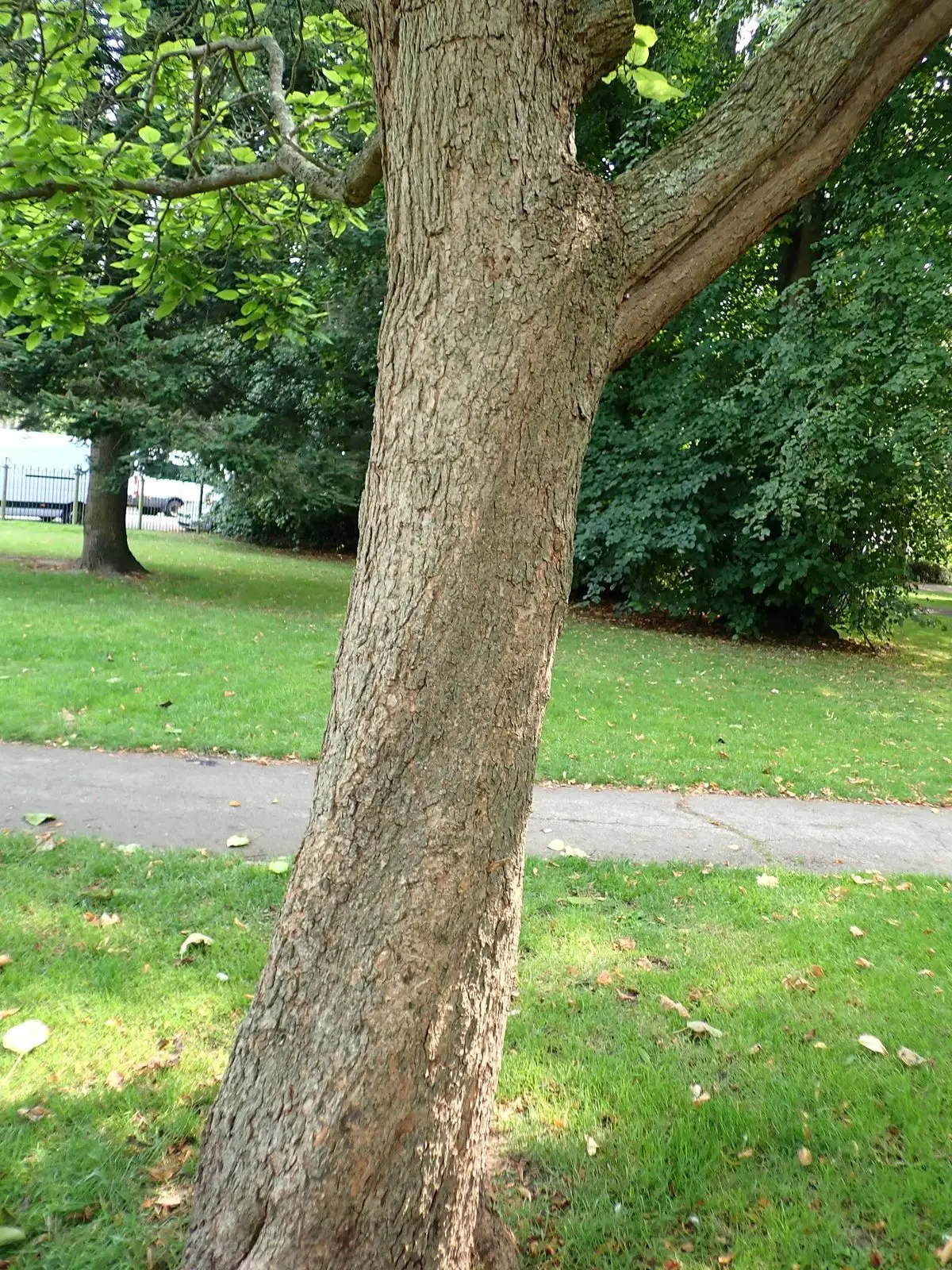
| Lower trunk | Pale greyish brown, wrapped in twiggy sprouts | Shallow scaly squares, pinkish orange |
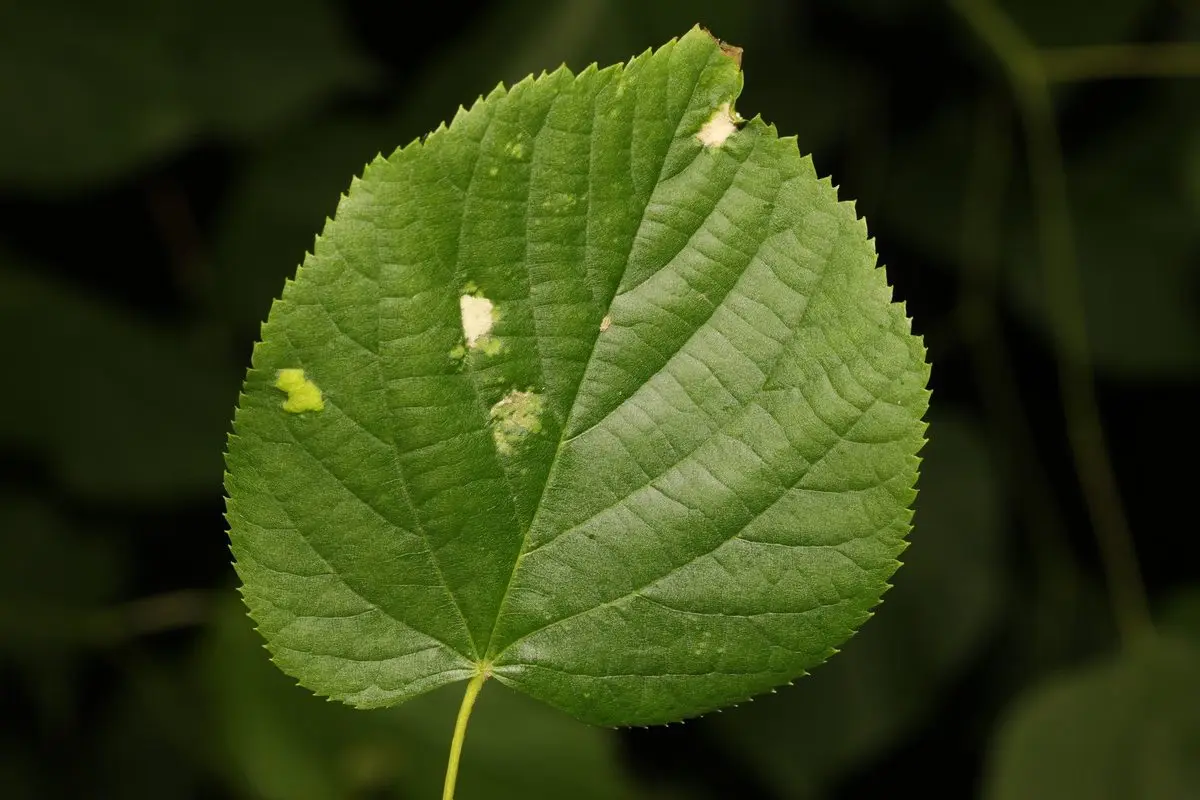
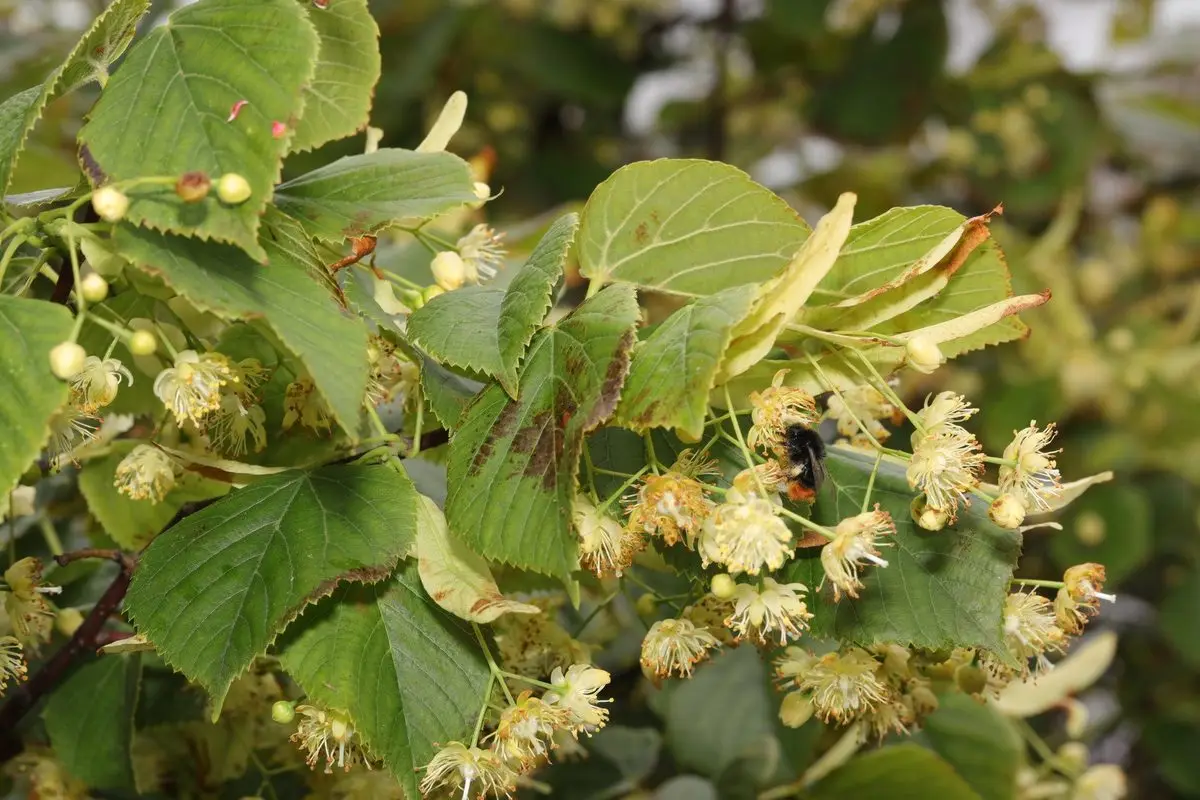
Common lime is a tall, domed tree planted in streets and parks, often with a mass of twiggy shoots round its foot. Its heart-shaped leaves are lopsided at the base.
How to identify common lime →Indian bean tree is a broad, open tree with big, pale green leaves. After hot summers, long, thin pods up to 40 cm hang from its bare branches in winter.
How to identify Indian bean tree →Free to download.
Every fact on this page is checked against the Collins Tree Guide, last in November 2026. Spotted something that looks wrong in front of a real tree? Tell us. How we check.
Photographs: Leon Cross (CC BY 4.0), Cheongweei Gan (CC BY 4.0), steve_mcwilliam (CC0), portioid (CC BY 4.0), nikonbird007 (CC0), bobwardell (CC0). With thanks to everyone who shares their photographs on iNaturalist and Wikimedia Commons.