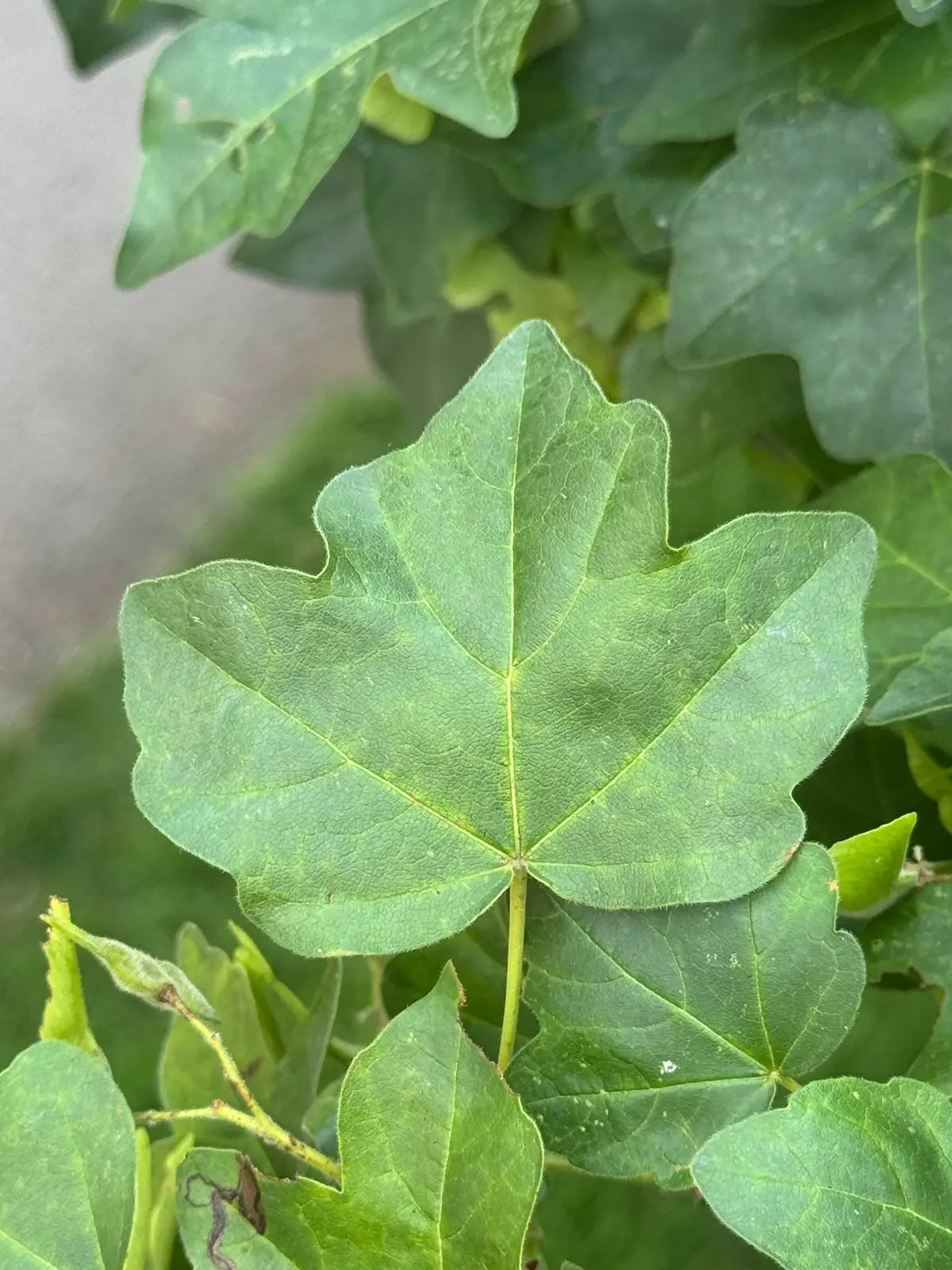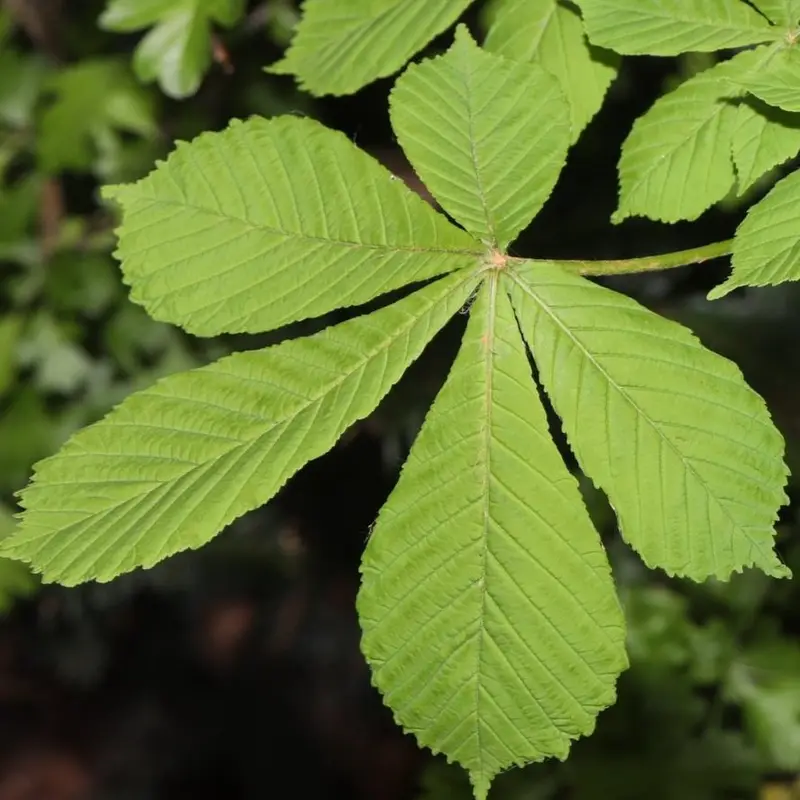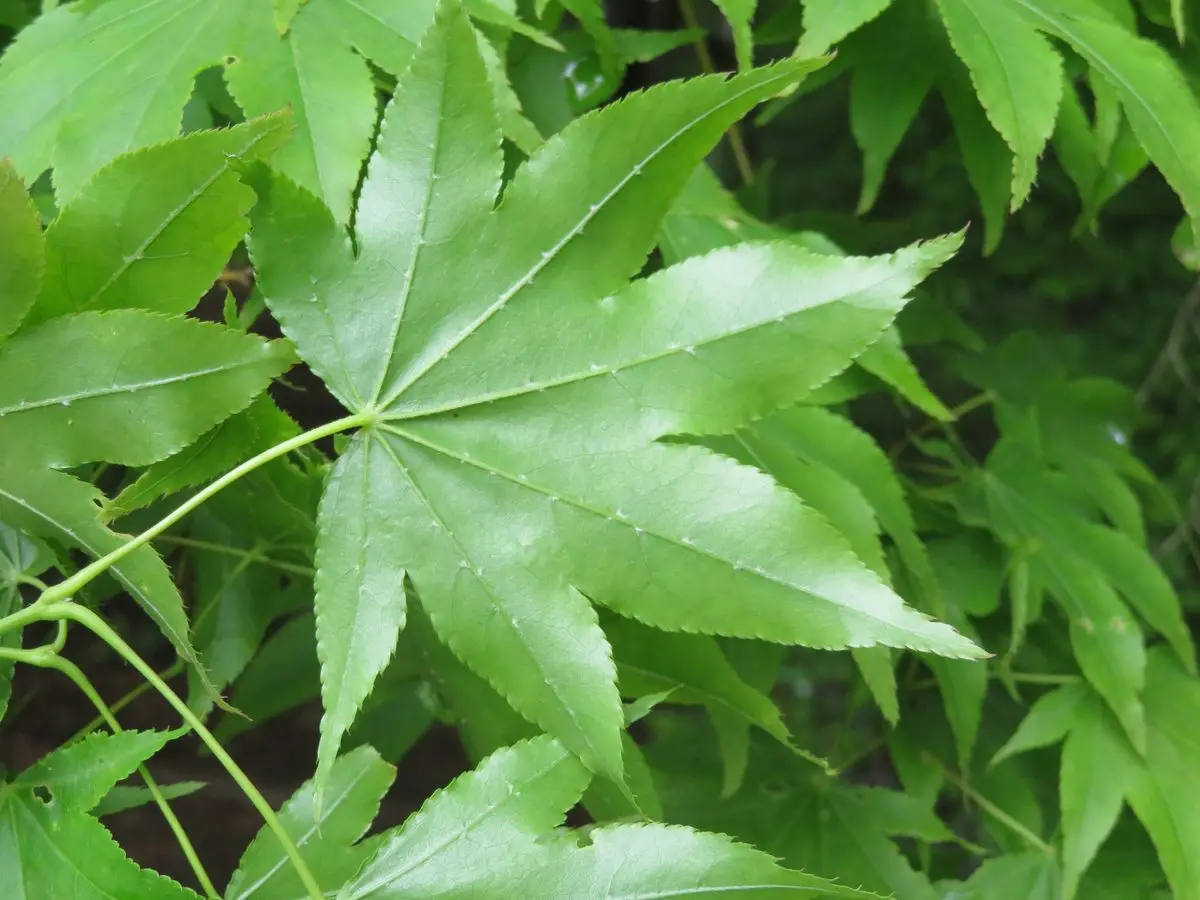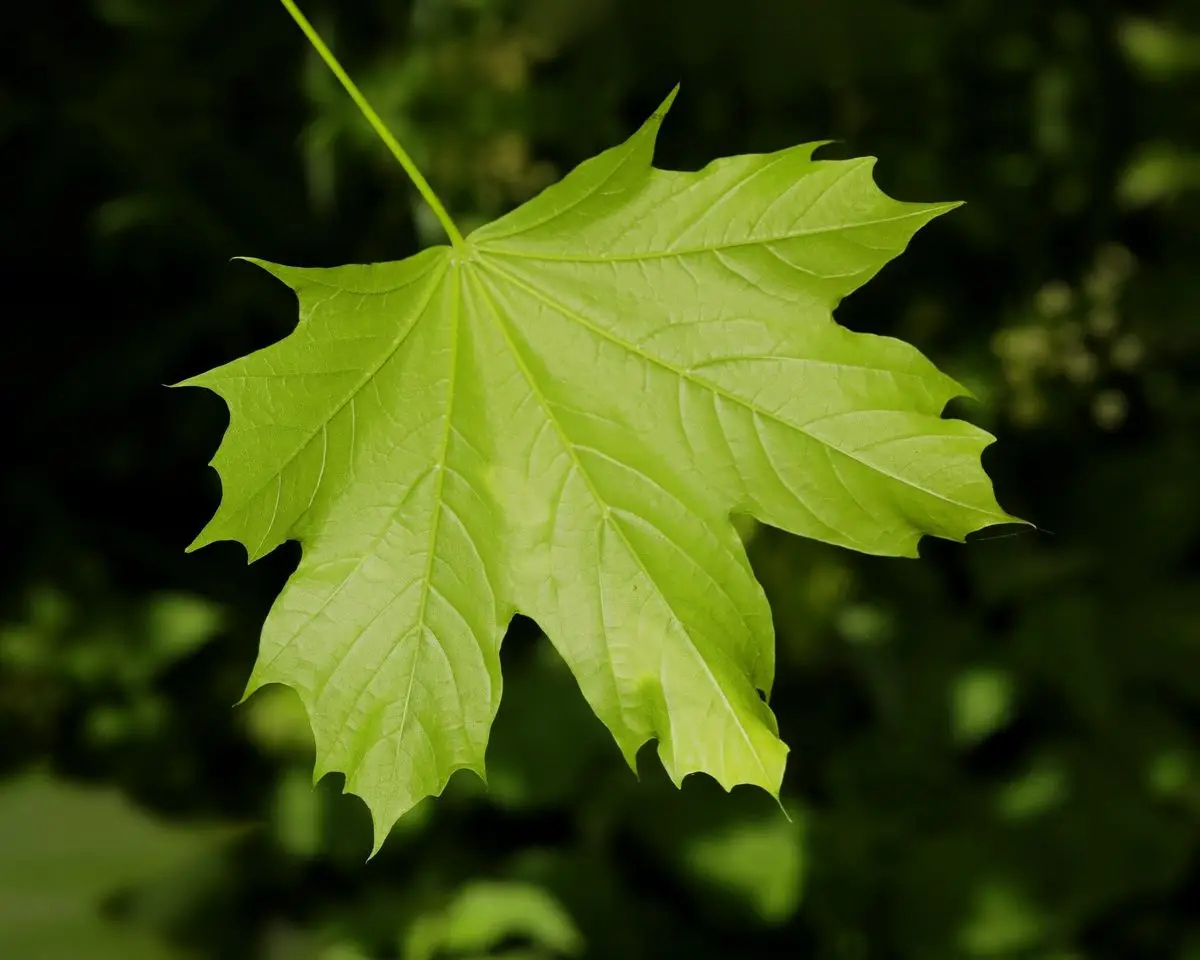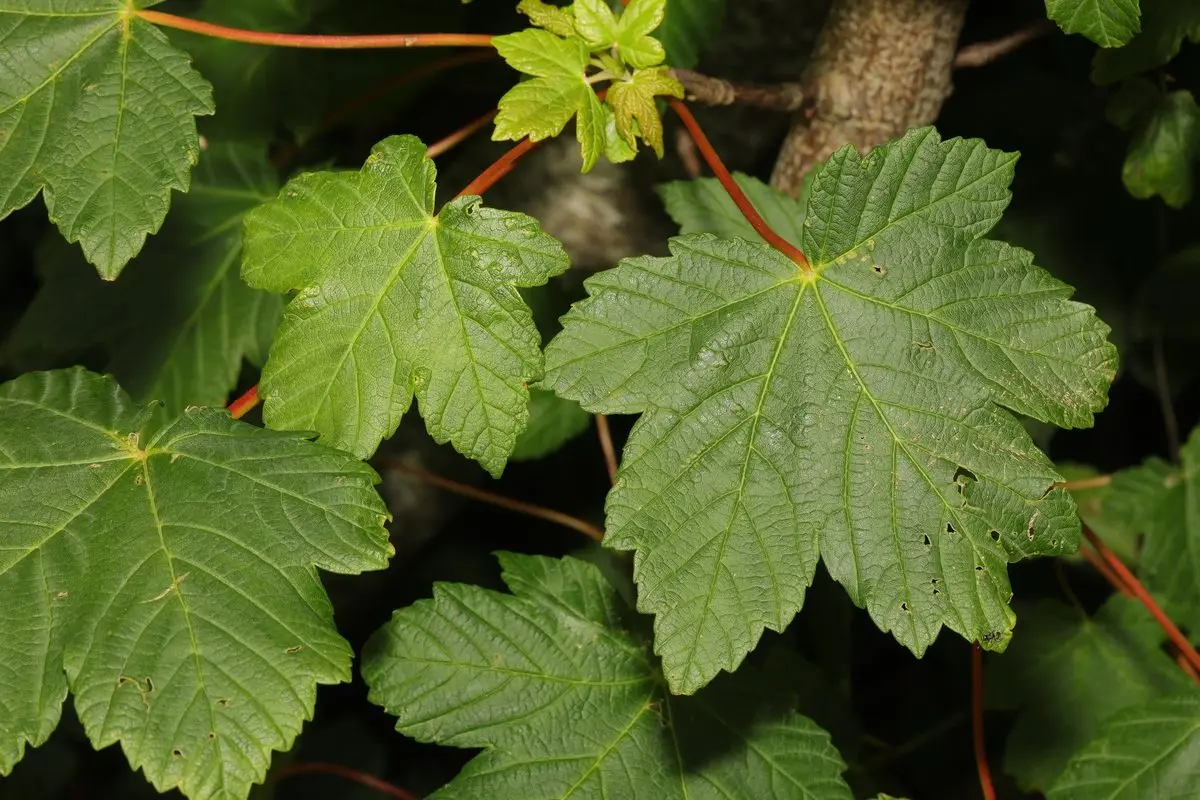
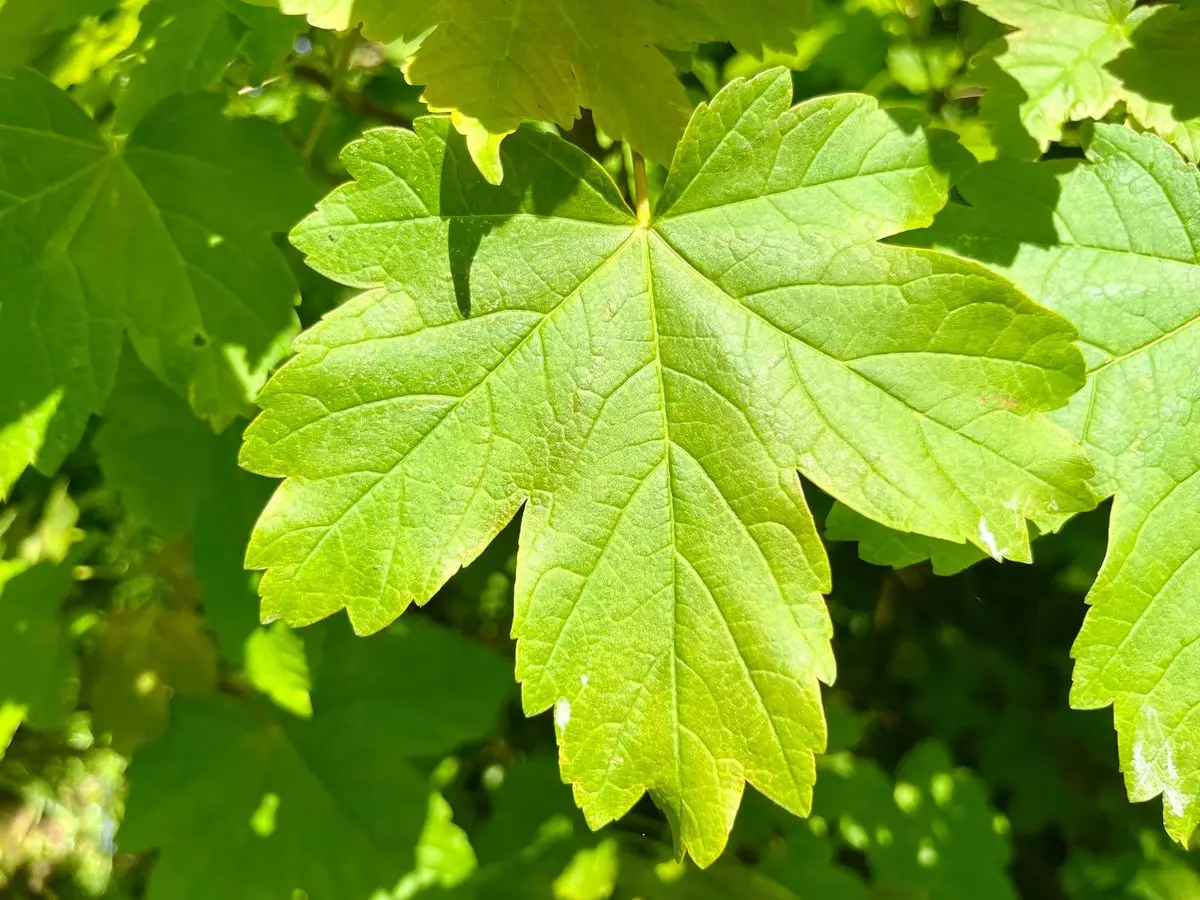
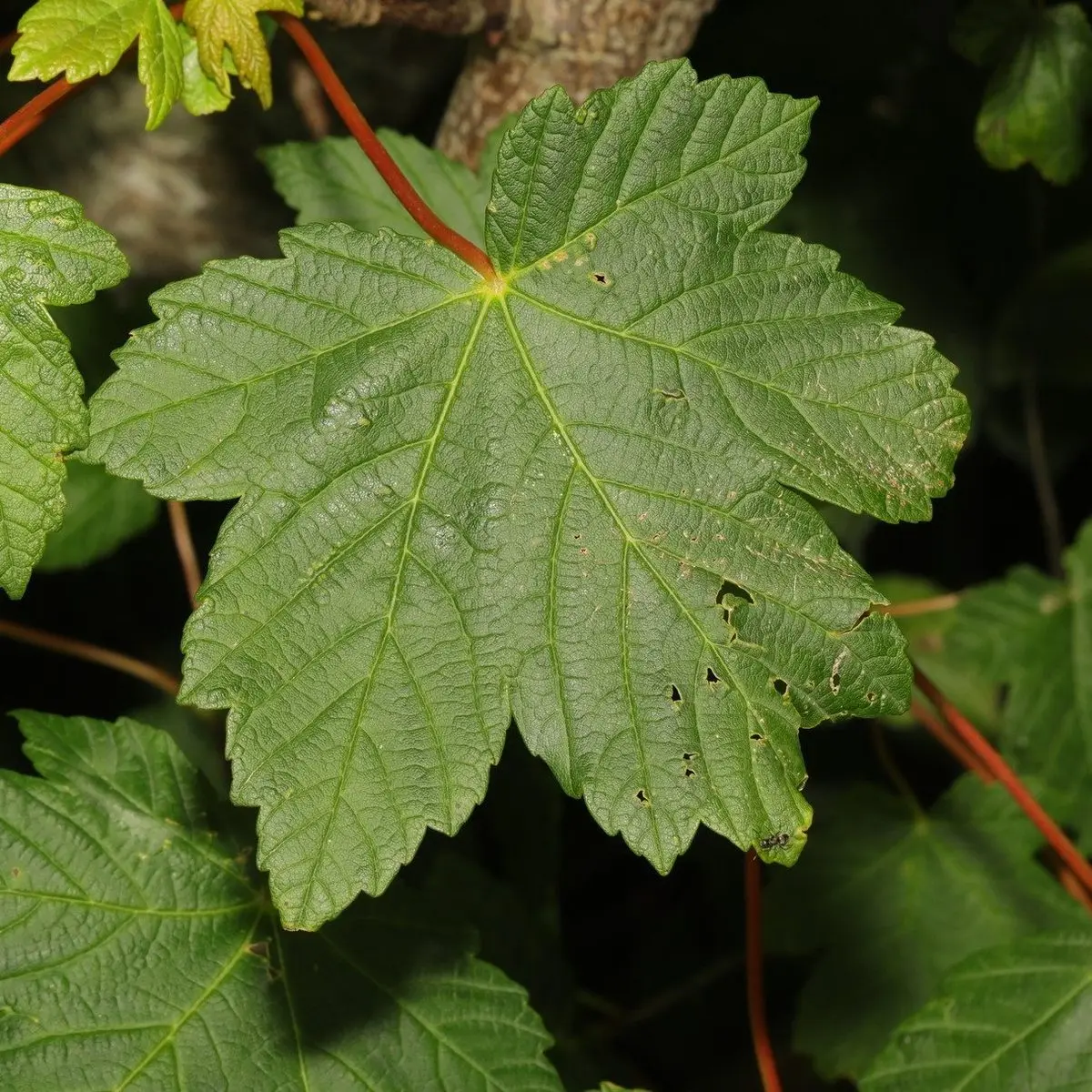
Sycamore leaves have five pointed lobes, spread like the fingers of a broad hand, with coarse teeth all round the edge, and each tooth blunt at the tip.
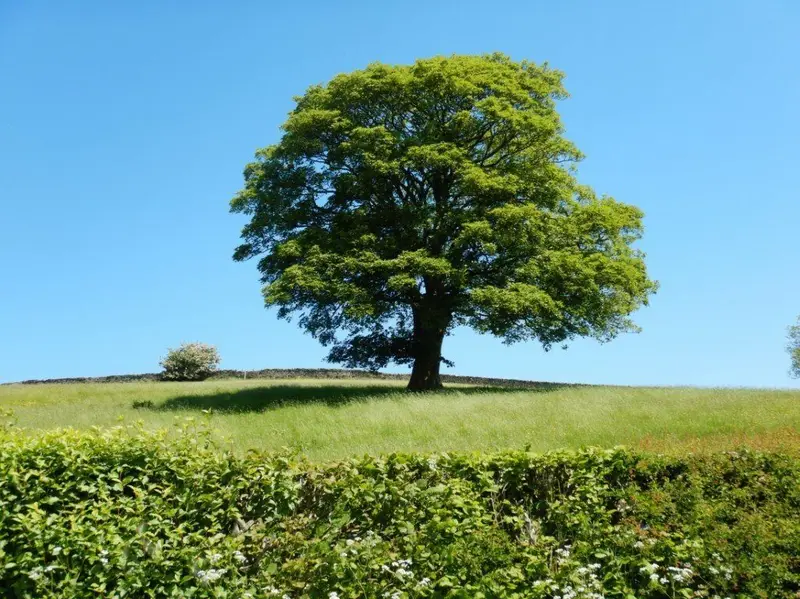
Acer pseudoplatanus · Sapindaceae
Also called great maple
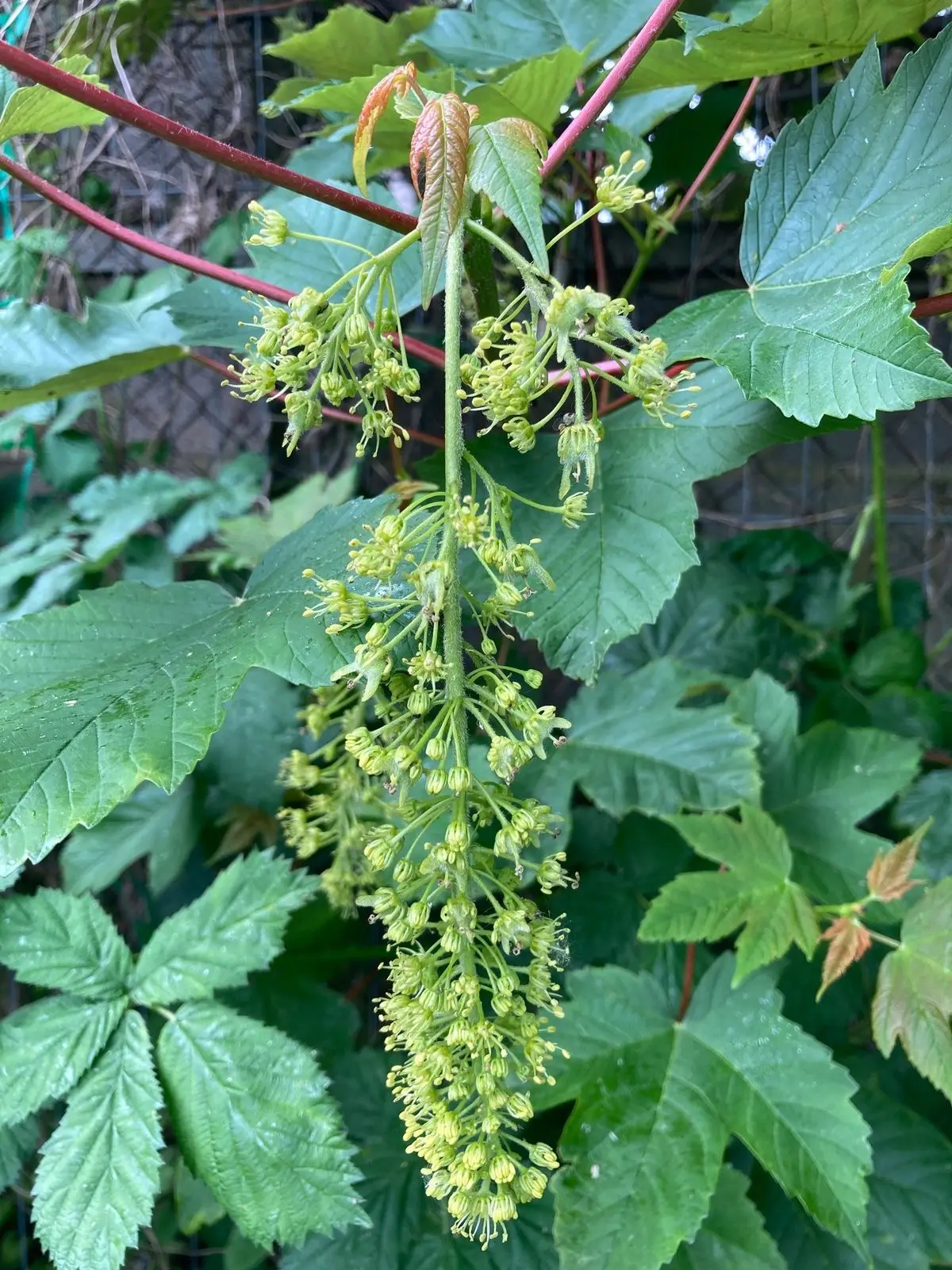
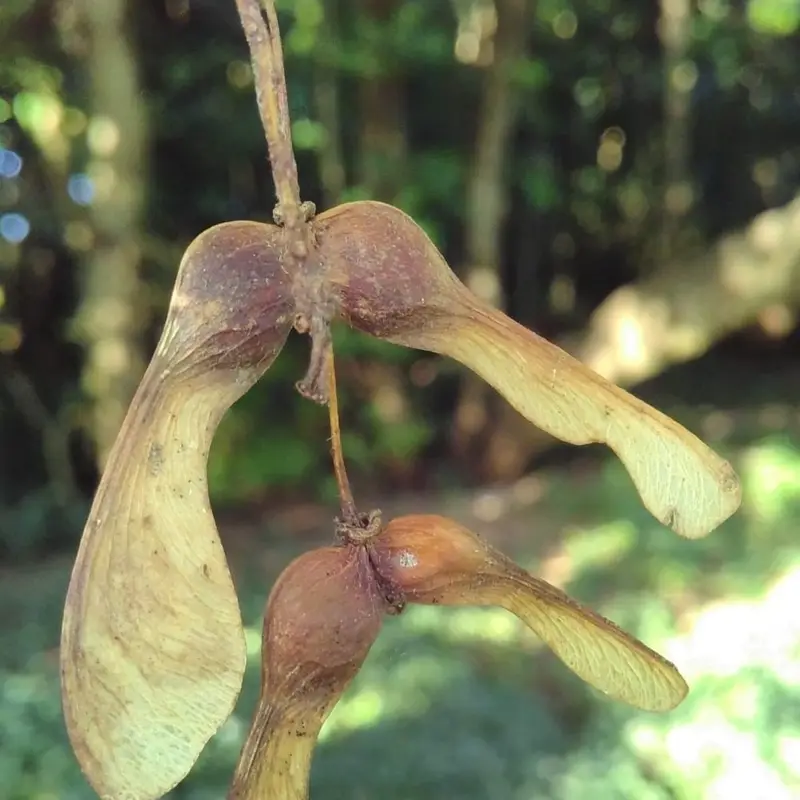
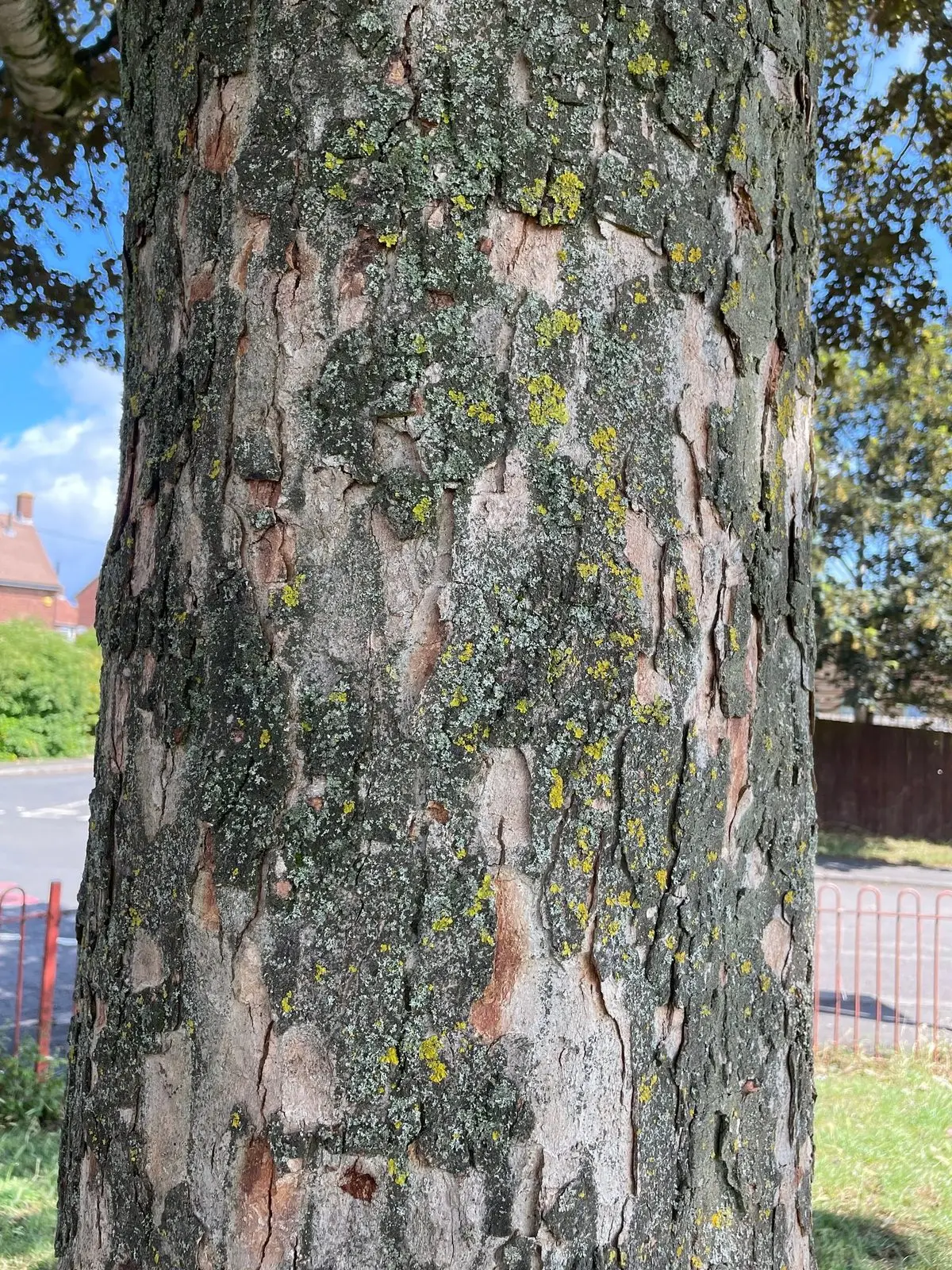
Sycamore grows into a huge, heavy dome. Its large leaves have five lobes edged with coarse, blunt teeth, and its paired keys hang with their wings set at a right angle or narrower.
Often mistaken for Norway maple. How to tell them apart →LeavesFive lobes and blunt teeth, on a long, often red stalk.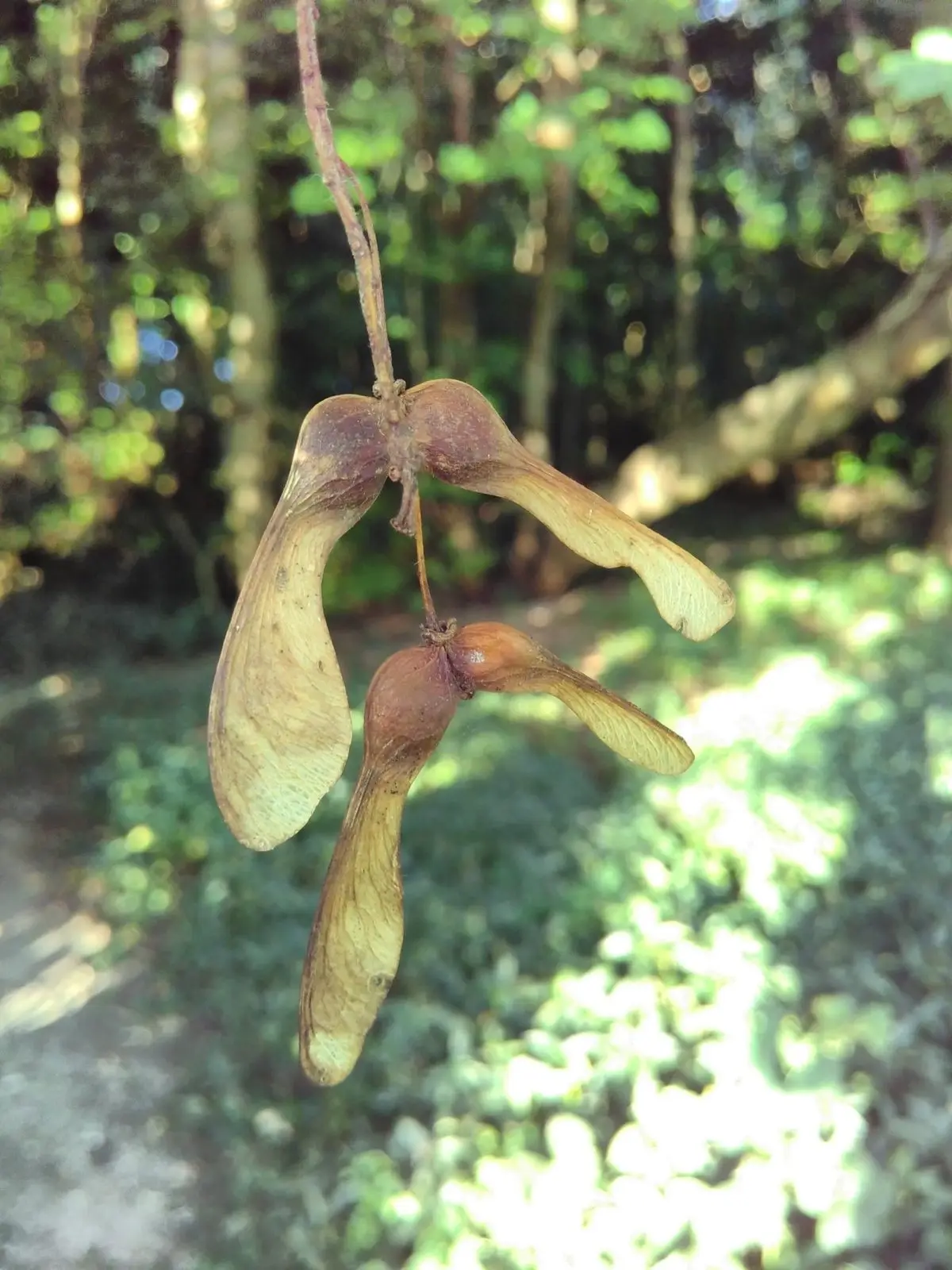 KeysTwo wings in a V, at a right angle or narrower, in hanging bunches.
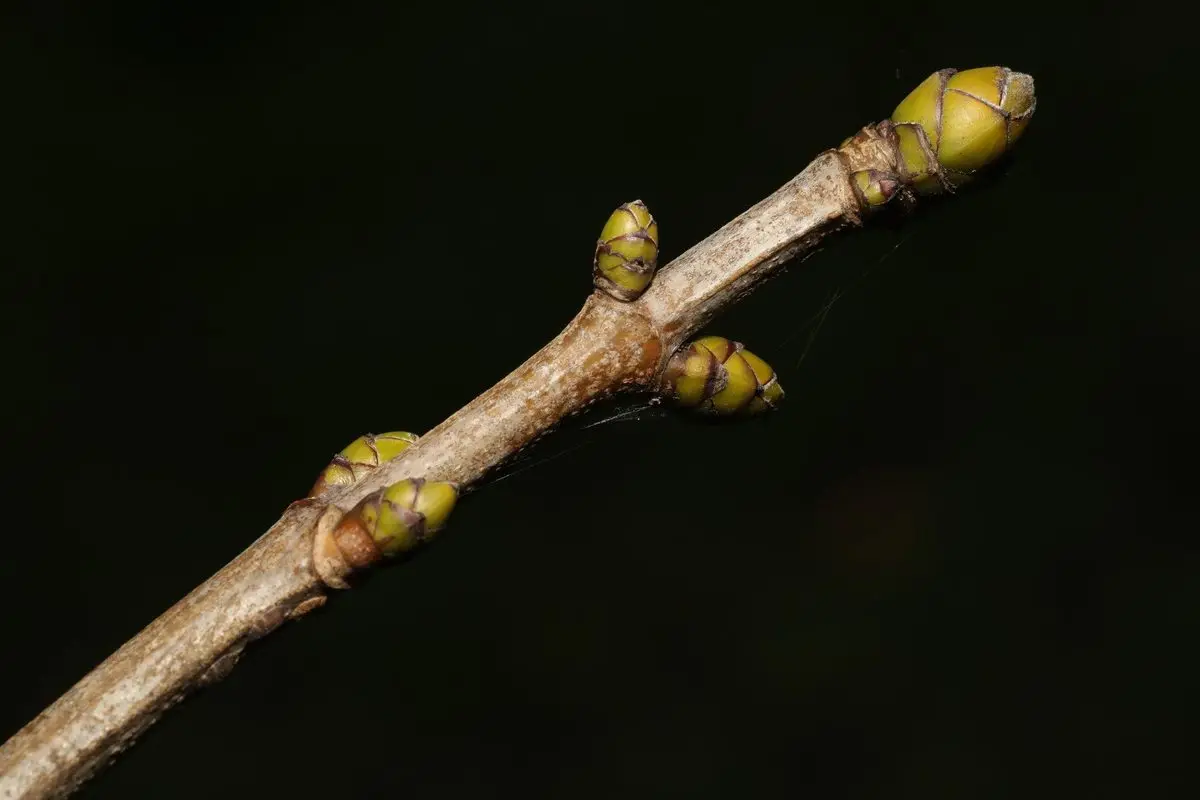
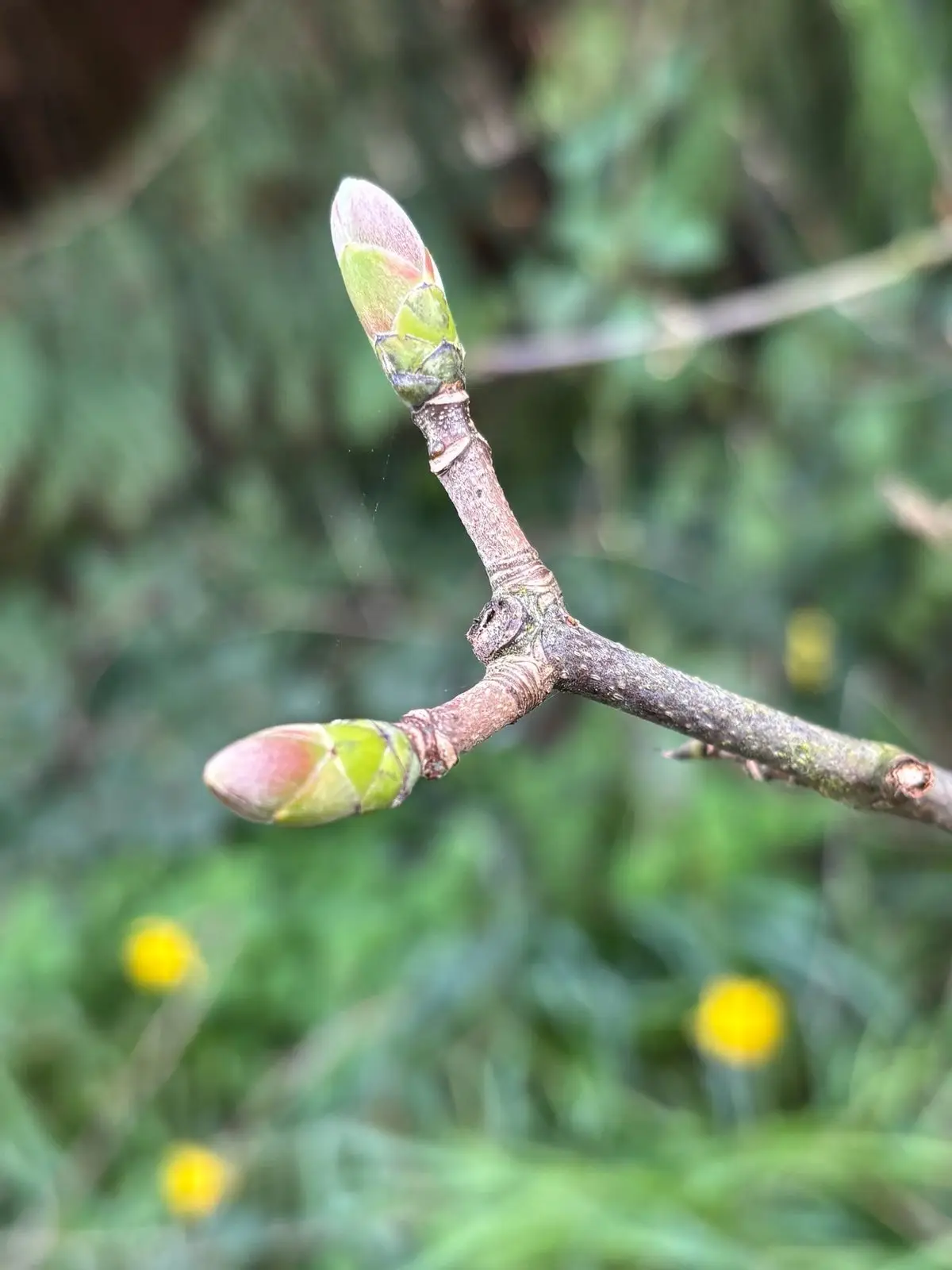
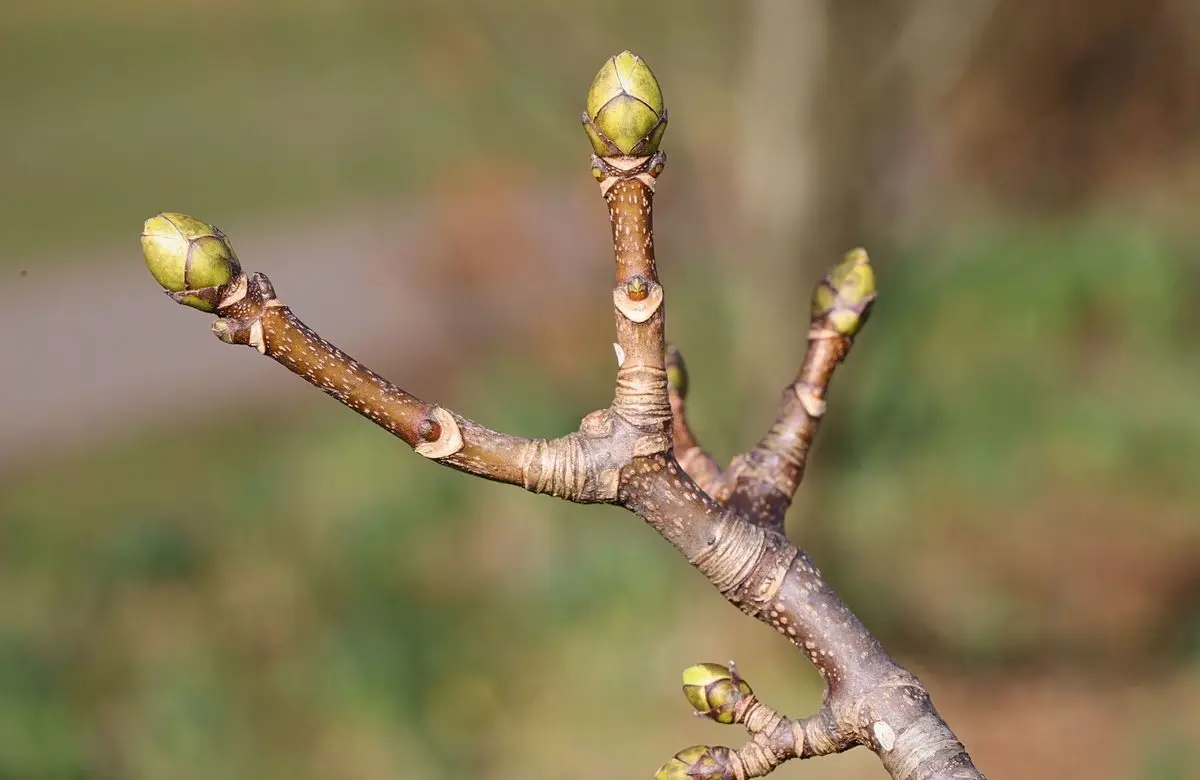 Green budsGreen buds in facing pairs, in winter.
Then check · Flower tailsIn April and May, as the leaves open, narrow greenish yellow flower tails hang from the shoot tips. Norway maple's yellow flowers stand upright, and open before its leaves.
Sycamore leaves have five pointed lobes, spread like the fingers of a broad hand, with coarse teeth all round the edge, and each tooth blunt at the tip.
The winged seeds, the helicopters, come in pairs with their wings at a right angle or narrower, like a V. They hang in bunches through summer and autumn.
In winter the buds are big and green, sometimes tipped red, and sit in facing pairs along the shoot.
 Learn the sycamore in TreelyEvery part through the year, and a short round each day until you know it.Get Treely
 Kieran Roy Powell, CC BY 4.0
 Nick Butcher, CC BY 4.0
 Yves Bas, CC BY 4.0
 friendsofdrpep, CC BY 4.0
In leaf: March to November · Flowers: April to June · Keys: May to November
Every tree on the calendar · How to identify trees in winter
Woods on rich or heavy soils, hedgerows, parks and churchyards, and rows planted for shelter in the uplands and along the coast. It grows almost throughout Britain, and its seedlings invade woods on chalk and heavy clay in south-east England.
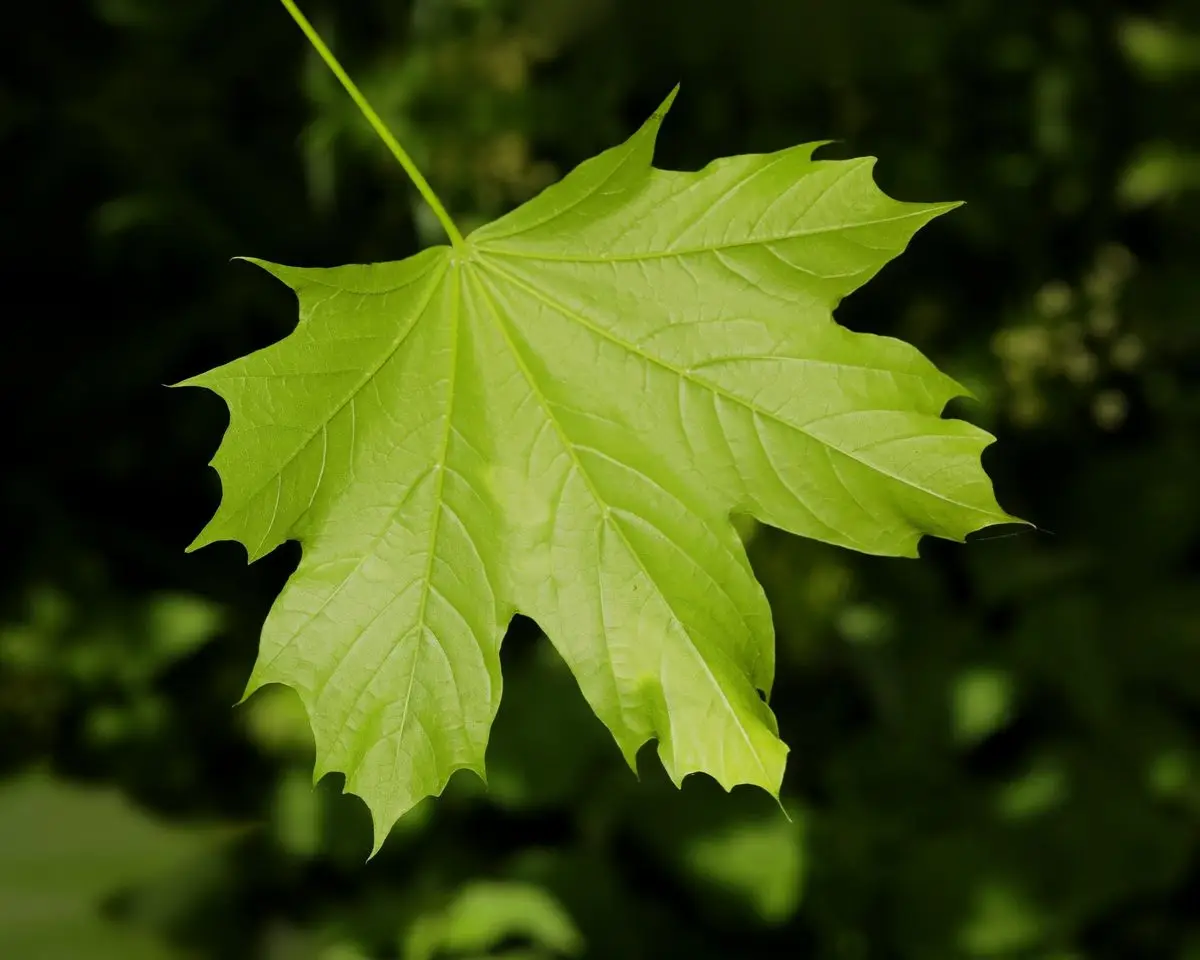 Sycamore or Norway maple?The hardest to tell apart. Both have five-lobed leaves on long stalks.Leaf edge→
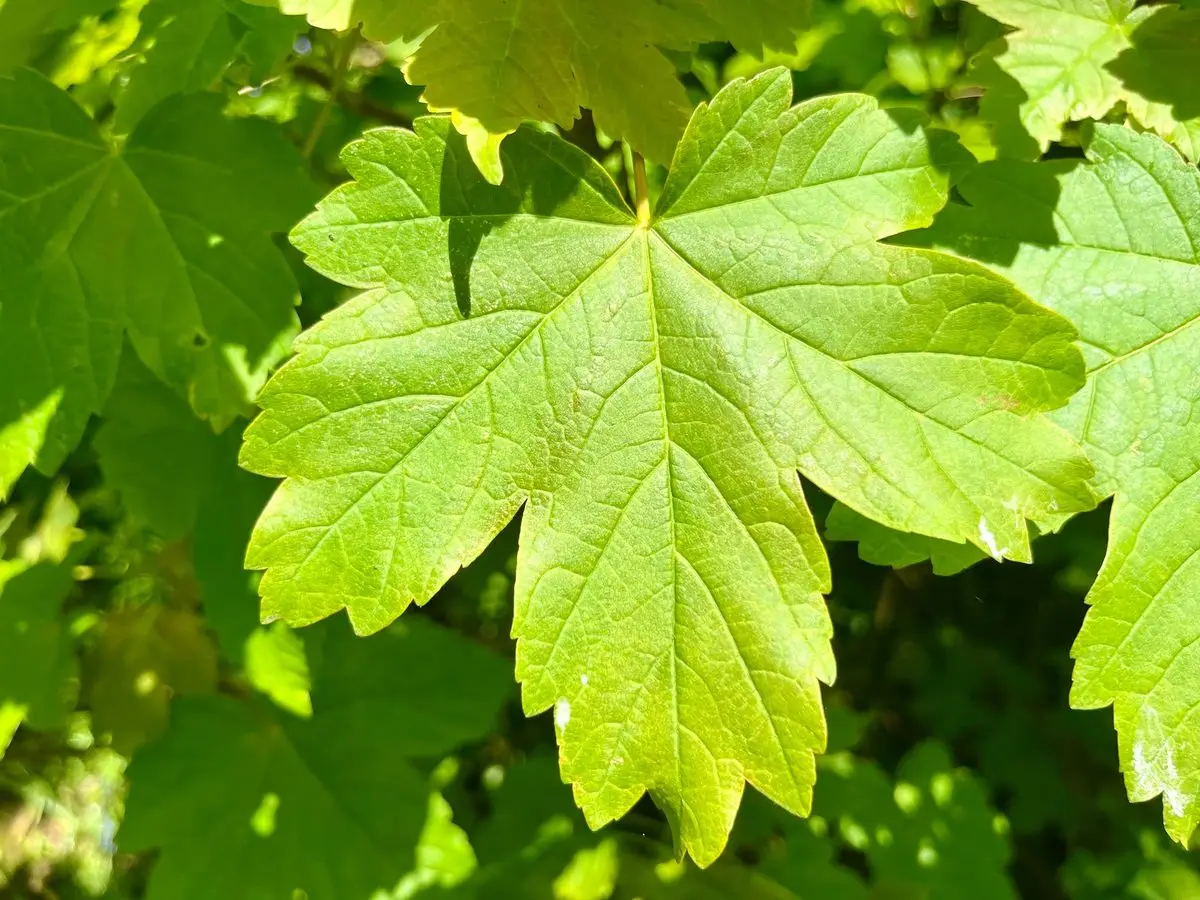
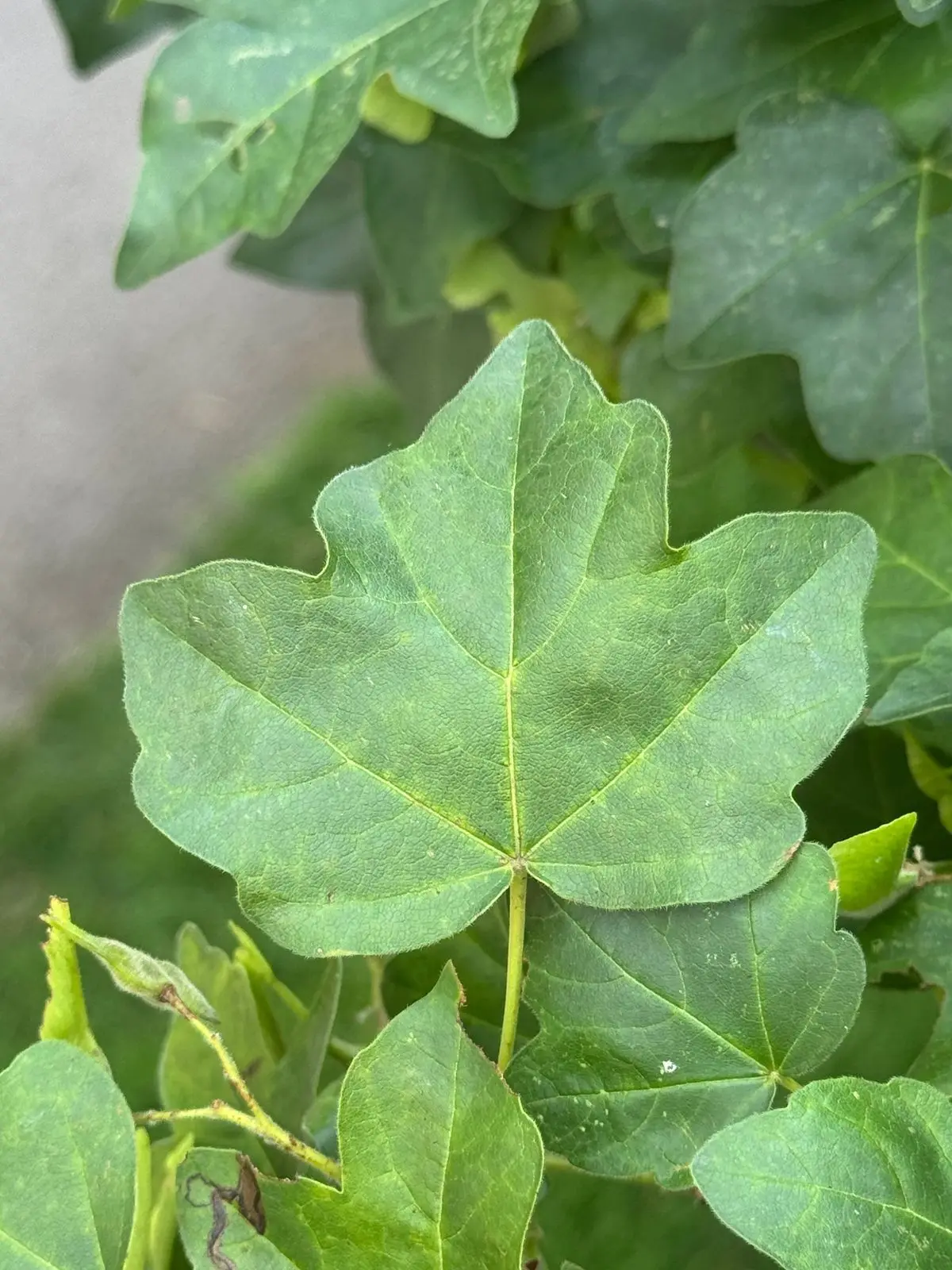 Sycamore or field maple?Both are maples with lobed leaves and paired keys.Lobes and their teeth→
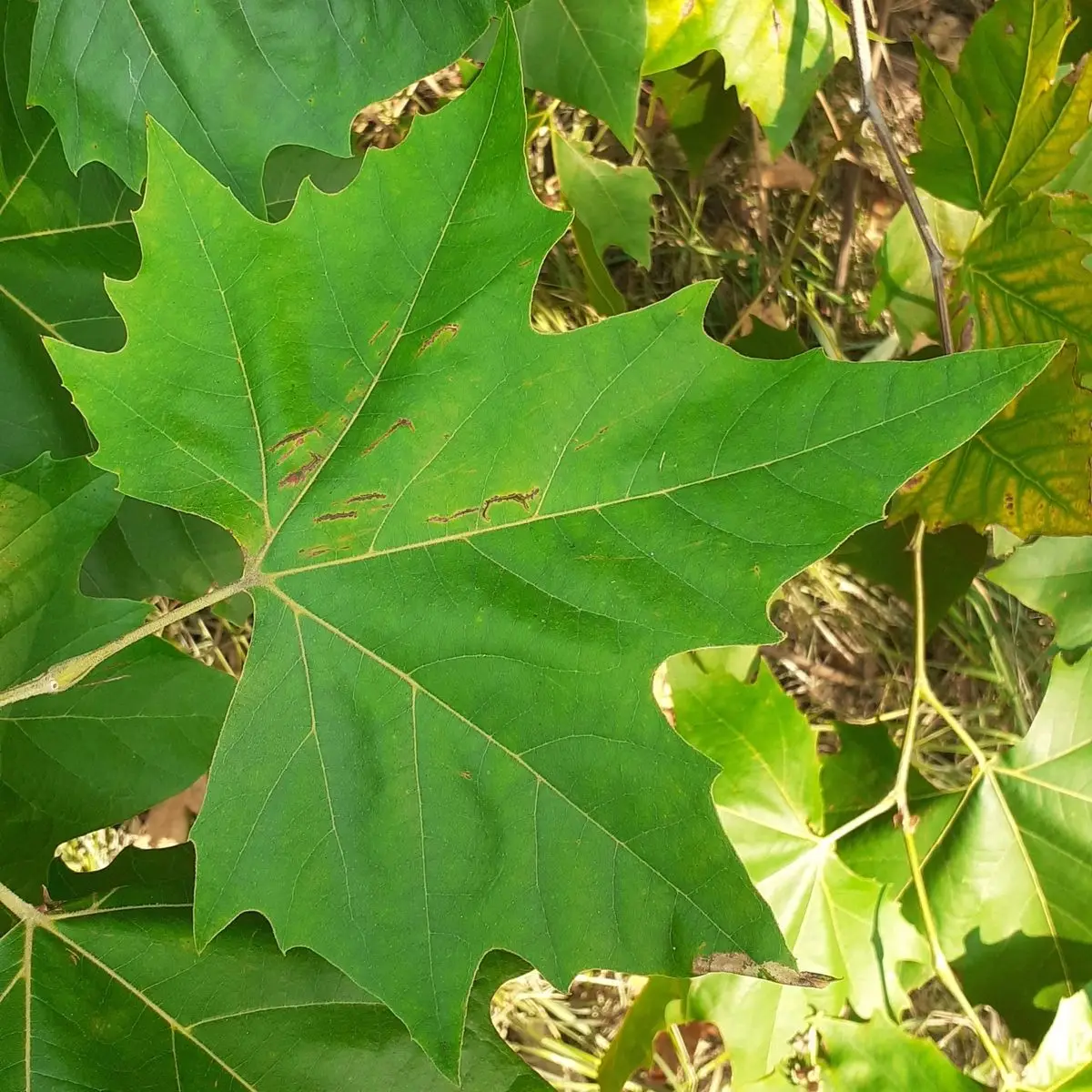 Sycamore or London plane?Both are big park trees with lobed leaves and flaking bark.How the leaves sit→
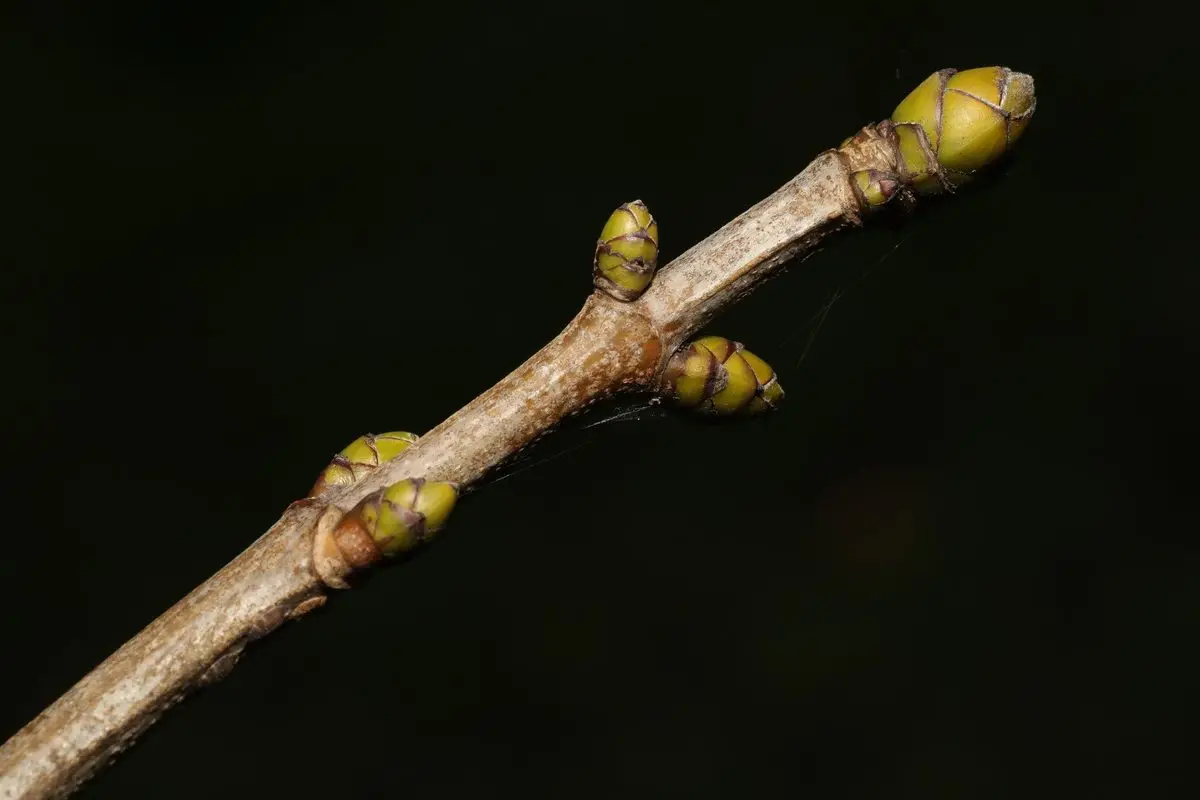
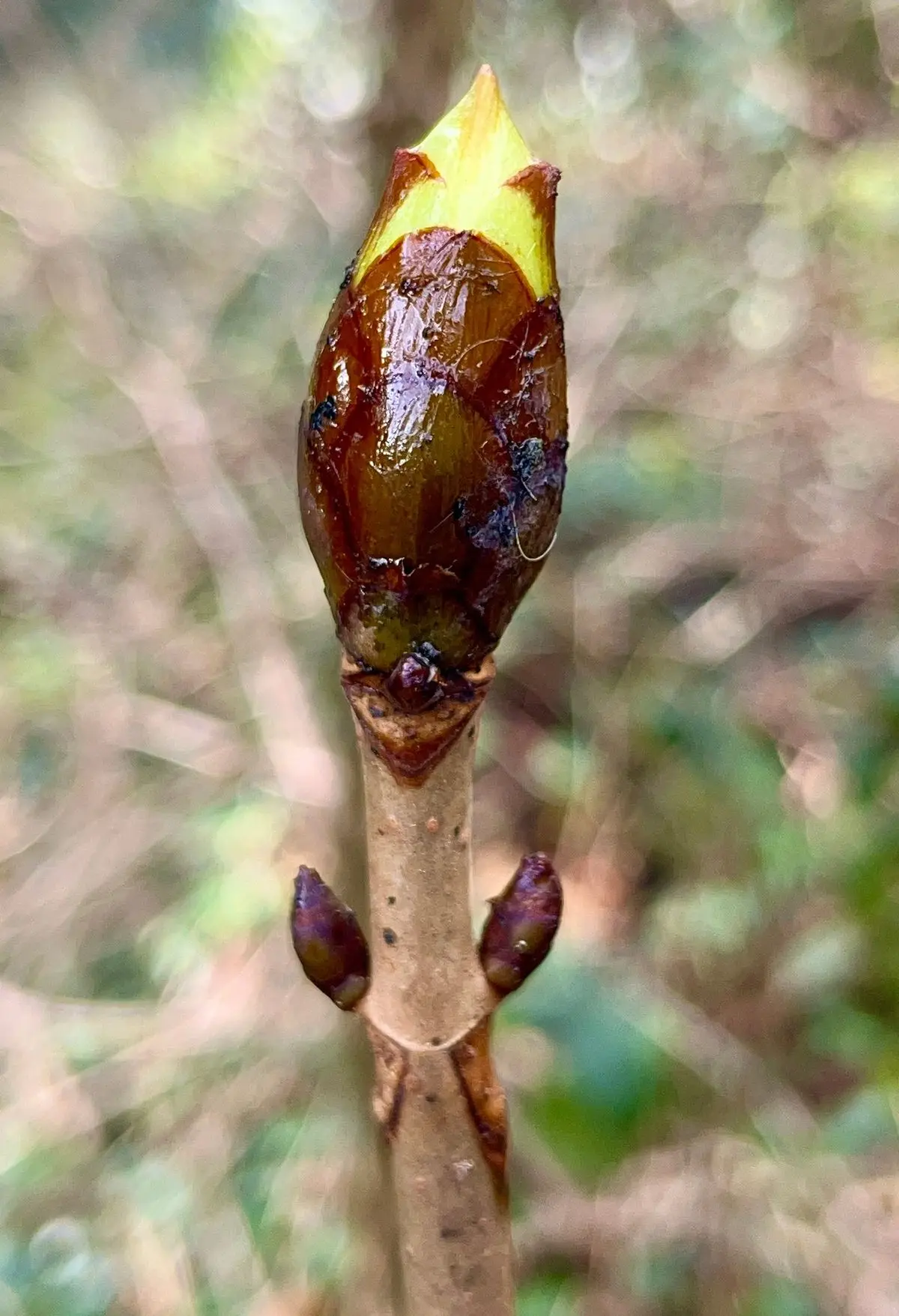 Sycamore or horse chestnut?Both are big domed park trees.Winter bud→
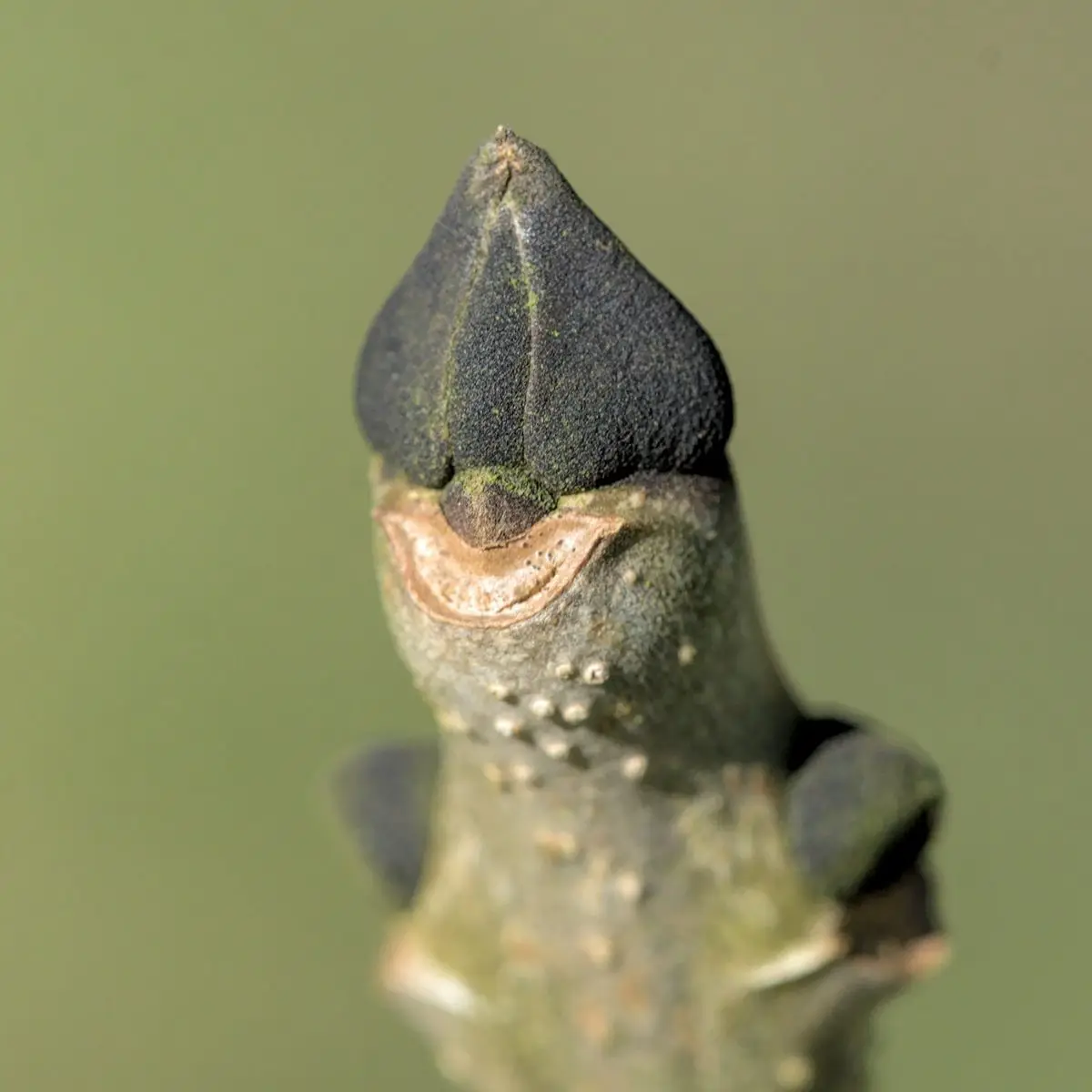 Sycamore or common ash?Big trees of the same woods, both with buds and leaves in facing pairs and winged seeds in bunches.Colour of a winter bud→
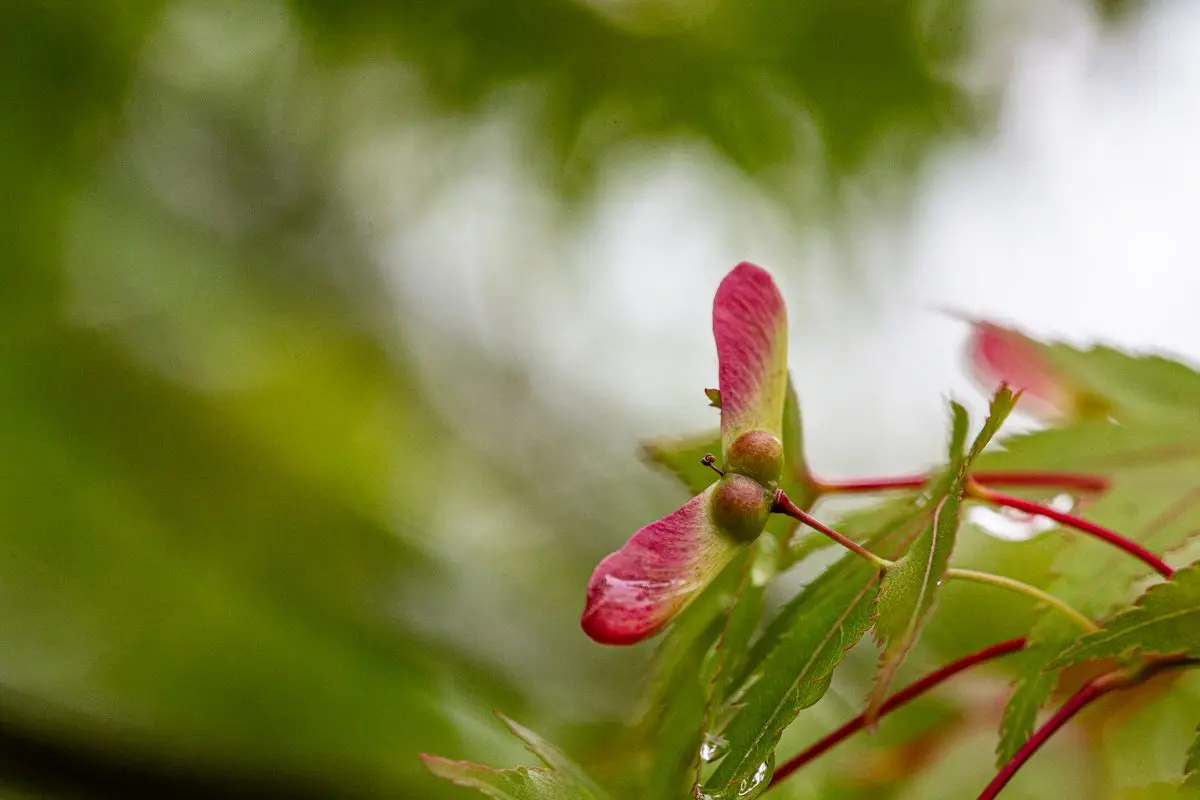 Sycamore or Japanese maple?Both have lobed leaves in facing pairs, and paired keys.Wings of a pair→
Free to download.
Every fact on this page is checked against the Collins Tree Guide, last in November 2026. Spotted something that looks wrong in front of a real tree? Tell us. How we check.
Photographs: pete_gateley (CC0), steve_mcwilliam (CC0), Yves Bas (CC BY 4.0), Kieran Roy Powell (CC BY 4.0), Nick Butcher (CC BY 4.0), friendsofdrpep (CC BY 4.0), Leon Cross (CC BY 4.0), oliverc29 (CC BY 4.0), Jose Gutierrez Higa (CC BY 4.0), Daniel Seth Jackson (CC BY 4.0), João D'Andretta (CC BY 4.0). With thanks to everyone who shares their photographs on iNaturalist and Wikimedia Commons.