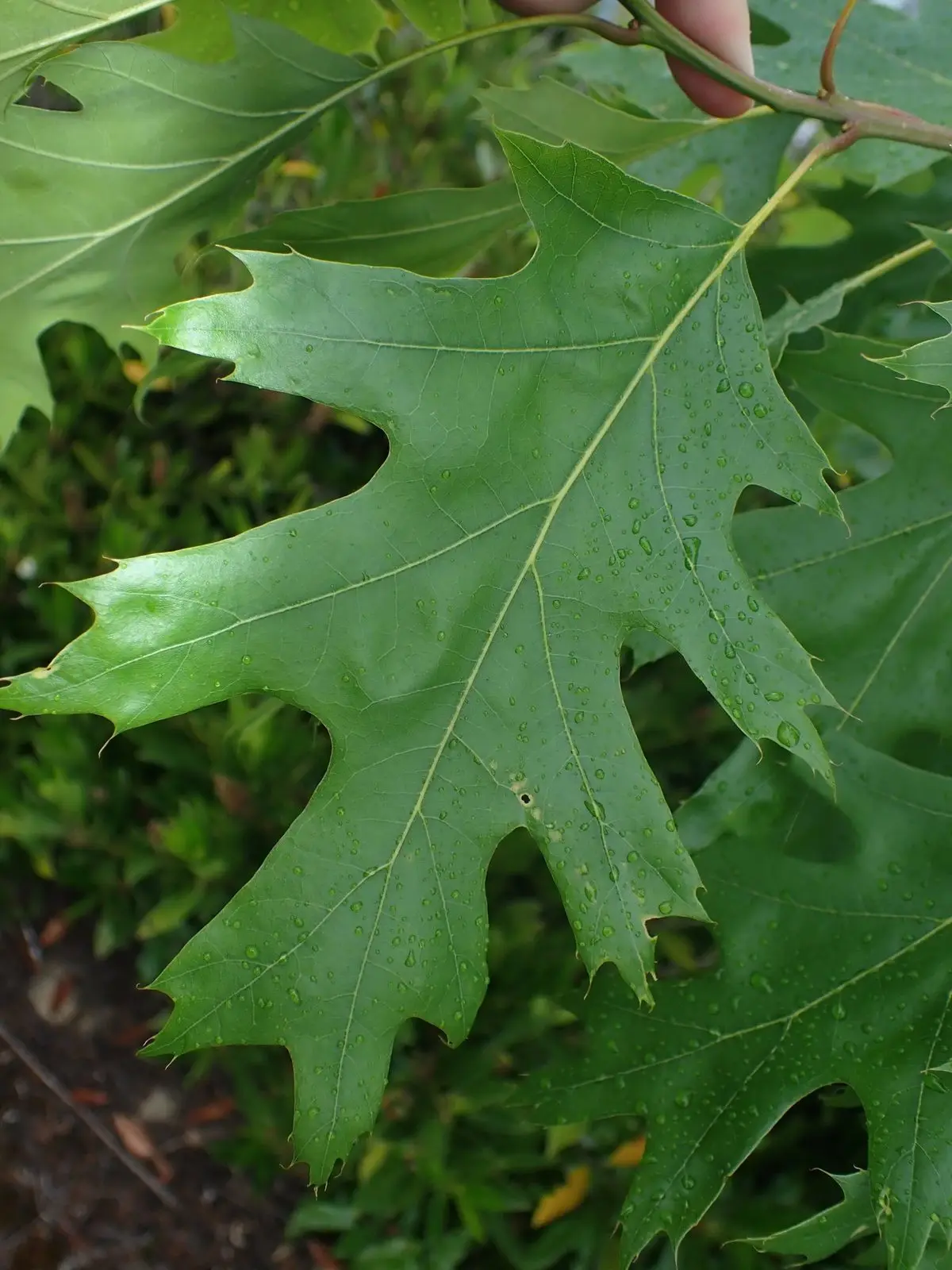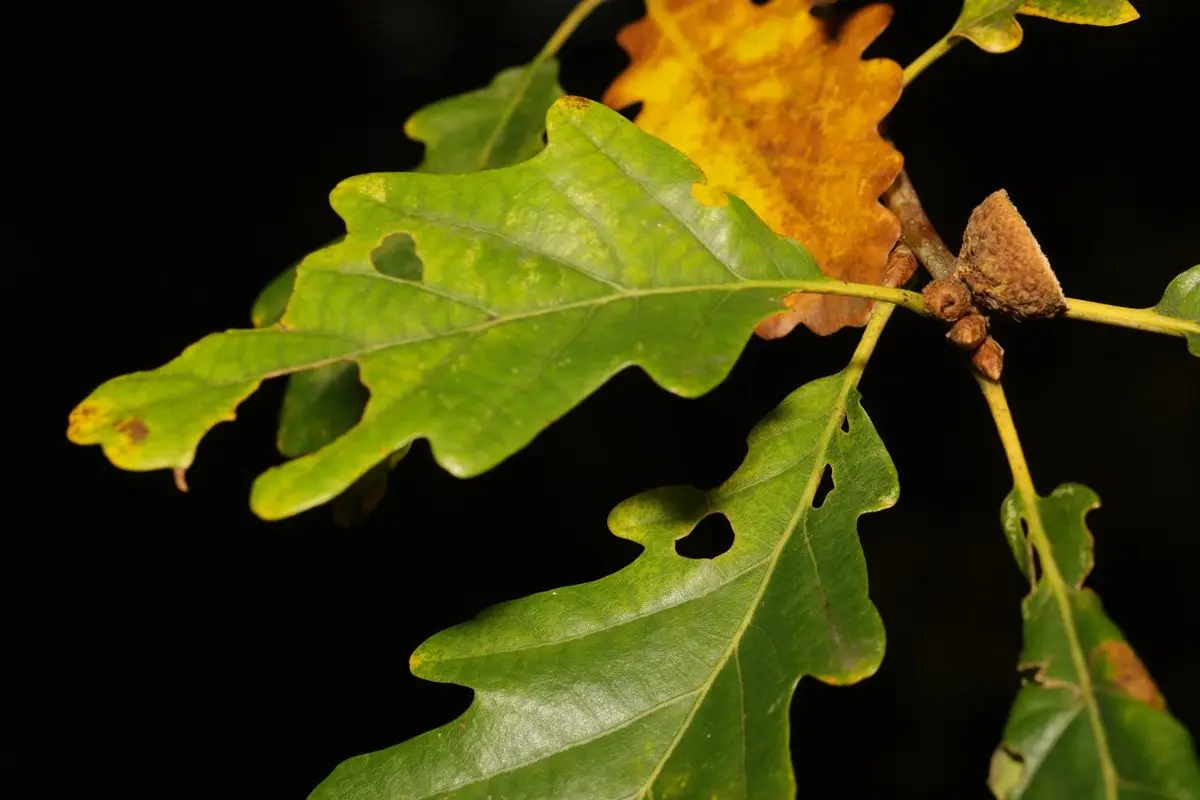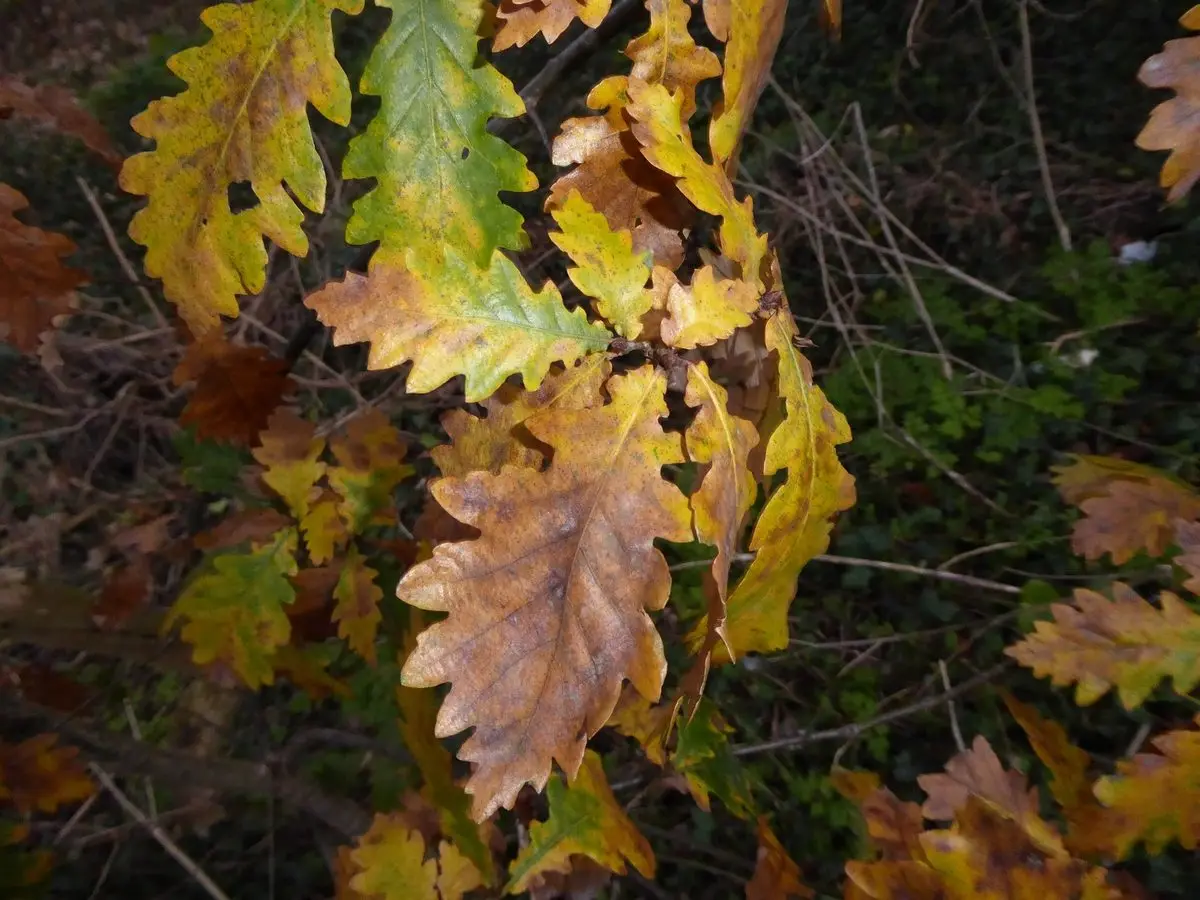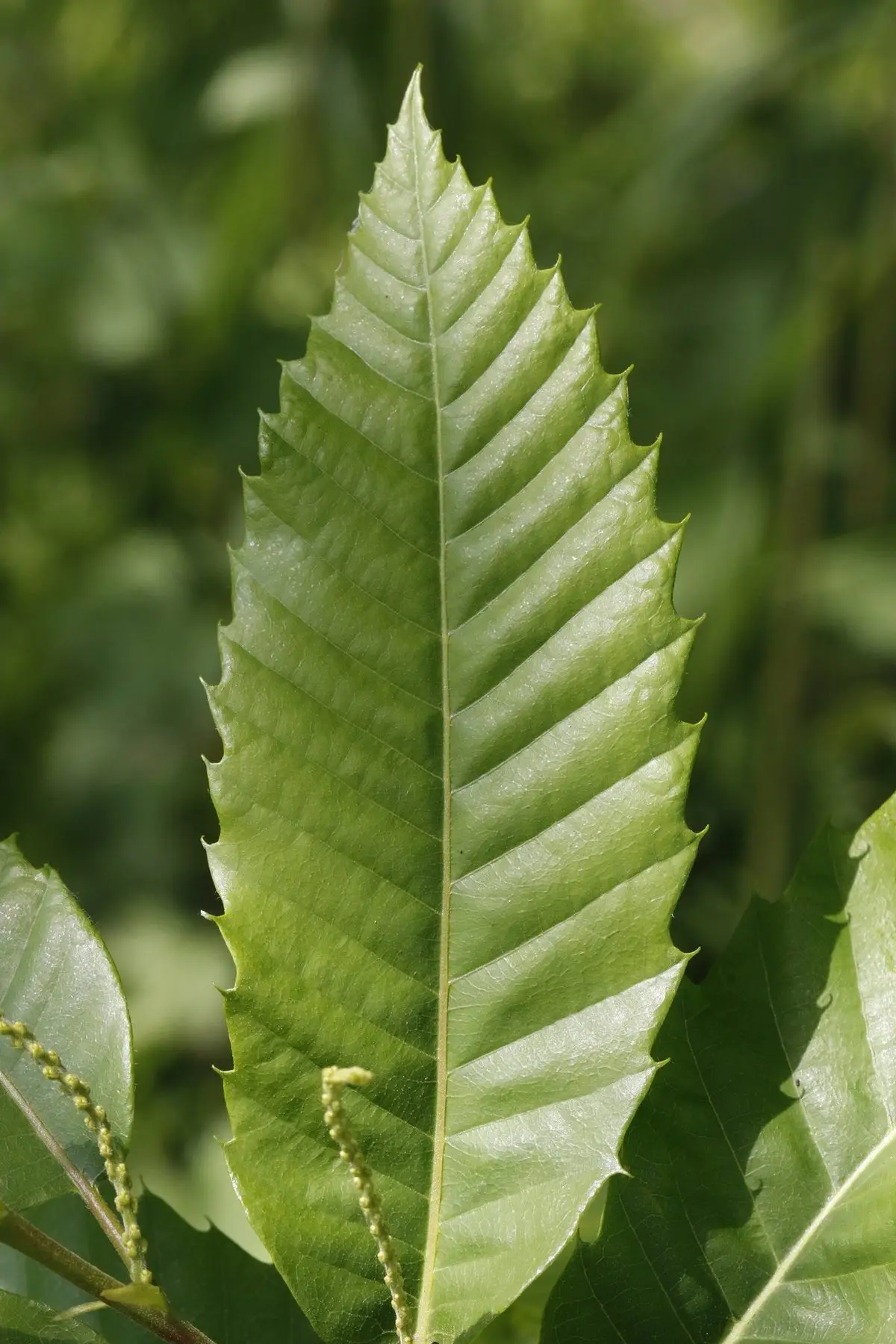
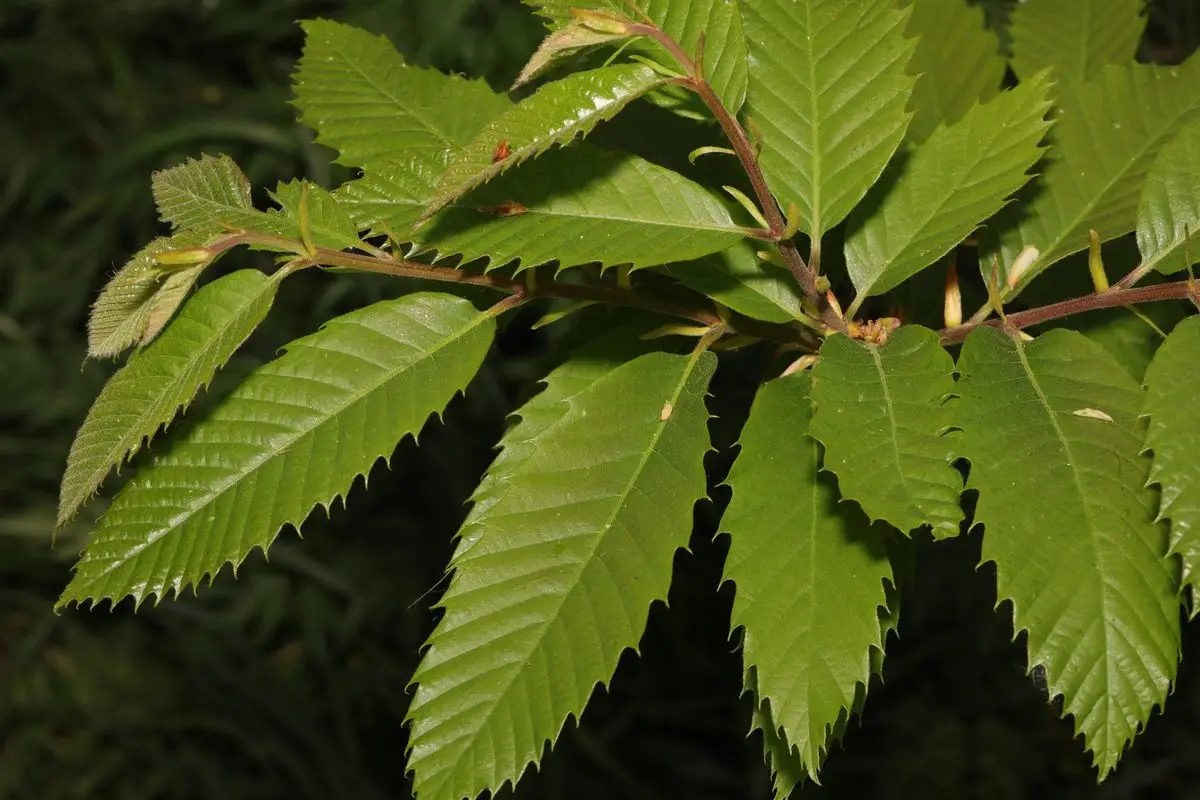
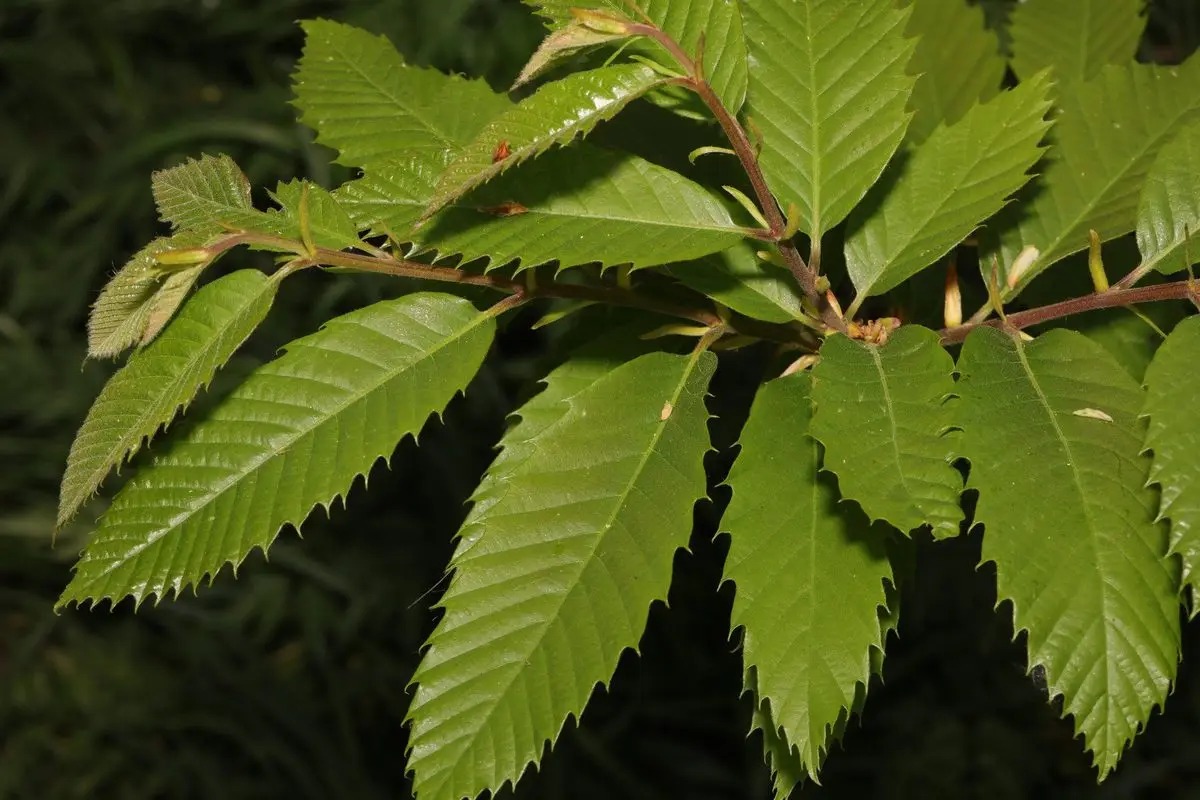
Sweet chestnut leaves are long, glossy and dark green, with coarse, spiky teeth spaced evenly down both edges. About twenty pairs of straight veins run side by side.
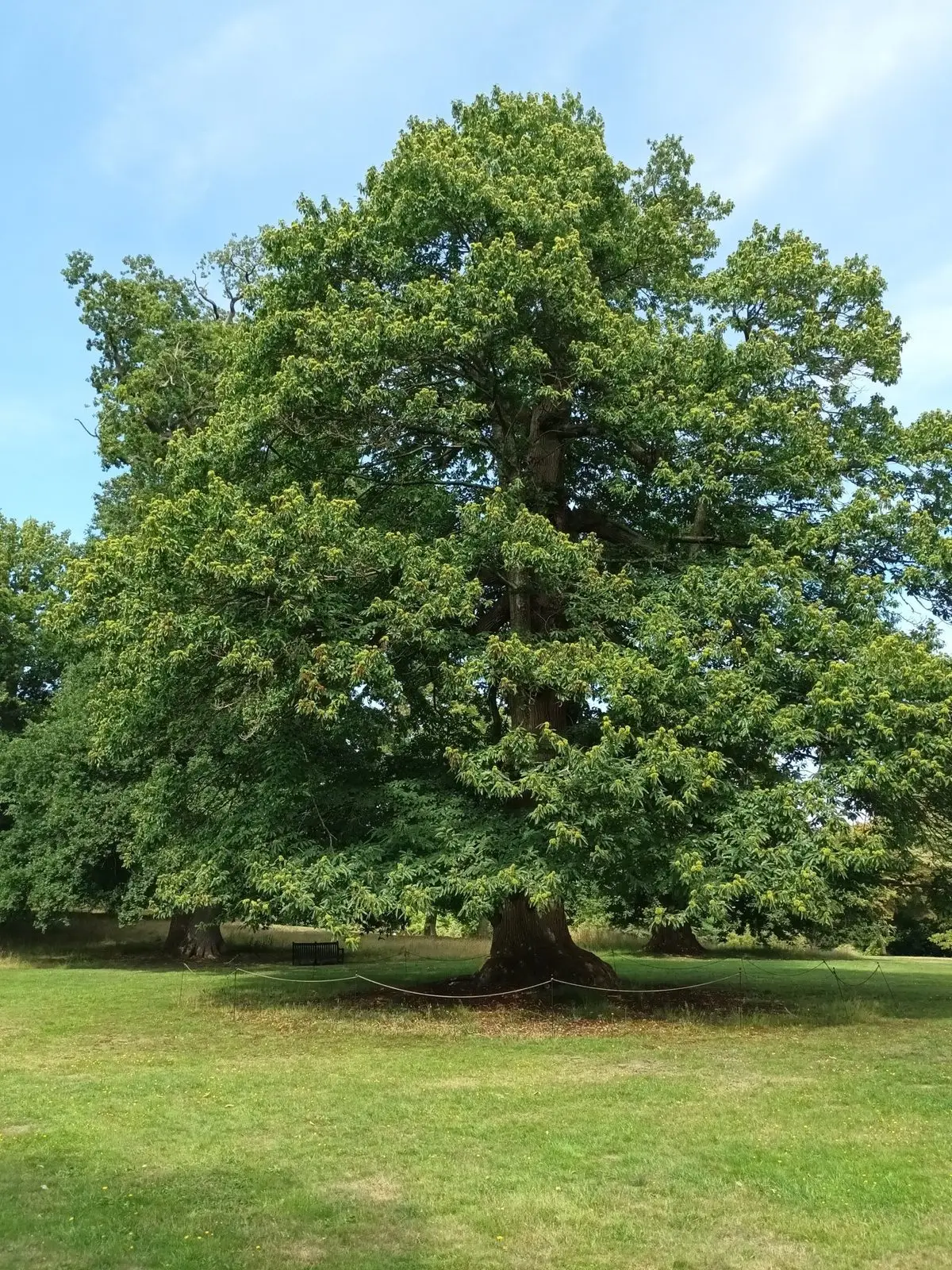
Castanea sativa · Fagaceae
Also called Spanish chestnut
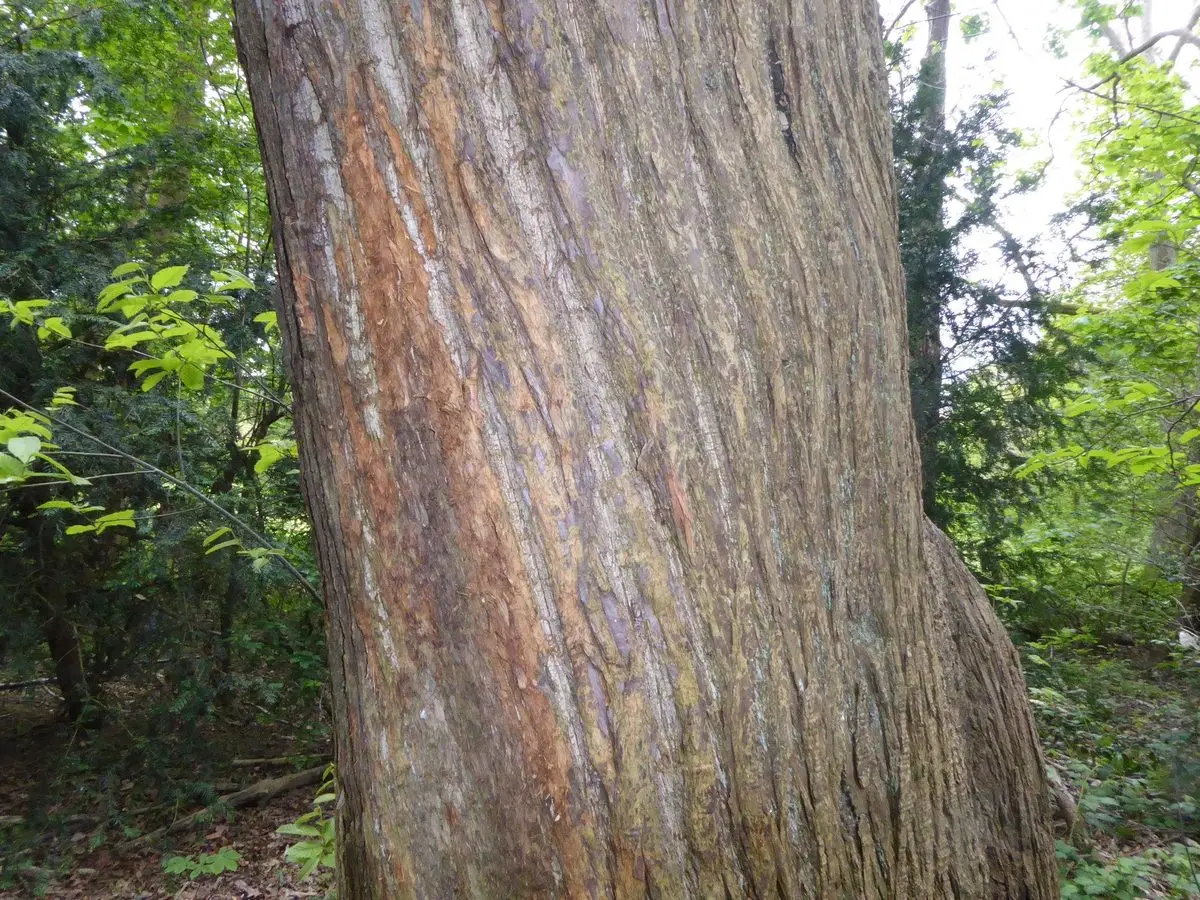
Sweet chestnut is a big tree with long, glossy leaves. Each leaf is edged with coarse, spiky teeth. On an old trunk the bark ridges twist round, usually clockwise.
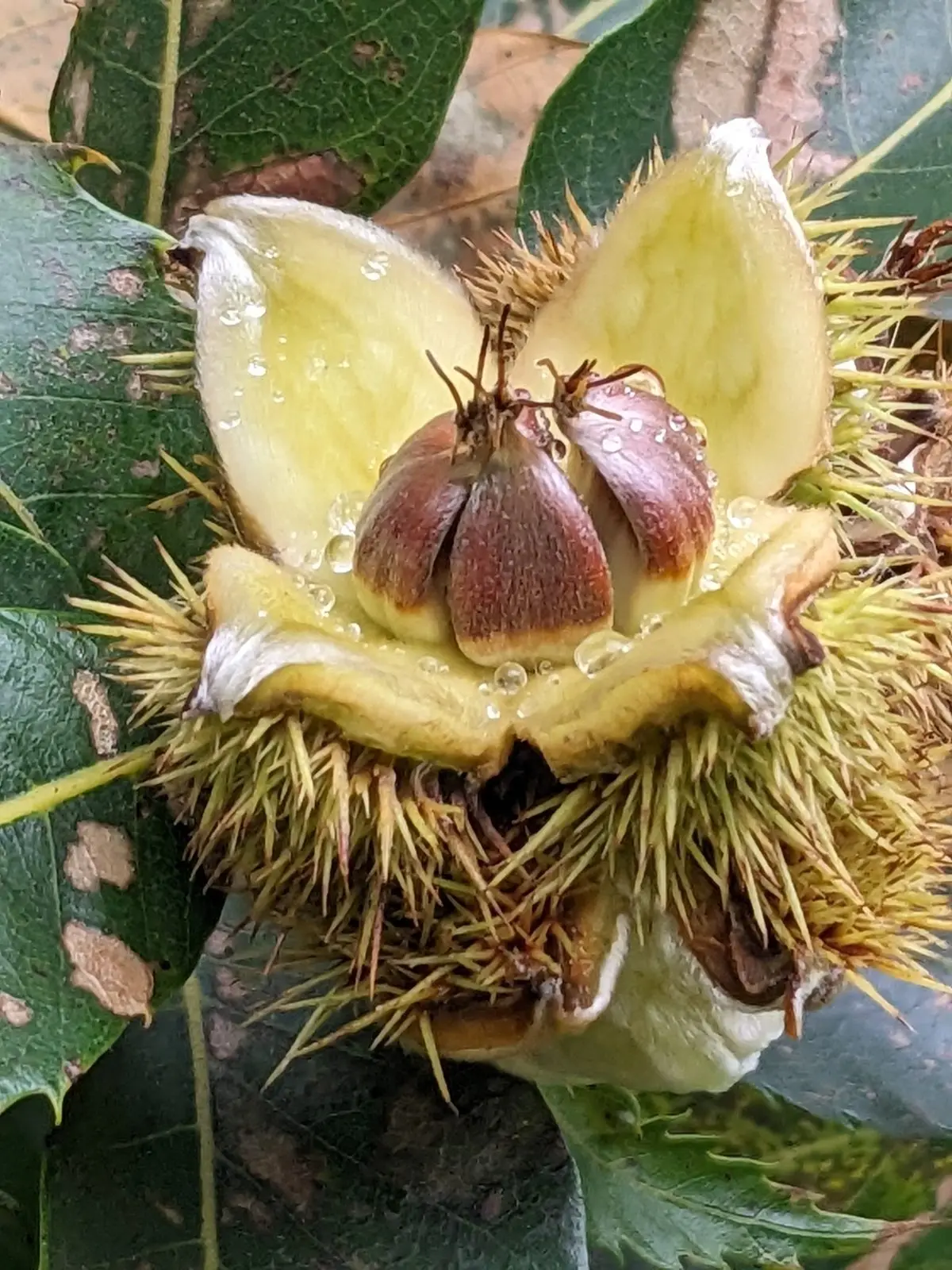
Often mistaken for horse chestnut. How to tell them apart →LeavesLong, glossy leaves with spiky teeth down both edges.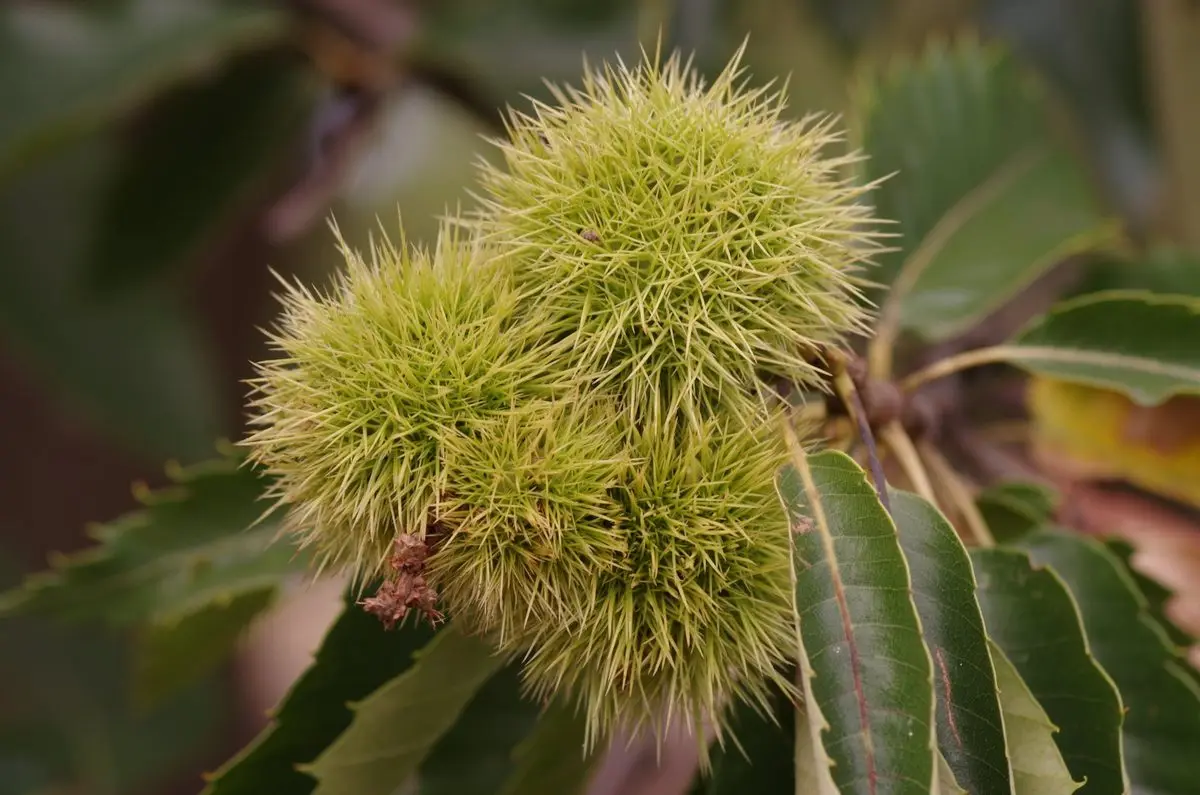 ChestnutsUsually three nuts in a ball of fine spines.
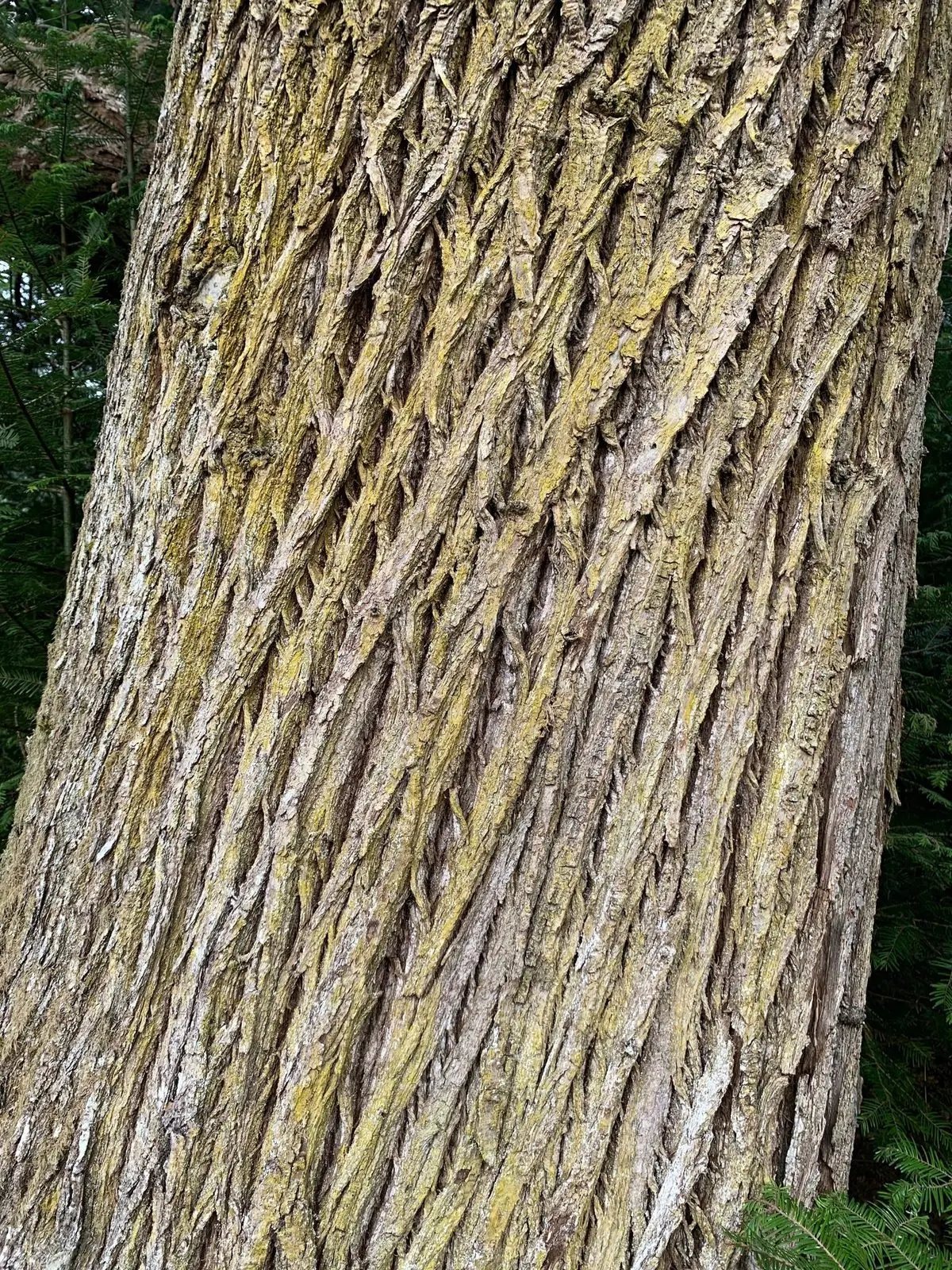 BarkDeep ridges that spiral up an old trunk.
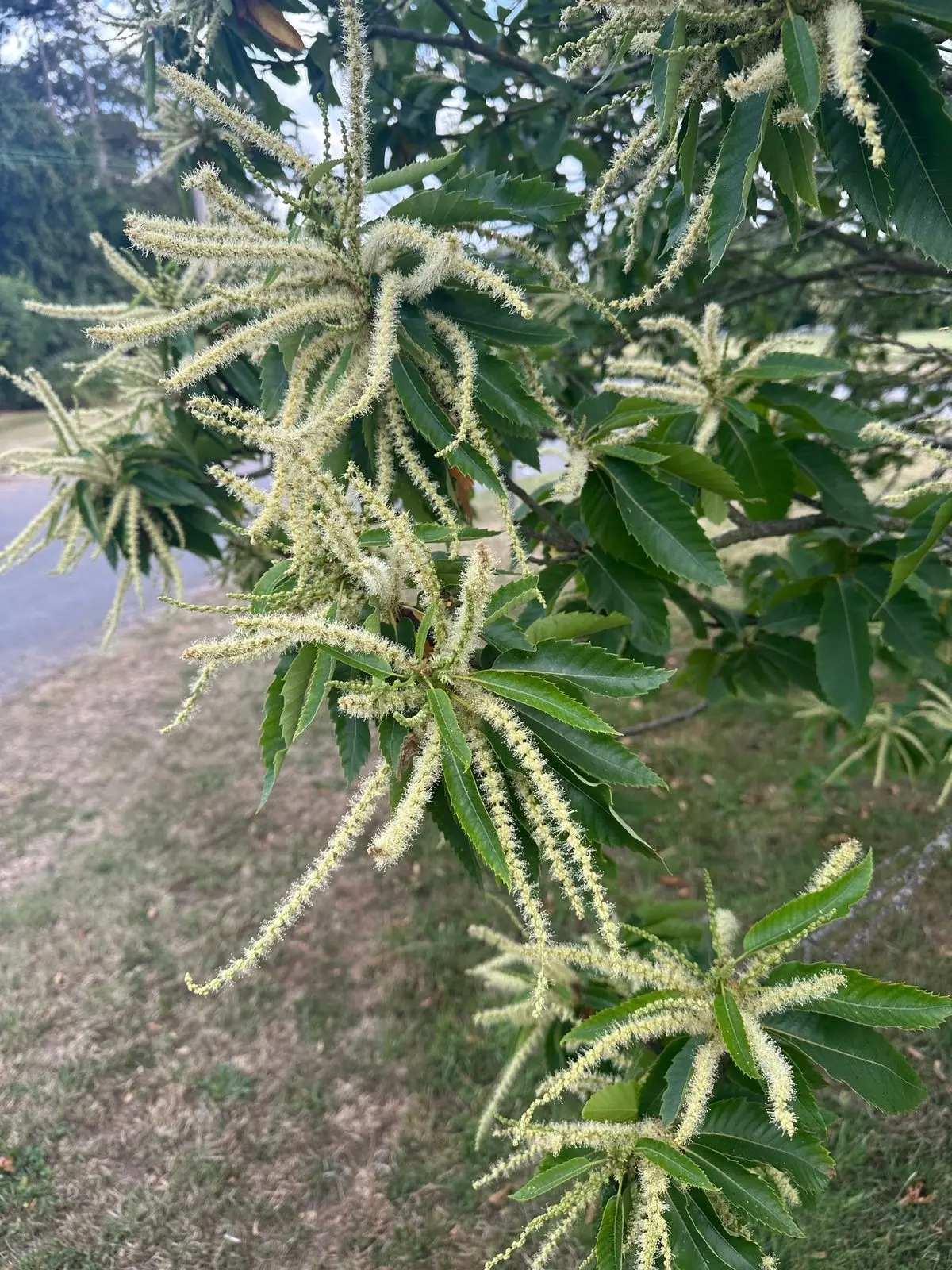
Then check · CatkinsFrom late June into July, long, creamy catkins stick stiffly out all over the tree and smell of frying mushrooms up close.
Sweet chestnut leaves are long, glossy and dark green, with coarse, spiky teeth spaced evenly down both edges. About twenty pairs of straight veins run side by side.
In summer the nuts grow inside green husks packed with fine, sharp spines. In autumn the husks split, often on the ground, to show glossy brown nuts, usually three.
On a big old trunk the bark is cut into deep ridges that cross in a net. The whole net twists as it climbs, usually clockwise.
 Learn the sweet chestnut in TreelyEvery part through the year, and a short round each day until you know it.Get Treely
 Owen and Carol Fawcett., CC BY 4.0
 jamie-aa, CC BY 4.0
In leaf: April to November · Catkins: May to August · Chestnuts: July to November
Common on poor, dry, sandy and gravelly soils, and the main tree in many sandy woods in the south-east. It also grows in parks, gardens and the odd hedgerow. It is scarce on wet or very chalky ground.
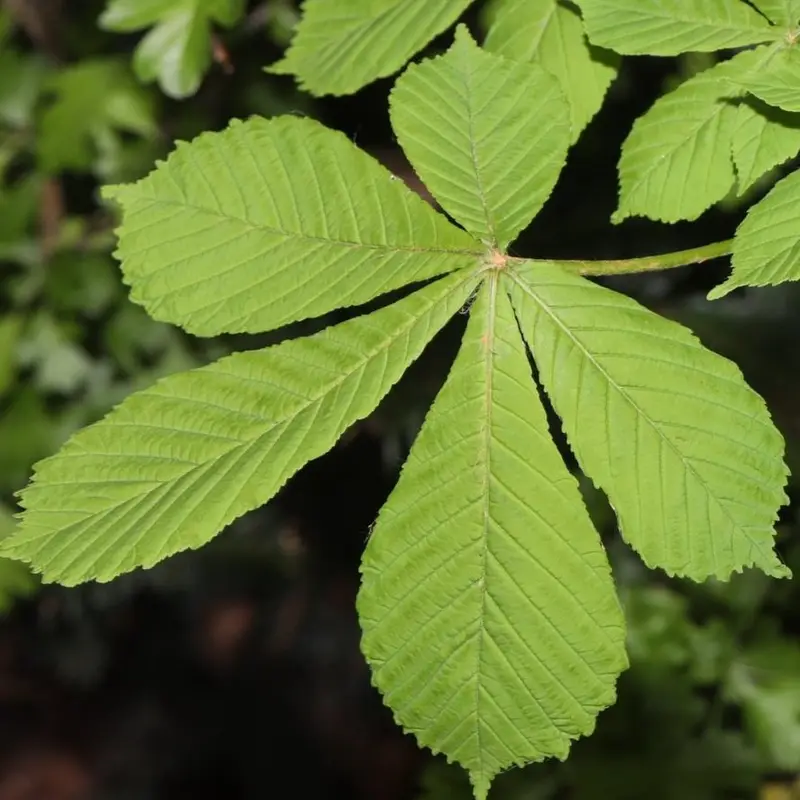 Sweet chestnut or horse chestnut?They share half a name and both drop spiny husks in autumn, but they are not related.Blades on one stalk→
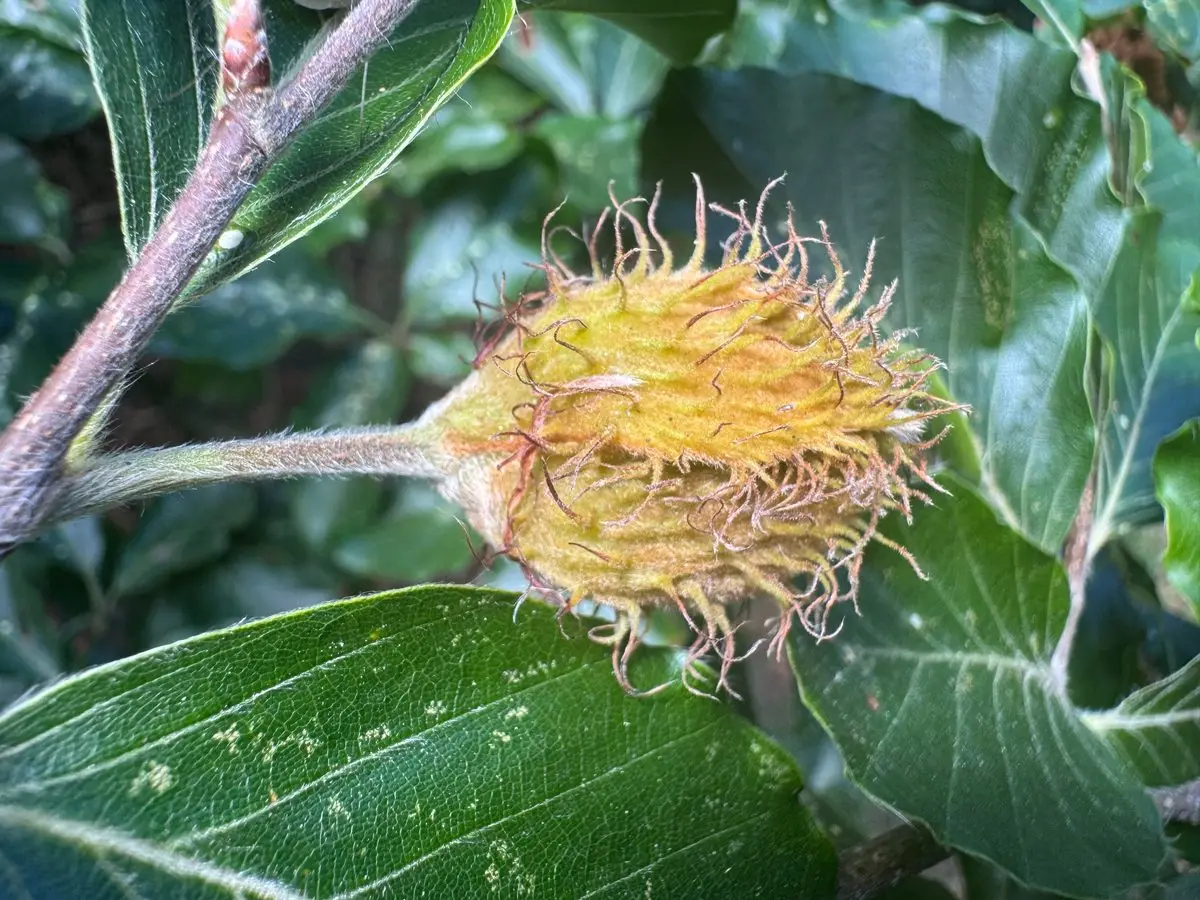 Sweet chestnut or common beech?Both are in the beech family and both drop nuts in prickly husks.Husk→
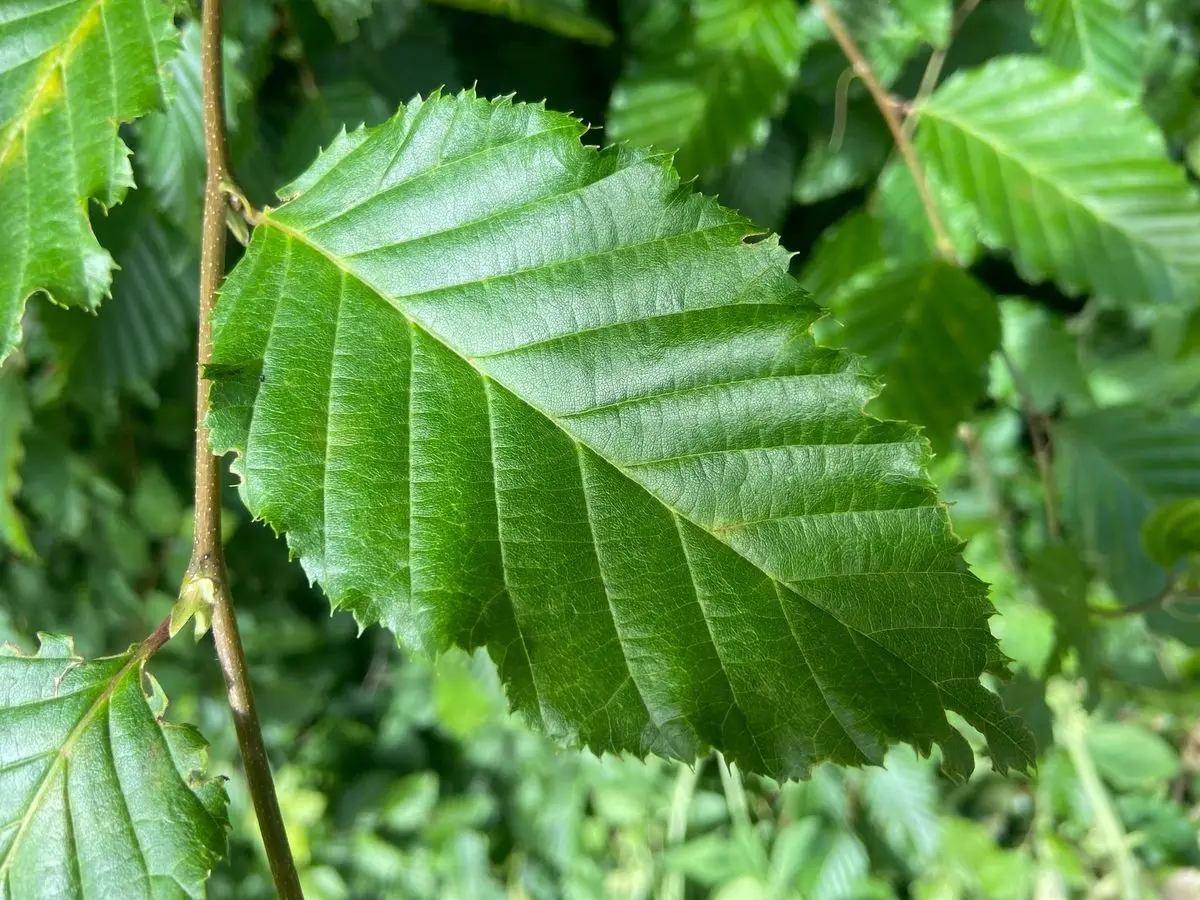 Sweet chestnut or hornbeam?Both have toothed leaves with parallel veins standing out.Leaf length→
Free to download.
Every fact on this page is checked against the Collins Tree Guide, last in November 2026. Spotted something that looks wrong in front of a real tree? Tell us. How we check.
Photographs: david_and_moira_sinden (CC0), steve_mcwilliam (CC0), Paul Cook (CC BY 4.0), Dunverig (CC BY 4.0), cjoynson (CC0), Owen and Carol Fawcett. (CC BY 4.0), jamie-aa (CC BY 4.0), Leon Cross (CC BY 4.0), Joss Carr (CC BY 4.0). With thanks to everyone who shares their photographs on iNaturalist and Wikimedia Commons.