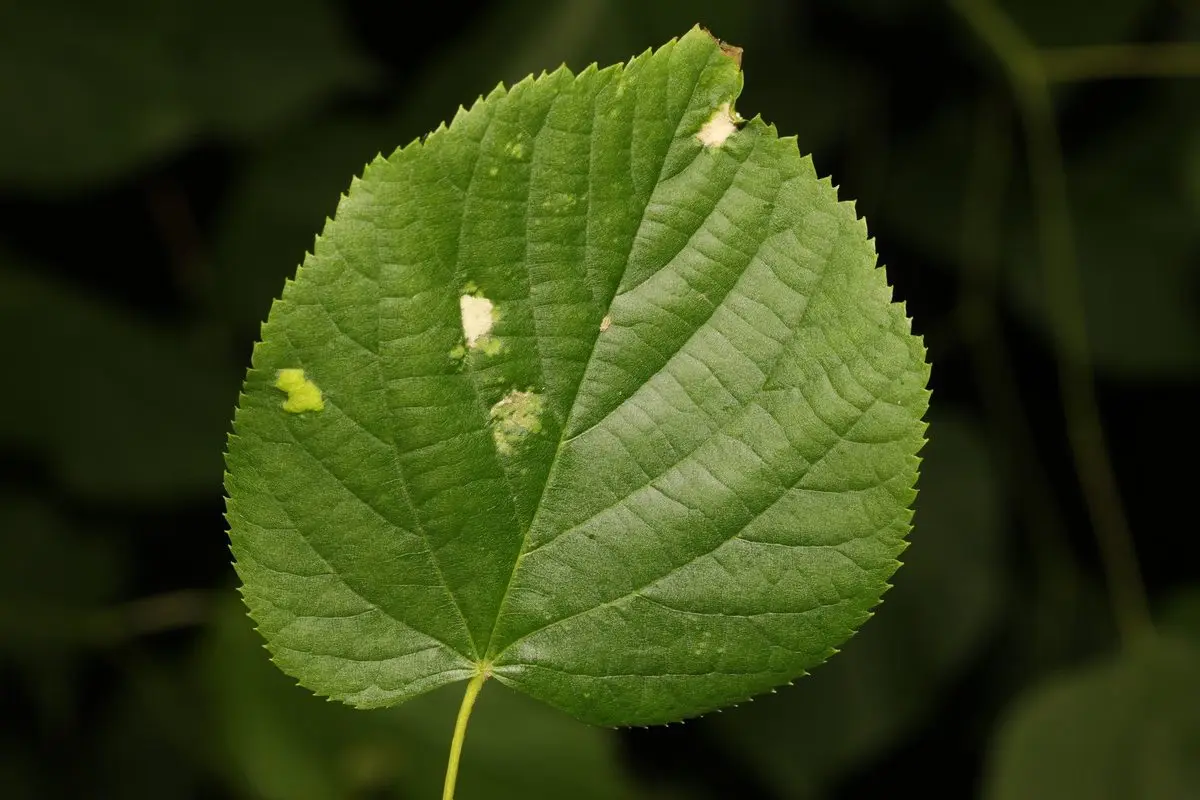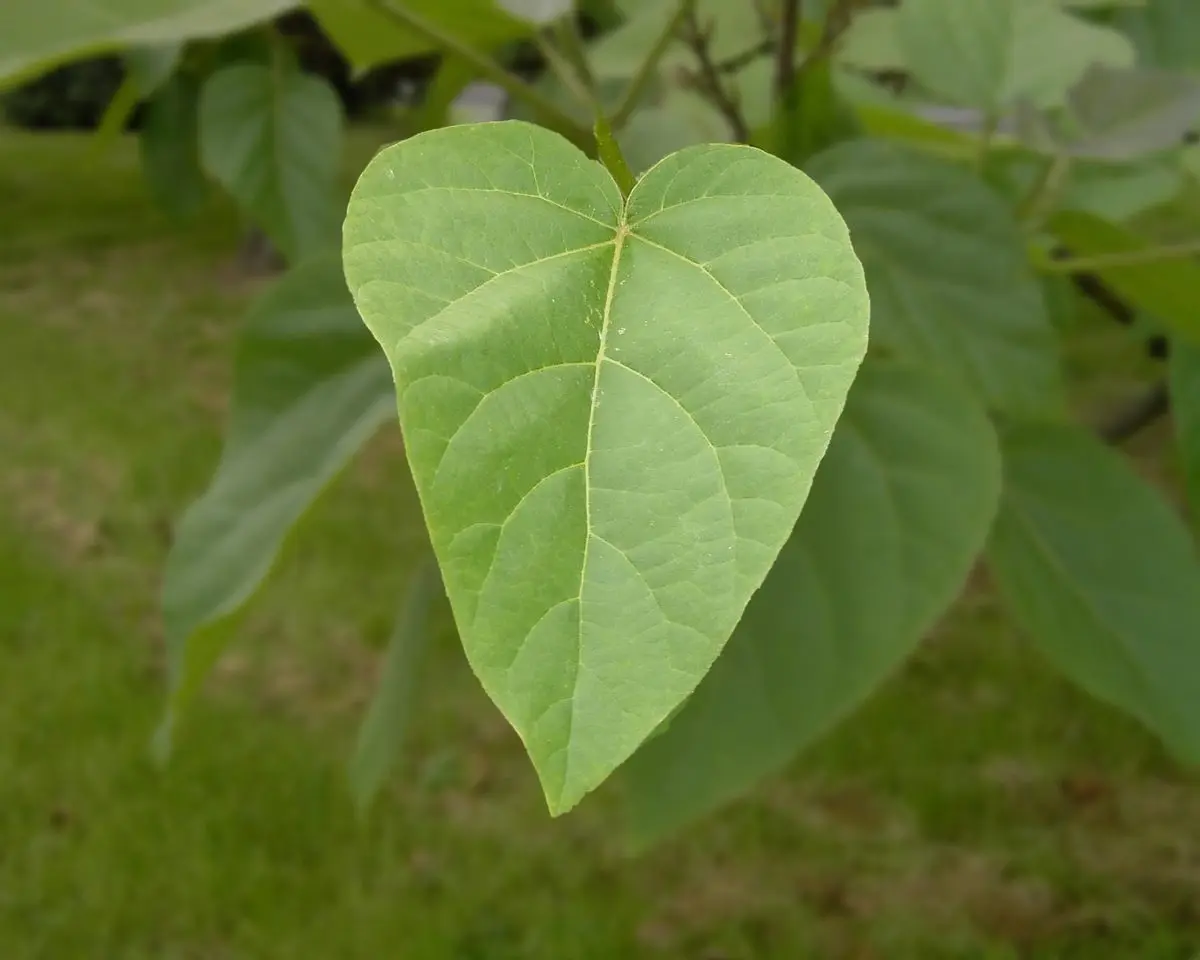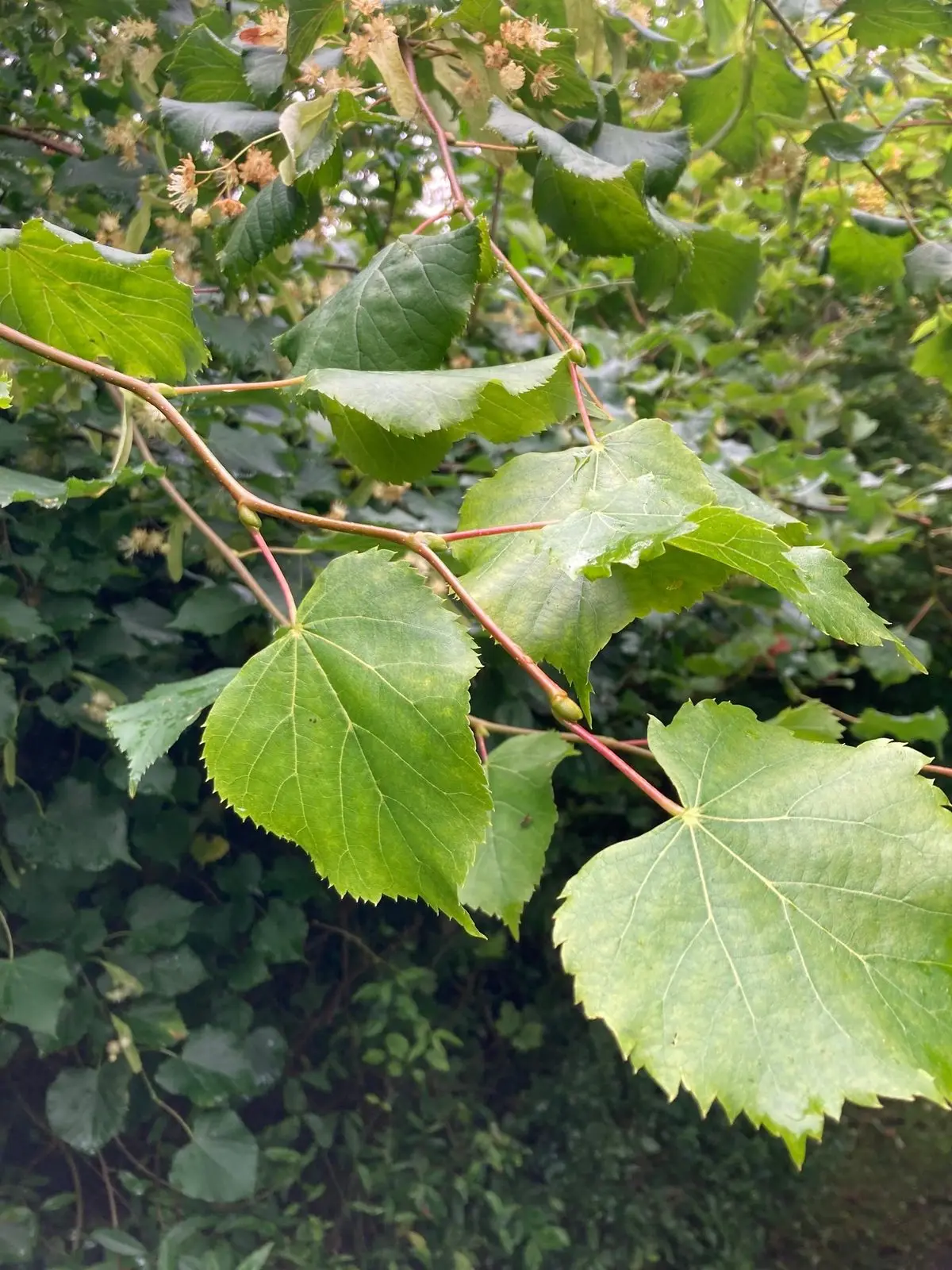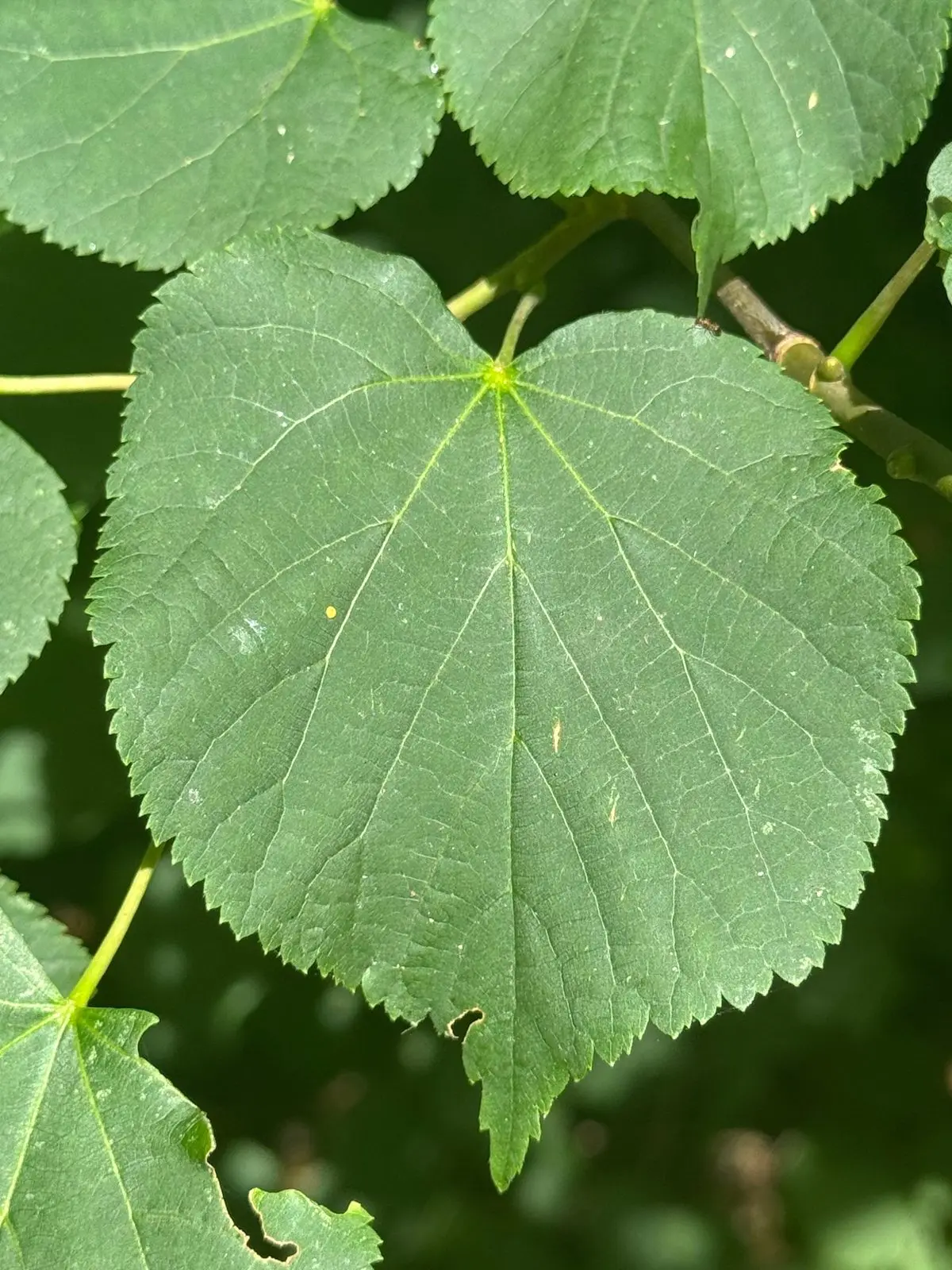
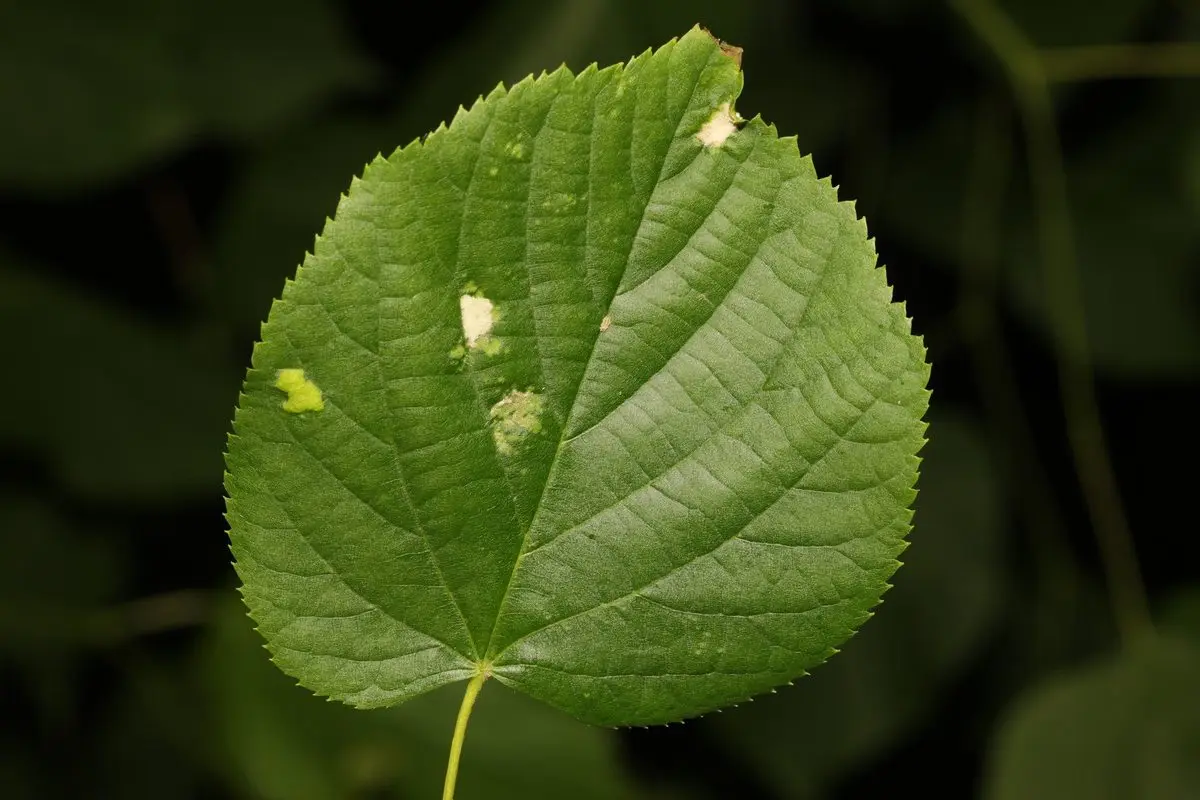
Lime leaves are heart-shaped, with a finely toothed edge. At the base they are lopsided, with one side reaching further down the stalk than the other.
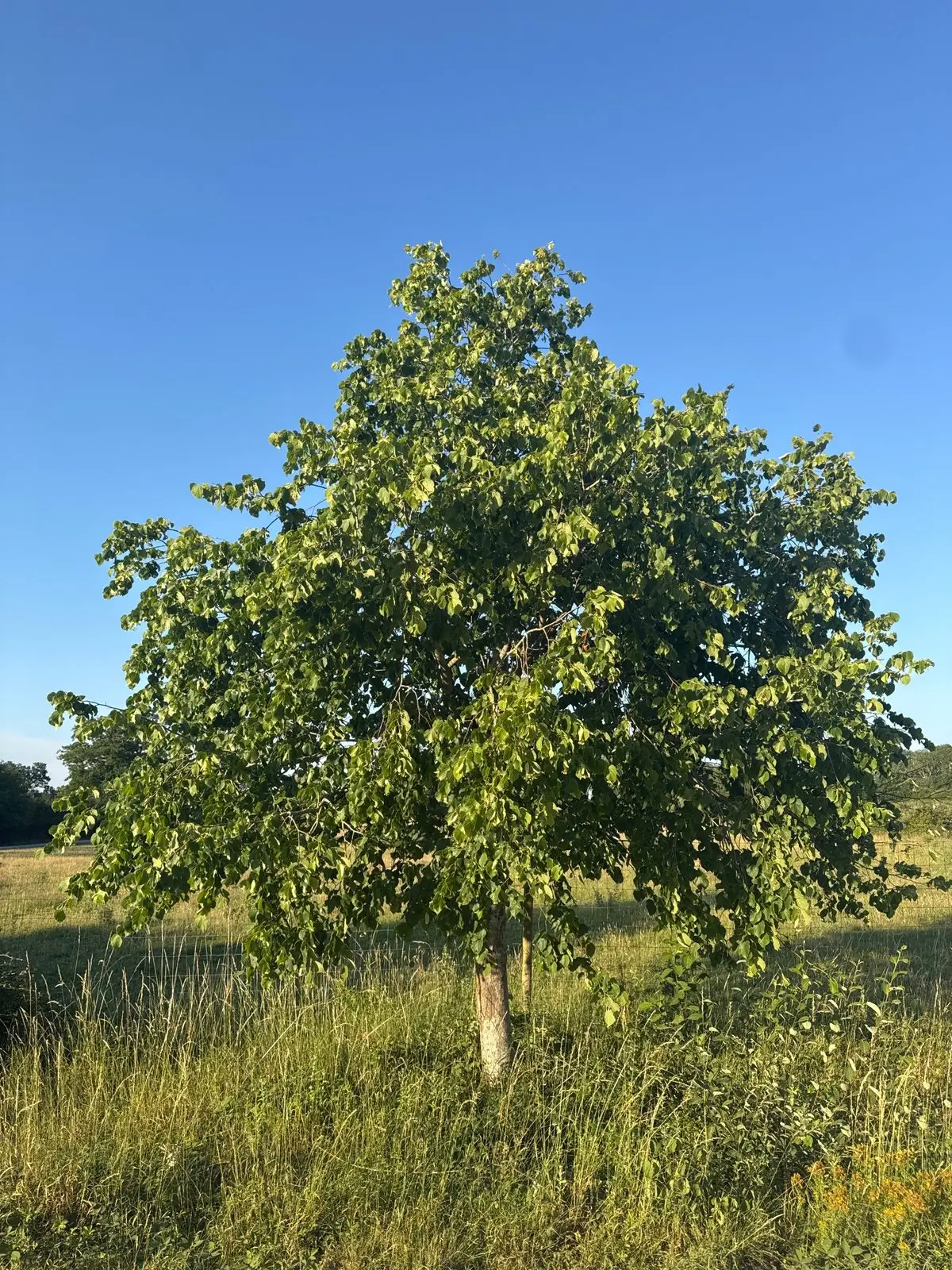
Tilia × europaea · Malvaceae
Common lime is a tall, domed tree planted in streets and parks, often with a mass of twiggy shoots round its foot. Its heart-shaped leaves are lopsided at the base.
Often mistaken for Indian bean tree. How to tell them apart →LeavesHeart-shaped leaves, lopsided at the base.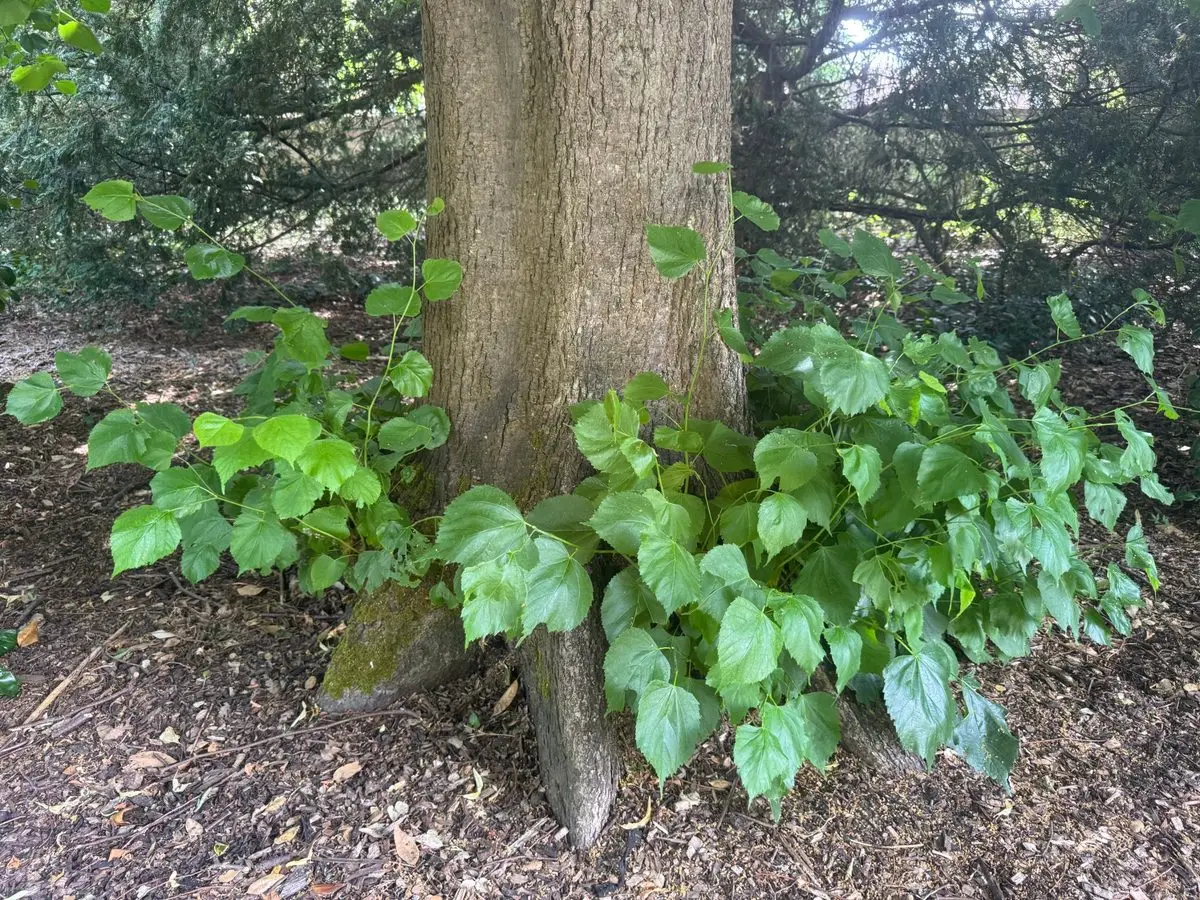 BurrsA mass of twiggy shoots round the foot of the trunk.
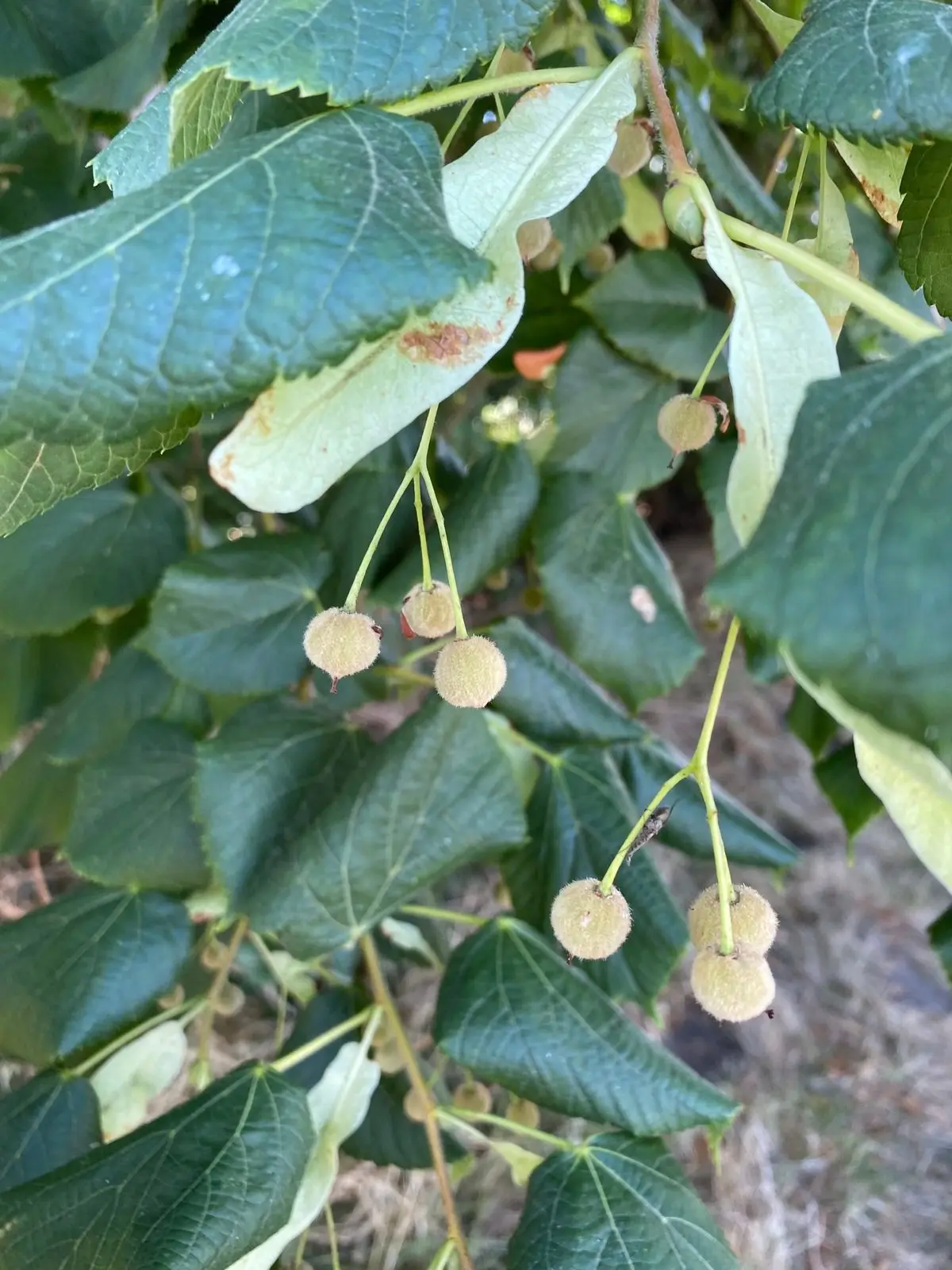
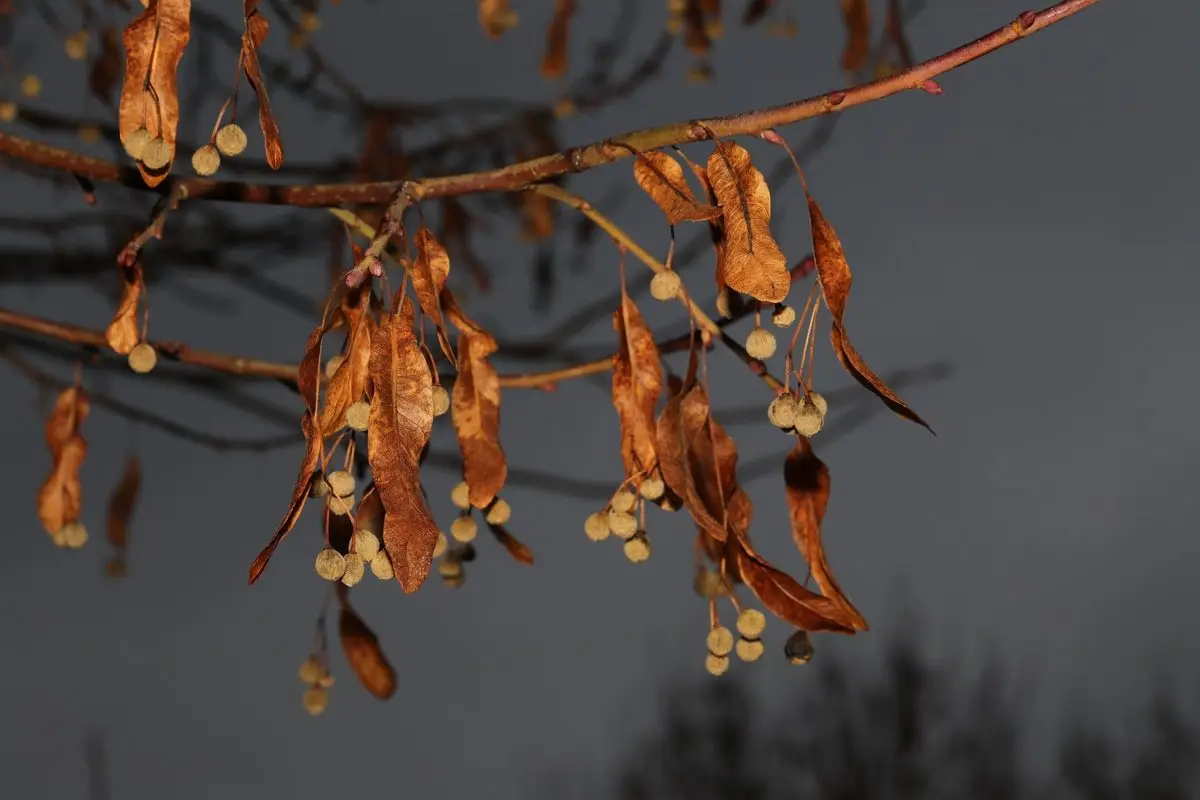
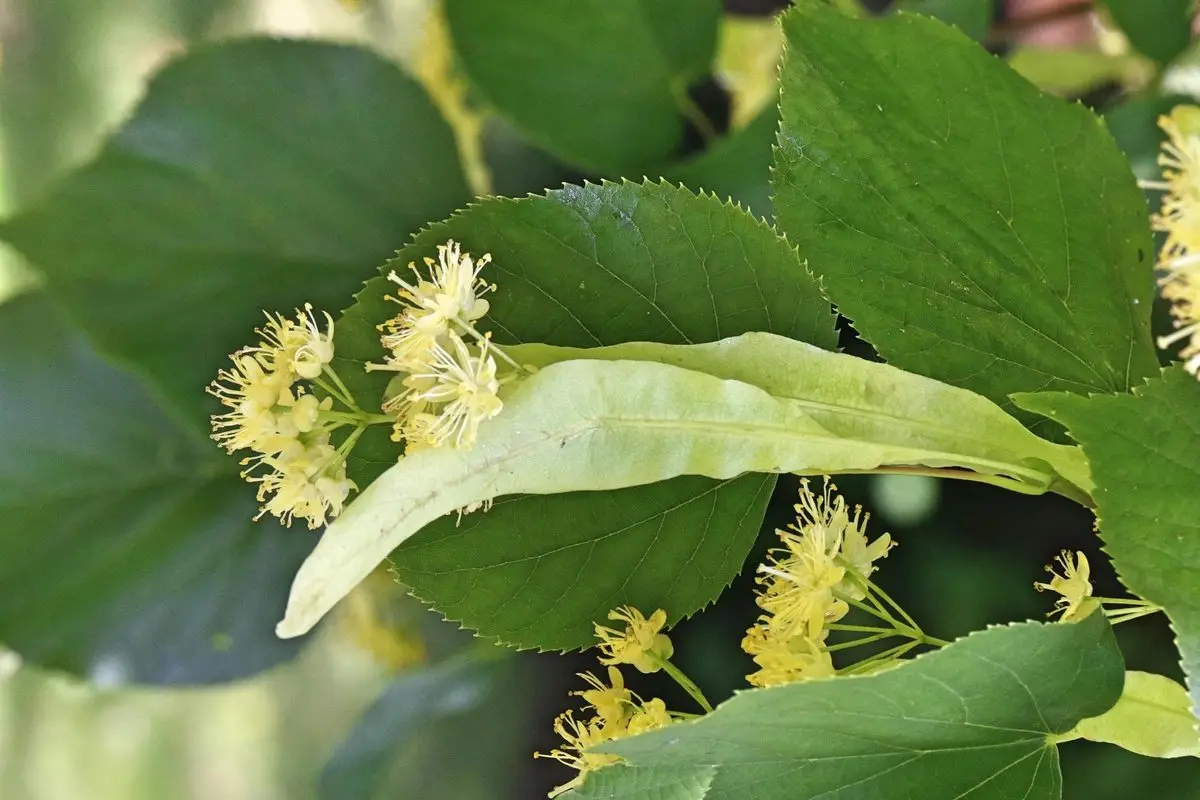 NutsFlowers in July, then hairy nuts, under a leafy strap.
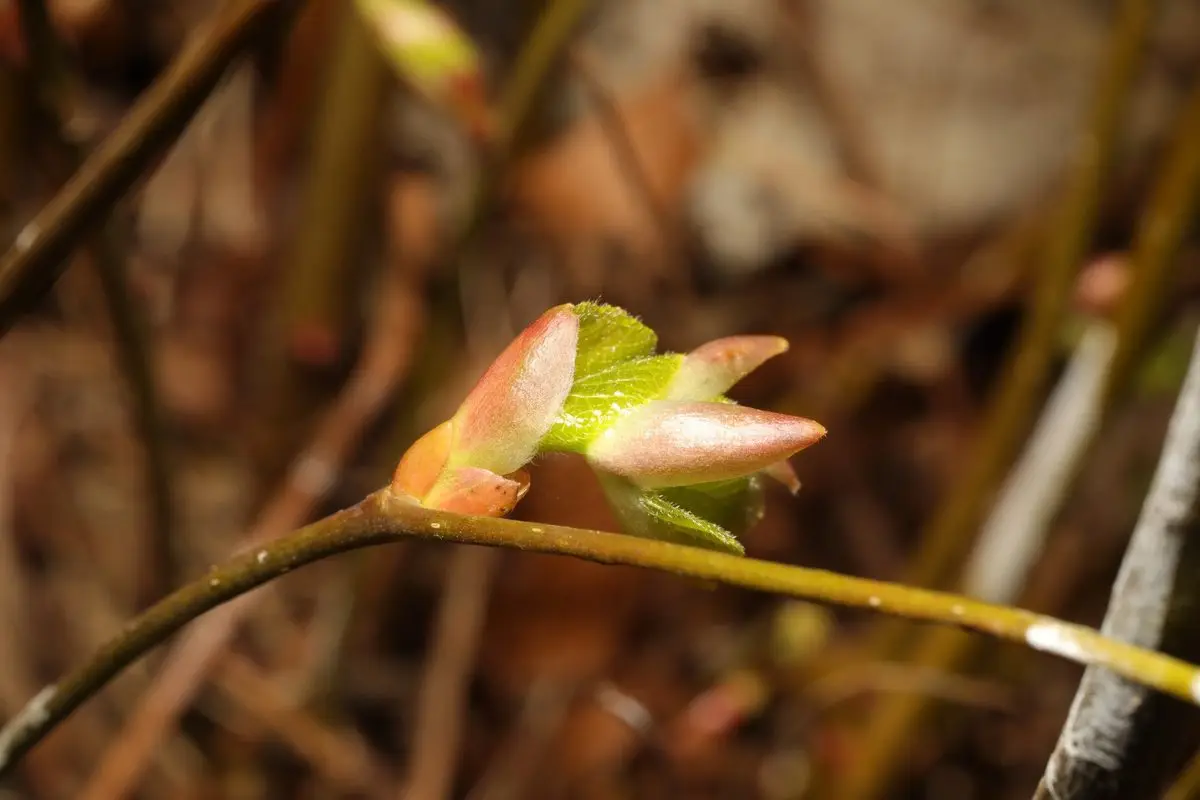
Then check · Red budsIn winter, fat red buds, each wrapped in two red flaps, one big and one small.
Lime leaves are heart-shaped, with a finely toothed edge. At the base they are lopsided, with one side reaching further down the stalk than the other.
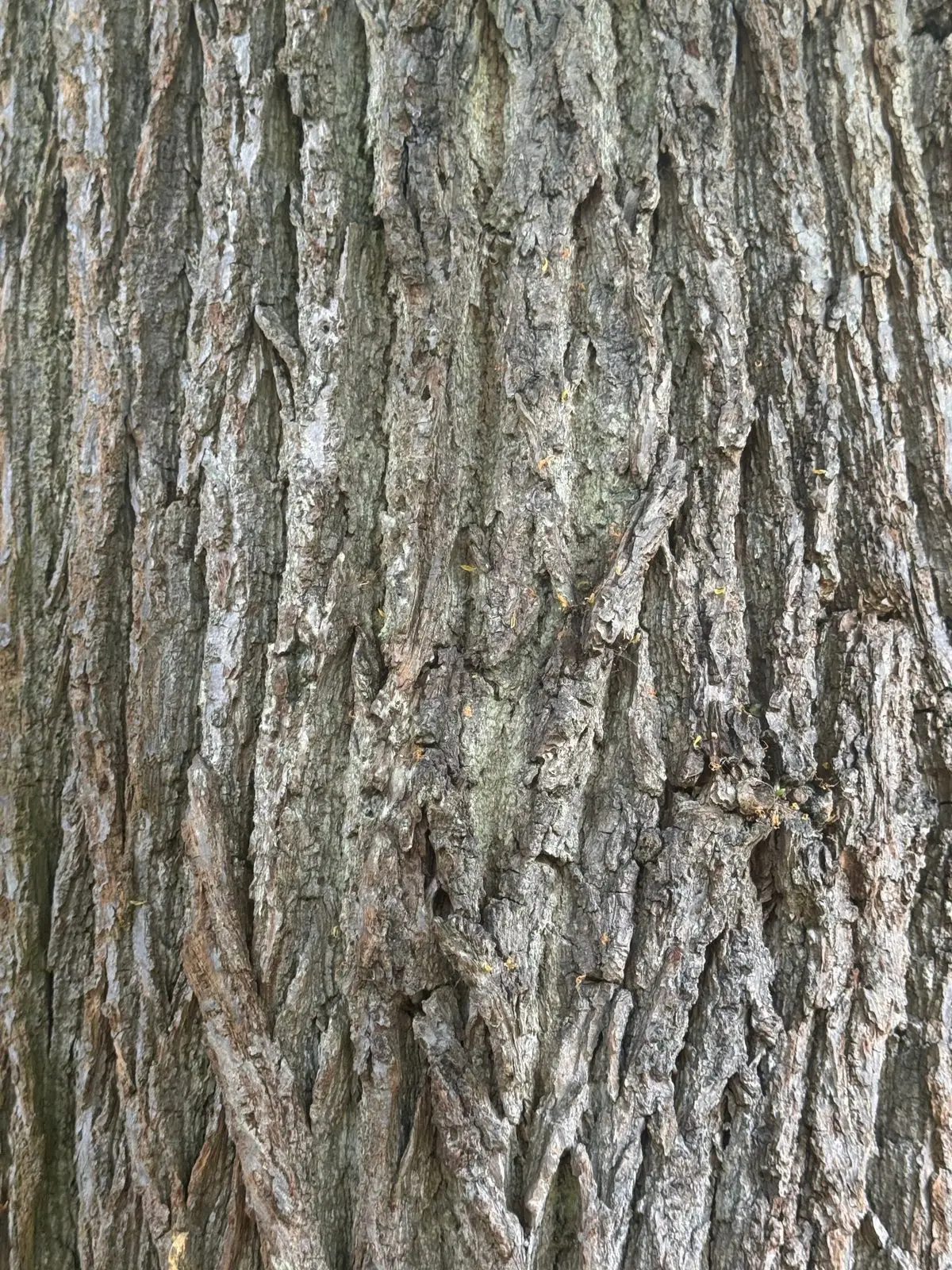
Many trees have a dense mass of twiggy shoots round the foot of the trunk, leafy in summer and a bare tangle in winter. Behind them the trunk is knobbly with burrs.
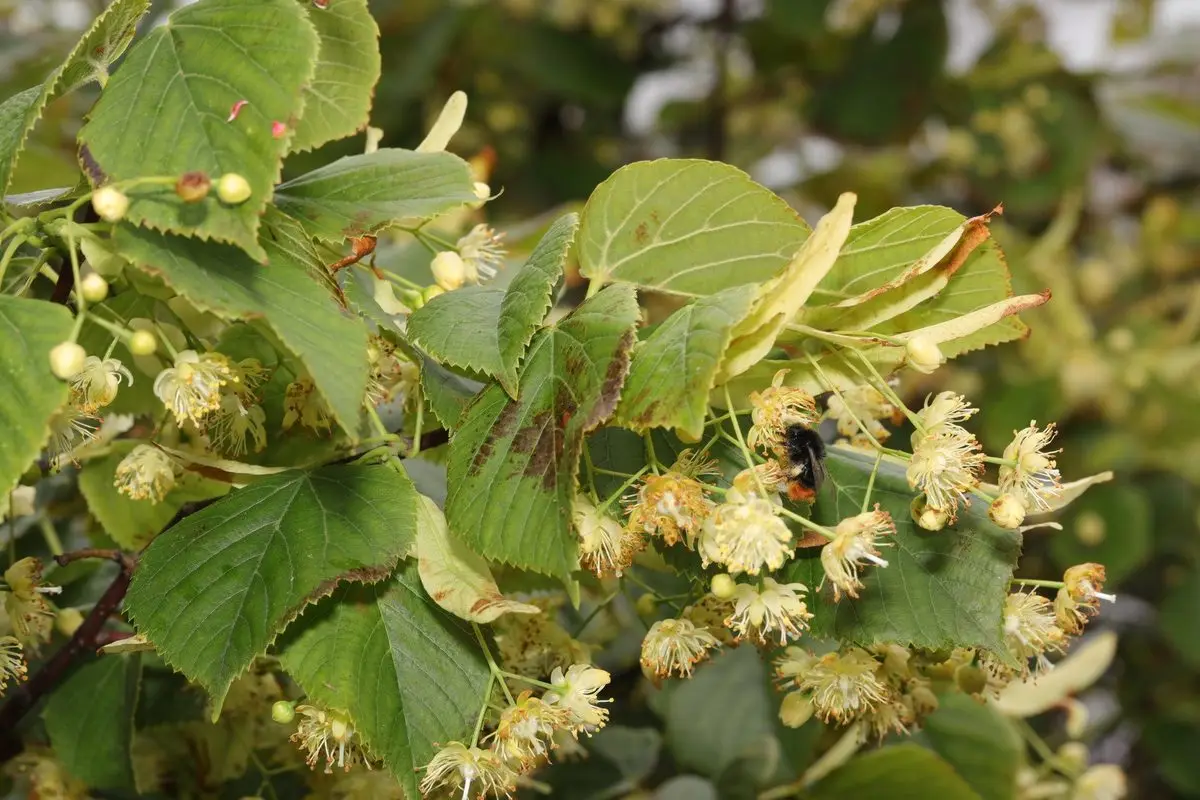
In July, small, fragrant, pale yellow flowers hang in clusters under a narrow, leafy strap. Later the same strap carries a bunch of small, round, hairy nuts.
 Learn the common lime in TreelyEvery part through the year, and a short round each day until you know it.Get Treely
In leaf: April to November · Flowers: July · Nuts on straps: July to November
Every tree on the calendar · How to identify trees in winter
Streets, avenues, parks, churchyards and village greens throughout Britain and Ireland, and planted in woods and shelter-belts too. It is rare in the wild, where it grows on steep limestone slopes in the Wye Valley, Derbyshire and Staffordshire.
Free to download.
Every fact on this page is checked against the Collins Tree Guide, last in November 2026. Spotted something that looks wrong in front of a real tree? Tell us. How we check.
Photographs: Leon Cross (CC BY 4.0), steve_mcwilliam (CC0), portioid (CC BY 4.0). With thanks to everyone who shares their photographs on iNaturalist and Wikimedia Commons.