Common whitebeam
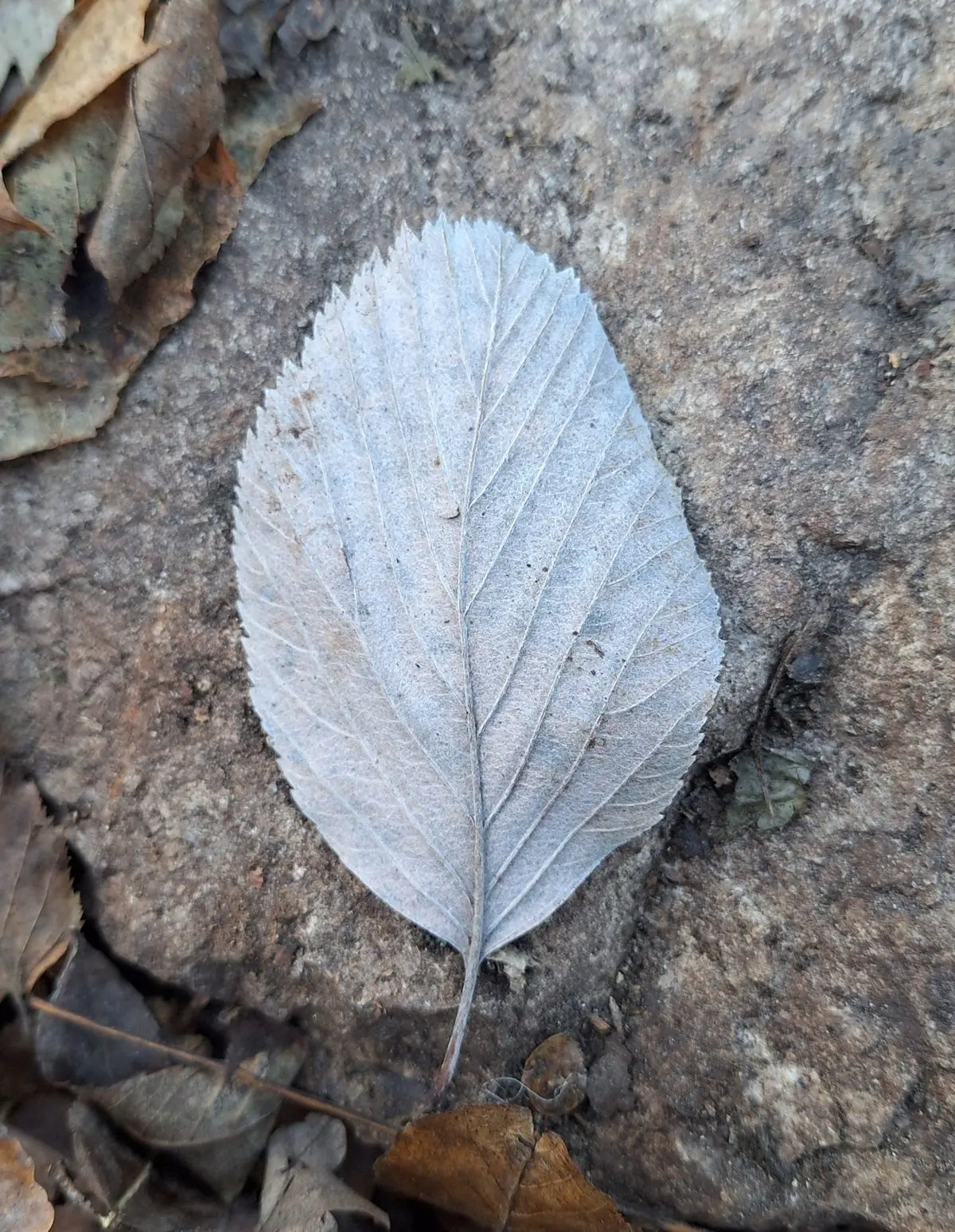
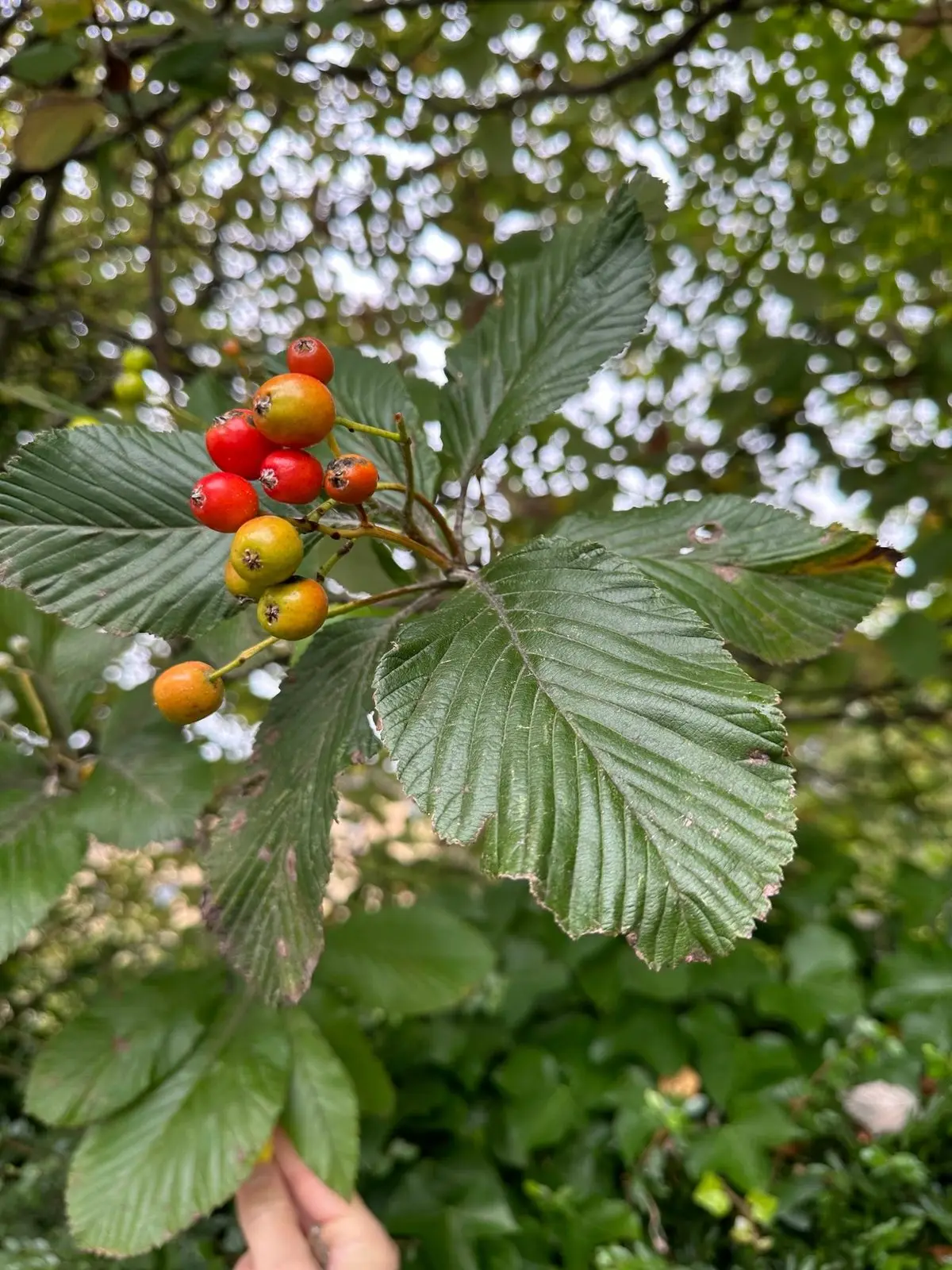
Sorbus ariaCommon whitebeam is a narrow-domed tree on stiff, steep branches, with oval, toothed leaves that are white and fuzzy underneath. In any breeze the whole crown flashes white.
How to identify common whitebeam →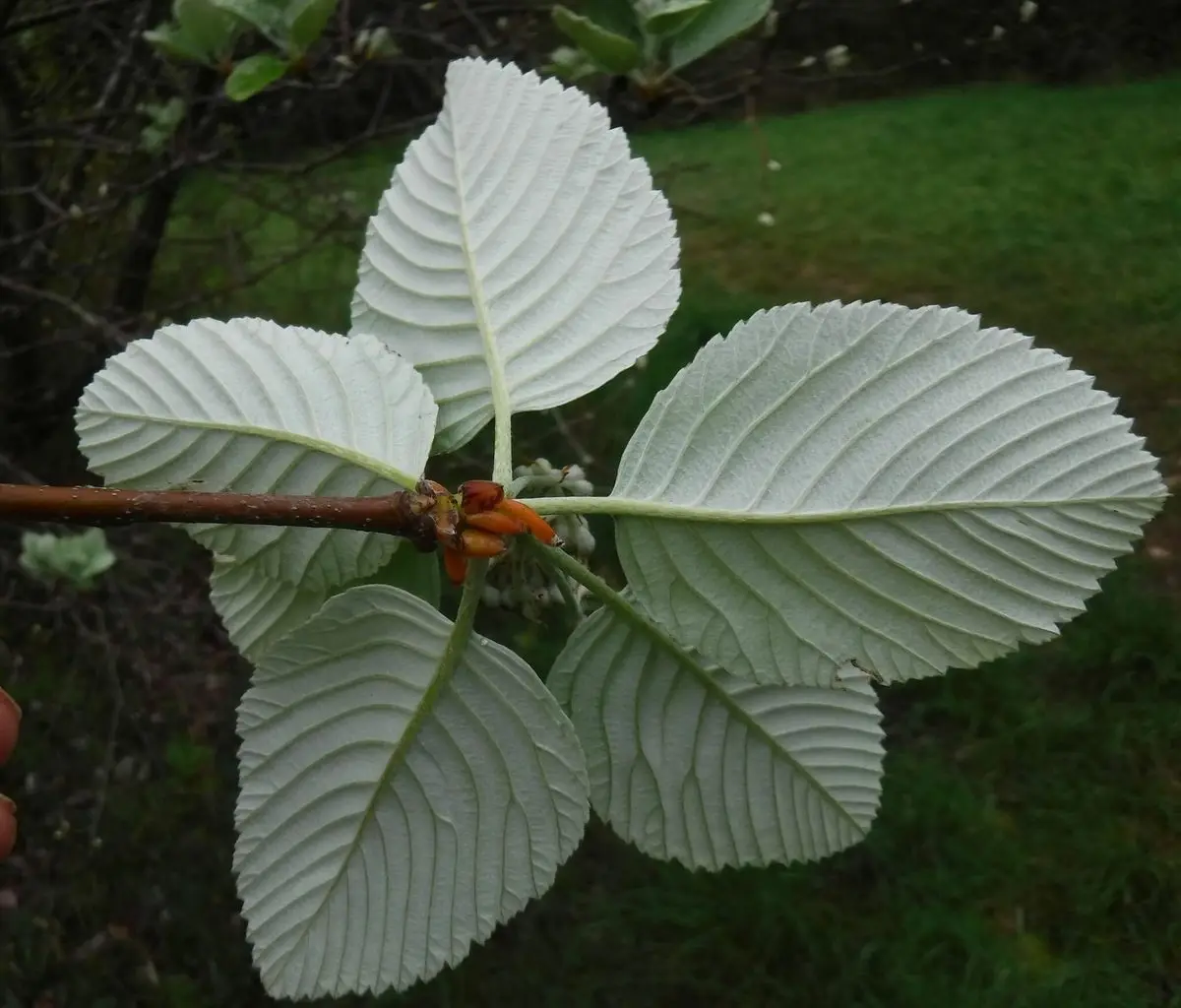 Jon Mortin, CC BY 4.0
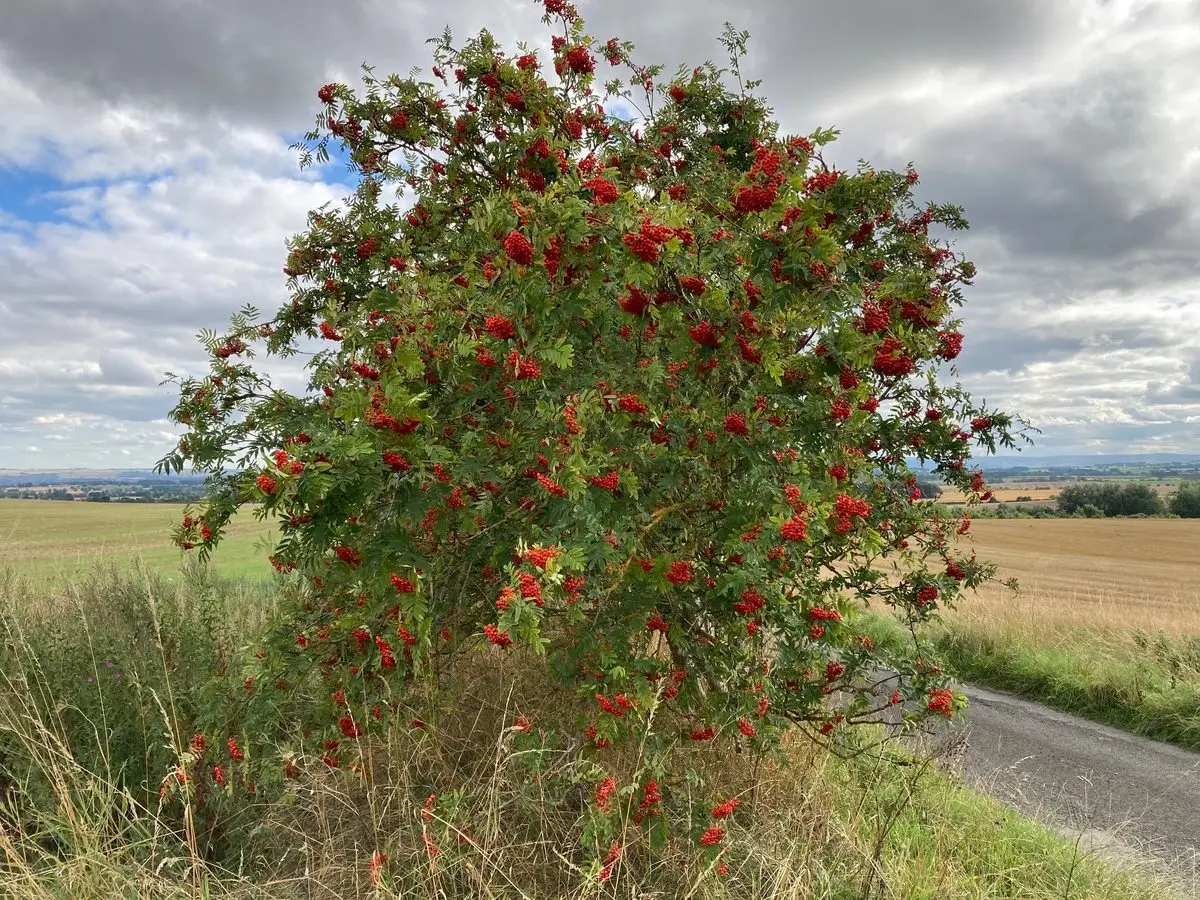 Mark Partington, CC BY 4.0
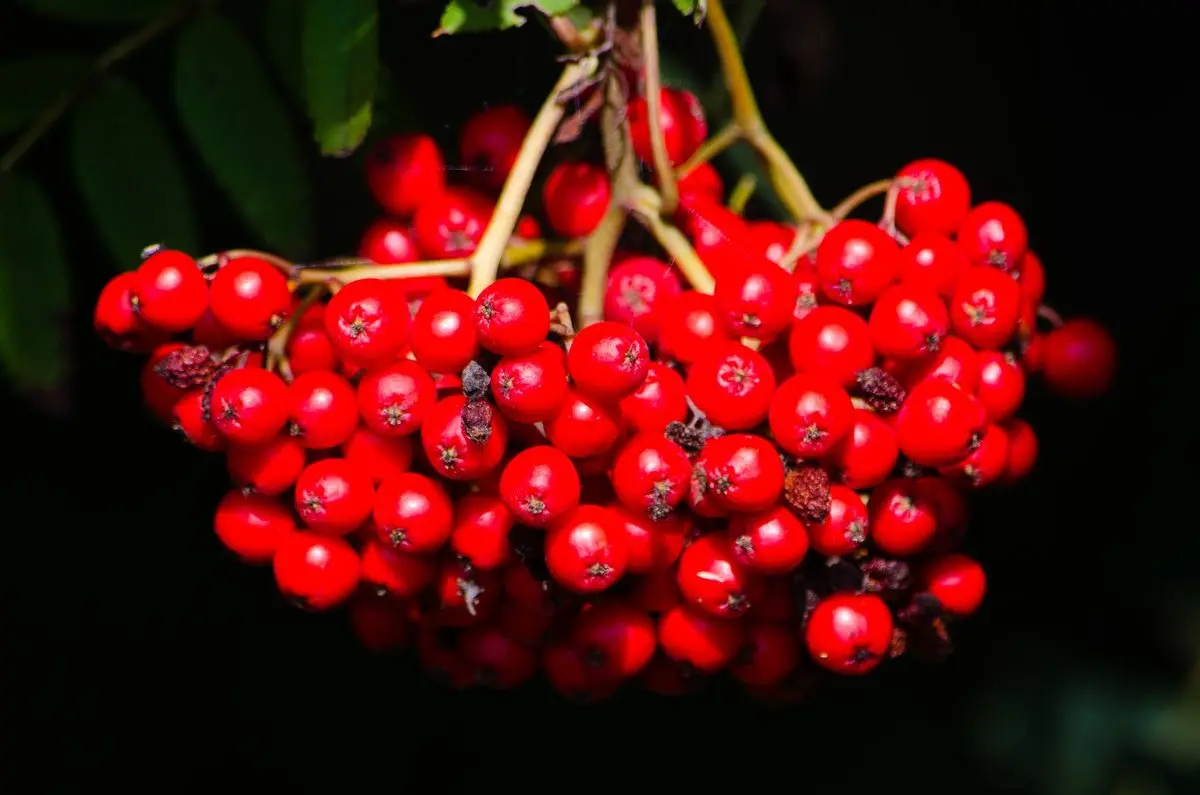
Both have white flower heads and red fruit.
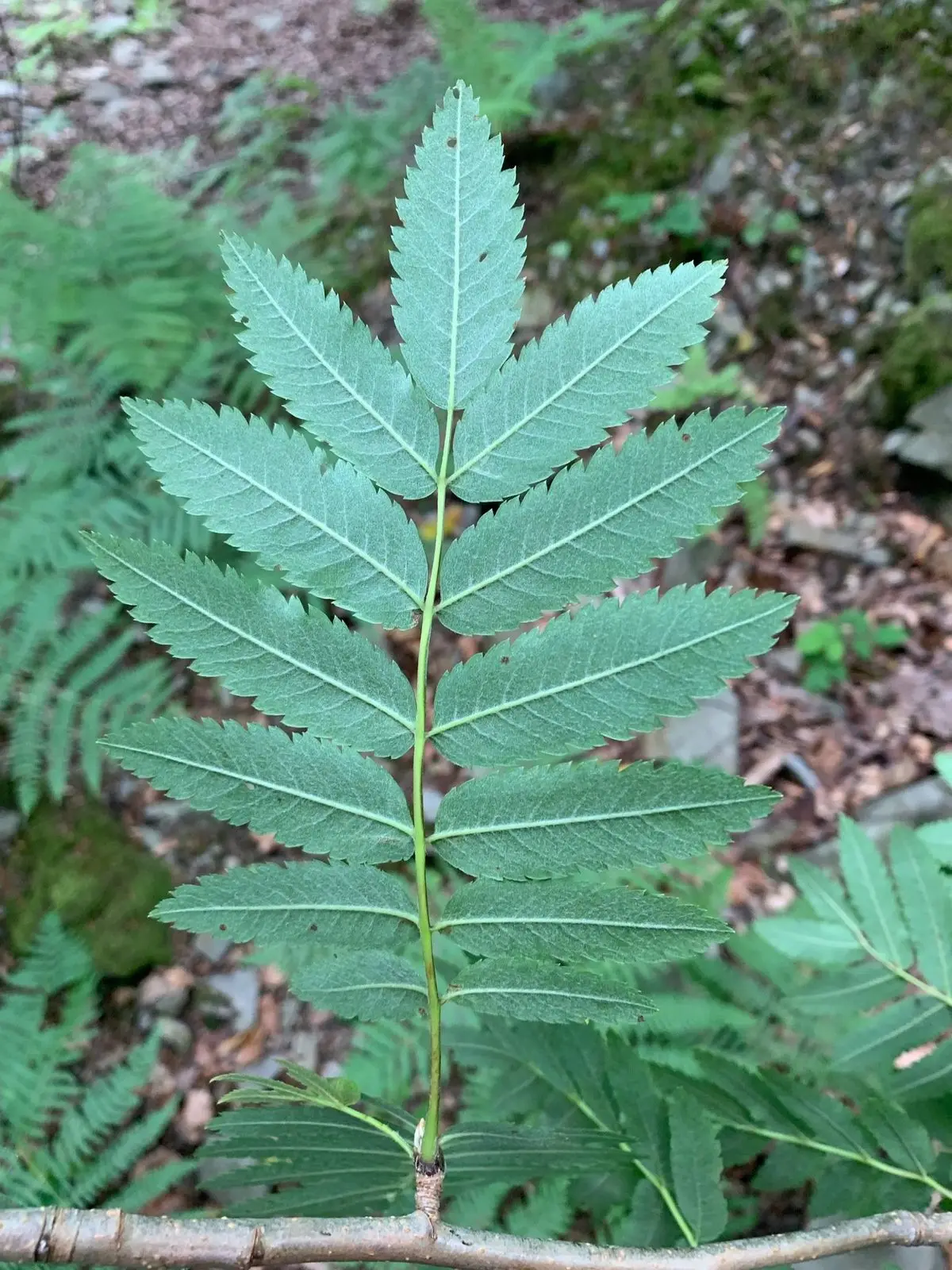
The quickest check is the blades on one stalk. Common whitebeam: one undivided oval leaf, to 12 cm. Rowan: feathered into 13 to 15 toothed leaflets. No leaves on the tree? Check the colour and the cluster.
| Look at | Common whitebeam | Rowan |
|---|---|---|
| Blades on one stalk | One undivided oval leaf, to 12 cm | Feathered into 13 to 15 toothed leaflets |
| Colour and the cluster | Dull red, in clusters | Scarlet, dozens in one flat-topped head |
| Whole tree | A narrow dome, flashing white in any breeze | Small and open, light showing through the crown |
Common whitebeam is a narrow-domed tree on stiff, steep branches, with oval, toothed leaves that are white and fuzzy underneath. In any breeze the whole crown flashes white.
How to identify common whitebeam →Rowan is a small, open tree with smooth silvery grey bark and feathered leaves of 13 to 15 toothed leaflets. From August it carries flat heads of scarlet berries.
How to identify rowan →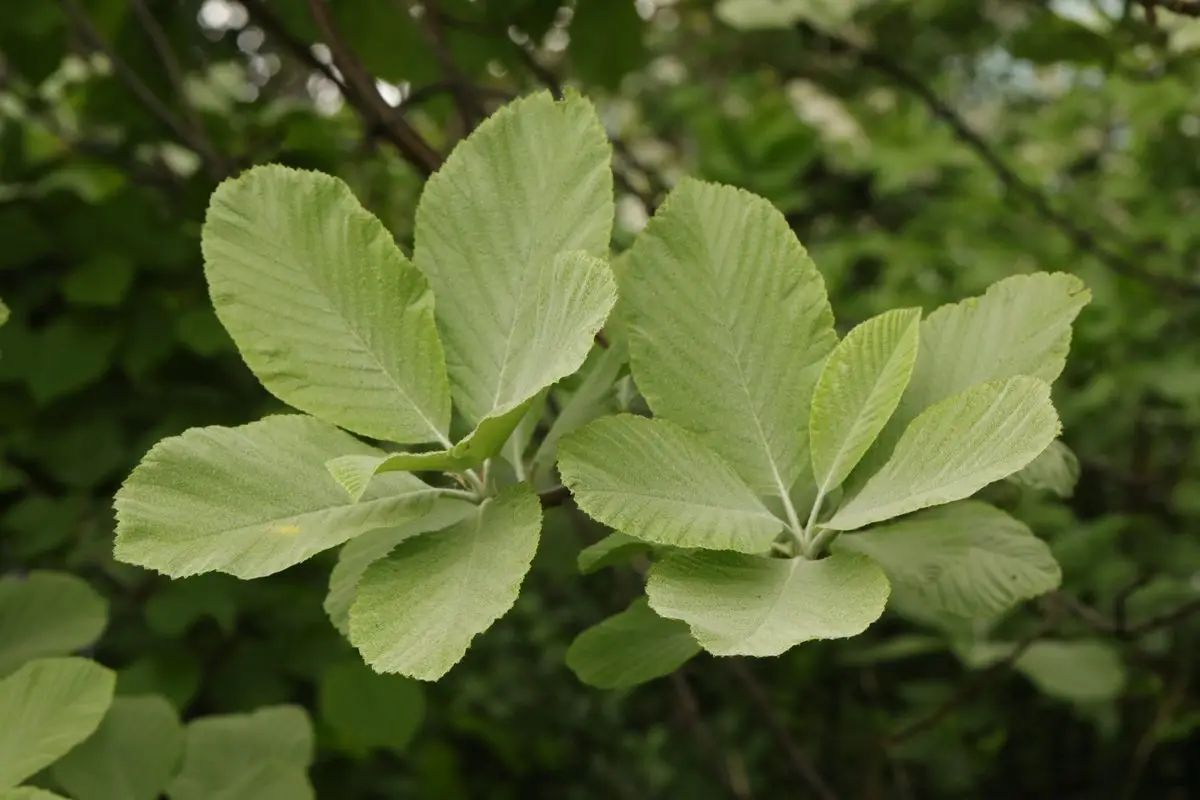
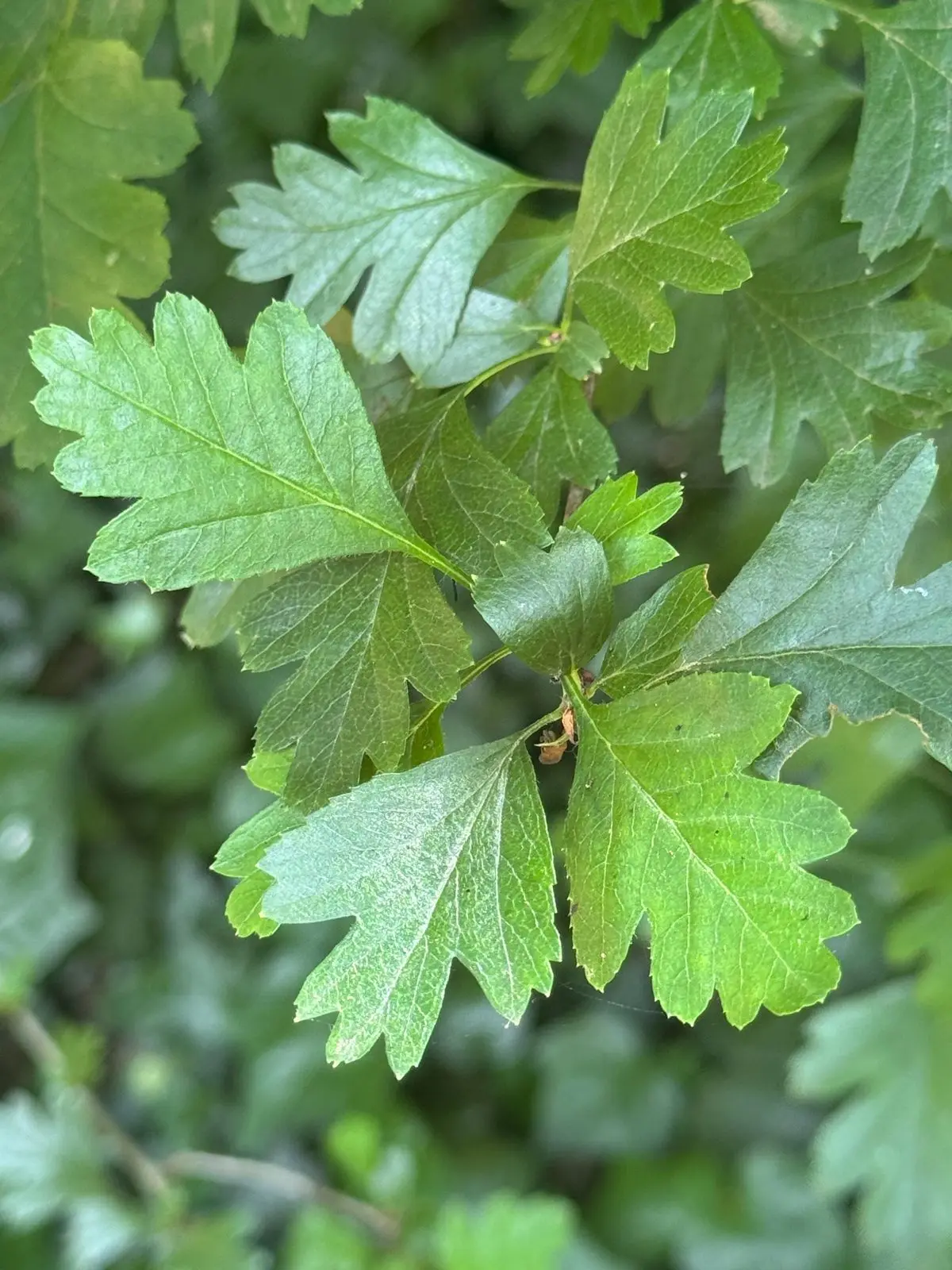 Common whitebeam or hawthorn?Quickest check: the outline→
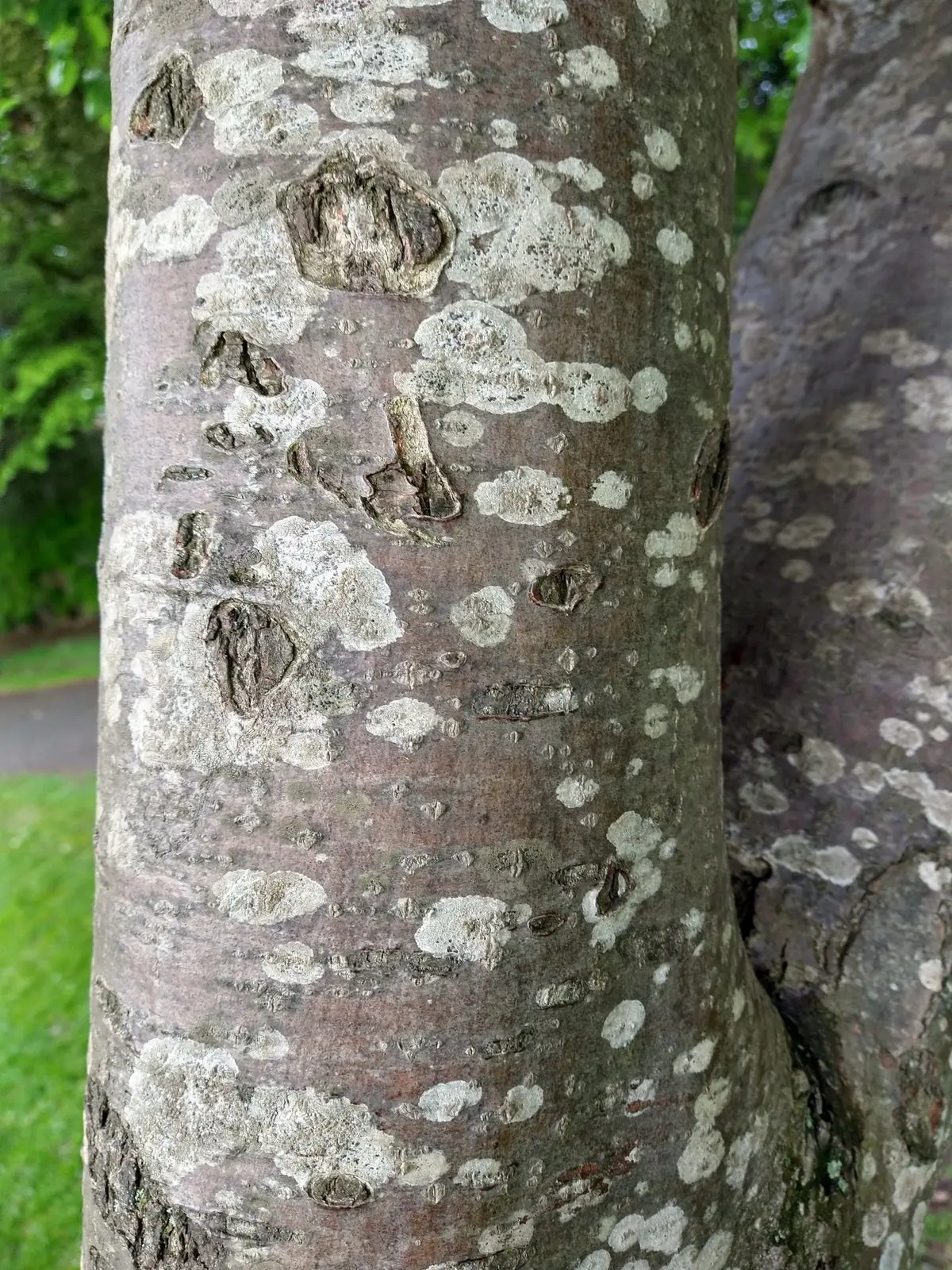
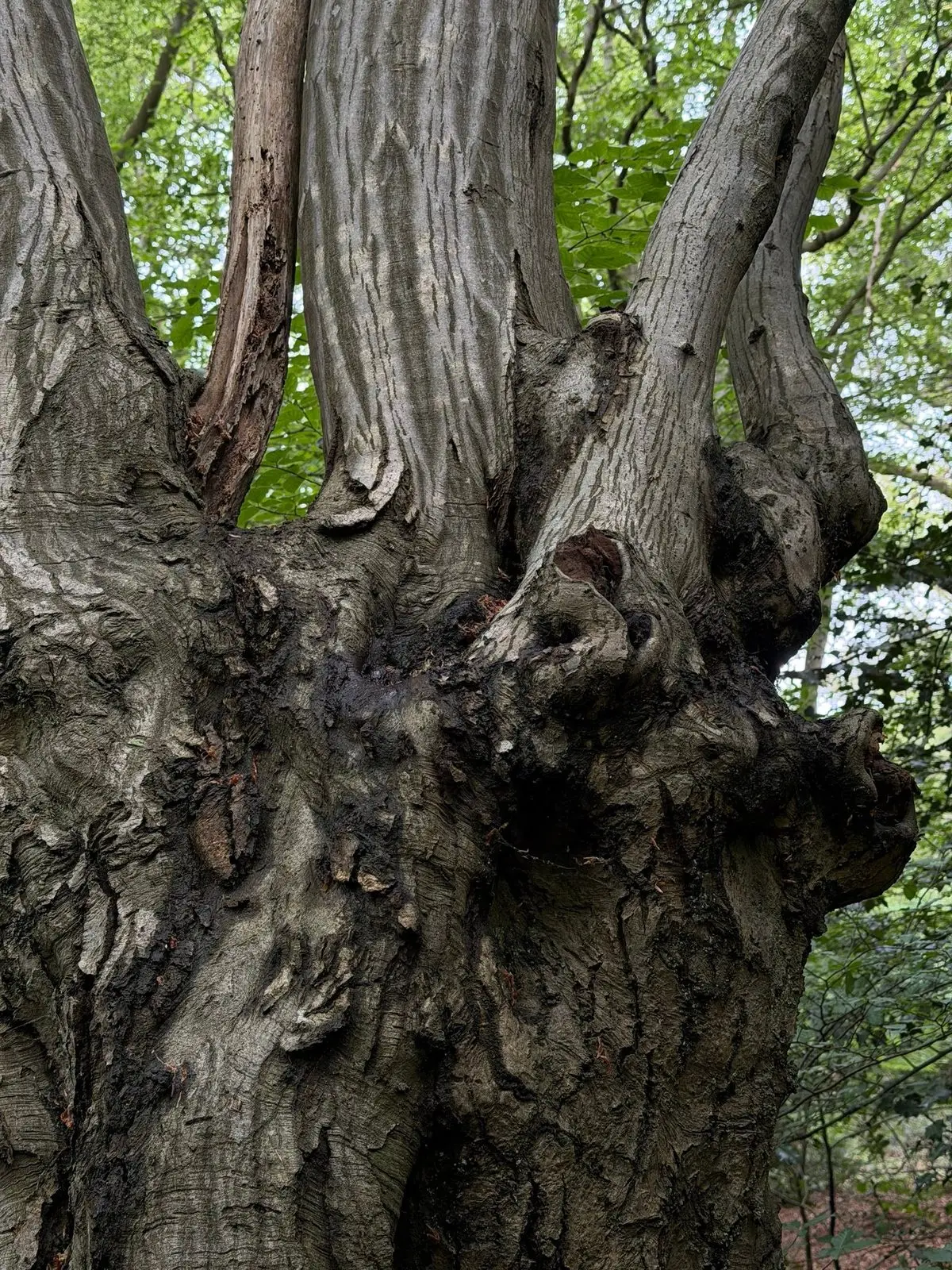 Common whitebeam or hornbeam?Quickest check: the trunk→
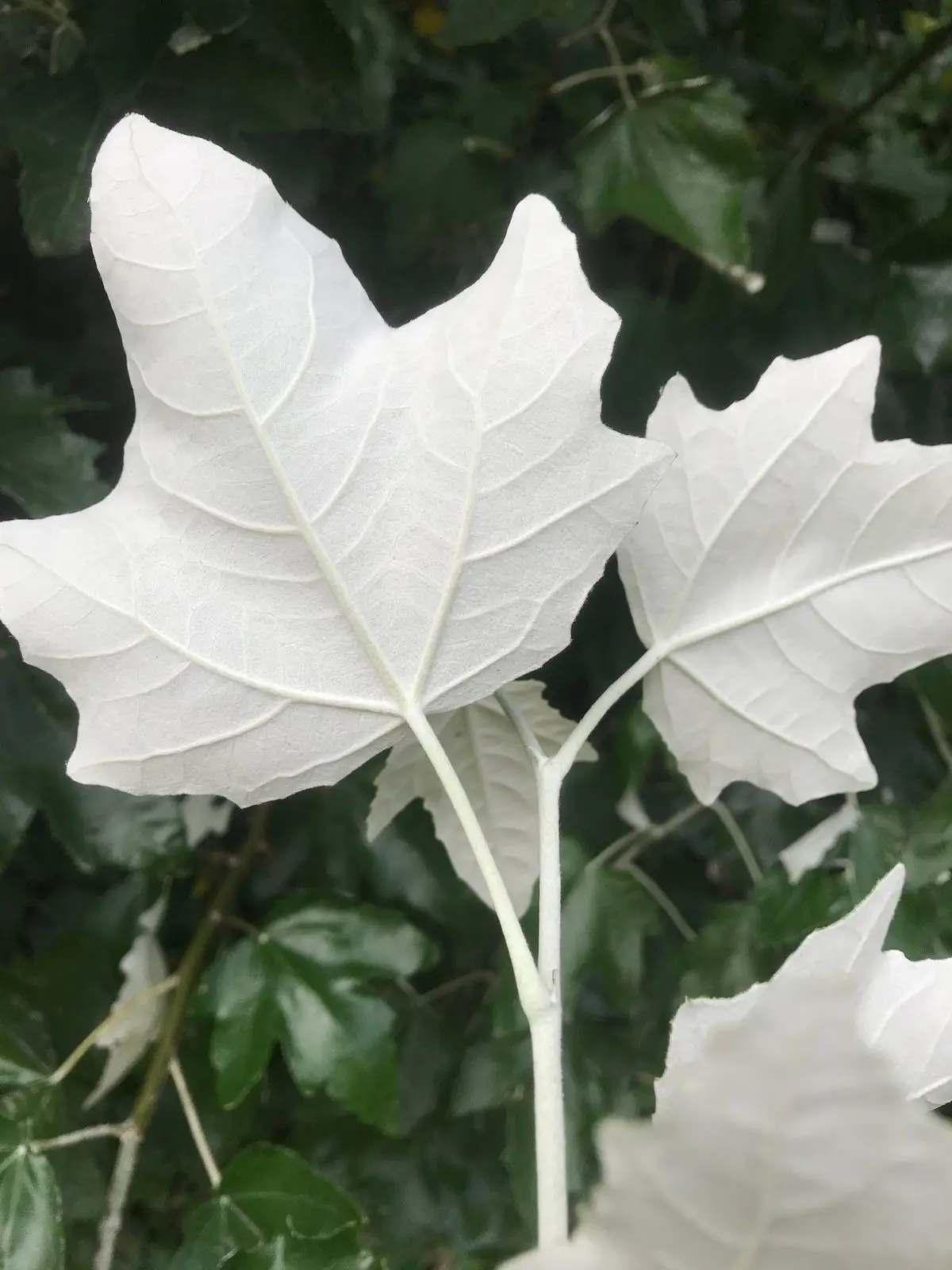 Common whitebeam or white poplar?Quickest check: the leaf outline→
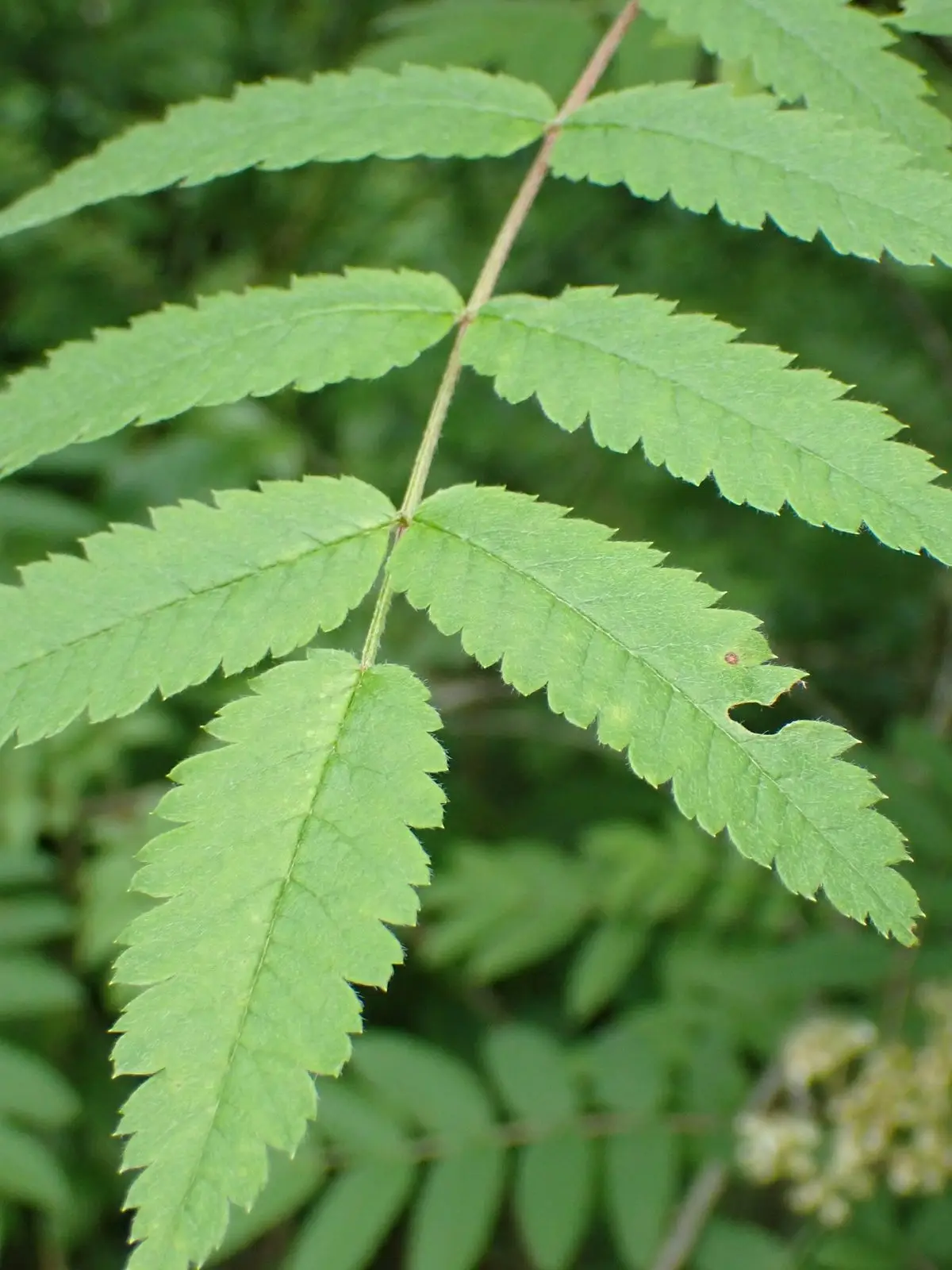
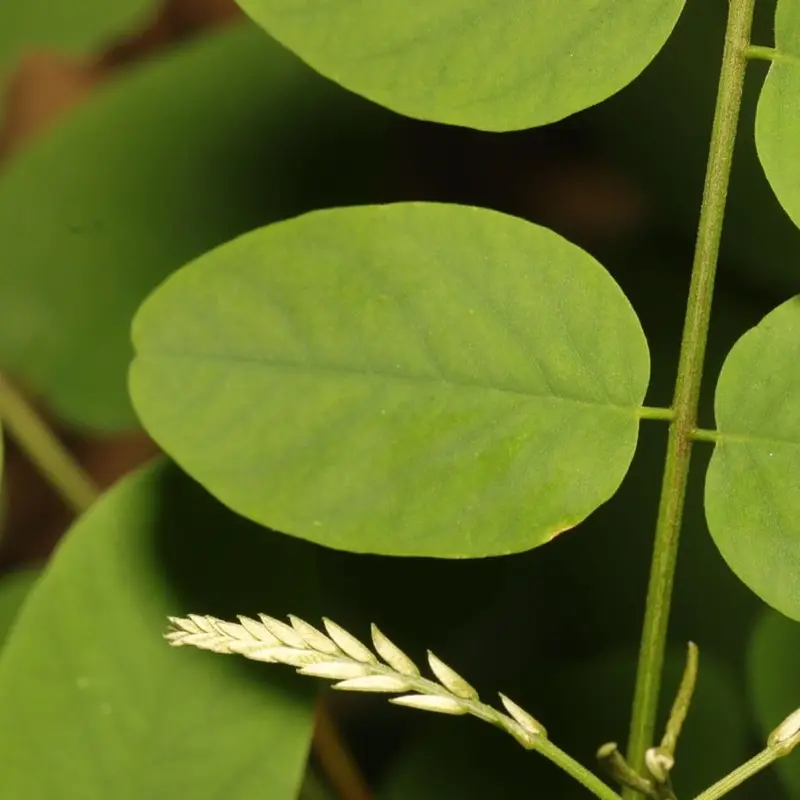 Rowan or false acacia?Quickest check: the leaflet edge→
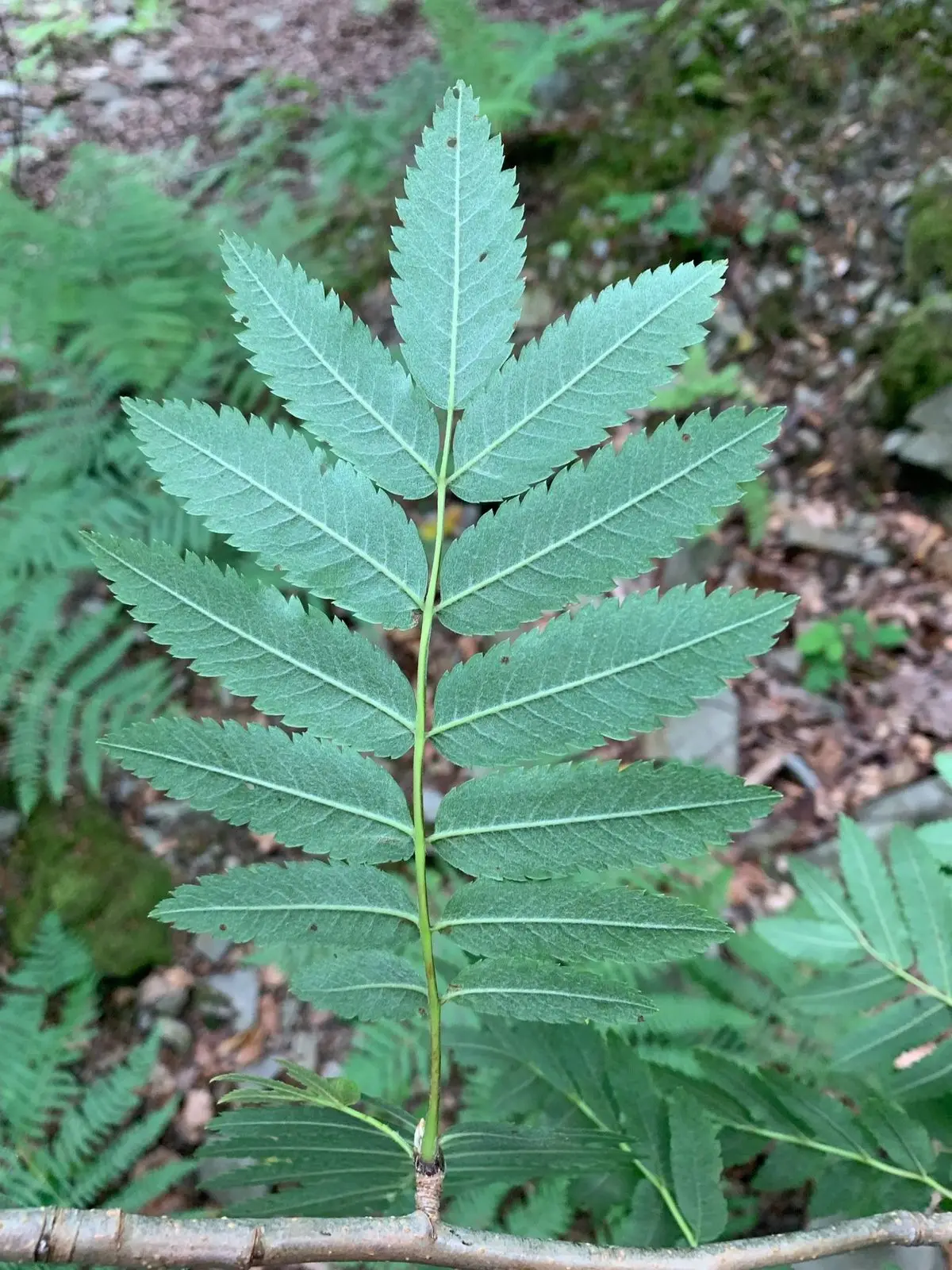 Rowan or hawthorn?Quickest check: the whole leaf→
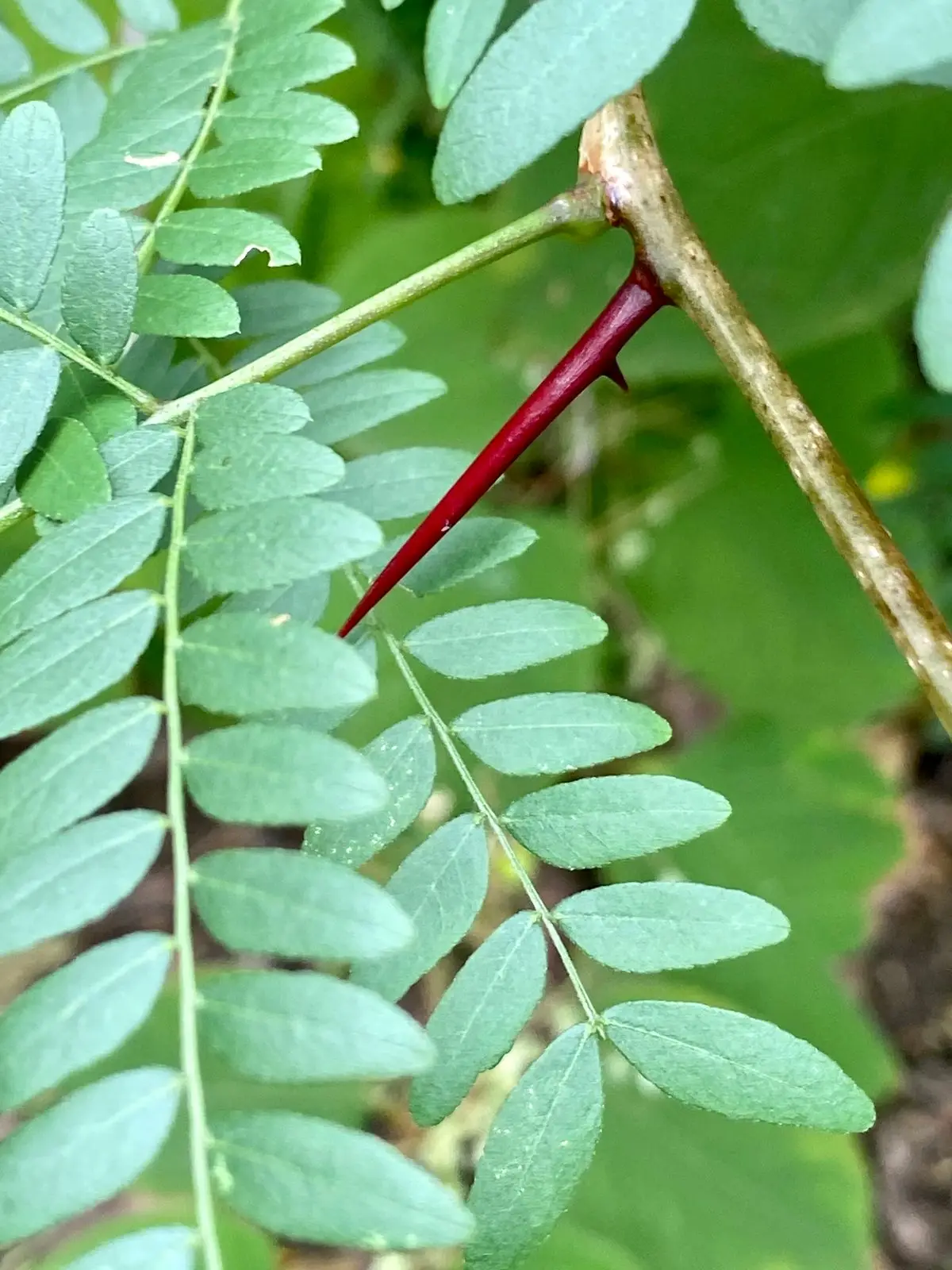 Rowan or honey locust?Quickest check: the leaflet edge→
Free to download.
Every fact on this page is checked against the Collins Tree Guide, last in November 2026. Spotted something that looks wrong in front of a real tree? Tell us. How we check.
Photographs: Jon Mortin (CC BY 4.0), Mark Partington (CC BY 4.0), Marek Hrušovský (CC BY 4.0), 呂一起(Lyu yi-chi) (CC BY 4.0), Scott Shanks (CC BY 4.0), David Ashcroft (CC BY 4.0). With thanks to everyone who shares their photographs on iNaturalist and Wikimedia Commons.