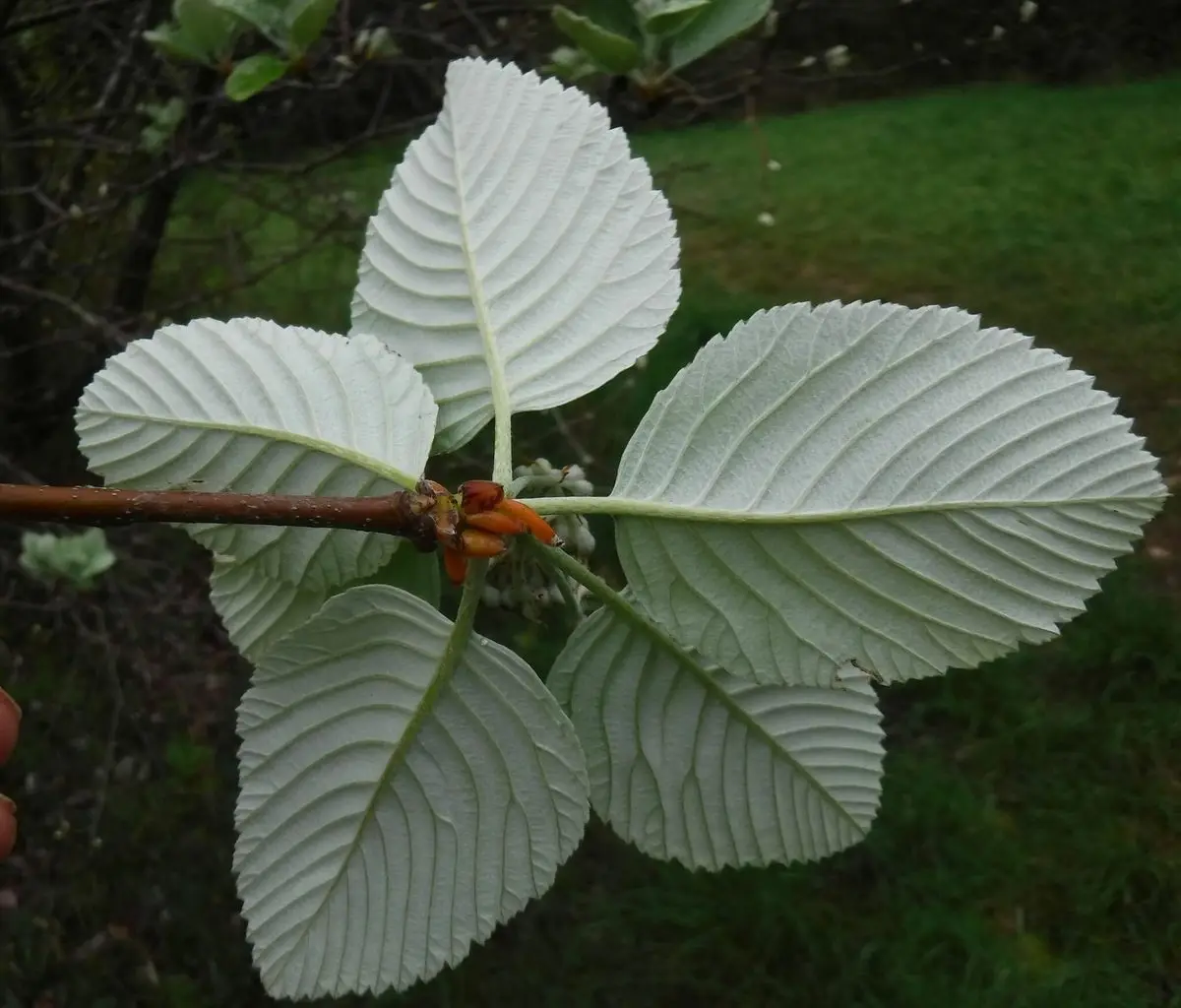
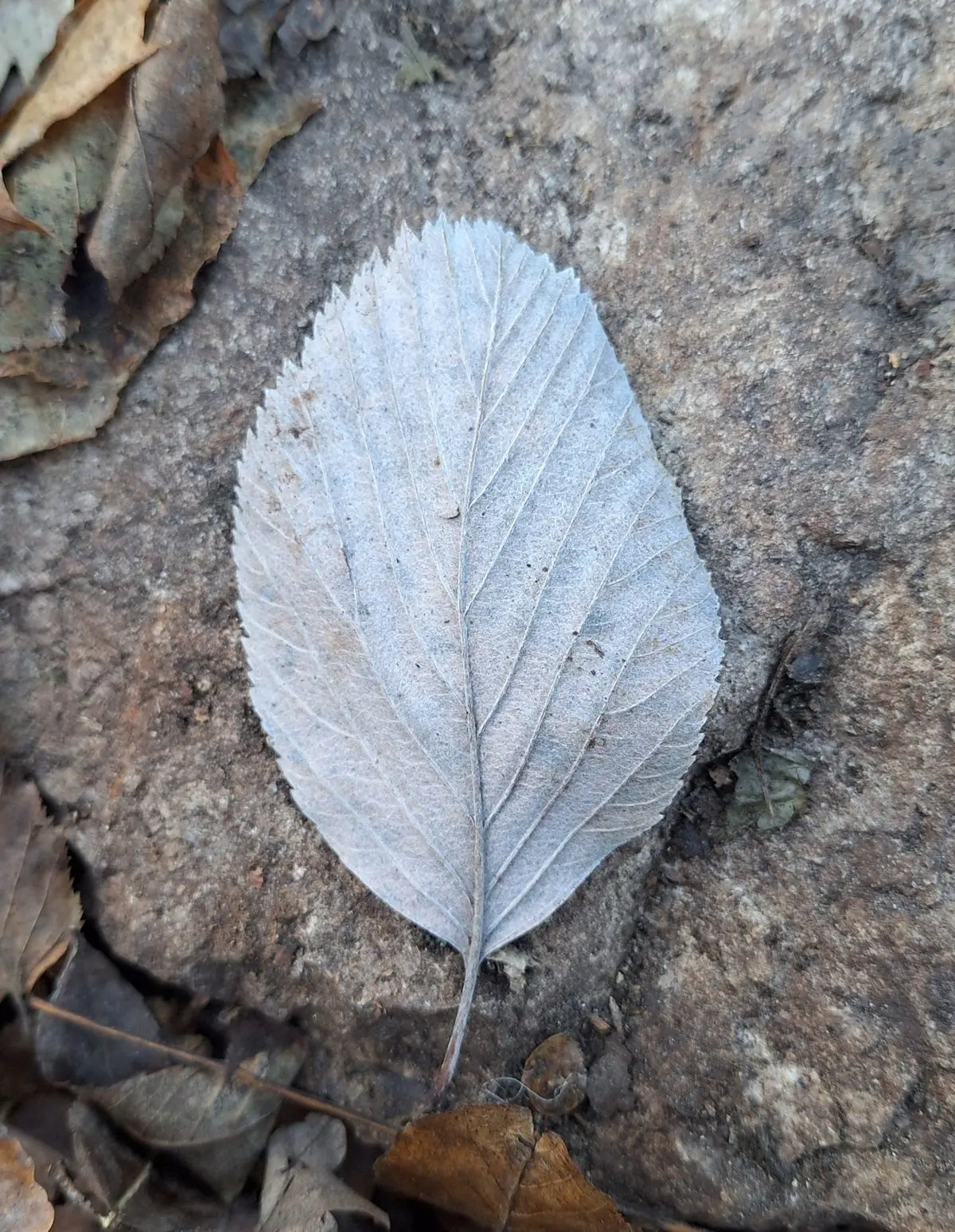
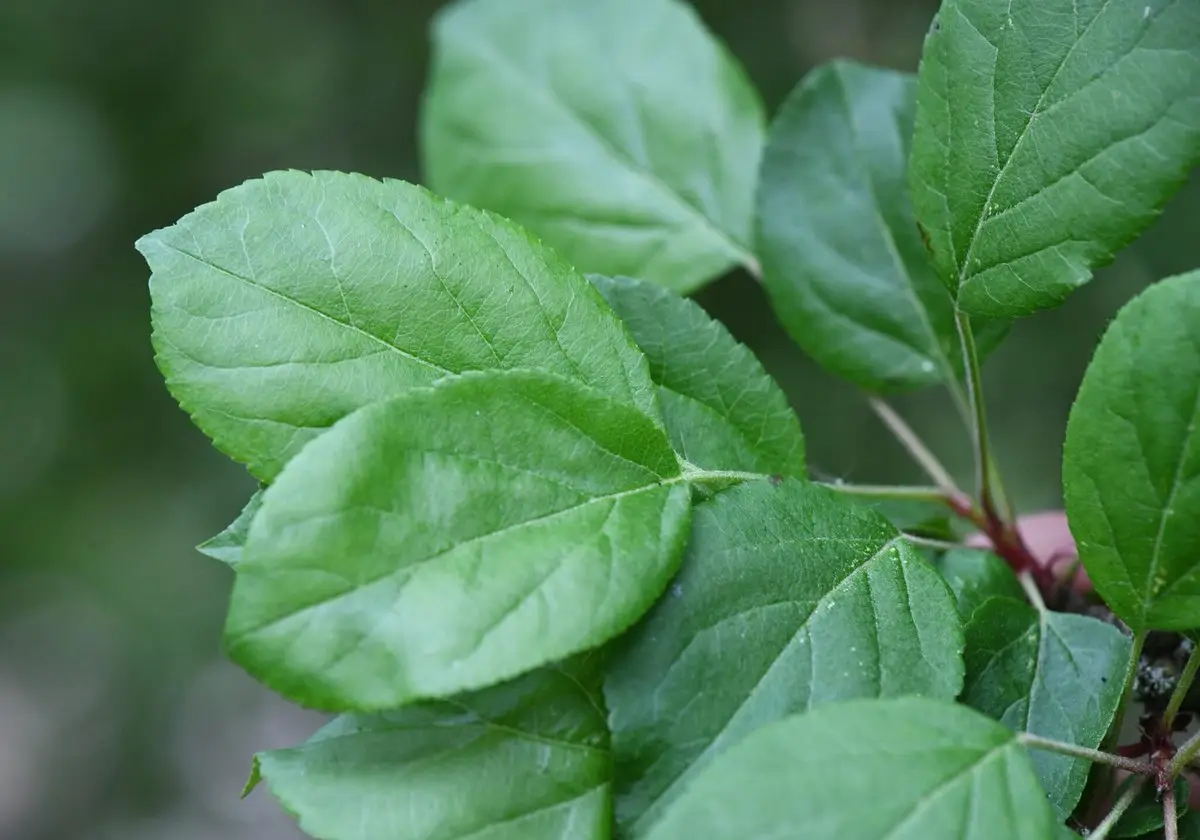
Each leaf is a single toothed oval, dark green on top and white underneath, with a coat of soft hairs. Close, straight veins run side by side out to the edge.
Native, in southern England and Co. Galway · Up to 23 m
Common whitebeam
Sorbus aria · Rosaceae
Common whitebeam is a narrow-domed tree on stiff, steep branches, with oval, toothed leaves that are white and fuzzy underneath. In any breeze the whole crown flashes white.
Often mistaken for rowan. How to tell them apart →Know it by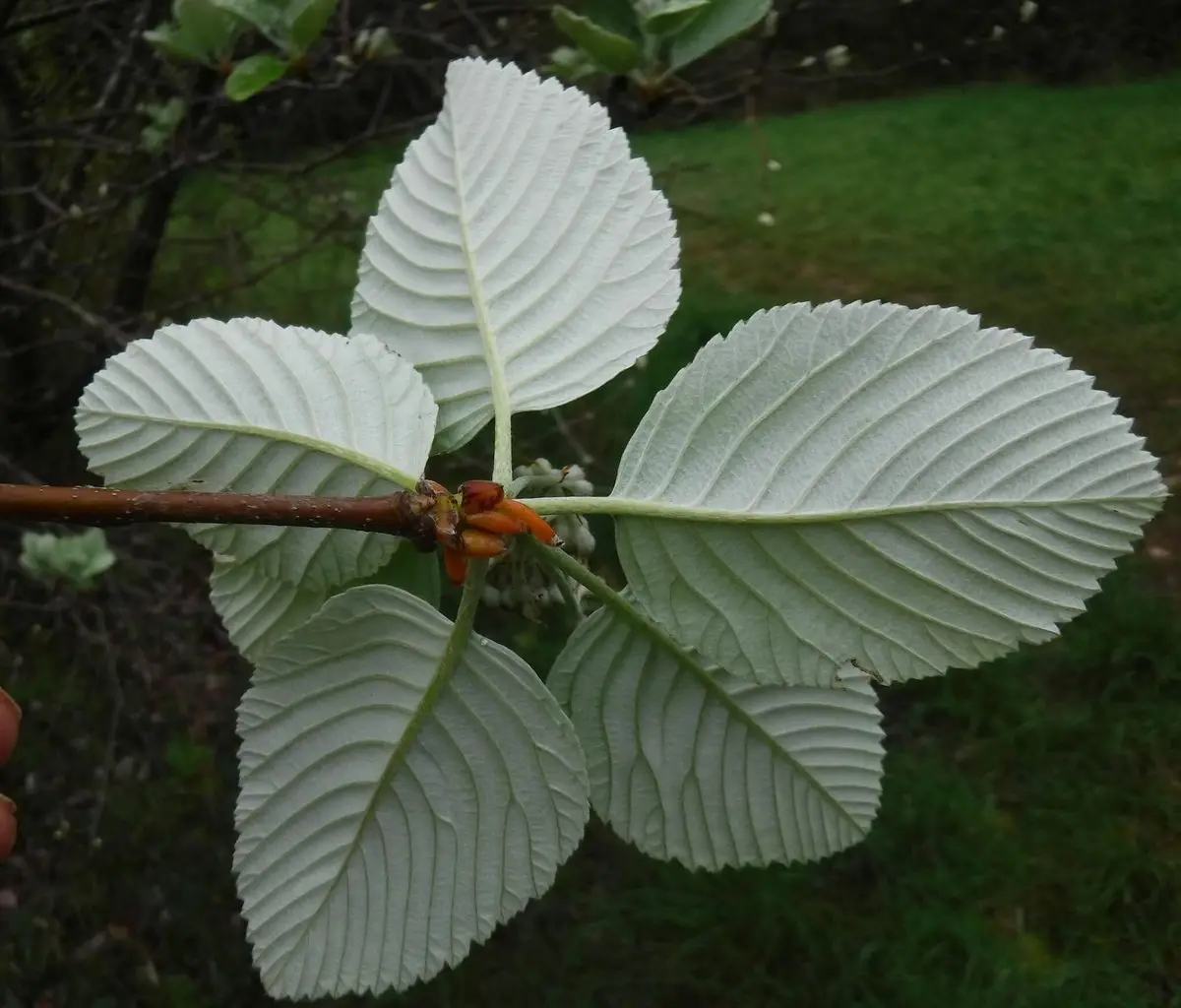 LeavesOval leaves, white and fuzzy underneath.
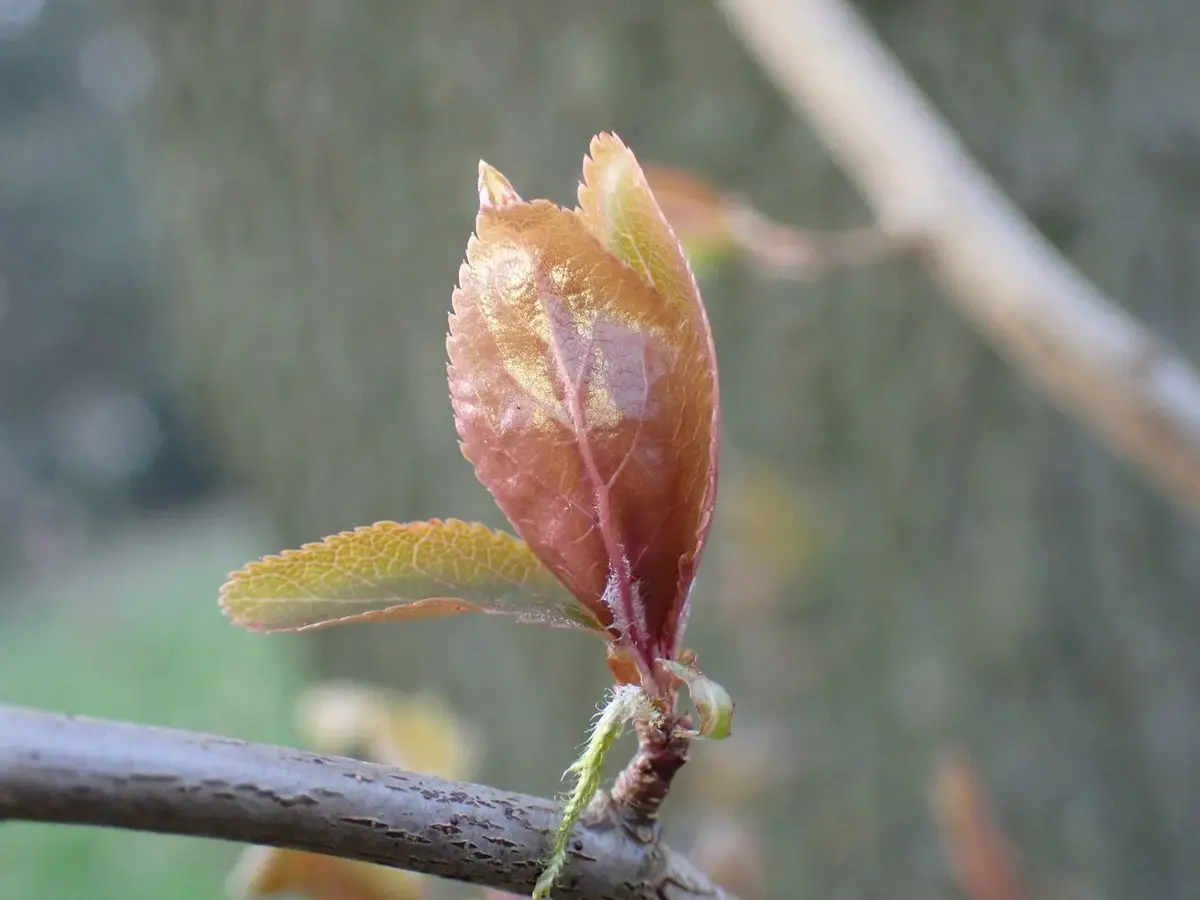
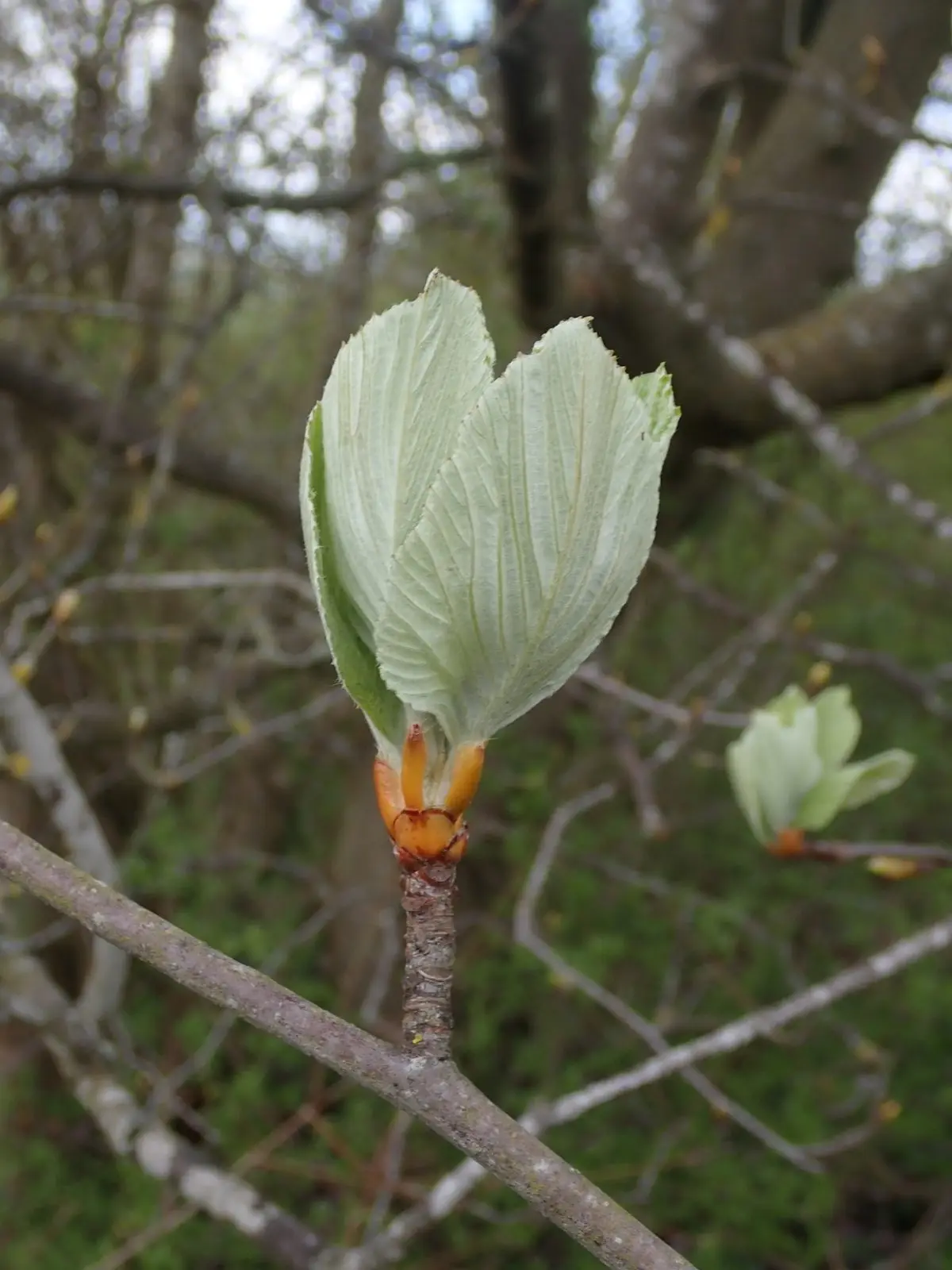 Spring leavesNew leaves stand up, silvery all over, in April.
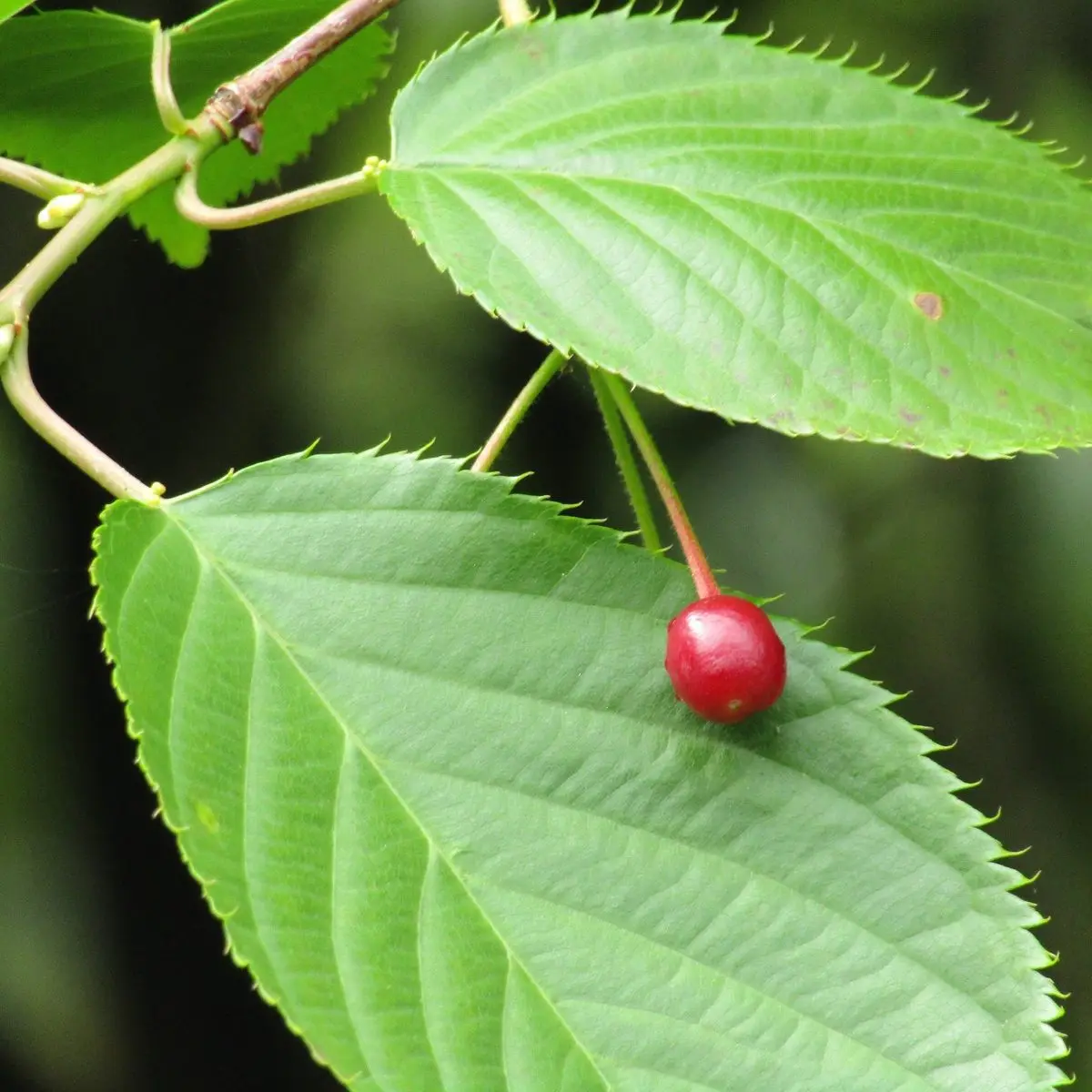
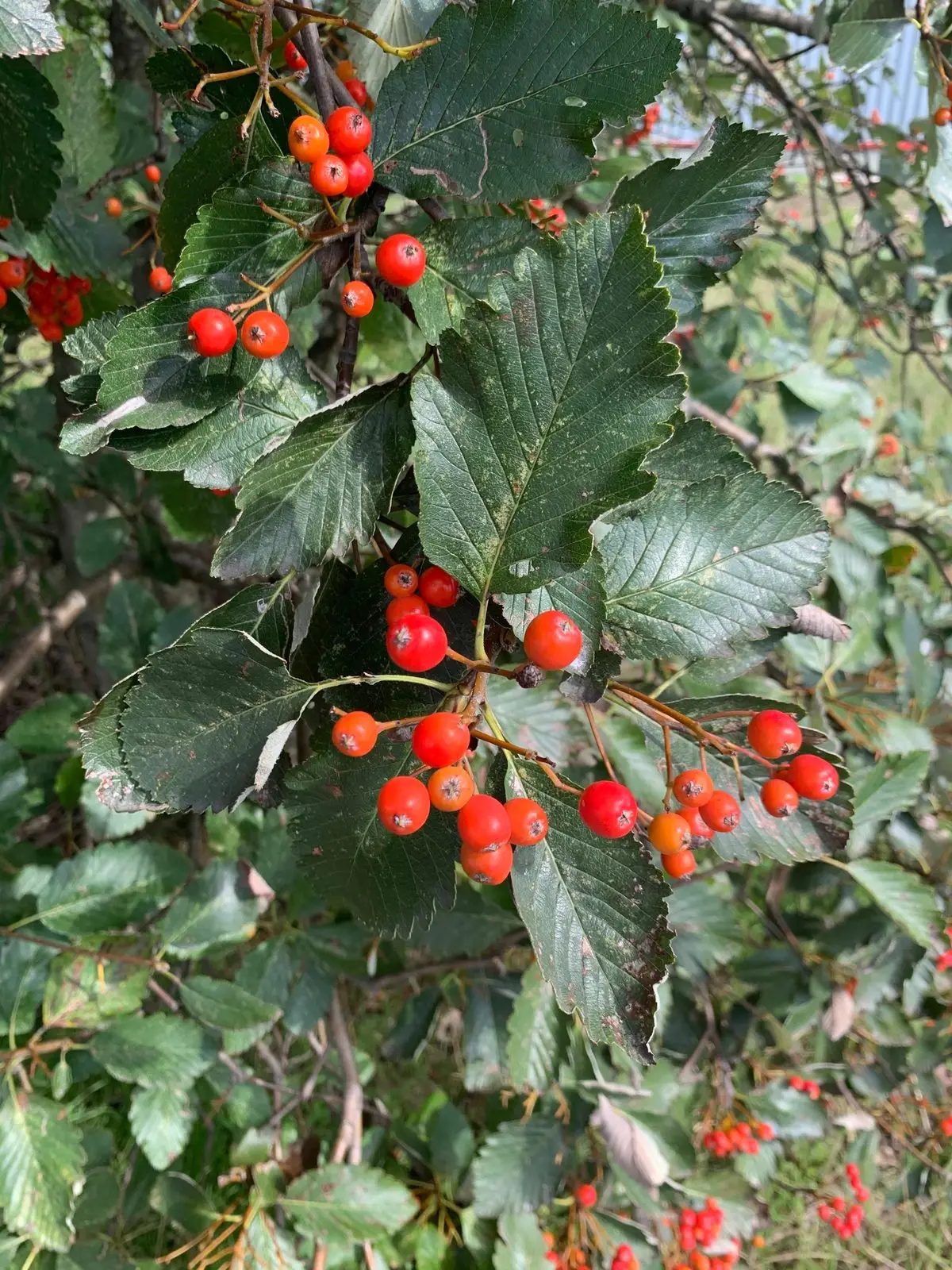 BerriesDull red berries in small bunches, from September.
LeavesOval leaves, white and fuzzy underneath.Spring leavesNew leaves stand up, silvery all over, in April.BerriesDull red berries in small bunches, from September.Then check · ShapeA narrow dome of stiff, steep branches, spreading as it ages. In leaf, the crown flashes white in a breeze as the undersides turn over.
How to identify a common whitebeam
In April the new leaves stand upright as they come out of the bud, and look silvery all over.
From September, dull red berries hang in small bunches among the leaves. Birds take them almost as soon as they ripen.
 Learn the common whitebeam in TreelyEvery part through the year, and a short round each day until you know it.Get Treely
Every part, in photographs
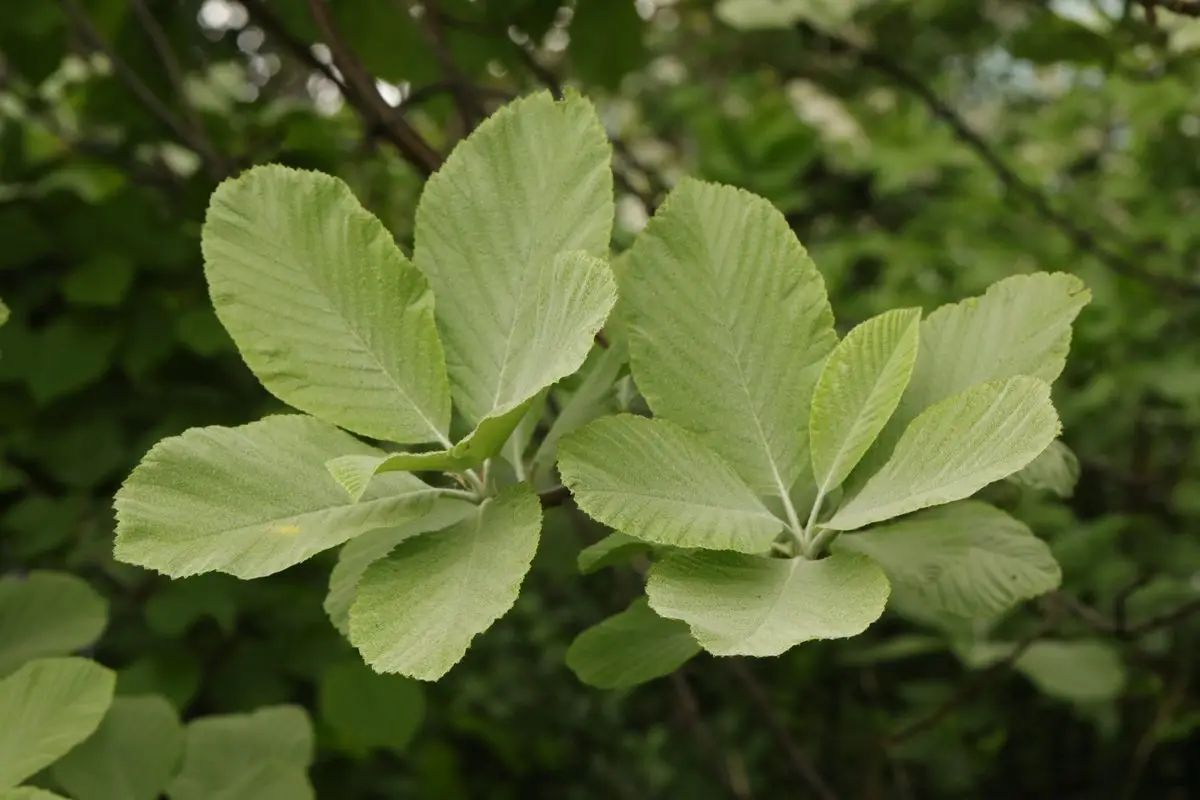
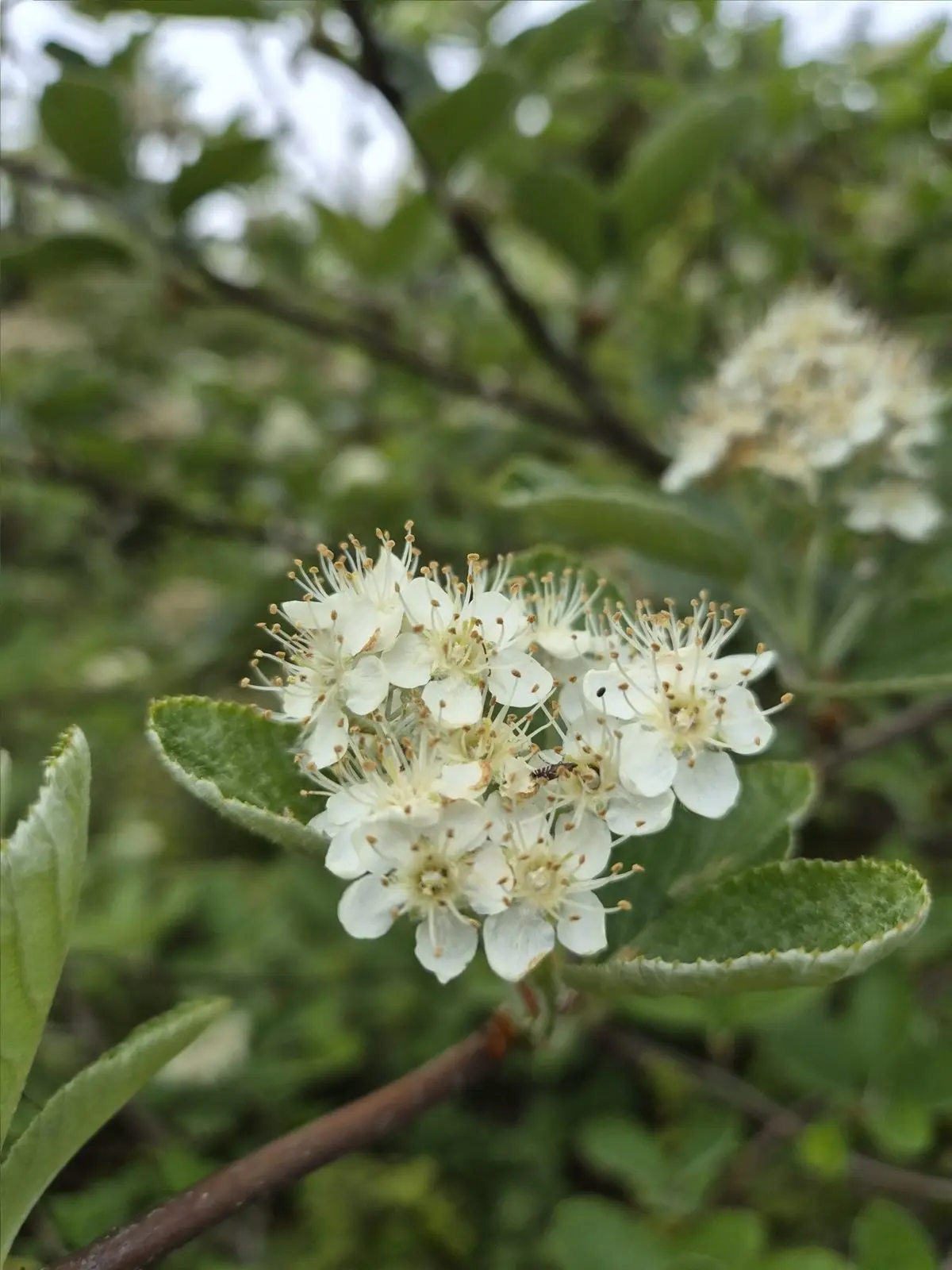
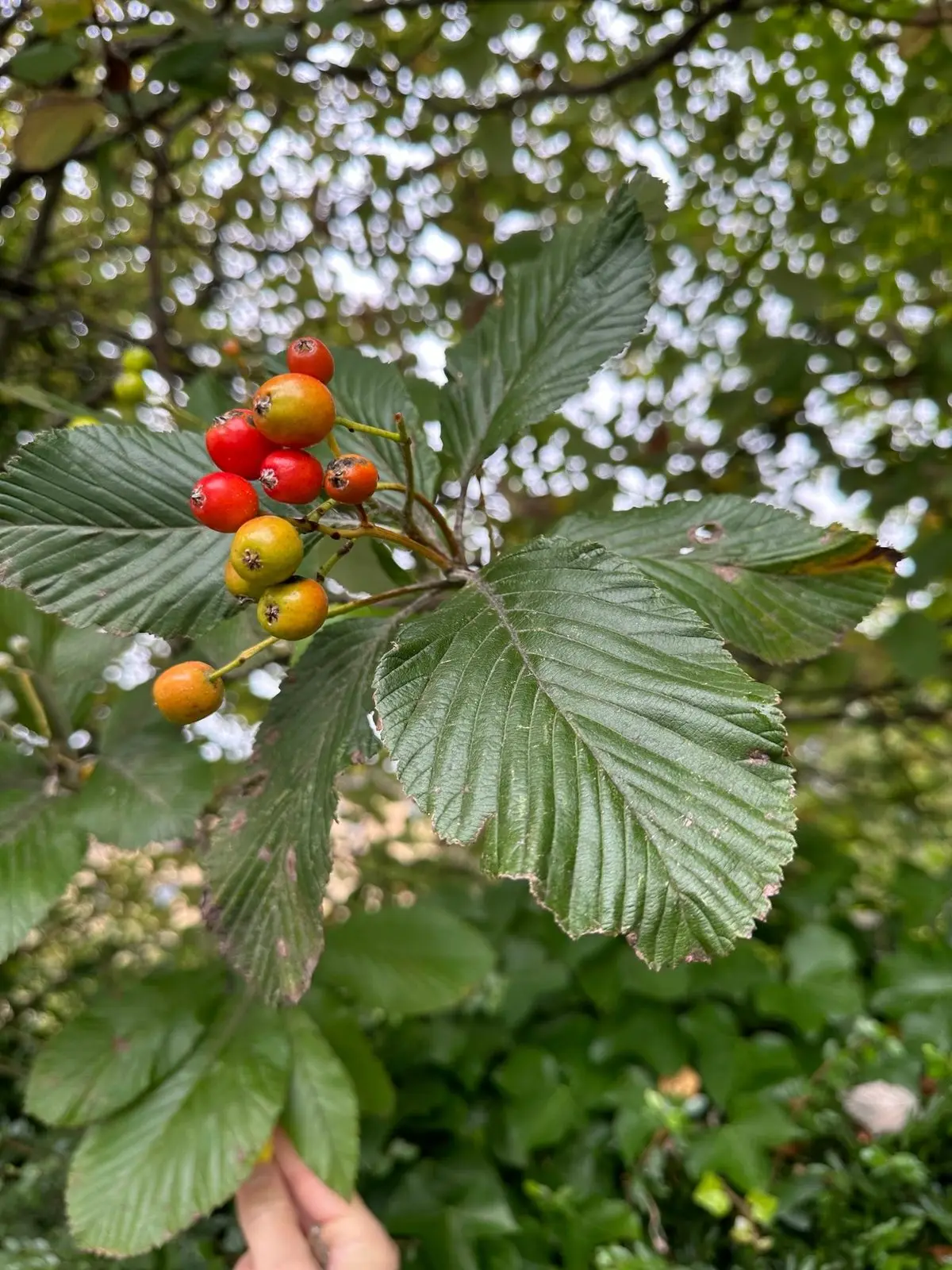 Scott Shanks, CC BY 4.0
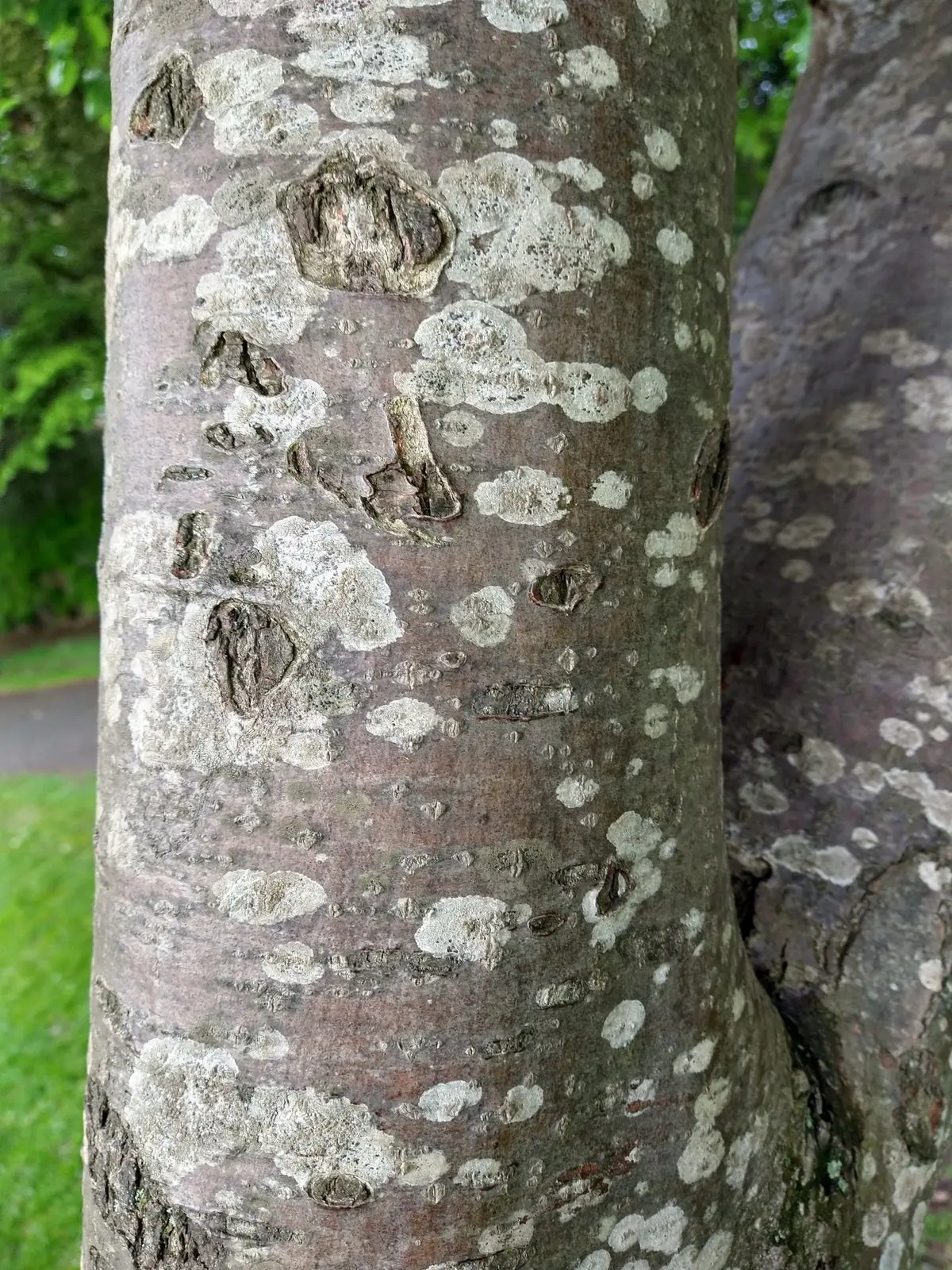 Eric Tittley, CC BY 4.0
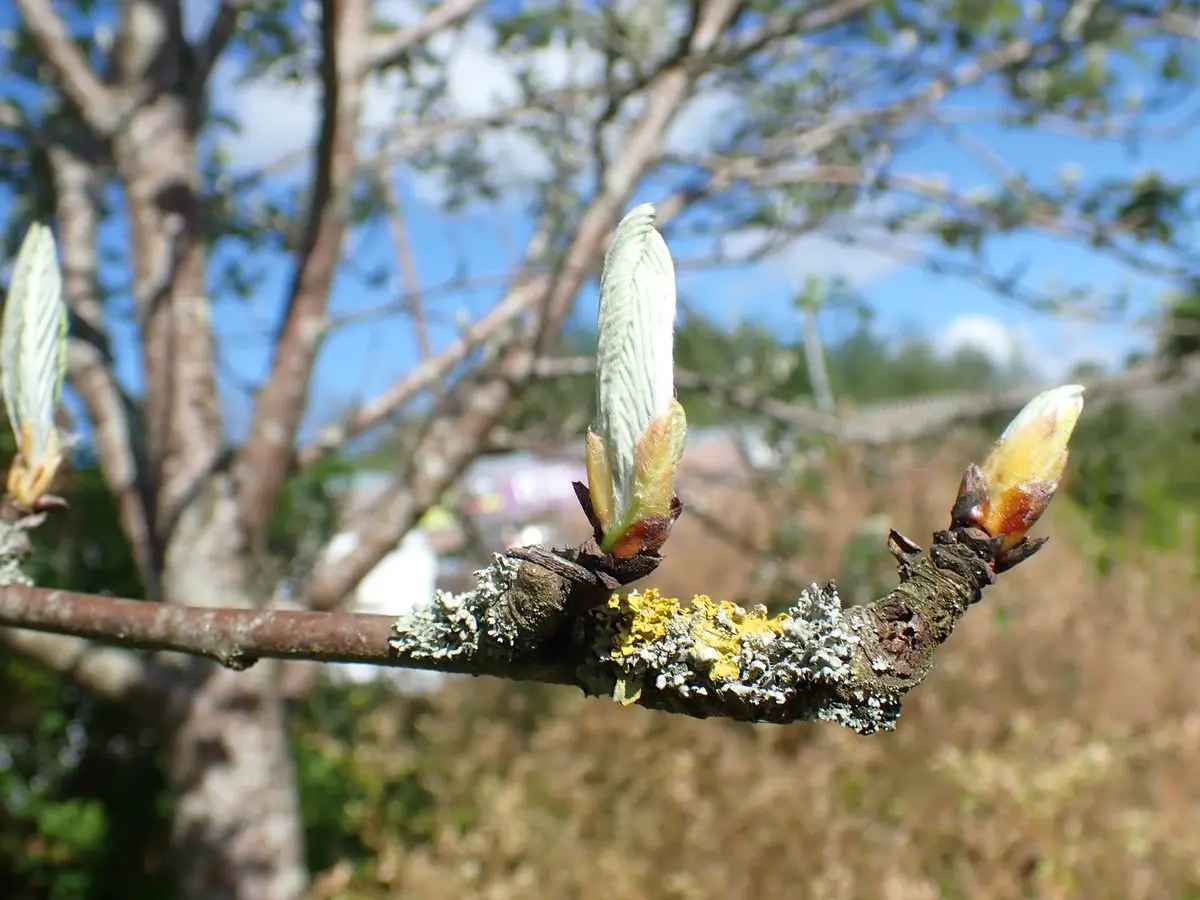 Jarro Nevsbaru, CC BY 4.0
 Jon Mortin, CC BY 4.0
When to look
JFMAMJJASOND
In leaf
Flowers
Berries
In leaf: April to November · Flowers: April to June · Berries: June to October
Every tree on the calendar · How to identify trees in winter
Where you’ll find it
Chalk scarps and light sands in southern England, hedgerows on chalky soil, open woodland on limestone and chalk scrub. Common in the wild in places, and planted in streets, parks and gardens everywhere.
What it’s mistaken for
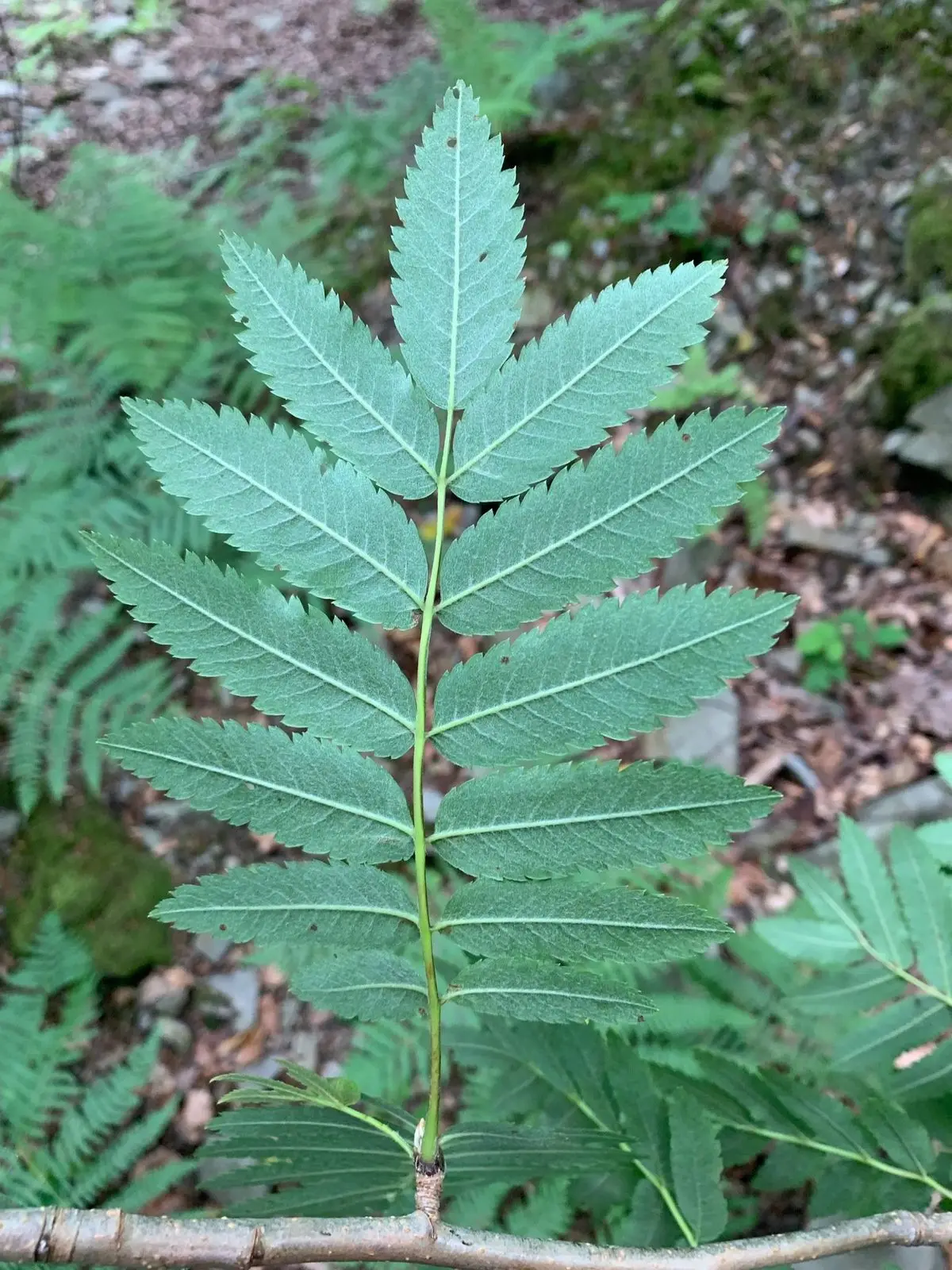 Common whitebeam or rowan?Both have white flower heads and red fruit.Blades on one stalk→
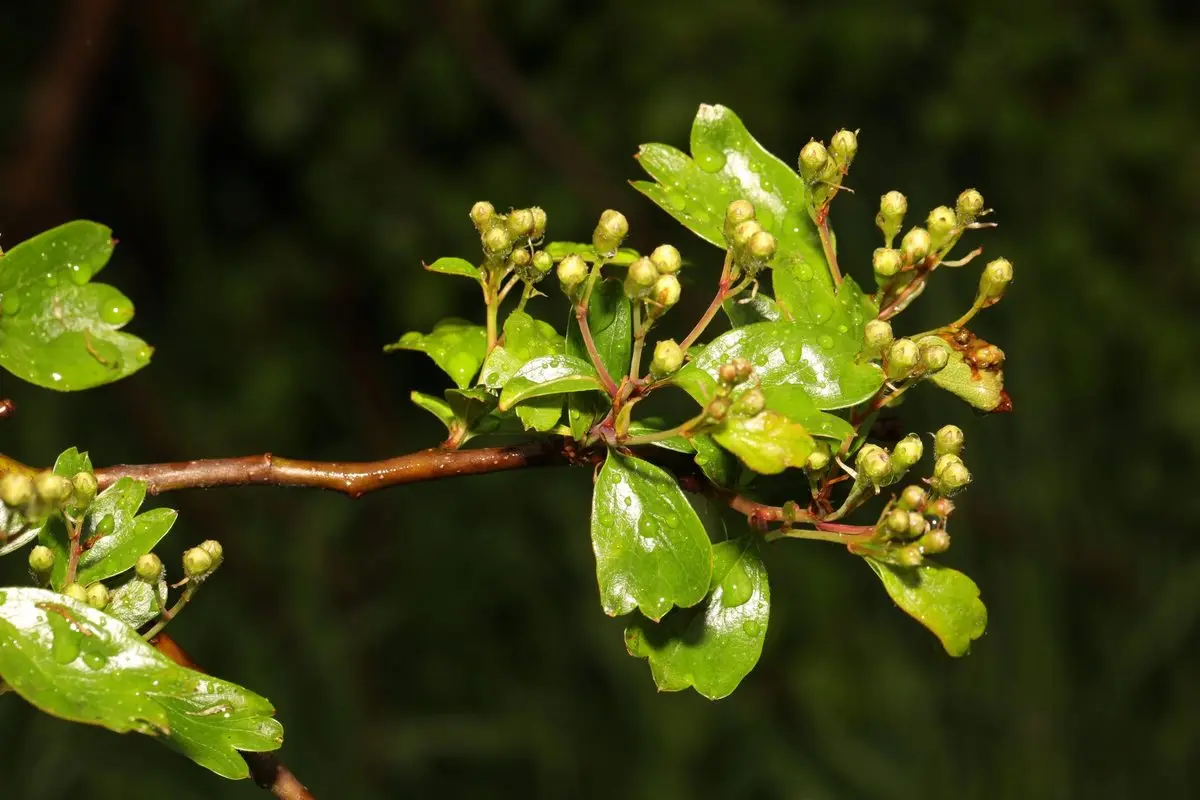
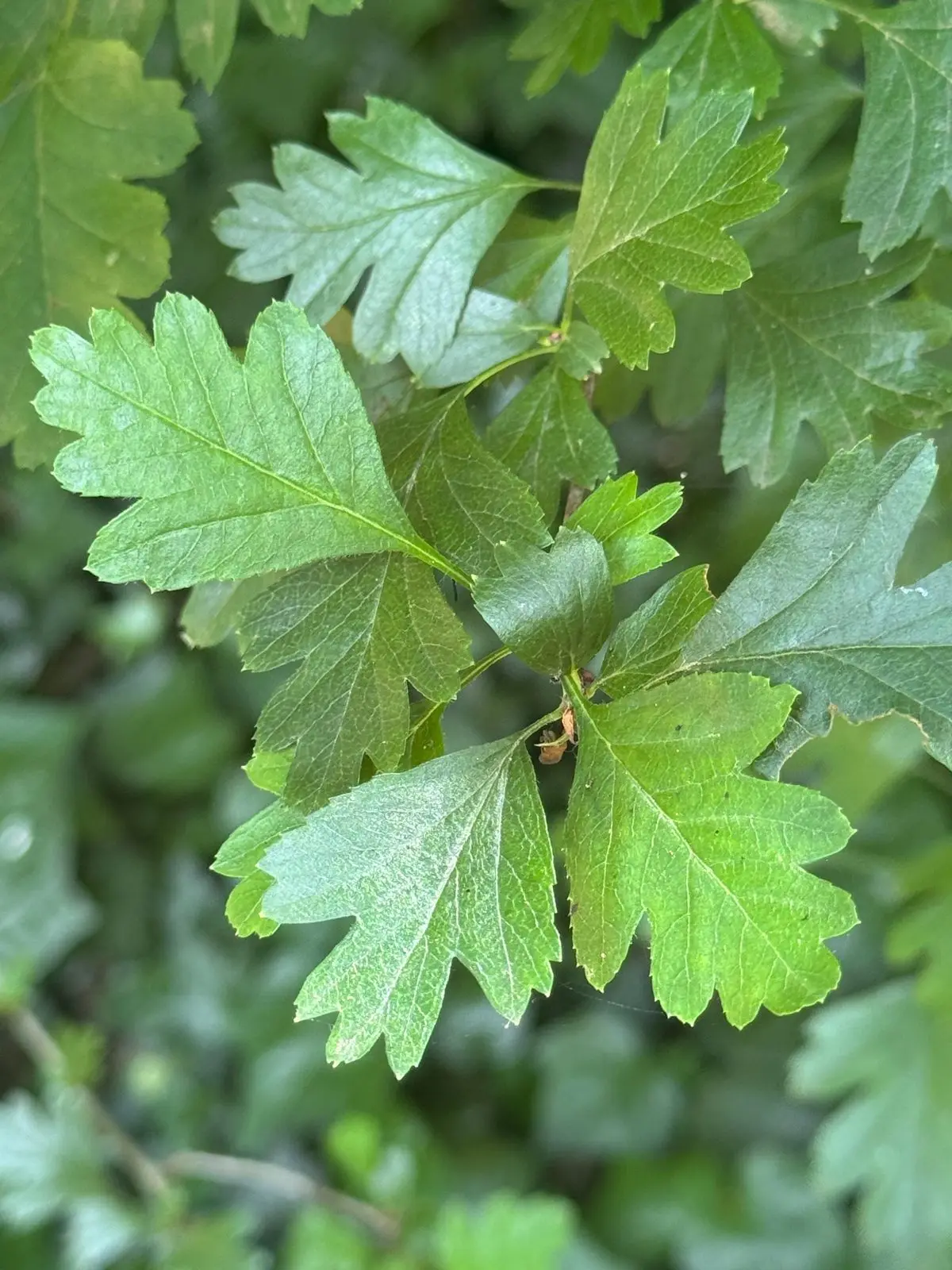 Common whitebeam or hawthorn?Both have flat white flower heads in May and red fruit after, so they look alike across a field.Outline→
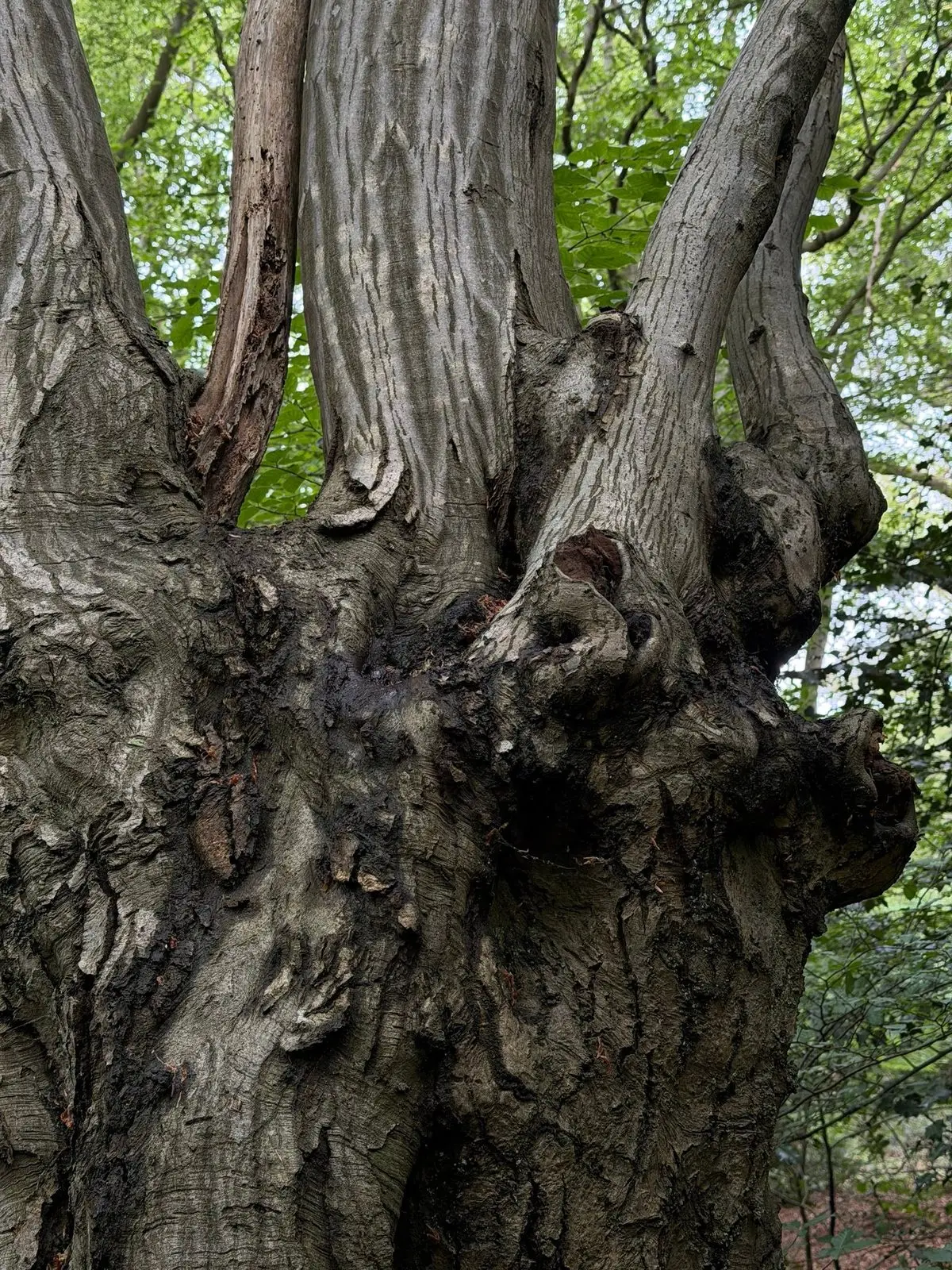 Common whitebeam or hornbeam?Both have simple, oval, strongly veined leaves.Trunk→
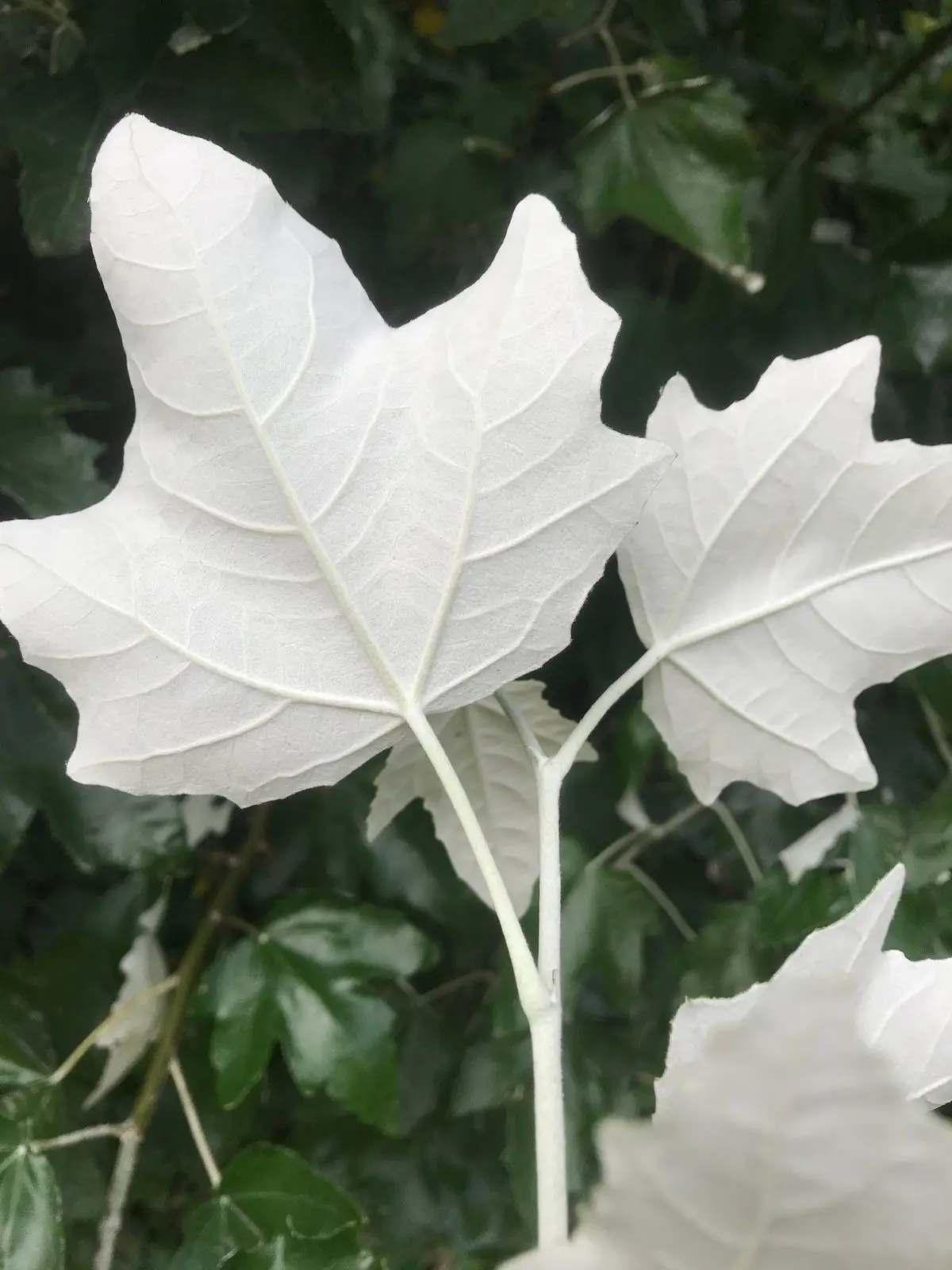 Common whitebeam or white poplar?Both flash white when the wind turns their leaves over.Leaf outline→
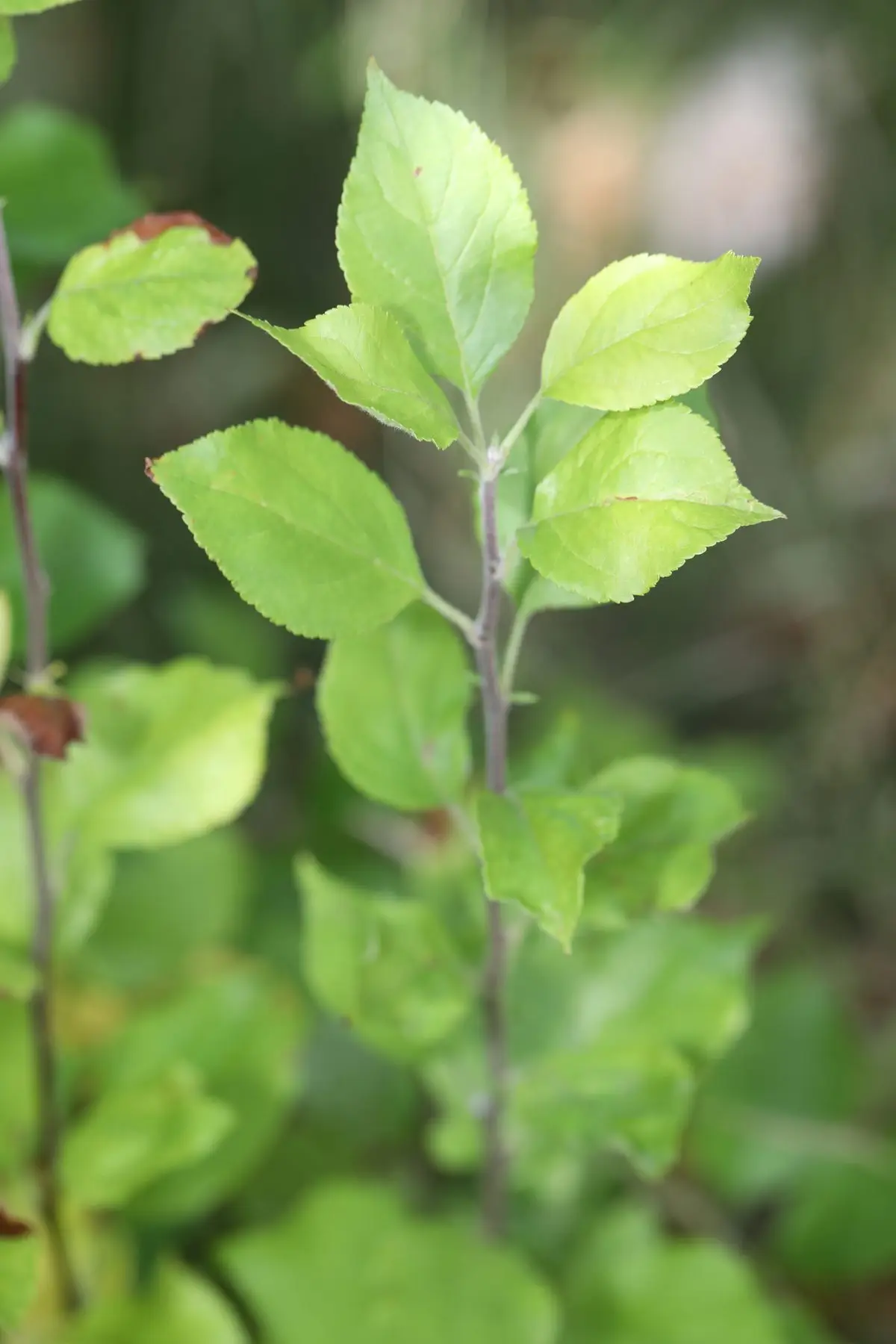
- Swedish whitebeamIts leaves are also pale and woolly underneath, and it is planted in the same streets, so the underside settles nothing. Leaf. Common whitebeam: uneven teeth on slight round lobes. Swedish whitebeam: rounded lobes cut a third to halfway in.
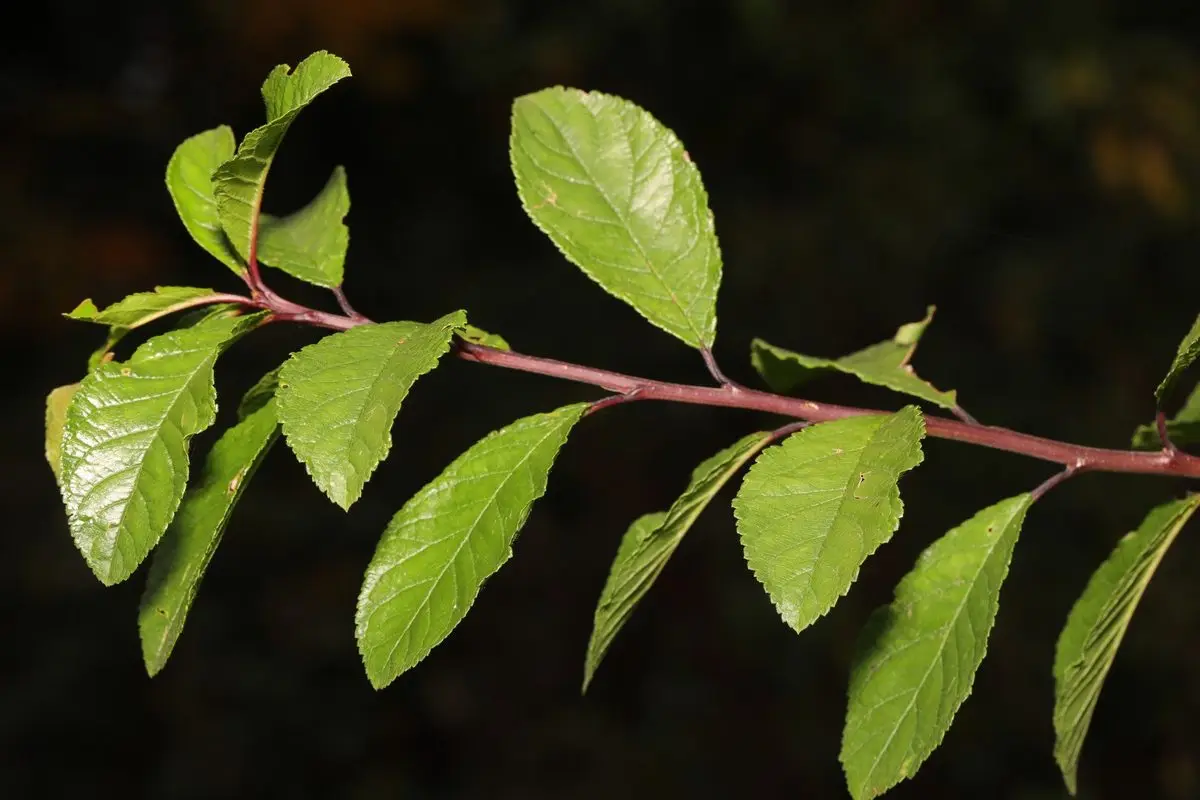
- Common beechBoth have simple oval leaves and smooth grey bark. Leaf. Common whitebeam: white with soft hairs, all season. Common beech: paler, with a few hairs on the centre line.
In the app
There’s more of the common whitebeam in Treely
- Every part, through the yearLeaves, bark, buds, flowers and fruit, photographed in every season
- Its lookalikes, side by sideThe checks that settle it, part by part
- A short round each dayUntil you know the common whitebeam on sight, from any side
- Name it from a photoA leaf, the bark or a flower, and Treely tells you which tree
Free to download.
Every fact on this page is checked against the Collins Tree Guide, last in November 2026. Spotted something that looks wrong in front of a real tree? Tell us. How we check.
Photographs: Jon Mortin (CC BY 4.0), Daniel Cahen (CC BY 4.0), colinwilson1 (CC0), steve_mcwilliam (CC0), parasksb (CC0), Scott Shanks (CC BY 4.0), Eric Tittley (CC BY 4.0), Jarro Nevsbaru (CC BY 4.0), Marek Hrušovský (CC BY 4.0), 呂一起(Lyu yi-chi) (CC BY 4.0), Leon Cross (CC BY 4.0), Ewan Shilland (CC BY 4.0), hjcjim (CC BY 4.0). With thanks to everyone who shares their photographs on iNaturalist and Wikimedia Commons.