Douglas fir
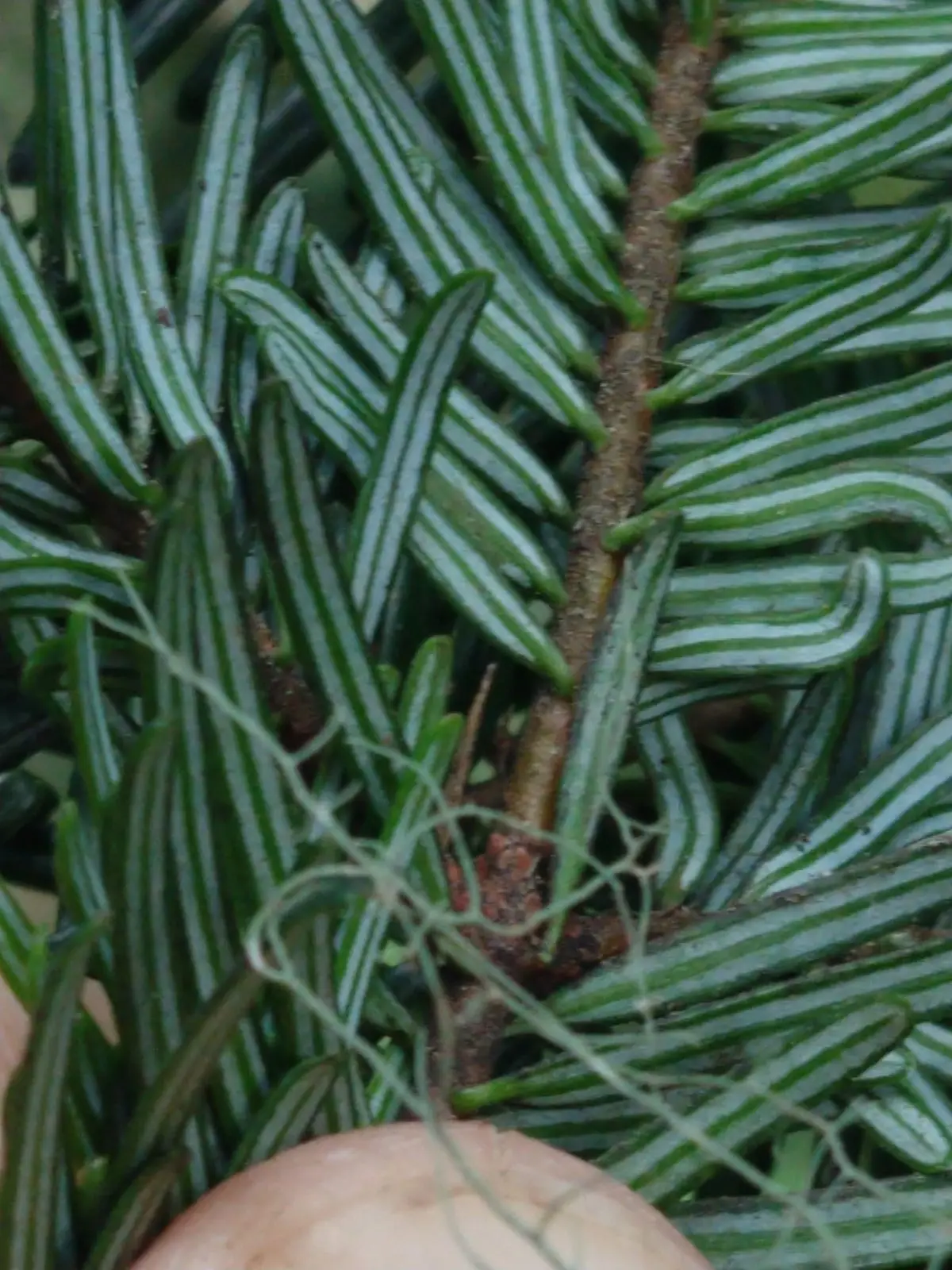
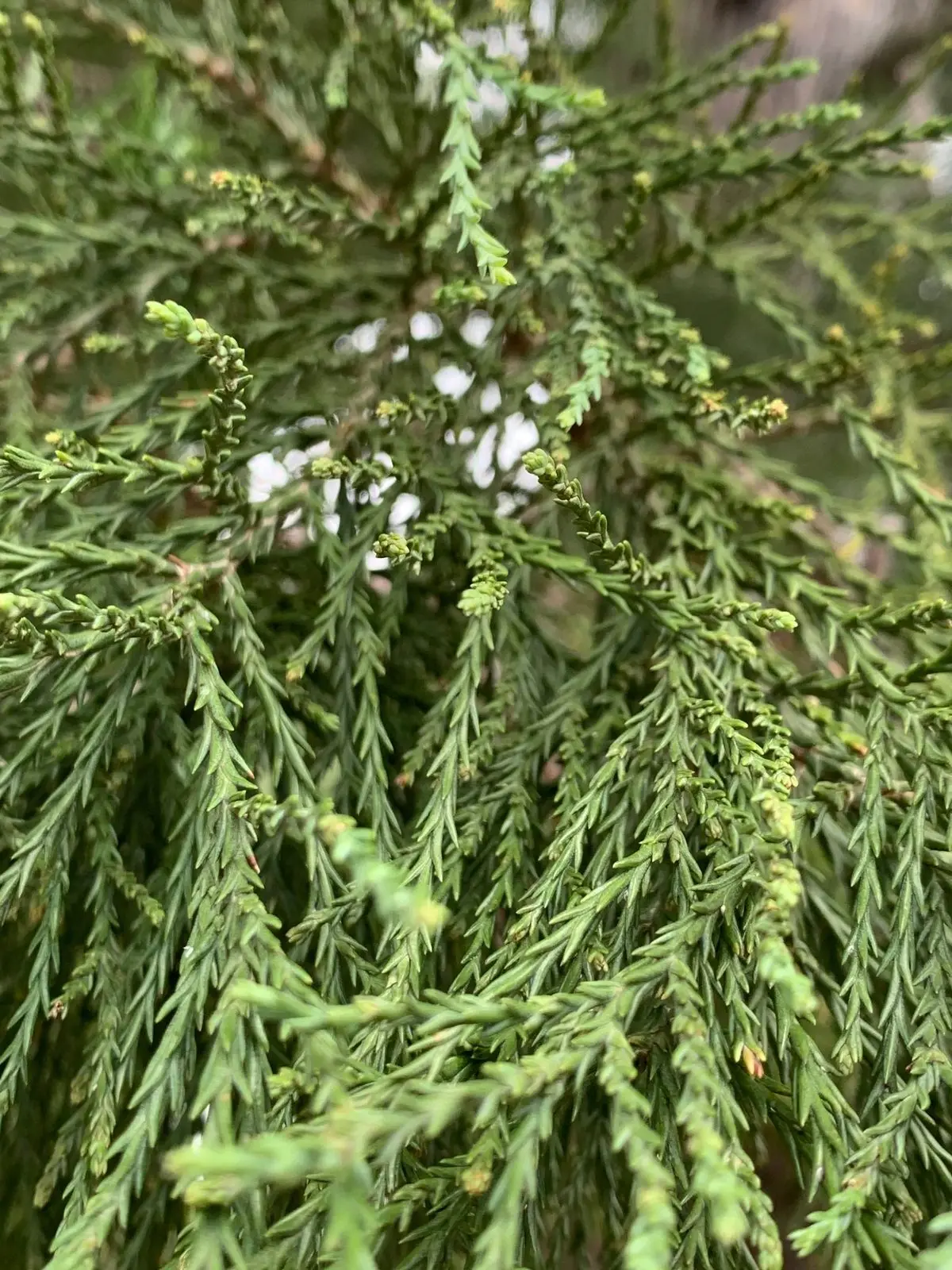
Pseudotsuga menziesiiDouglas fir is a tall, slender conifer. A thin three-pointed strap pokes out from under every scale of its hanging cones. Its soft needles smell sweet and fruity when crushed.
How to identify Douglas fir →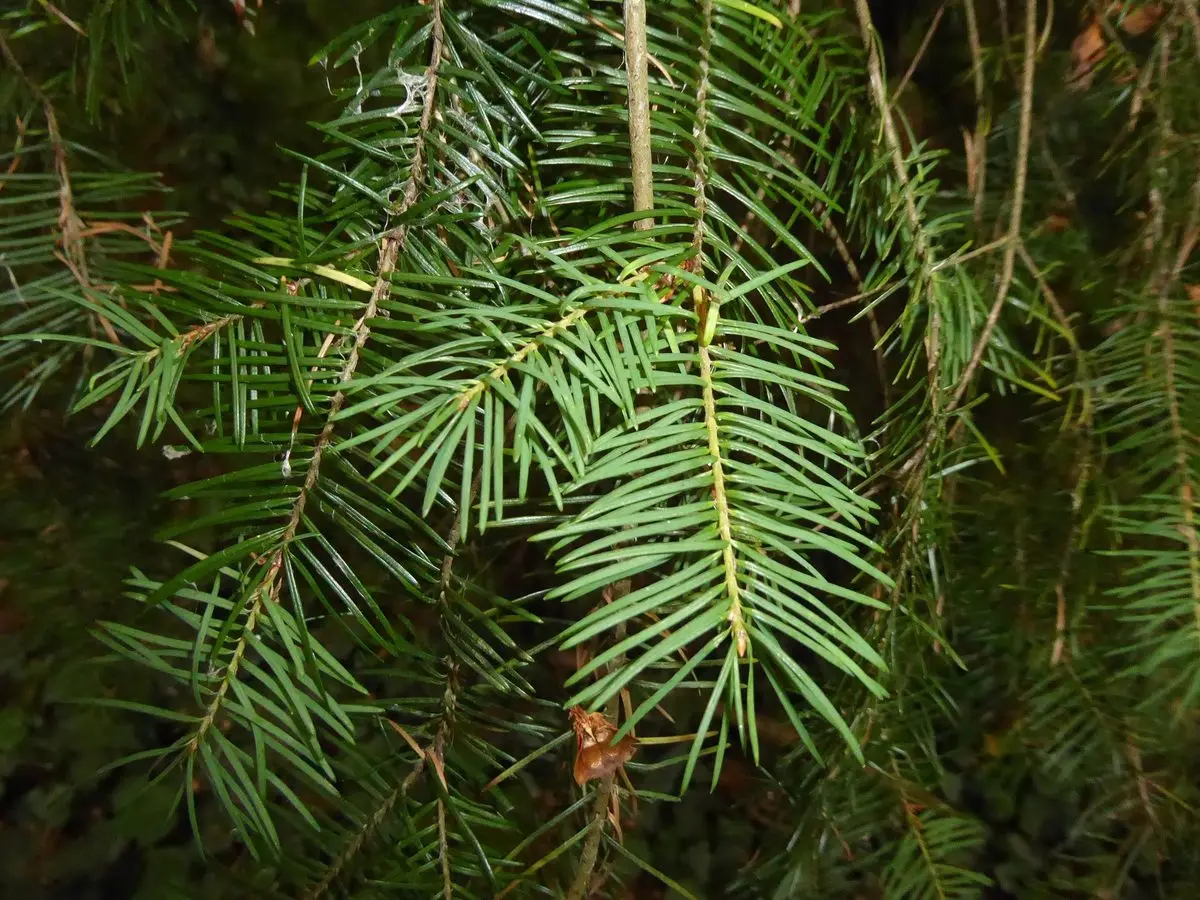 jamie-aa, CC BY 4.0
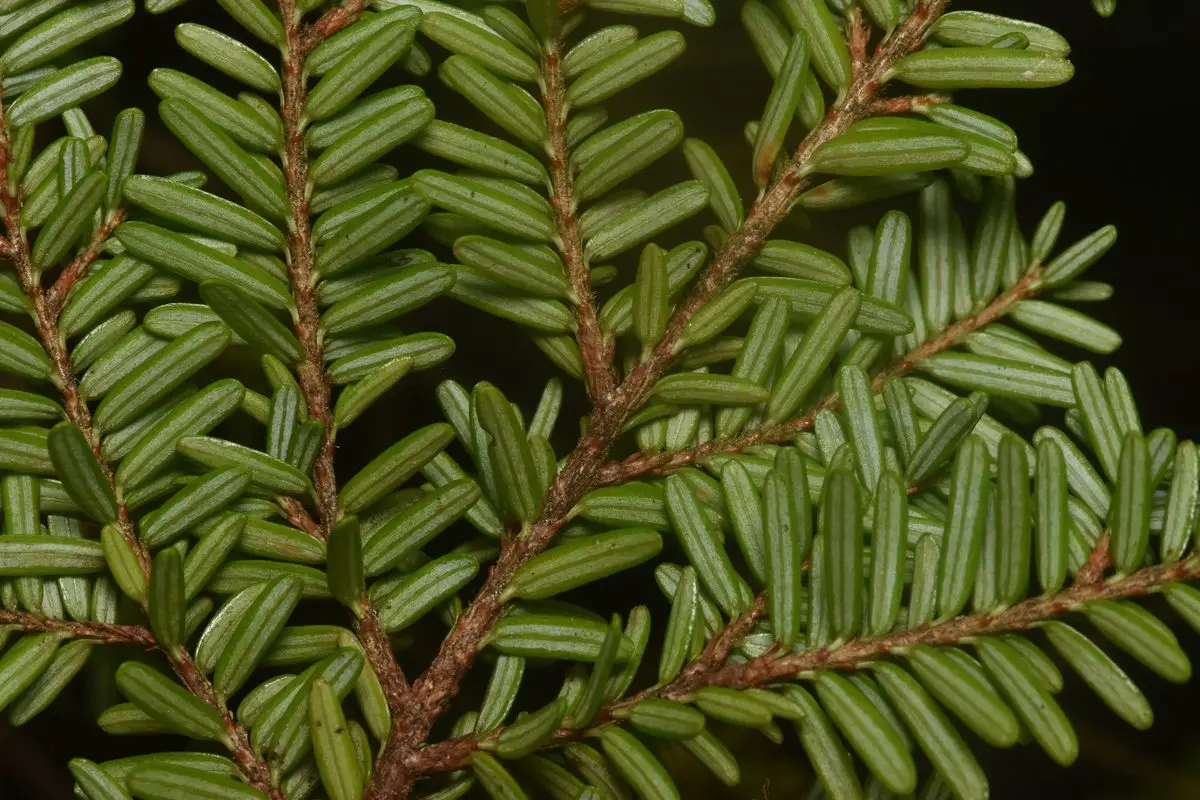
Both grow in the same wet plantations, with a similar spire.
The quickest check is the top of the tree. Douglas fir: a narrow spire, flat or ragged when old. Western hemlock: leading shoot bent right over and hanging.
| Look at | Douglas fir | Western hemlock |
|---|---|---|
| Top of the tree | A narrow spire, flat or ragged when old | Leading shoot bent right over and hanging |
| Along a shoot | Needles standing out on every side | Two flat rows, short on top, long at the sides |
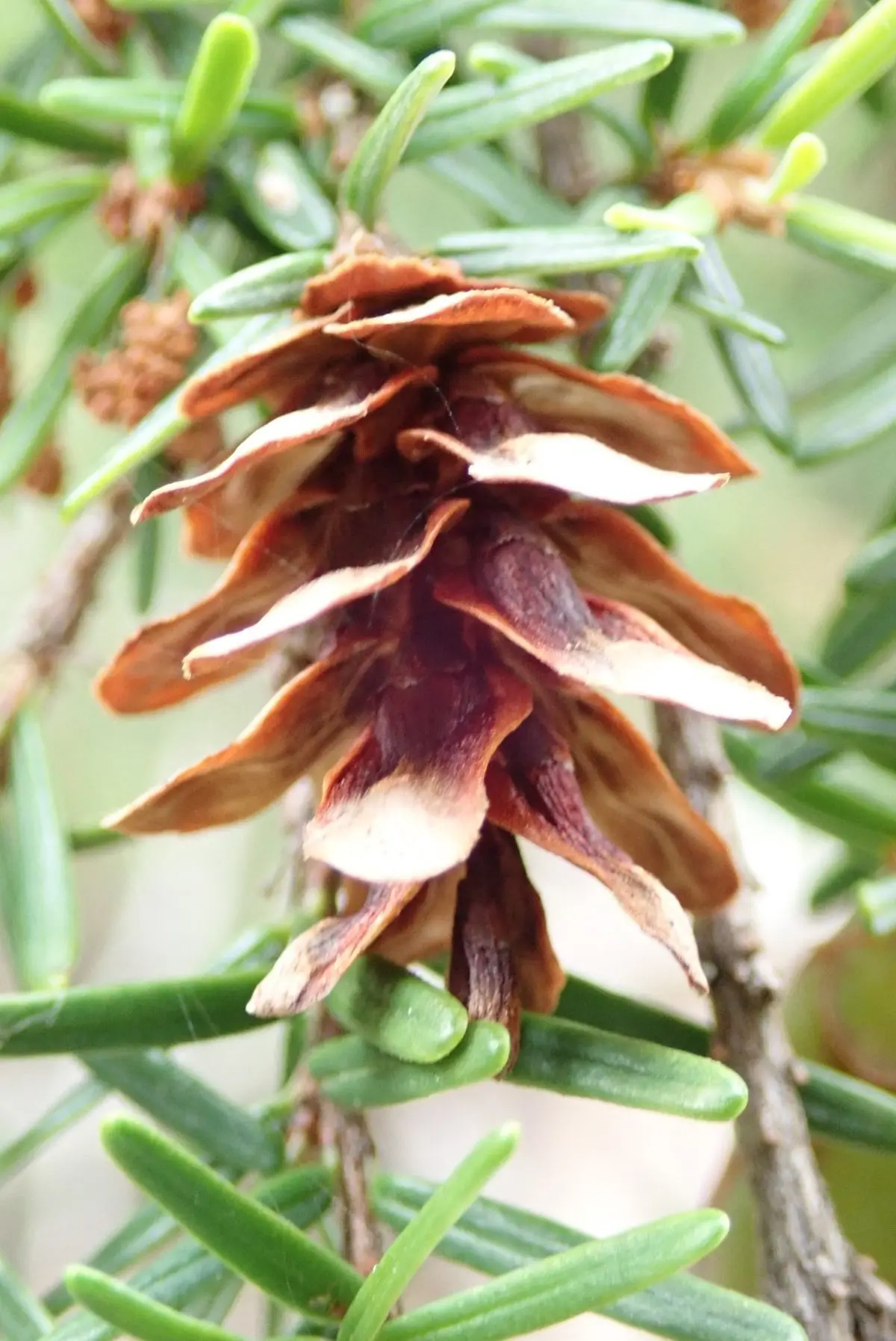
| Size of a fallen cone | About 6 cm long | Under 3 cm, small and oval |
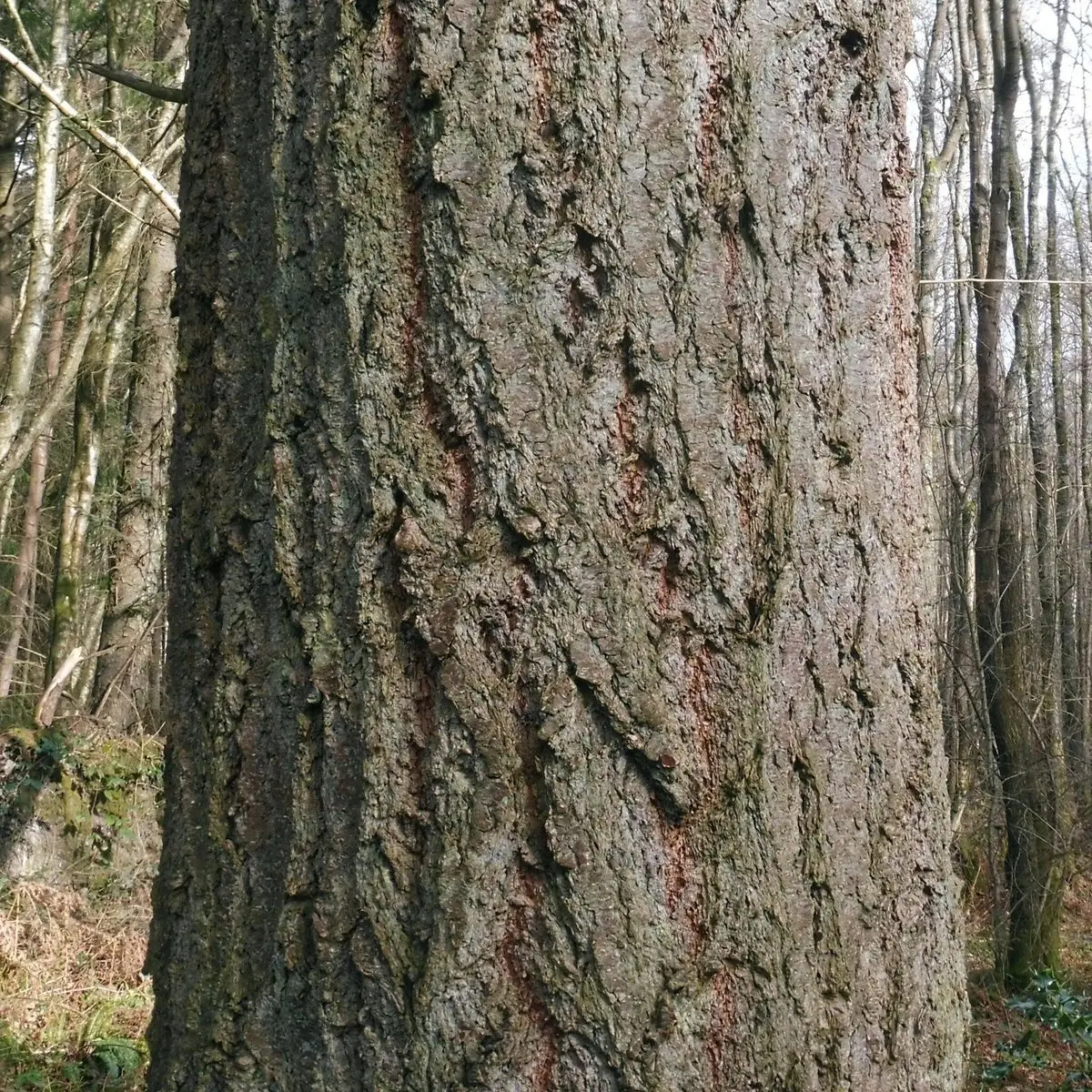
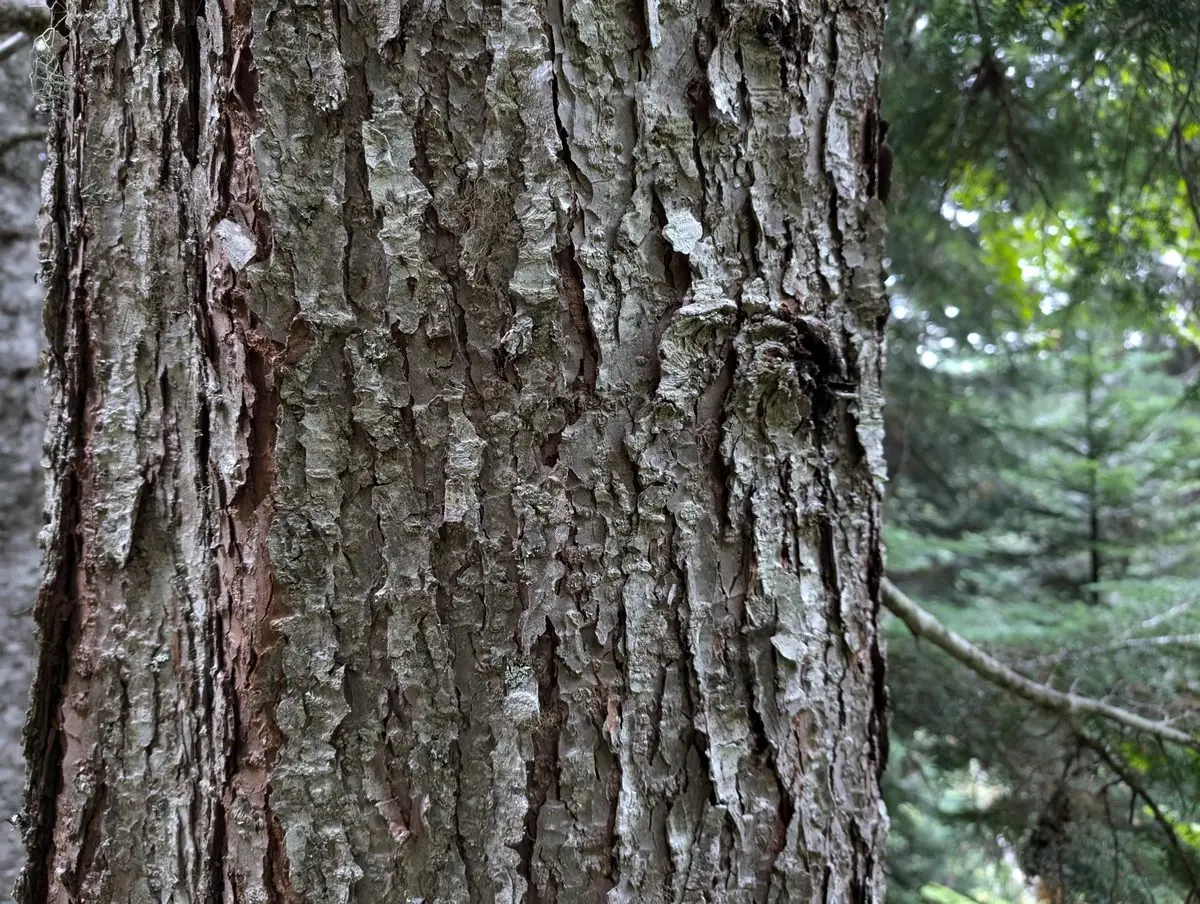
| Bark of an old trunk | Thick and corky, cracks opening orange | Dark brown and thin, in scaly ridges |
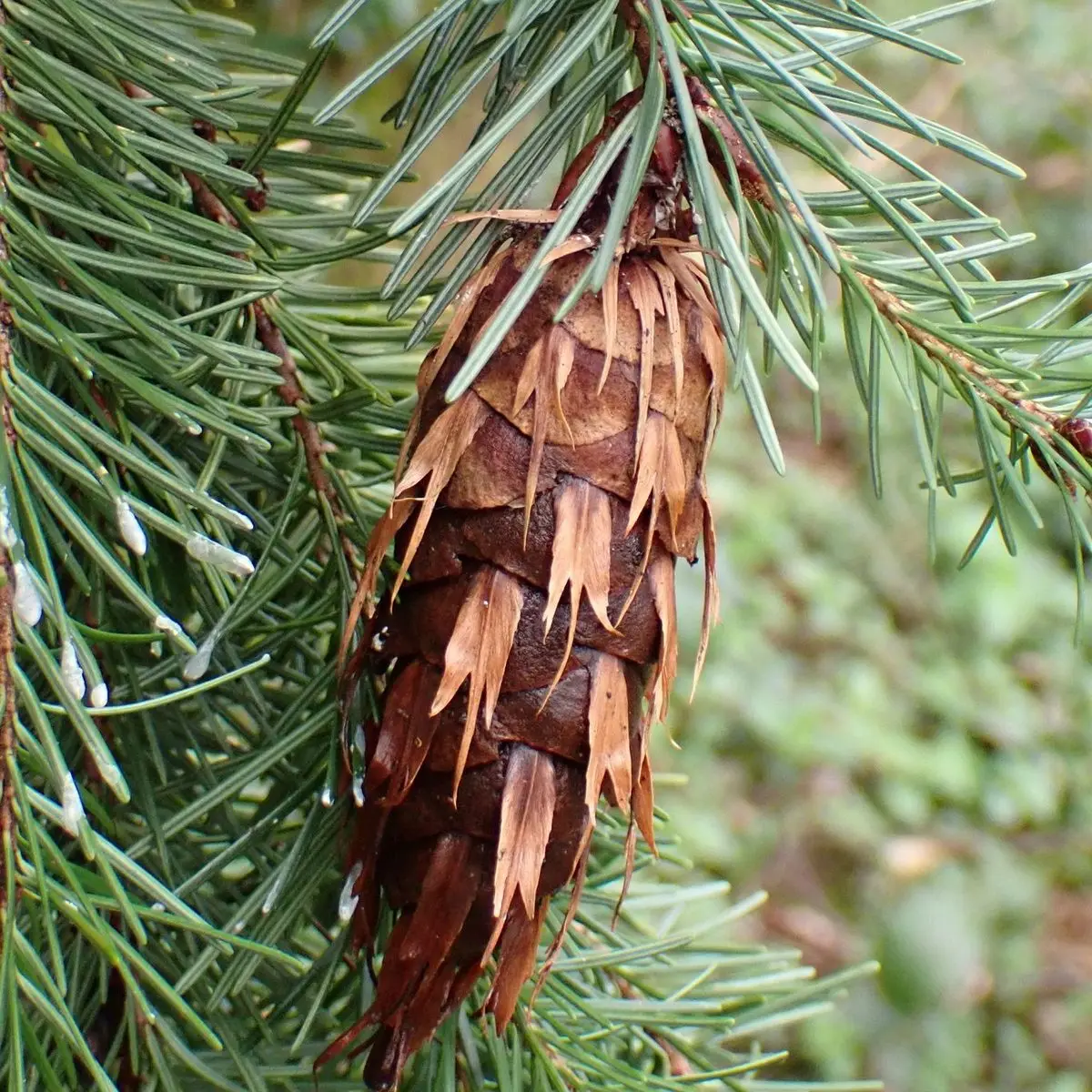
Douglas fir is a tall, slender conifer. A thin three-pointed strap pokes out from under every scale of its hanging cones. Its soft needles smell sweet and fruity when crushed.
How to identify Douglas fir →Western hemlock is a narrow, spire-shaped conifer whose top shoot bends right over and hangs. Its flat needles come in two lengths on the same shoot.
How to identify western hemlock →Free to download.
Every fact on this page is checked against the Collins Tree Guide, last in November 2026. Spotted something that looks wrong in front of a real tree? Tell us. How we check.
Photographs: jamie-aa (CC BY 4.0), bradenjudson (CC0), bobwardell (CC0), rambryum (CC0), Barry Walter (CC BY 4.0), humon (CC BY 4.0). With thanks to everyone who shares their photographs on iNaturalist and Wikimedia Commons.