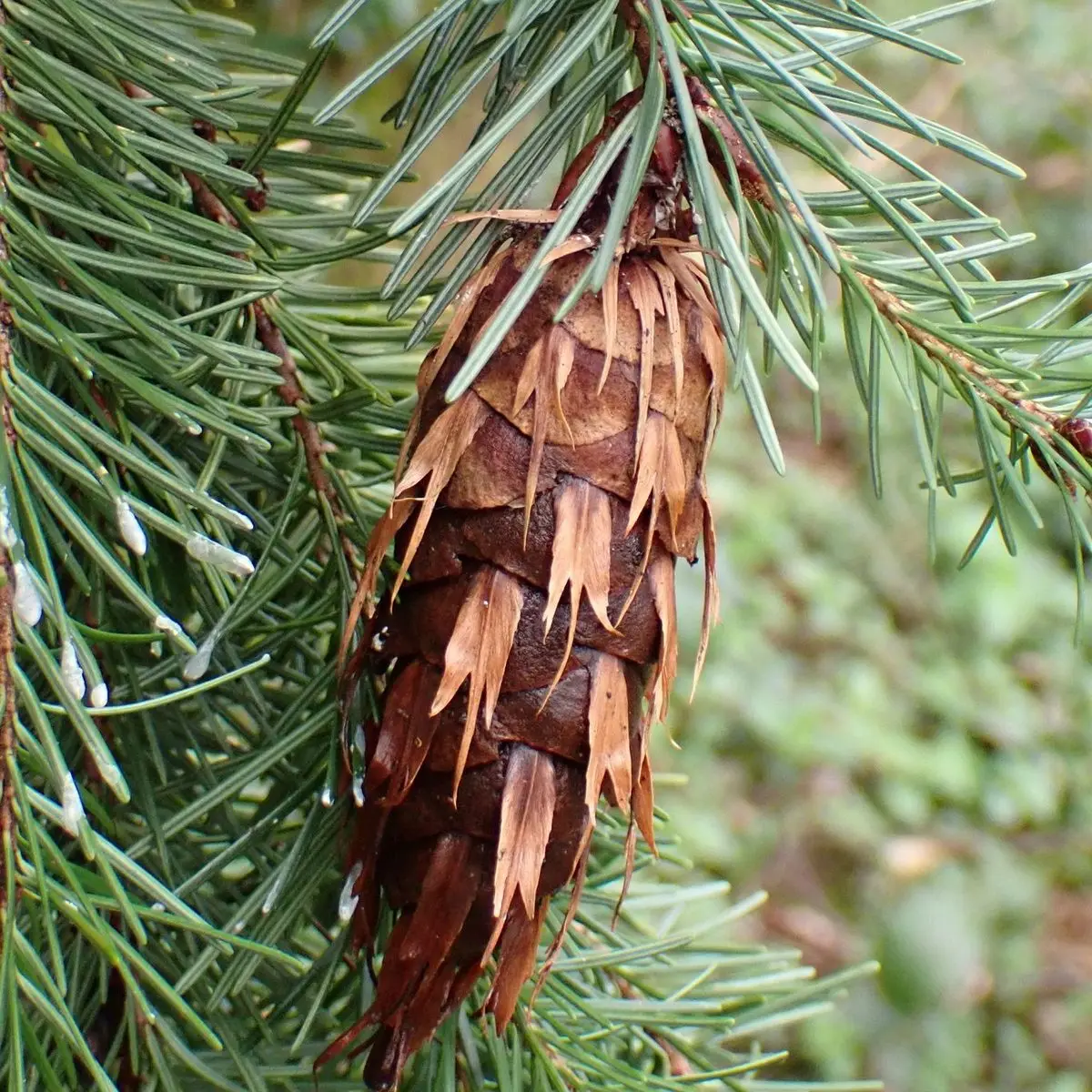
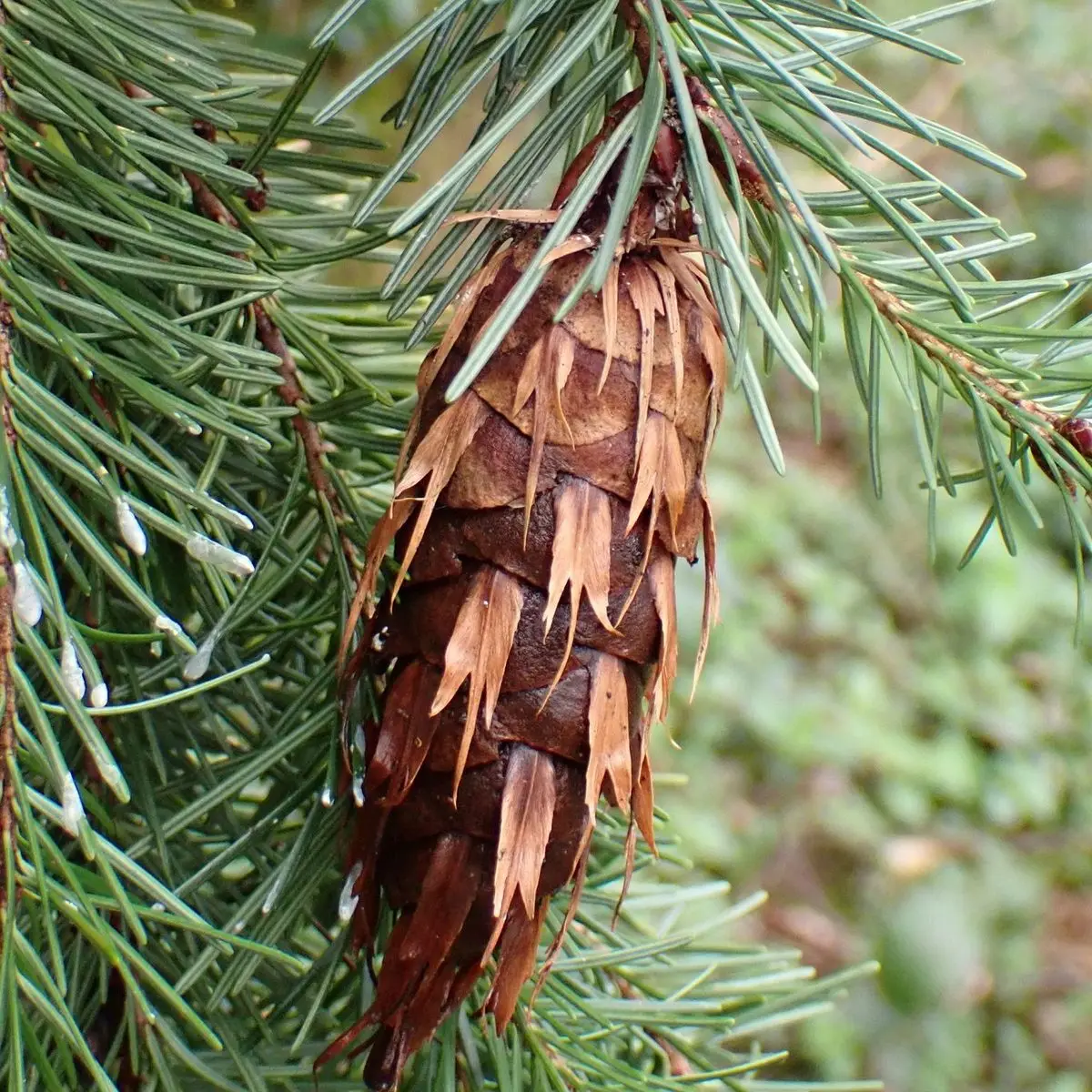
Hanging and about 6 cm long, green ripening brown, with a thin three-pointed strap poking out from under every scale.
Pseudotsuga menziesii · Pinaceae
Douglas fir is a tall, slender conifer. A thin three-pointed strap pokes out from under every scale of its hanging cones. Its soft needles smell sweet and fruity when crushed.
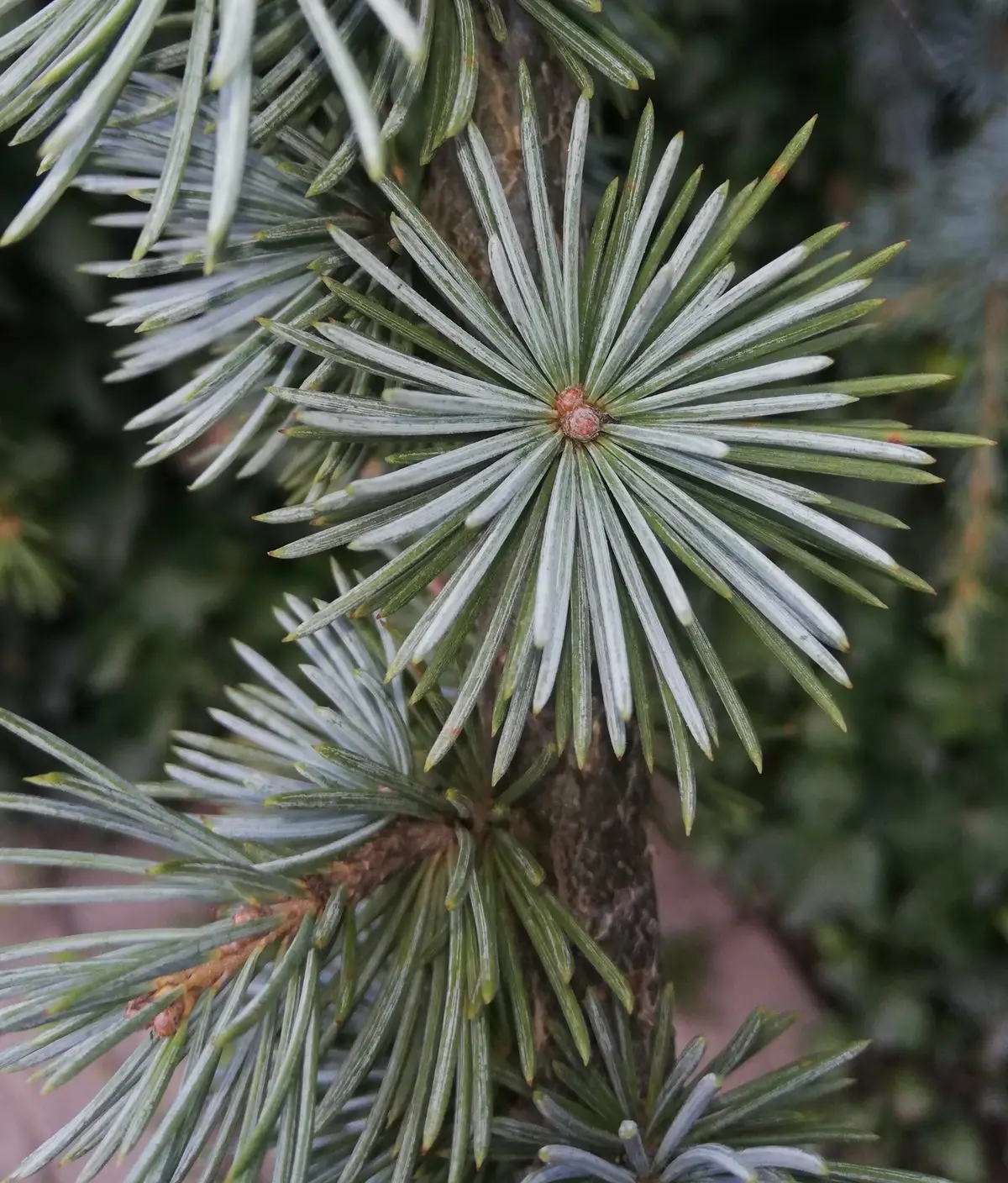
Often mistaken for grand fir. How to tell them apart →ConesHanging, about 6 cm long, green ripening brown.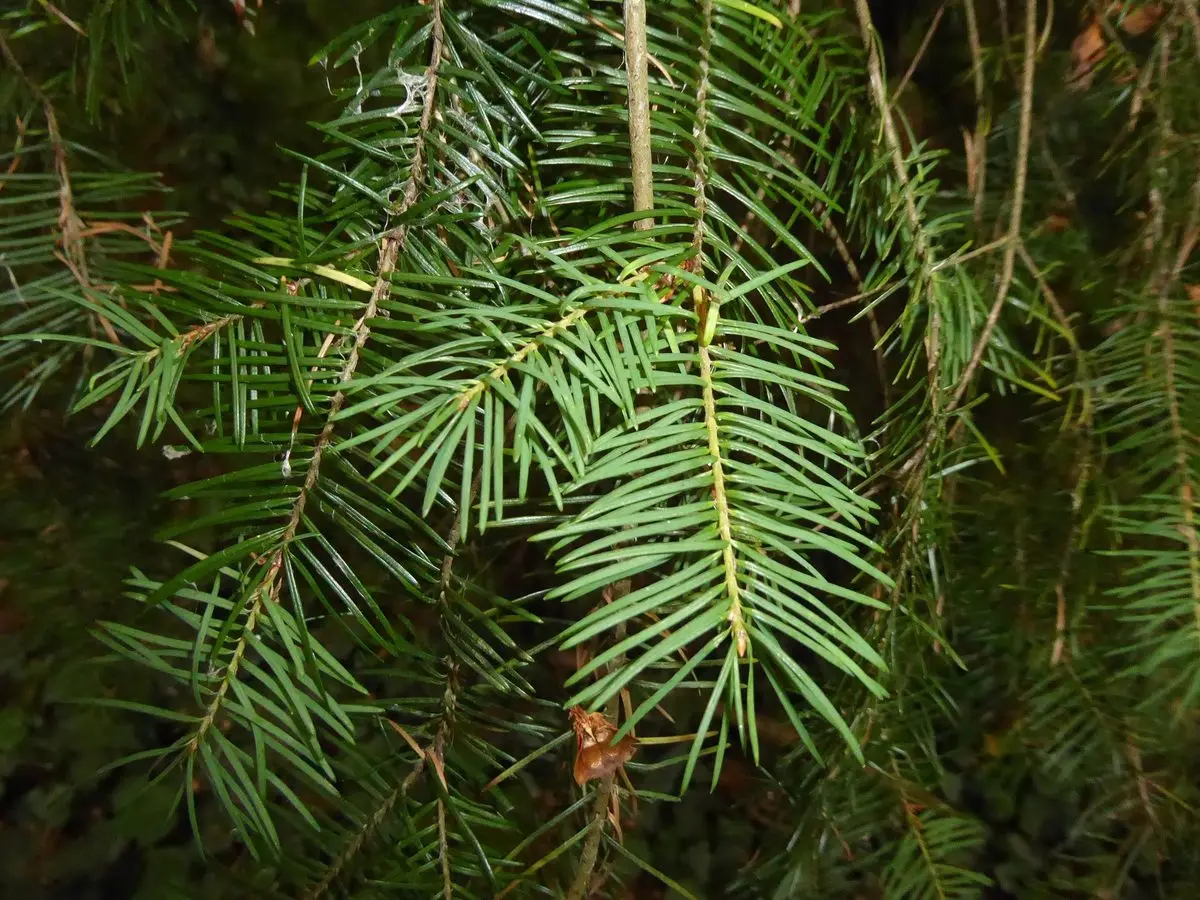 NeedlesSoft, set all round the shoot, two white bands underneath.BudsAbout 10 mm and pale brown, on finely hairy shoots.
Then check · BarkSmooth and grey with resin blisters when young. Later it is thick and corky, split by deep upright cracks that open orange.
Hanging and about 6 cm long, green ripening brown, with a thin three-pointed strap poking out from under every scale.
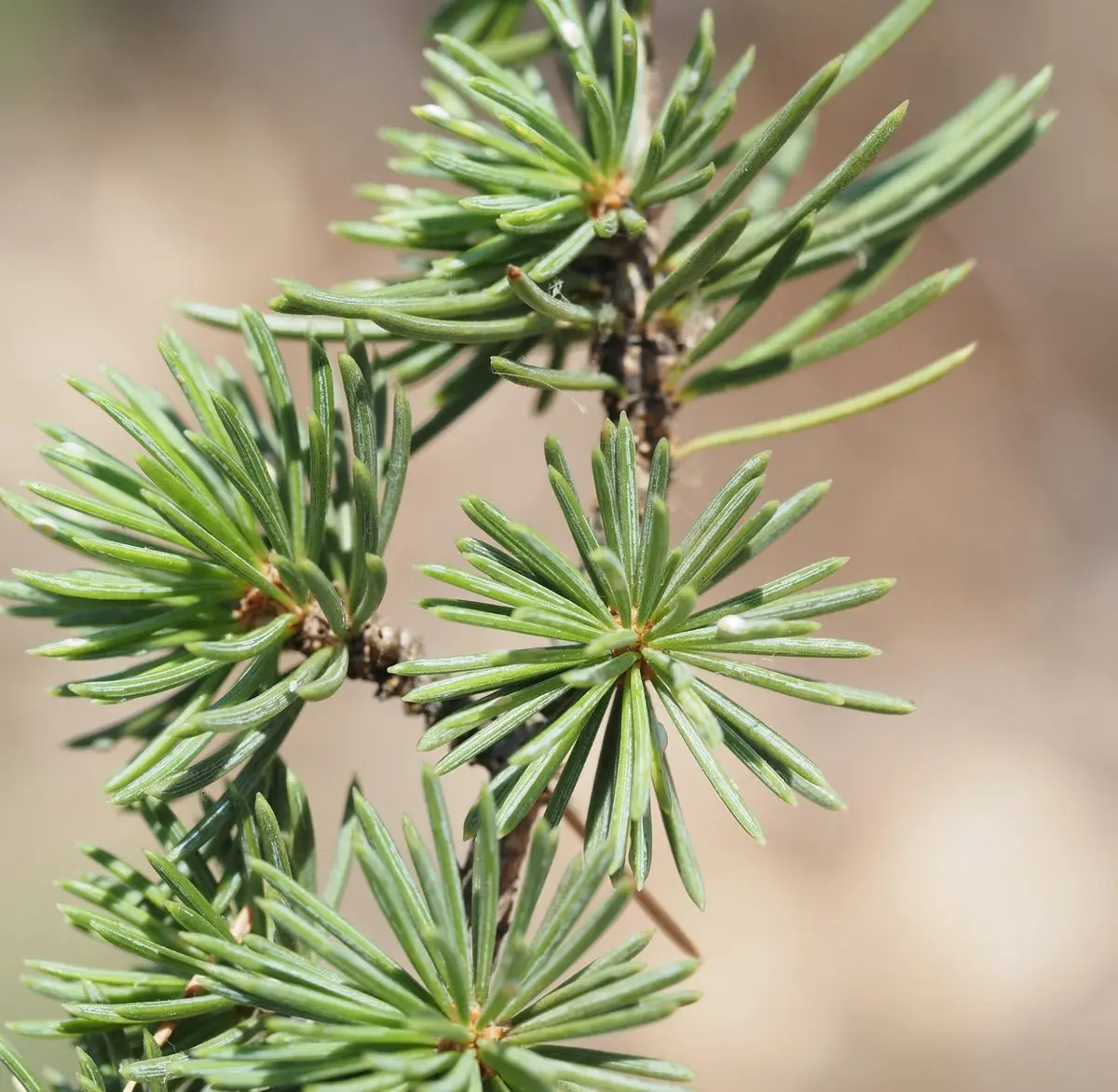
Soft and flexible, set all round the shoot, with two white bands underneath and a sweet, fruity smell when crushed.
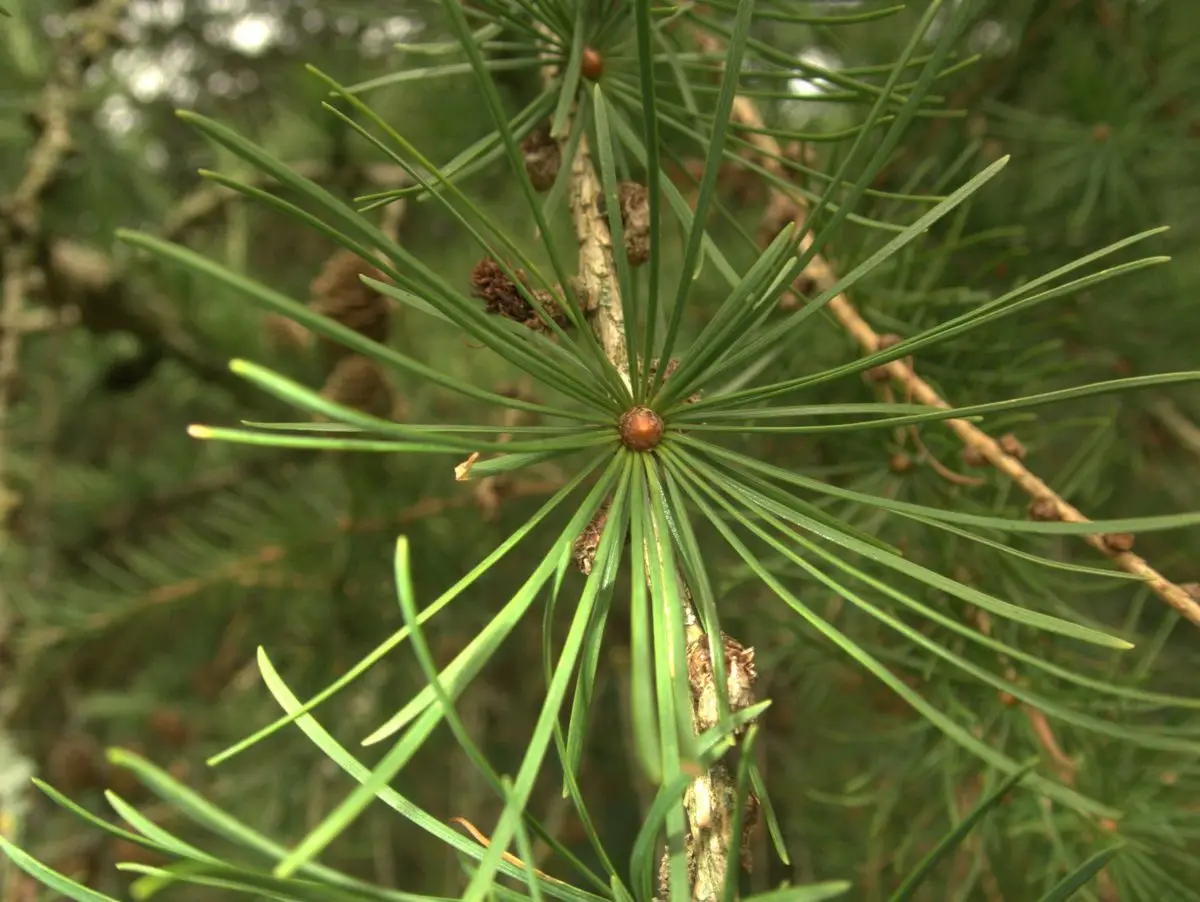
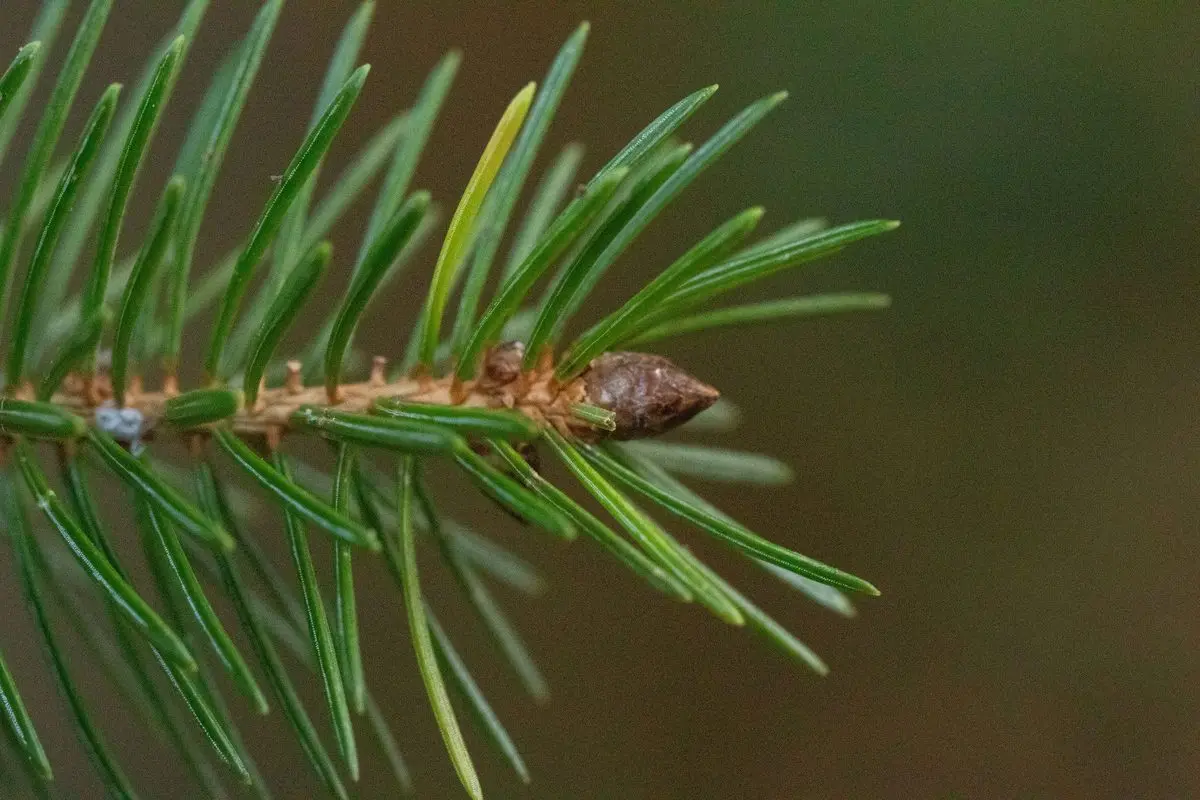
Slender pale brown buds, about 10 mm, taper to a fine point like a beech bud. The shoots are thin and finely hairy.
 Learn the Douglas fir in TreelyEvery part through the year, and a short round each day until you know it.Get Treely
jamie-aa, CC BY 4.0
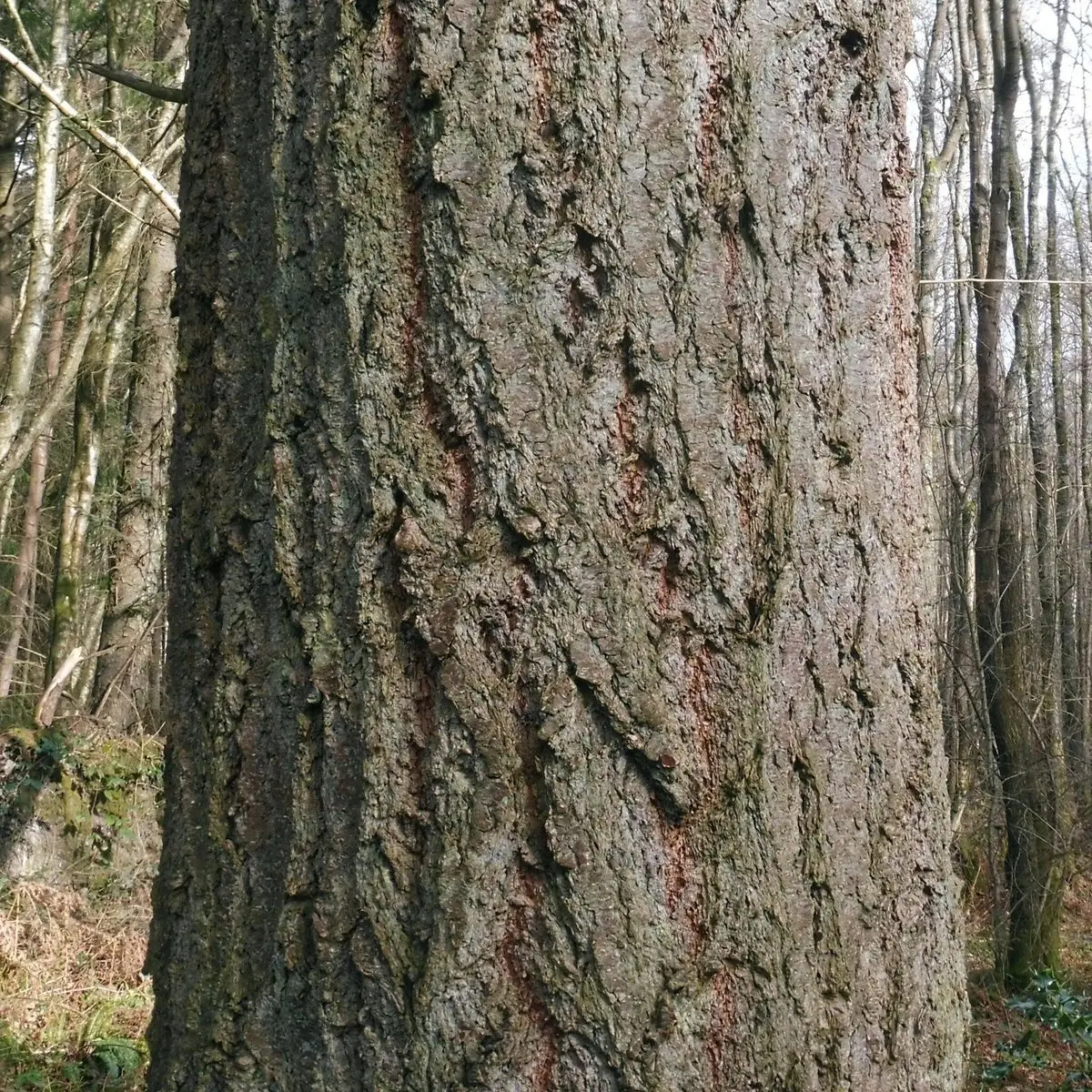 Barry Walter, CC BY 4.0
In leaf: all year · Flowers: March to May · Cones: September to November
Plantations, parks and sheltered glens, growing best in the wetter west and in Scotland. It rarely seeds itself. It needs a damp climate, with 700 to 2000 mm of rain a year. It suffers in exposed places and does badly on waterlogged or limy ground.
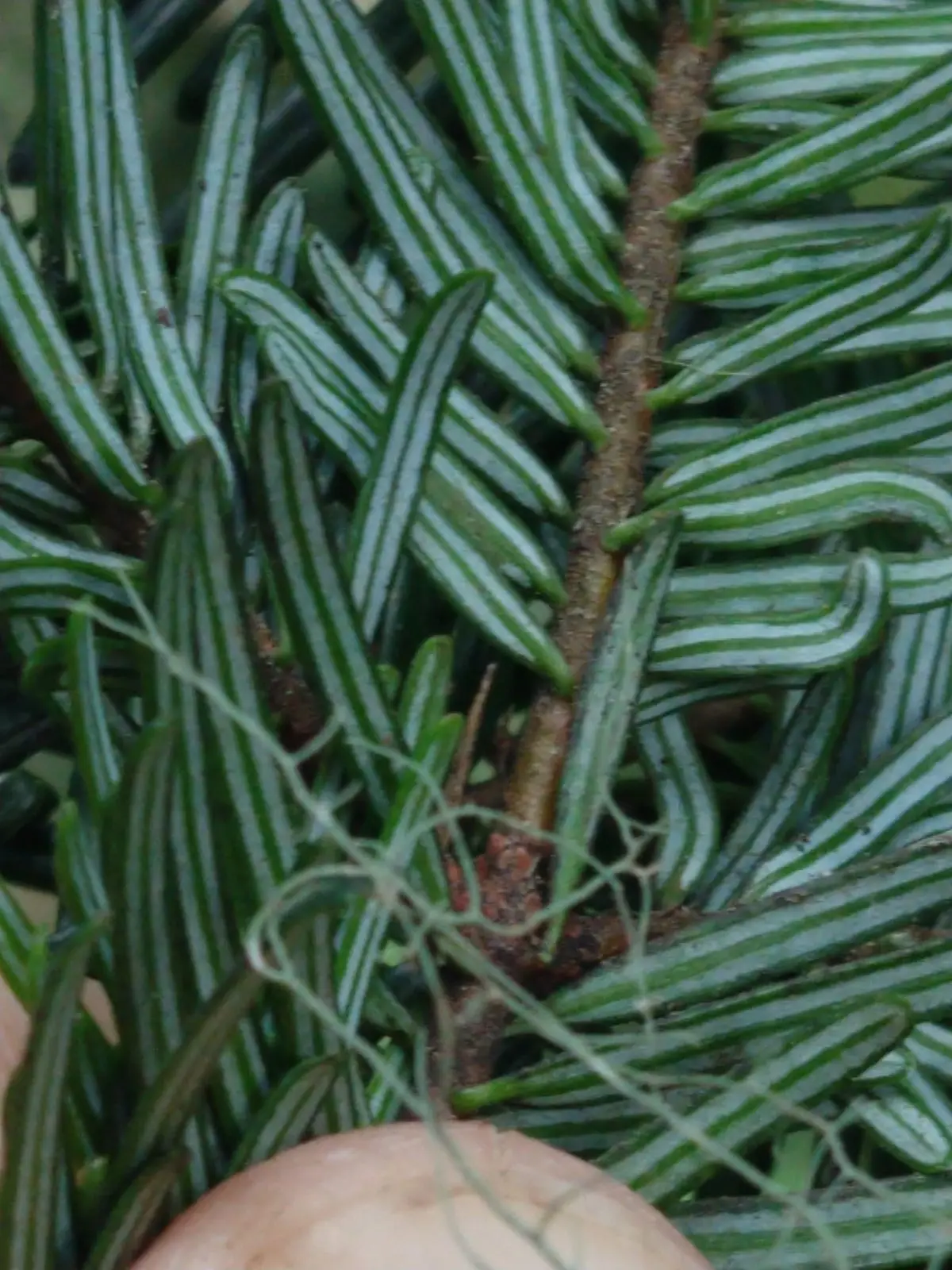 Douglas fir or grand fir?Both are big soft-needled conifers of western plantations, sweetly scented when crushed.Shoot from above→
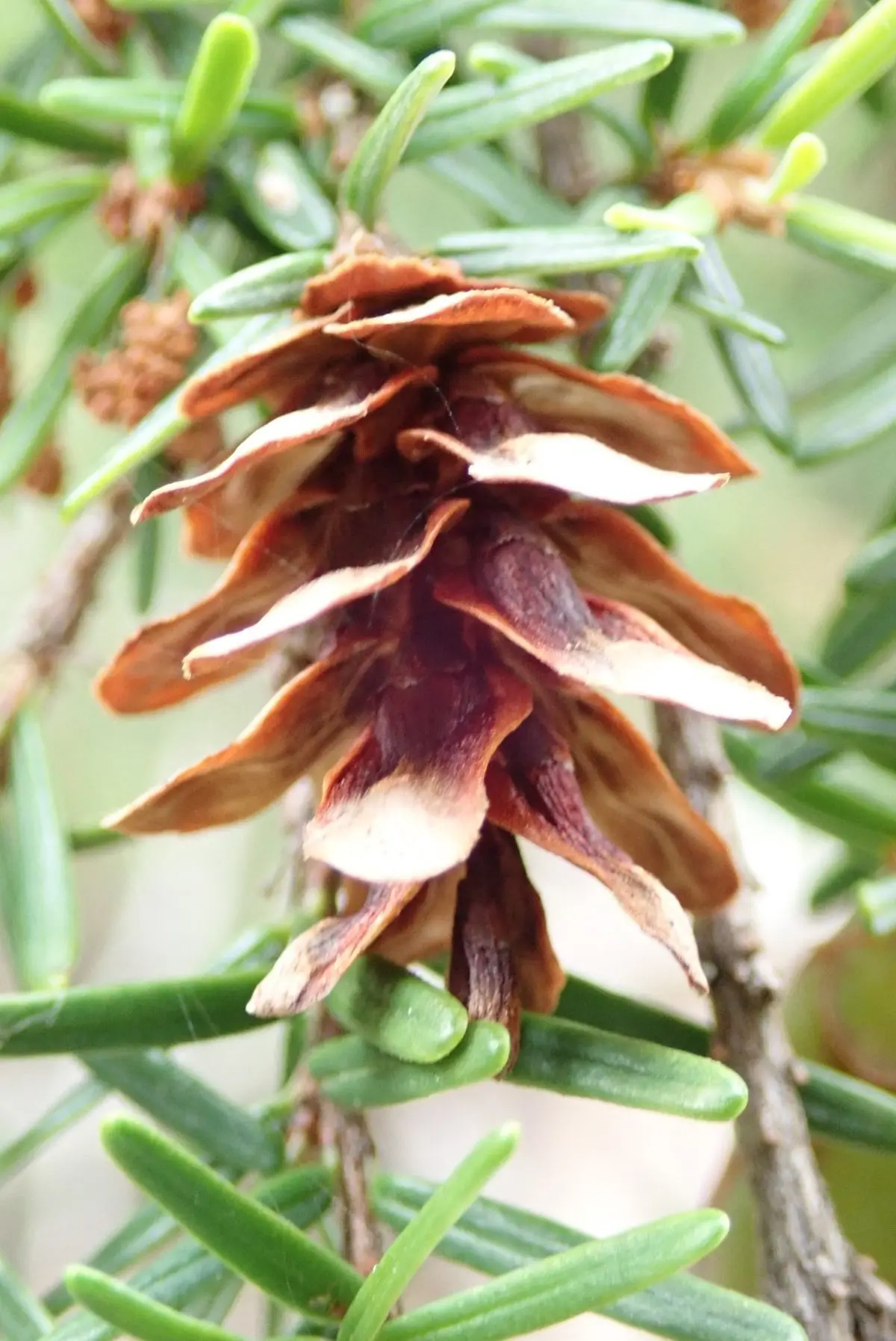 Douglas fir or western hemlock?Both grow in the same wet plantations, with a similar spire.Size of a fallen cone→
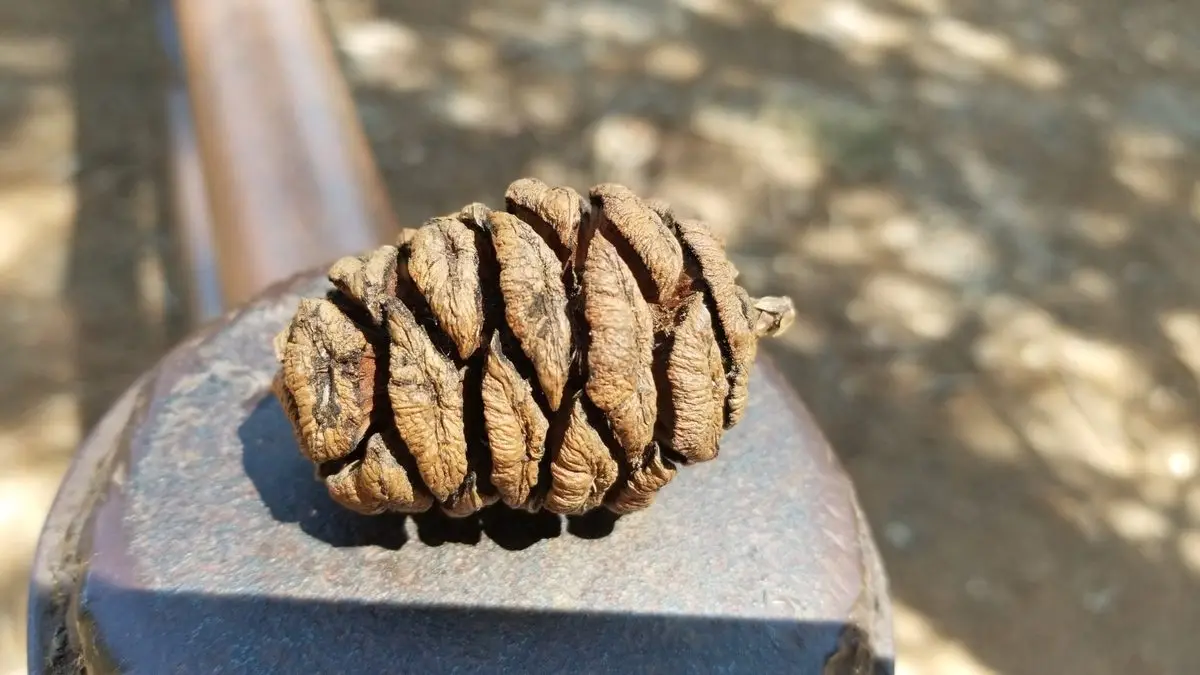 Douglas fir or giant redwood?Both are huge estate conifers whose thick corky bark gives under a hand.Scales of a fallen cone→
Free to download.
Every fact on this page is checked against the Collins Tree Guide, last in November 2026. Spotted something that looks wrong in front of a real tree? Tell us. How we check.
Photographs: jamie-aa (CC BY 4.0), bobwardell (CC0), Barry Walter (CC BY 4.0), rockybajada (CC0), rambryum (CC0), Nicole (CC BY 4.0). With thanks to everyone who shares their photographs on iNaturalist and Wikimedia Commons.