Grand fir
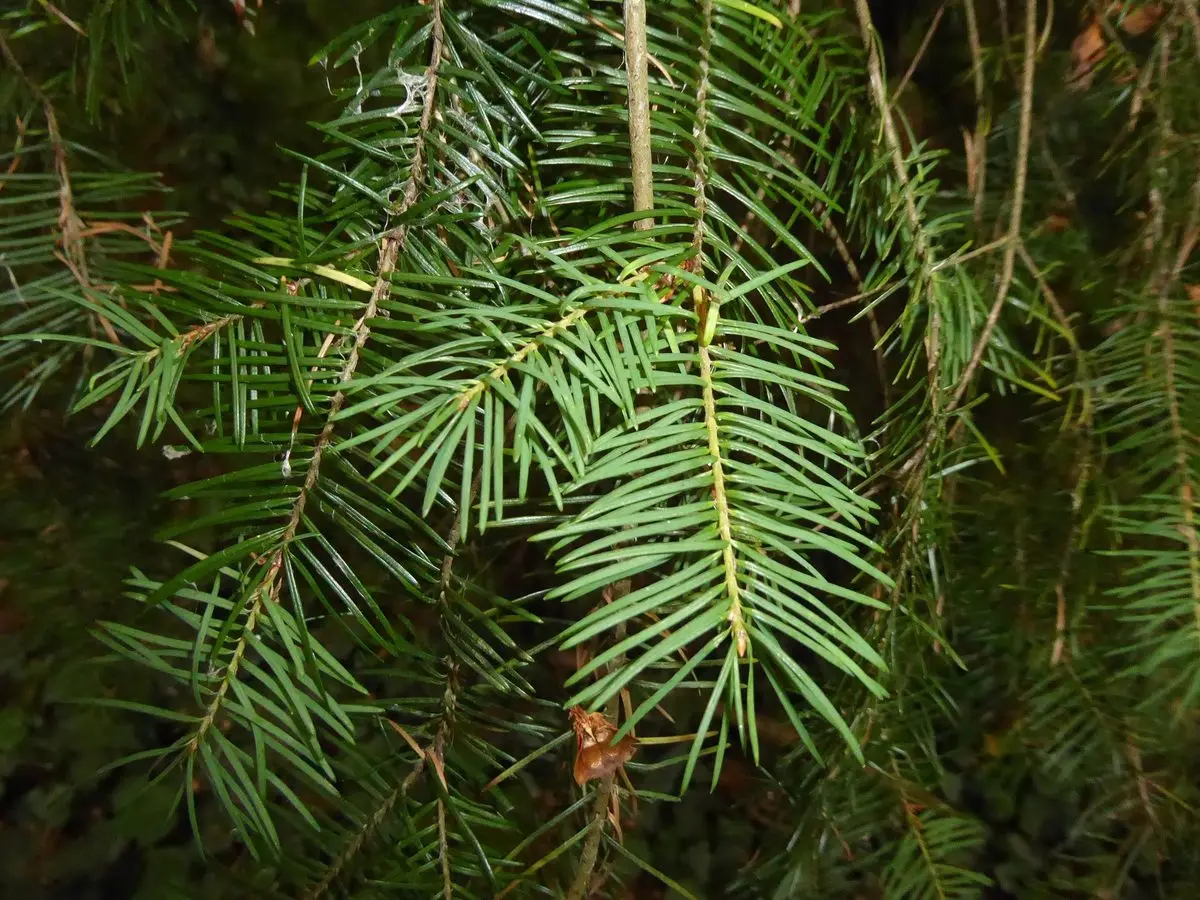
Abies grandisGrand fir is a conifer with glossy needles that lie flat in two rows either side of the shoot. Rubbed, they smell of tangerine peel. In many districts it is the tallest tree.
How to identify grand fir →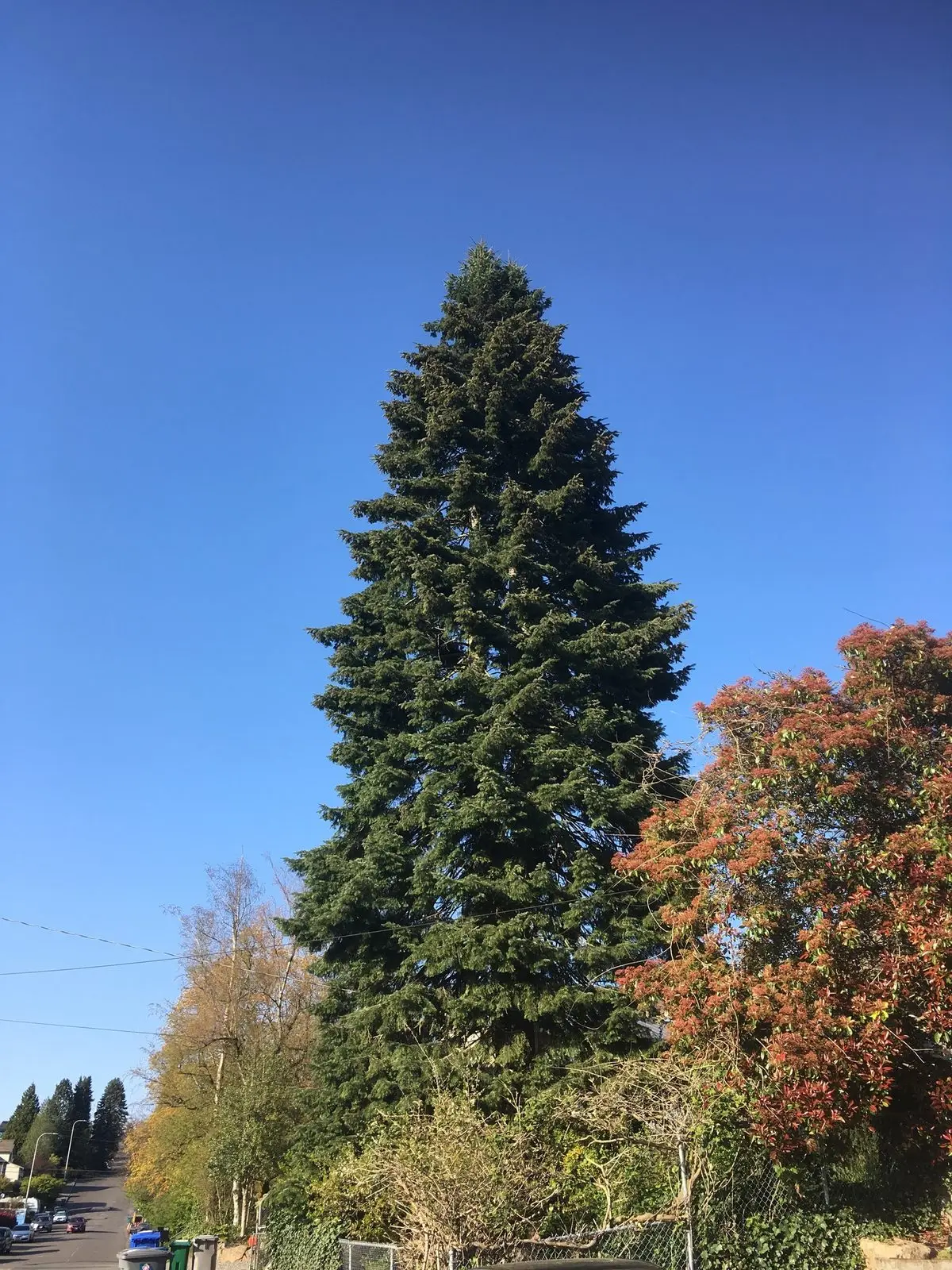 Harry Podschwit, CC BY 4.0
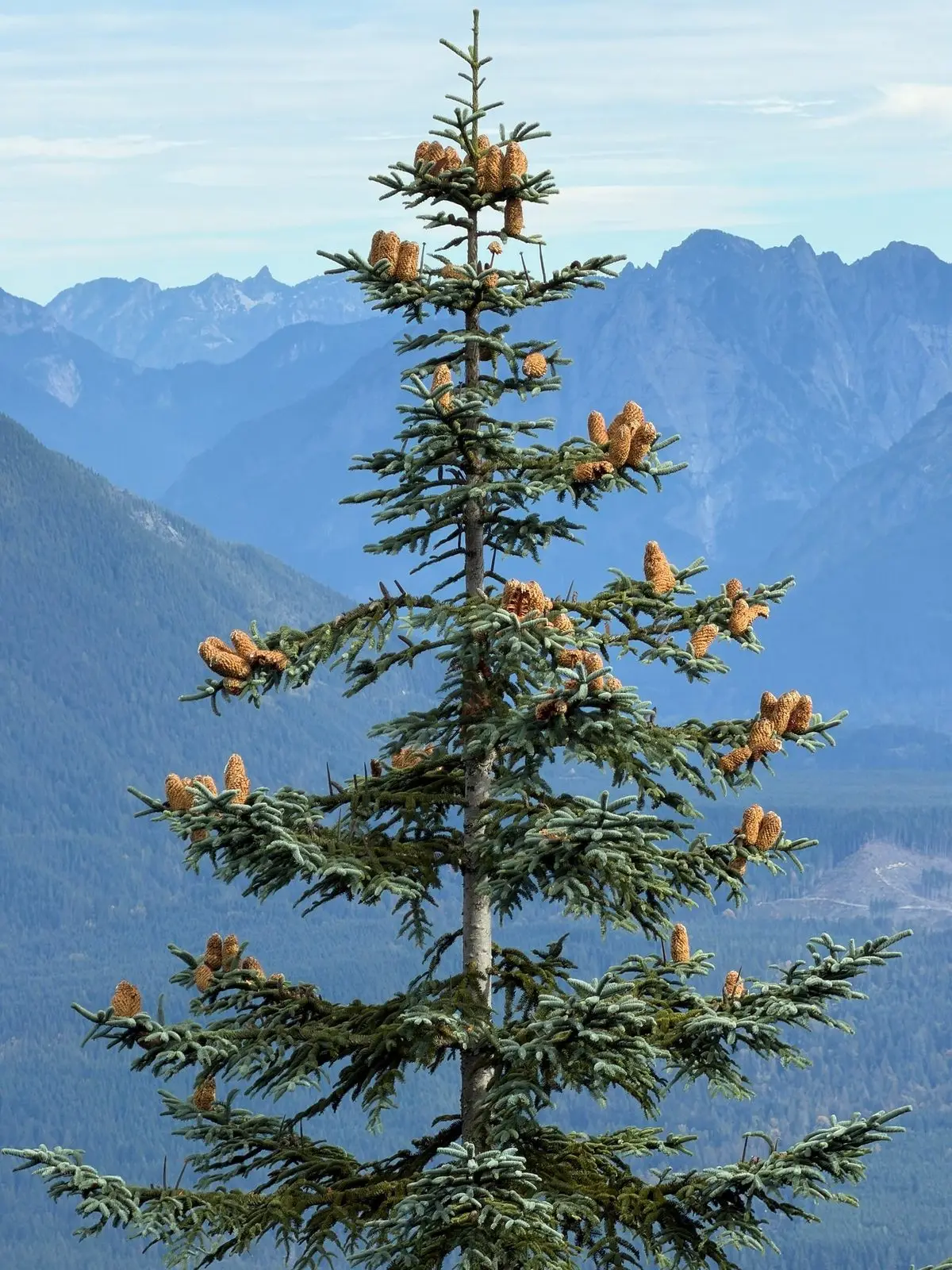 James H. Thomas, CC BY 4.0
Both are big firs from the Pacific coast of North America.
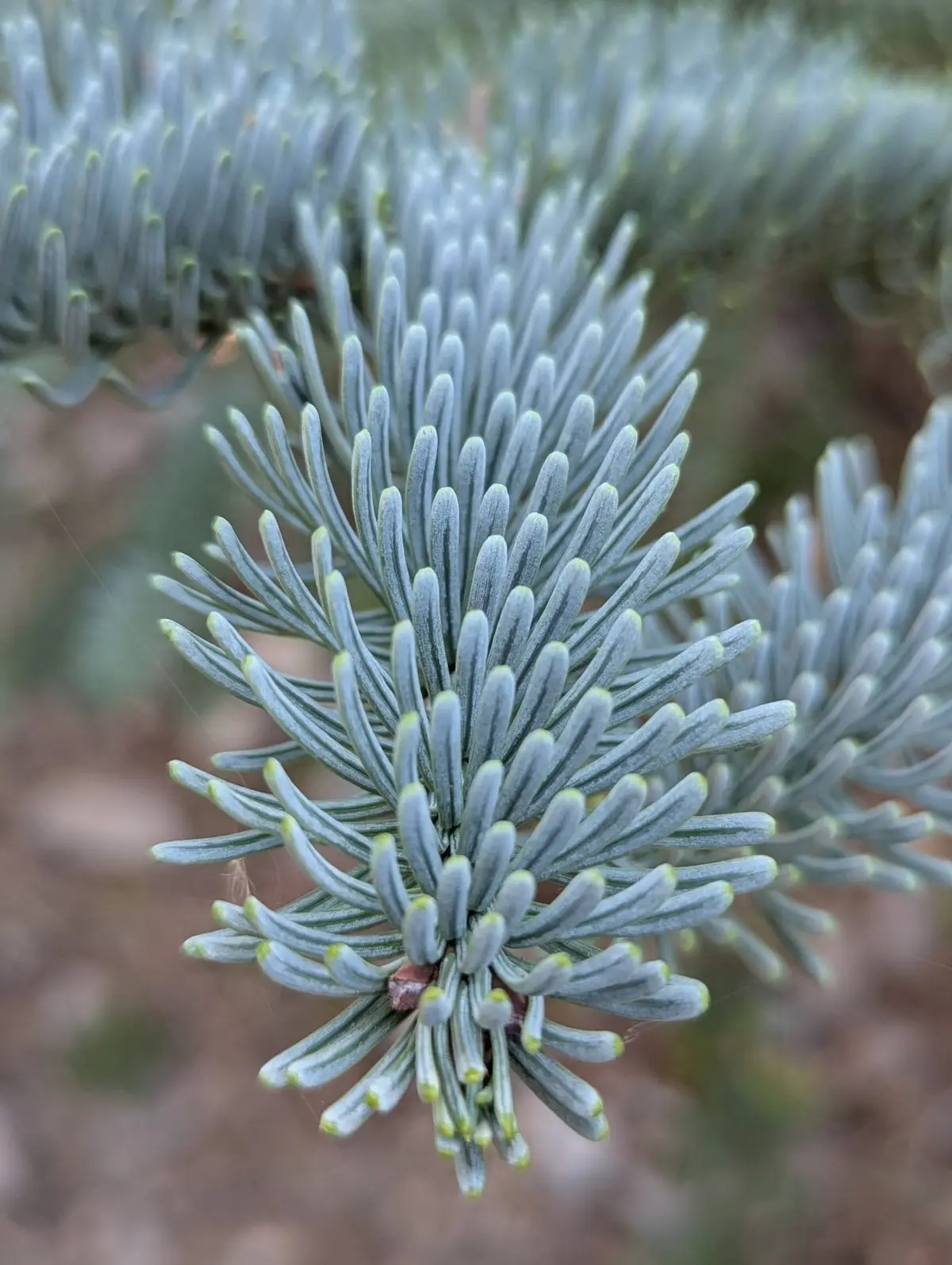
The quickest check is the shoot from above. Grand fir: combed flat into two rows either side. Noble fir: curving up over it, hiding the twig. No leaves on the tree? Check the cones high up.
| Look at | Grand fir | Noble fir |
|---|---|---|
| Shoot from above | Combed flat into two rows either side | Curving up over it, hiding the twig |
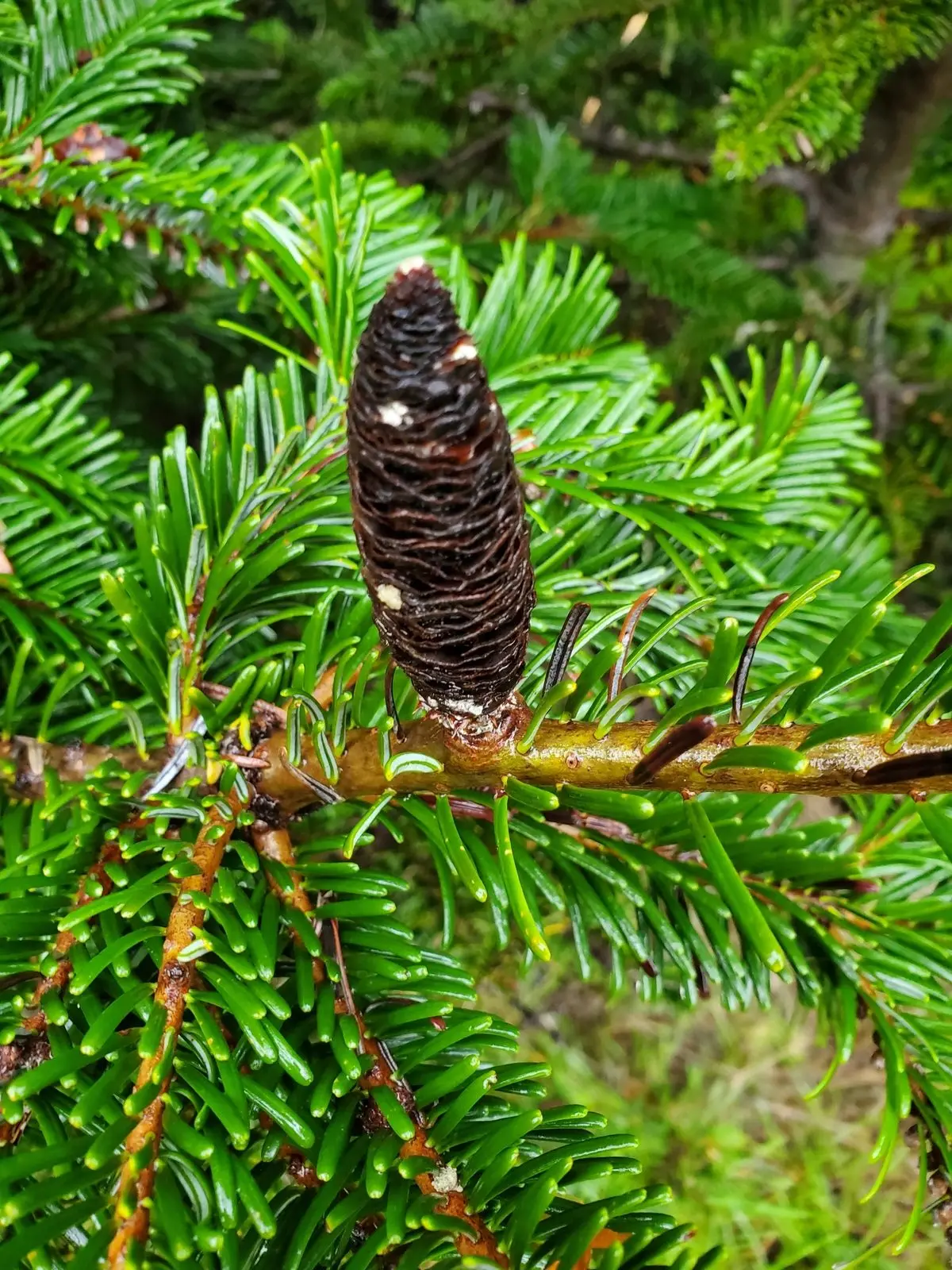
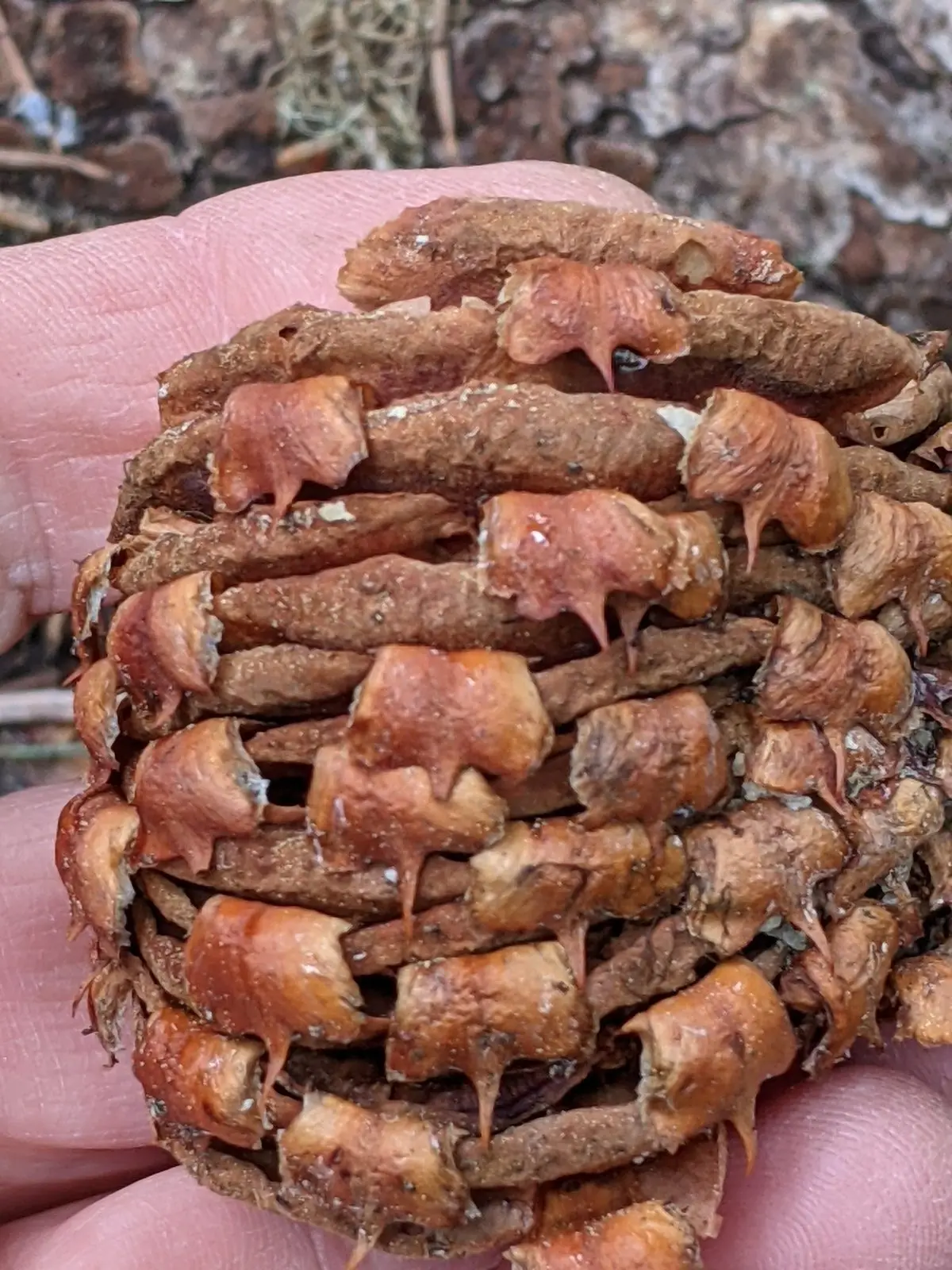
| Cones high up | Smooth, about 8 cm long | Up to 25 cm, covered in papery flaps |
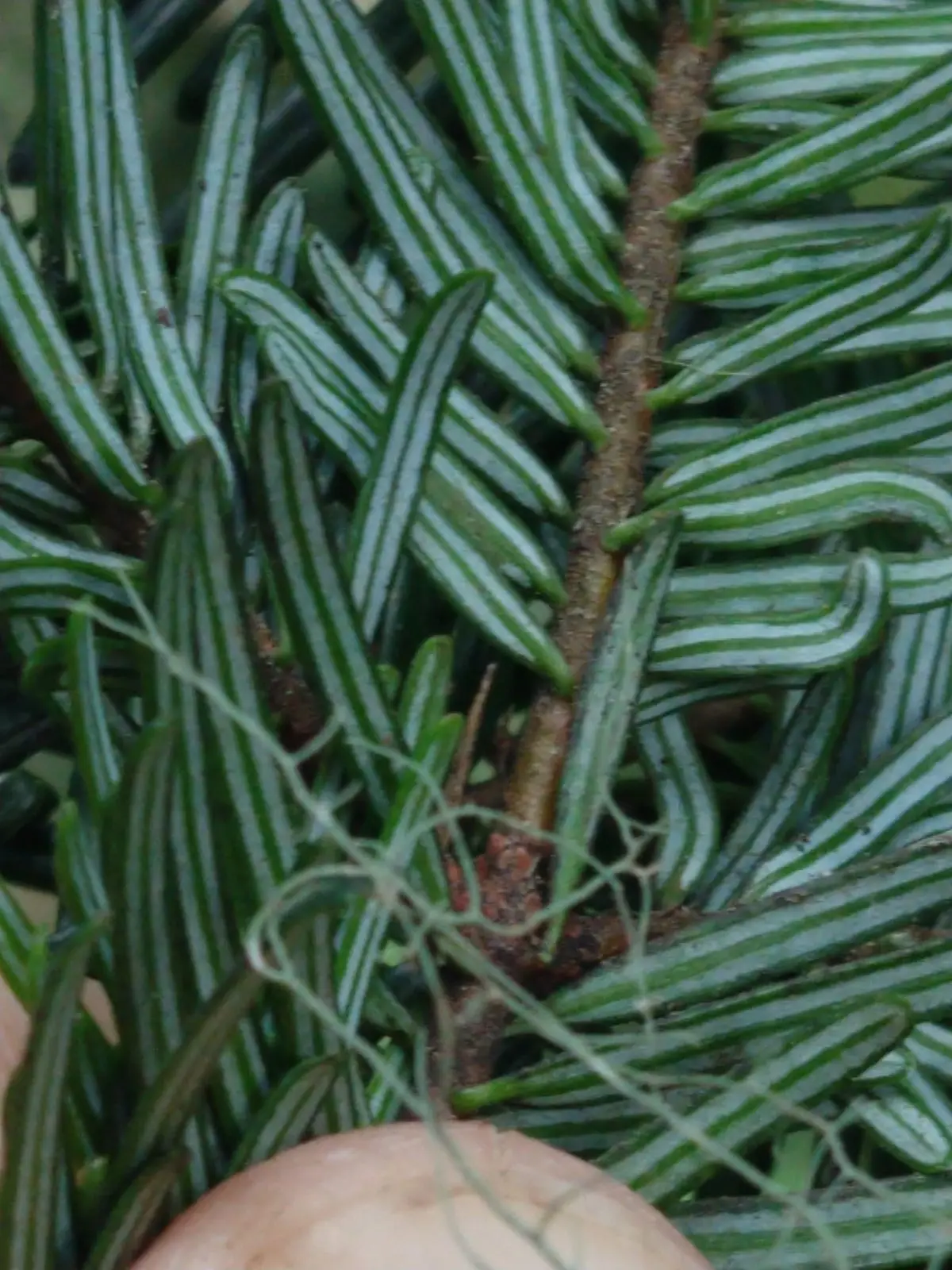
Grand fir is a conifer with glossy needles that lie flat in two rows either side of the shoot. Rubbed, they smell of tangerine peel. In many districts it is the tallest tree.
How to identify grand fir →Noble fir is a narrow, bluish grey conifer. Its needles curve up over the shoot, packed so close they hide the twig. High up, huge cones stand upright on the branches.
How to identify noble fir →Free to download.
Every fact on this page is checked against the Collins Tree Guide, last in November 2026. Spotted something that looks wrong in front of a real tree? Tell us. How we check.
Photographs: Harry Podschwit (CC BY 4.0), James H. Thomas (CC BY 4.0), rockybajada (CC0), David Anderson (CC BY 4.0), Jonathan Curley (CC BY 4.0). With thanks to everyone who shares their photographs on iNaturalist and Wikimedia Commons.