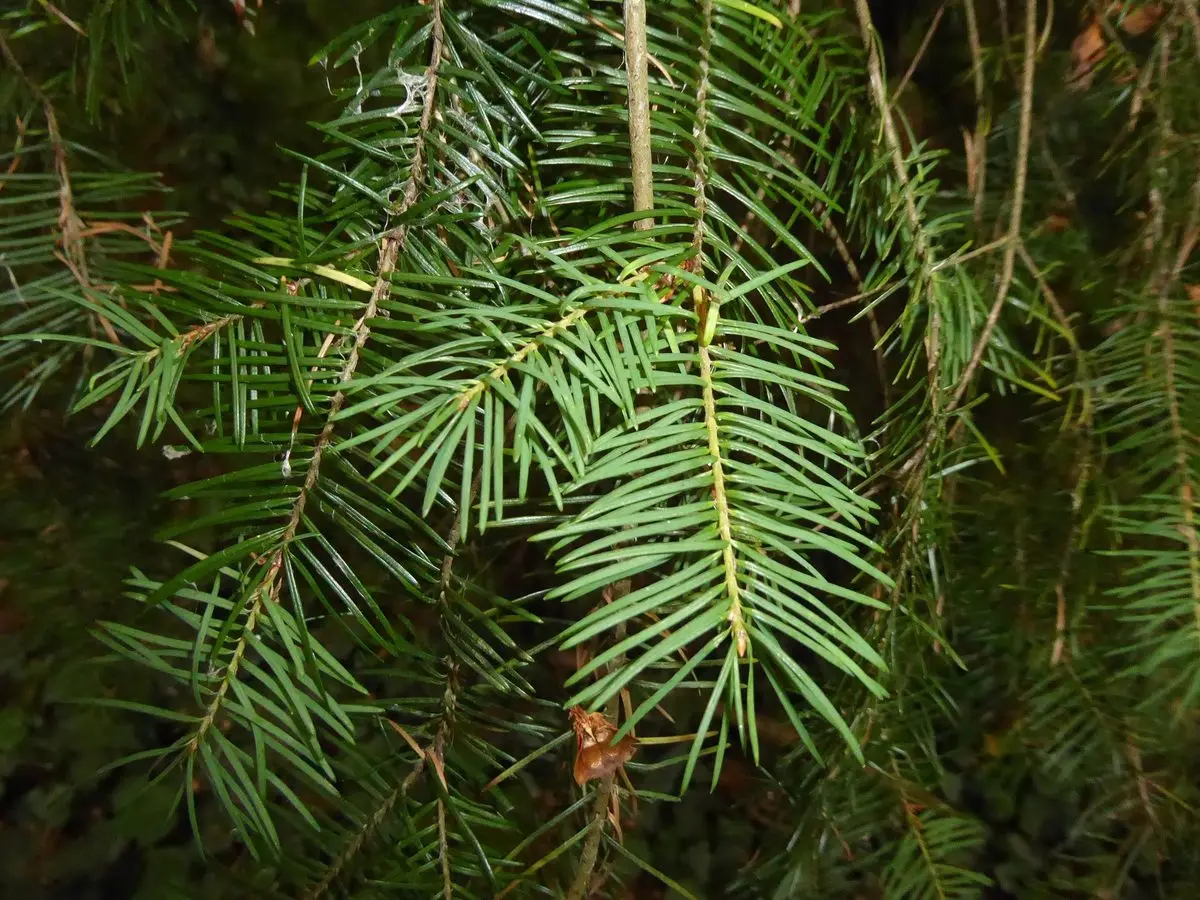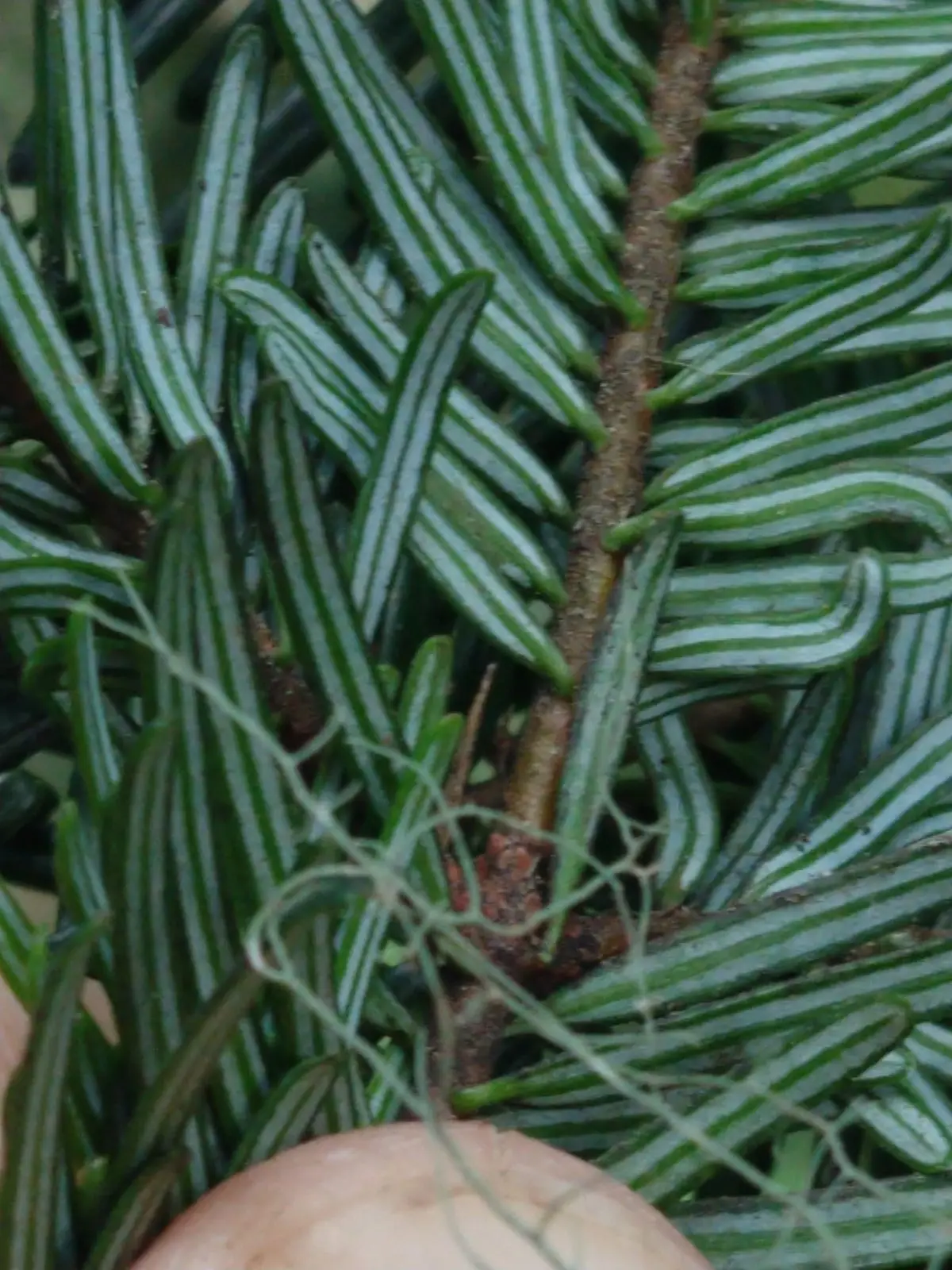
Glossy dark green, 25 to 50 mm long and notched at the tip, in two flat rows either side of the shoot.
Abies grandis · Pinaceae
Also called giant fir
Grand fir is a conifer with glossy needles that lie flat in two rows either side of the shoot. Rubbed, they smell of tangerine peel. In many districts it is the tallest tree.
Often mistaken for noble fir. How to tell them apart →NeedlesGlossy dark green, 25 to 50 mm long.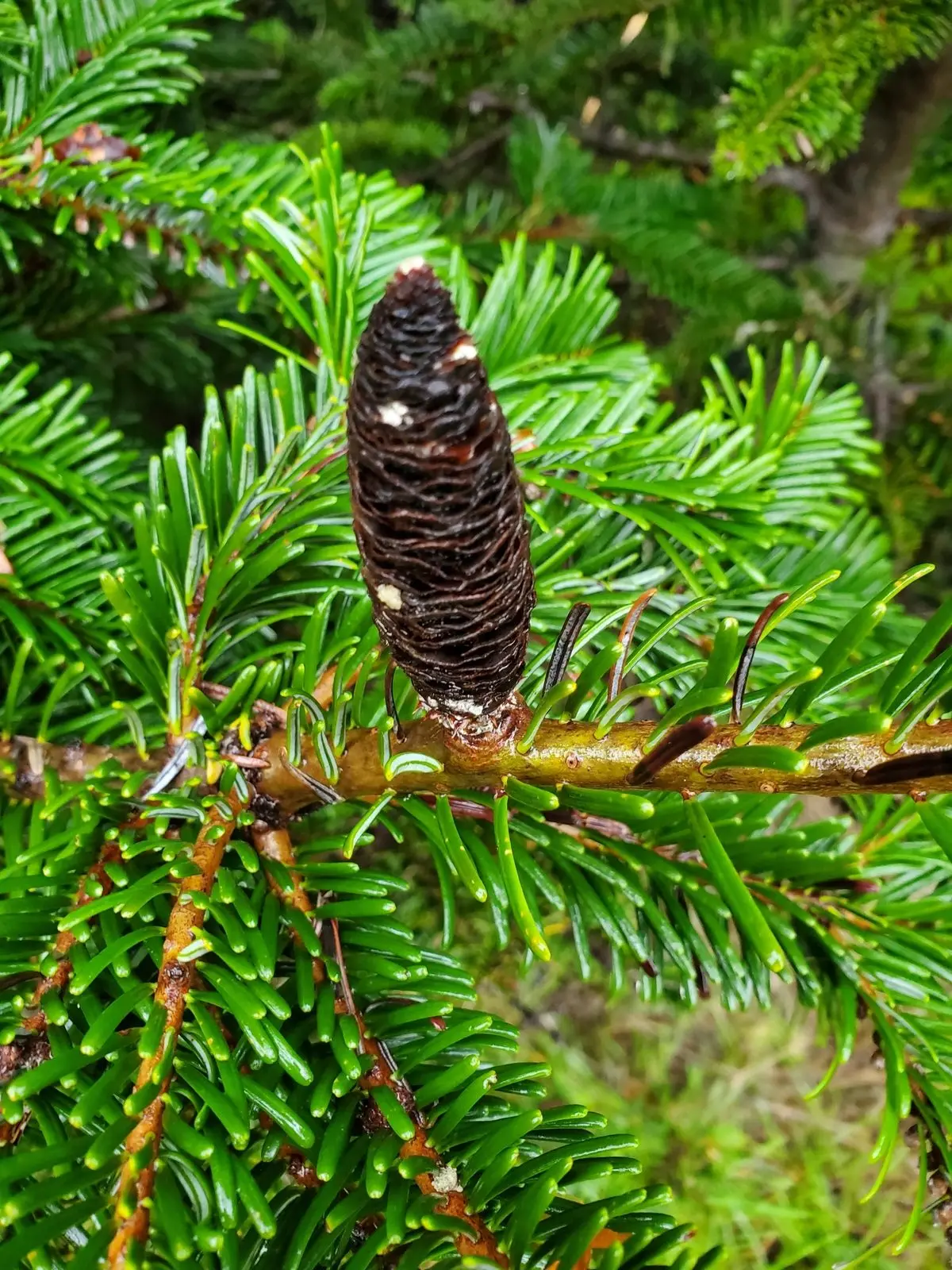 ConesSmooth, pale green, about 8 cm, falling apart to leave a spike.ShootsTiny round grey buds on olive green, hairy shoots.
Then check · BarkSmooth and grey with resin blisters when young. Later silvery or purplish grey, cracking into small, close rectangles.
Glossy dark green, 25 to 50 mm long and notched at the tip, in two flat rows either side of the shoot.
Smooth, pale green and about 8 cm long, upright on the topmost branches, falling apart there to leave a bare spike.
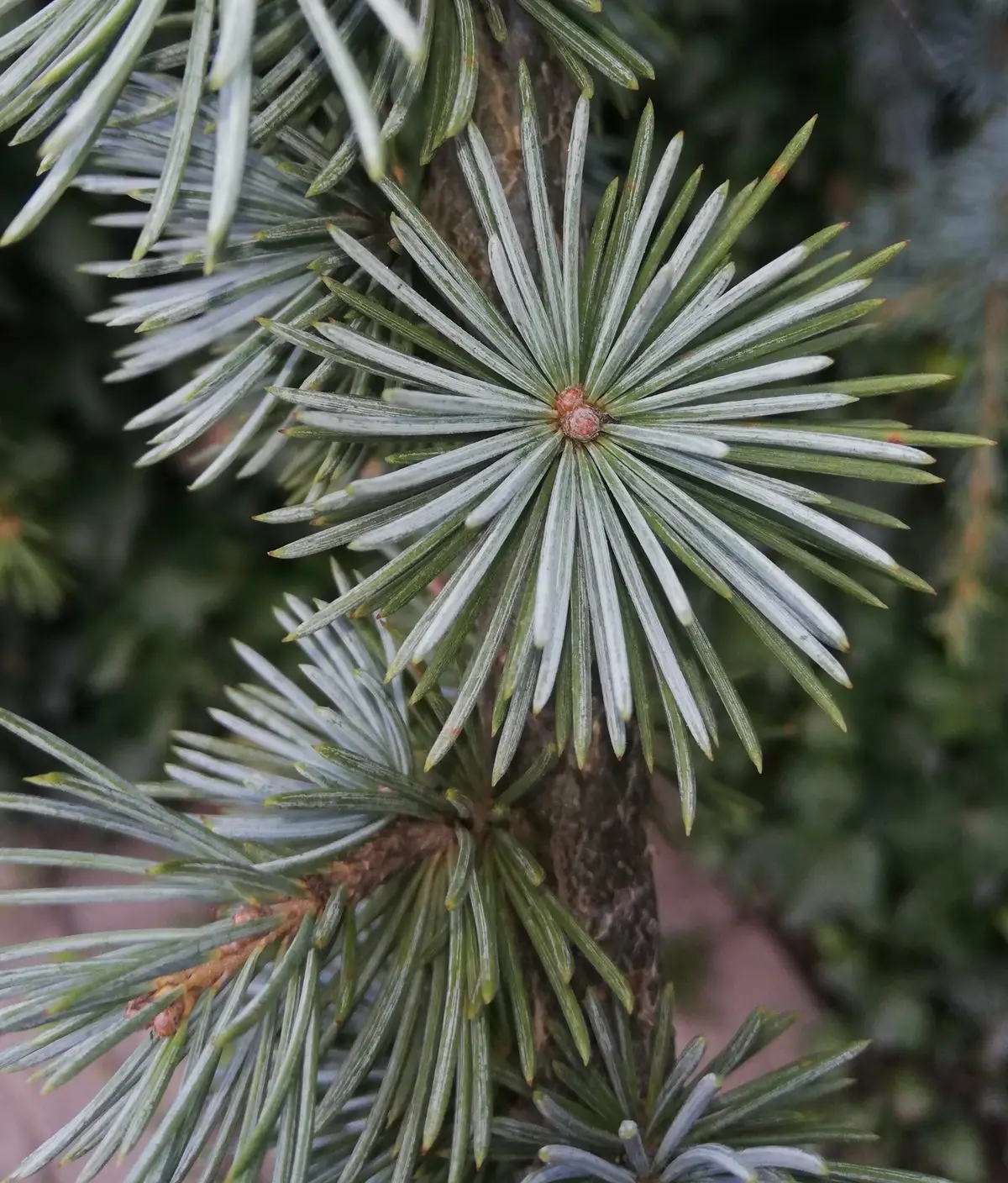
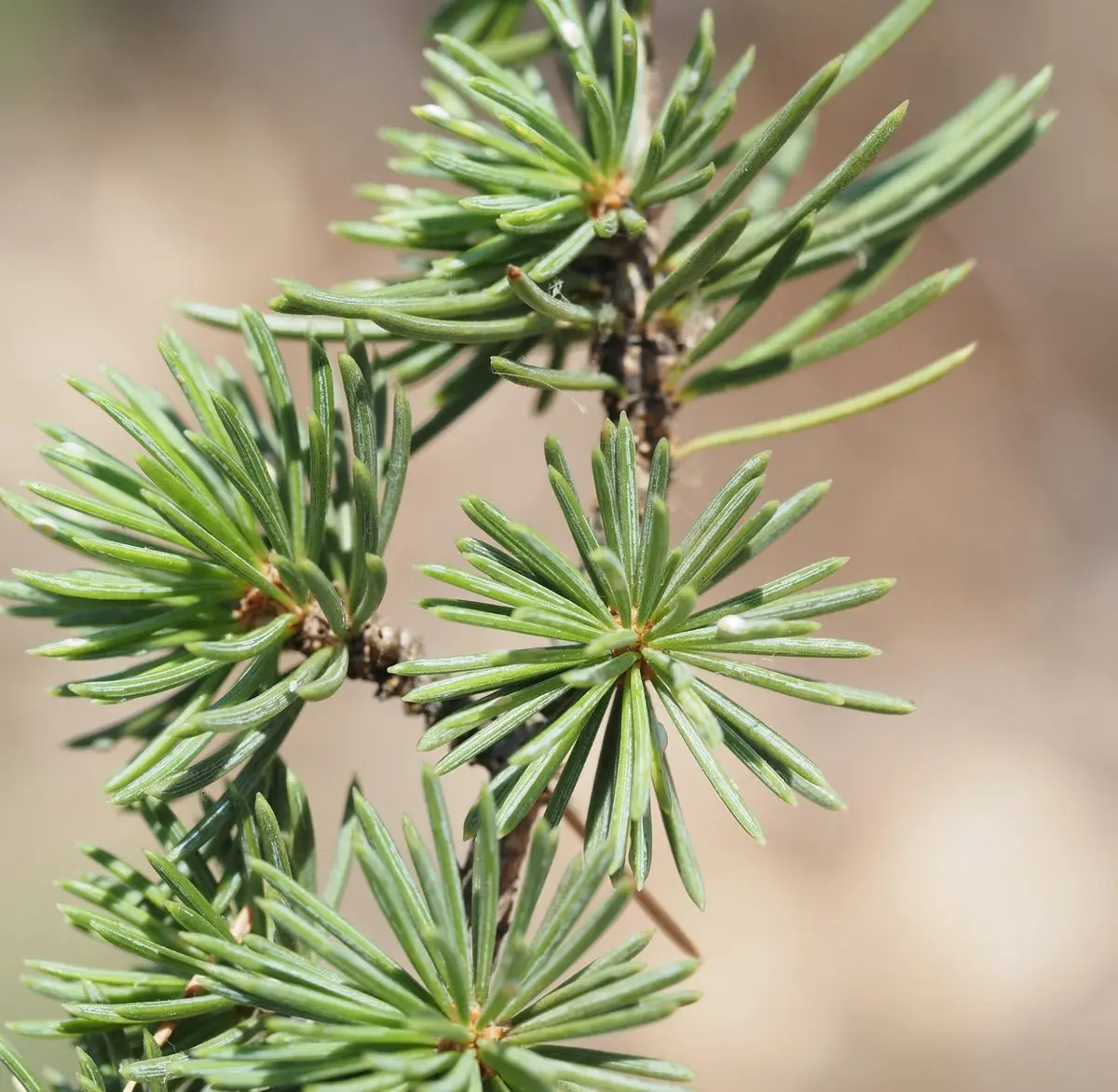
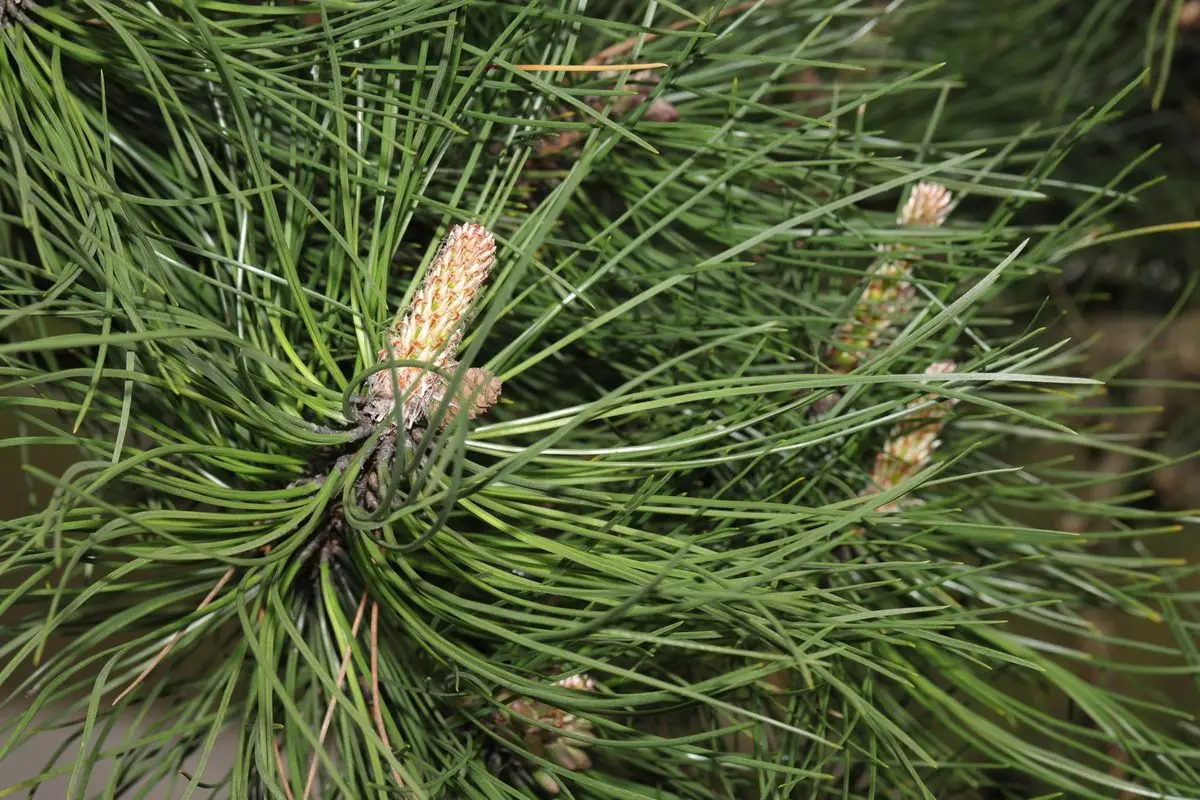
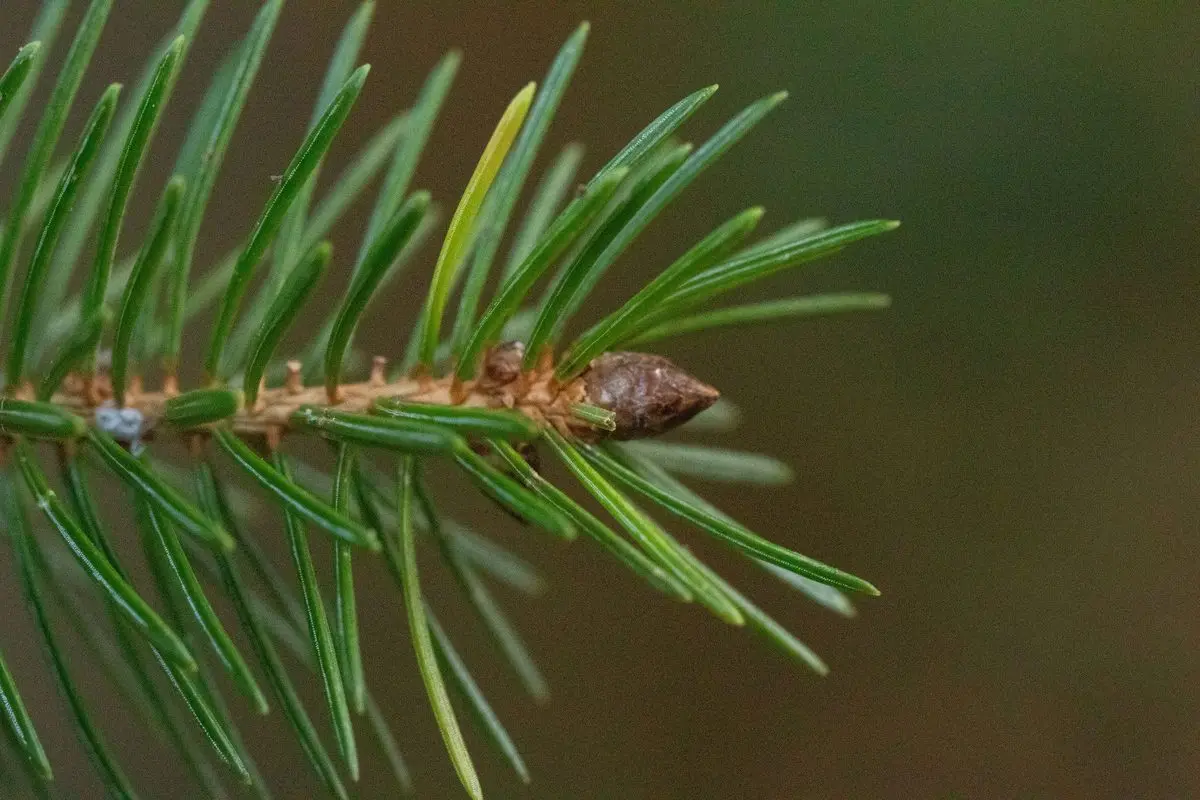
Olive green and finely hairy, with tiny round grey buds, the end one ringed by four or five smaller ones.
 Learn the grand fir in TreelyEvery part through the year, and a short round each day until you know it.Get Treely
Jonathan Curley, CC BY 4.0
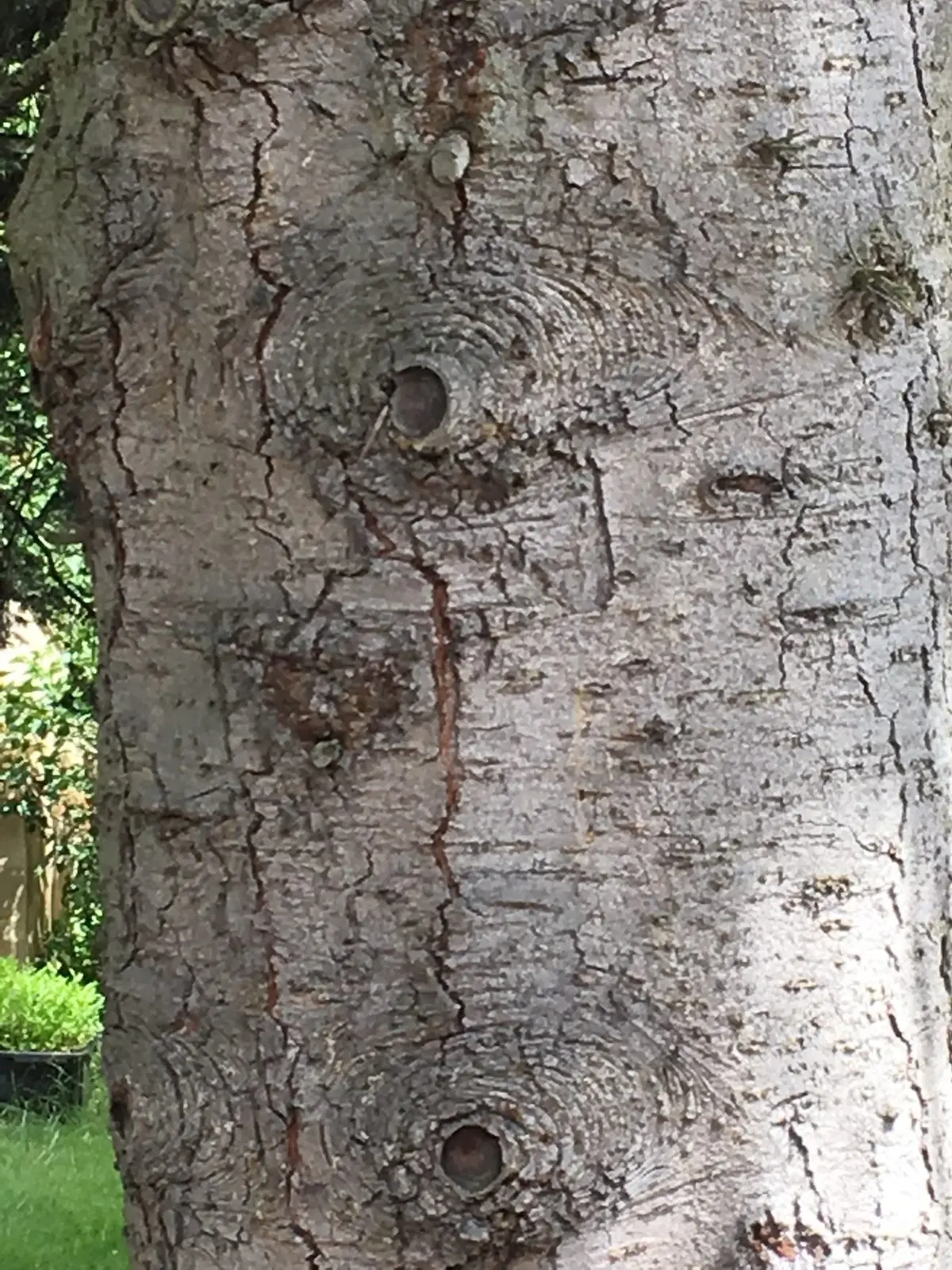 Harry Podschwit, CC BY 4.0
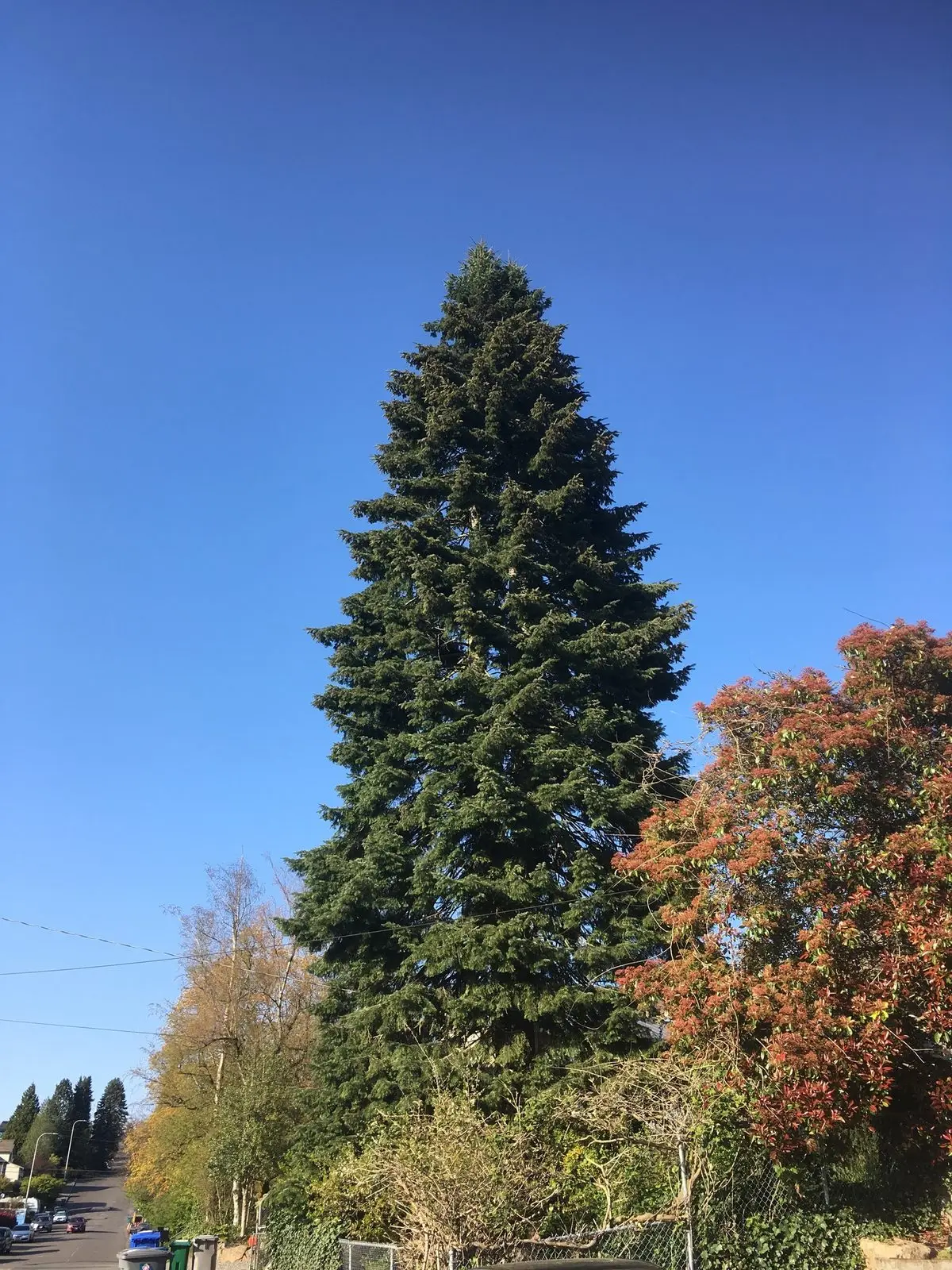 Harry Podschwit, CC BY 4.0
In leaf: all year · Flowers: April to May · Cones: September to October
Plantations and old estates, on deep, well-drained ground in the wetter west and north, where over 1000 mm of rain falls a year. It is scarce in dry districts. The biggest trees grow in the sheltered glens of Scotland. It sometimes seeds itself.
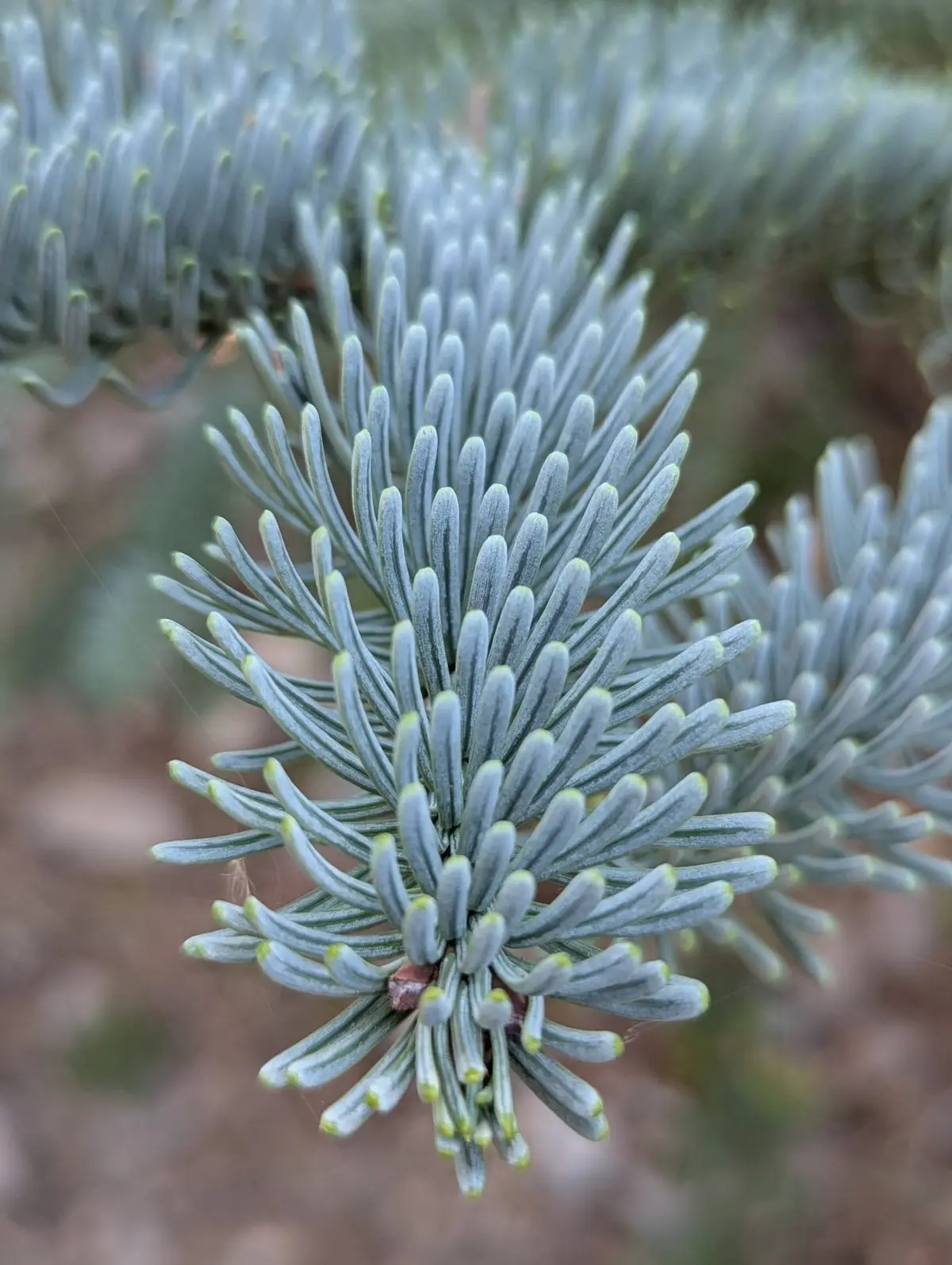 Grand fir or noble fir?Both are big firs from the Pacific coast of North America.Shoot from above→
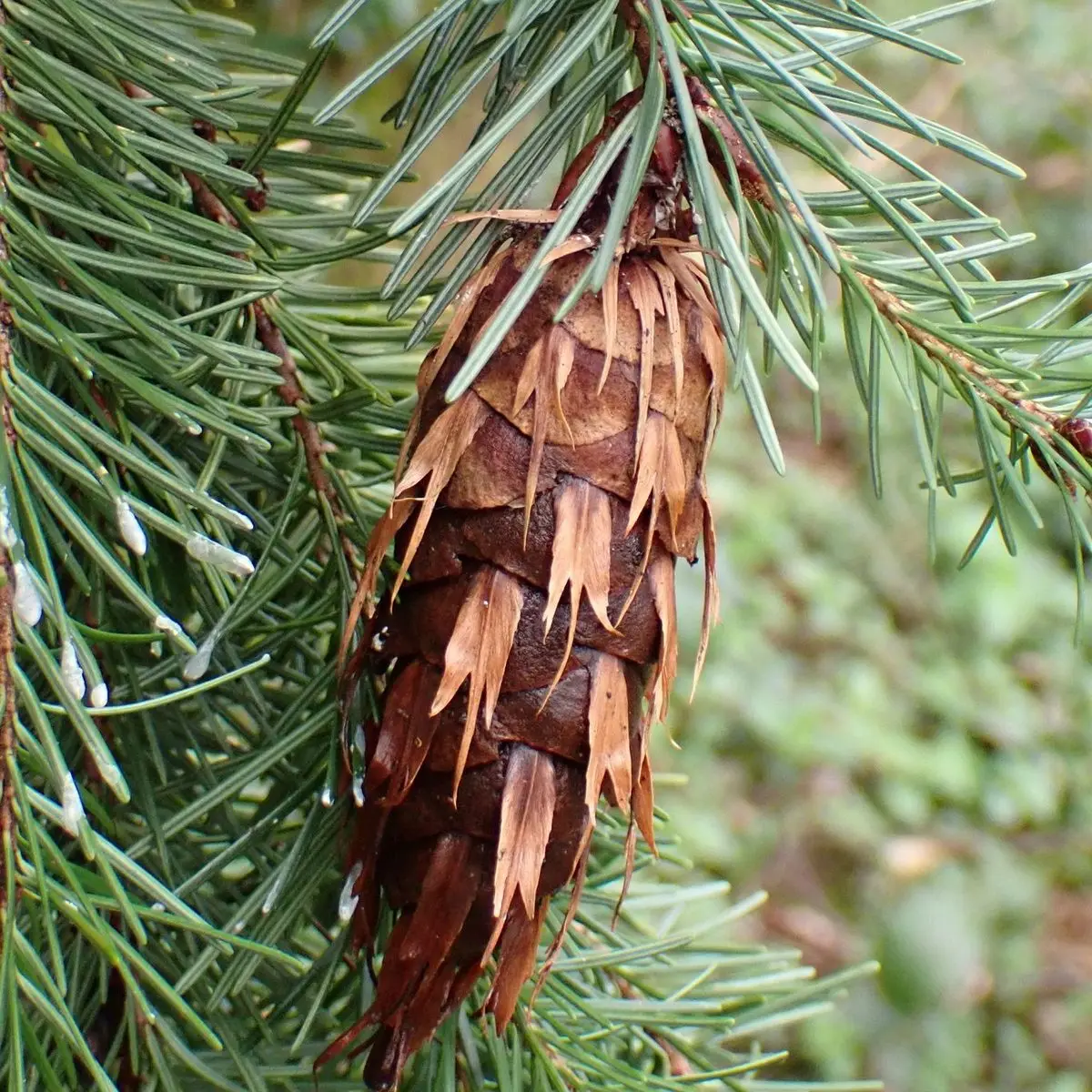 Grand fir or Douglas fir?Both are giants of the western plantations, with soft flat needles.How the cones are held→
Free to download.
Every fact on this page is checked against the Collins Tree Guide, last in November 2026. Spotted something that looks wrong in front of a real tree? Tell us. How we check.
Photographs: Harry Podschwit (CC BY 4.0), rockybajada (CC0), Jonathan Curley (CC BY 4.0), David Anderson (CC BY 4.0), bobwardell (CC0). With thanks to everyone who shares their photographs on iNaturalist and Wikimedia Commons.