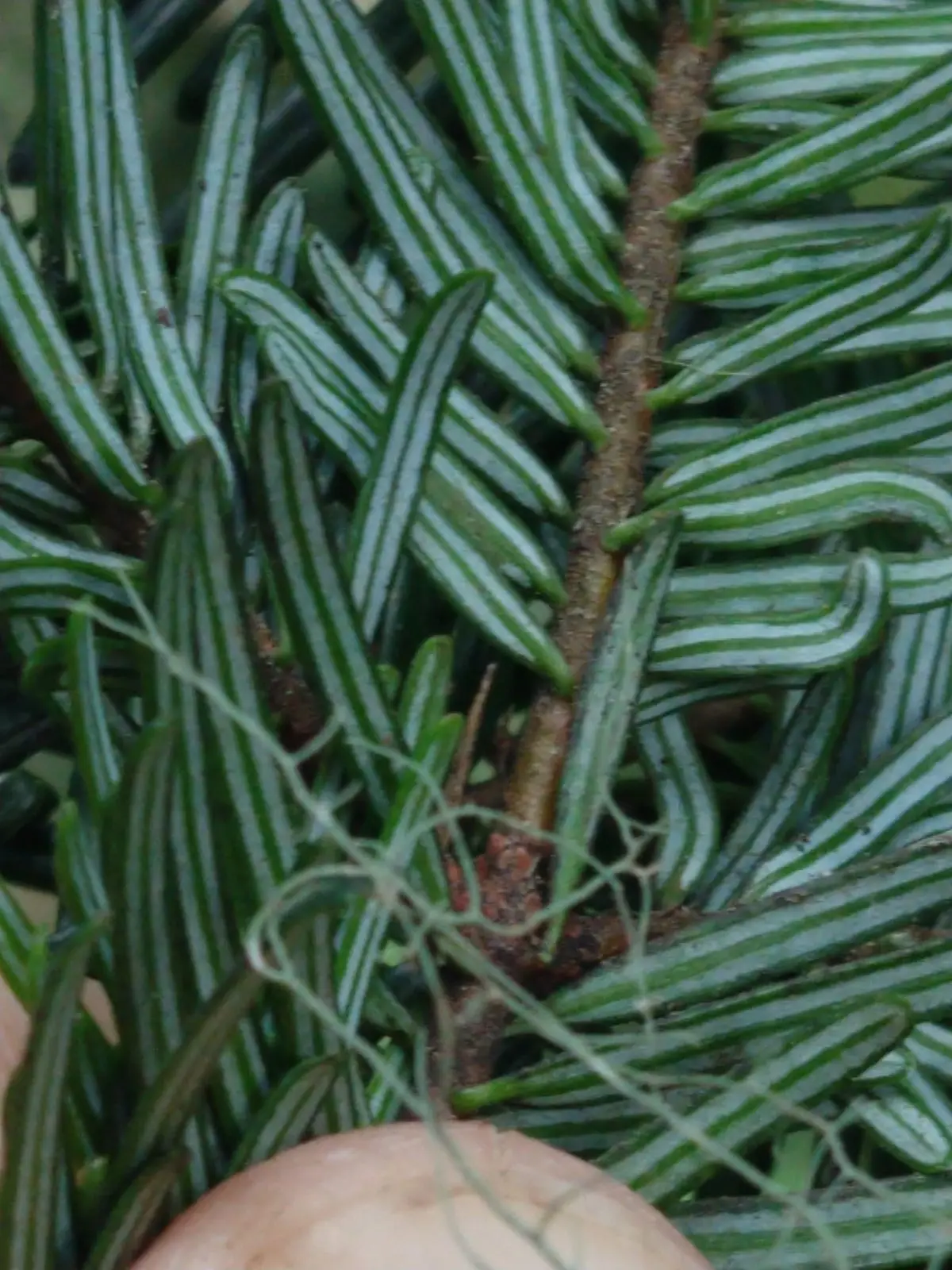
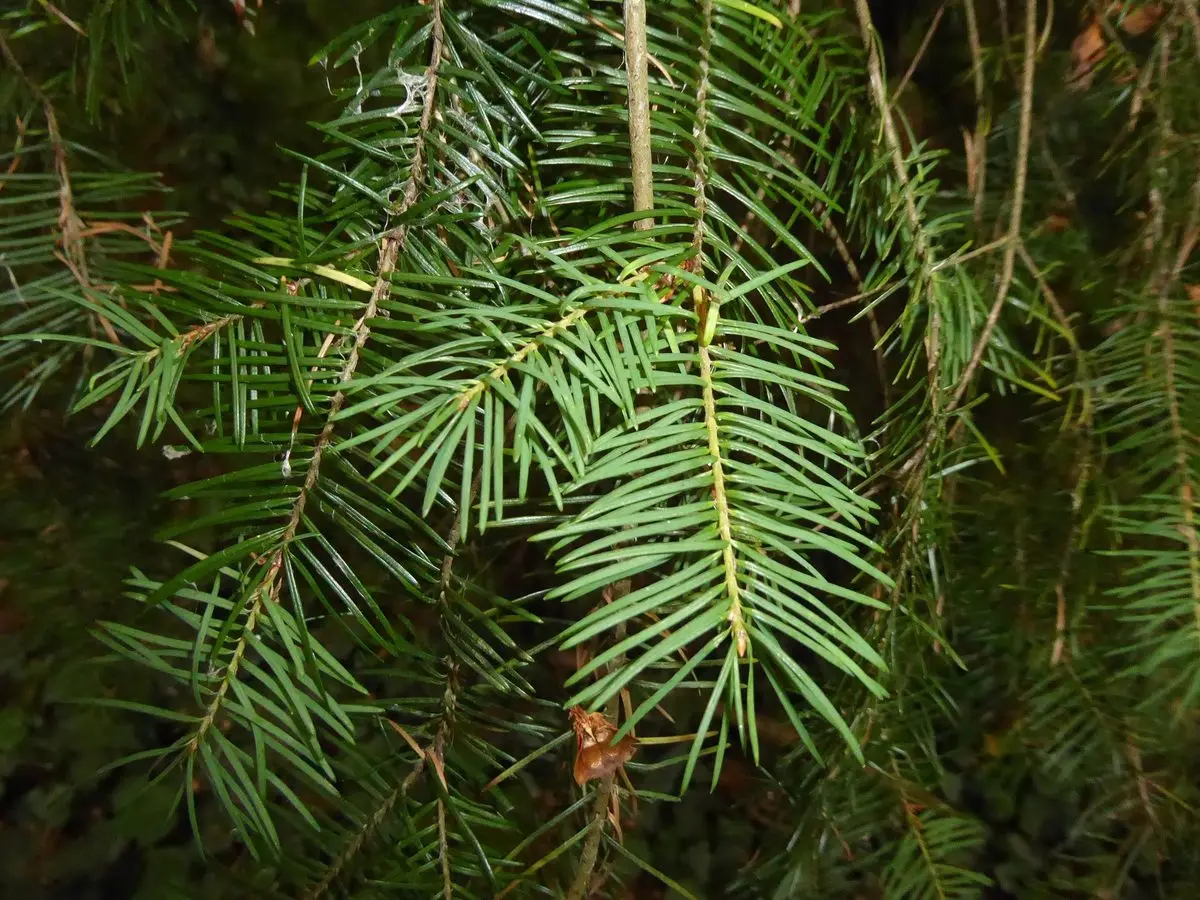
Bluish grey on both sides, 2 to 3 cm long, curving up over the shoot so thickly they hide the twig.
Introduced, naturalised · Up to 50 m
Noble fir
Abies procera · Pinaceae
Noble fir is a narrow, bluish grey conifer. Its needles curve up over the shoot, packed so close they hide the twig. High up, huge cones stand upright on the branches.
Often mistaken for grand fir. How to tell them apart →Know it by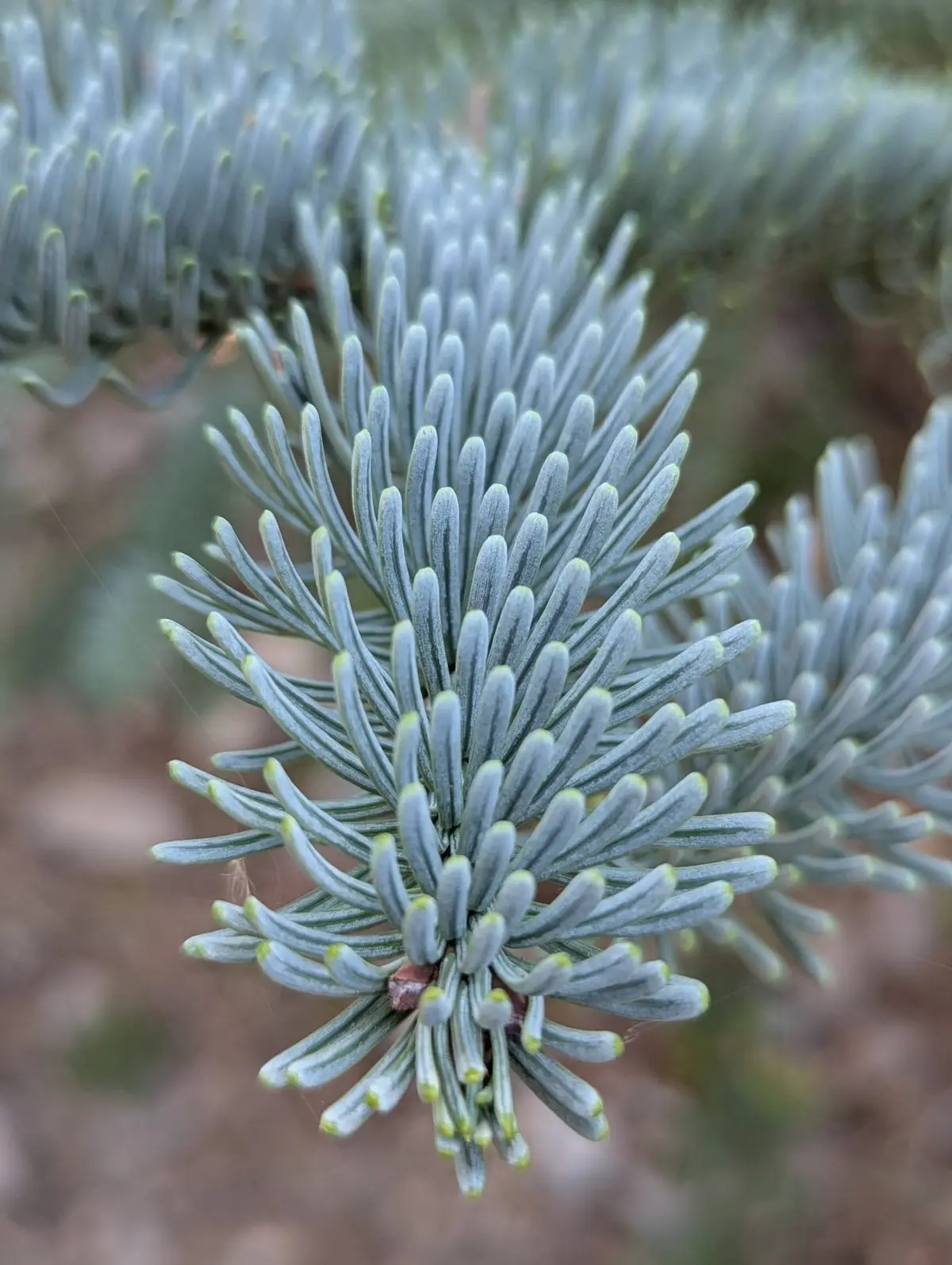 Needles2 to 3 cm, curving up so thickly they hide the twig.
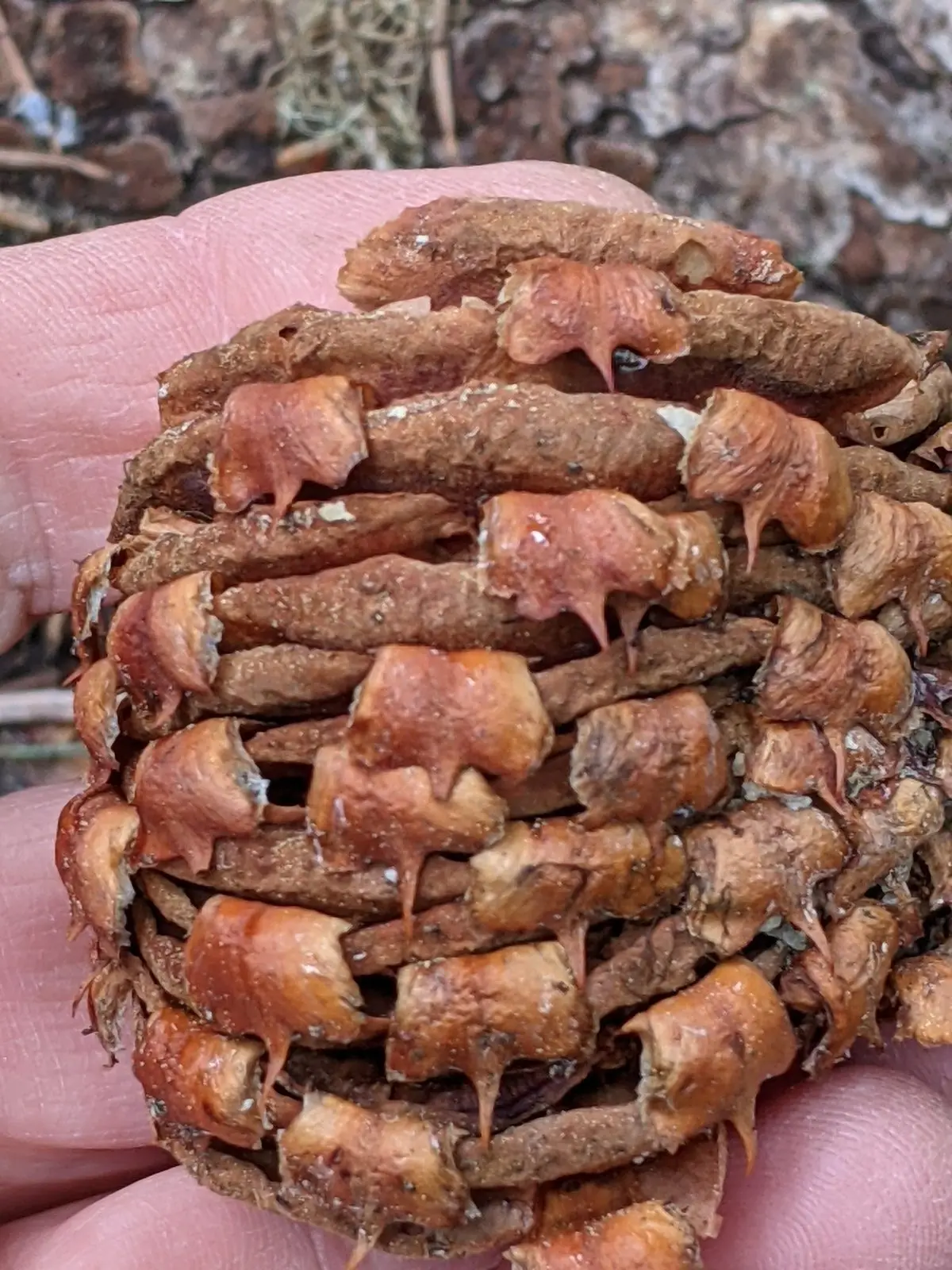 ConesUp to 25 cm and upright, on high branches.
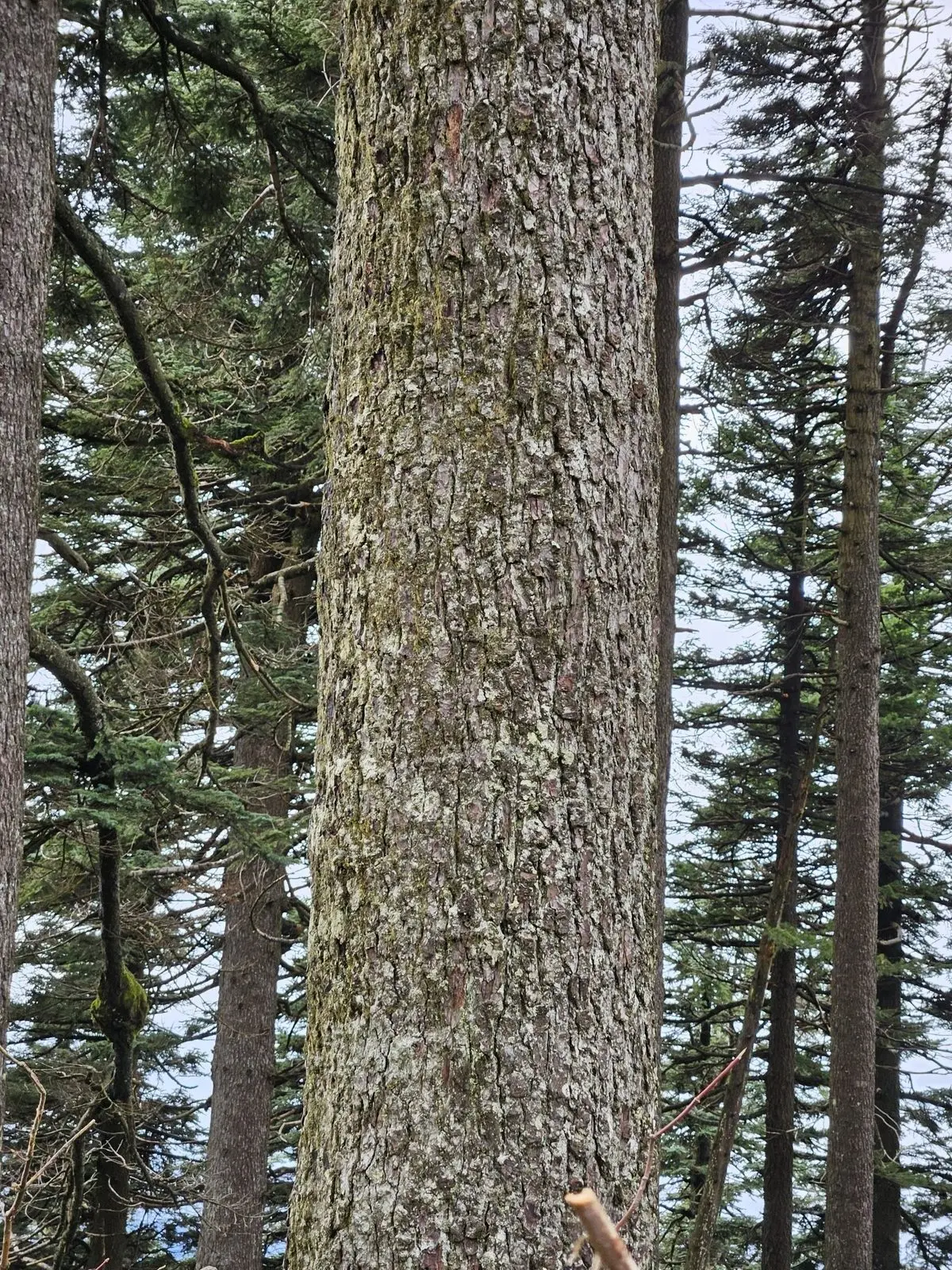 BarkSmooth when young, later silvery grey, cracked into flat plates.
Needles2 to 3 cm, curving up so thickly they hide the twig.ConesUp to 25 cm and upright, on high branches.BarkSmooth when young, later silvery grey, cracked into flat plates.Then check · ShapeA narrow spire on a straight trunk, with short, level branches that often start a long way up.
How to identify a noble fir
Up to 25 cm and upright on high branches, covered in long, papery flaps that fold down over the scales.
Smooth and pale grey with resin blisters when young, turning silvery grey and cracking into flat plates with age.
 Learn the noble fir in TreelyEvery part through the year, and a short round each day until you know it.Get Treely
Every part, in photographs
David Anderson, CC BY 4.0David Anderson, CC BY 4.0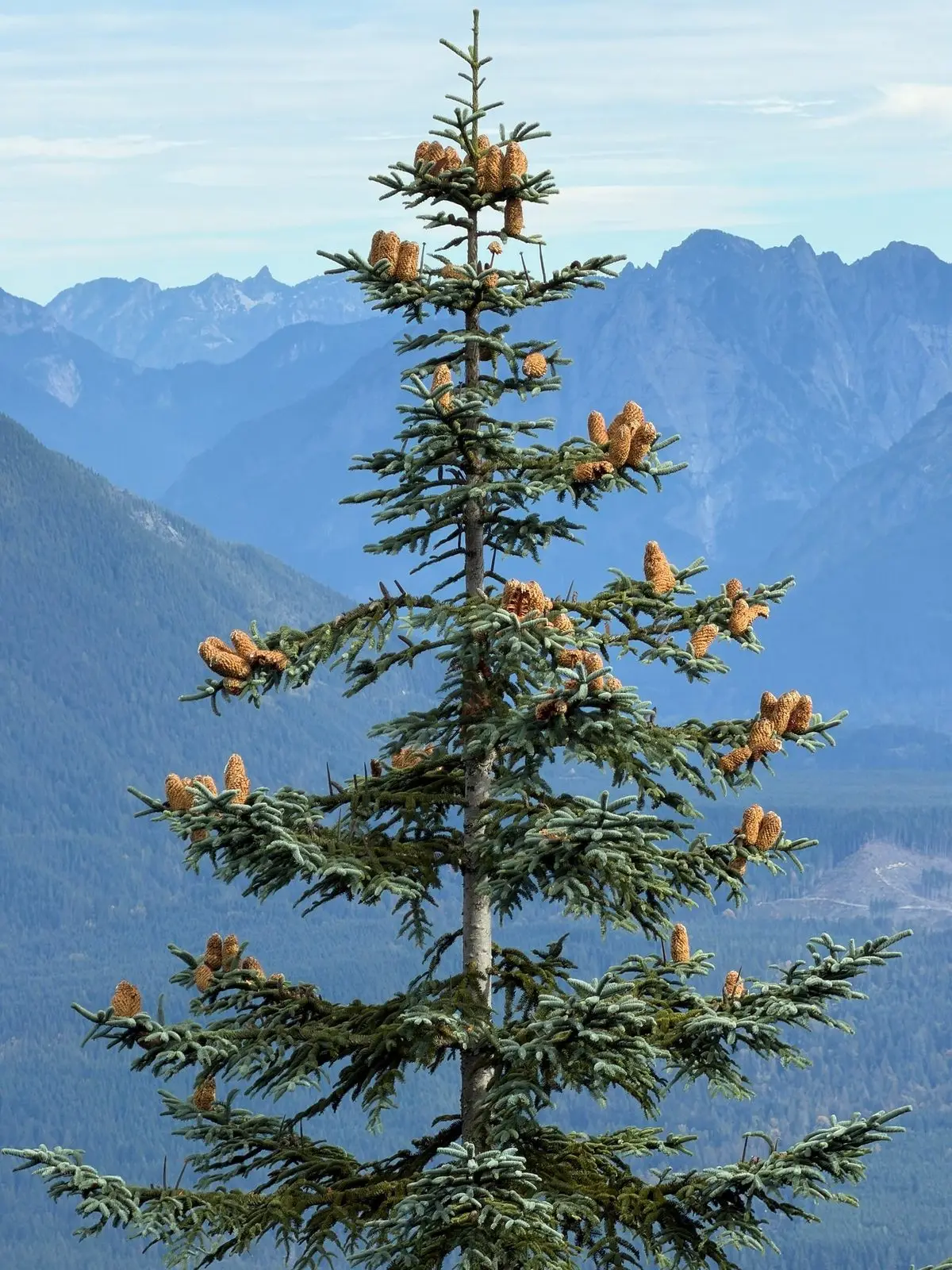 James H. Thomas, CC BY 4.0
When to look
JFMAMJJASOND
In leaf
Flowers
Cones
In leaf: all year · Flowers: April to May · Cones: September to October
Where you’ll find it
Planted in parks, large gardens and conifer collections, and very rarely in forestry plantations. It grows best where the climate is cool and wet, such as the Perthshire glens, and does badly on dry ground.
What it’s mistaken for
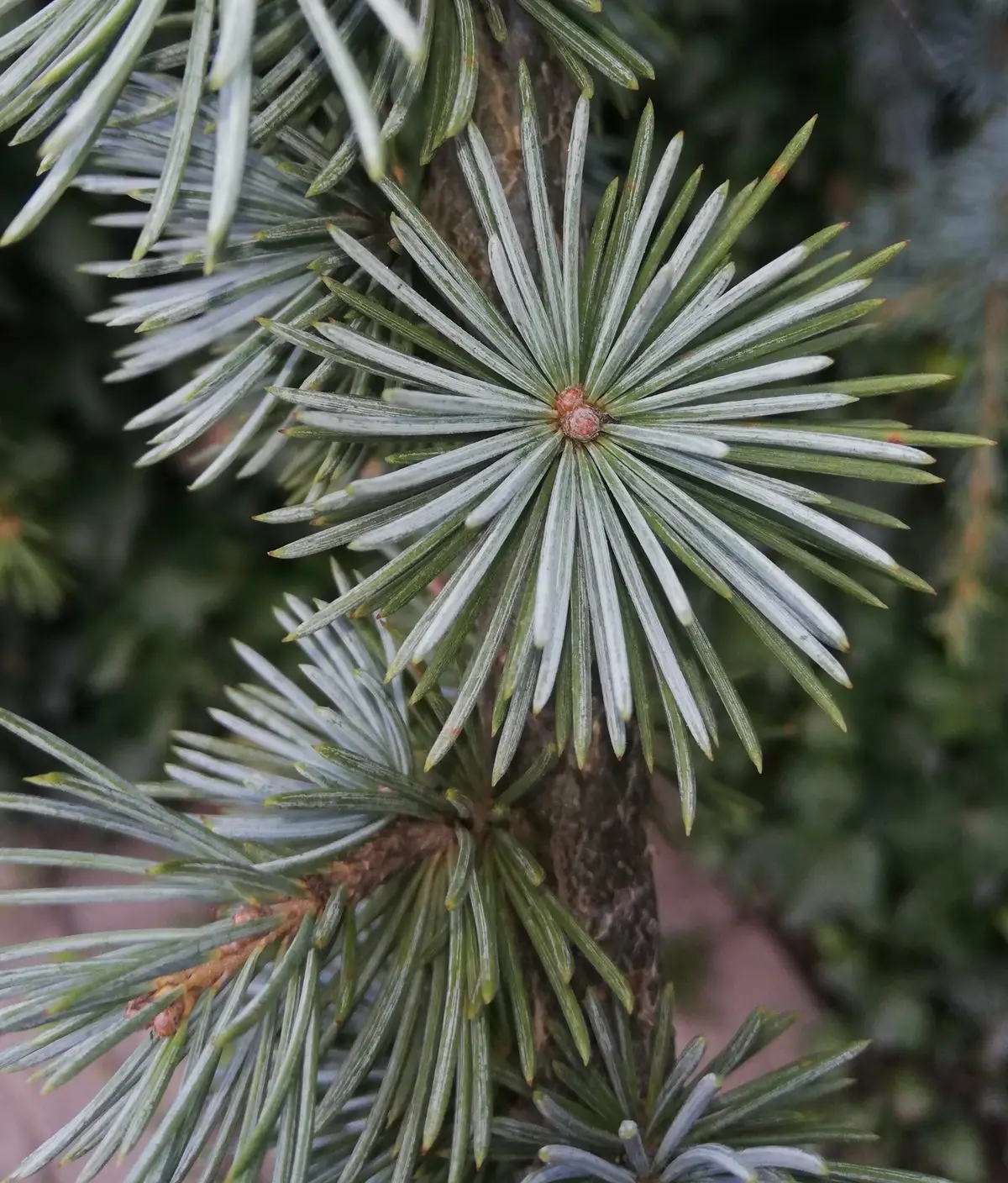
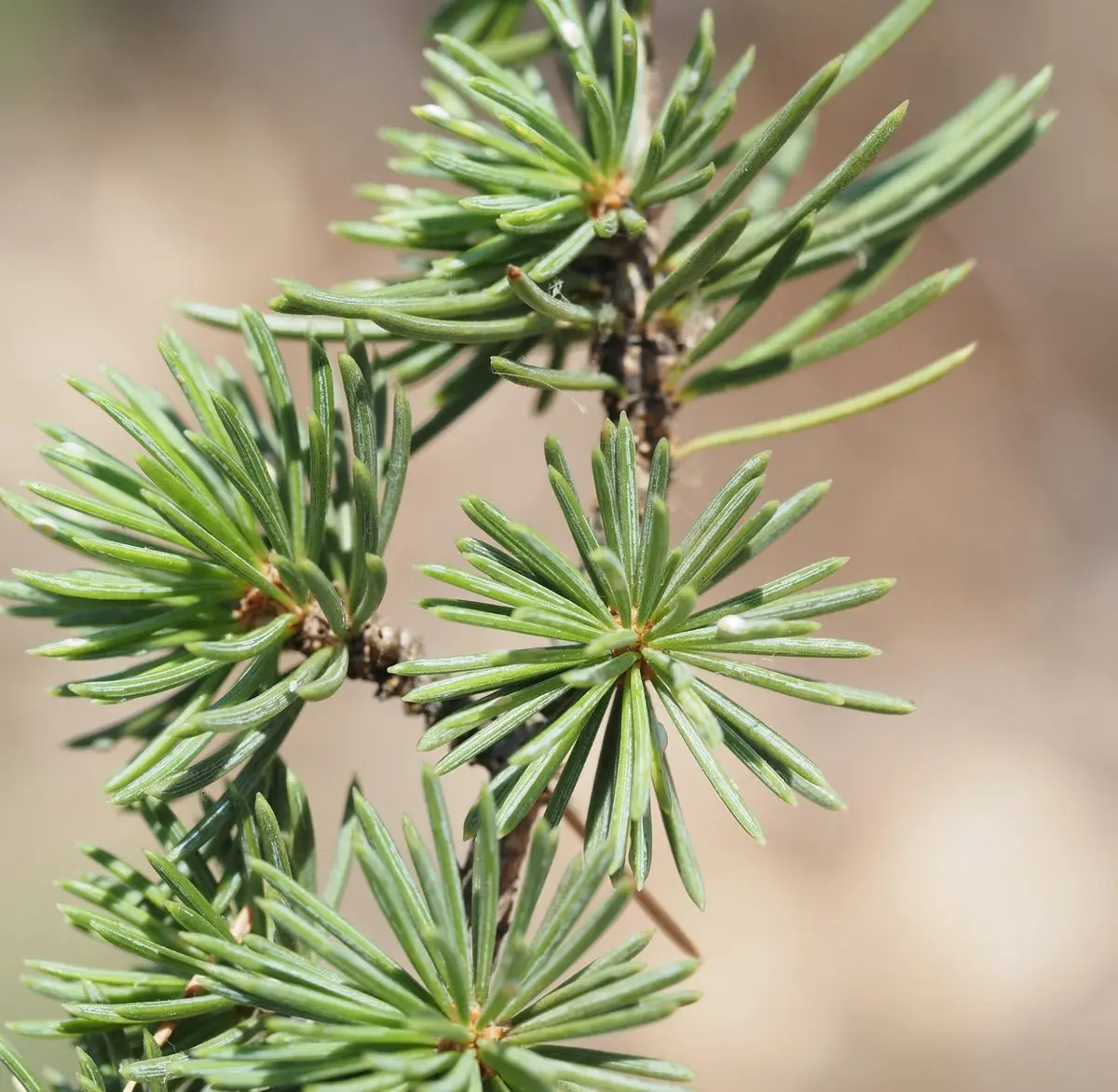
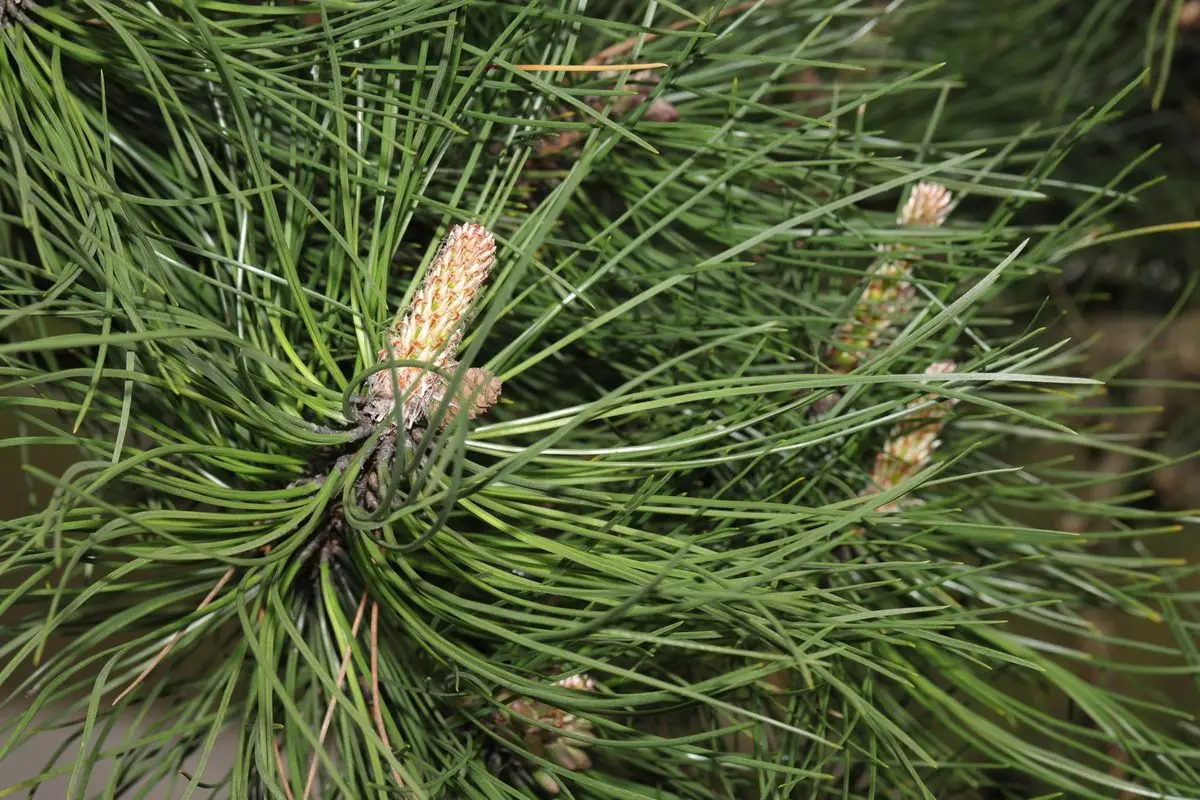
- Douglas firBoth are tall Pacific conifers, brought back by the same collector. Fruit. Noble fir: upright on the upper side of high branches. Douglas fir: hanging down, a three-pointed strap under each scale.
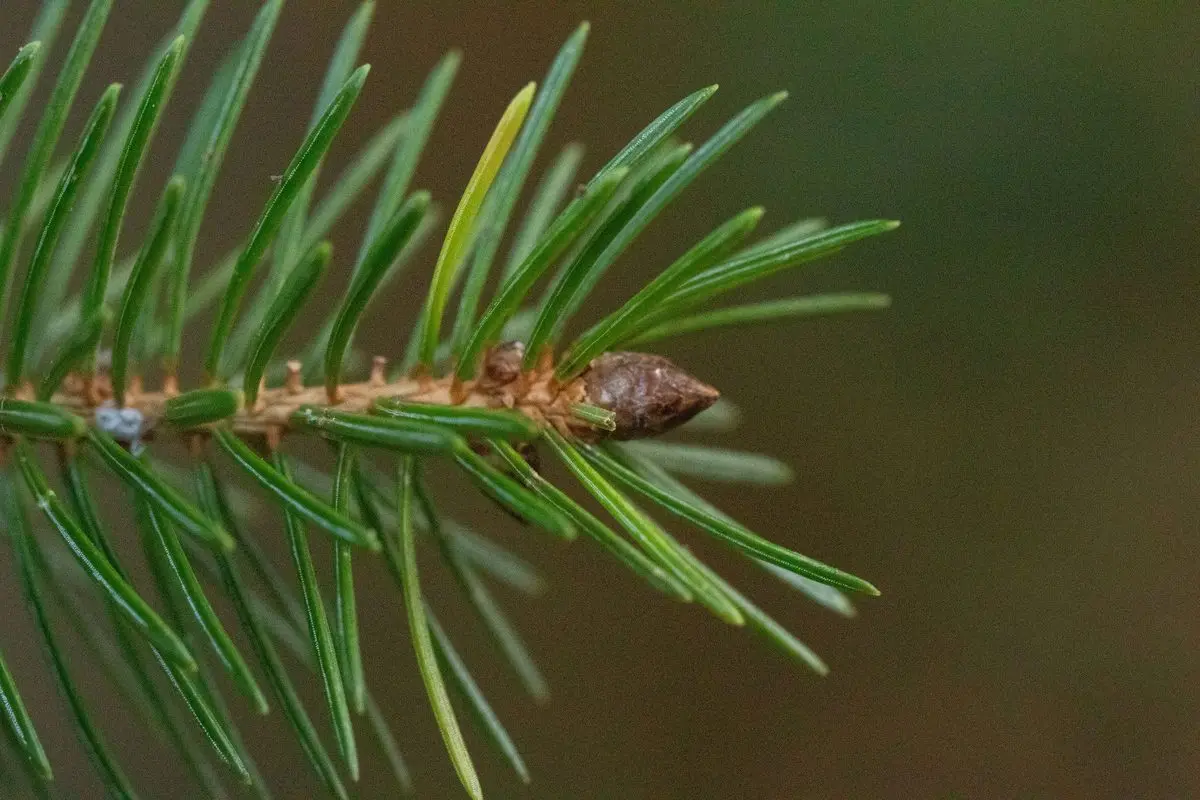
- Sitka spruceBoth have bluish grey crowns and grow in the wet west. Leaf. Noble fir: rounded, rarely notched. Sitka spruce: sharp enough to hurt.
- Norway spruceBoth are sold as Christmas trees. Leaf. Noble fir: flat, and stays flat between the fingers. Norway spruce: four-sided, and turns freely.
In the app
There’s more of the noble fir in Treely
- Every part, through the yearLeaves, bark, buds, flowers and fruit, photographed in every season
- Its lookalikes, side by sideThe checks that settle it, part by part
- A short round each dayUntil you know the noble fir on sight, from any side
- Name it from a photoA leaf, the bark or a flower, and Treely tells you which tree
Free to download.
Every fact on this page is checked against the Collins Tree Guide, last in November 2026. Spotted something that looks wrong in front of a real tree? Tell us. How we check.
Photographs: James H. Thomas (CC BY 4.0), David Anderson (CC BY 4.0), benjamis (CC0), rockybajada (CC0). With thanks to everyone who shares their photographs on iNaturalist and Wikimedia Commons.