Dark red, deeply furrowed and fibrous, soft under a hand, and up to 60 cm thick on an old tree.
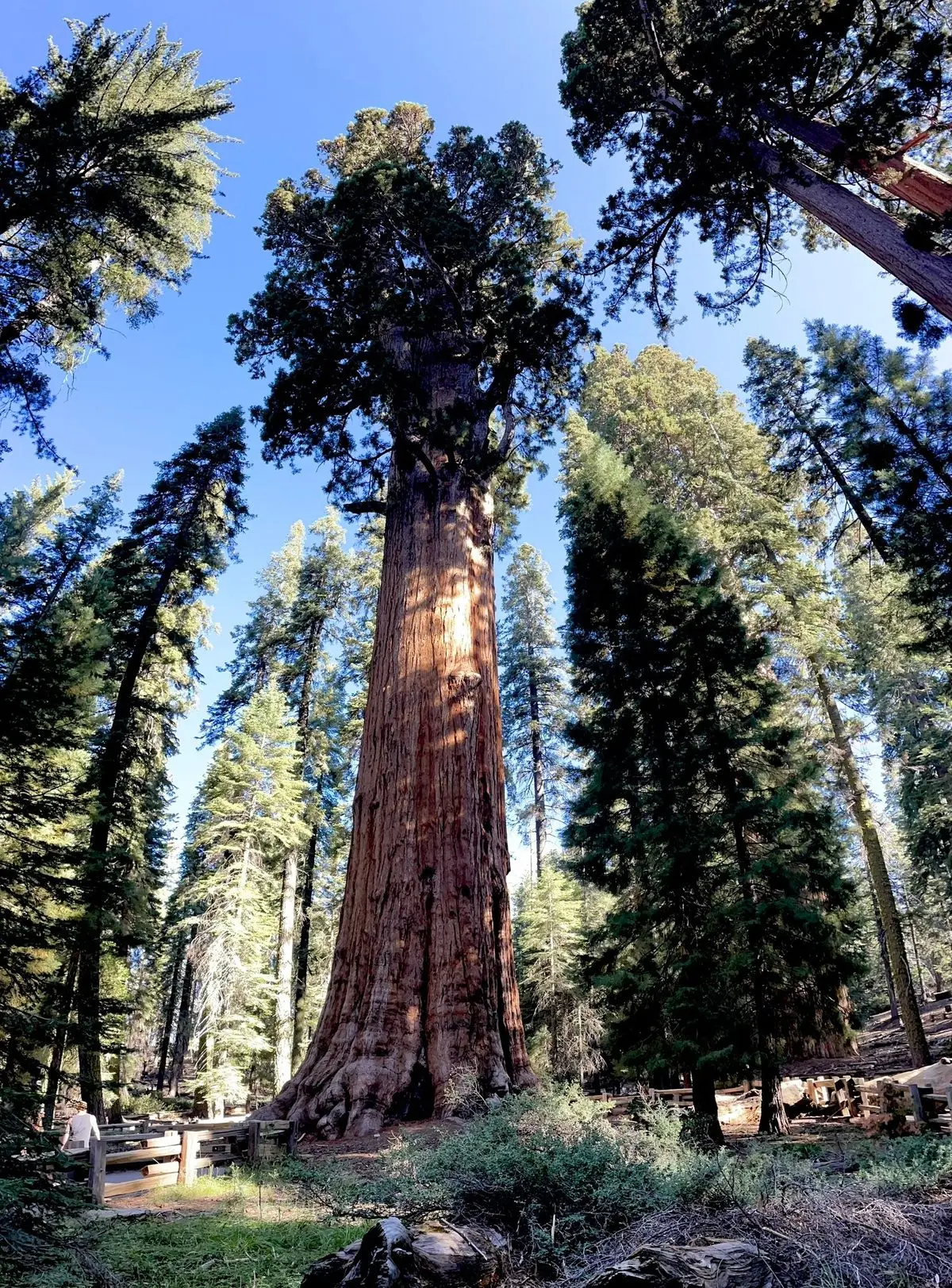
Introduced · Up to 56 m
Giant redwood
Sequoiadendron giganteum · Cupressaceae
Also called Wellingtonia or giant sequoia
Giant redwood grows into a dark, narrow spire, often taller than anything around it. Its thick dark red bark is deeply furrowed, and soft enough to give under a flat hand.
Often mistaken for Douglas fir. How to tell them apart →Know it byBarkDeeply furrowed, up to 60 cm thick on an old tree.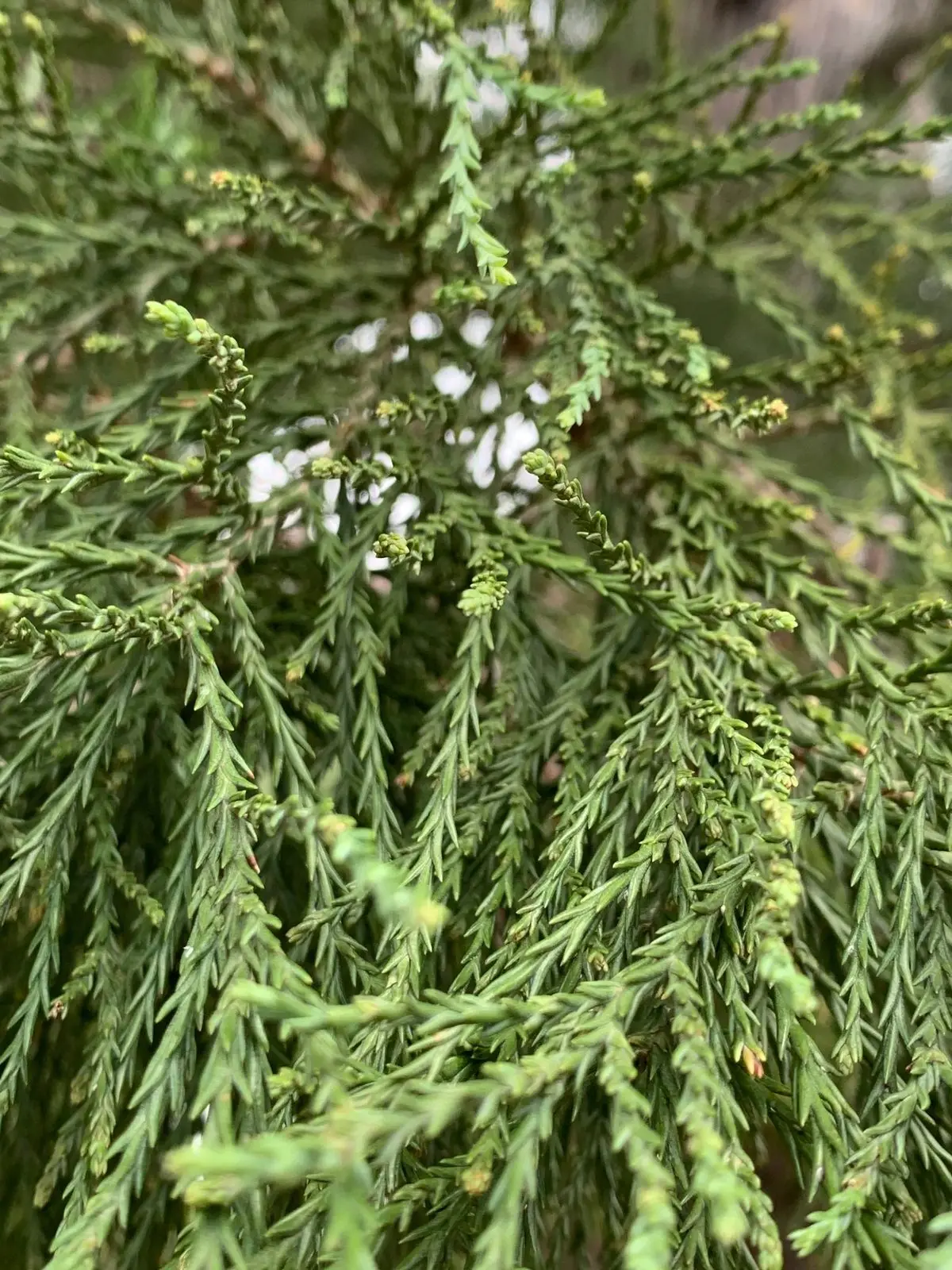 ScalesHard scales up to 1 cm long, clasping the shoot all round.ShapeA narrow cone with hanging lower branches.
Then check · ConesWoody and egg-shaped, 4 to 7 cm long. They often stay green and shut on the branch for years, and turn brown when they open.
How to identify a giant redwood
Hard scales up to 1 cm long, clasping the shoot all round, with a smell of aniseed when rubbed.
A narrow cone over an enormous trunk that flares out at a ridged base, with the lower branches hanging.
 Learn the giant redwood in TreelyEvery part through the year, and a short round each day until you know it.Get Treely
Every part, in photographs
Ben Hayden, CC BY 4.0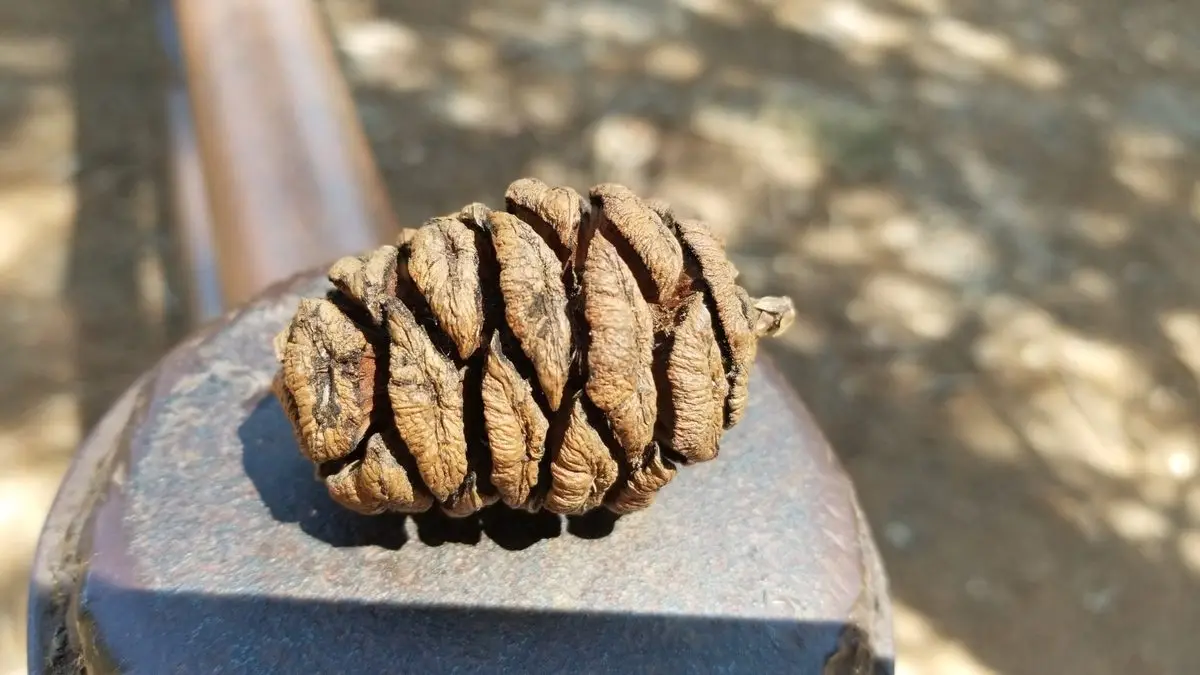 Nicole, CC BY 4.0
When to look
JFMAMJJASOND
In leaf
Flowers
Cones
In leaf: all year · Flowers: February to April · Cones: all year
Where you’ll find it
Planted in parks, gardens, churchyards and on big estates. It is fairly common except in the driest and most polluted lowlands, and does best in the west. It will not grow on shallow chalk. Wind rarely harms it, but salt spray off the sea does.
What it’s mistaken for
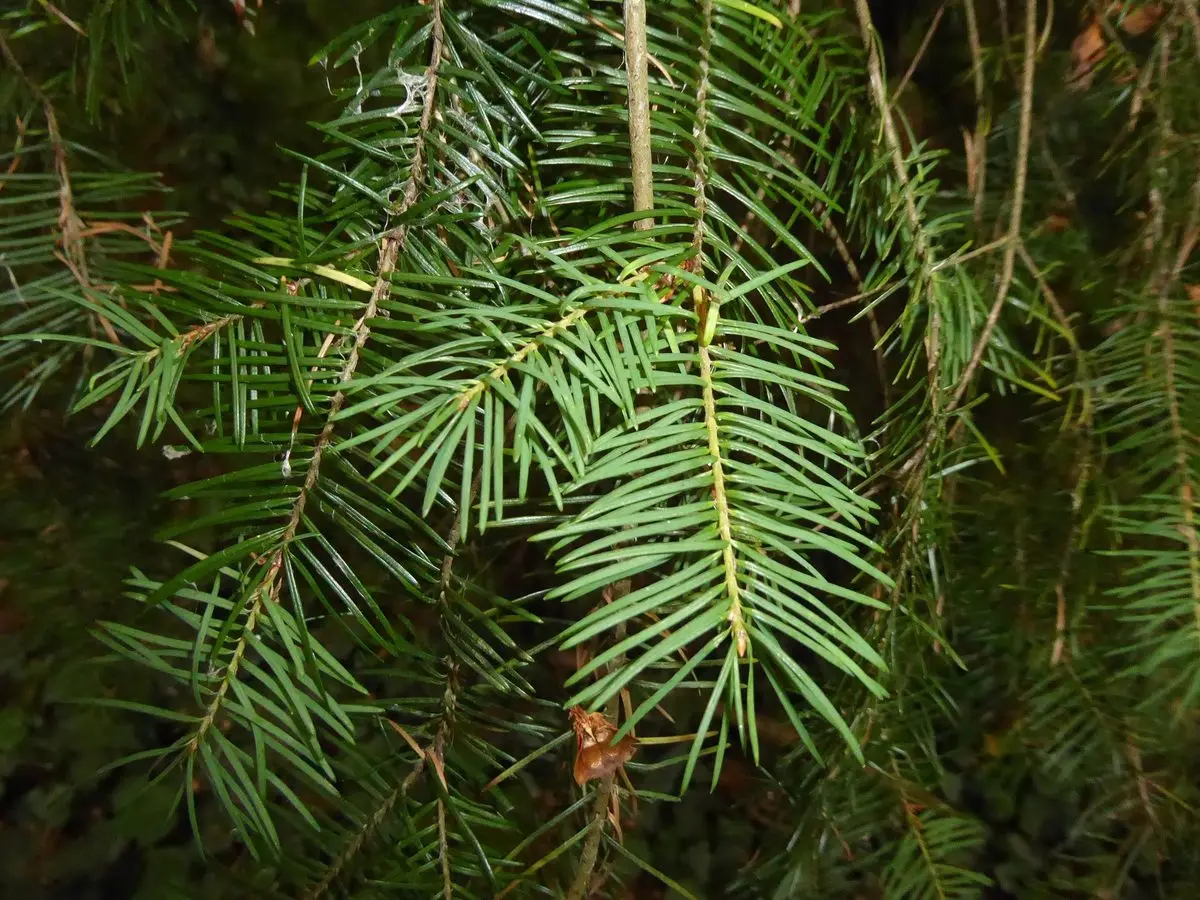
- Western red cedarBoth are conifers of parks and big gardens with tiny scale leaves and soft, stringy, reddish bark. Leaf. Giant redwood: set all the way round a cord-like shoot. Western red cedar: tiny glossy scales in flat sprays.
- Lawson cypressBoth are cypress-family evergreens planted by the thousand in parks and churchyards. Leaf. Giant redwood: set all the way round a cord-like shoot. Lawson cypress: pressed flat in lacy, fern-like sprays.
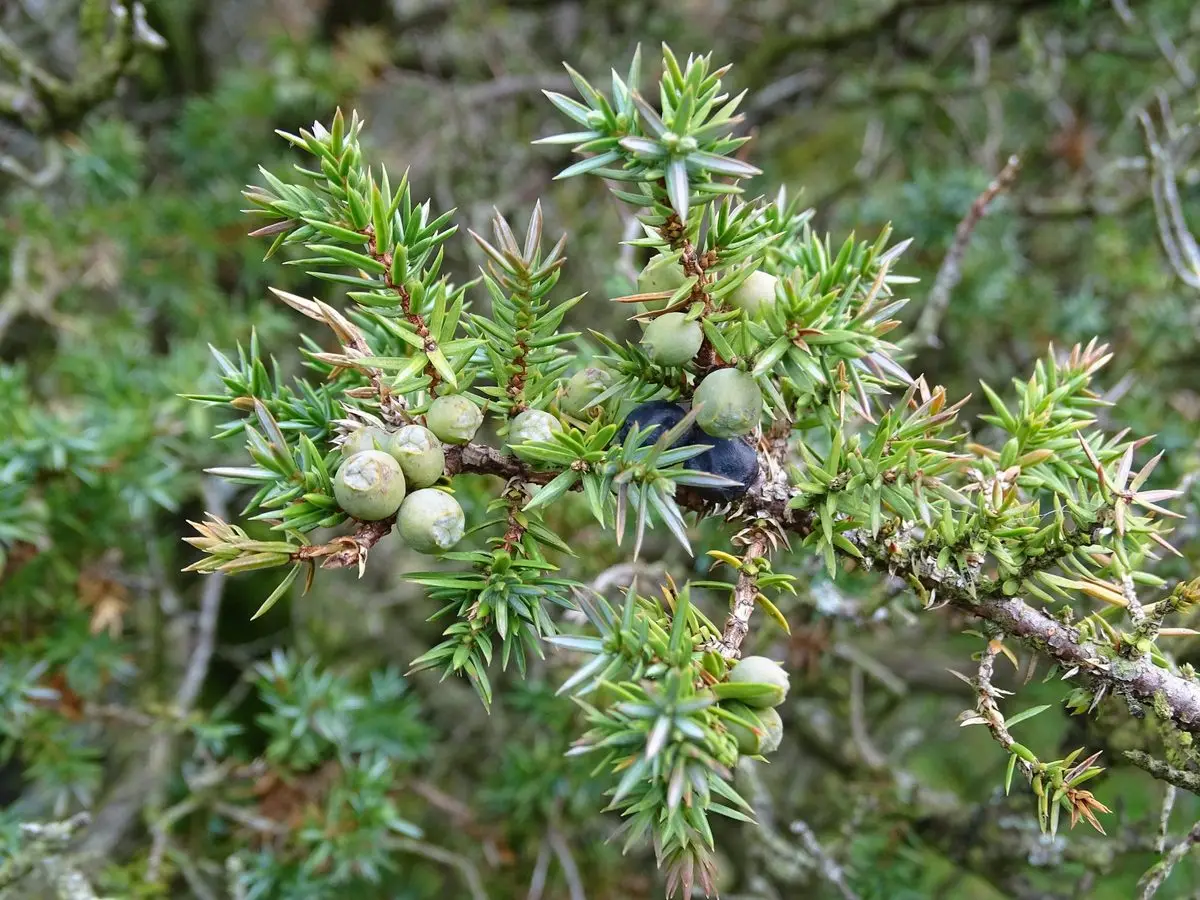
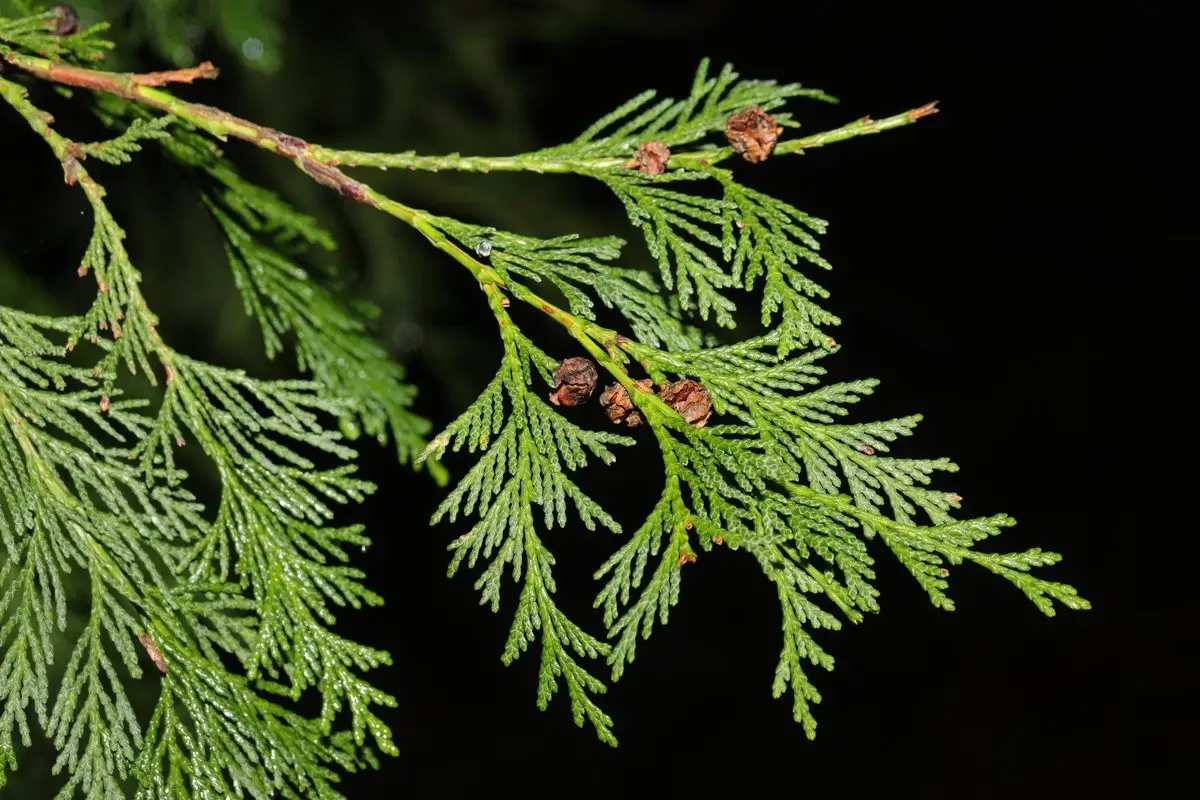
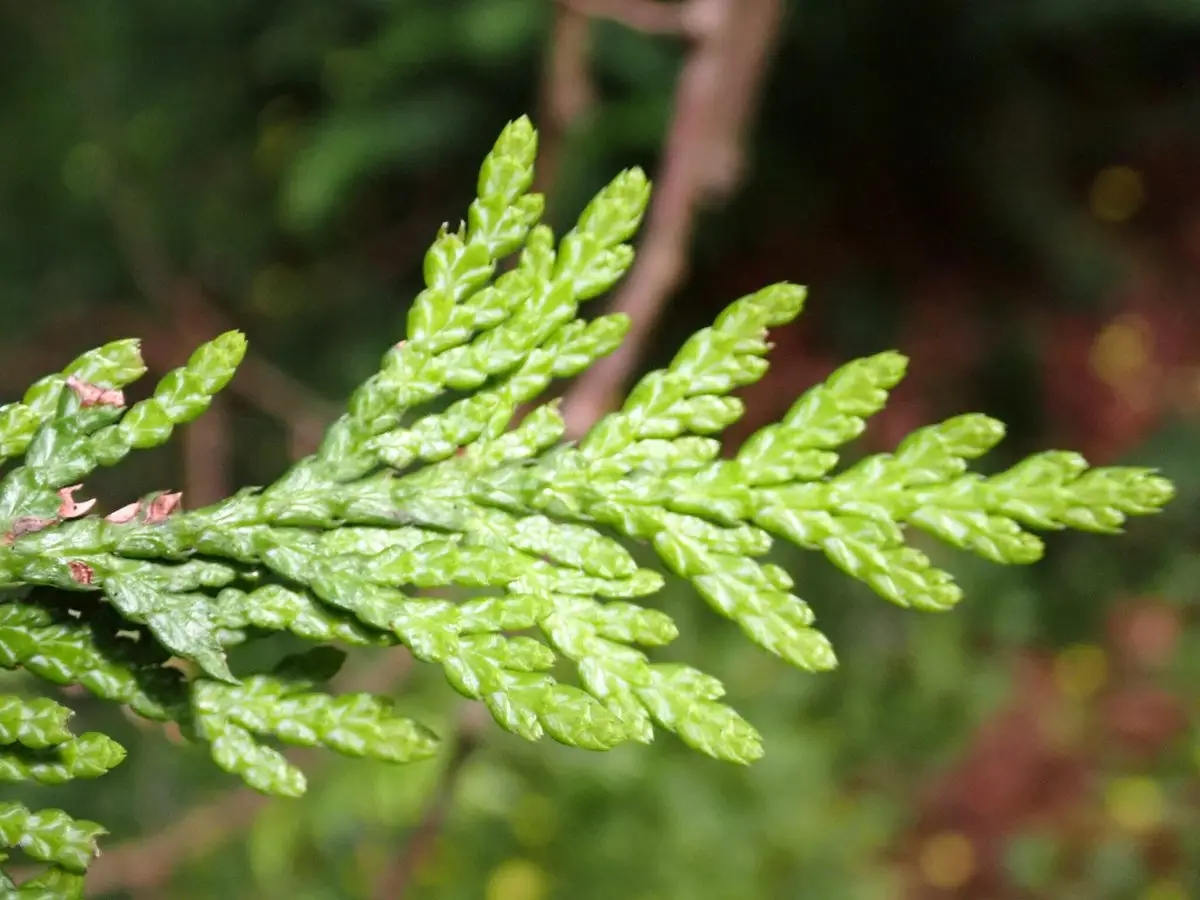
More cypresses, junipers and redwoods
In the app
There’s more of the giant redwood in Treely
- Every part, through the yearLeaves, bark, buds, flowers and fruit, photographed in every season
- Its lookalikes, side by sideThe checks that settle it, part by part
- A short round each dayUntil you know the giant redwood on sight, from any side
- Name it from a photoA leaf, the bark or a flower, and Treely tells you which tree
Free to download.
Every fact on this page is checked against the Collins Tree Guide, last in November 2026. Spotted something that looks wrong in front of a real tree? Tell us. How we check.
Photographs: aparrot1 (CC0), Ben Hayden (CC BY 4.0), Nicole (CC BY 4.0), jamie-aa (CC BY 4.0). With thanks to everyone who shares their photographs on iNaturalist and Wikimedia Commons.