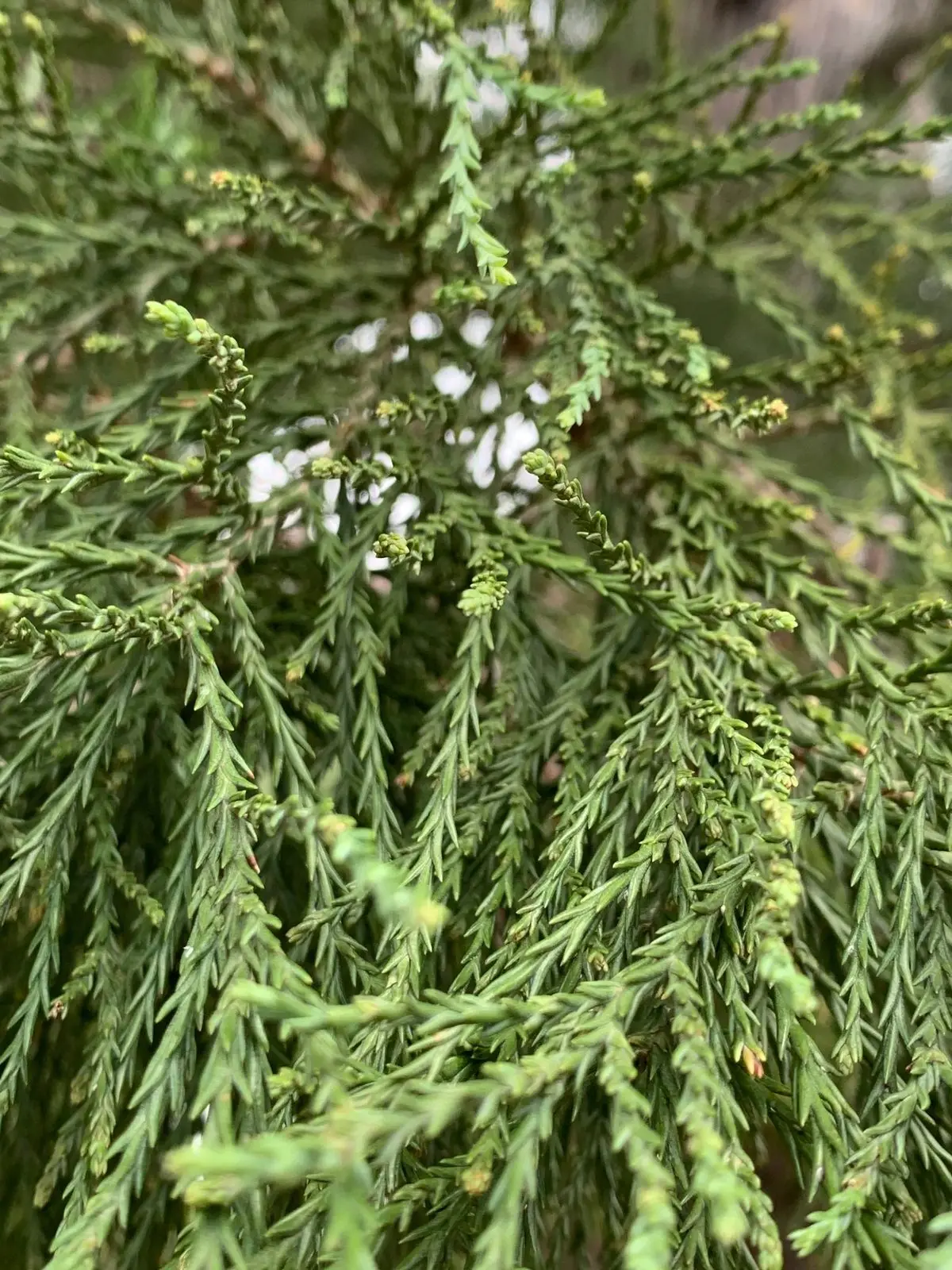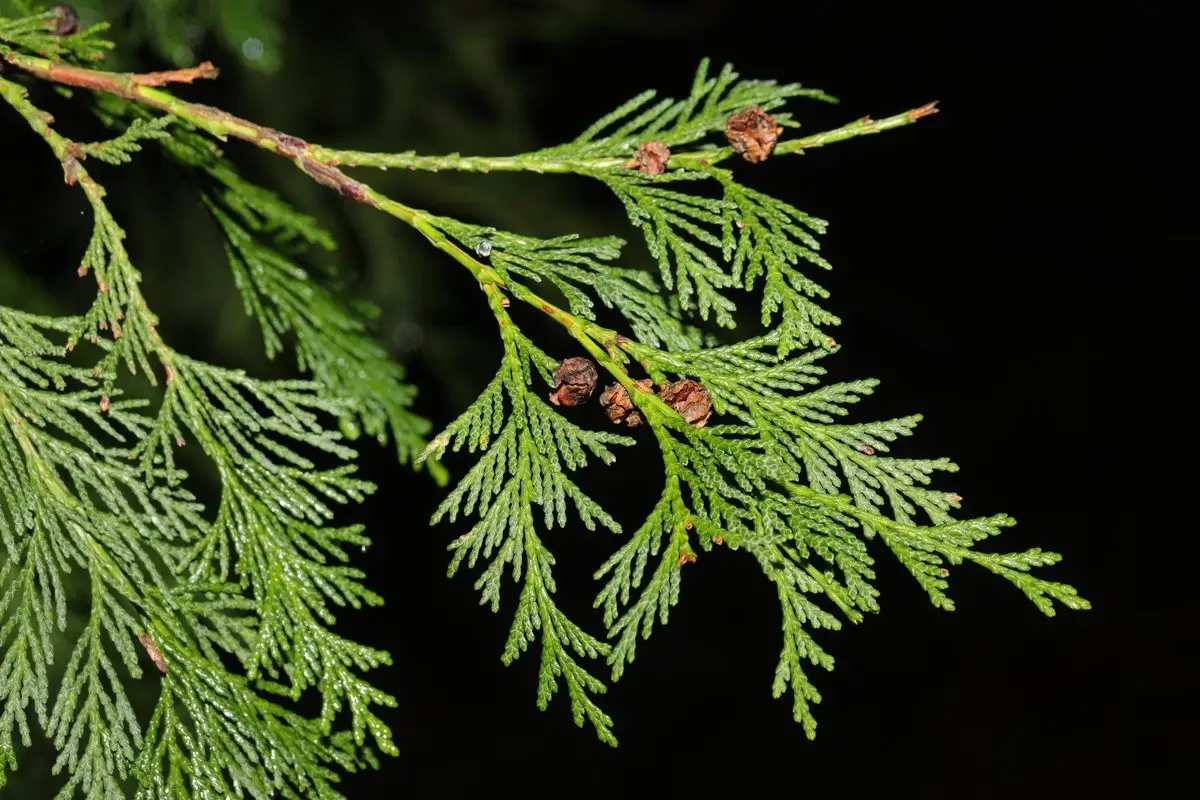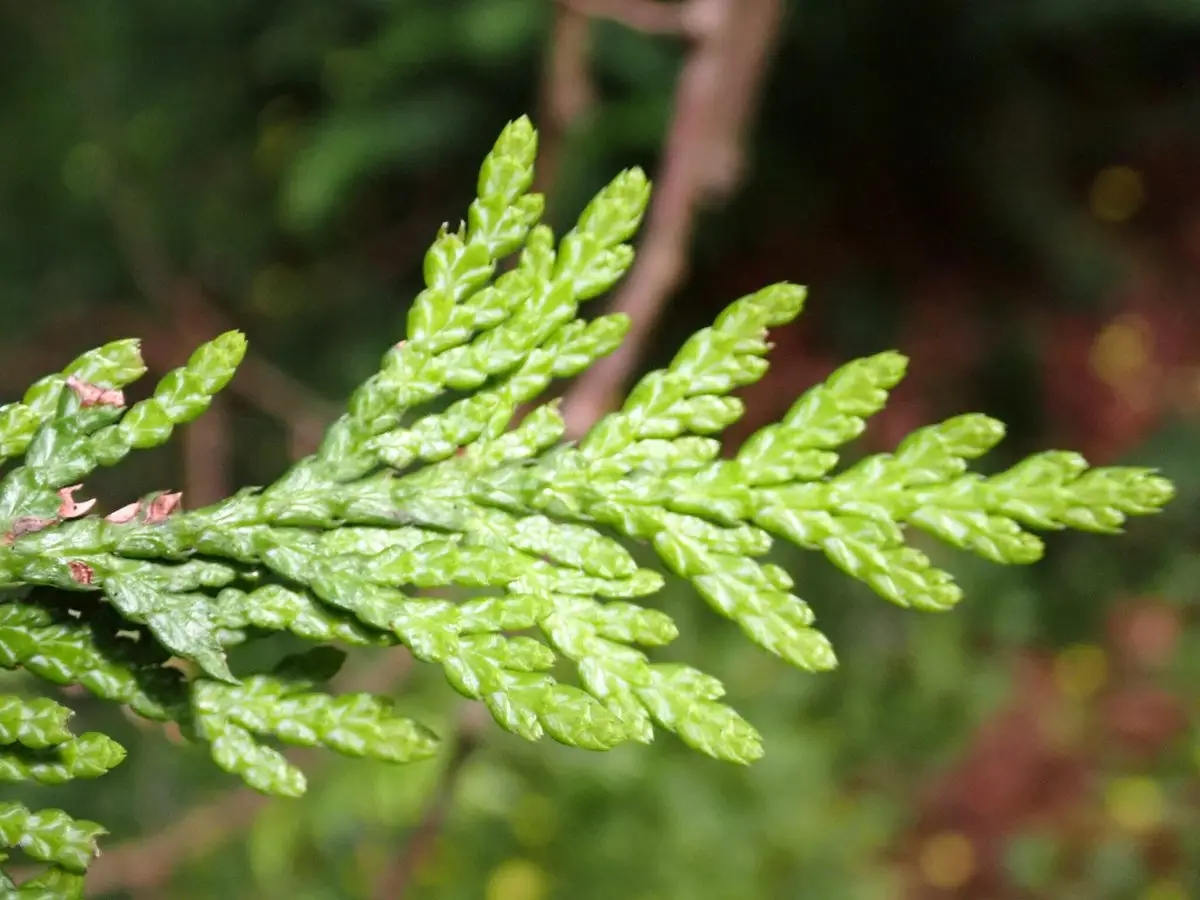
Tiny, glossy and deep olive green, in flat sprays, with dull whitish streaks underneath and a sweet pineapple smell when crushed.
Thuja plicata · Cupressaceae
Western red cedar is a tall conifer shaped like a spire, with its top shoot standing upright. Its flat, glossy sprays of tiny scales smell sweet, like pineapple, when crushed.
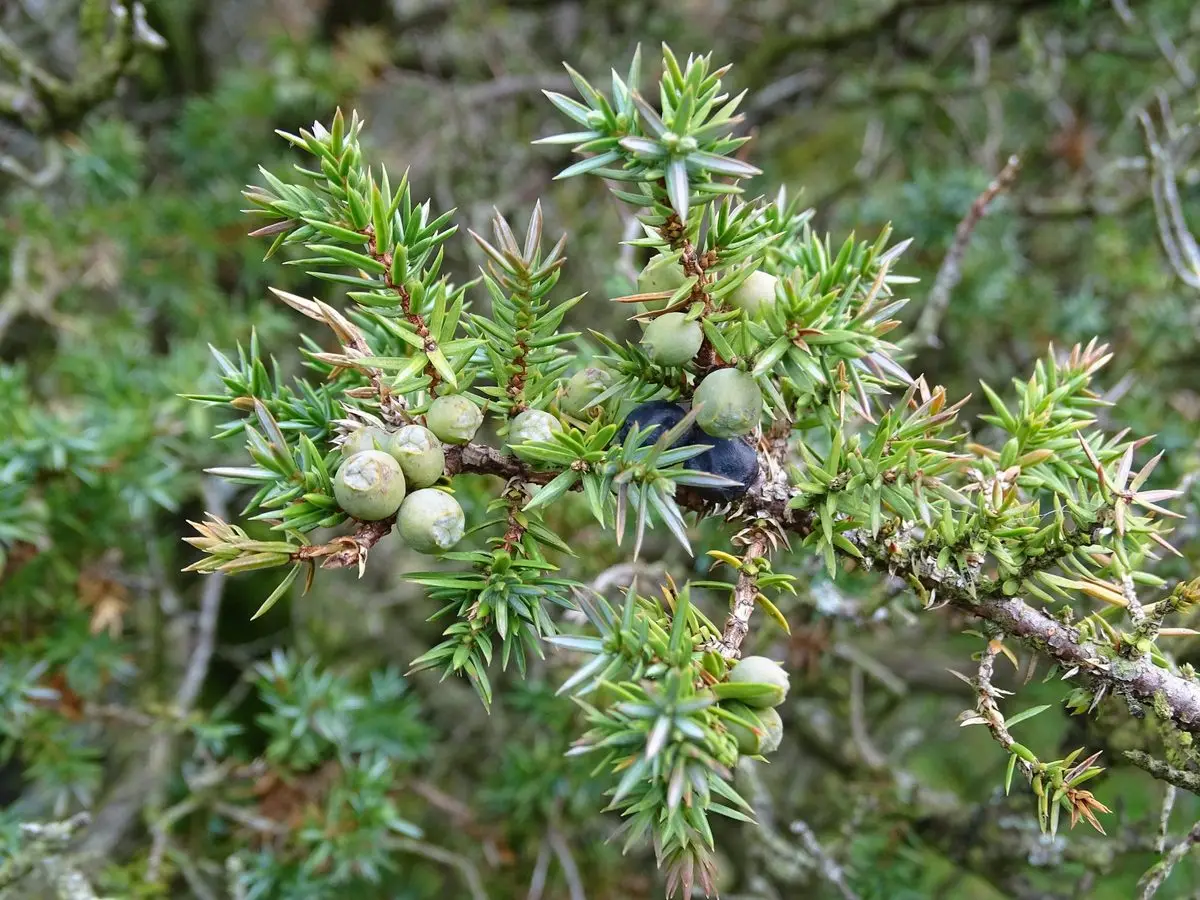
Often mistaken for yew. How to tell them apart →ScalesTiny glossy scales in flat sprays, streaked white beneath.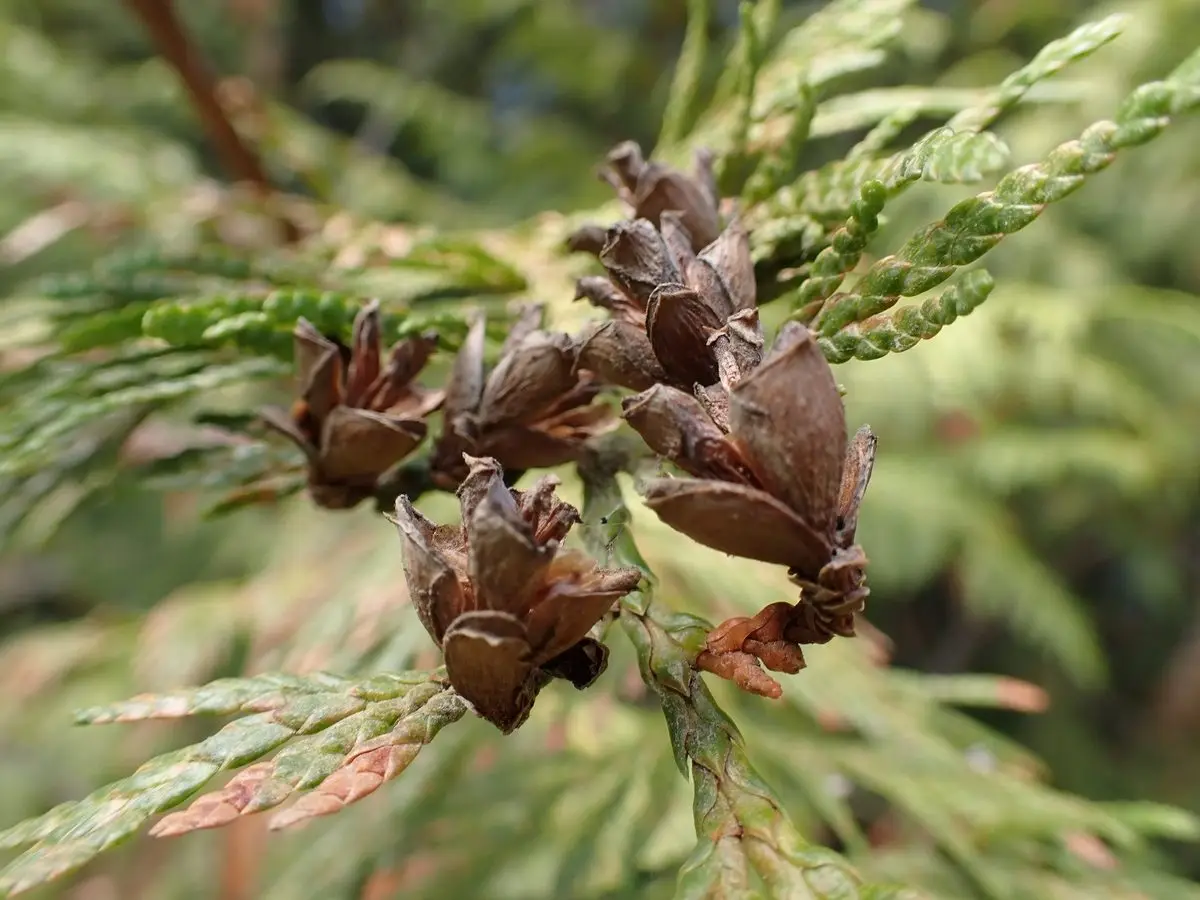 ConesUp to 12 mm, above the branch, with 8 to 10 thin scales.
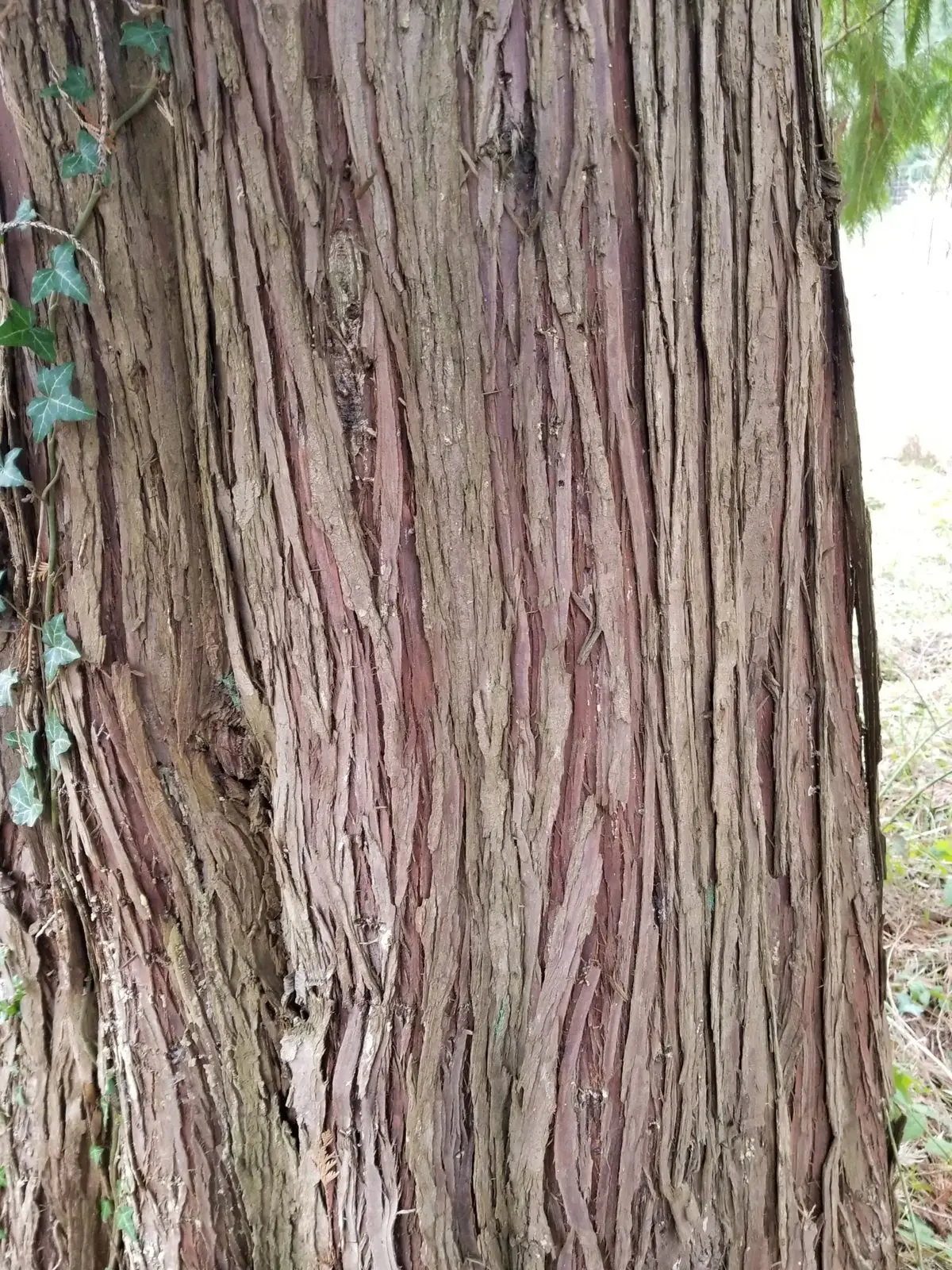 BarkLong upright ridges, grey where the sun reaches them.
Then check · ShapeA tall spire with an upright top shoot. Its branches curve up at their ends, and the sprays hang from them.
Tiny, glossy and deep olive green, in flat sprays, with dull whitish streaks underneath and a sweet pineapple smell when crushed.
Small, egg-shaped and upright, up to 12 mm long, standing in clusters above the branch, with 8 to 10 thin scales.
Dark reddish brown, soft and stringy, in long upright ridges that turn grey where the sun reaches them.
 Learn the western red cedar in TreelyEvery part through the year, and a short round each day until you know it.Get Treely
Chris Fluit, CC BY 4.0
In leaf: all year · Flowers: December to April · Cones: June to February
Planted in gardens, often as a hedge, and for timber. It does best in wet places with more than 800 mm of rain a year, and is scarcer in dry or polluted parts. It copes with deep shade.
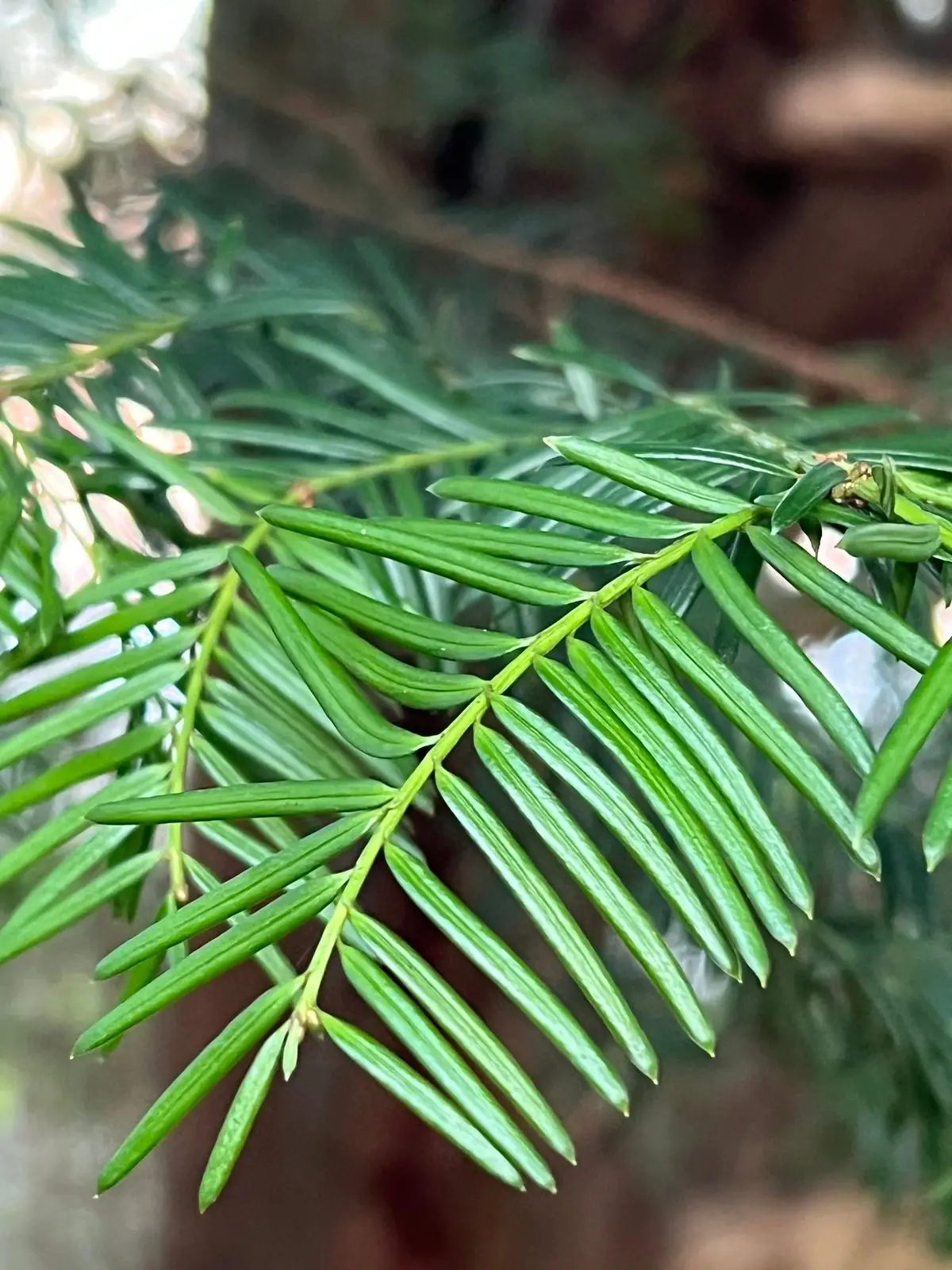 Western red cedar or yew?Both are dark evergreens clipped into hedges and screens.Leaves on a shoot→
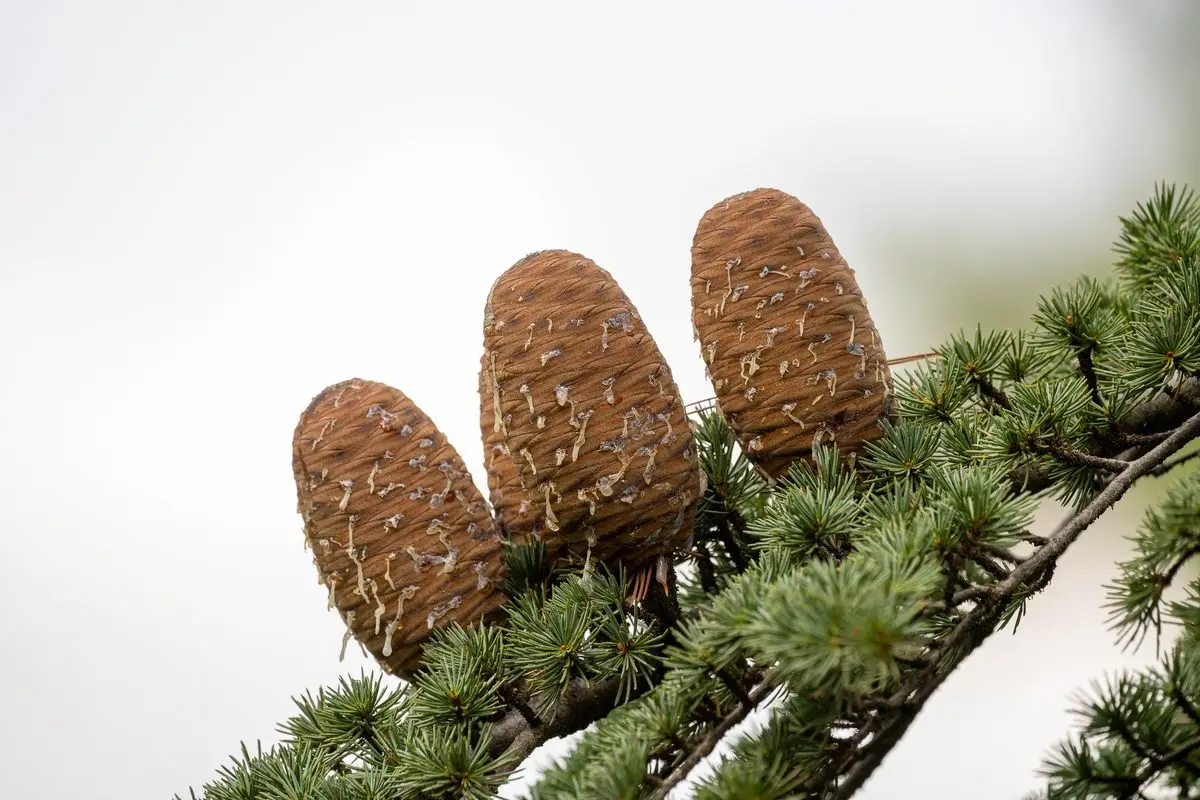 Western red cedar or cedar of Lebanon?The name puts the two together, and both are large dark evergreens of parks and big gardens.Size of a cone→
Free to download.
Every fact on this page is checked against the Collins Tree Guide, last in November 2026. Spotted something that looks wrong in front of a real tree? Tell us. How we check.
Photographs: quillipede (CC0), Chris Fluit (CC BY 4.0), haida_gwaii (CC0), Ewan Shilland (CC BY 4.0), Шальнов Кирилл (CC BY 4.0). With thanks to everyone who shares their photographs on iNaturalist and Wikimedia Commons.