False acacia
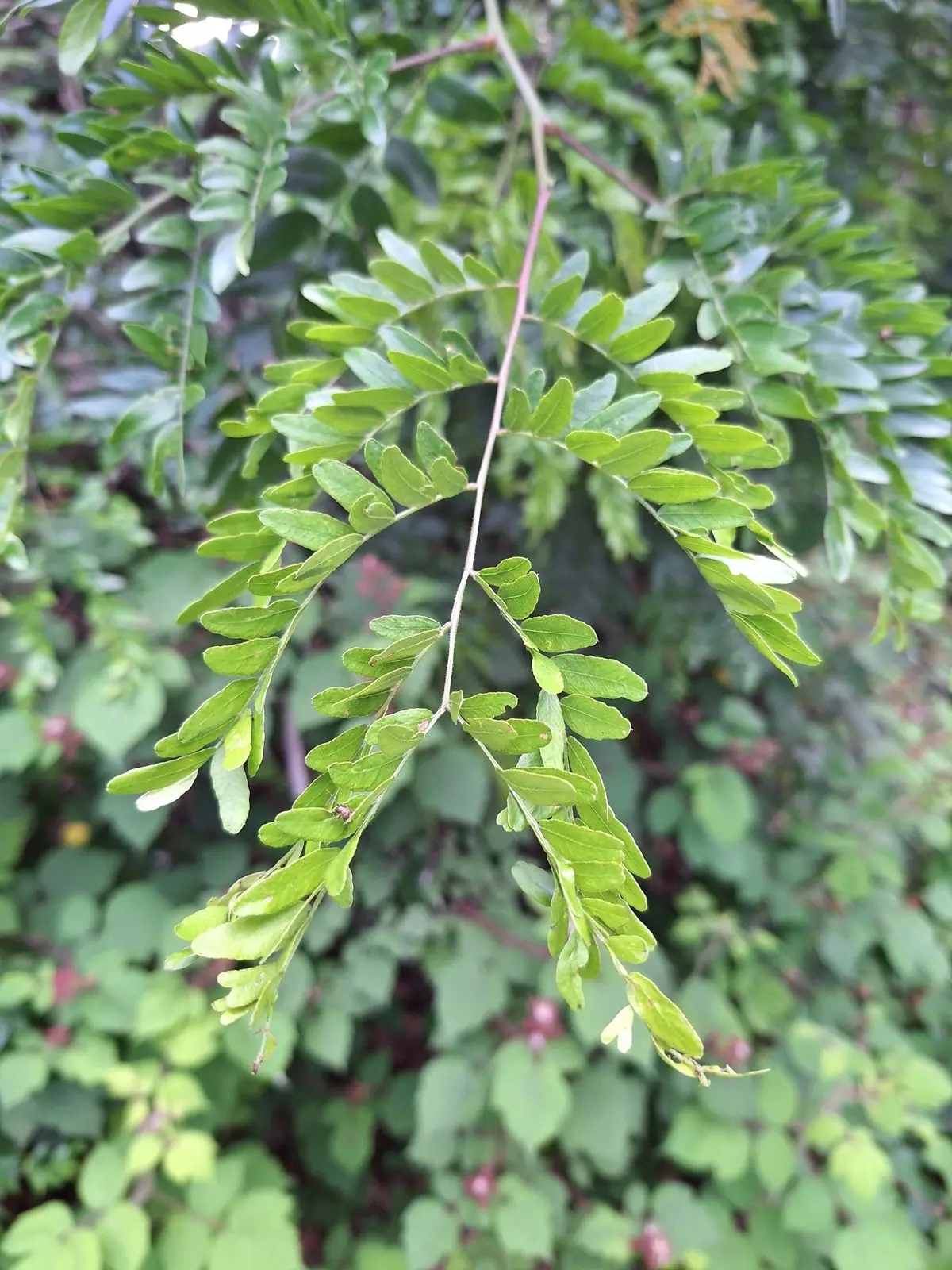
Robinia pseudoacaciaFalse acacia is an open tree with twisting branches. Its long leaves carry many small oval leaflets, and its bark is deeply furrowed. Scented white pea flowers hang in clusters in June.
 cigazze, CC BY 4.0
Both are pea-family trees with feathered leaves, and both can carry thorns.
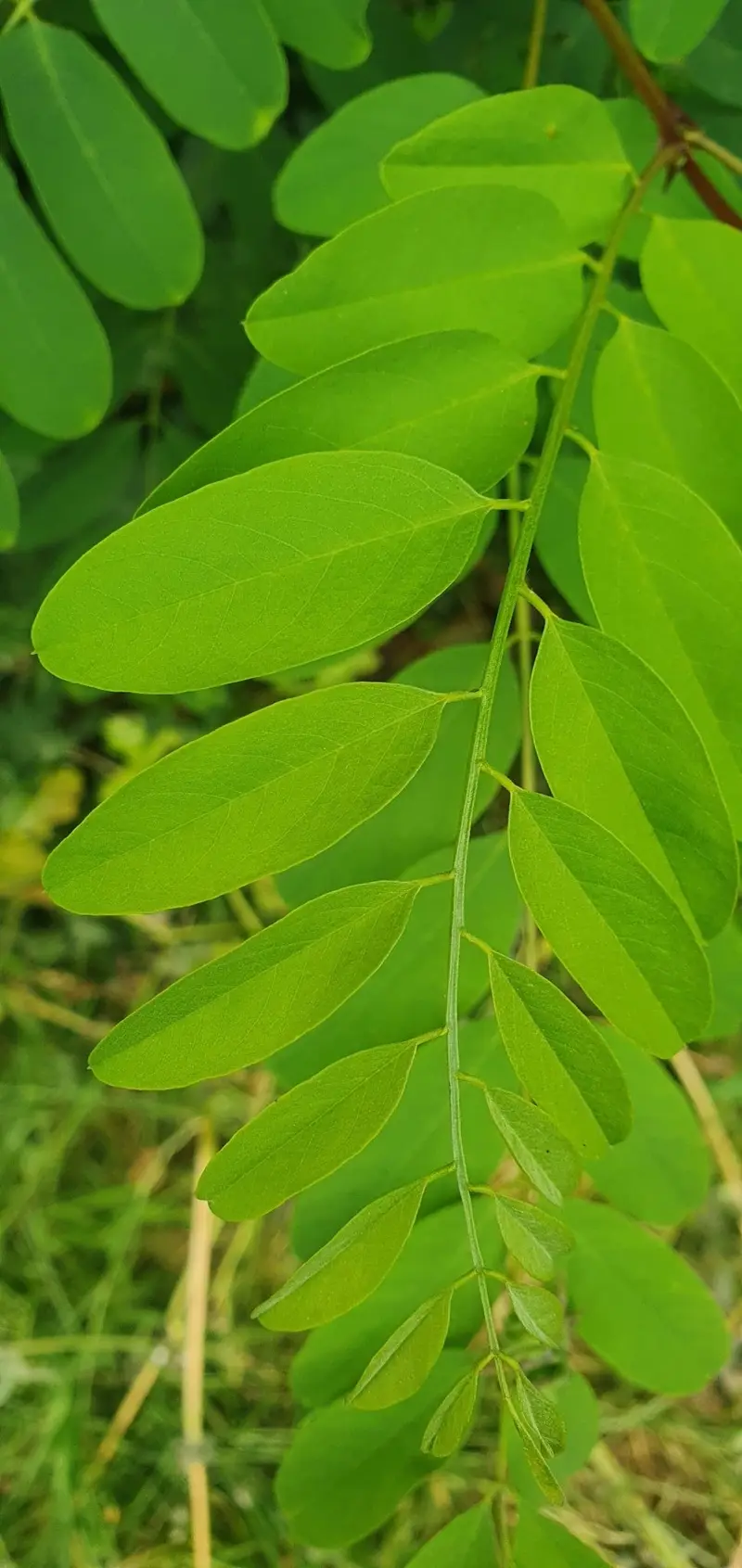
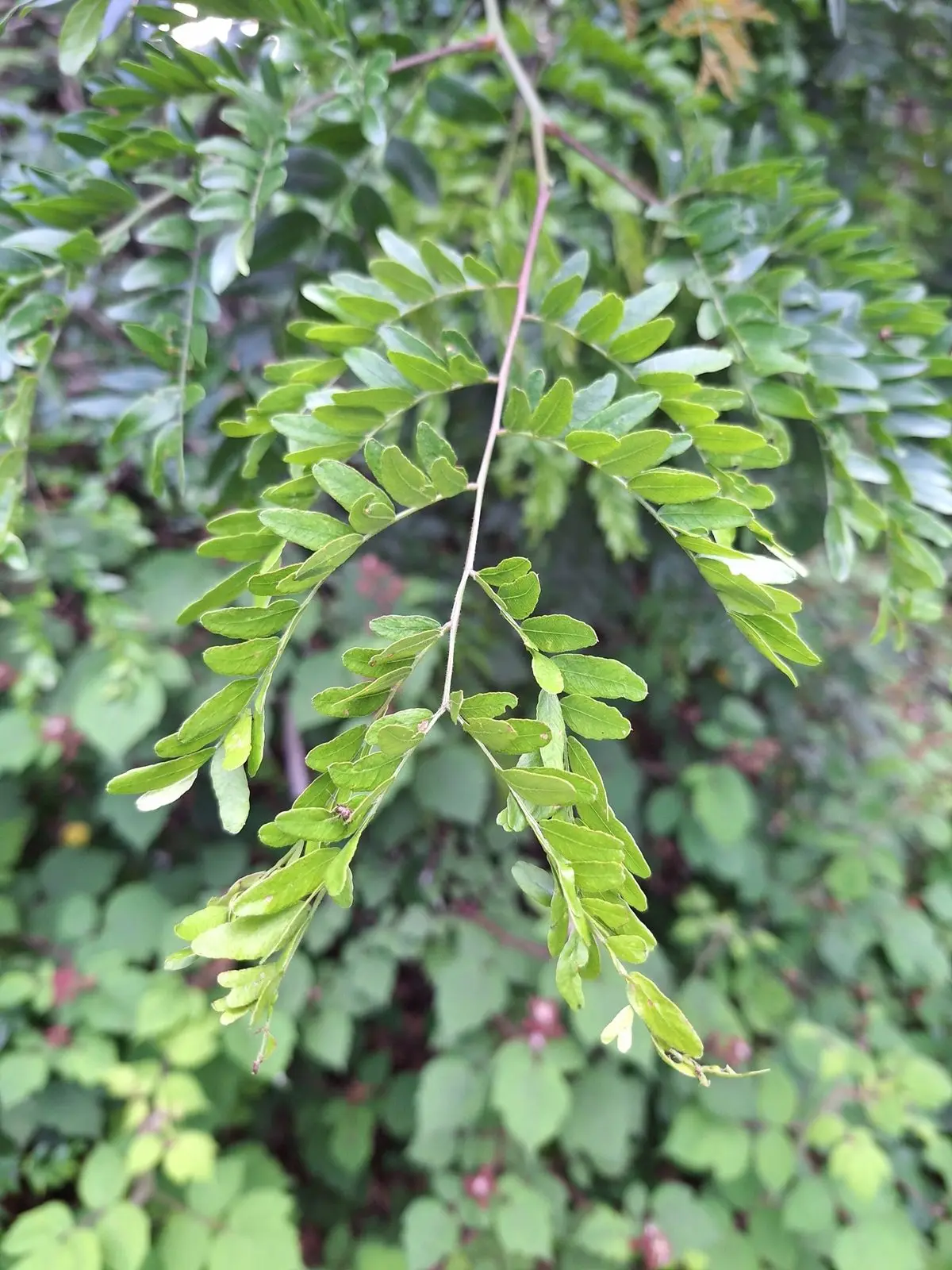
The quickest check is the leaf stalk. False acacia: one stalk, 9 to 23 leaflets in pairs. Honey locust: often branched, each branch with its own pairs. No leaves on the tree? Check the flowers in june.
| Look at | False acacia | Honey locust |
|---|---|---|
| Leaf stalk | One stalk, 9 to 23 leaflets in pairs | Often branched, each branch with its own pairs |
| Flowers in June | White pea flowers about 2.5 cm, in hanging sprays | Tiny greenish white flowers in thin tails |
| Trunk | Greyish brown, deep cracks crossing into diamonds | Purplish grey, in wide raised ridges |
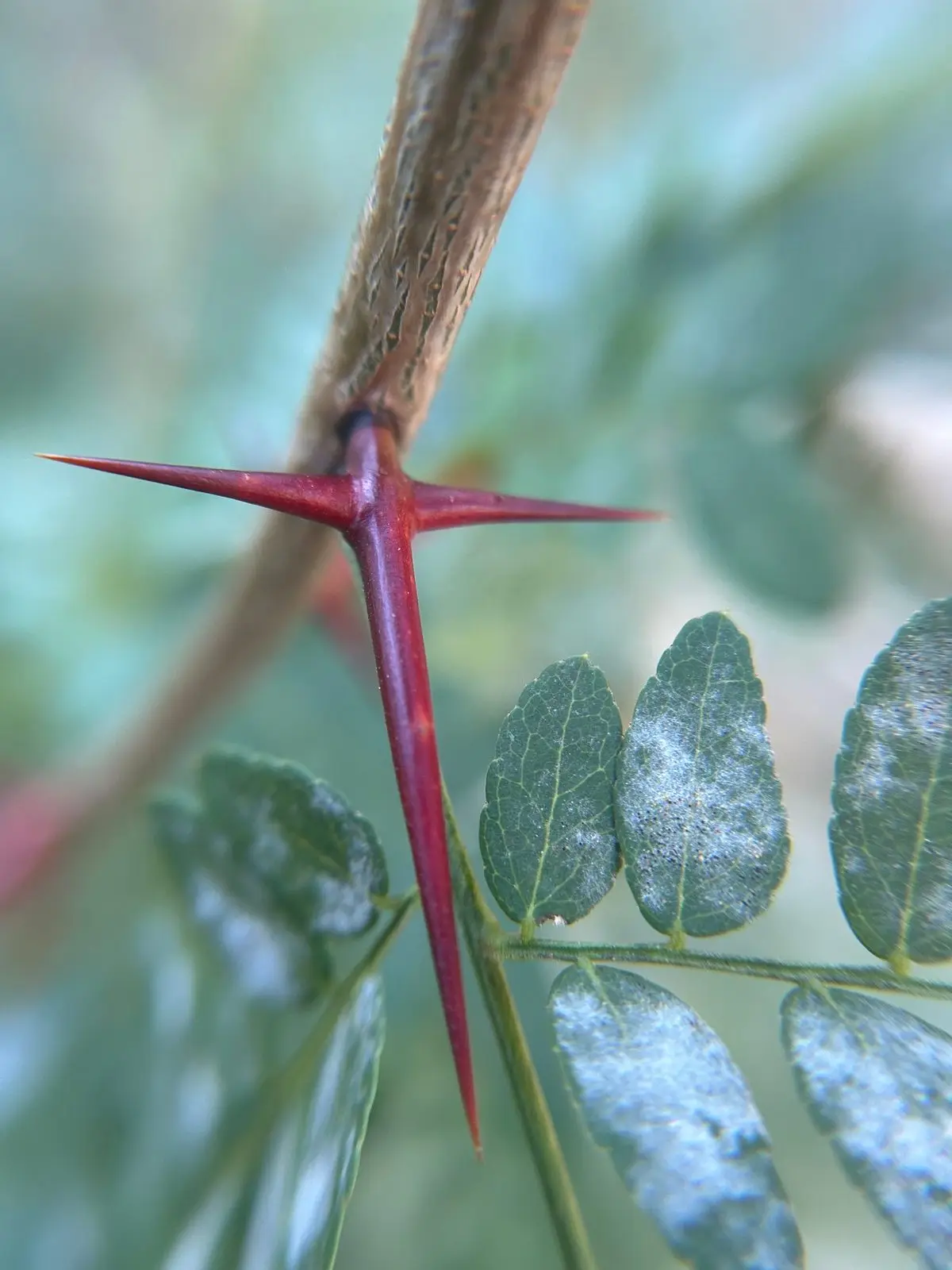
| Spines beside a bud | Two at each leaf base, one either side | Three beside each bud |
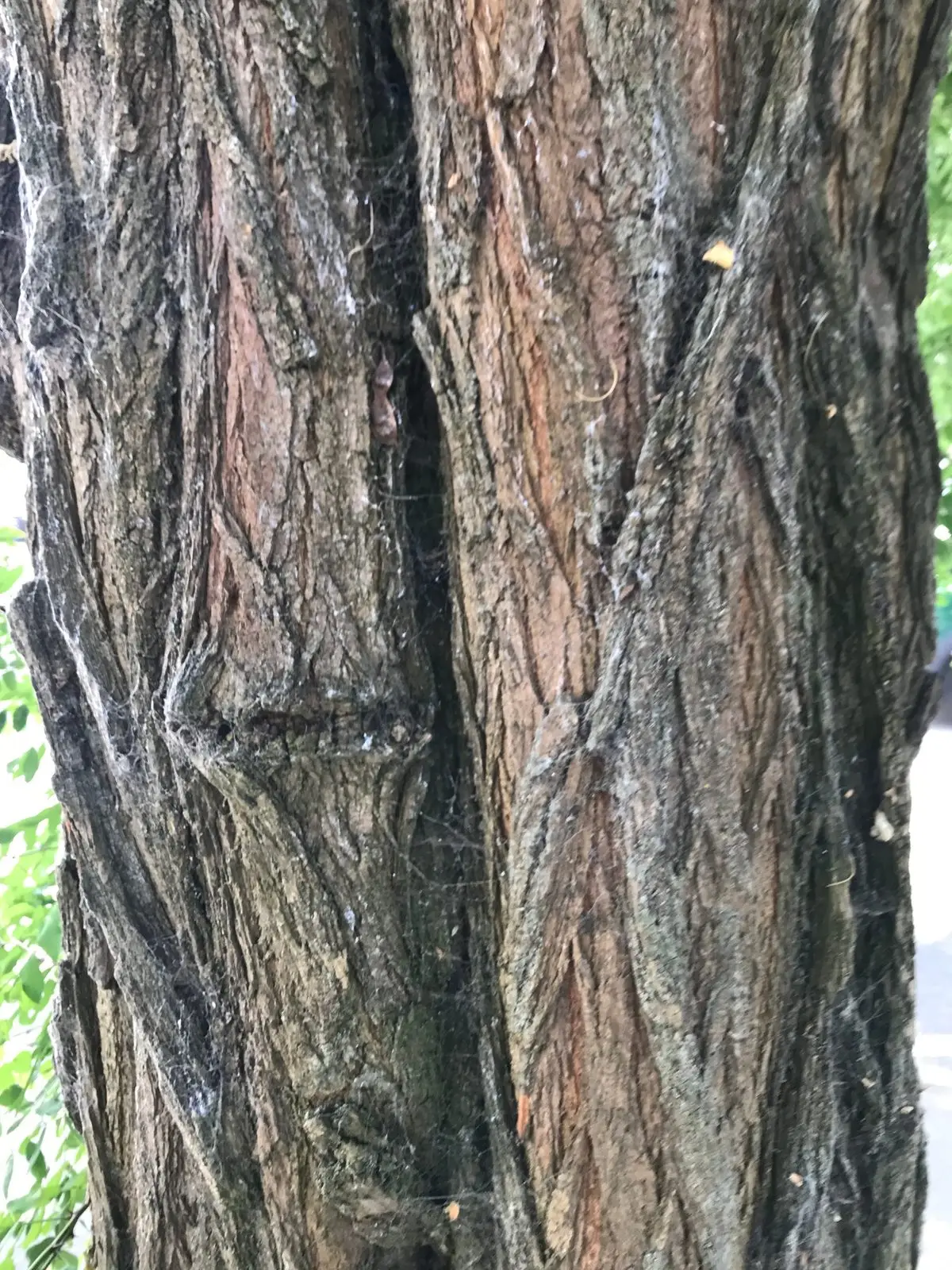
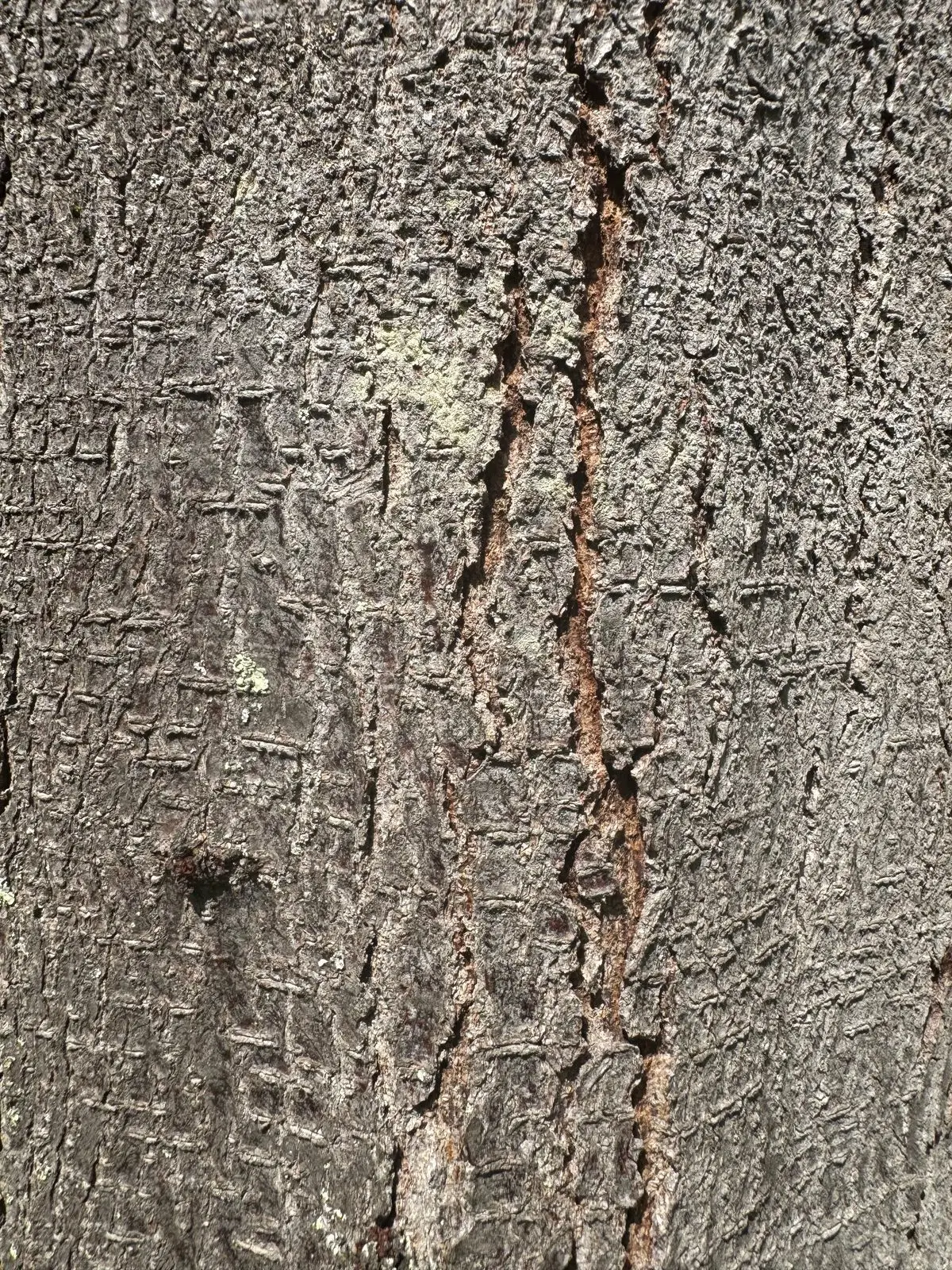
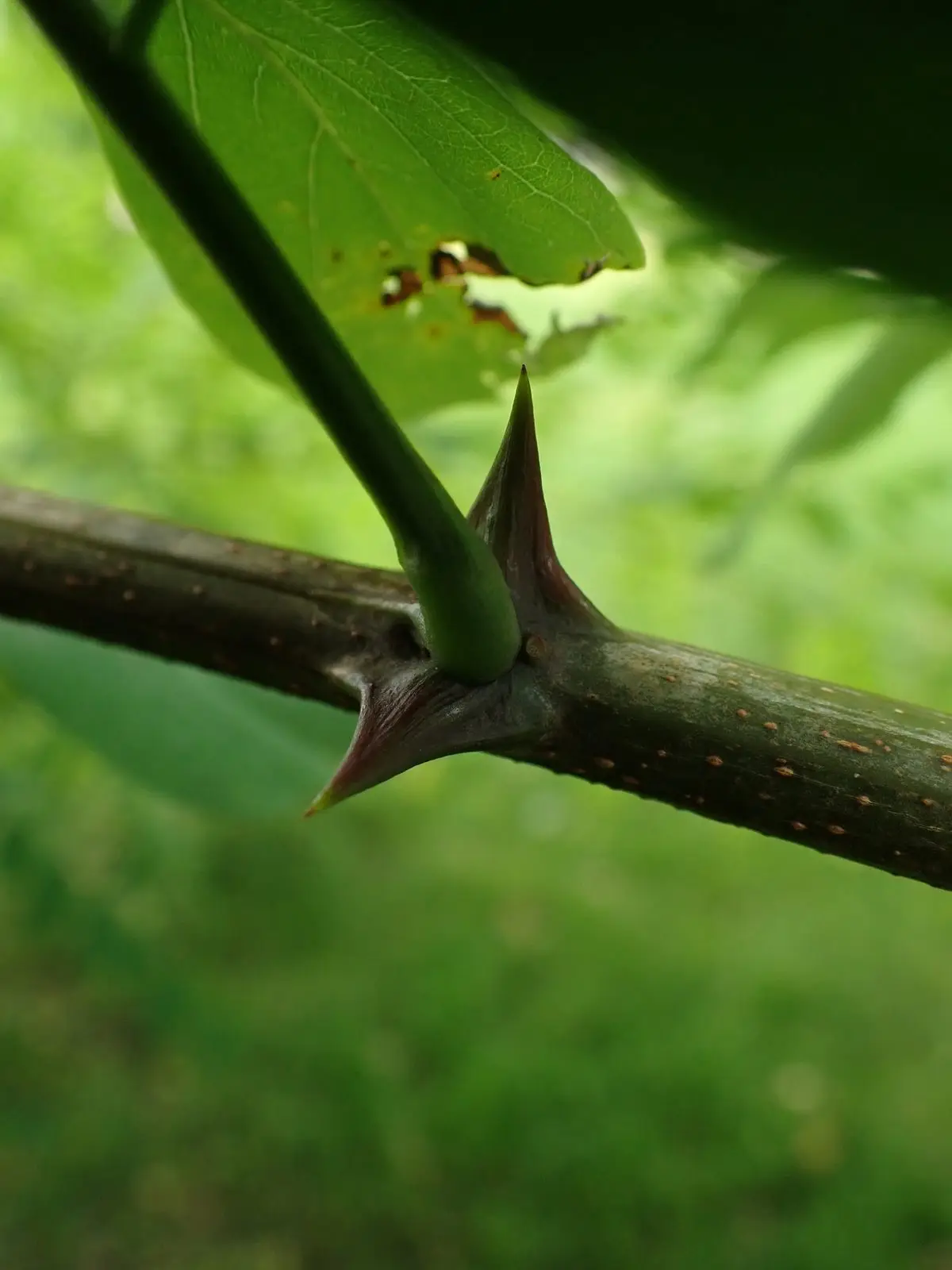
False acacia is an open tree with twisting branches. Its long leaves carry many small oval leaflets, and its bark is deeply furrowed. Scented white pea flowers hang in clusters in June.
Honey locust is a slender, open tree with feathery leaves of many small leaflets, often bright yellow when young. Most planted in Britain are thornless. The ordinary thorny kind, rare in Britain, carries clumps of long spines on its trunk.
How to identify honey locust →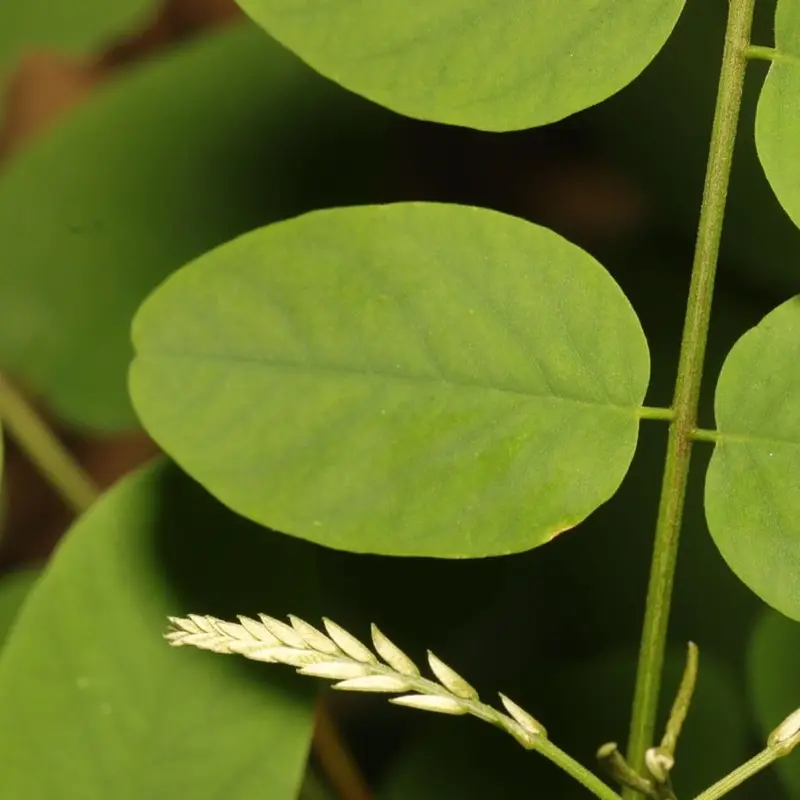
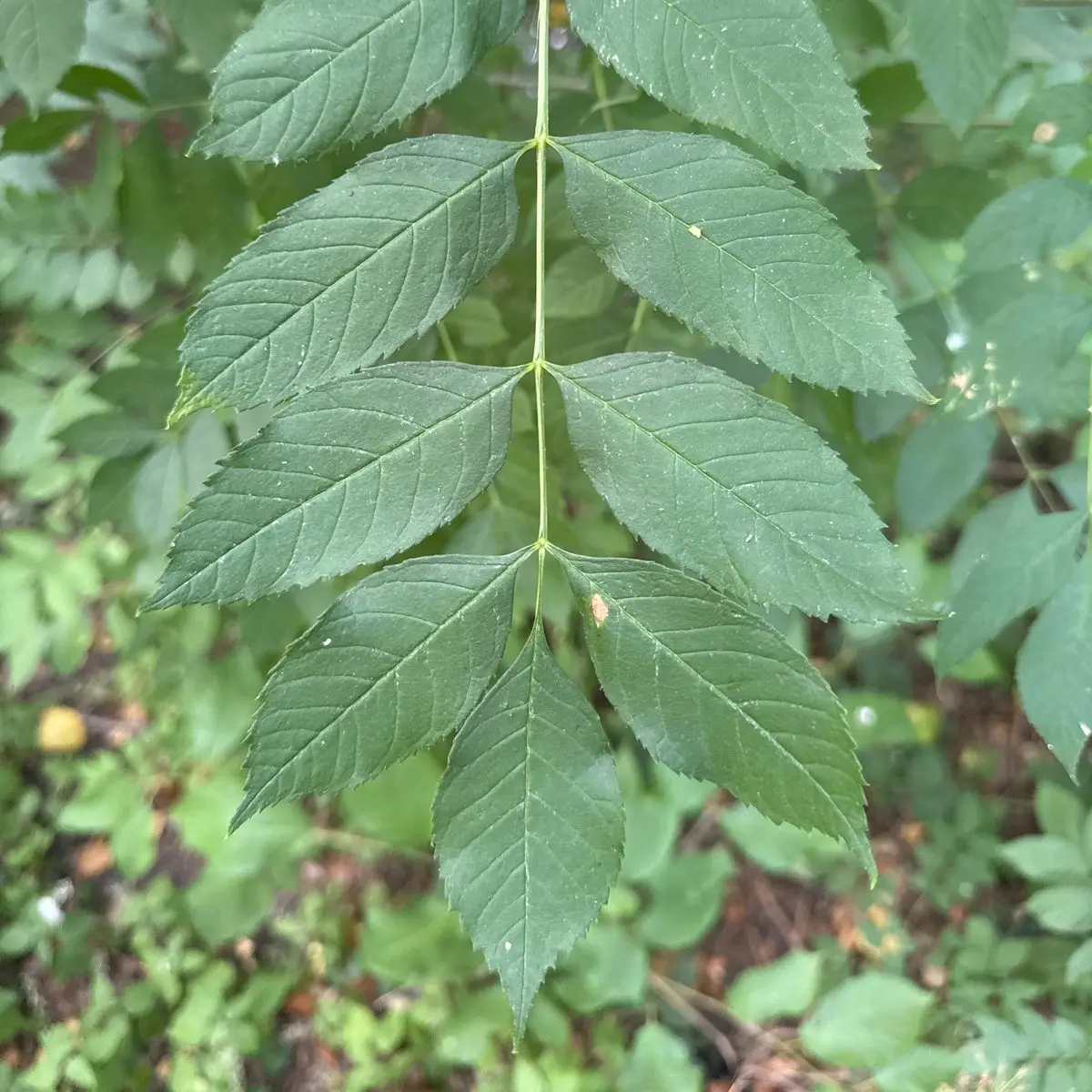 False acacia or common ash?Quickest check: the edge of a leaflet→
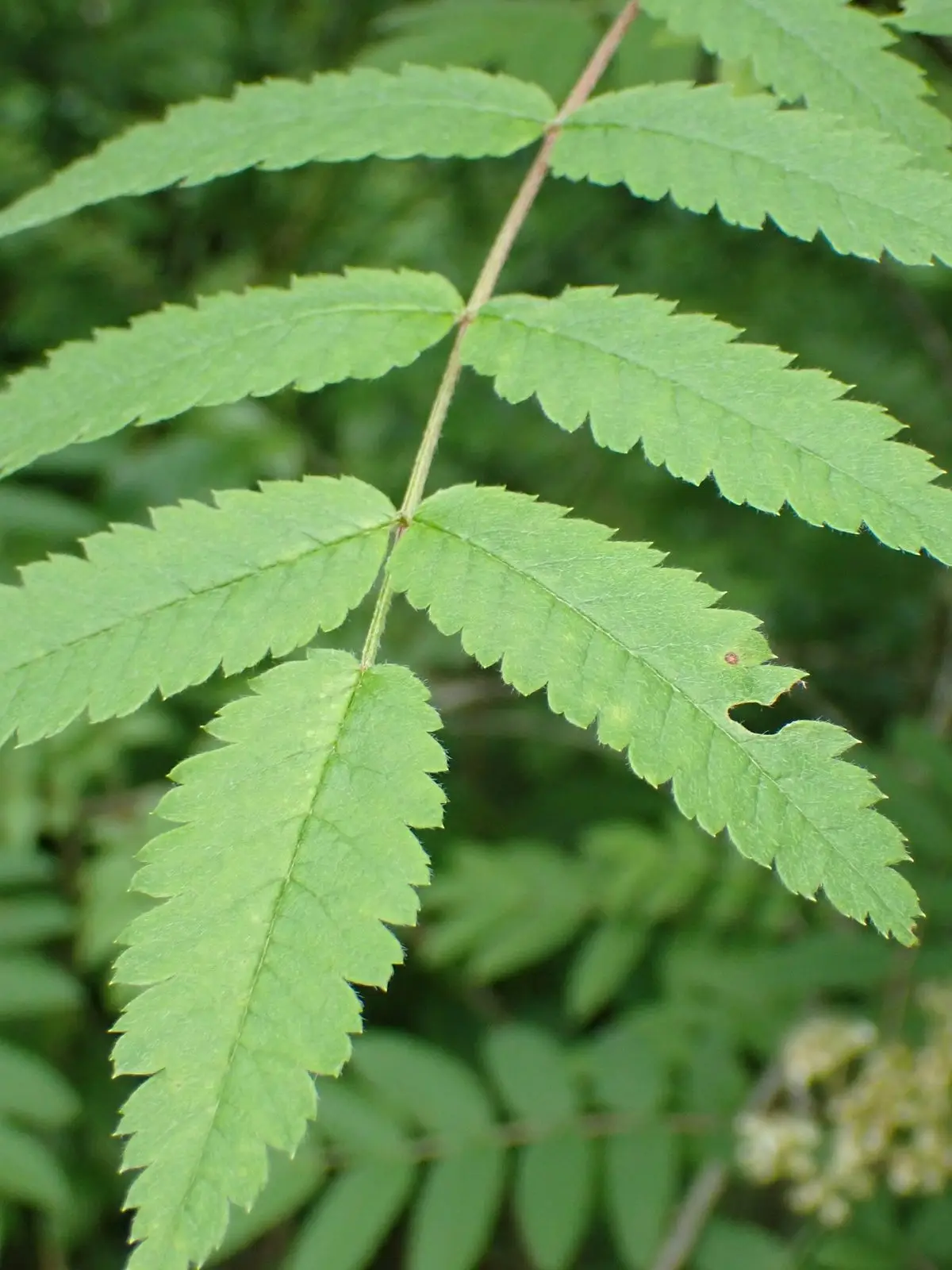 False acacia or rowan?Quickest check: the leaflet edge→
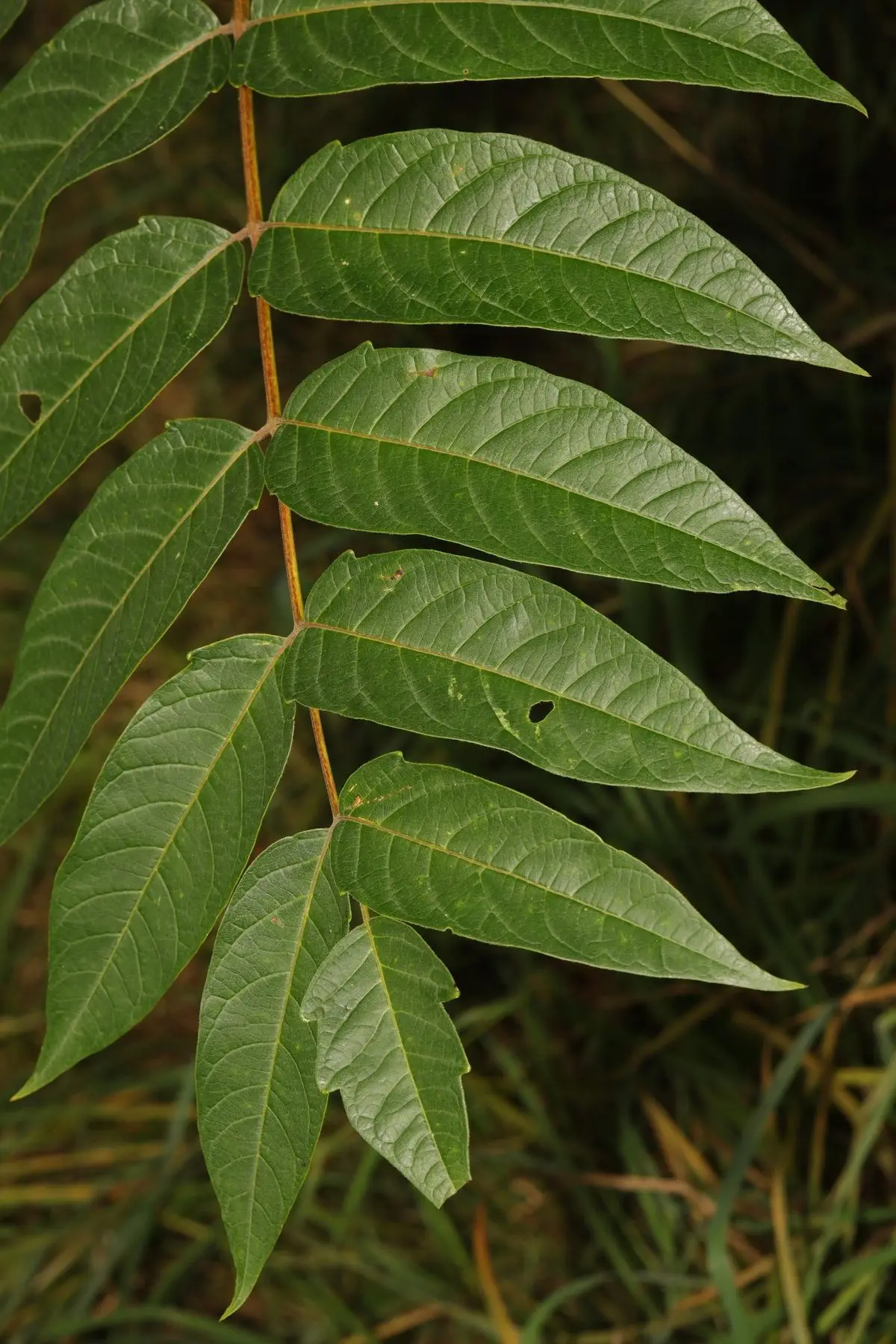 False acacia or tree of heaven?Quickest check: the base of a leaflet→
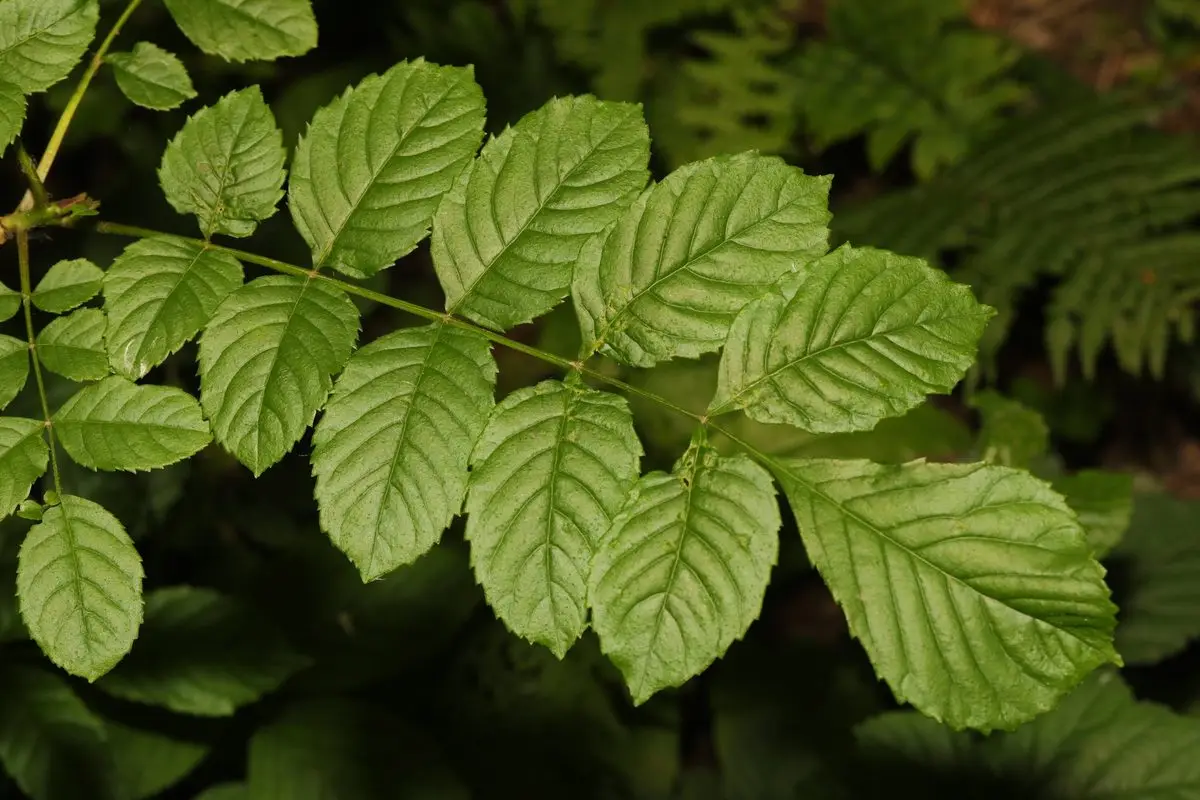 Honey locust or common ash?Quickest check: the leaflets→
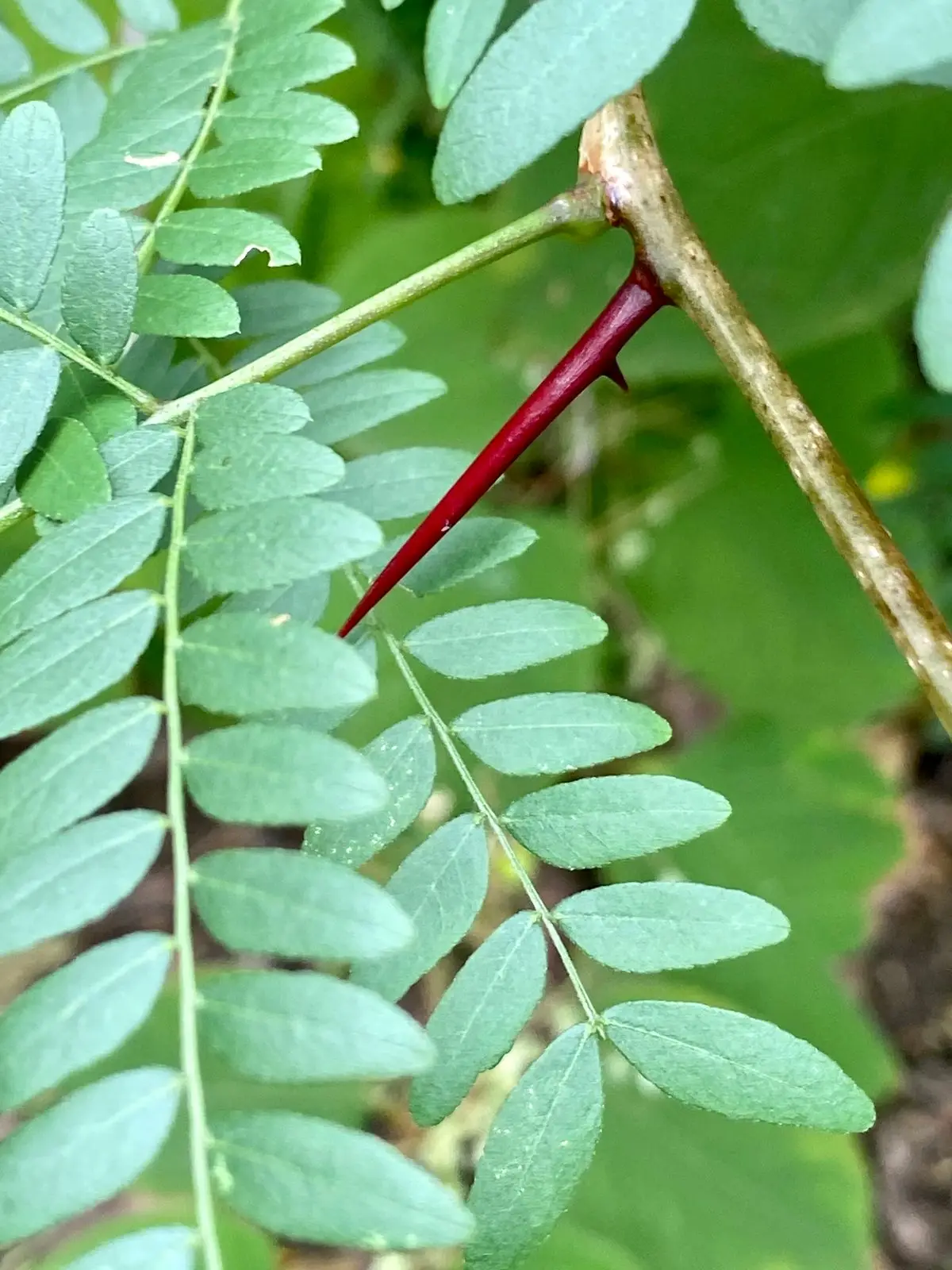 Honey locust or rowan?Quickest check: the leaflet edge→
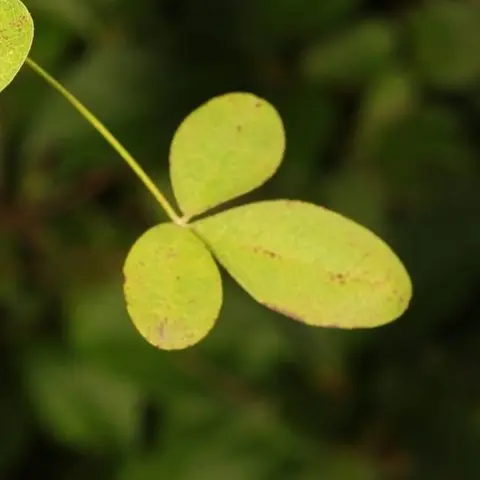 Honey locust or laburnum?Quickest check: the leaflets on one leaf→
Free to download.
Every fact on this page is checked against the Collins Tree Guide, last in November 2026. Spotted something that looks wrong in front of a real tree? Tell us. How we check.
Photographs: bmapp02 (CC0), cigazze (CC BY 4.0), loverseed (CC0), Leon Cross (CC BY 4.0), bobwardell (CC0), sblumen (CC BY 4.0). With thanks to everyone who shares their photographs on iNaturalist and Wikimedia Commons.