Up to 20 cm, with many small leaflets in pairs. On strong shoots the stalk branches, each branch with its own pairs.
Introduced · Up to 27 m
Honey locust
Gleditsia triacanthos · Fabaceae
Honey locust is a slender, open tree with feathery leaves of many small leaflets, often bright yellow when young. Most planted in Britain are thornless. The ordinary thorny kind, rare in Britain, carries clumps of long spines on its trunk.
Often mistaken for false acacia. How to tell them apart →Know it by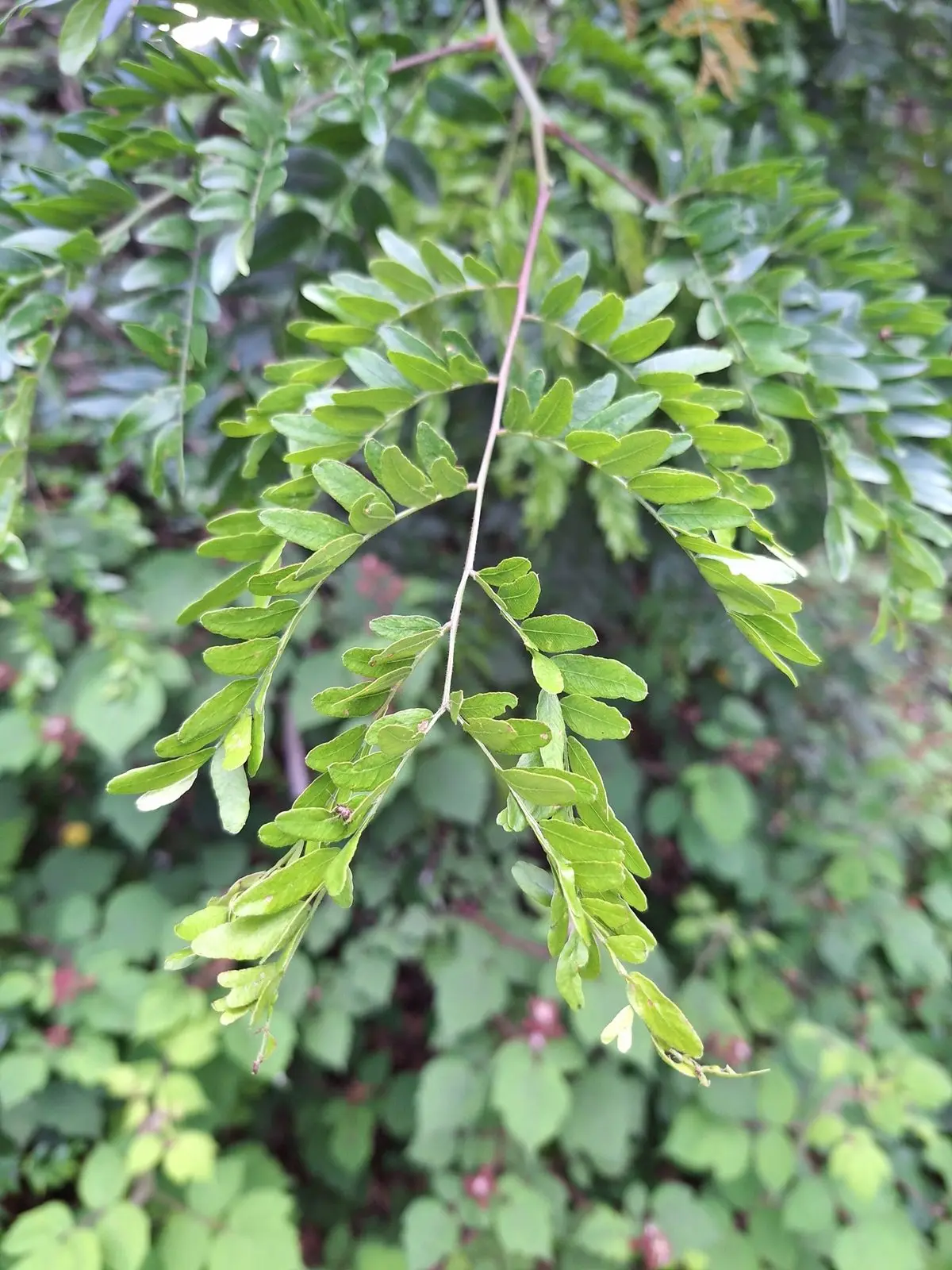 LeavesUp to 20 cm. On strong shoots the stalk branches into more pairs.
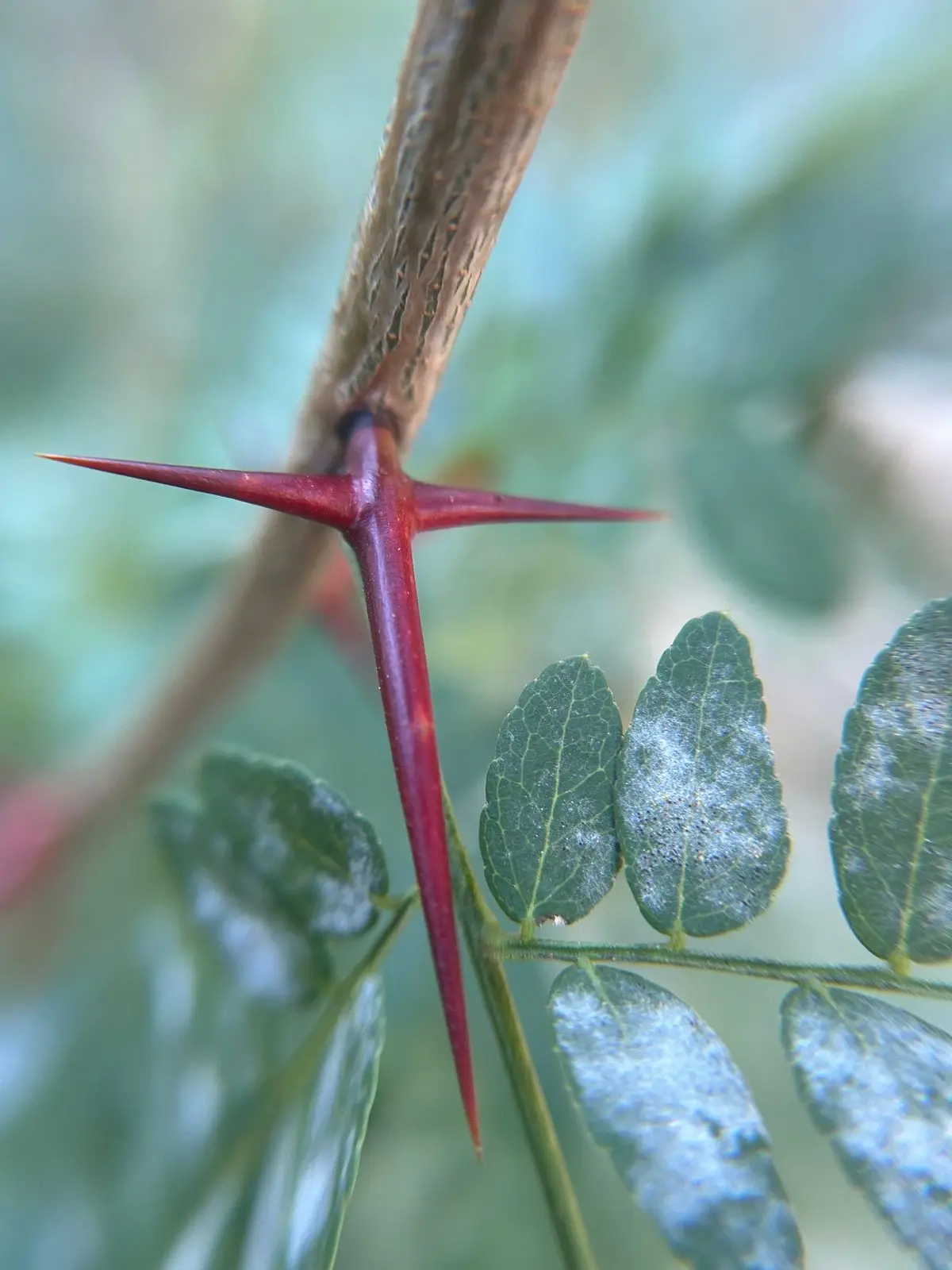 TwigsOn curling shoots, with three spines by each on thorny trees.
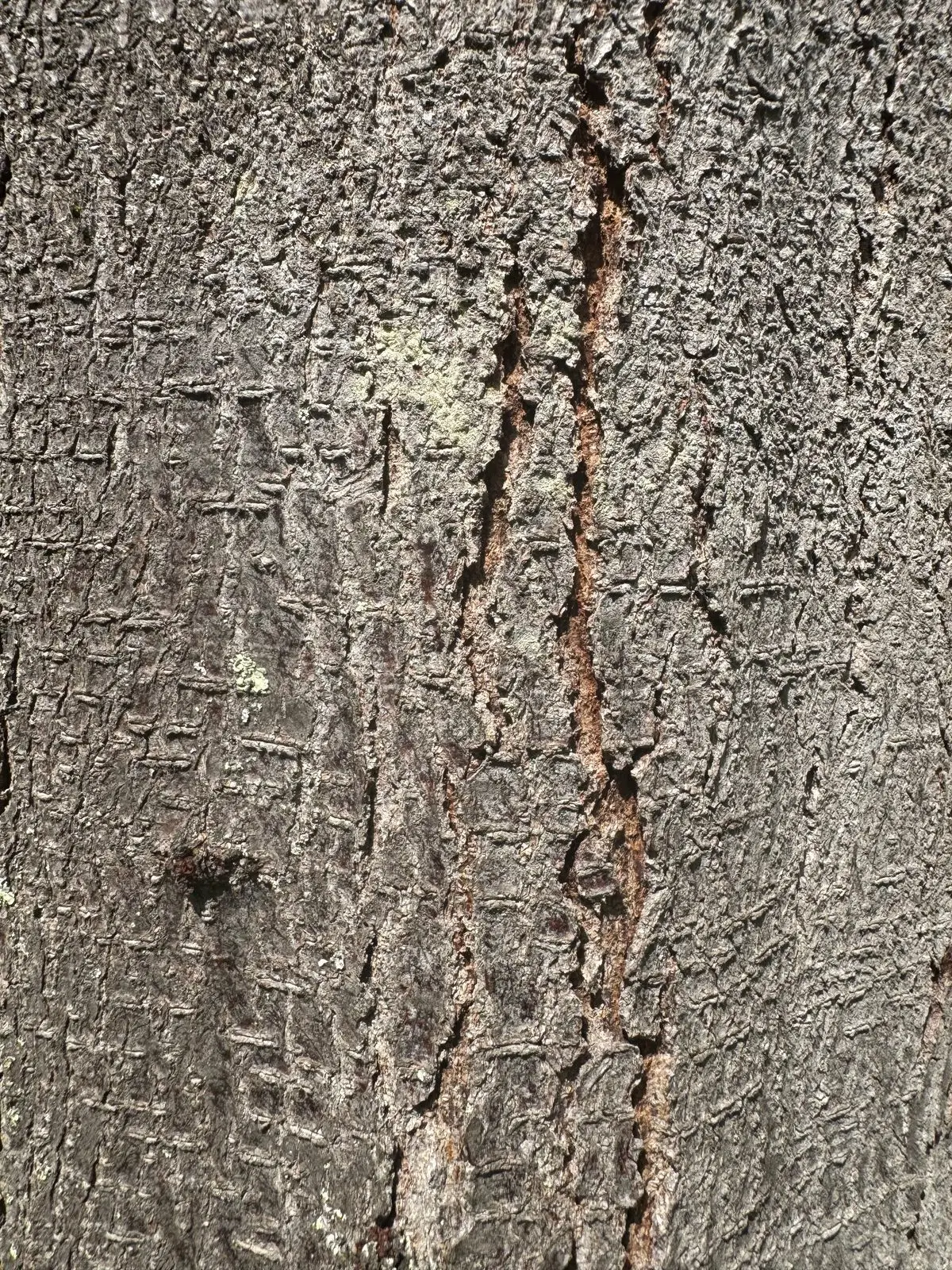 BarkThorny trees carry clumps of branched spines up to 20 cm.
LeavesUp to 20 cm. On strong shoots the stalk branches into more pairs.TwigsOn curling shoots, with three spines by each on thorny trees.BarkThorny trees carry clumps of branched spines up to 20 cm.Then check · ShapeSlender and open on a long, winding trunk, with mainly level branches and a crown thin enough to let light through.
How to identify a honey locust
Curling shoots with tiny orange buds about 1 mm across, and on thorny trees three spines beside each bud.
Purplish grey with wide, raised ridges. Thorny trees carry clumps of branched spines up to 20 cm long on the trunk.
 Learn the honey locust in TreelyEvery part through the year, and a short round each day until you know it.Get Treely
Every part, in photographs
cigazze, CC BY 4.0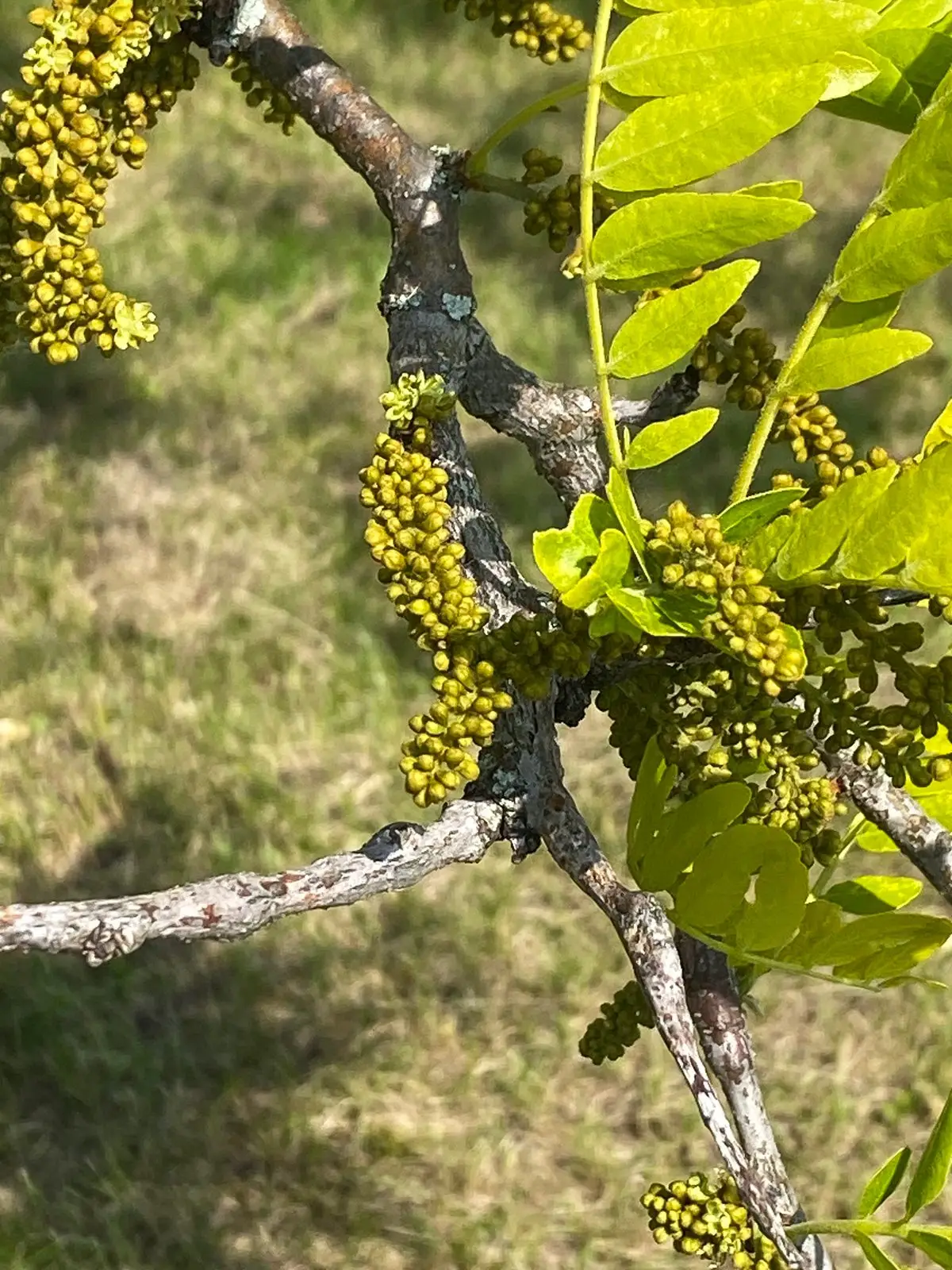 Sandy Wolkenberg, CC BY 4.0
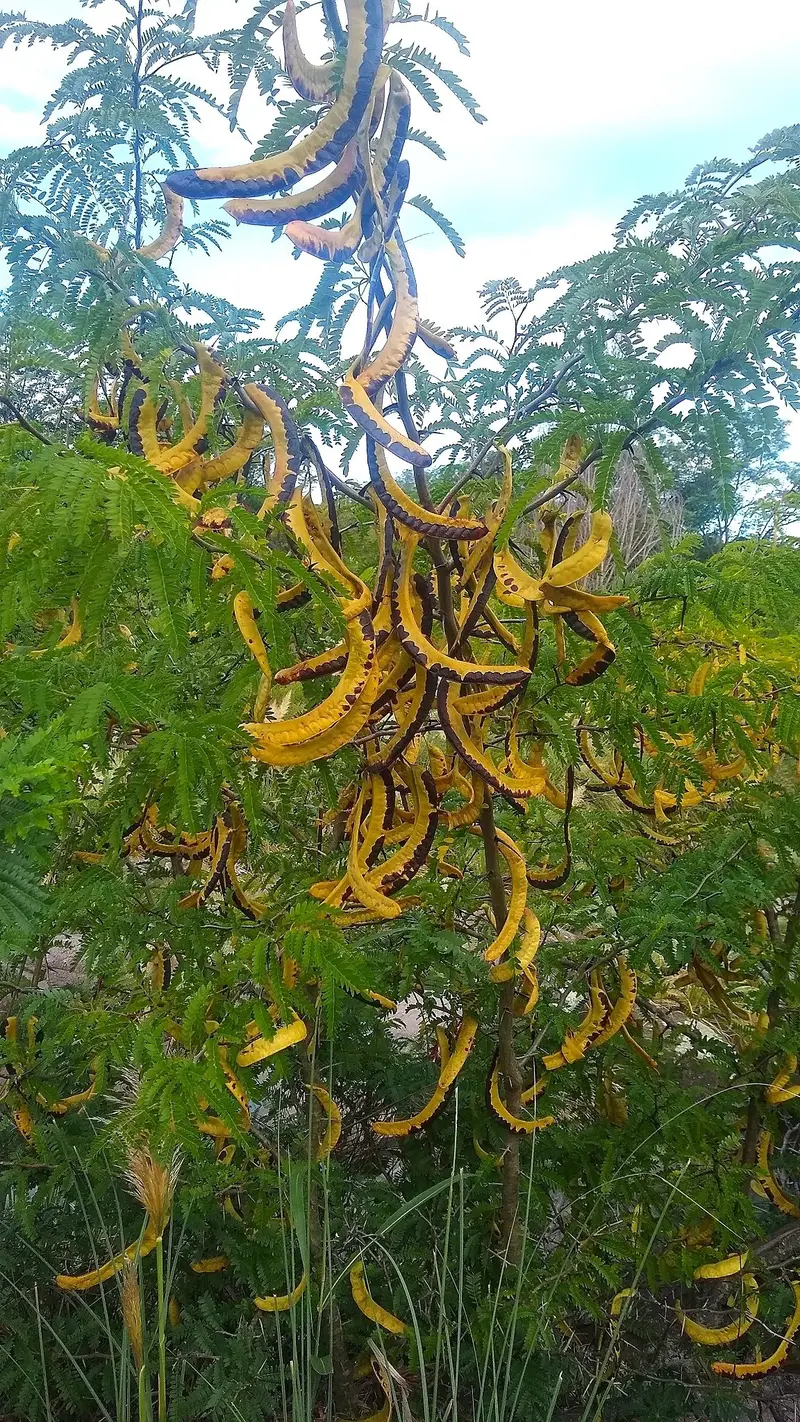 Tomás Carranza Perales, CC BY 4.0sblumen, CC BY 4.0
When to look
JFMAMJJASOND
In leaf
Flowers
Pods
In leaf: May to October · Flowers: June · Pods: September to November
Every tree on the calendar · How to identify trees in winter
Where you’ll find it
Planted in streets and parks, and fairly common in places in the warmer parts of Britain. It does better in the south of England, where the summers are hotter. It needs full sun, and copes with polluted air, salt spray and hard, trodden soil.
What it’s mistaken for
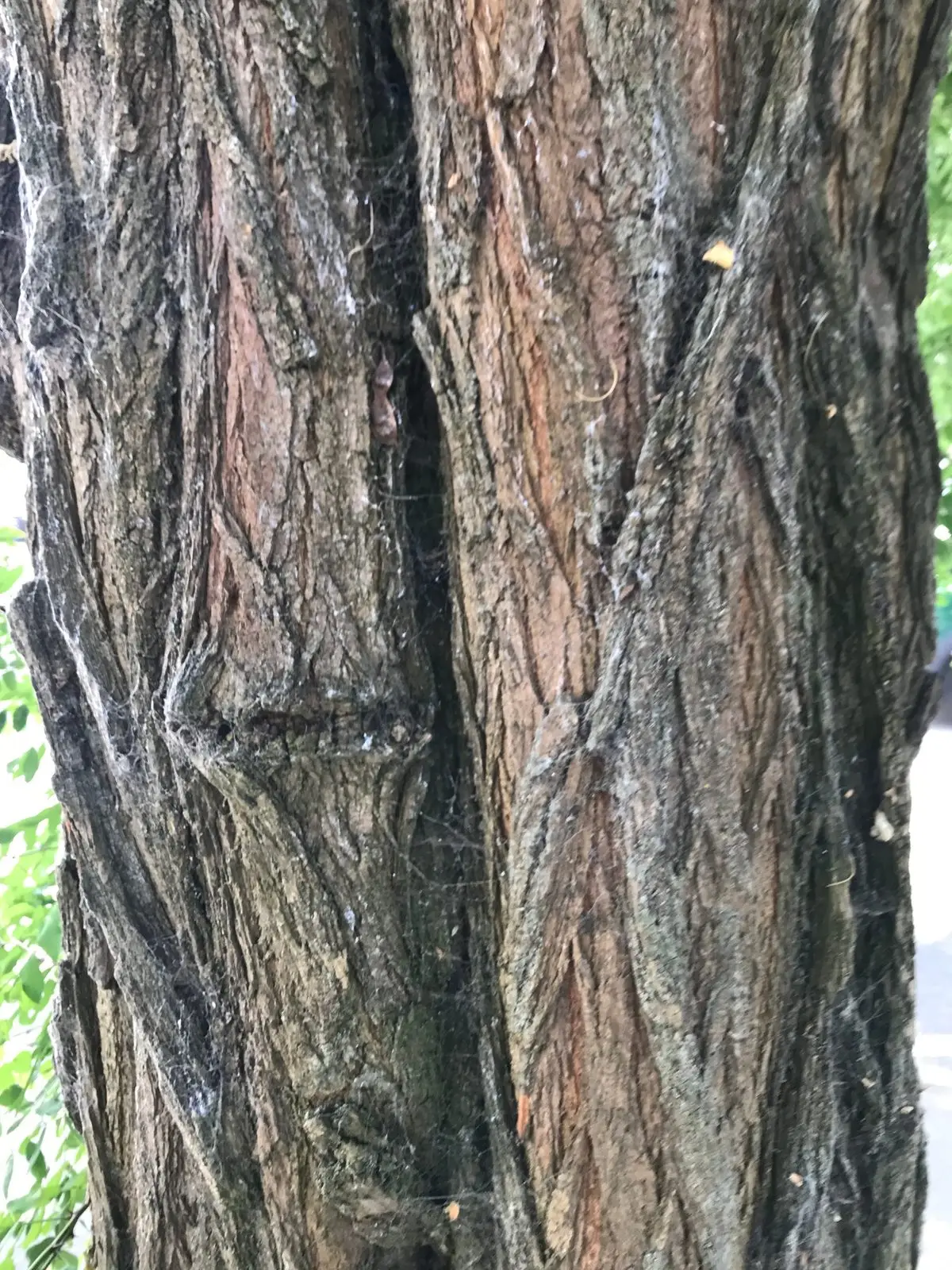 Honey locust or false acacia?Both are pea-family trees with feathered leaves, and both can carry thorns.Trunk→
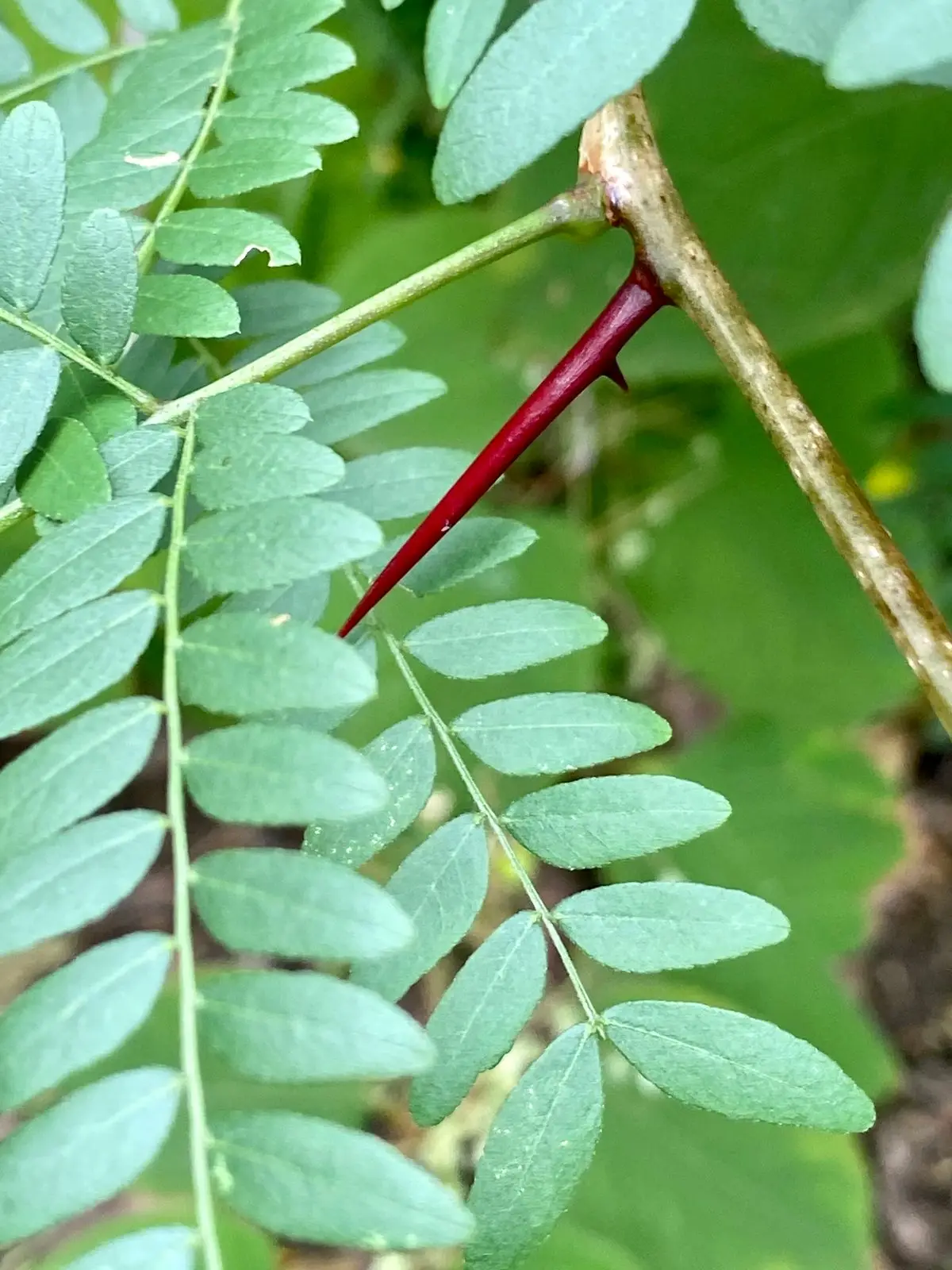
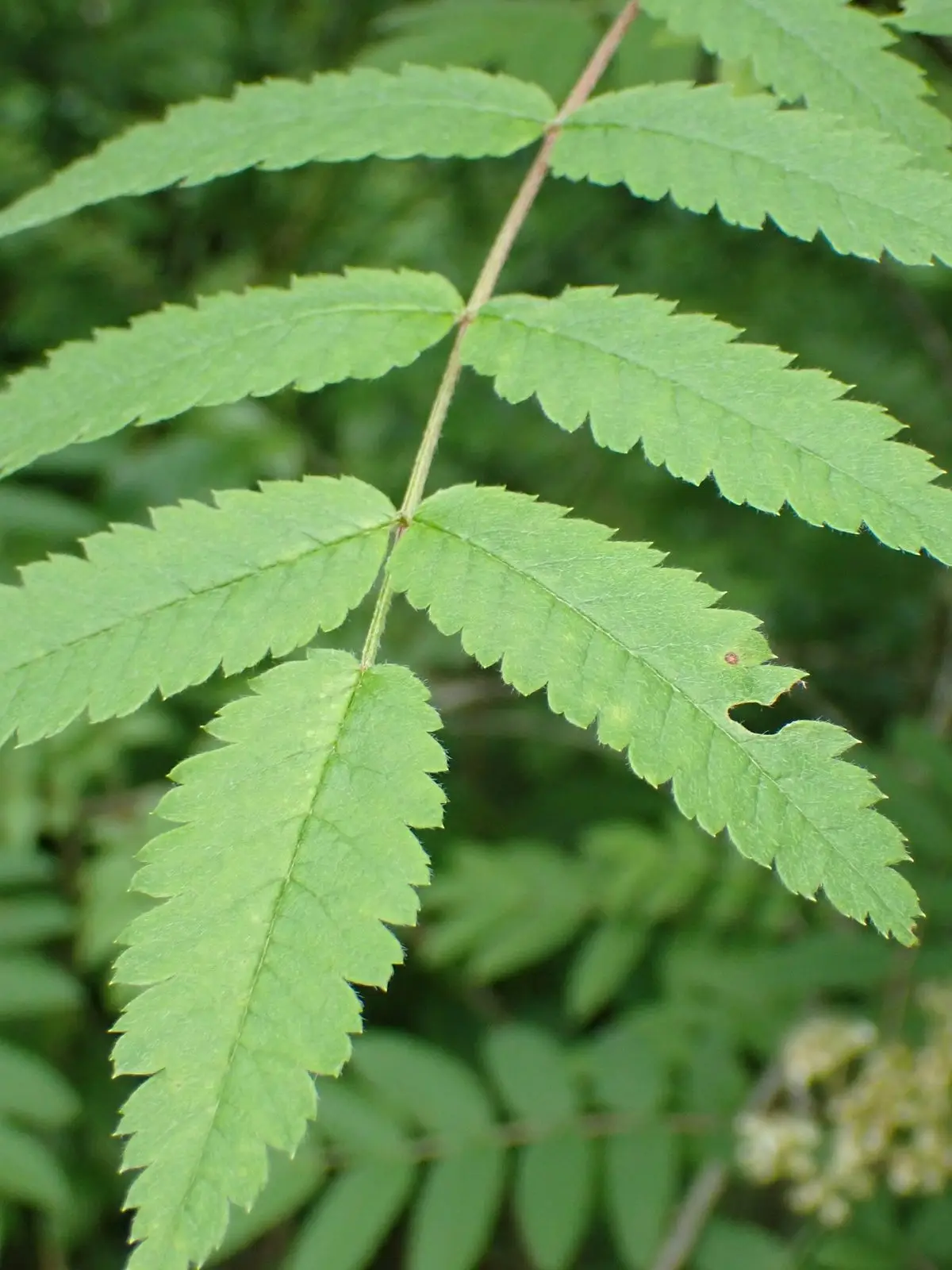 Honey locust or rowan?Both have feathered leaves and grow in streets and gardens.Leaflet edge→
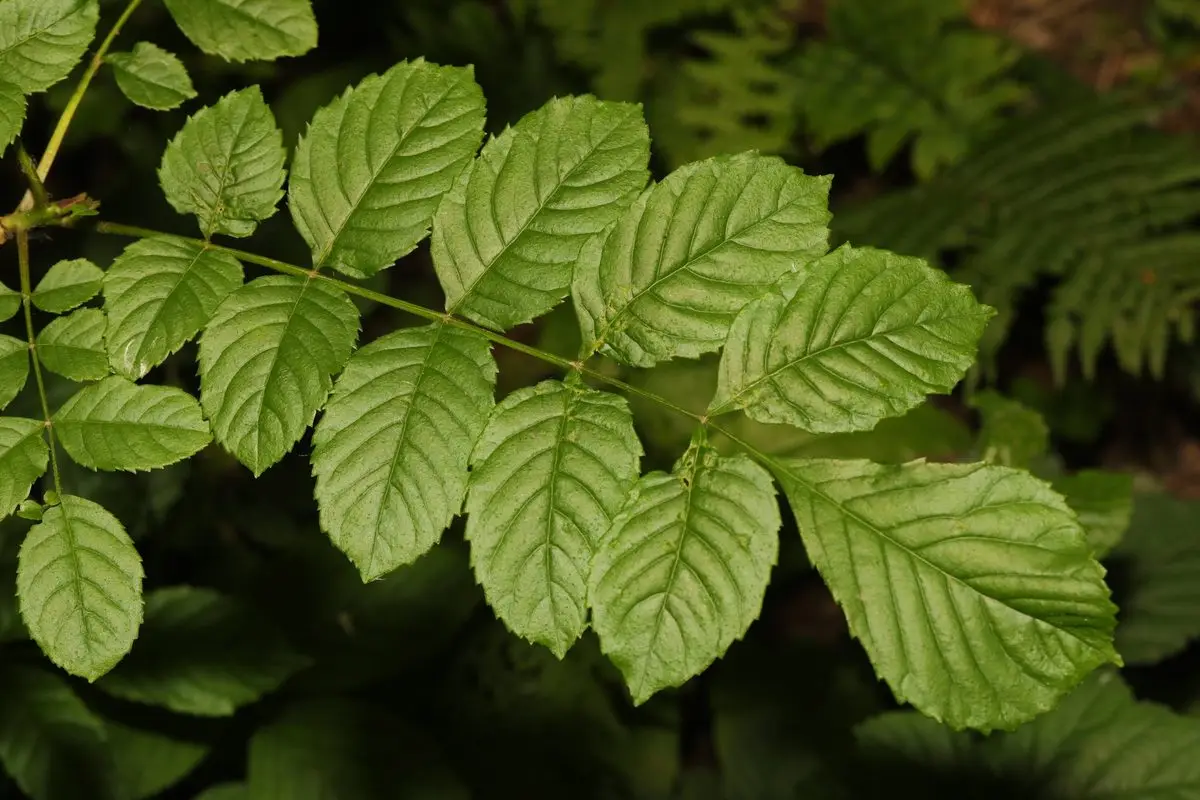 Honey locust or common ash?Both are big trees with feathered leaves, and both look thin and open once the leaves have fallen.Leaflets→
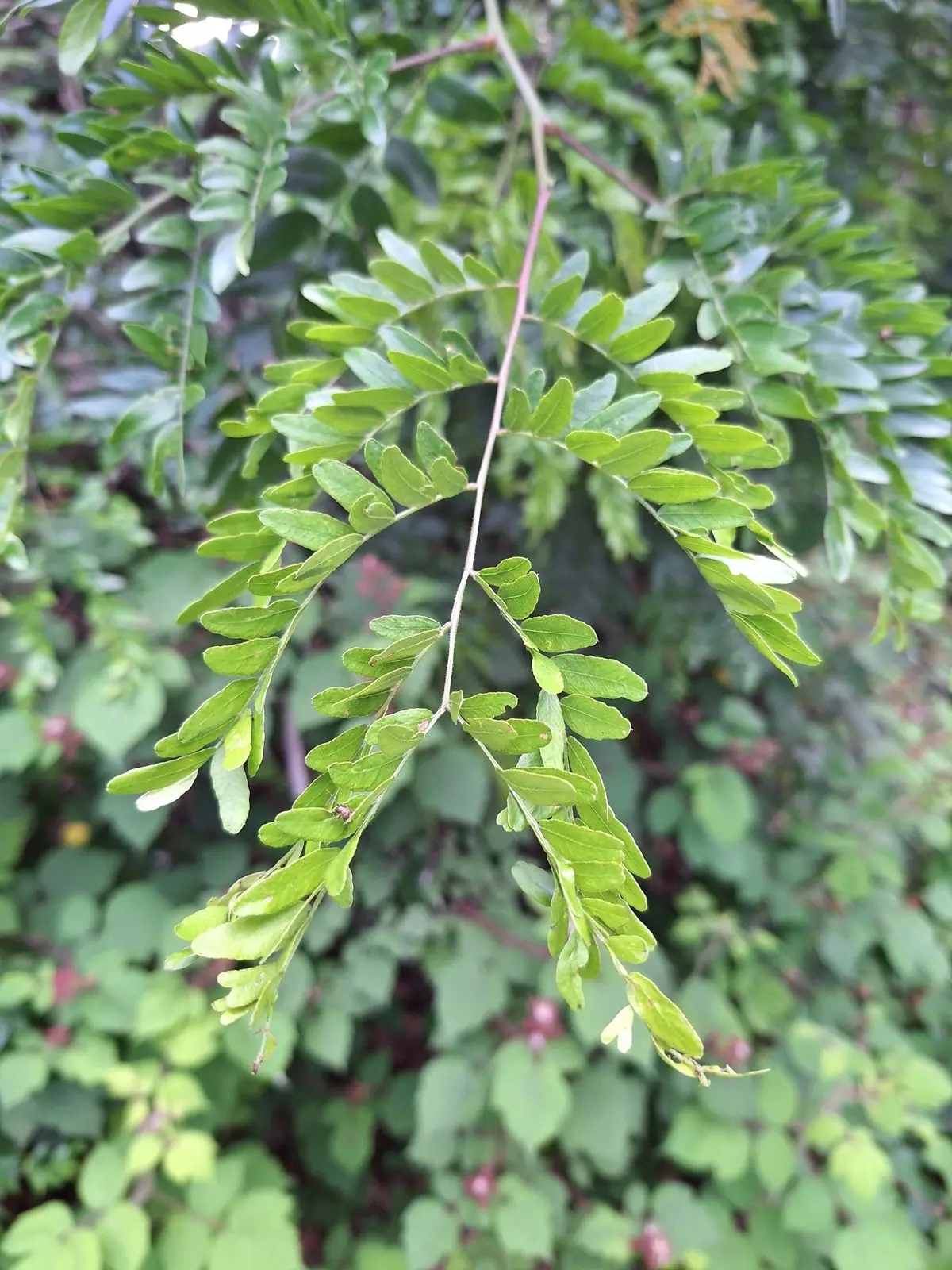
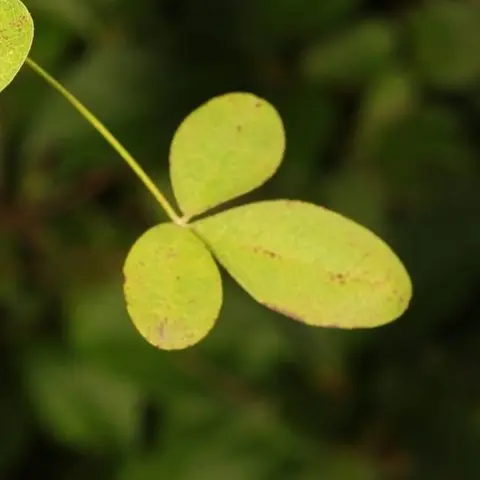 Honey locust or laburnum?Both are pea-family trees with hanging pods, planted in gardens and parks.Leaflets on one leaf→
More the pea family
In the app
There’s more of the honey locust in Treely
- Every part, through the yearLeaves, bark, buds, flowers and fruit, photographed in every season
- Its lookalikes, side by sideThe checks that settle it, part by part
- A short round each dayUntil you know the honey locust on sight, from any side
- Name it from a photoA leaf, the bark or a flower, and Treely tells you which tree
Free to download.
Every fact on this page is checked against the Collins Tree Guide, last in November 2026. Spotted something that looks wrong in front of a real tree? Tell us. How we check.
Photographs: cigazze (CC BY 4.0), sblumen (CC BY 4.0), Leon Cross (CC BY 4.0), Sandy Wolkenberg (CC BY 4.0), Tomás Carranza Perales (CC BY 4.0), loverseed (CC0), bobwardell (CC0), steve_mcwilliam (CC0). With thanks to everyone who shares their photographs on iNaturalist and Wikimedia Commons.