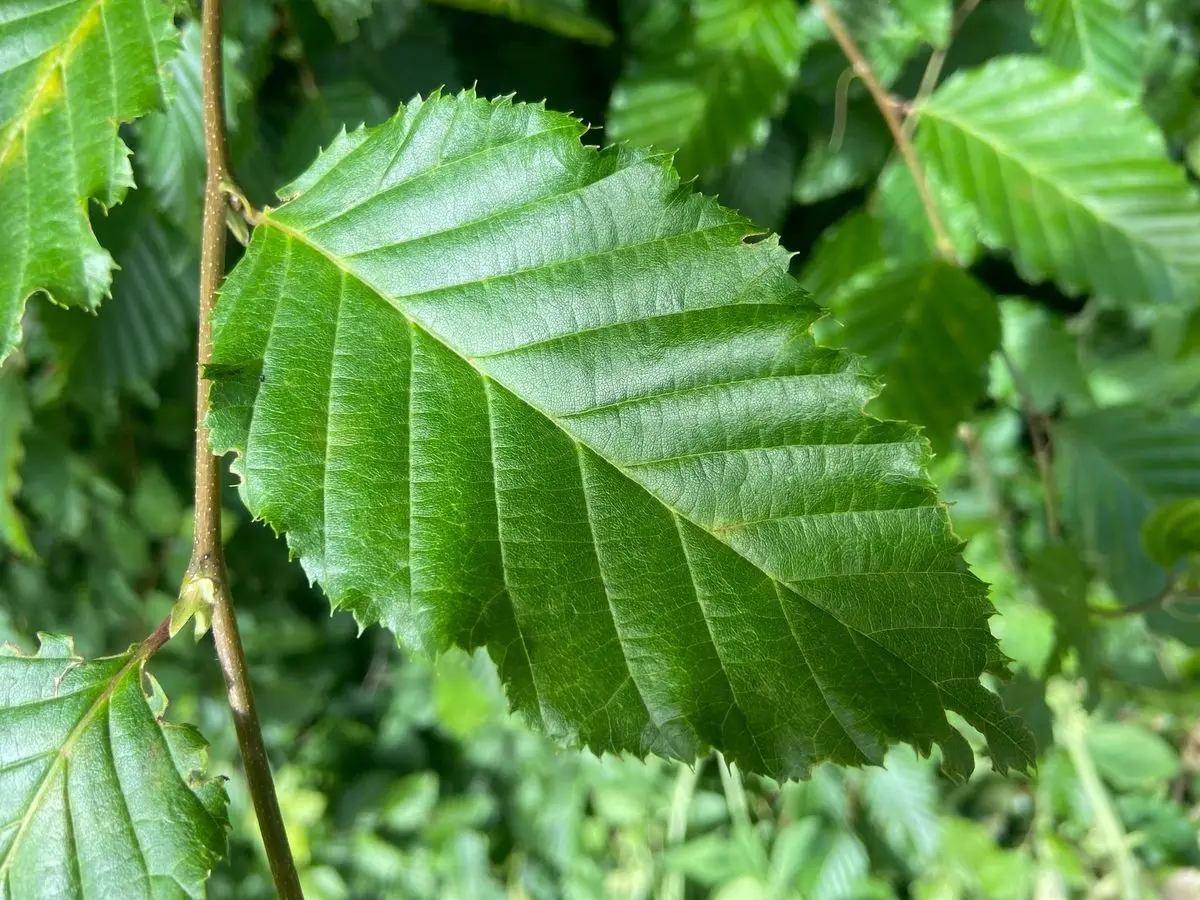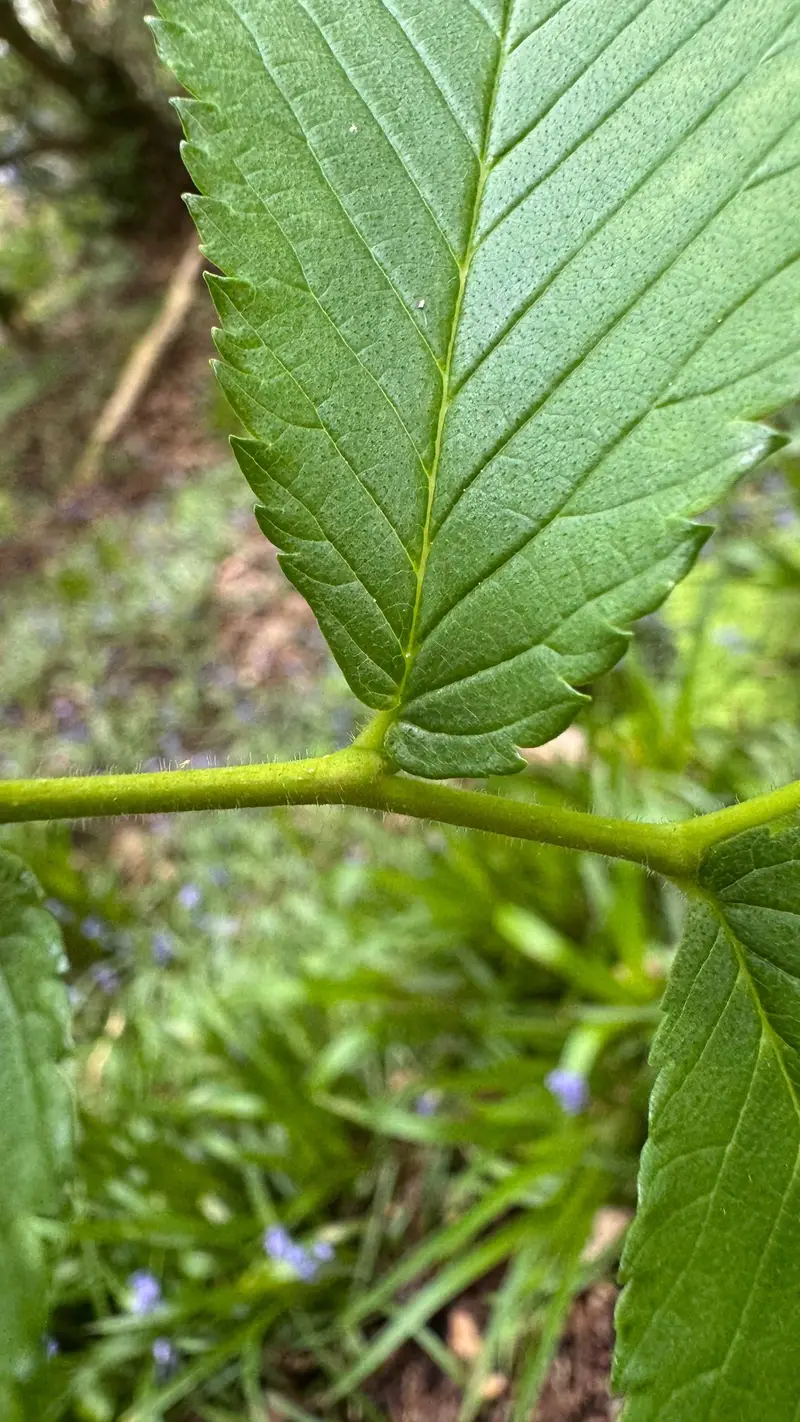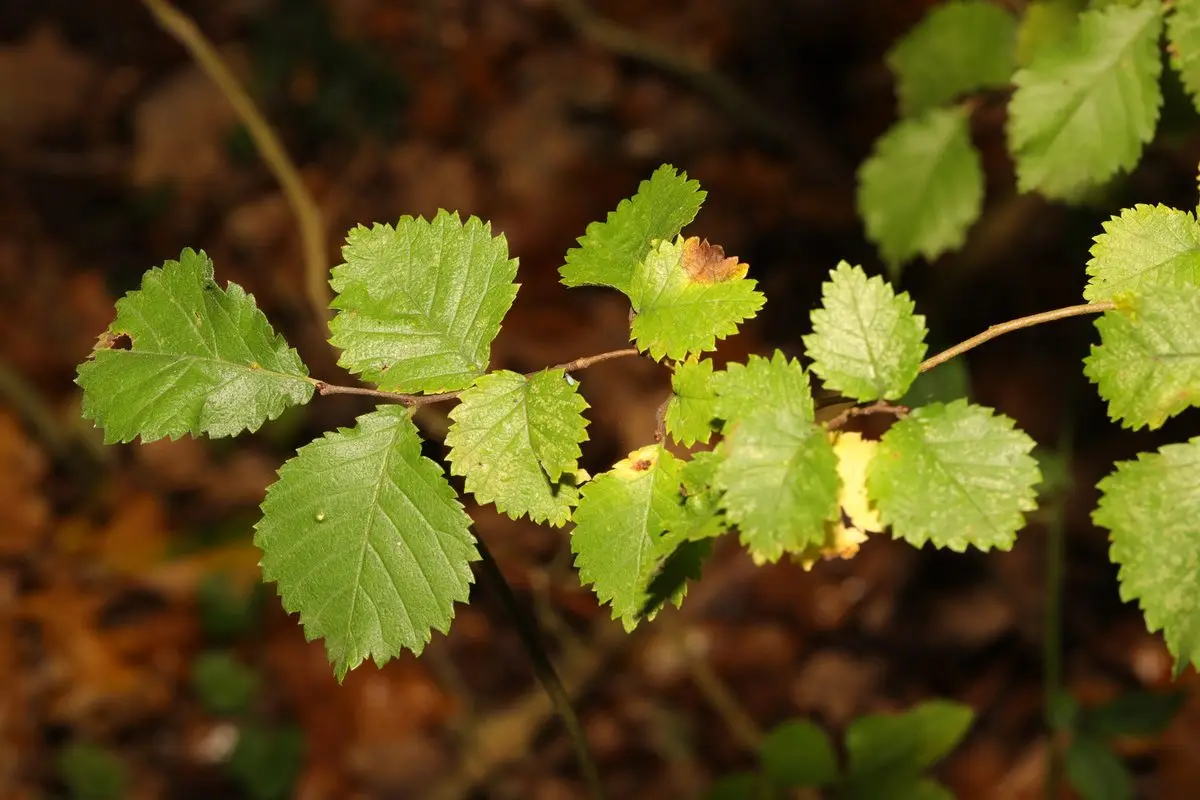
Oval, 6 to 15 cm, glossy and smooth on grown trees, lopsided at the base on a 1 cm stalk.
Ulmus minor · Ulmaceae
Field elm is now rarely seen full-grown, because Dutch elm disease has killed most of Britain's elms. It survives as young stems in hedges, with oval leaves lopsided at the base.
Often mistaken for hornbeam. How to tell them apart →LeavesOval, 6 to 15 cm, smooth on grown trees, on a 1 cm stalk.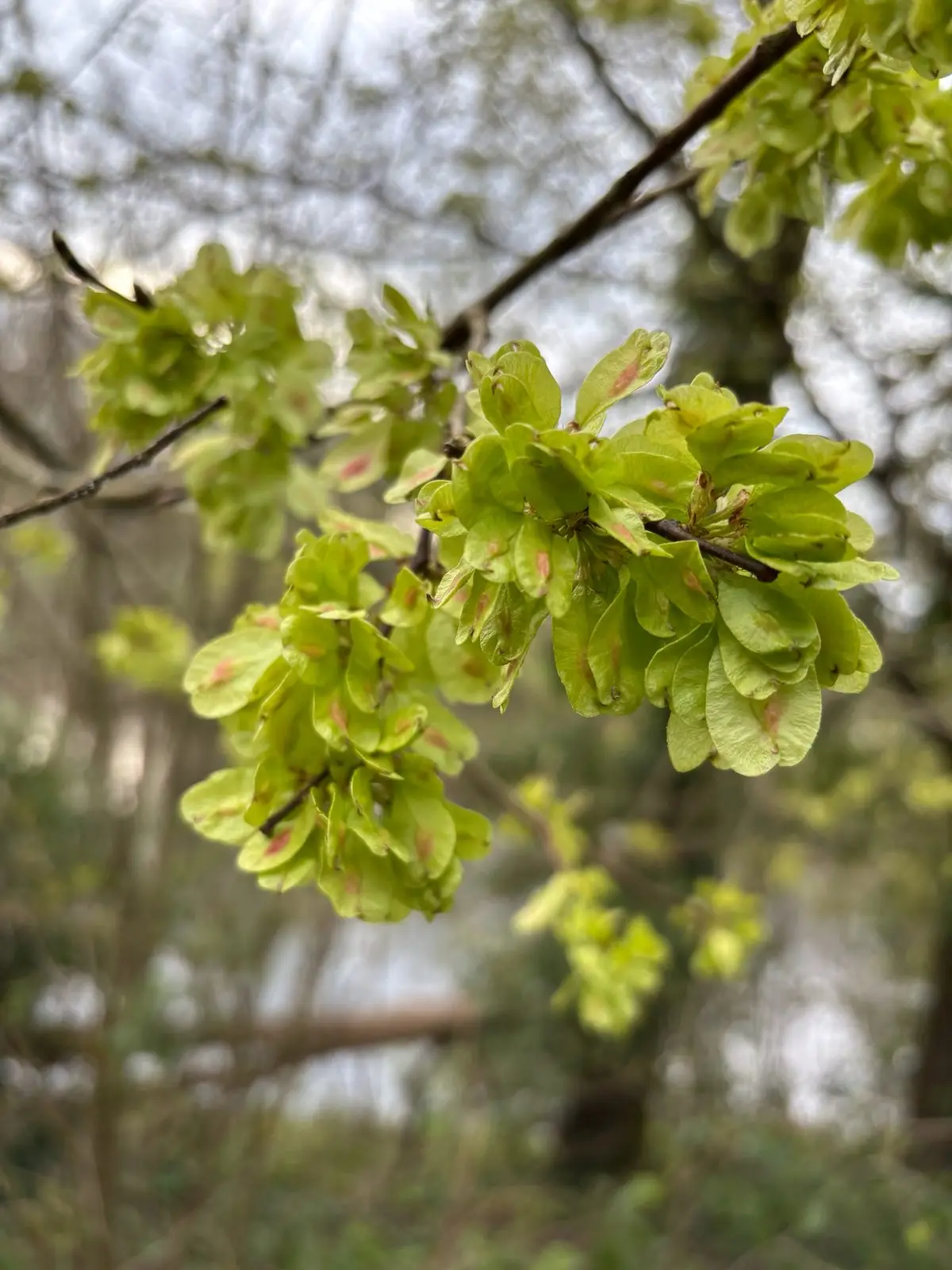 SeedsFlat, papery, oval discs 12 to 15 mm long.TwigsSlender and brown, the buds slim. Some carry corky ridges.
Then check · BarkGreyish brown and rough, with shallow ridges that cross each other in a block pattern on older trunks.
Oval, 6 to 15 cm, glossy and smooth on grown trees, lopsided at the base on a 1 cm stalk.
Flat, papery, oval discs 12 to 15 mm long, with the seed set high up, close to the notch at the top.
Slender brown shoots, smooth to the touch, with slim, fuzzy buds along them. Some carry corky ridges.
 Learn the field elm in TreelyEvery part through the year, and a short round each day until you know it.Get Treely
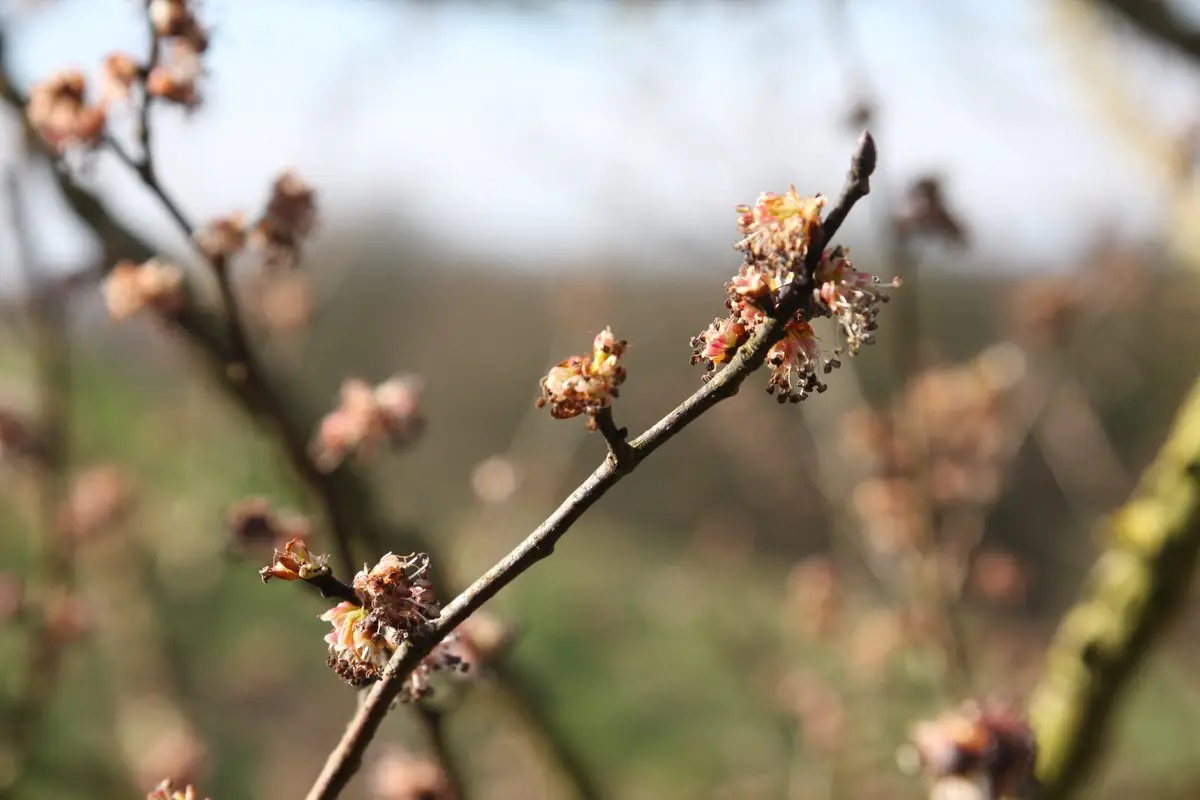 olmagon, CC BY 4.0Jose Gutierrez Higa, CC BY 4.0
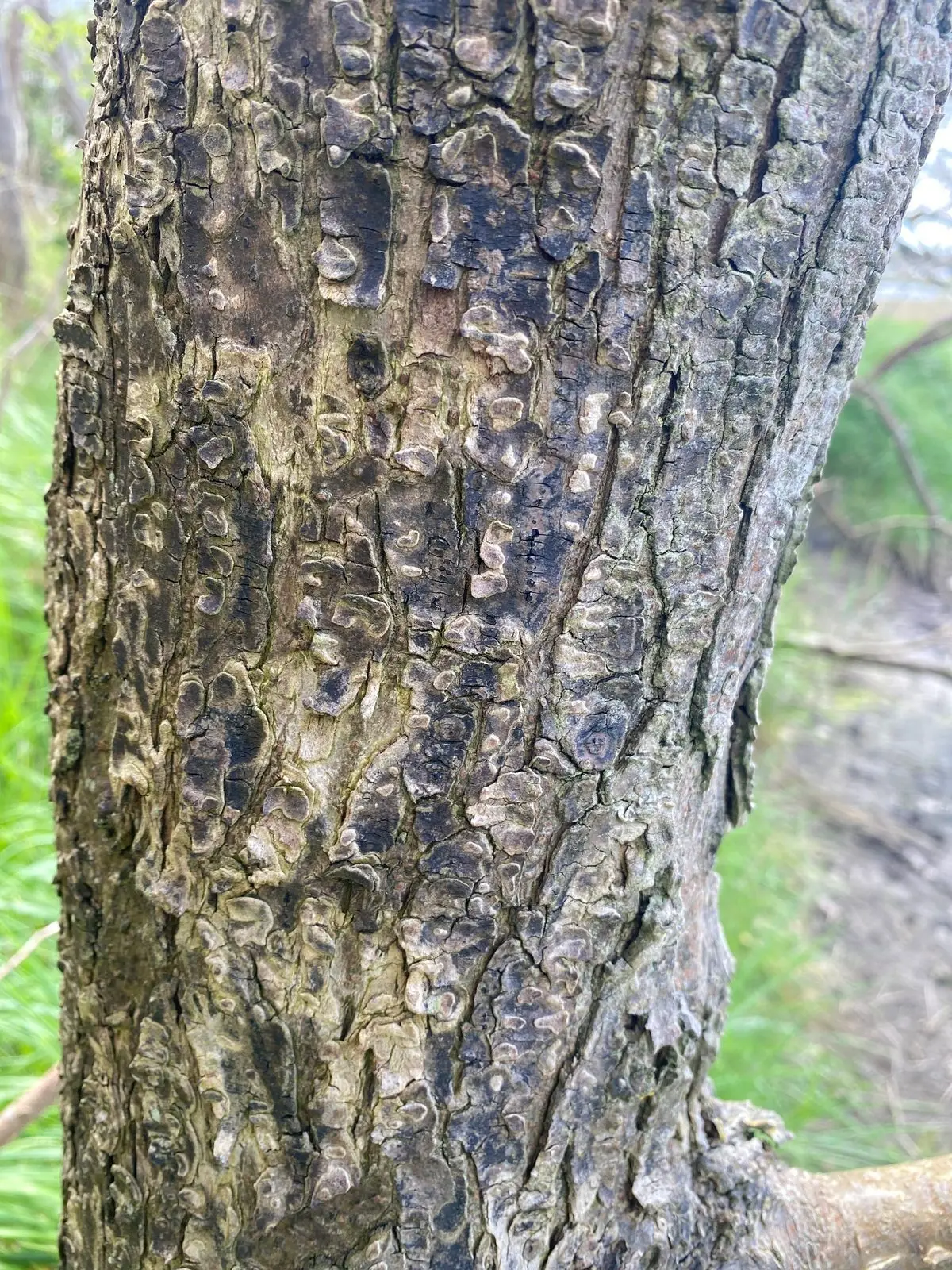 Wendy Herniman, CC BY 4.0
In leaf: April to November · Flowers: February to March · Seeds: April to May
Mostly in hedgerows across lowland England, where it is the common elm. It is most widespread in the Midlands and the south-east. It spreads into some woods, but is seldom a woodland tree.
Free to download.
Every fact on this page is checked against the Collins Tree Guide, last in November 2026. Spotted something that looks wrong in front of a real tree? Tell us. How we check.
Photographs: steve_mcwilliam (CC0), Jose Gutierrez Higa (CC BY 4.0), olmagon (CC BY 4.0), Wendy Herniman (CC BY 4.0), Joss Carr (CC BY 4.0). With thanks to everyone who shares their photographs on iNaturalist and Wikimedia Commons.