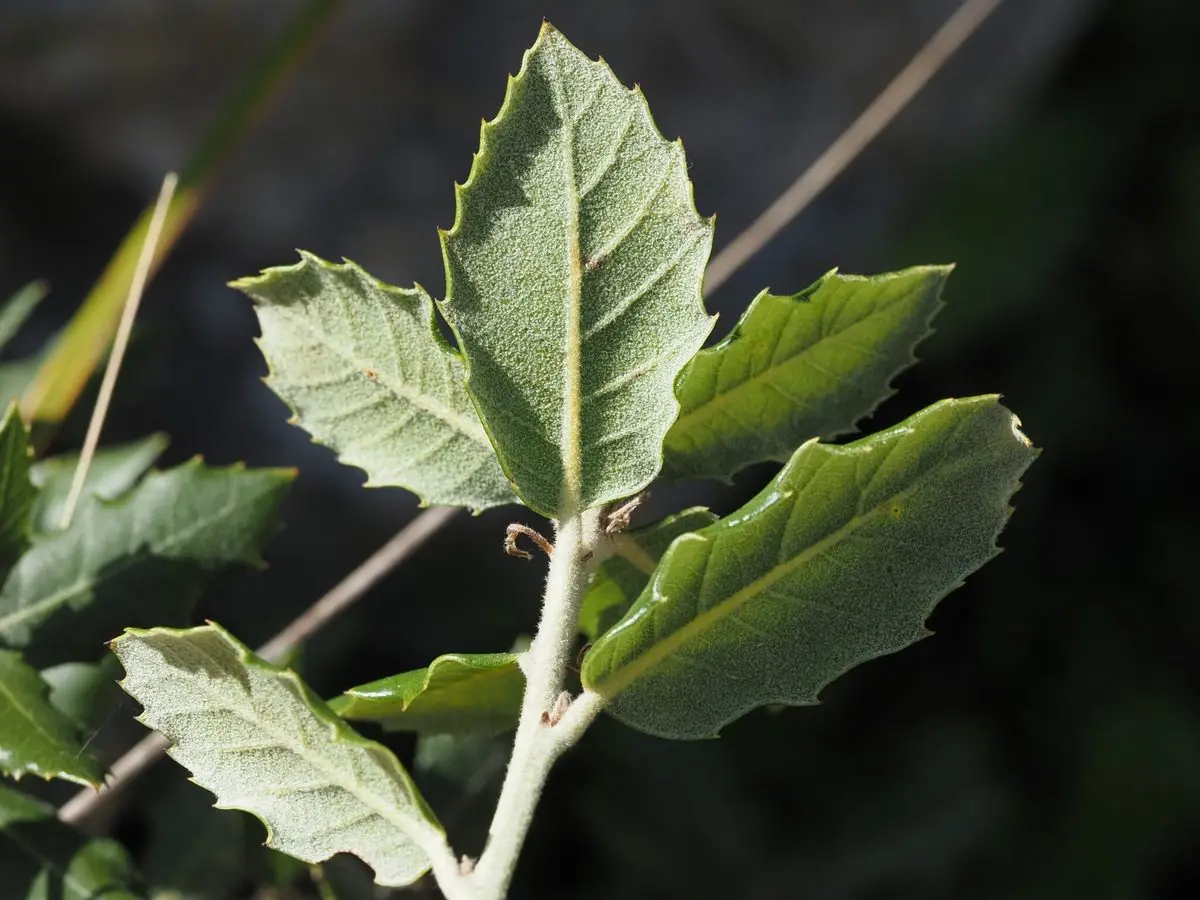
Buds clustered at the shoot tips, each wrapped in long, twisting whiskers, on a slender shoot thick with grey hairs.
Introduced, naturalised · Up to 40 m
Turkey oak
Quercus cerris · Fagaceae
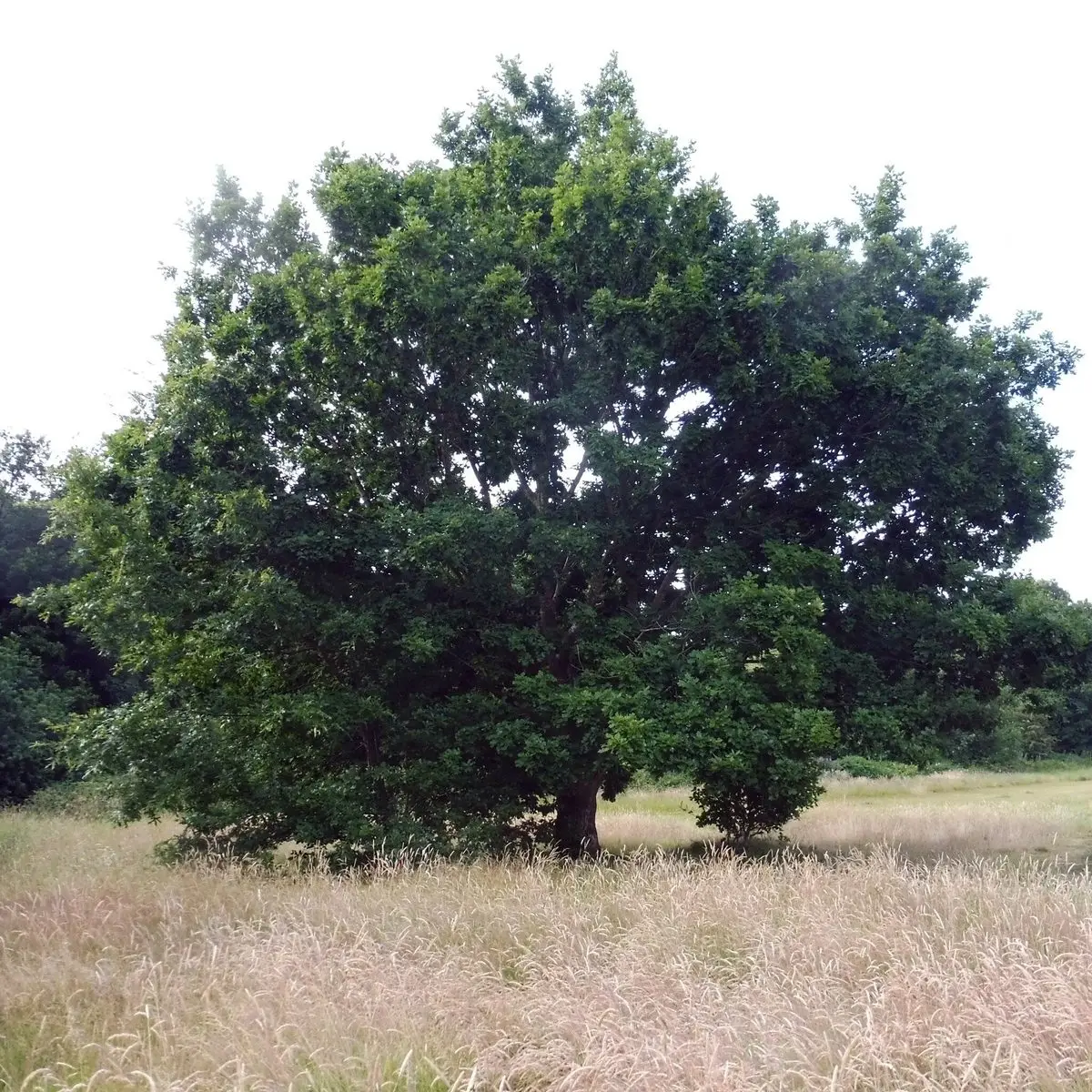
Turkey oak is a tall, fast-growing tree, common in parks and along roads. Every bud sits in a tangle of long, twisting whiskers. Its acorns have deep, mossy cups.
Know it byWhiskered budsClustered at the tips of slender shoots, thick with grey hairs.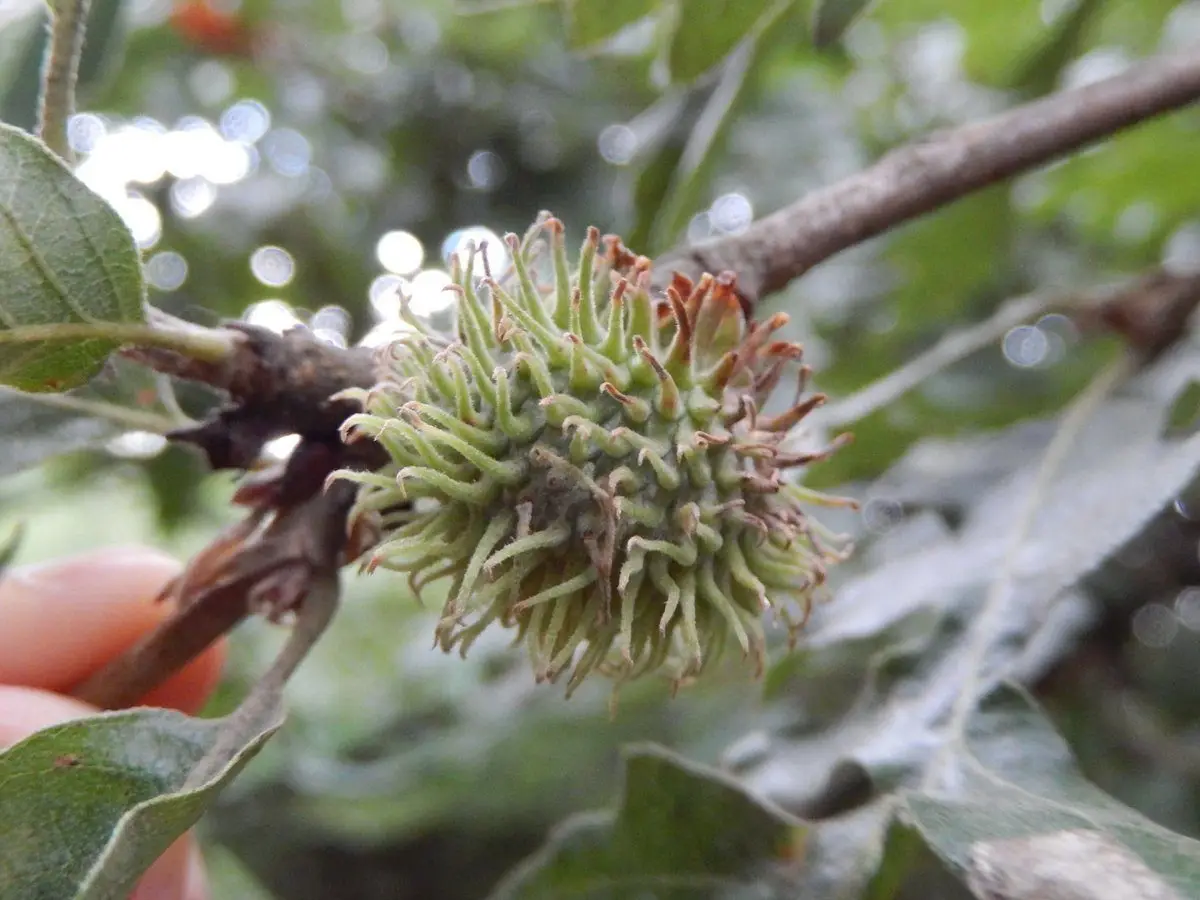 Acorns2.5 to 4 cm, orange at the base and greenish brown at the tip.
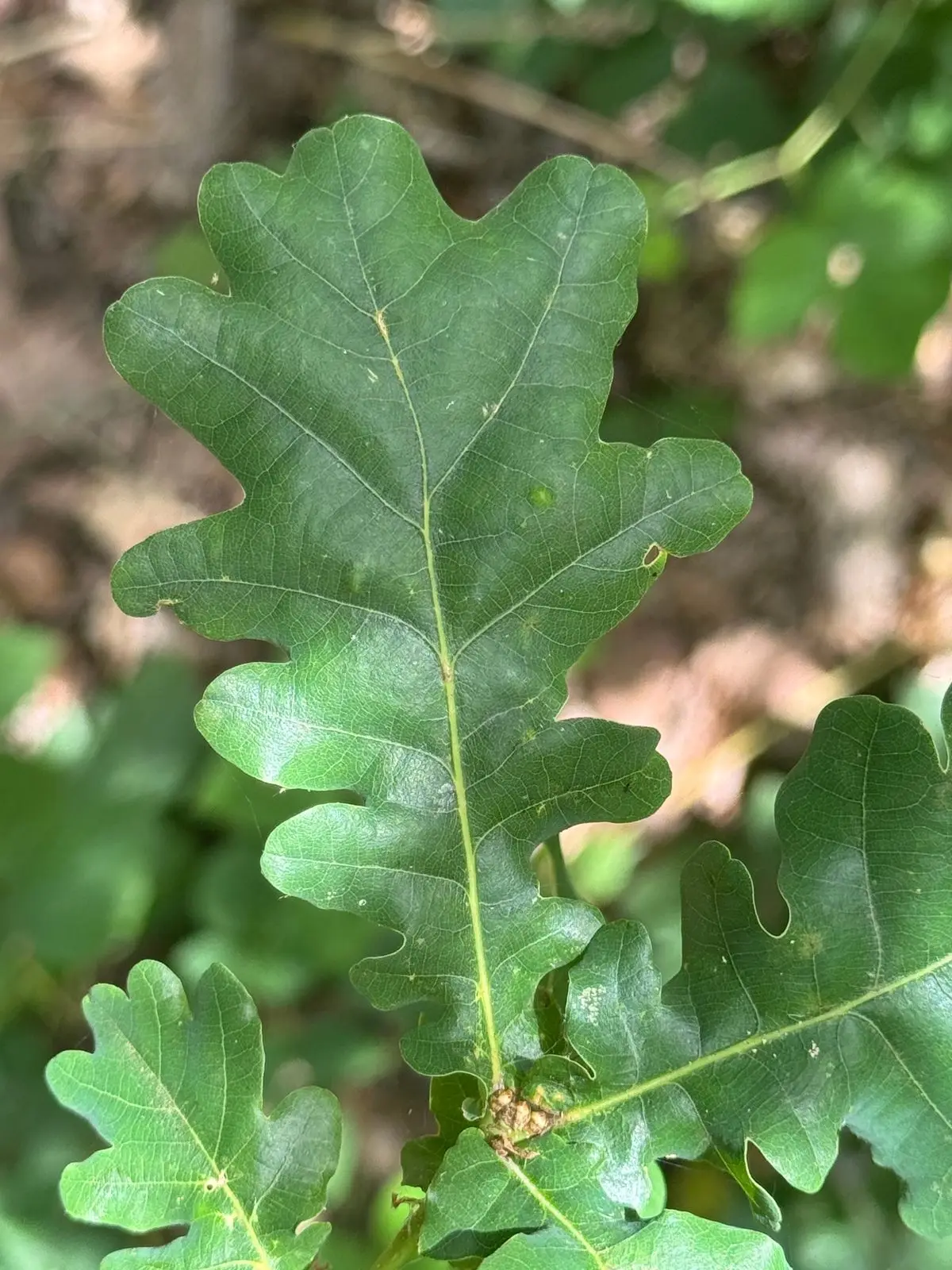
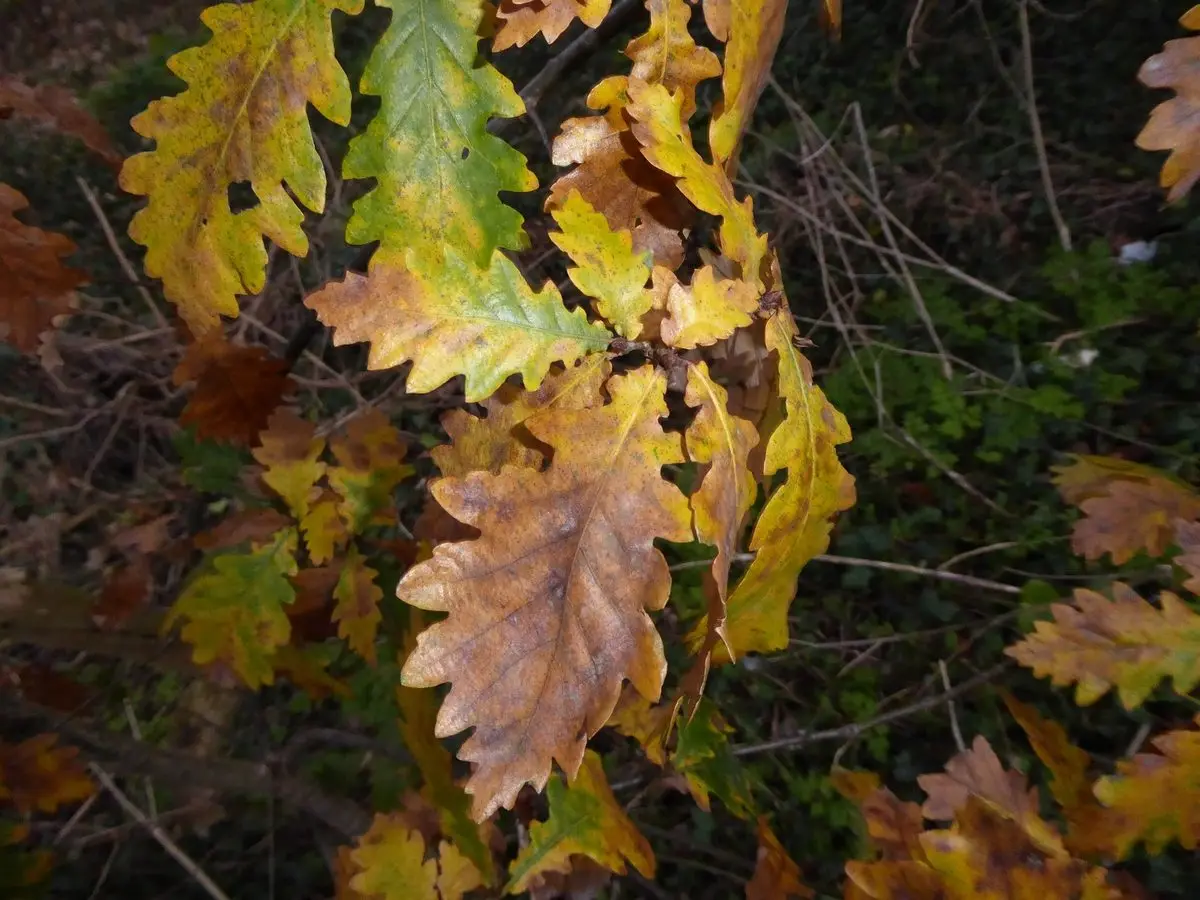 LeavesUp to 12 cm, rough but shiny on top, fuzzy grey underneath.
Acorns2.5 to 4 cm, orange at the base and greenish brown at the tip.LeavesUp to 12 cm, rough but shiny on top, fuzzy grey underneath.Then check · BarkPale mauvish grey, split by deep wedge-shaped cracks that are often orange near the foot of the trunk.
How to identify a Turkey oak
Orange at the base and greenish brown at the tip, 2.5 to 4 cm, in a deep cup of soft mossy bristles.
Jaggedly lobed and up to 12 cm long, thick and rough but shiny on top, with a fine, fuzzy grey underside.
 Learn the Turkey oak in TreelyEvery part through the year, and a short round each day until you know it.Get Treely
Every part, in photographs
jamie-aa, CC BY 4.0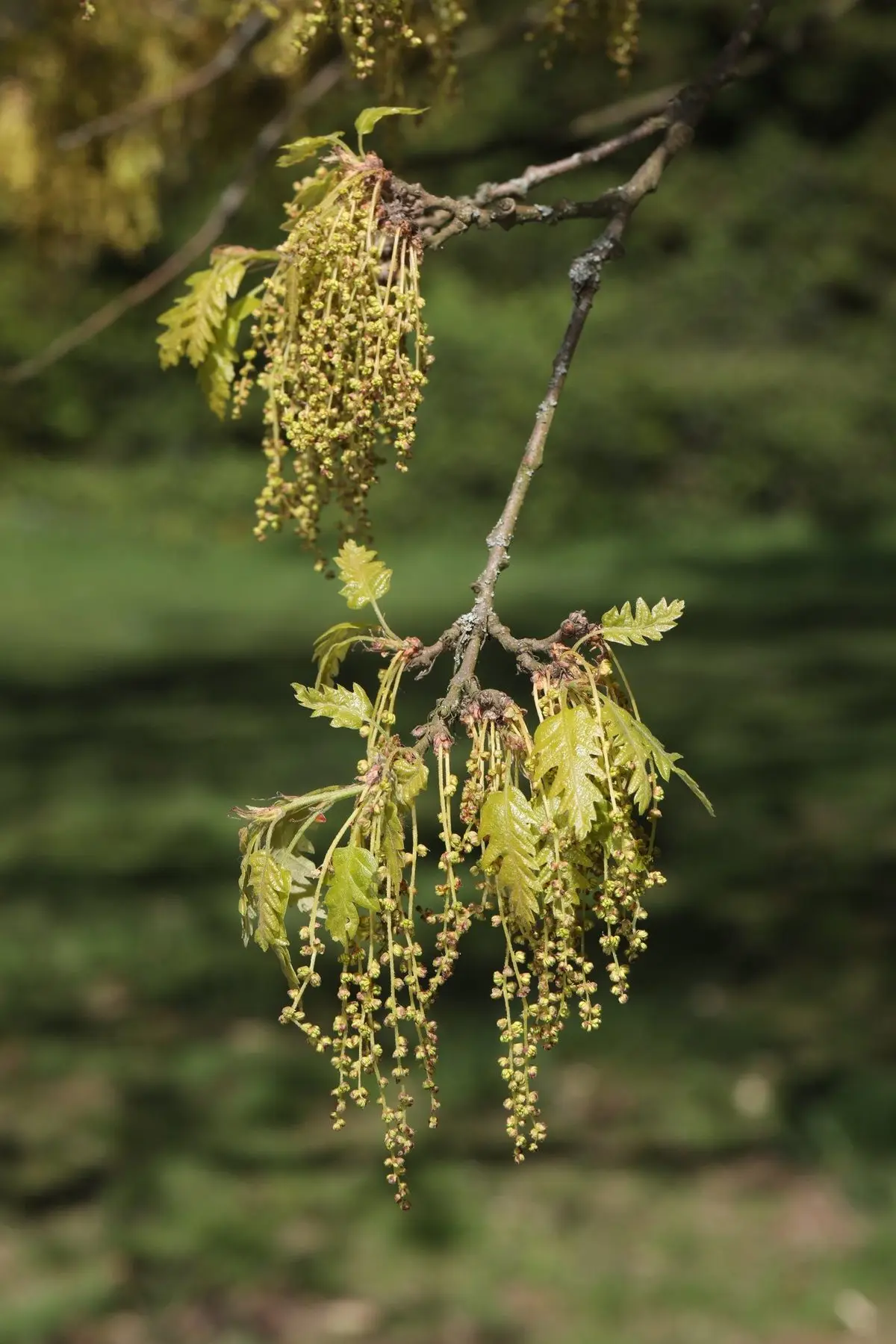 Luca Fornasari, CC BY 4.0
 Barry Walter, CC BY 4.0
When to look
JFMAMJJASOND
In leaf
Catkins
Acorns
In leaf: April to November · Catkins: April to June · Acorns: June to October
Where you’ll find it
Planted in parks and gardens and along roads. It also seeds itself onto verges and into woods. It is widespread across most of England and Wales, and less common in northern England and Scotland.
What it’s mistaken for
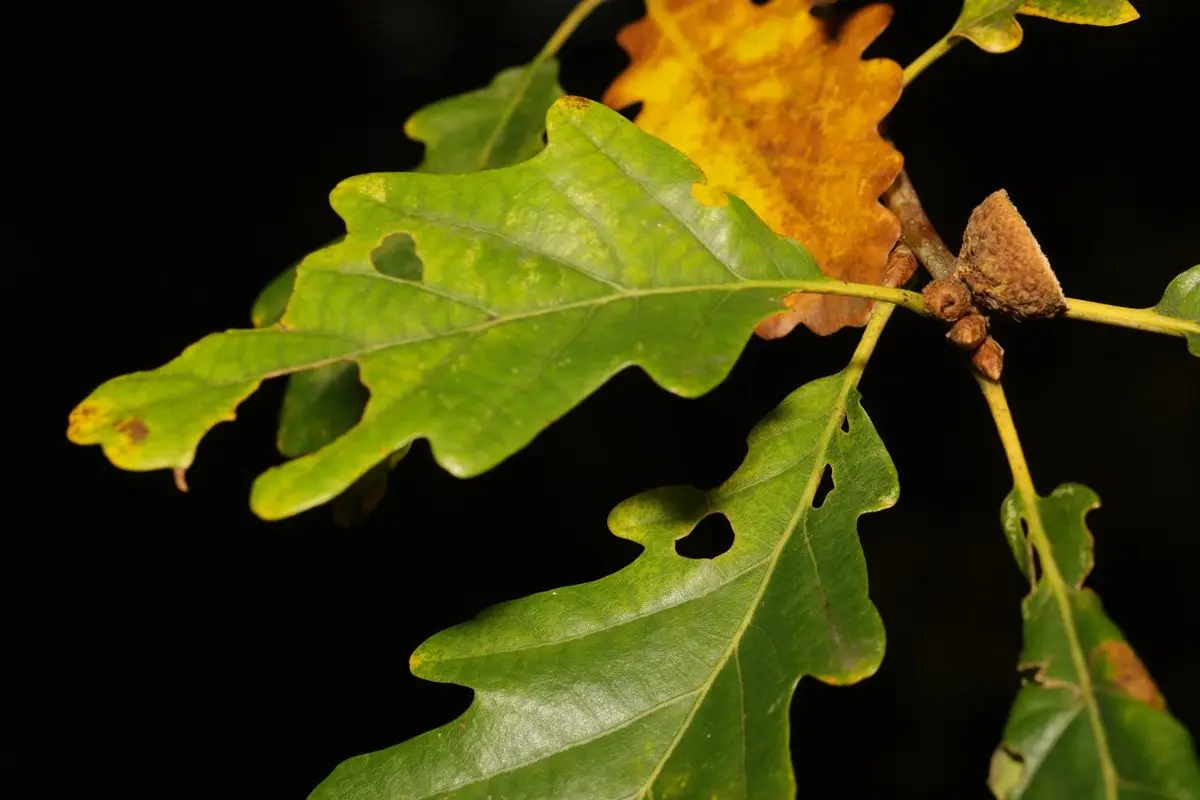
- English oakBoth are big oaks with deeply lobed leaves. Fruit. Turkey oak: deep cup thick with soft mossy bristles. English oak: shallow cup of flat overlapping scales.
- Sessile oakBoth have acorns that sit straight on the twig, with no stalk. Fruit. Turkey oak: deep cup thick with soft mossy bristles. Sessile oak: neat woody cup of close-overlapping scales.
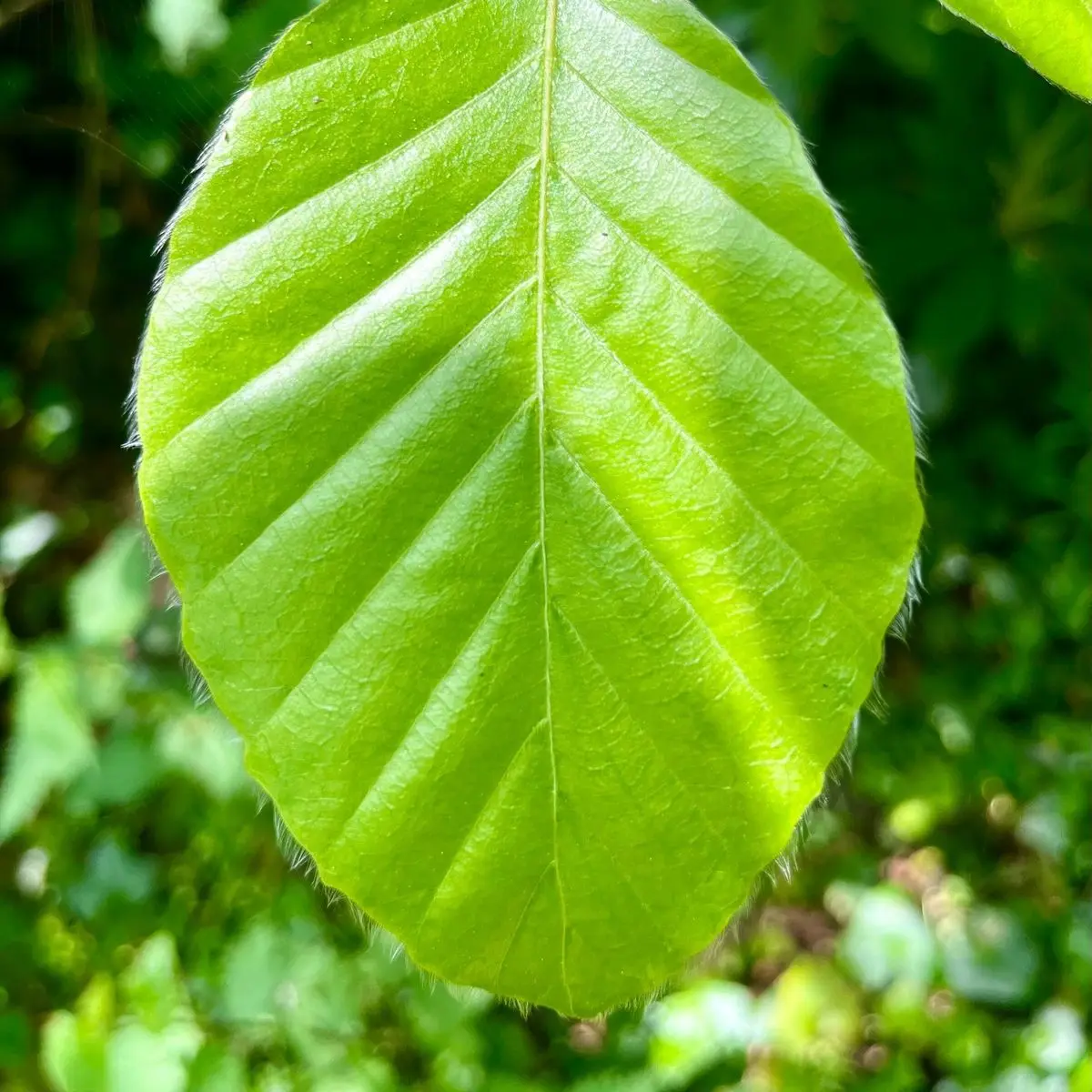
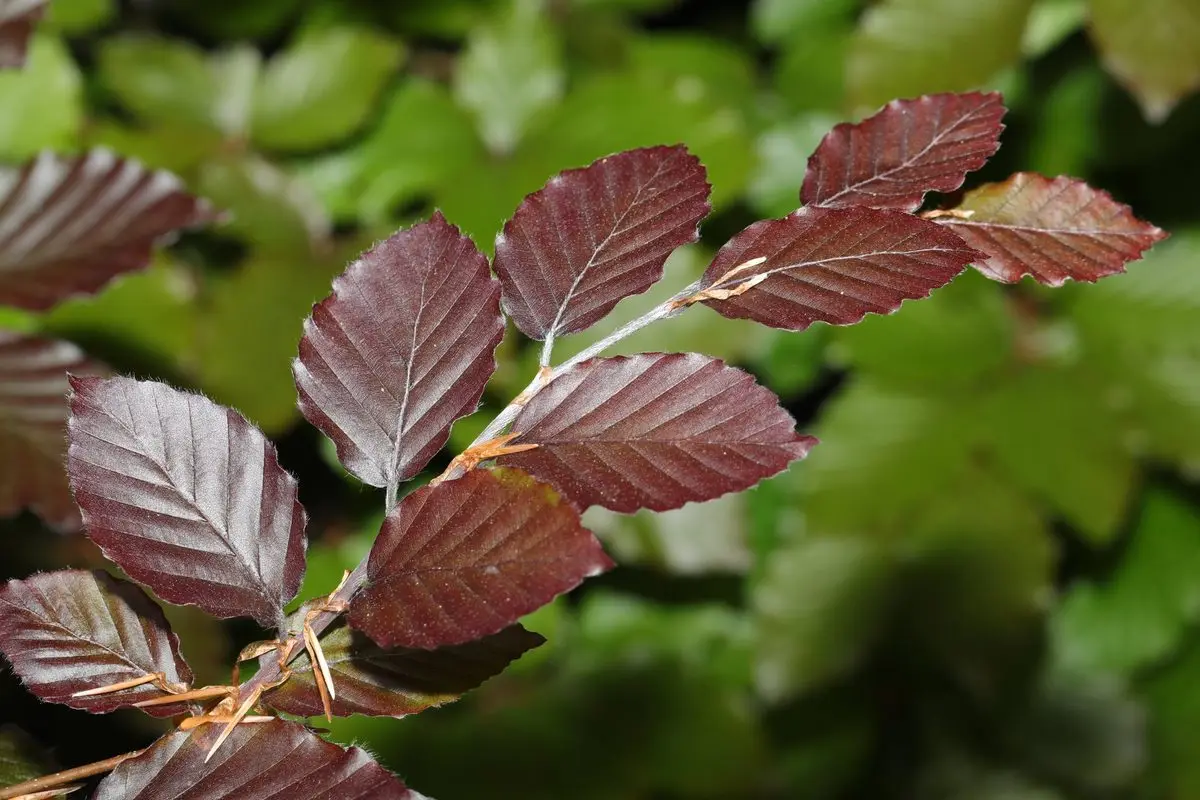
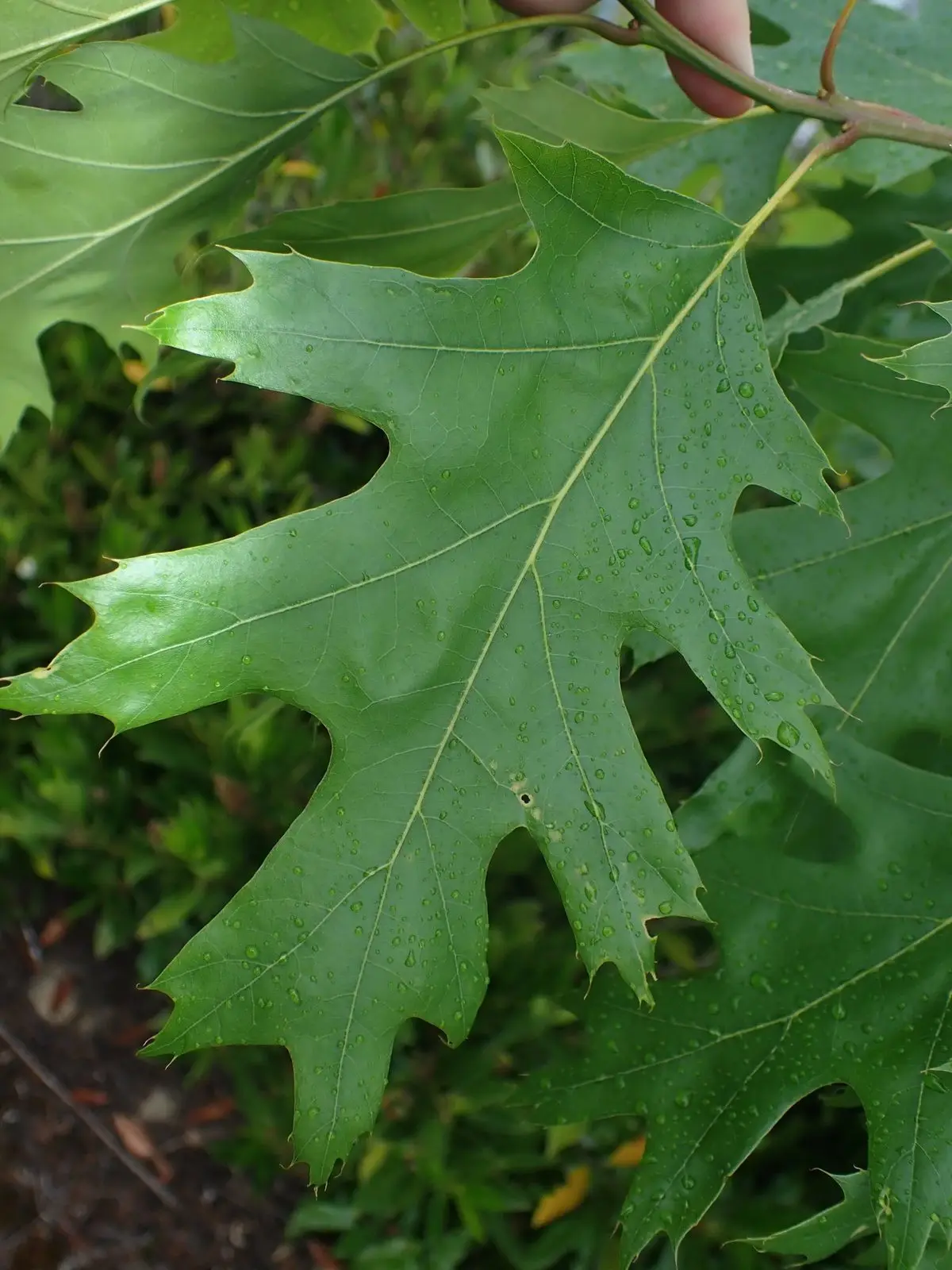
- Red oakBoth are big planted oaks with lobed leaves and acorns. Leaf. Turkey oak: fine grey fuzz close all over it. Red oak: matt pale green, tufts in the vein angles.
In the app
There’s more of the Turkey oak in Treely
- Every part, through the yearLeaves, bark, buds, flowers and fruit, photographed in every season
- Its lookalikes, side by sideThe checks that settle it, part by part
- A short round each dayUntil you know the Turkey oak on sight, from any side
- Name it from a photoA leaf, the bark or a flower, and Treely tells you which tree
Free to download.
Every fact on this page is checked against the Collins Tree Guide, last in November 2026. Spotted something that looks wrong in front of a real tree? Tell us. How we check.
Photographs: Barry Walter (CC BY 4.0), Luca Fornasari (CC BY 4.0), jamie-aa (CC BY 4.0), steve_mcwilliam (CC0). With thanks to everyone who shares their photographs on iNaturalist and Wikimedia Commons.