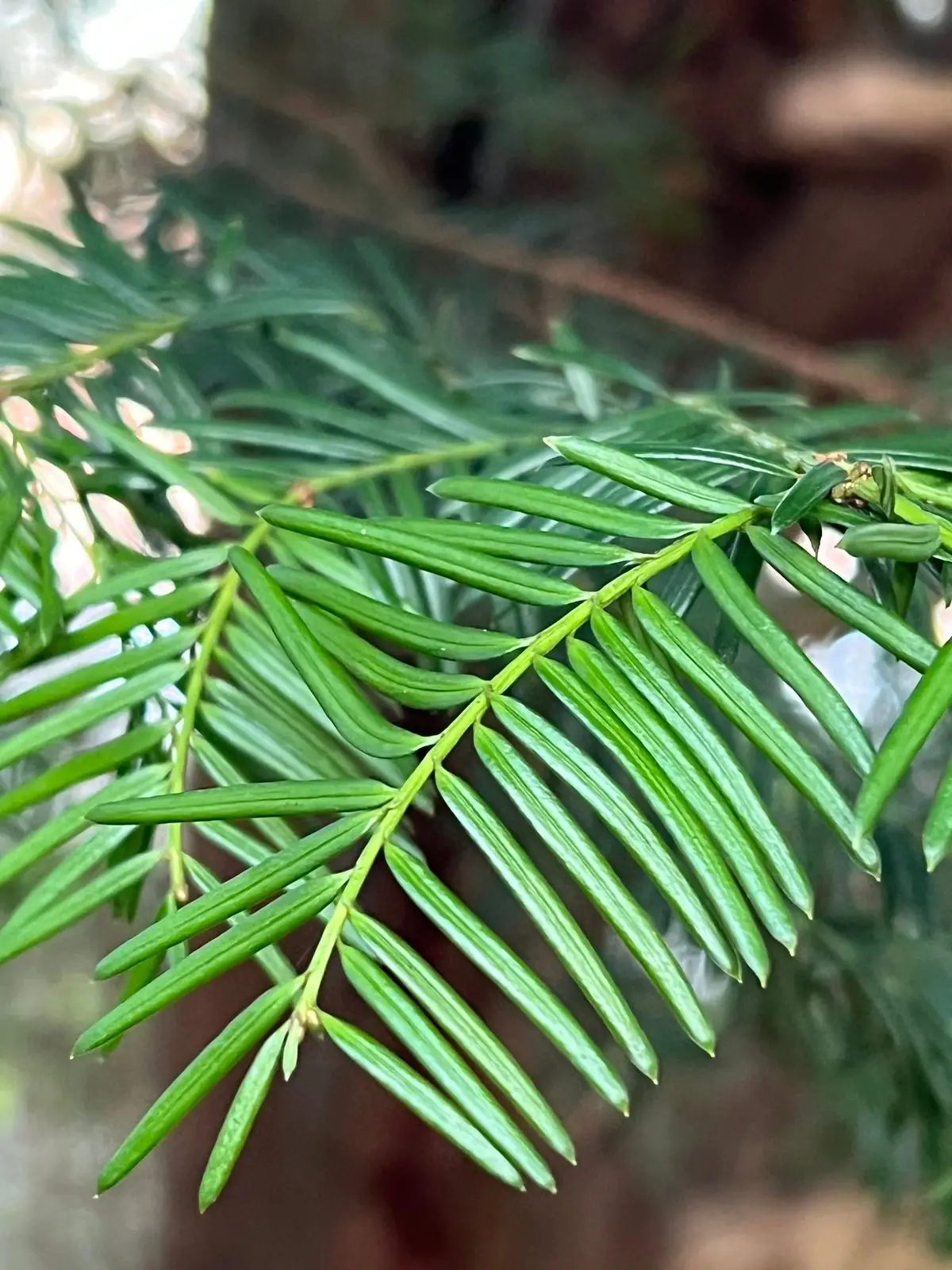
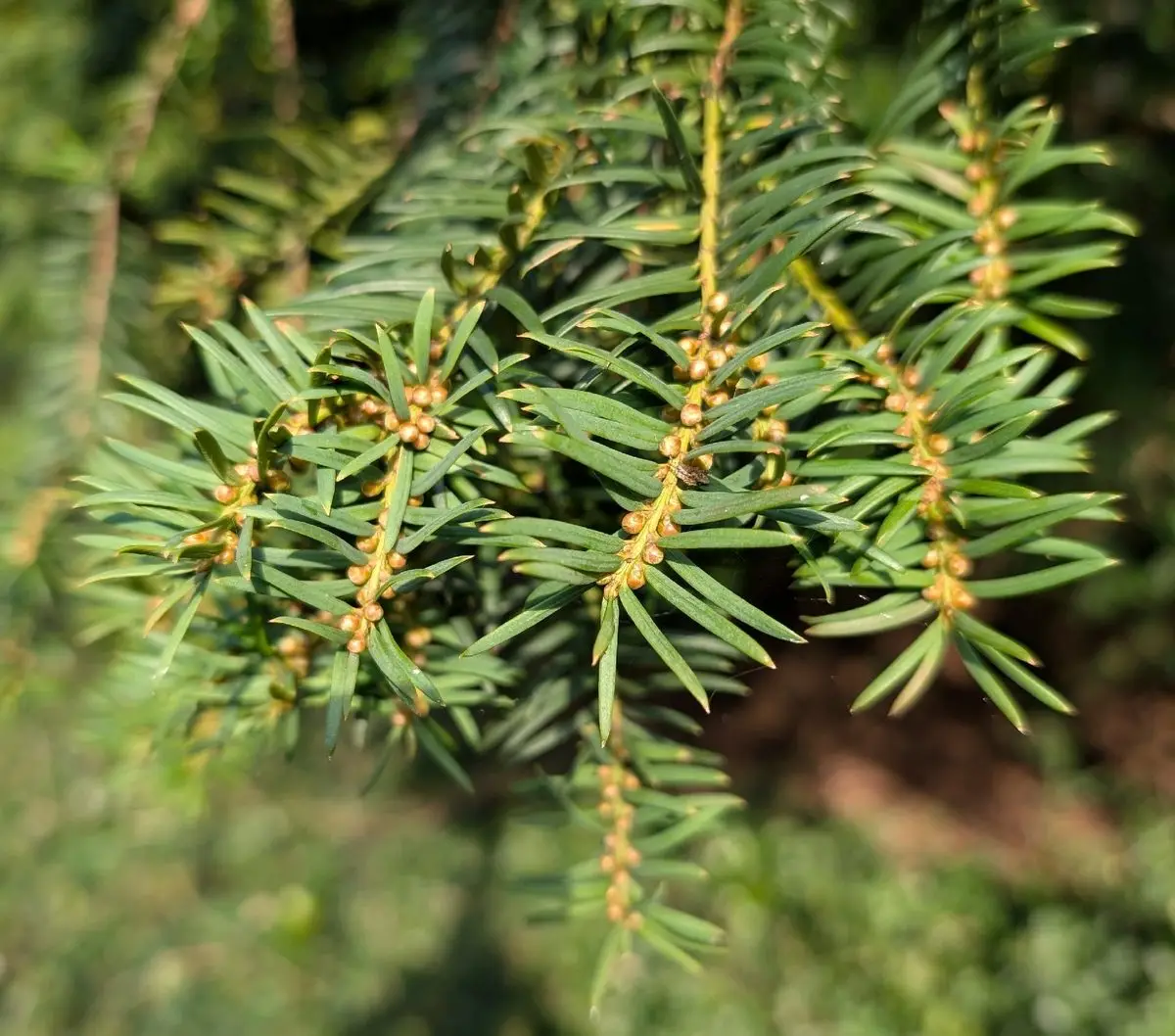
Yew needles are flat and grow in two rows along each side-shoot, dark and glossy on top and paler underneath. The shoot they sit on stays green.
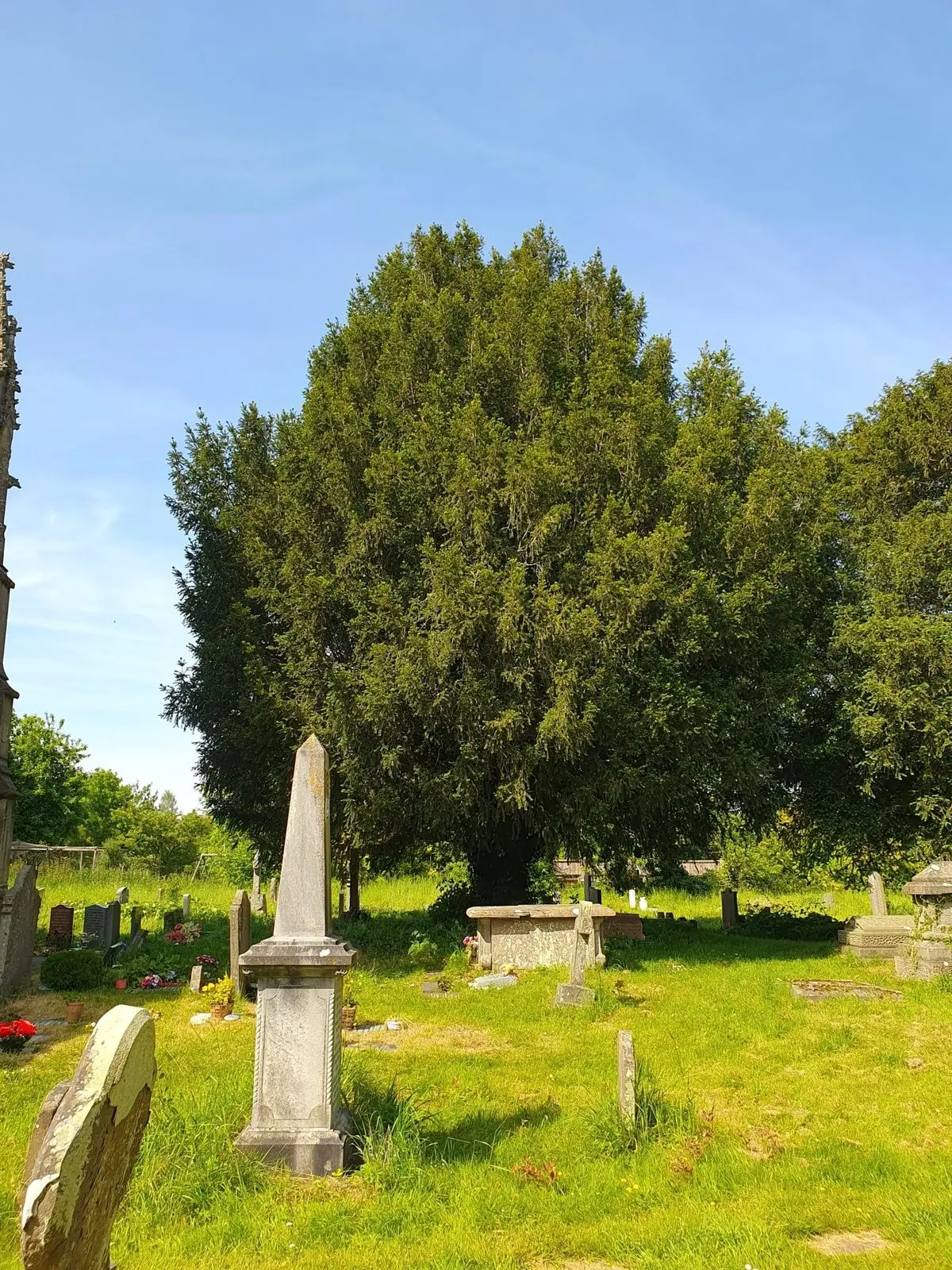
Native · Up to 25 m
Yew
Taxus baccata · Taxaceae
Yew is a dark evergreen, often planted in churchyards. Its flat needles grow in two rows, almost black above and yellowish beneath. Female trees carry red berries, open at the tip.
Often mistaken for holly. How to tell them apart →Know it by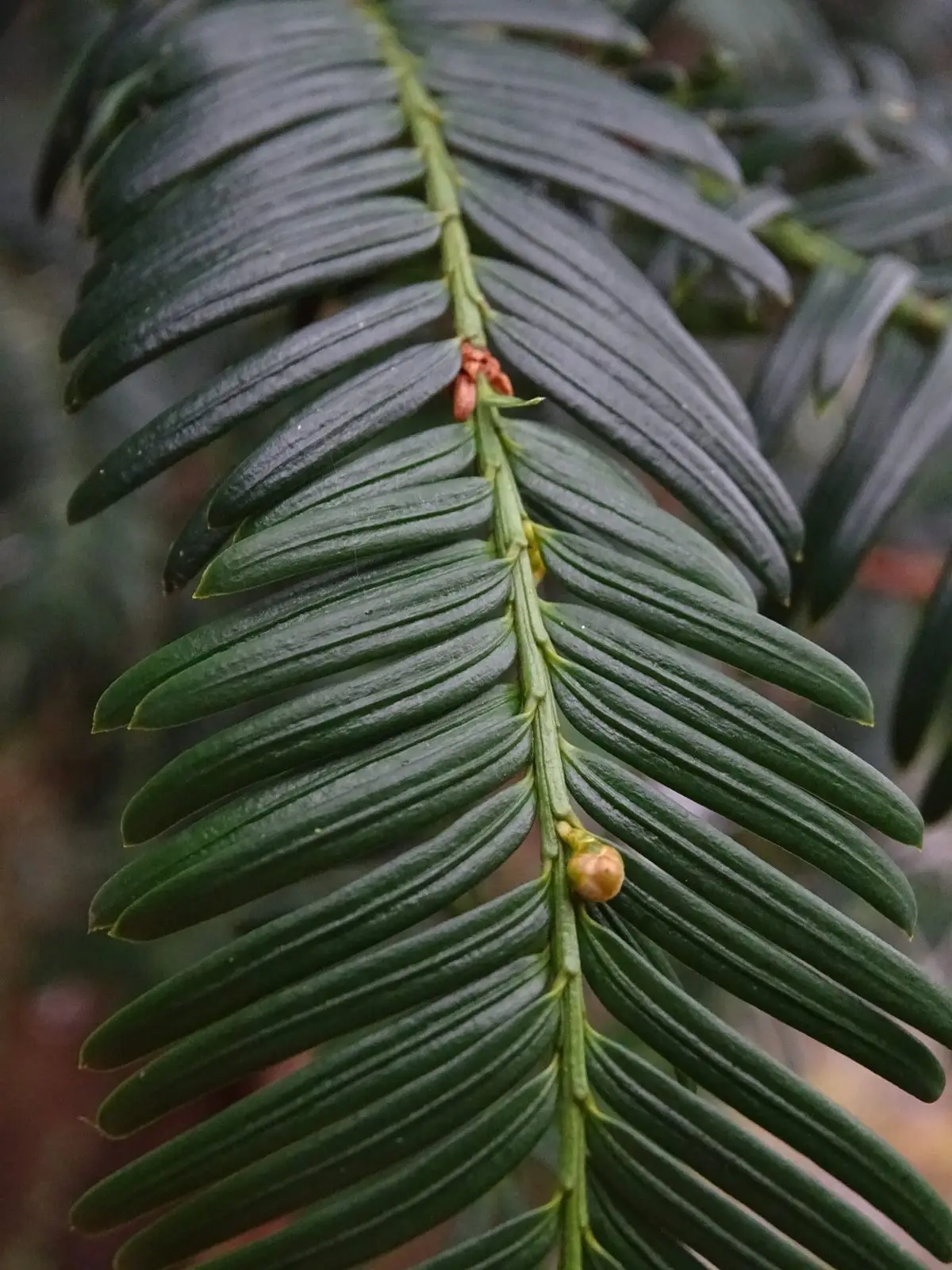 NeedlesFlat needles in two rows, dark and glossy on top.
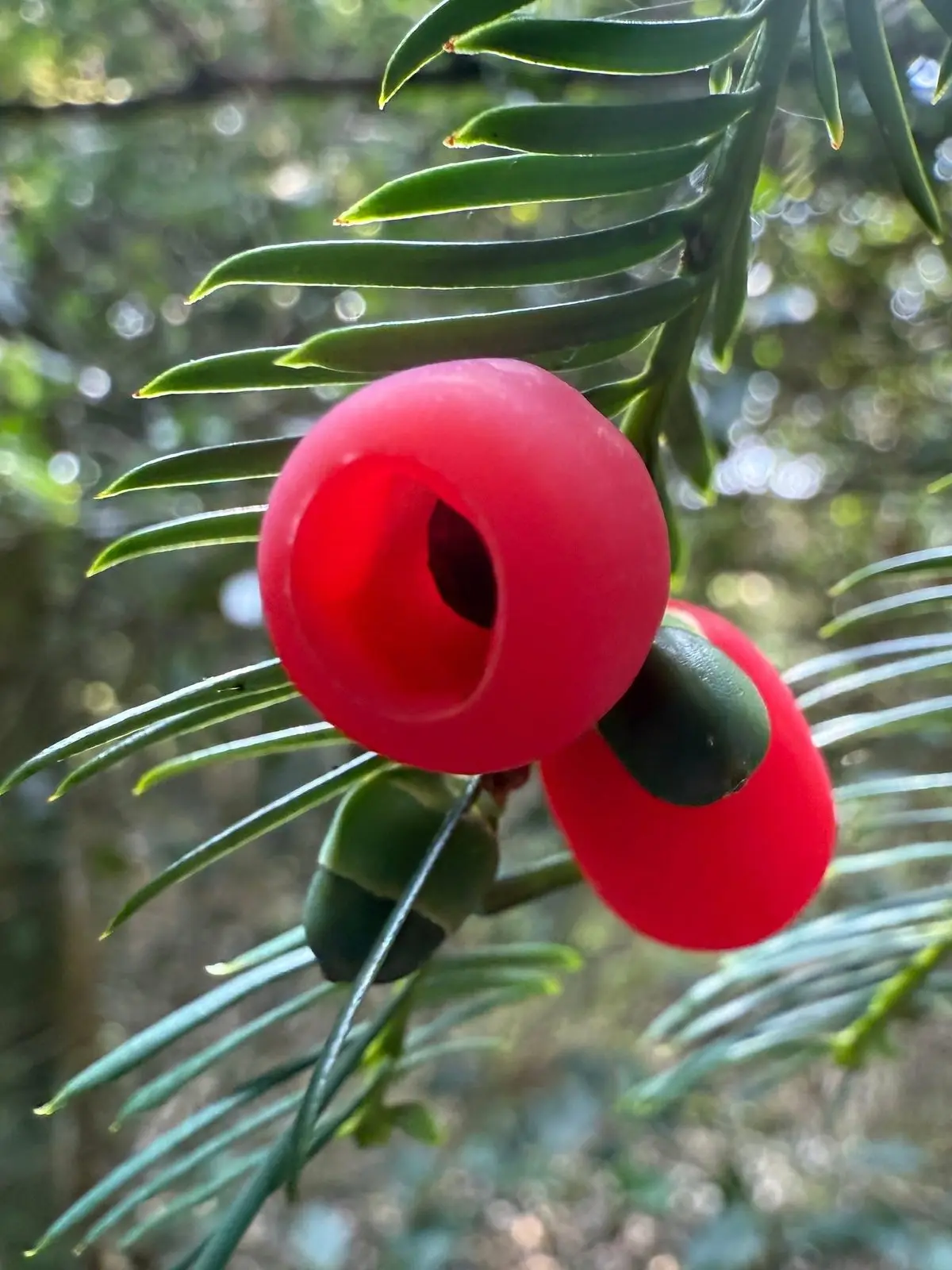
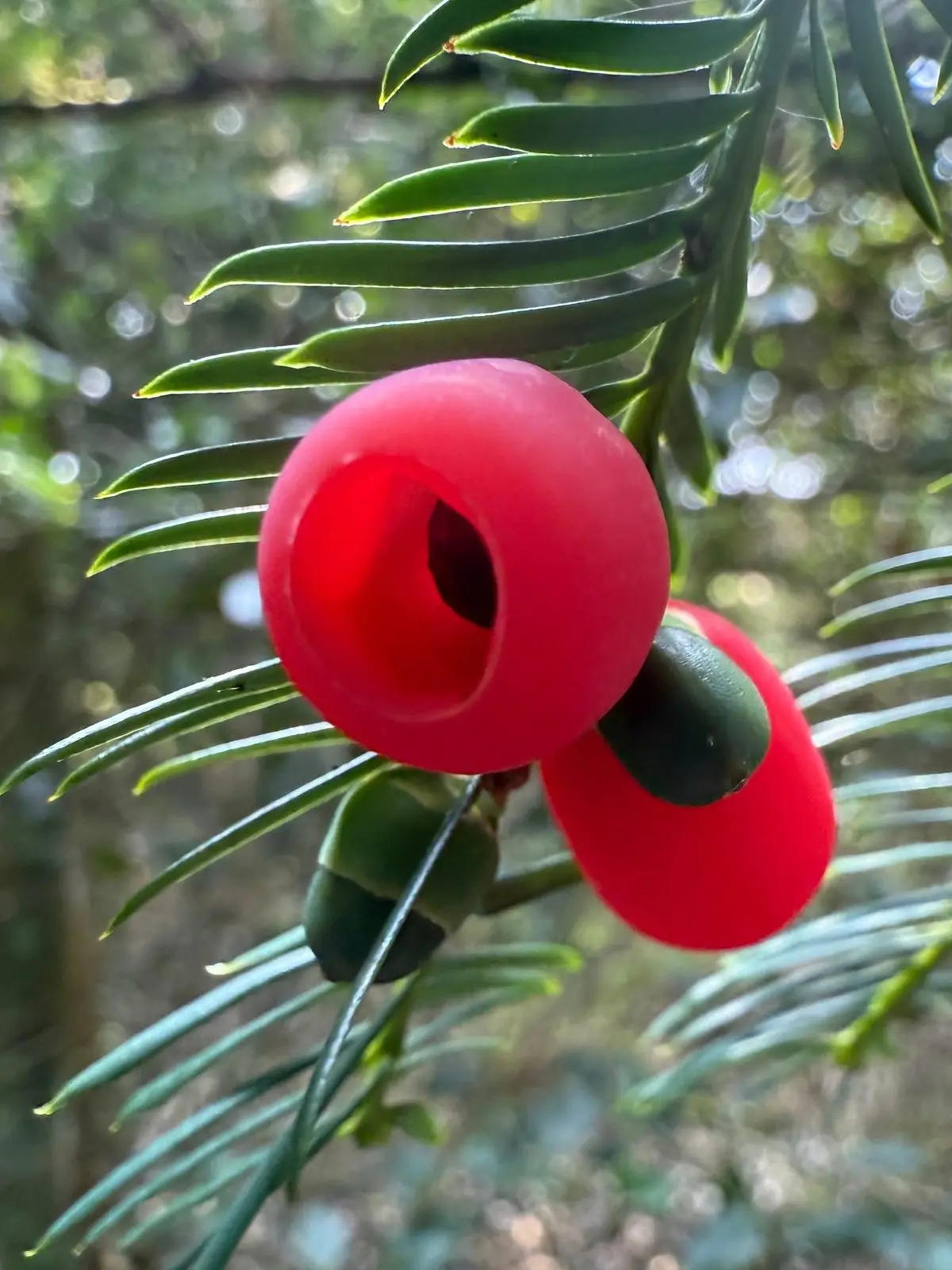 BerriesA soft red cup, open at the tip, on female trees.
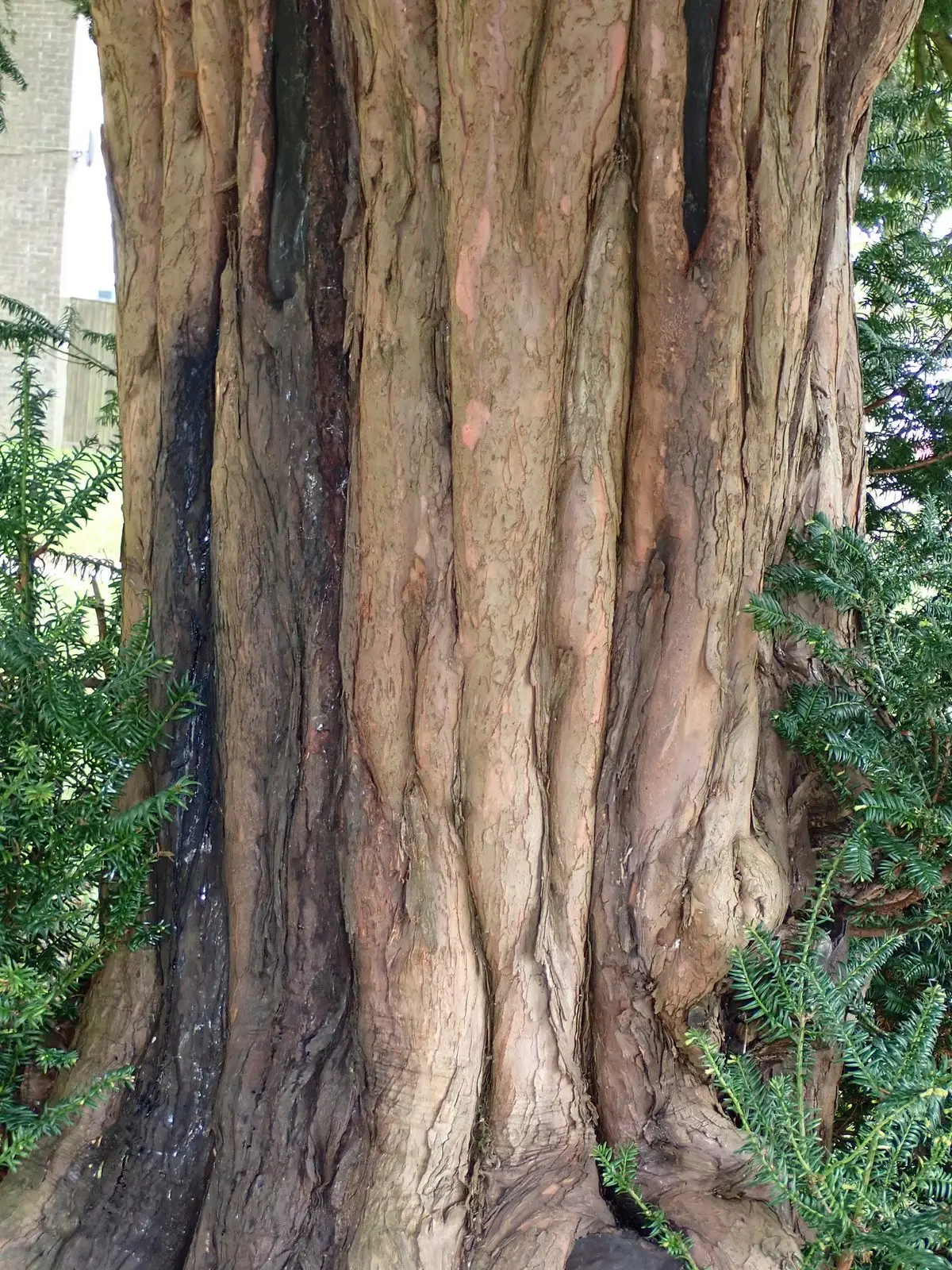
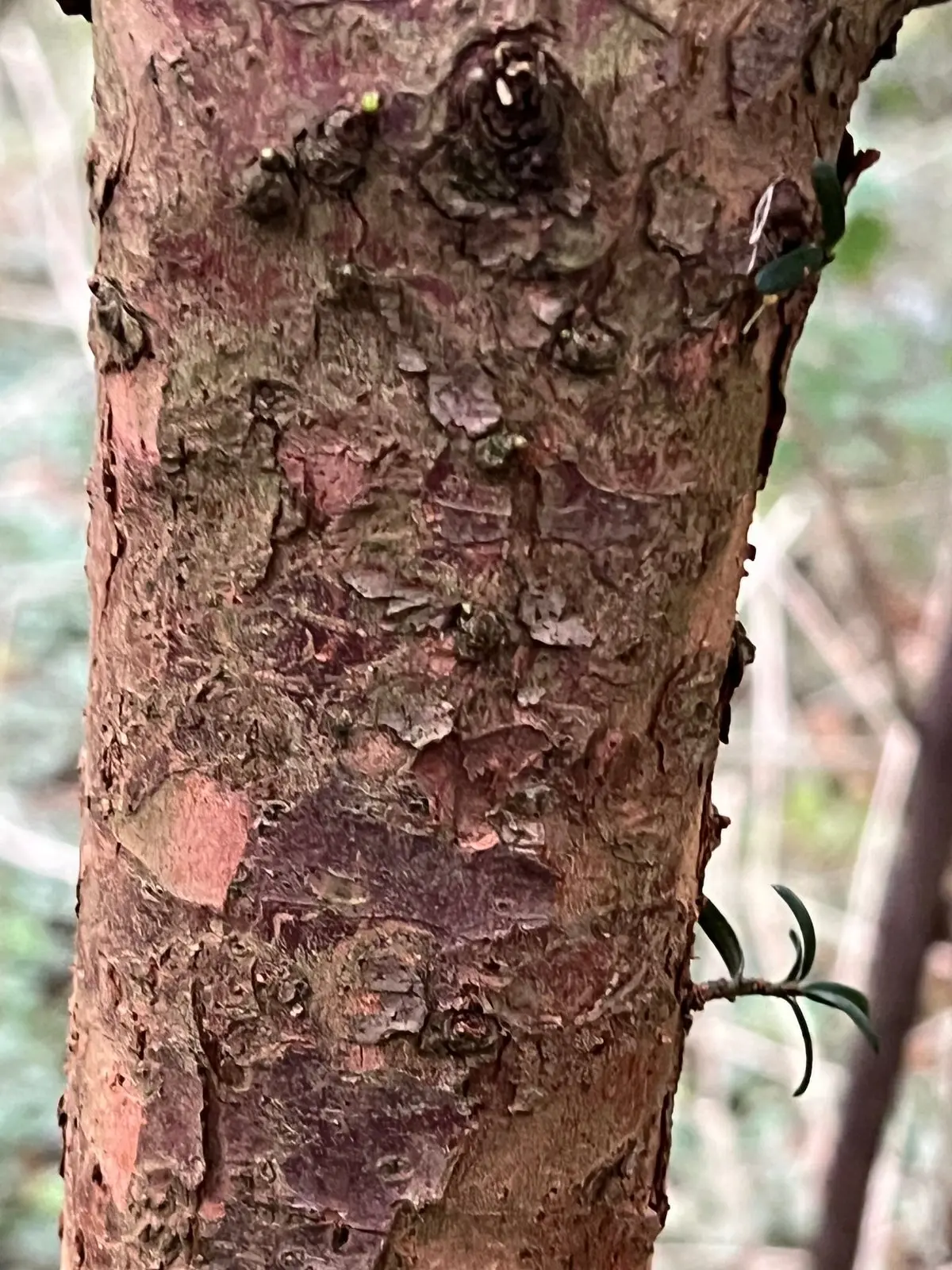 BarkThin, scaly bark in patches of grey, purple and red.
NeedlesFlat needles in two rows, dark and glossy on top.BerriesA soft red cup, open at the tip, on female trees.BarkThin, scaly bark in patches of grey, purple and red.Then check · ShapeA broad, heavy crown, so dark it looks almost black from a distance, usually with a pointed tip. It is often in a churchyard.
How to identify a yew
From late summer into autumn, female trees carry soft, bright red cups, each open at the tip with a green seed showing inside. The whole fruit is poisonous.
The bark is thin and lifts off in small scales, leaving patches of grey, purple and red on the same trunk.
 Learn the yew in TreelyEvery part through the year, and a short round each day until you know it.Get Treely
Every part, in photographs
 Ewan Shilland, CC BY 4.0
 John Witton, CC BY 4.0
When to look
JFMAMJJASOND
In leaf
Flowers
Berries
In leaf: all year · Flowers: February to April · Berries: August to November
Where you’ll find it
Under taller trees in woods, above all under beech, and in dense groves on limestone slopes and the chalk downs. It is planted in churchyards, parks and gardens, and is commonest in southern England.
What it’s mistaken for
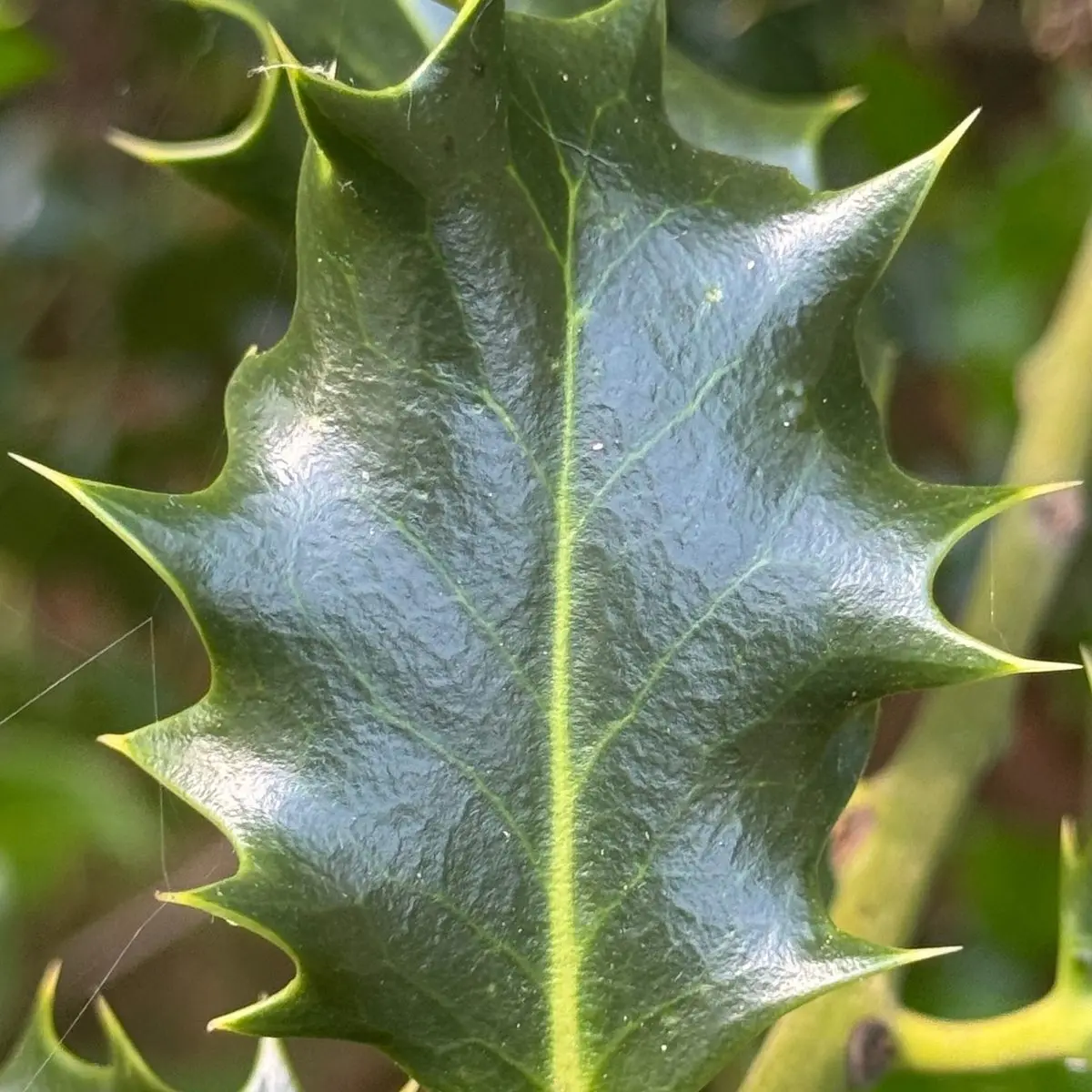 Yew or holly?Both are dark native evergreens with red fruit in the same woods and churchyards.Shape of a leaf→
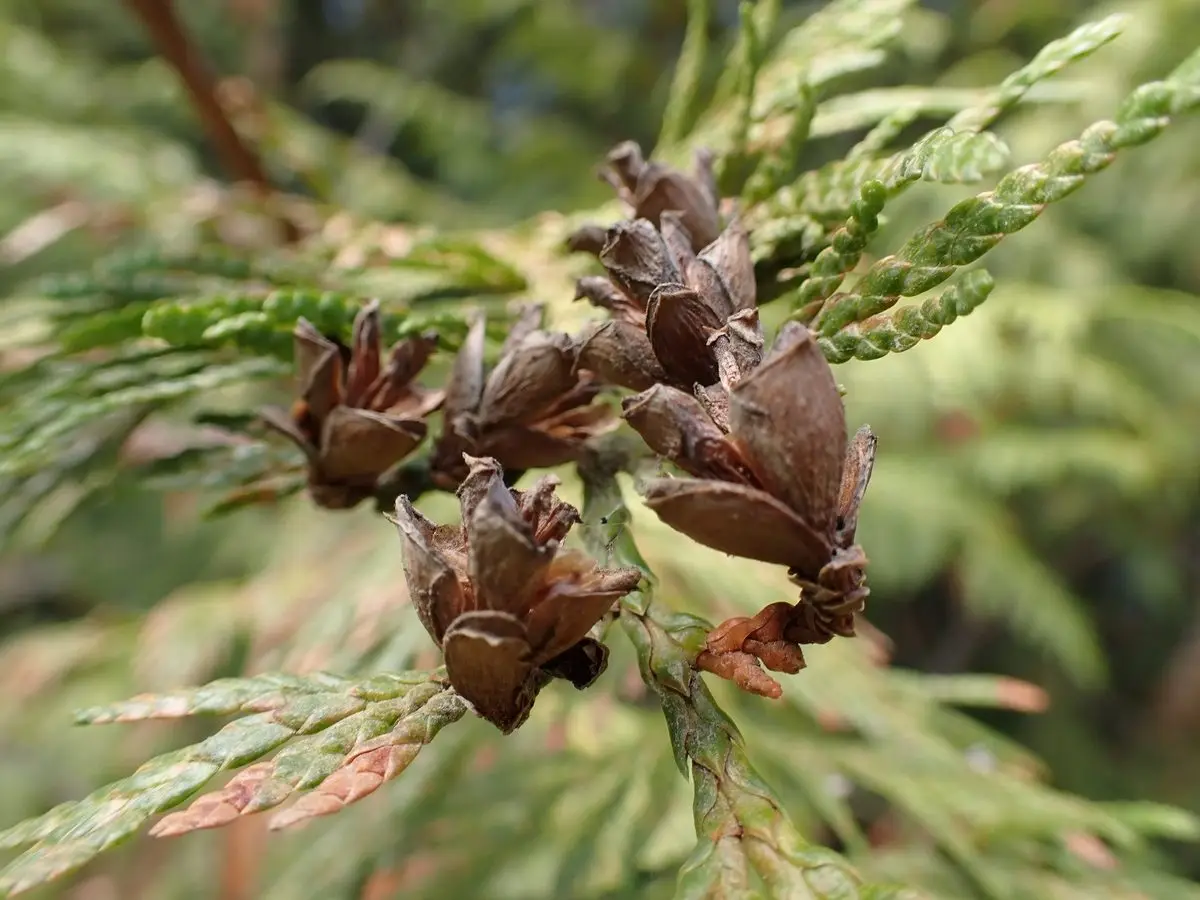 Yew or western red cedar?Both are dark evergreens used for hedging.Fruit on the shoots→
- Norway spruceBoth are dark evergreens with needles. Leaf. Yew: flat, bending under a finger. Norway spruce: four-sided, turning freely, stiff and sharp.
- Western hemlockBoth are dark evergreens whose flat needles lie in two rows either side of the shoot. Leaf. Yew: dull yellowish green, abruptly sharp tips. Western hemlock: two white bands, blunt tips, two lengths.
- JuniperBoth are native evergreens carrying a fleshy fruit in place of a woody cone. Leaf. Yew: two flat rows along the side-shoots. Juniper: in threes, standing straight out from the twig.
In the app
There’s more of the yew in Treely
- Every part, through the yearLeaves, bark, buds, flowers and fruit, photographed in every season
- Its lookalikes, side by sideThe checks that settle it, part by part
- A short round each dayUntil you know the yew on sight, from any side
- Name it from a photoA leaf, the bark or a flower, and Treely tells you which tree
Free to download.
Every fact on this page is checked against the Collins Tree Guide, last in November 2026. Spotted something that looks wrong in front of a real tree? Tell us. How we check.
Photographs: ruth628 (CC0), Zeke Marshall (CC BY 4.0), John Witton (CC BY 4.0), Ewan Shilland (CC BY 4.0), twig777 (CC0), bobwardell (CC0), Leon Cross (CC BY 4.0), Chris Fluit (CC BY 4.0). With thanks to everyone who shares their photographs on iNaturalist and Wikimedia Commons.