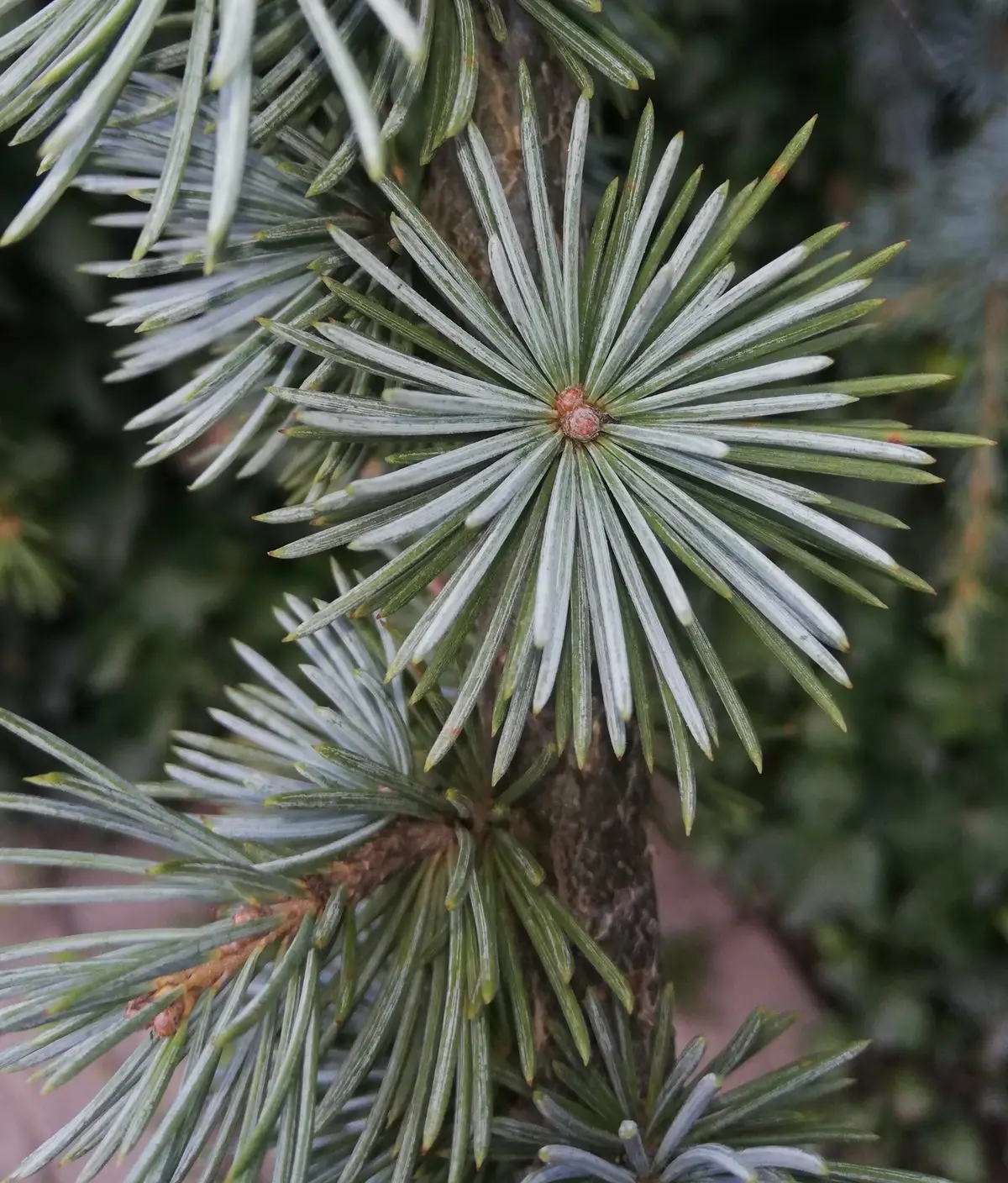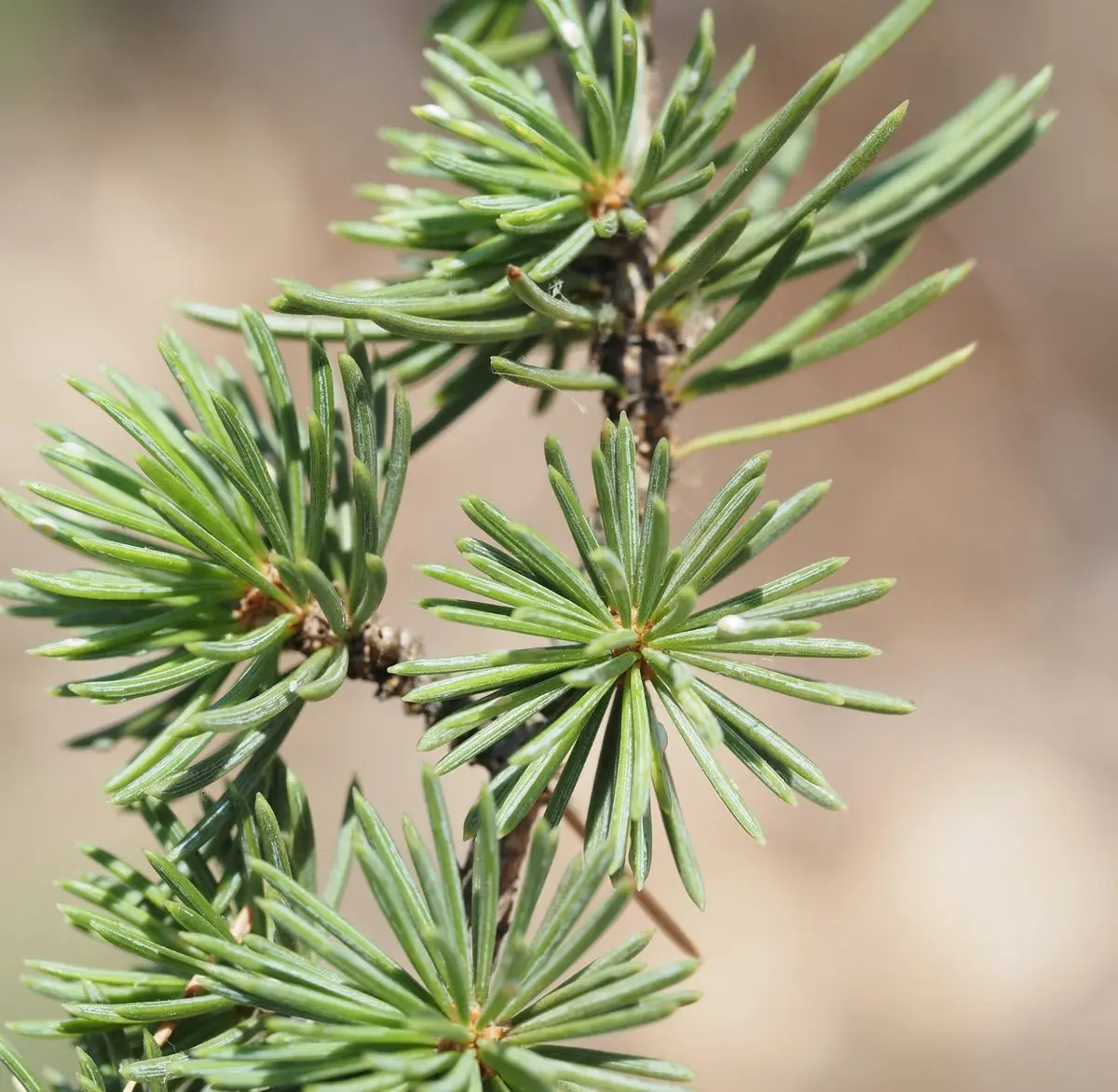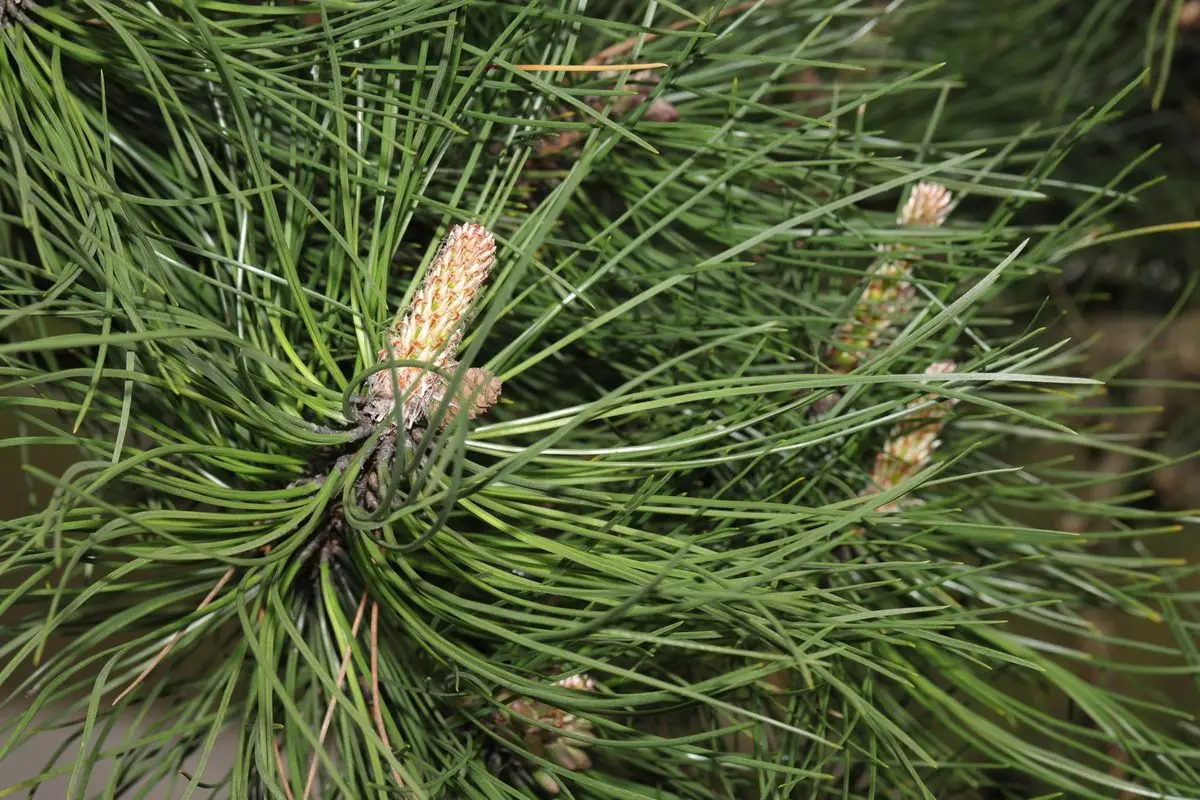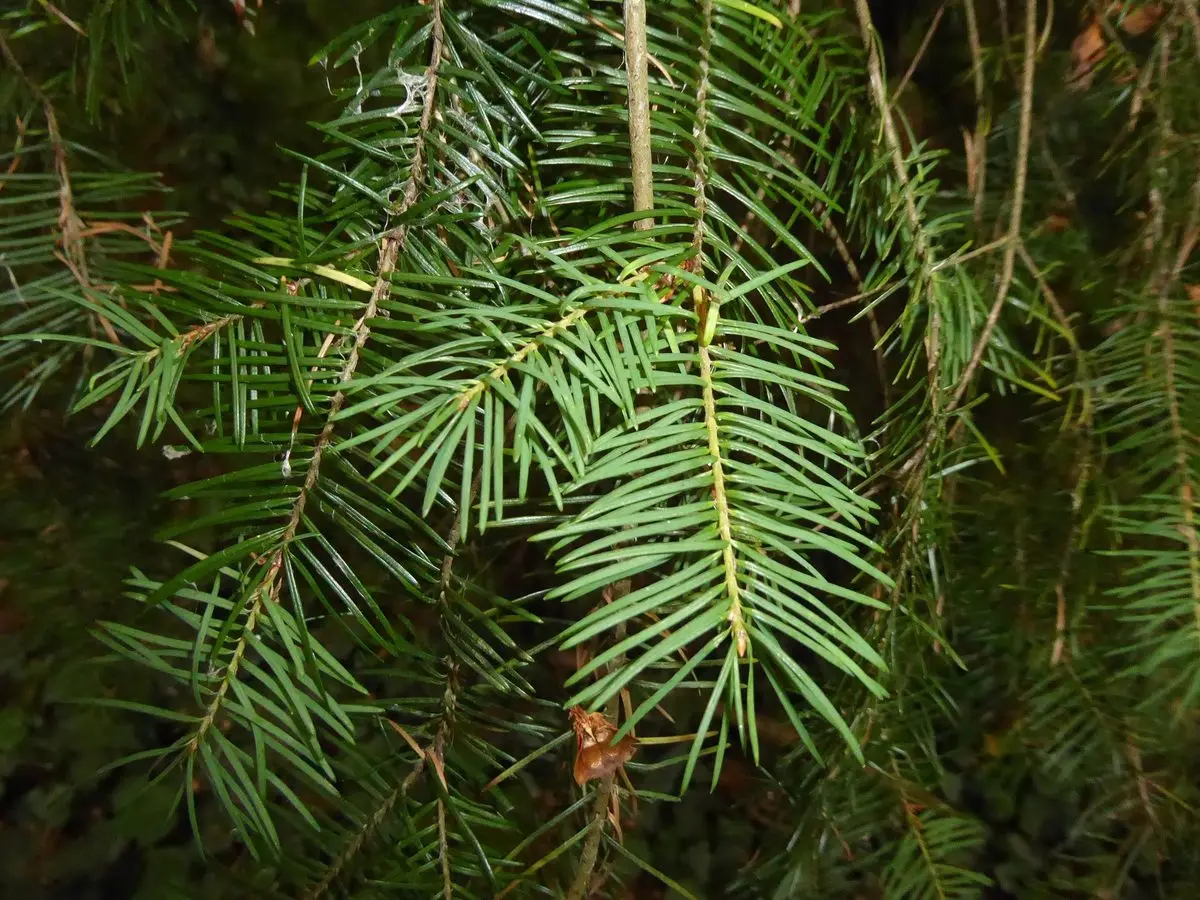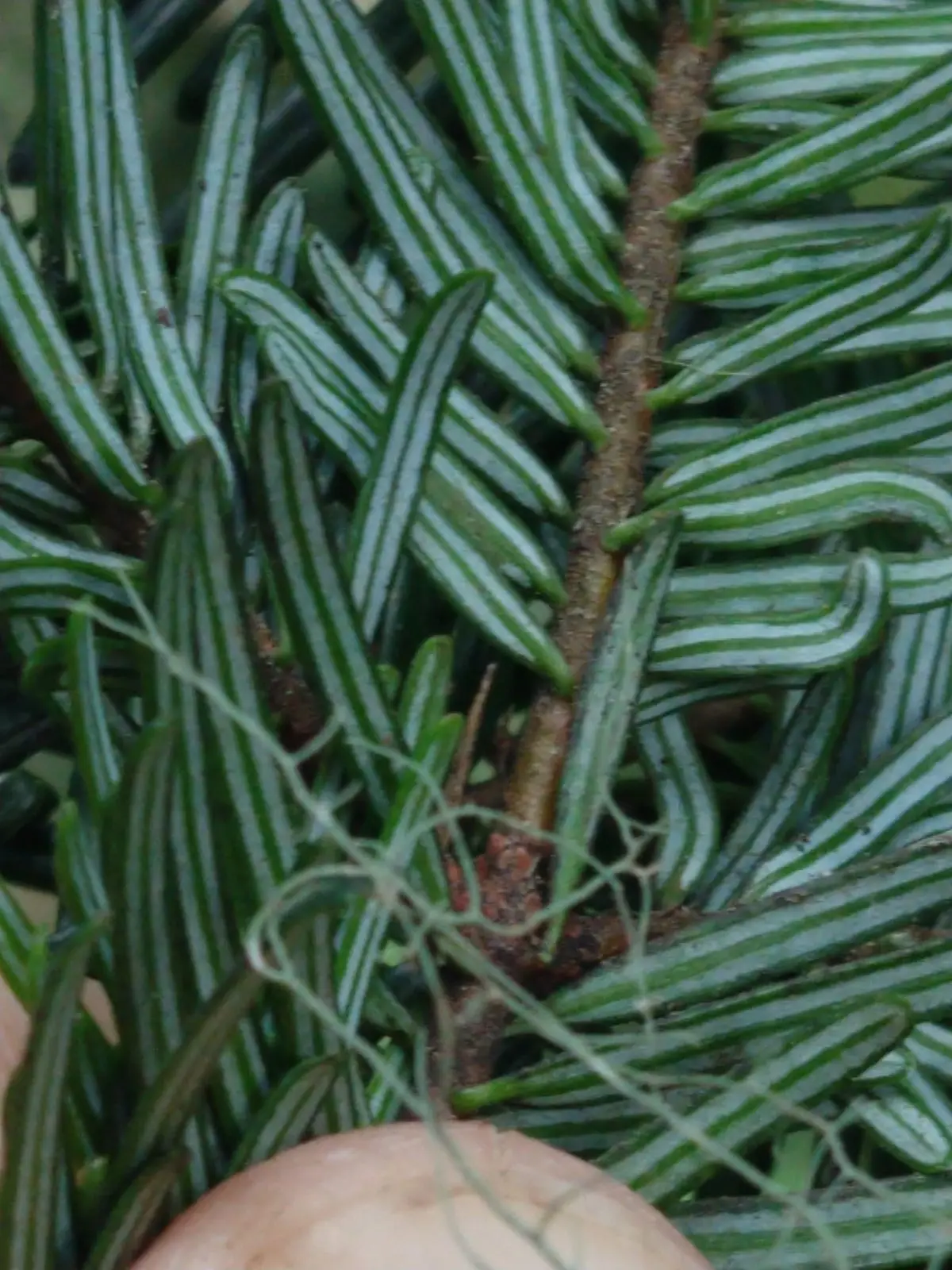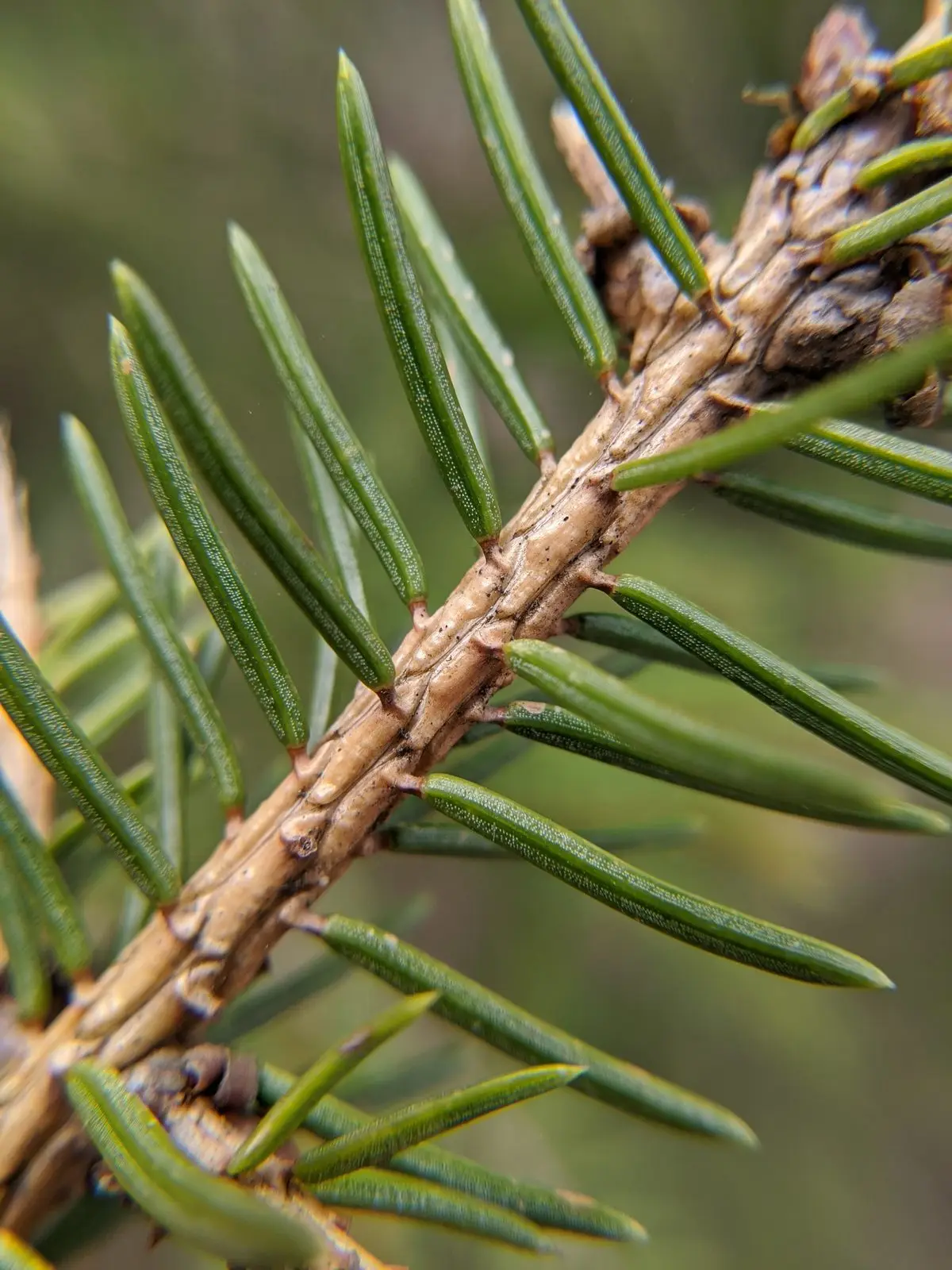
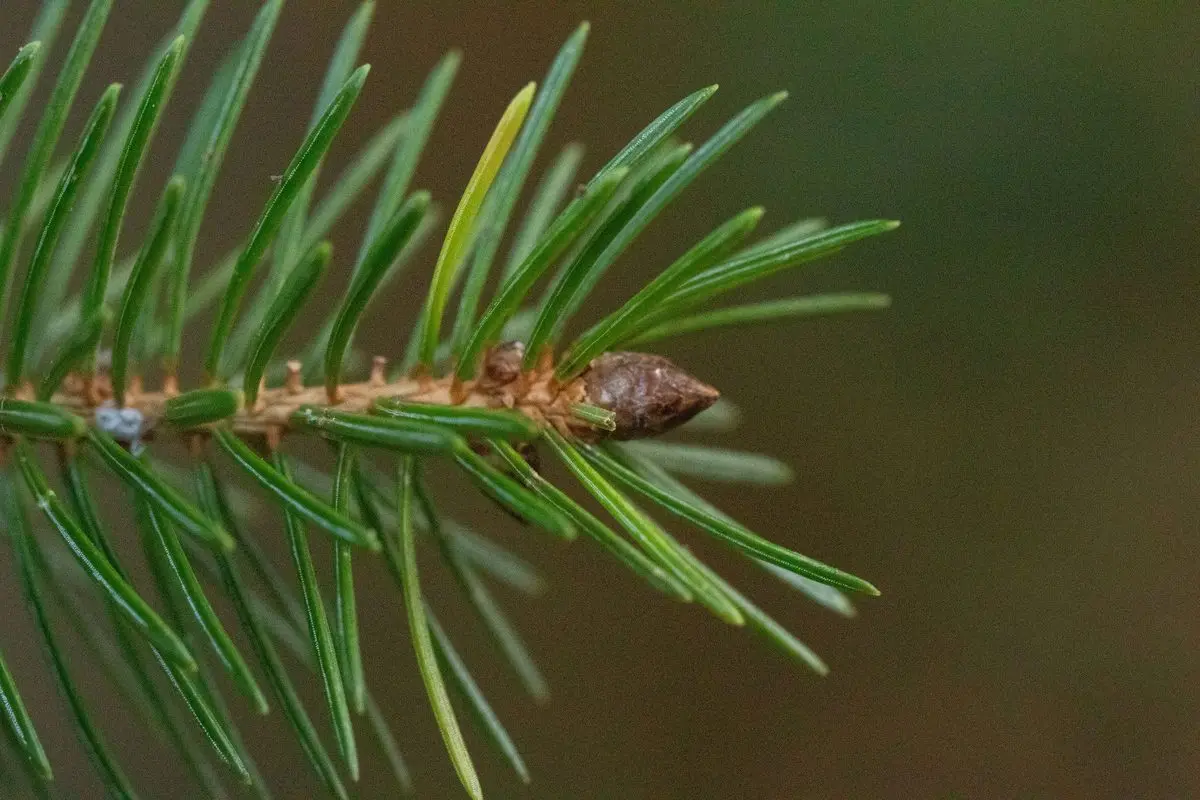
Each dark green needle grows singly on its own small woody peg along the shoot. When the needles drop, the pegs stay behind and leave the twig rough.
Picea abies · Pinaceae
Also called Christmas tree or spruce fir
Norway spruce is the traditional Christmas tree. Its needles sit singly on tiny woody pegs and roll between finger and thumb. Its long cones hang straight down.
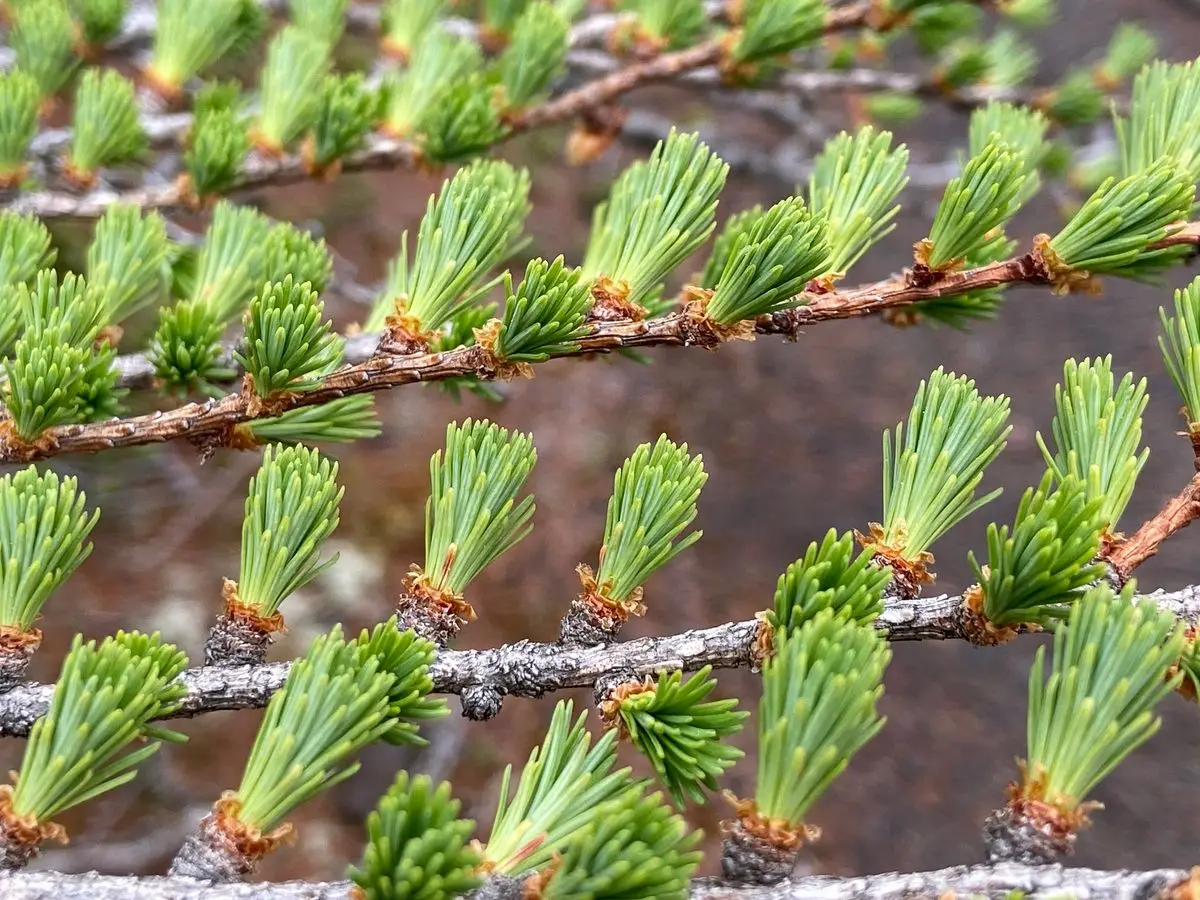
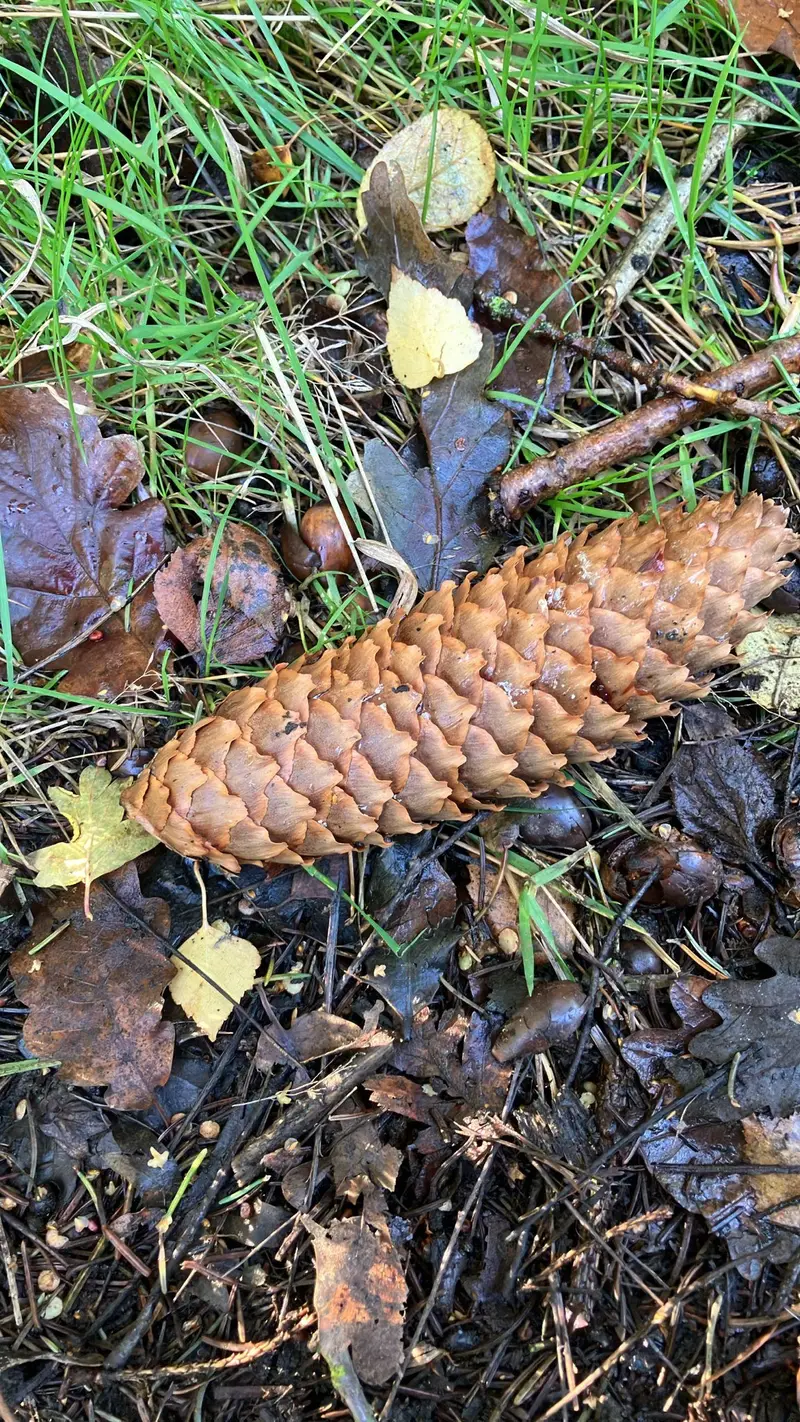
Often mistaken for European larch. How to tell them apart →NeedlesSingle needles on woody pegs, which stay when the needles drop.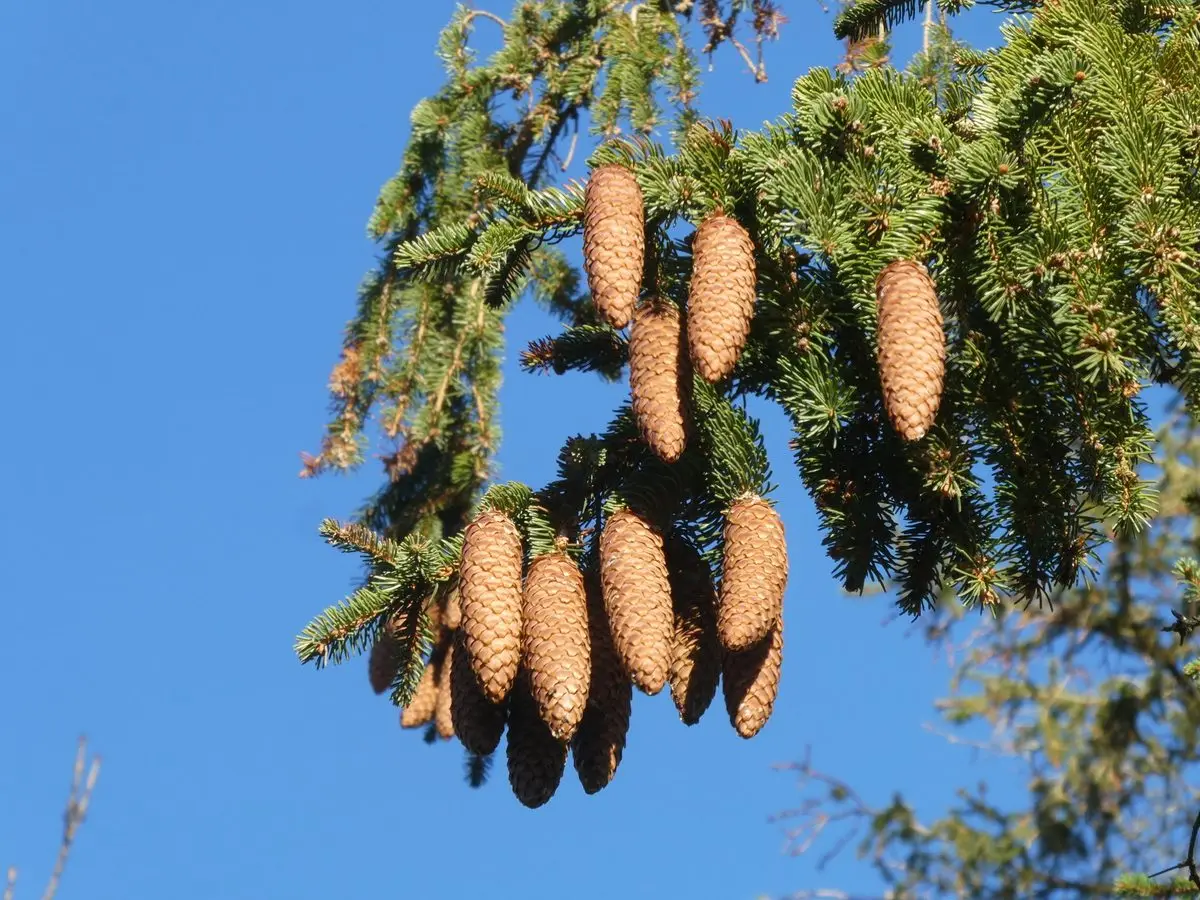 ConesLong hanging cones that fall whole, often found under the tree.
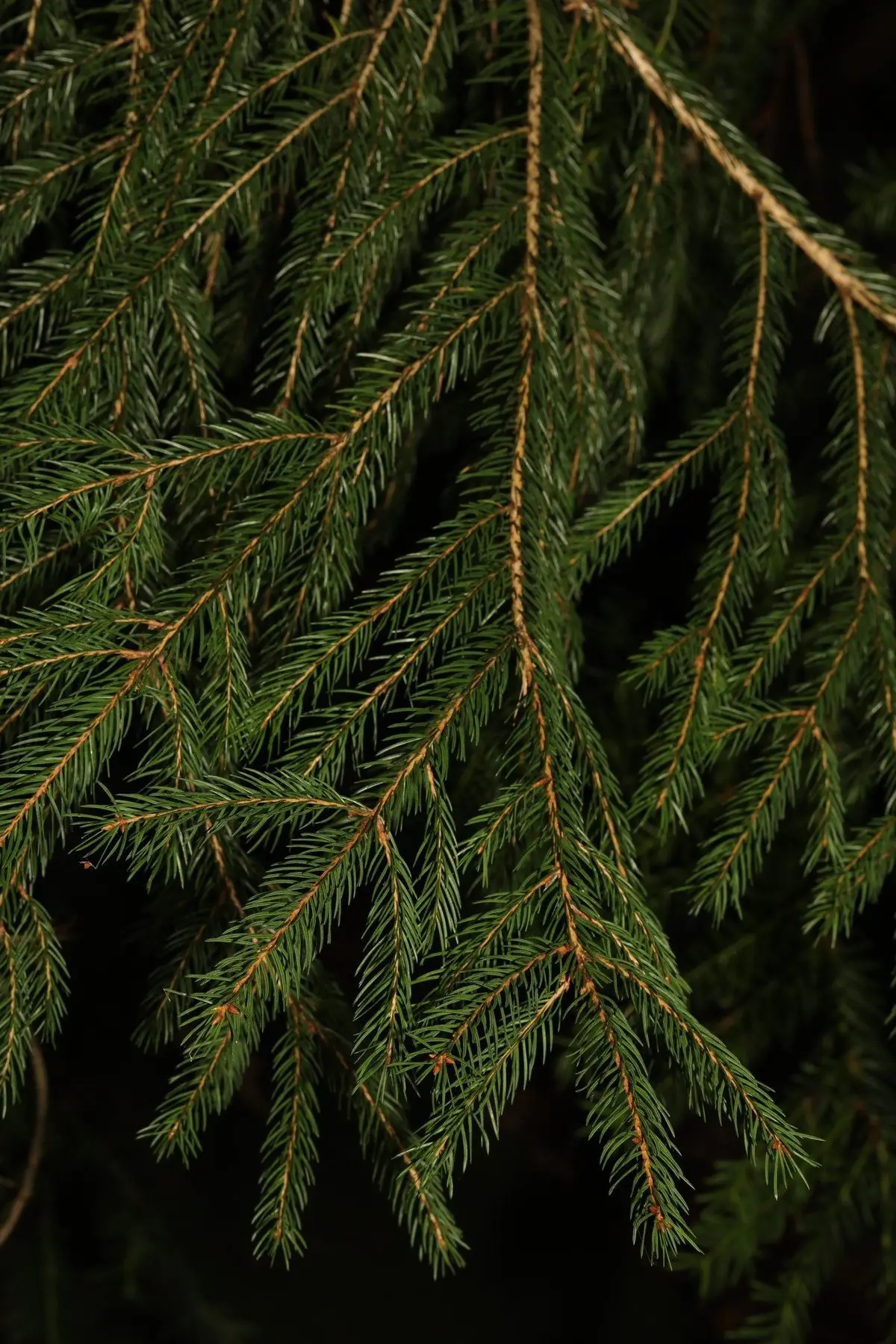 ShapeA narrow dark spire, its side twigs hanging down.
Then check · BarkCoppery brown and finely shredding for many years, then grey and cracked into small rounded plates on old trees.
Each dark green needle grows singly on its own small woody peg along the shoot. When the needles drop, the pegs stay behind and leave the twig rough.
On older trees, long, slender cones hang straight down from the branches and ripen brown. They fall whole, so there are usually some lying under the tree.
On an older tree the side twigs hang straight down from the branches. From further off, the whole tree makes a neat, narrow, dark spire.
 Learn the Norway spruce in TreelyEvery part through the year, and a short round each day until you know it.Get Treely
 dawn2022, CC BY 4.0
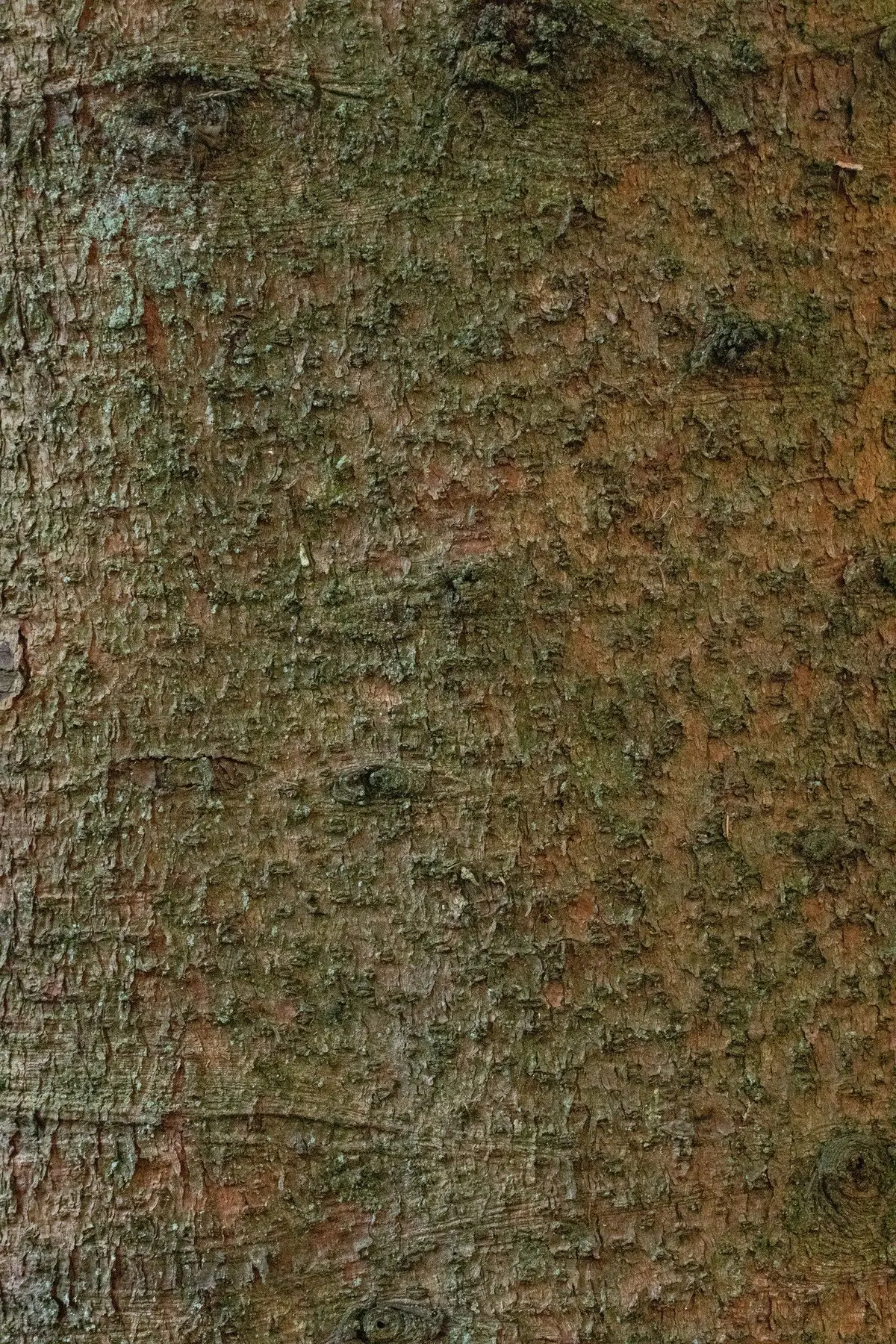 dawn2022, CC BY 4.0
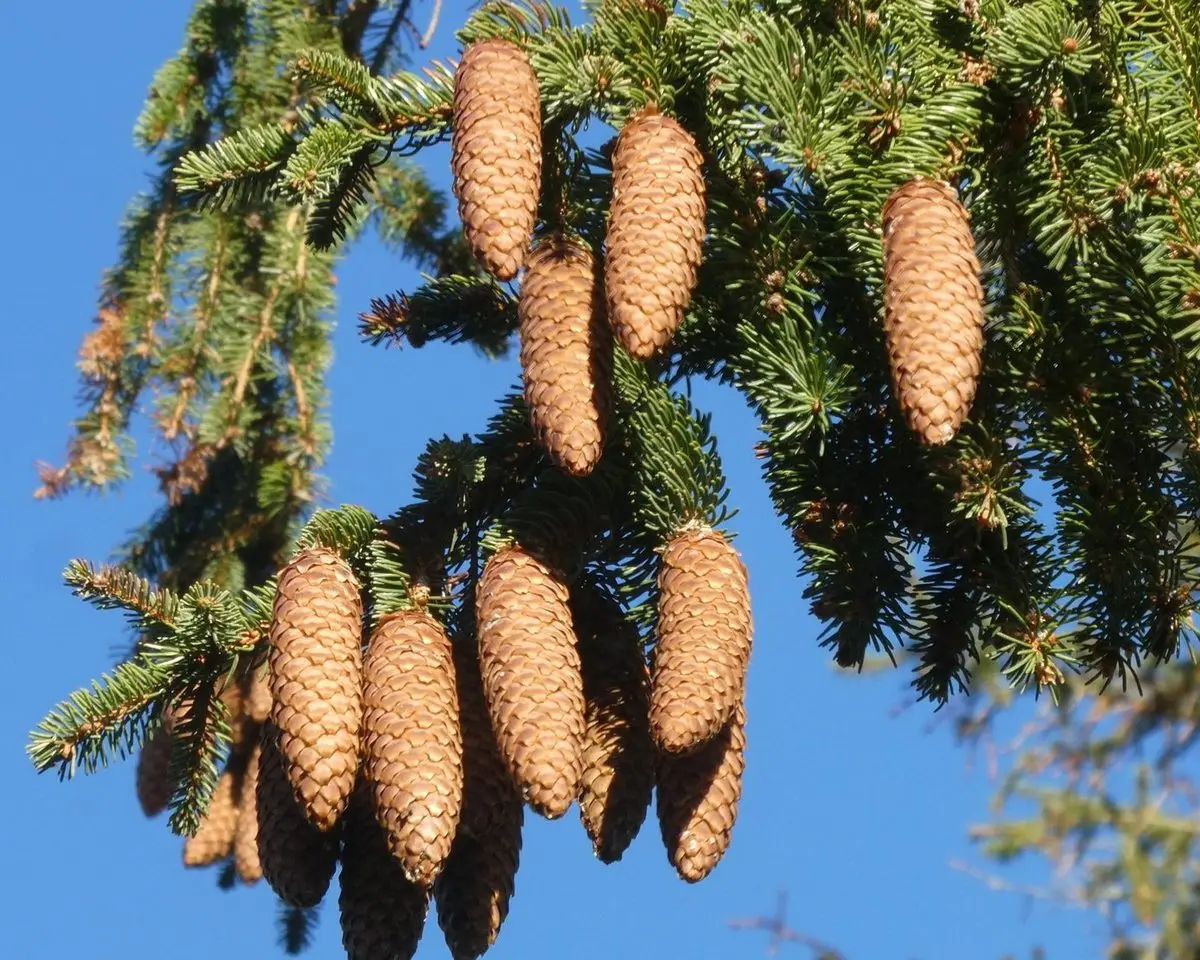 gwynmwilliams, CC BY 4.0
In leaf: all year · Flowers: April to July · Cones: all year
Forestry plantations throughout Britain, most of all in the wetter uplands, and parks and gardens everywhere. It also turns up in small town gardens, where Christmas trees are planted out and seldom do well.
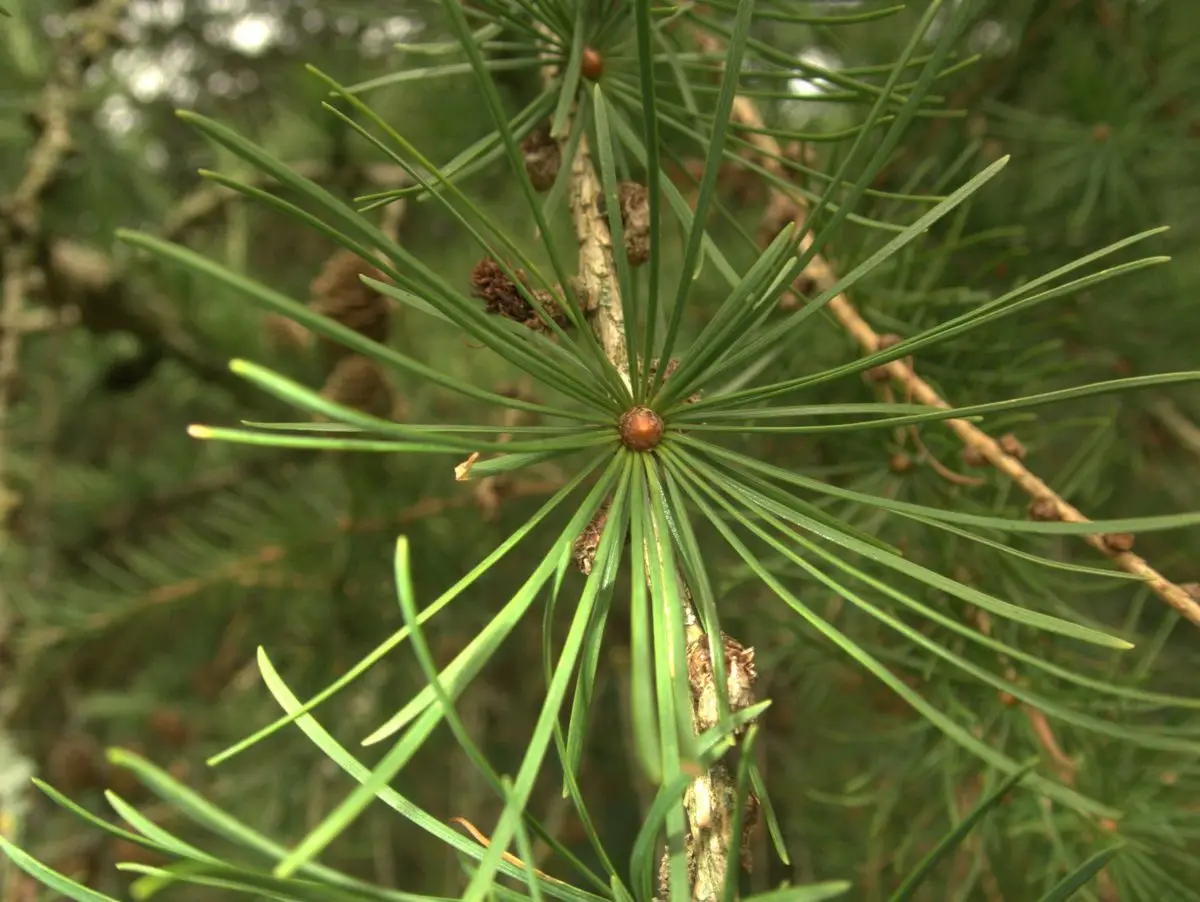 Norway spruce or European larch?Both are plantation conifers of much the same outline.How the needles sit→
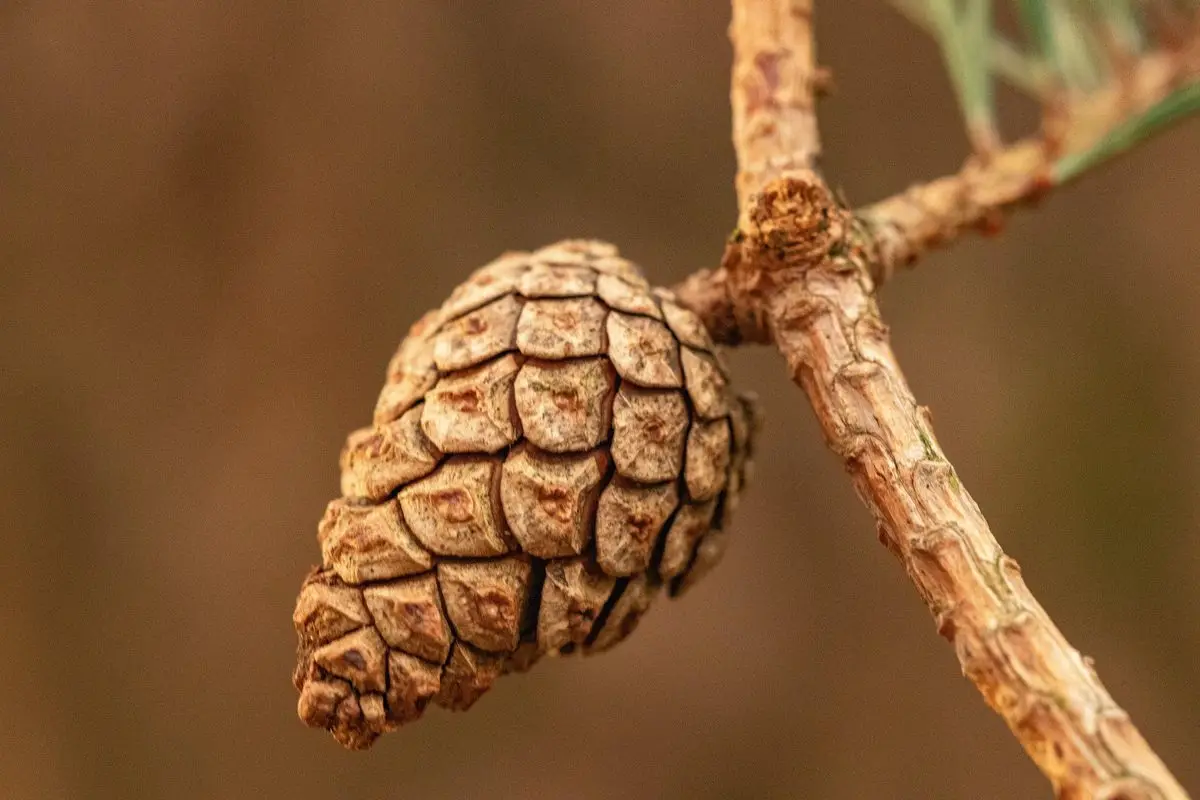 Norway spruce or Scots pine?Both are big planted conifers.Fallen cone→
Free to download.
Every fact on this page is checked against the Collins Tree Guide, last in November 2026. Spotted something that looks wrong in front of a real tree? Tell us. How we check.
Photographs: gwynmwilliams (CC BY 4.0), megachile (CC0), steve_mcwilliam (CC0), dawn2022 (CC BY 4.0), dsykodave (CC0), Jarro Nevsbaru (CC BY 4.0). With thanks to everyone who shares their photographs on iNaturalist and Wikimedia Commons.