Hornbeam
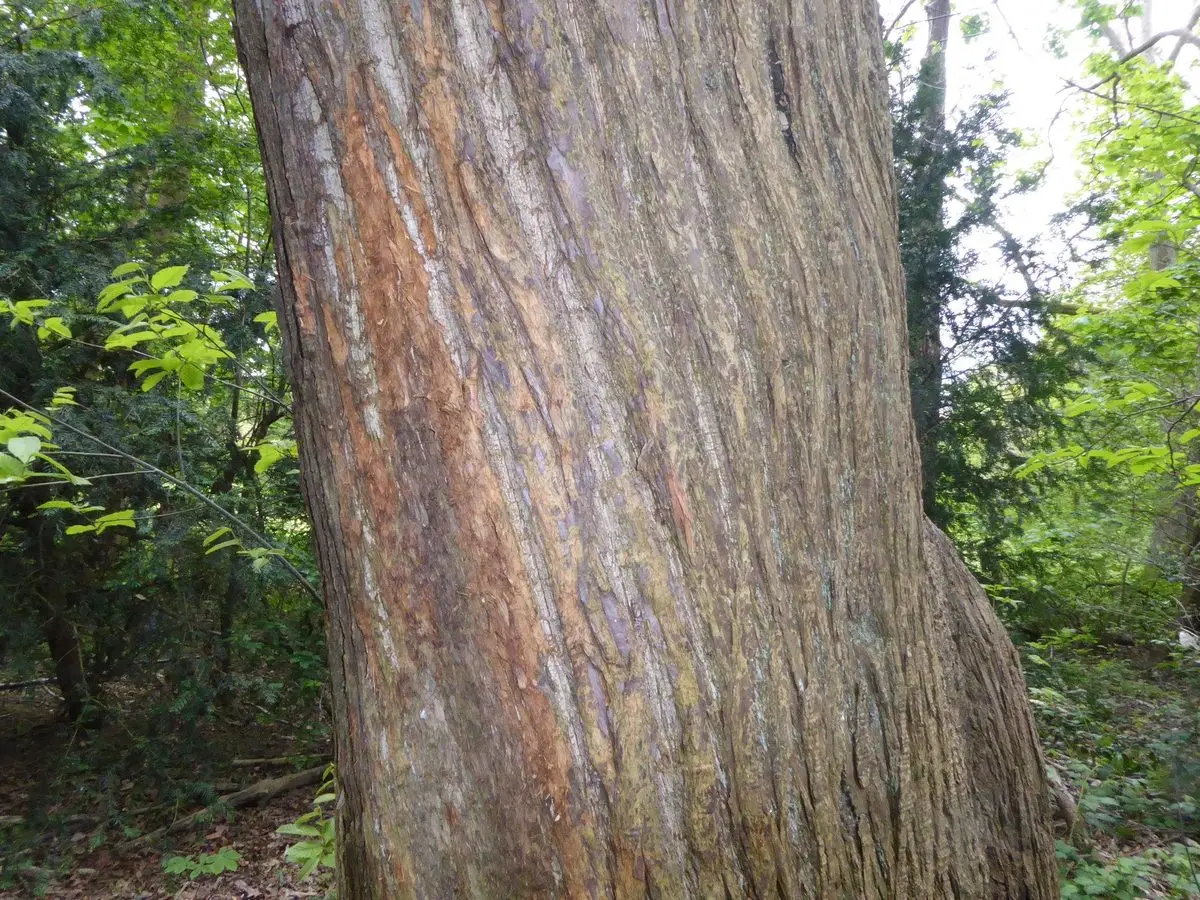
Carpinus betulusHornbeam is a broad, dense tree, often clipped as a hedge. Its smooth grey trunk is ridged like muscle, with wriggling silver or orange marks running up it.
How to identify hornbeam →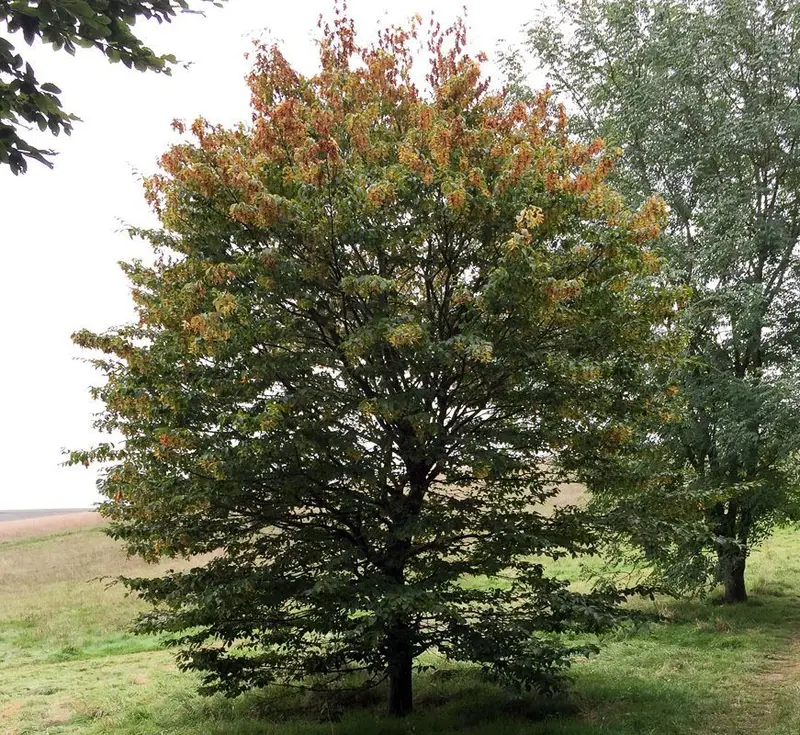 Drepanostoma, CC BY 4.0
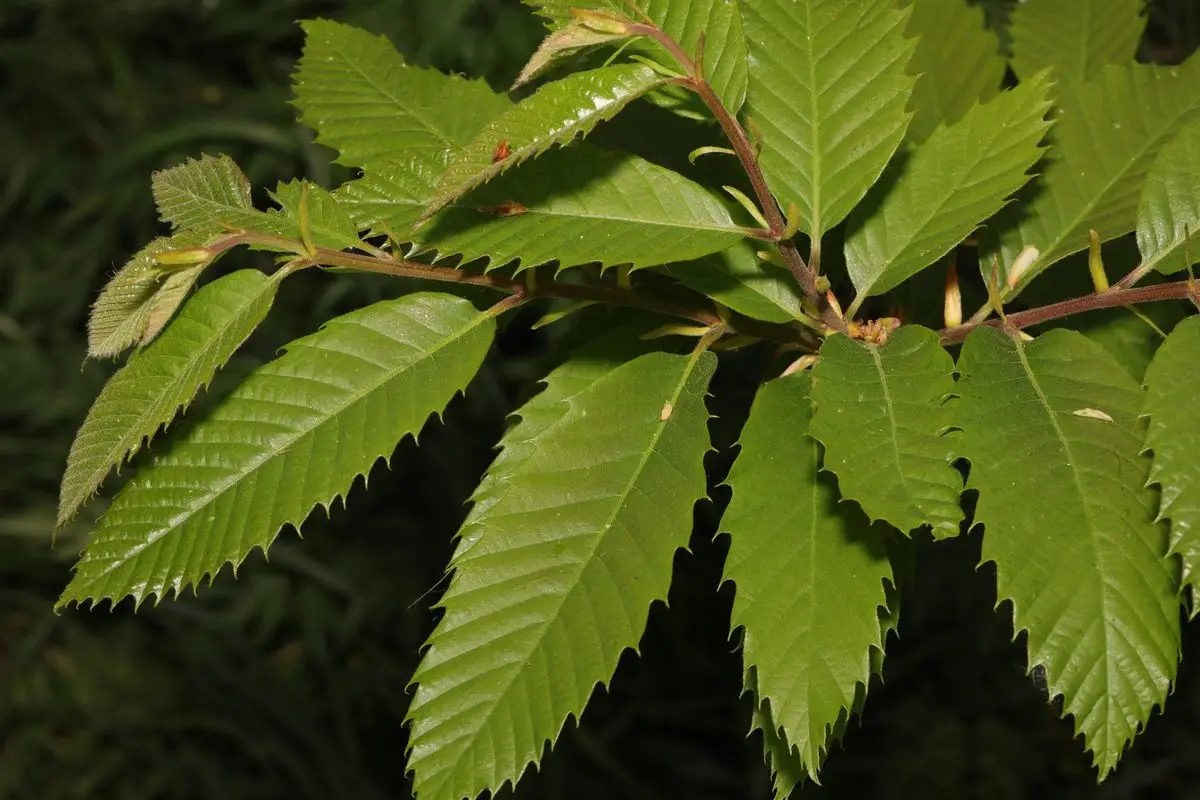
Both have toothed leaves with parallel veins.
The quickest check is the leaf length. Hornbeam: 7 to 12 cm, big and small teeth. Sweet chestnut: 16 to 25 cm, spine-teeth 1 cm apart. No leaves on the tree? Check the old trunk.
| Look at | Hornbeam | Sweet chestnut |
|---|---|---|
| Leaf length | 7 to 12 cm, big and small teeth | 16 to 25 cm, spine-teeth 1 cm apart |
| Old trunk | Smooth grey, in ridges and hollows | Crisp ridges spiralling up the trunk |
Hornbeam is a broad, dense tree, often clipped as a hedge. Its smooth grey trunk is ridged like muscle, with wriggling silver or orange marks running up it.
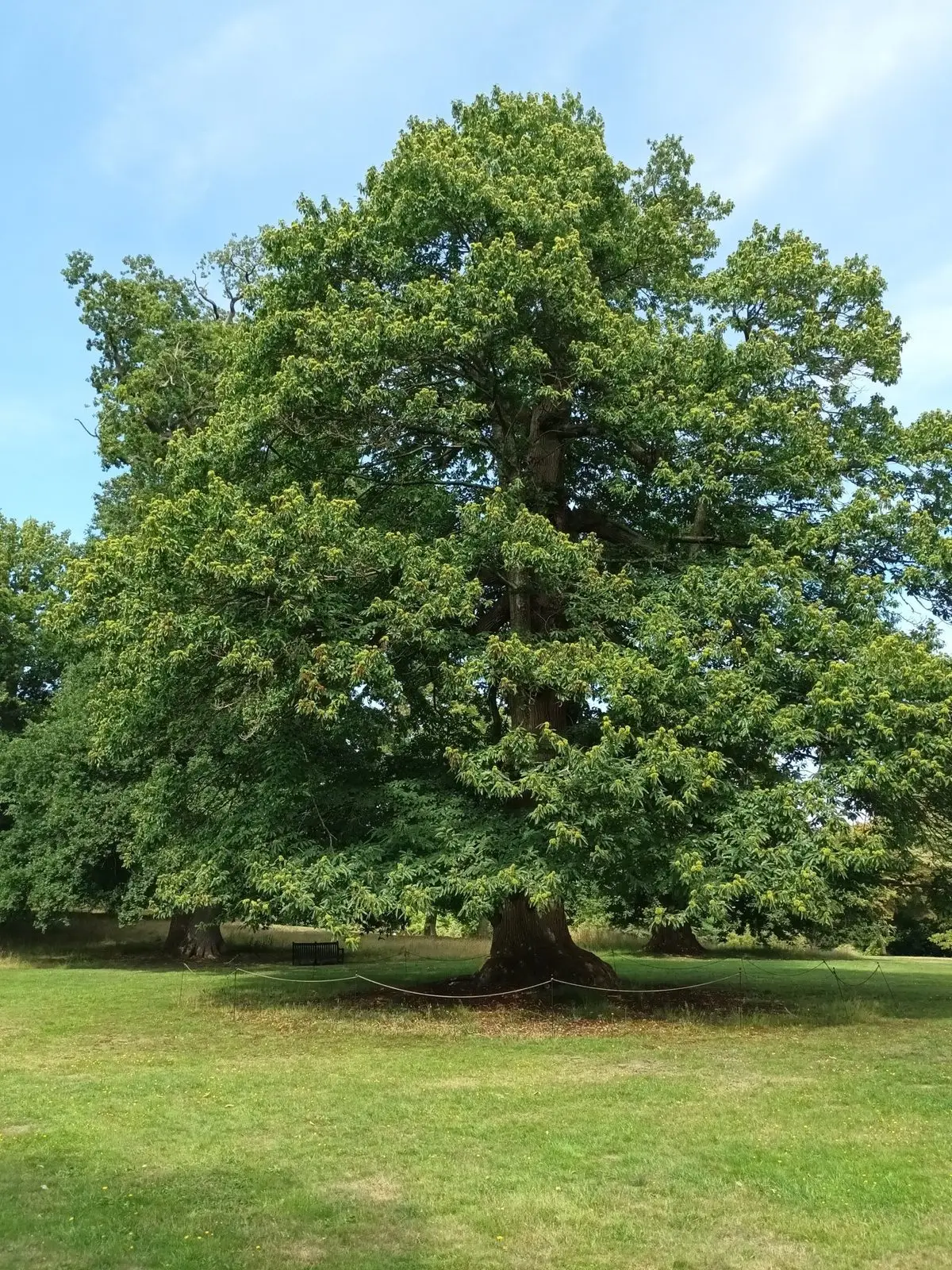
How to identify hornbeam →Sweet chestnut is a big tree with long, glossy leaves. Each leaf is edged with coarse, spiky teeth. On an old trunk the bark ridges twist round, usually clockwise.
How to identify sweet chestnut →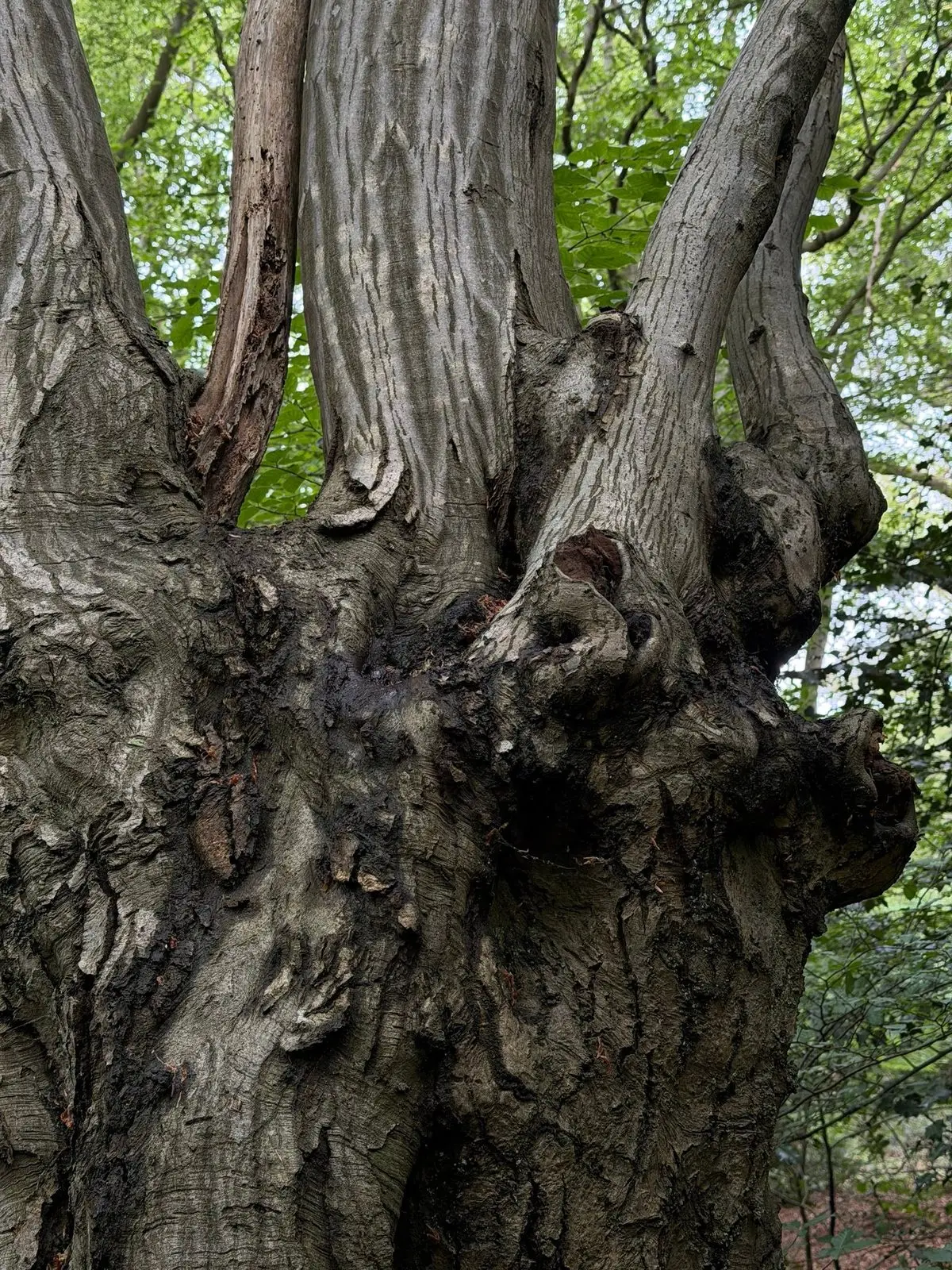
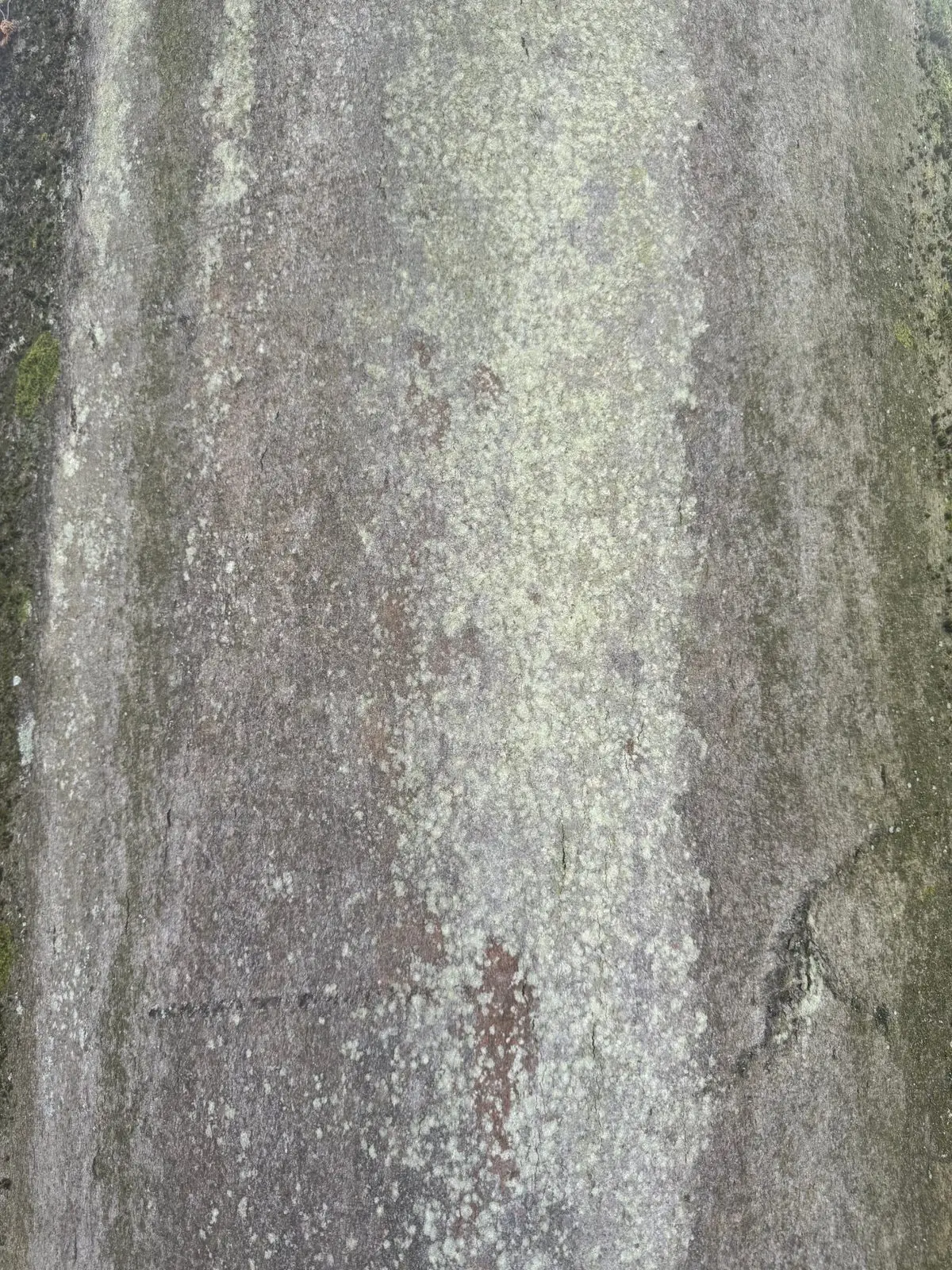 Hornbeam or common beech?Quickest check: the trunk surface→
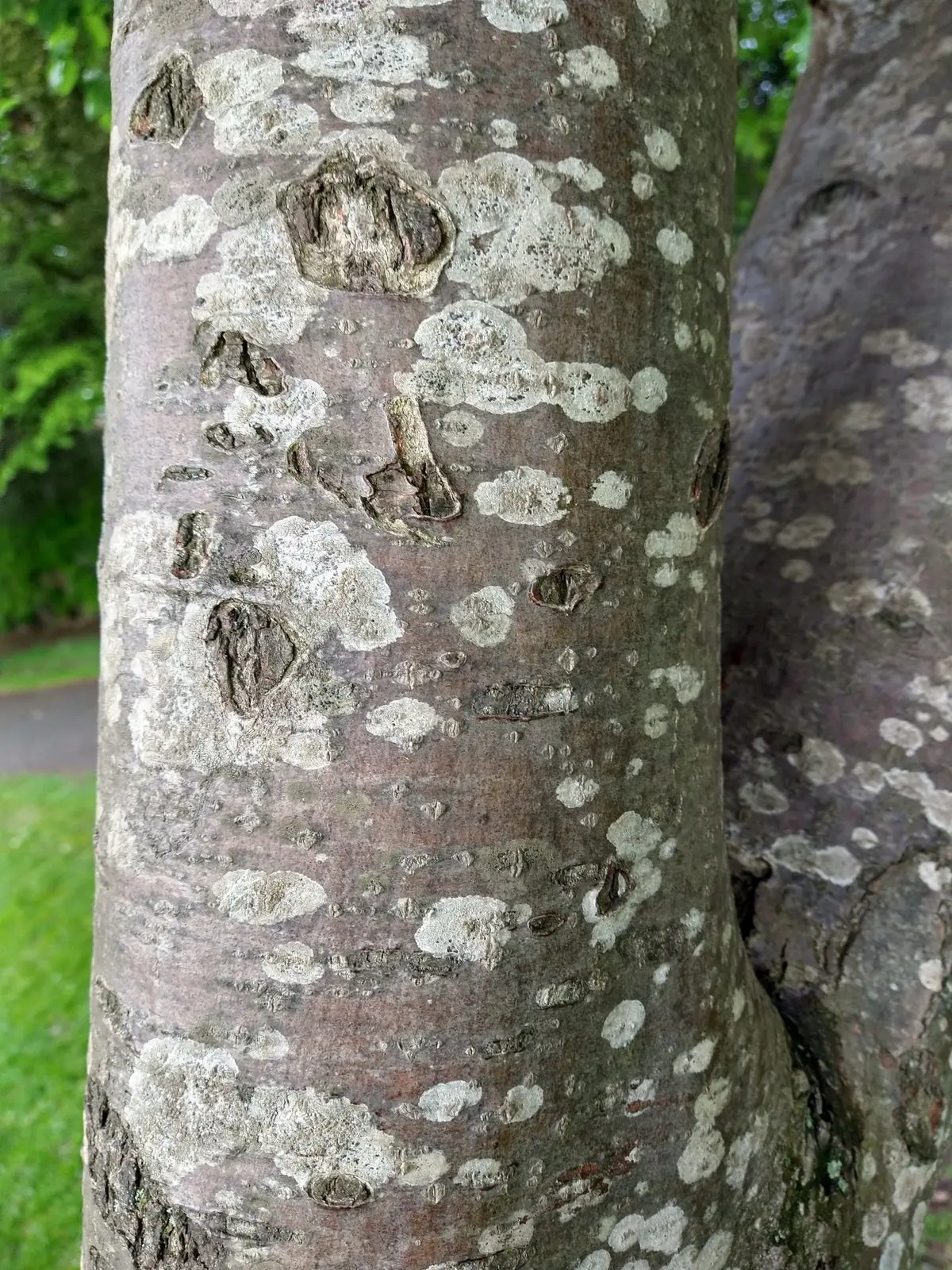 Hornbeam or common whitebeam?Quickest check: the trunk→
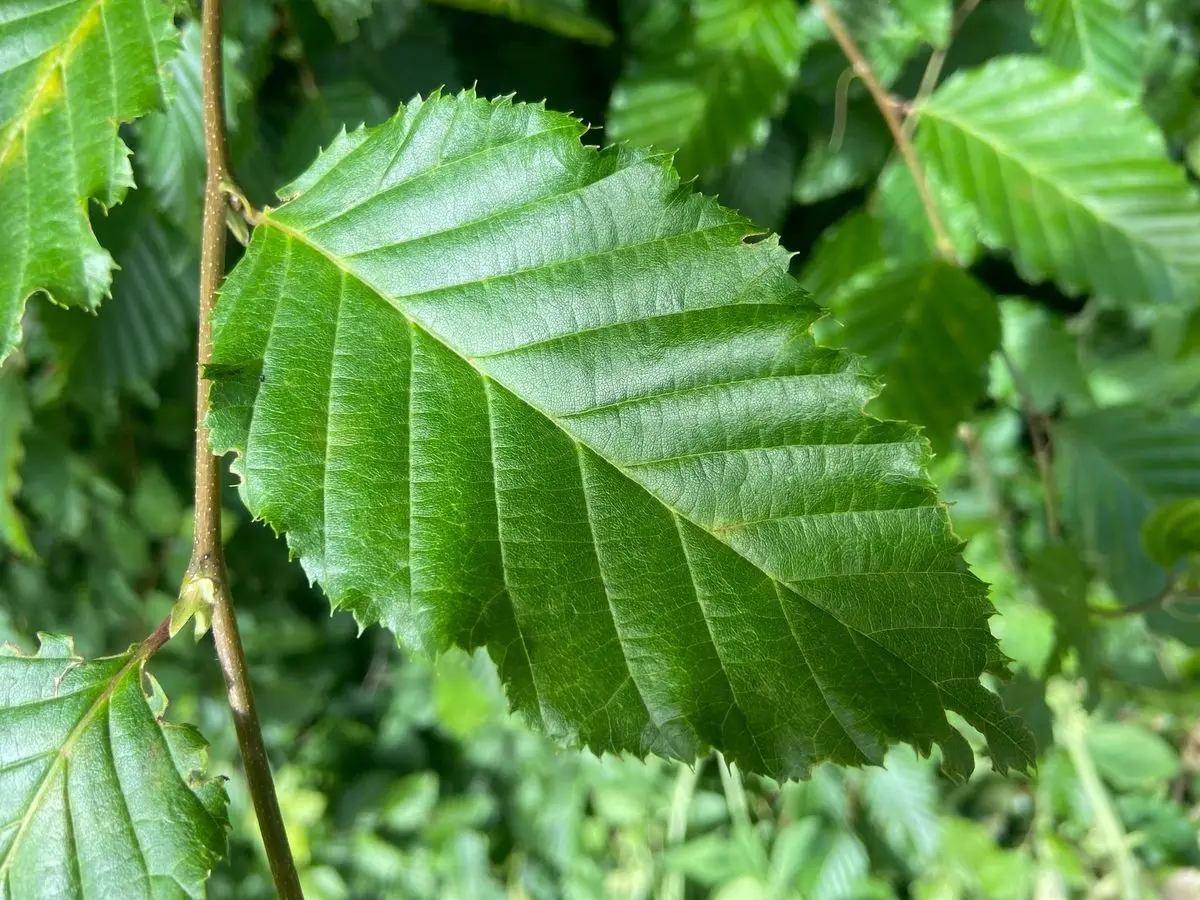
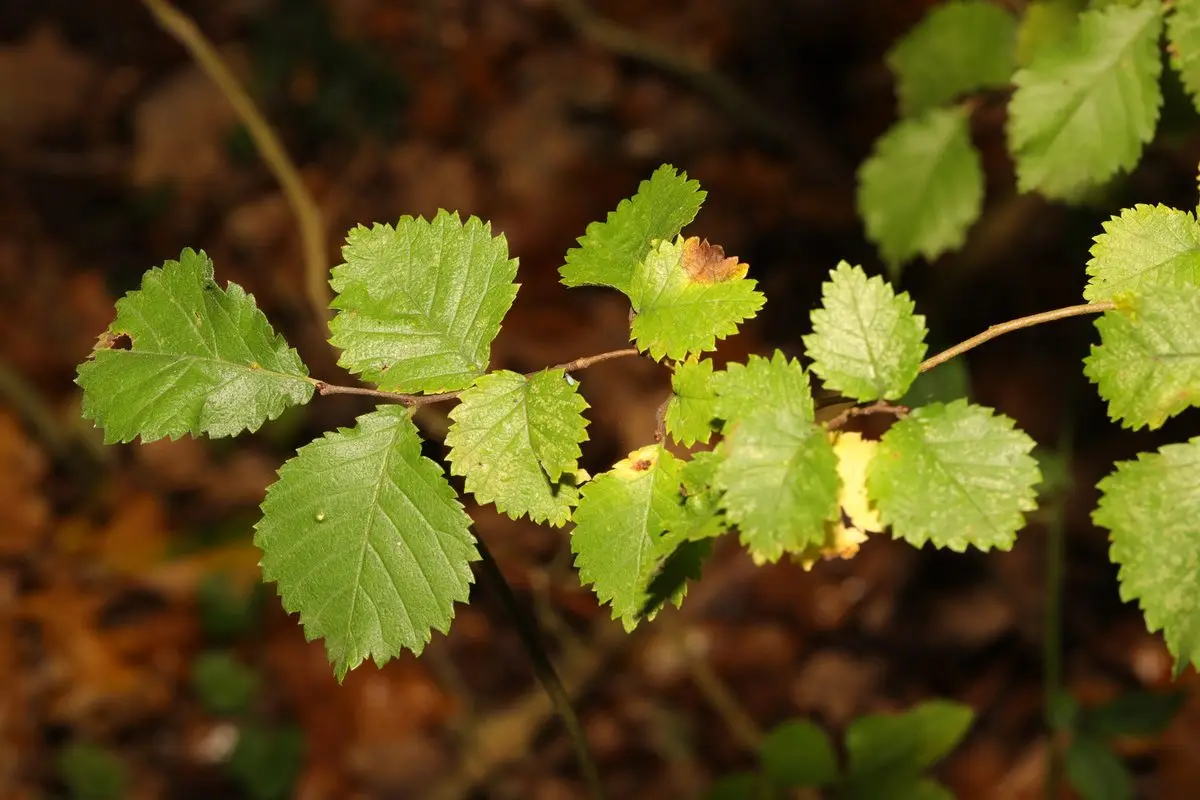 Hornbeam or field elm?Quickest check: the leaf surface→
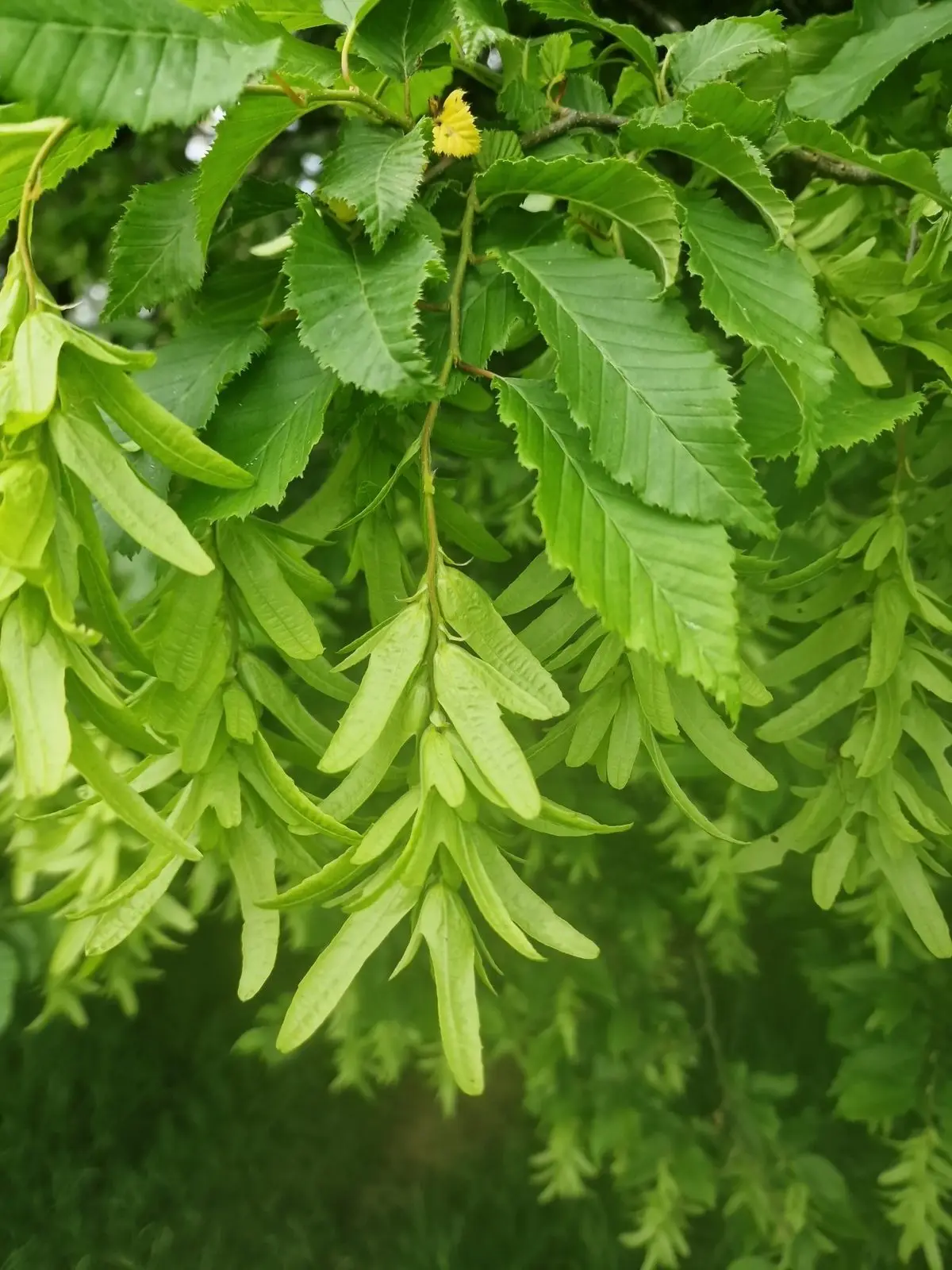
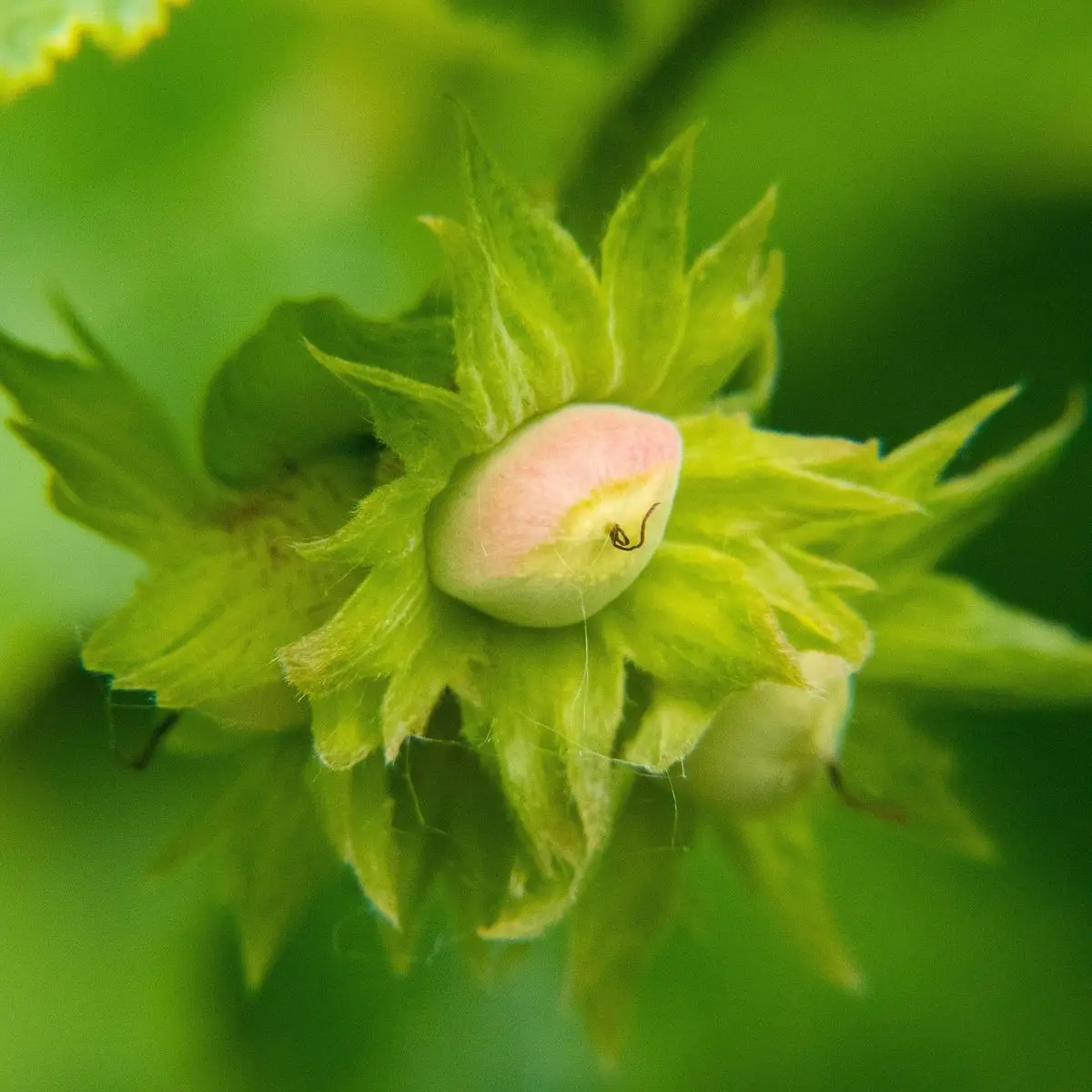 Hornbeam or hazel?Quickest check: what holds each nut→
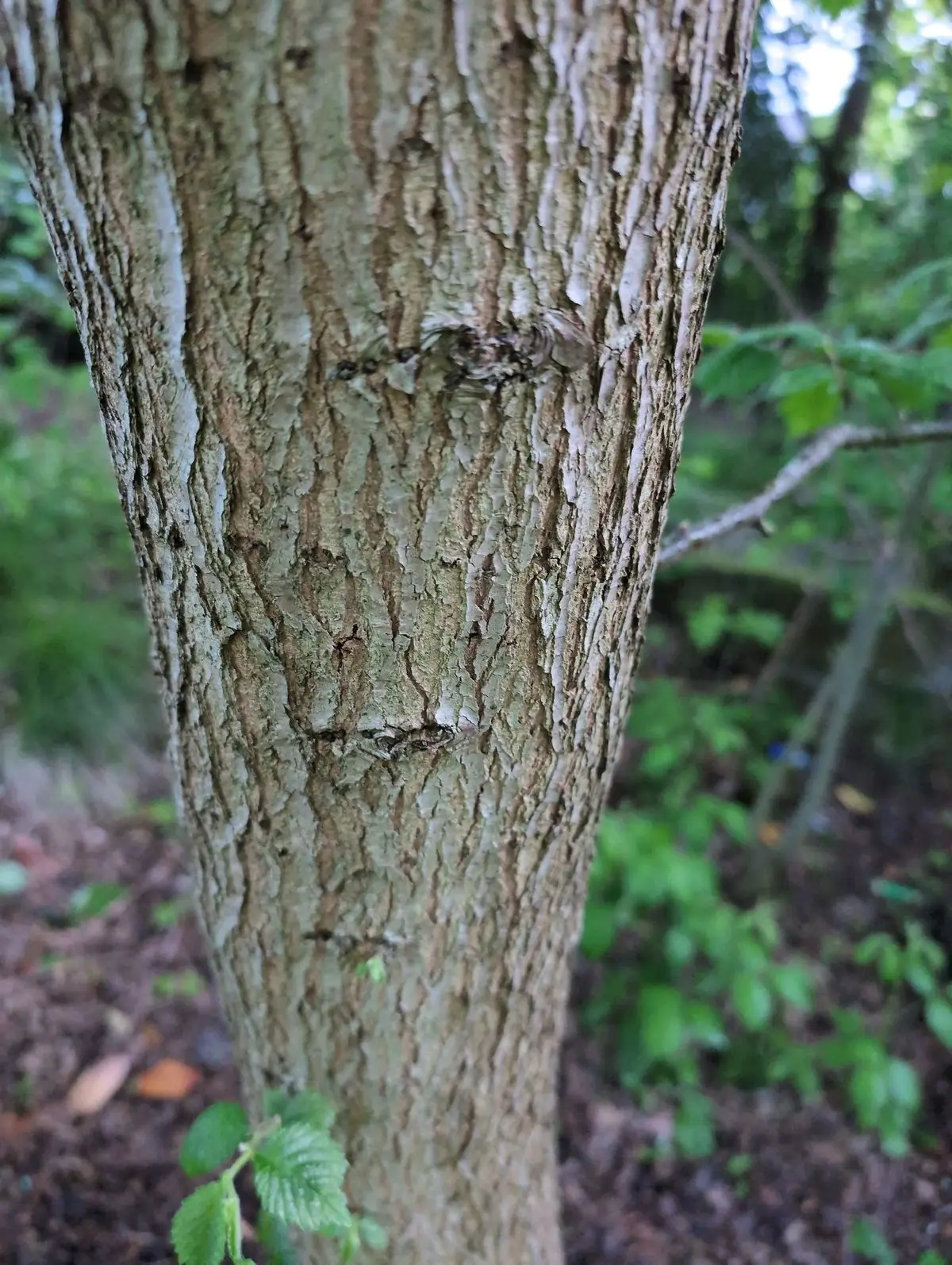 Hornbeam or wych elm?Quickest check: the older trunk→
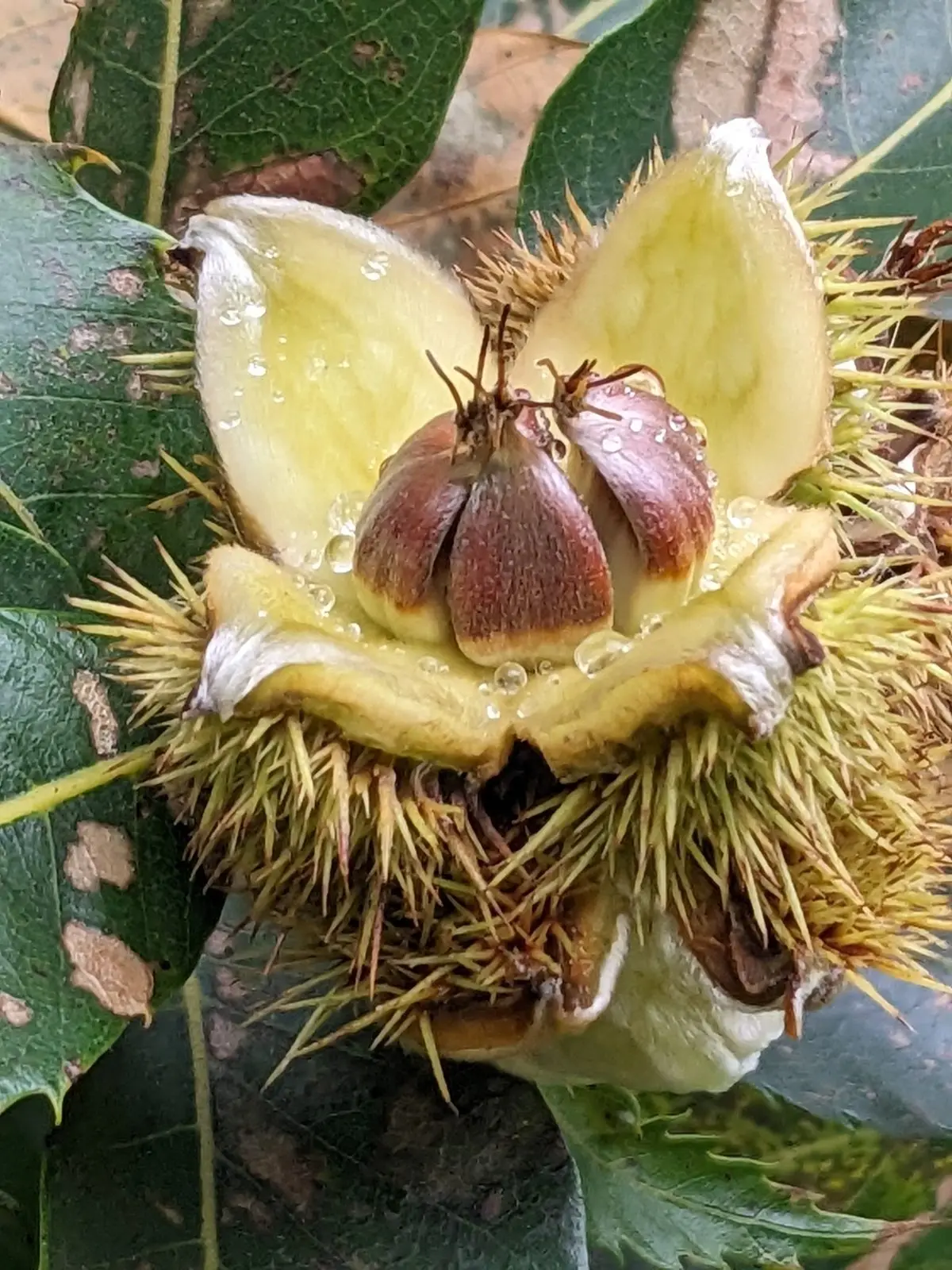
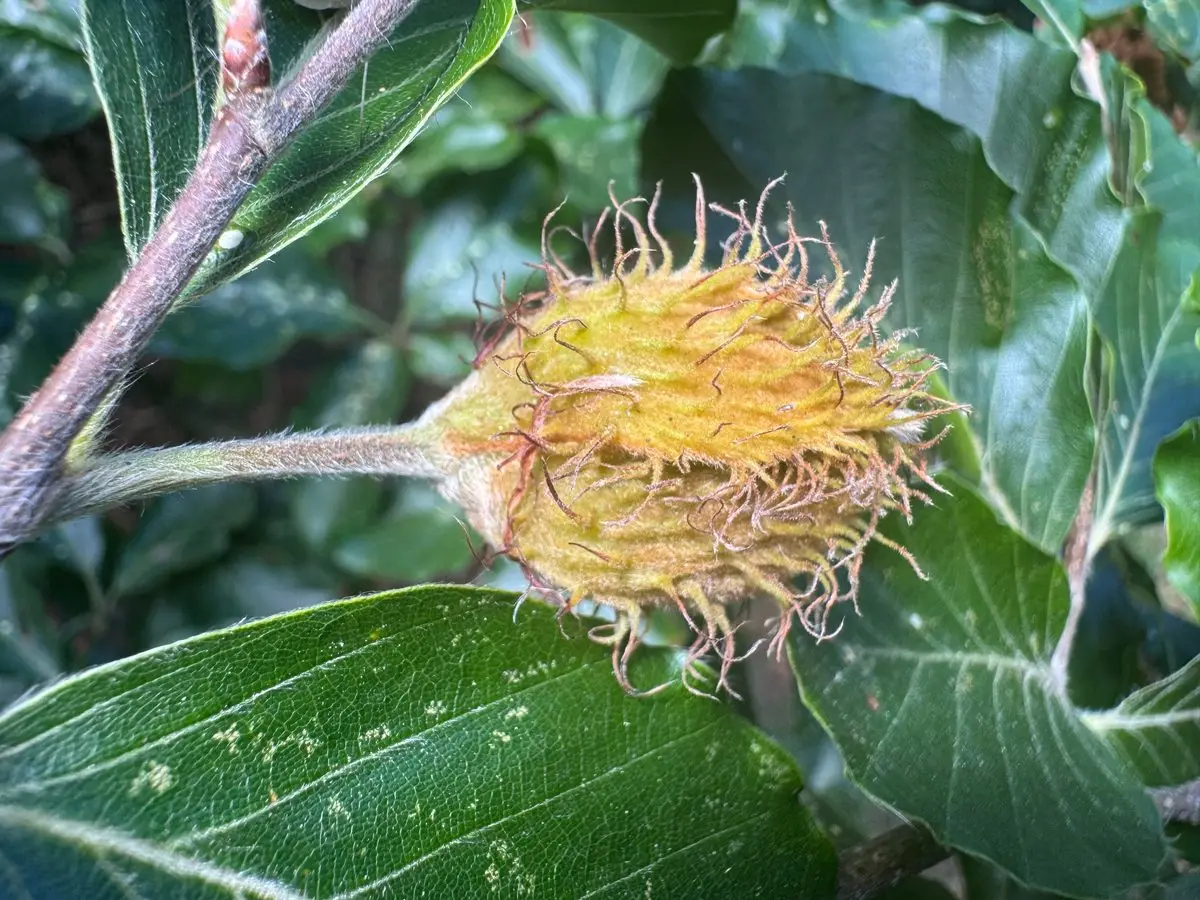 Sweet chestnut or common beech?Quickest check: the husk→
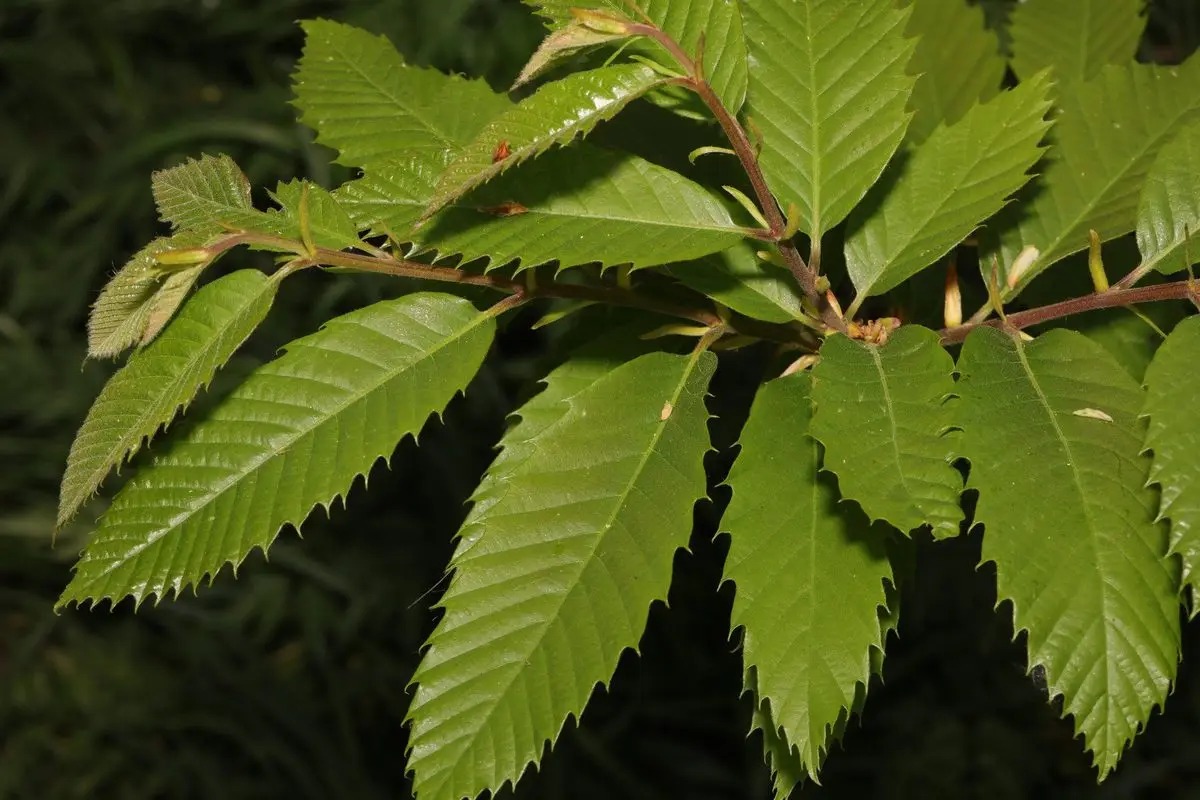
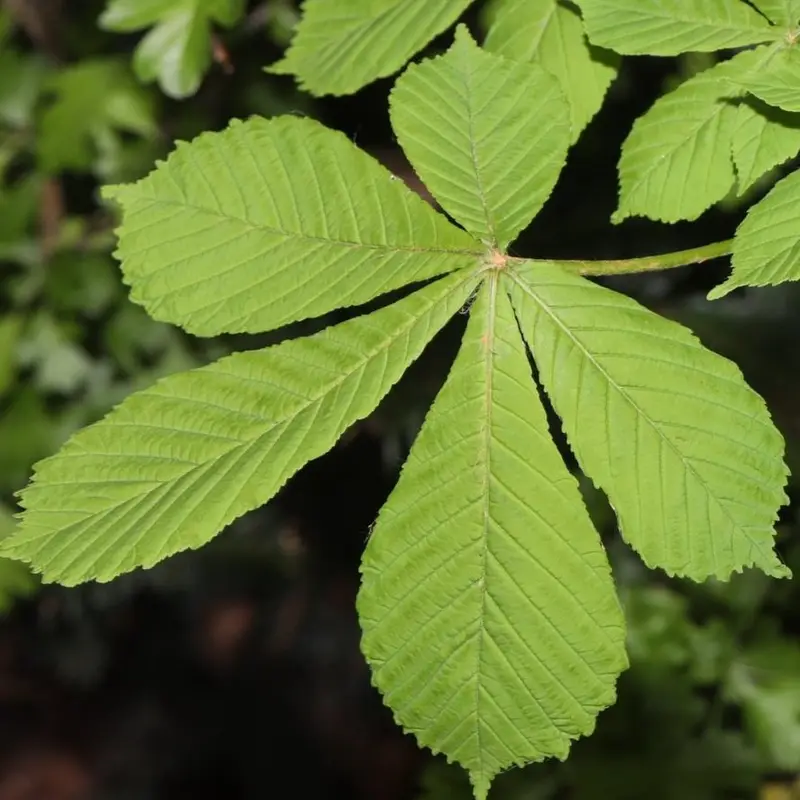 Sweet chestnut or horse chestnut?Quickest check: the blades on one stalk→
Free to download.
Every fact on this page is checked against the Collins Tree Guide, last in November 2026. Spotted something that looks wrong in front of a real tree? Tell us. How we check.
Photographs: Drepanostoma (CC BY 4.0), david_and_moira_sinden (CC0), Joss Carr (CC BY 4.0), steve_mcwilliam (CC0), Ewan Shilland (CC BY 4.0), jamie-aa (CC BY 4.0). With thanks to everyone who shares their photographs on iNaturalist and Wikimedia Commons.