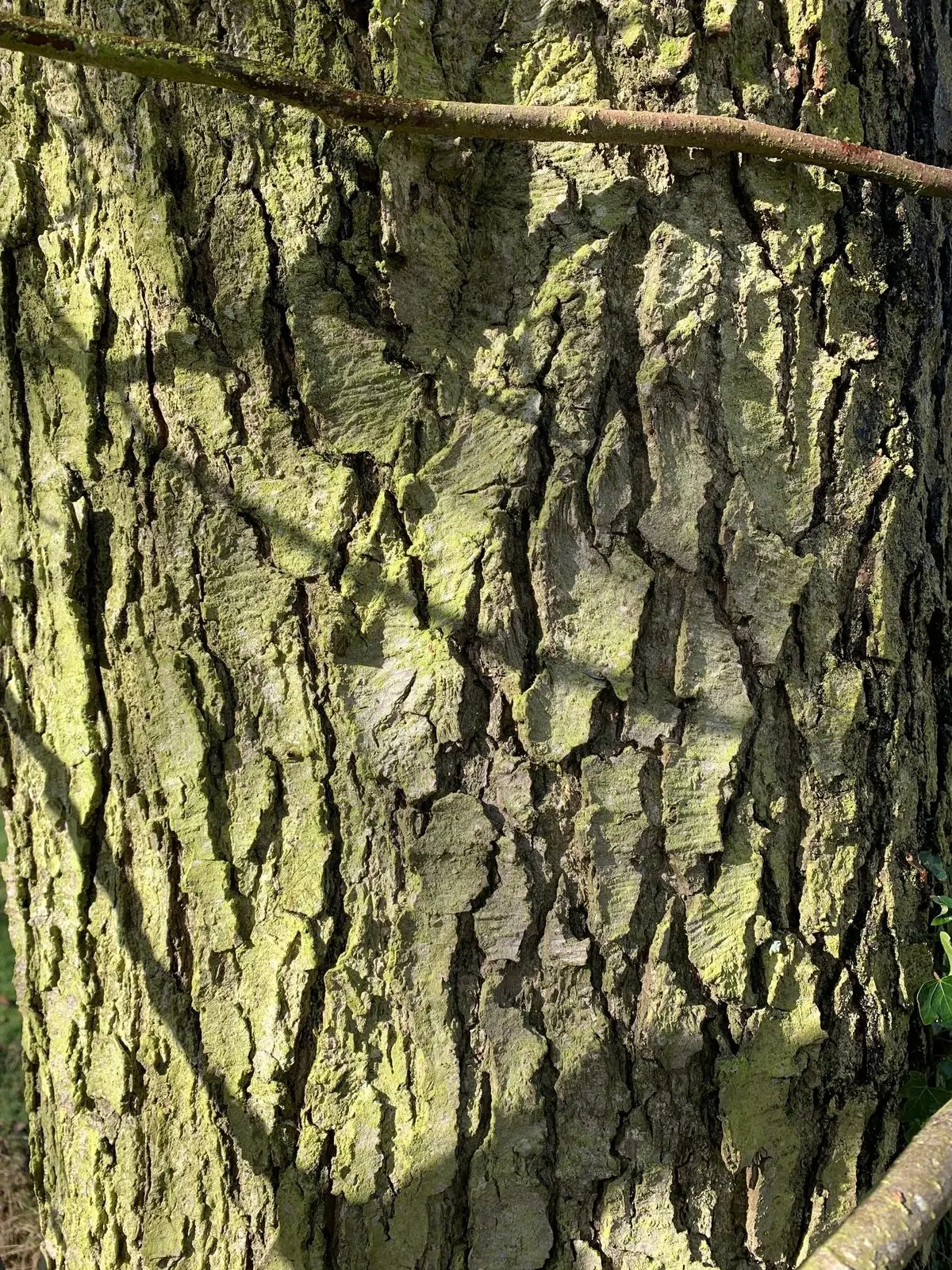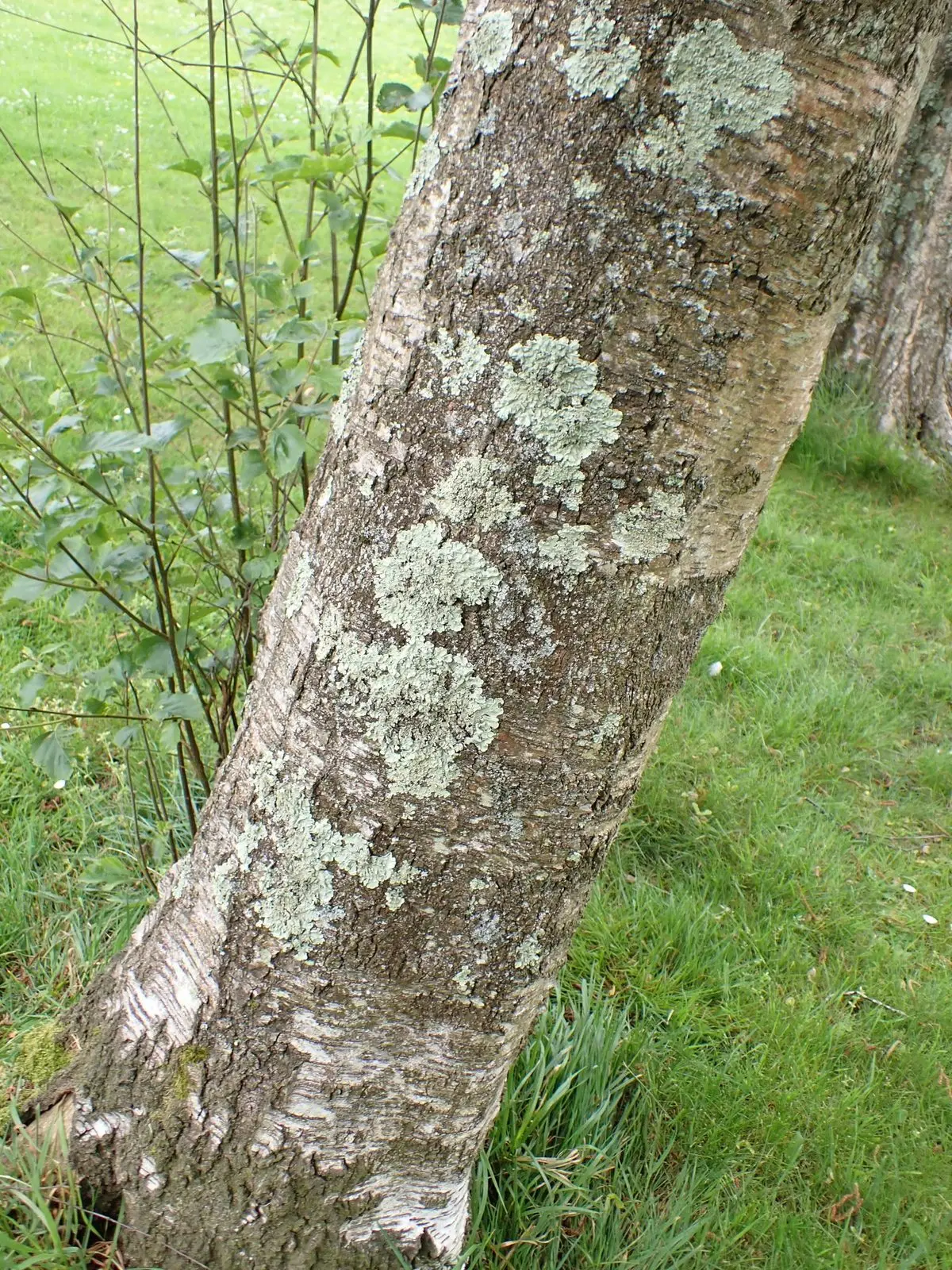
Dull greyish white with grey or brown bands across it, pale right down to the foot, and purplish on young trees.
Betula pubescens · Betulaceae
Downy birch is a slender, upright tree, often on wet, poorly drained ground. Its bark is dull greyish white, banded with grey. Its young shoots feel velvety, covered in very short hairs.
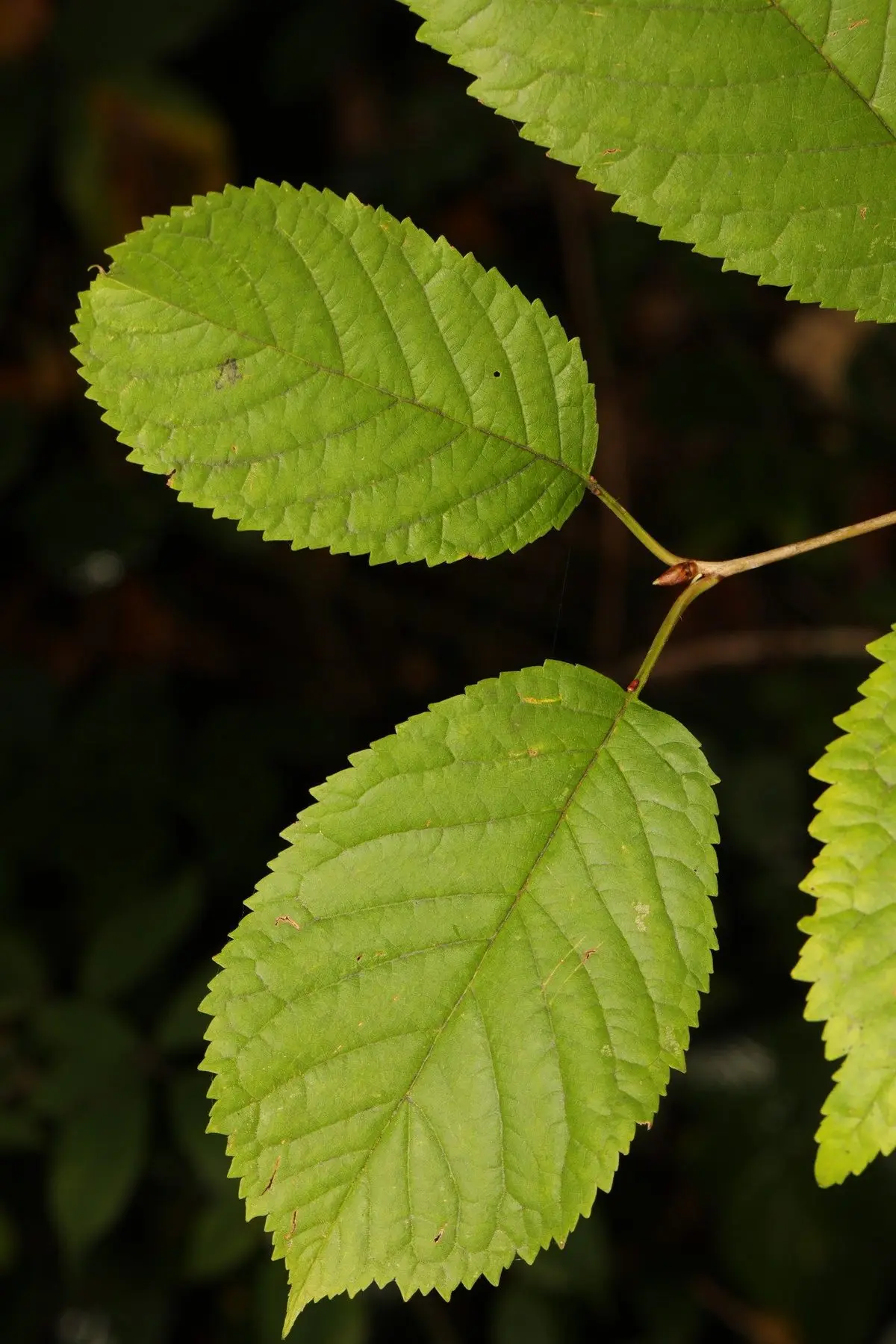
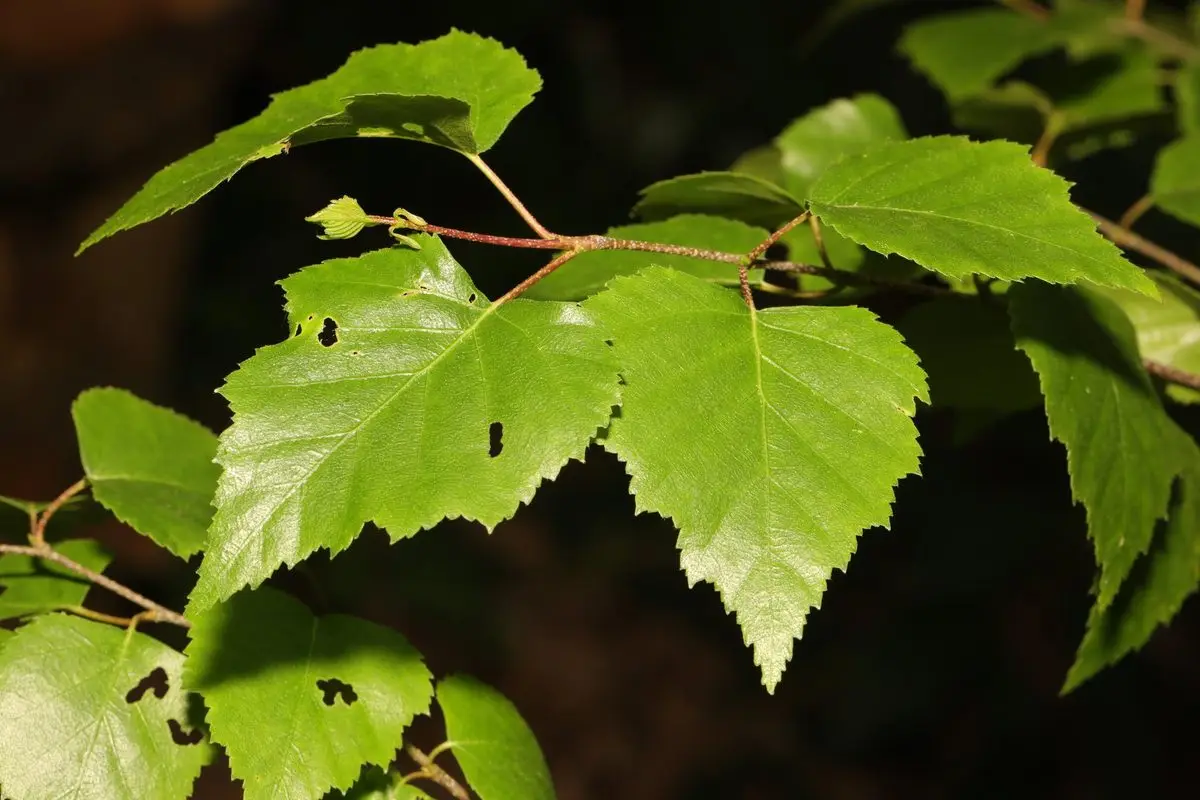
Often mistaken for silver birch. How to tell them apart →BarkDull greyish white with grey or brown bands, purplish when young.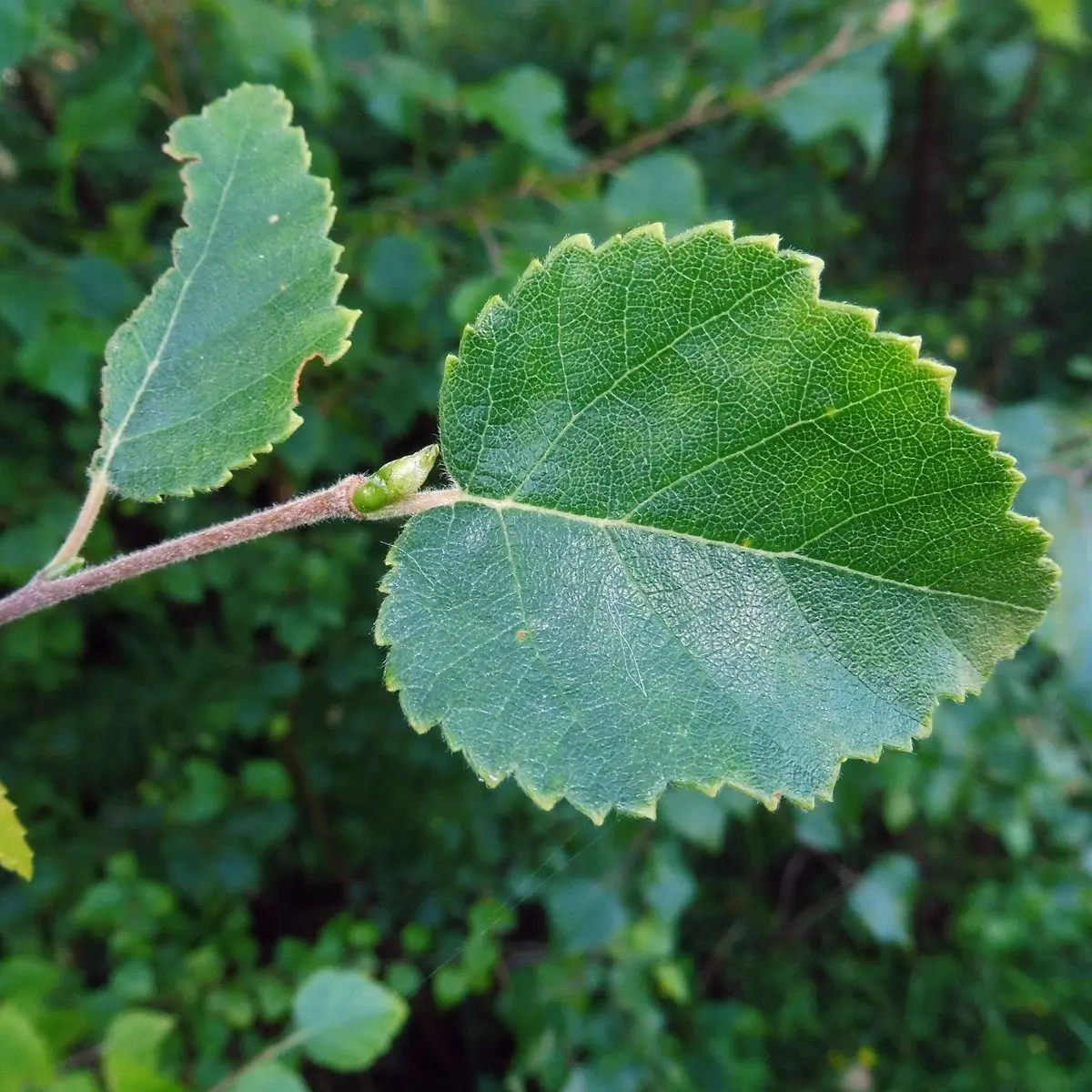 LeavesRounded triangles 2 to 5 cm, small teeth, hairs on veins beneath.
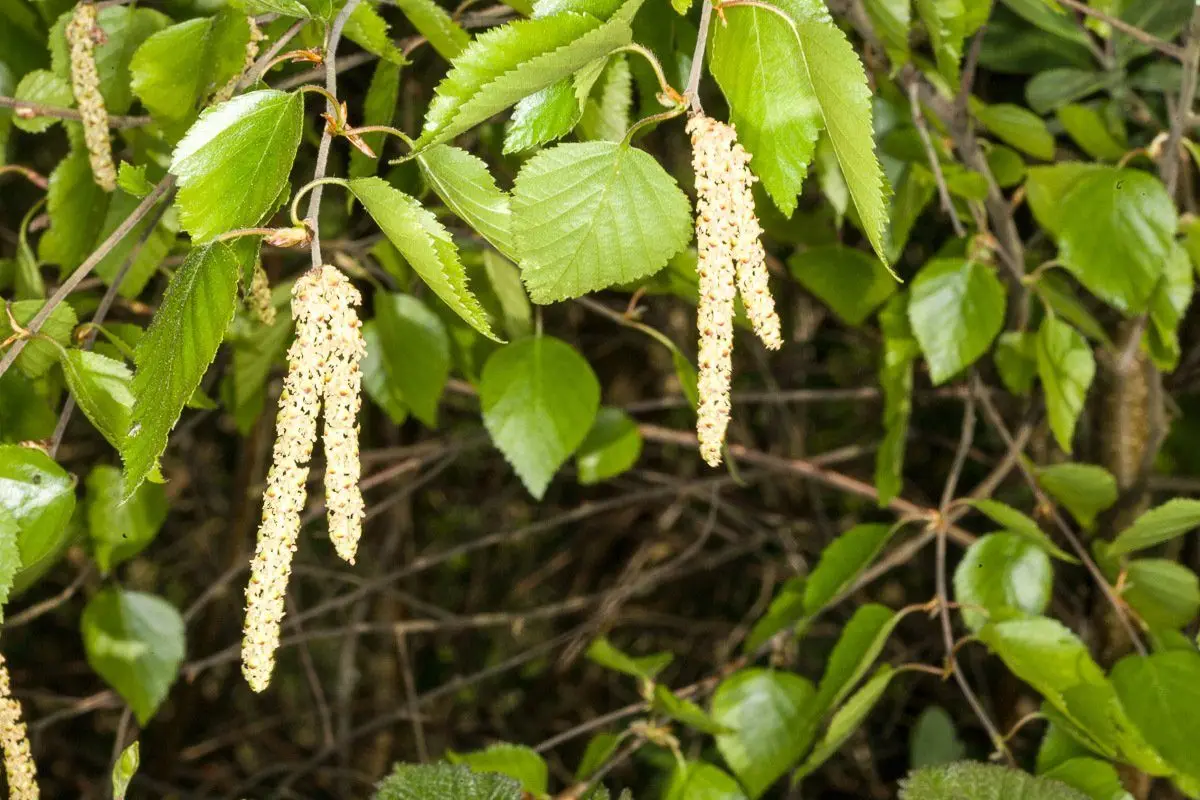 CatkinsMales long and yellow, two to four; females short, green.
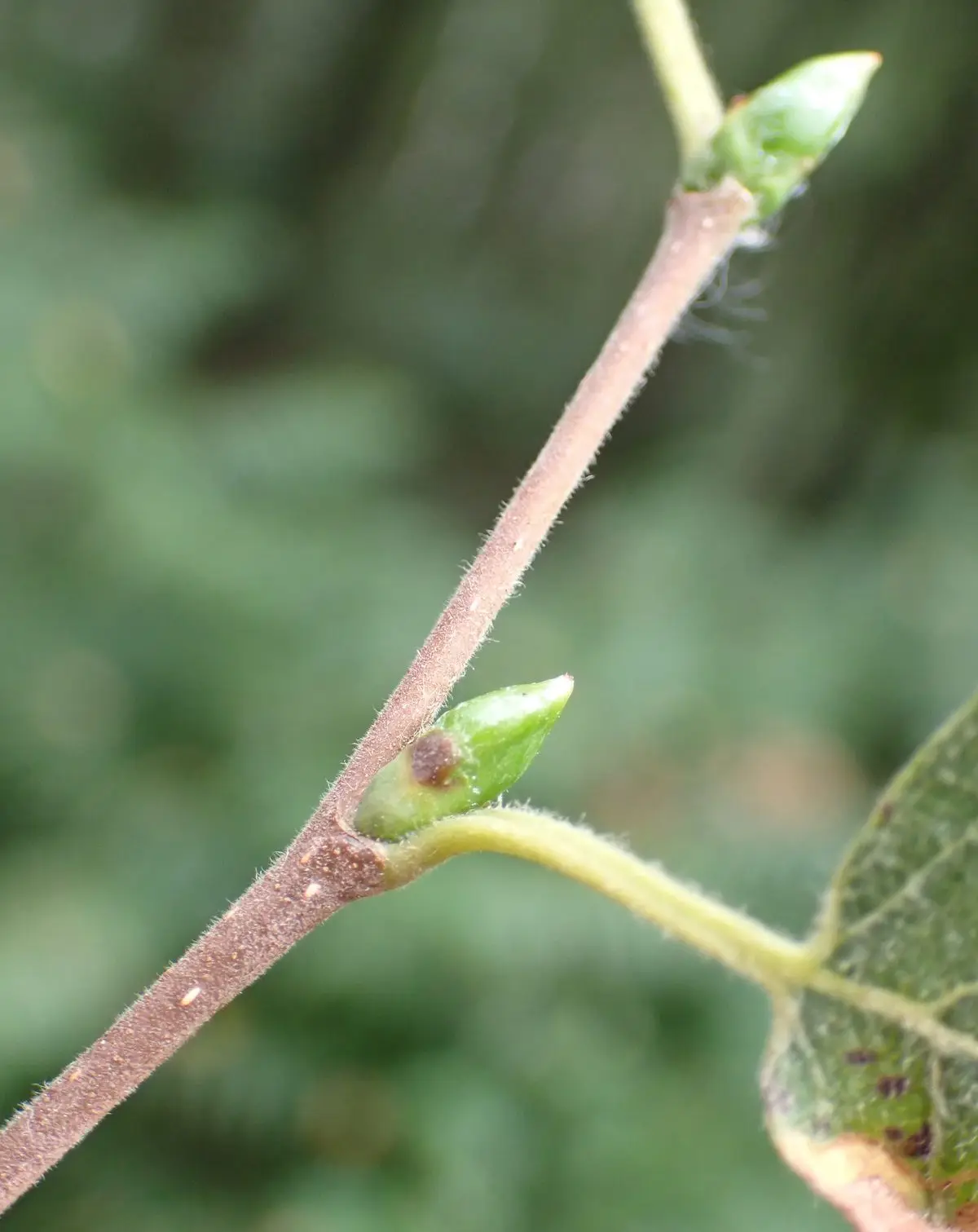
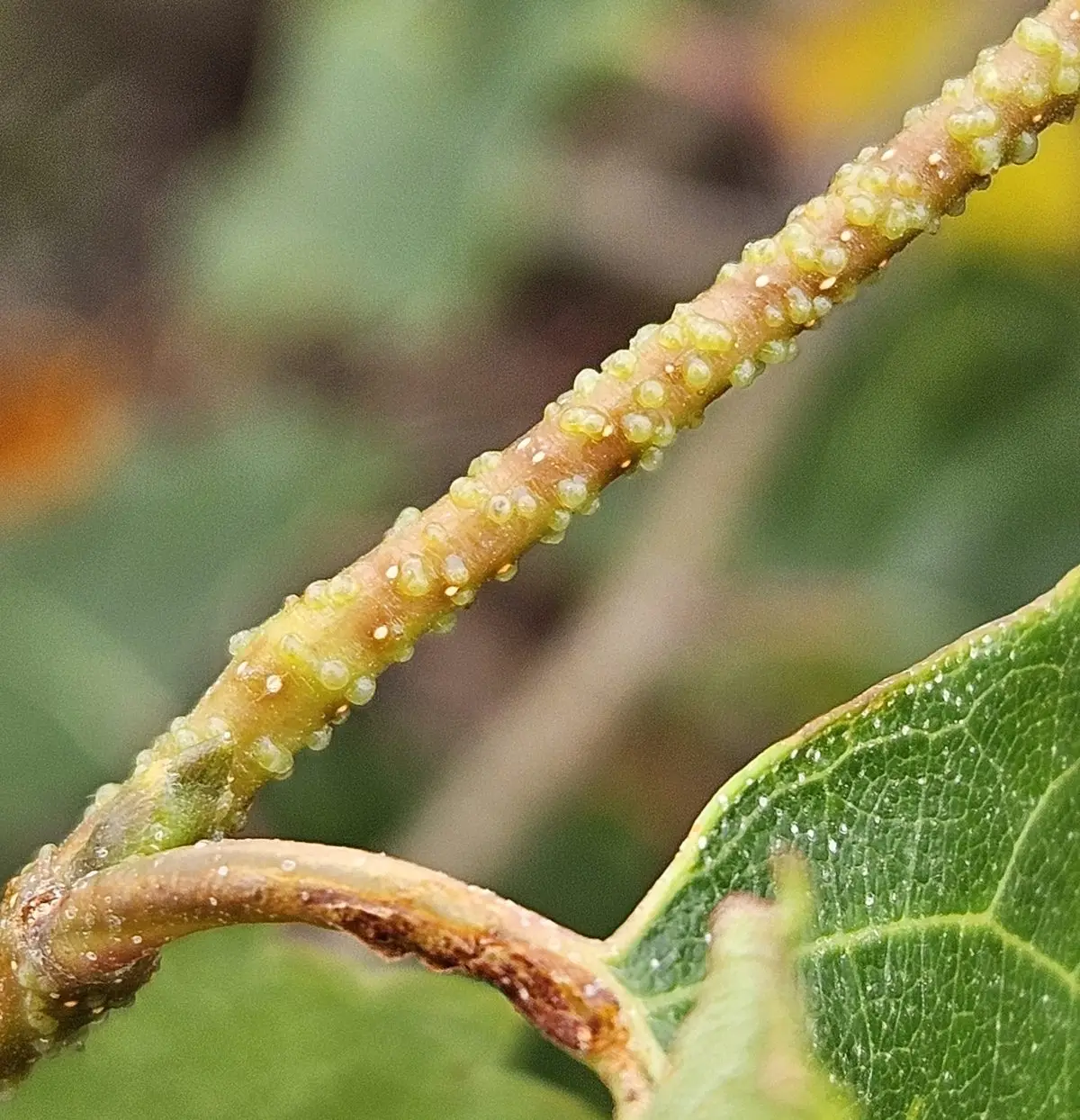
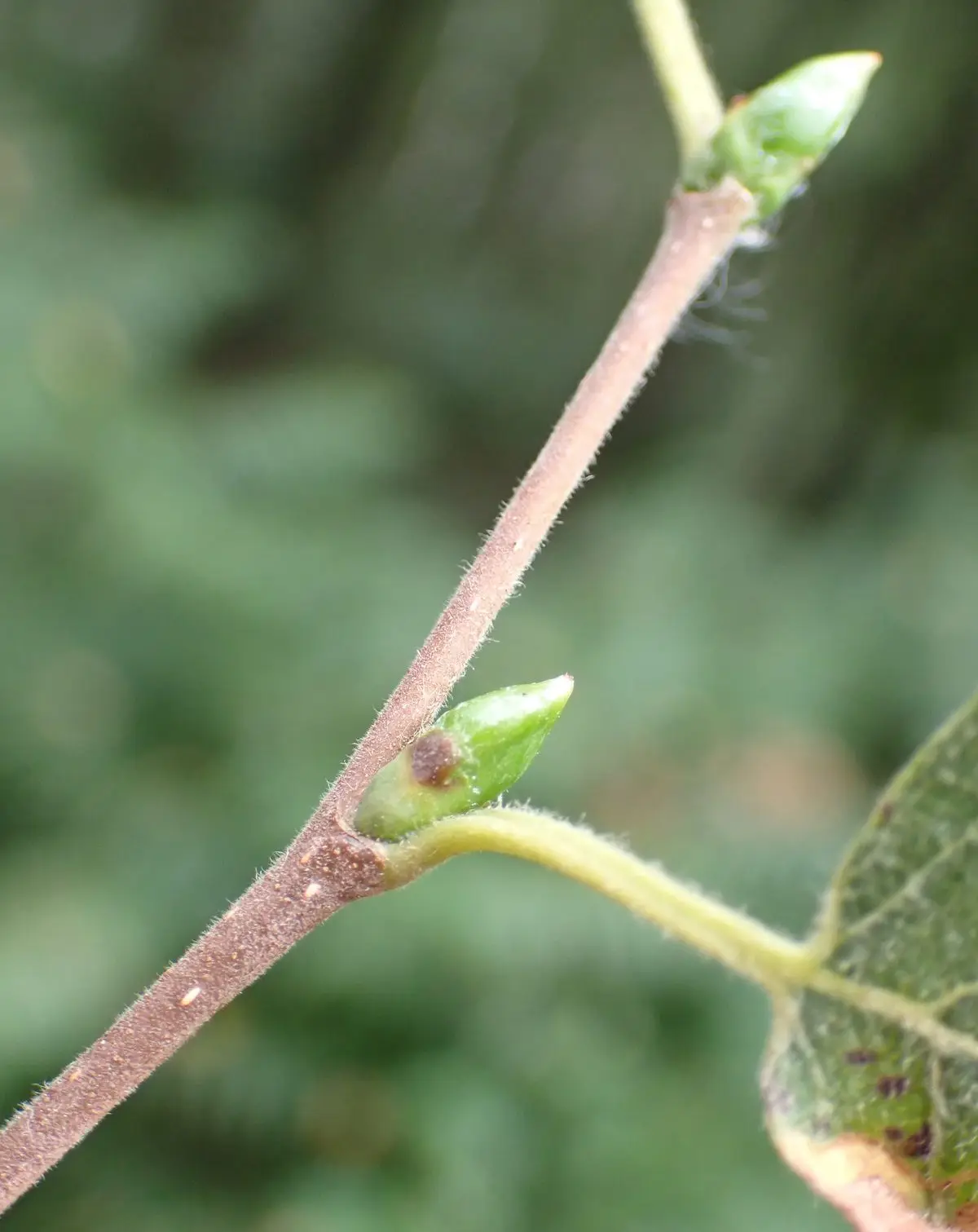
Then check · TwigsGreyish young shoots that feel velvety, covered all over in very short hairs, with no white warts.
Dull greyish white with grey or brown bands across it, pale right down to the foot, and purplish on young trees.
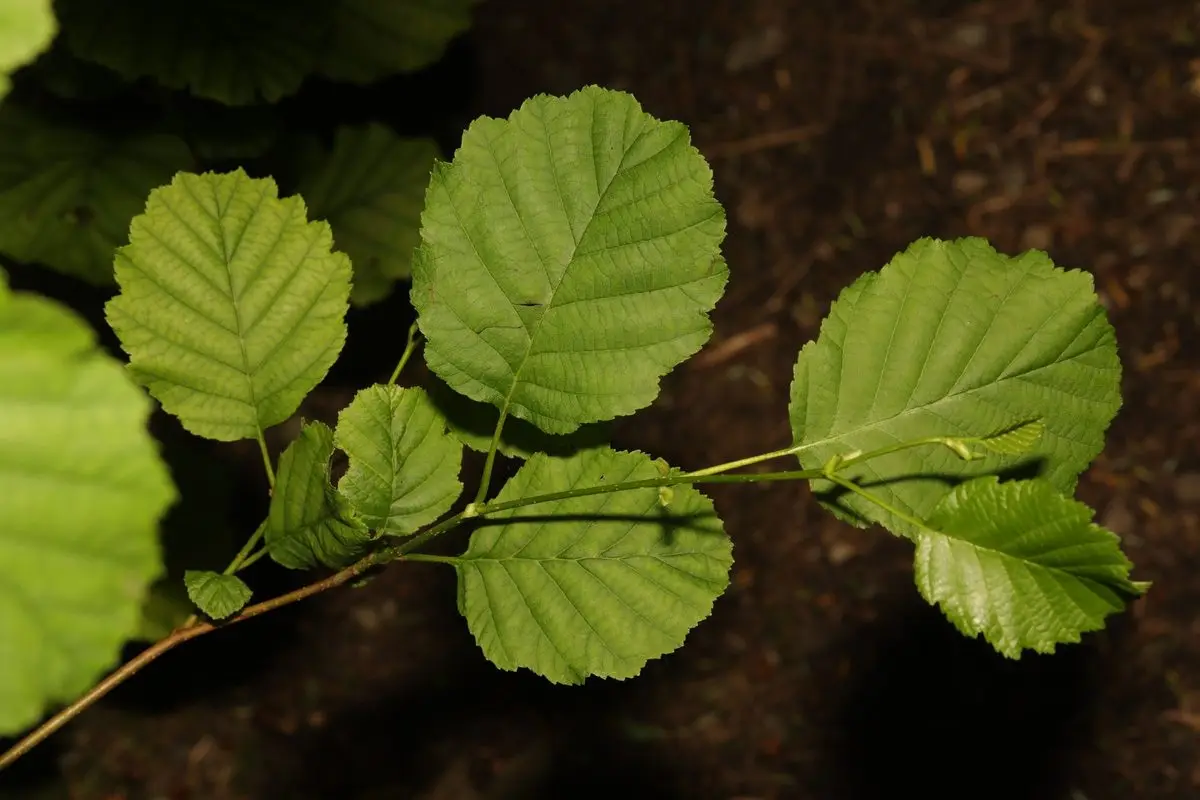
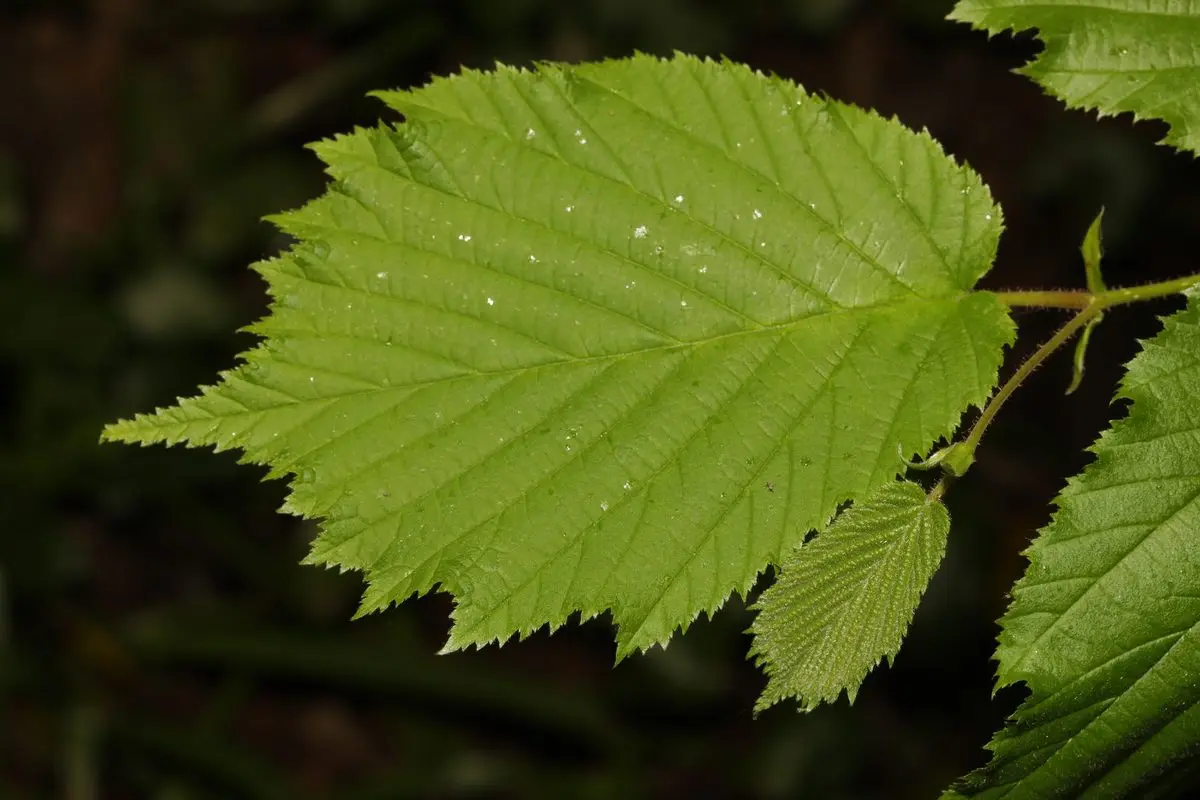
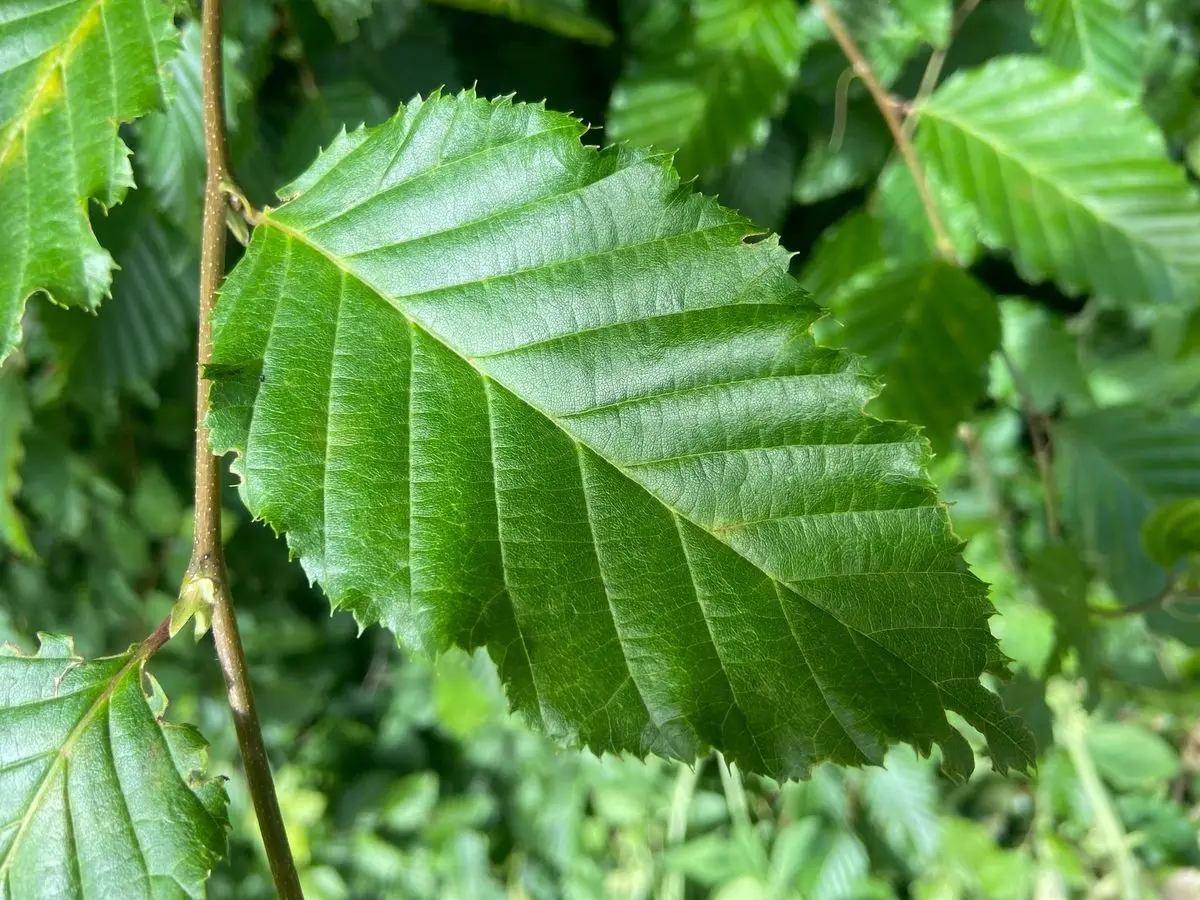
Rounded triangles 2 to 5 cm long with small teeth along the edge, a fuzzy stalk and hairs on the veins beneath.
Long yellow male catkins hang two to four together at the shoot tips, and short green female catkins stand upright.
 Learn the downy birch in TreelyEvery part through the year, and a short round each day until you know it.Get Treely
Barry Walter, CC BY 4.0Drepanostoma, CC BY 4.0
 Thomas Gyselinck, CC BY 4.0
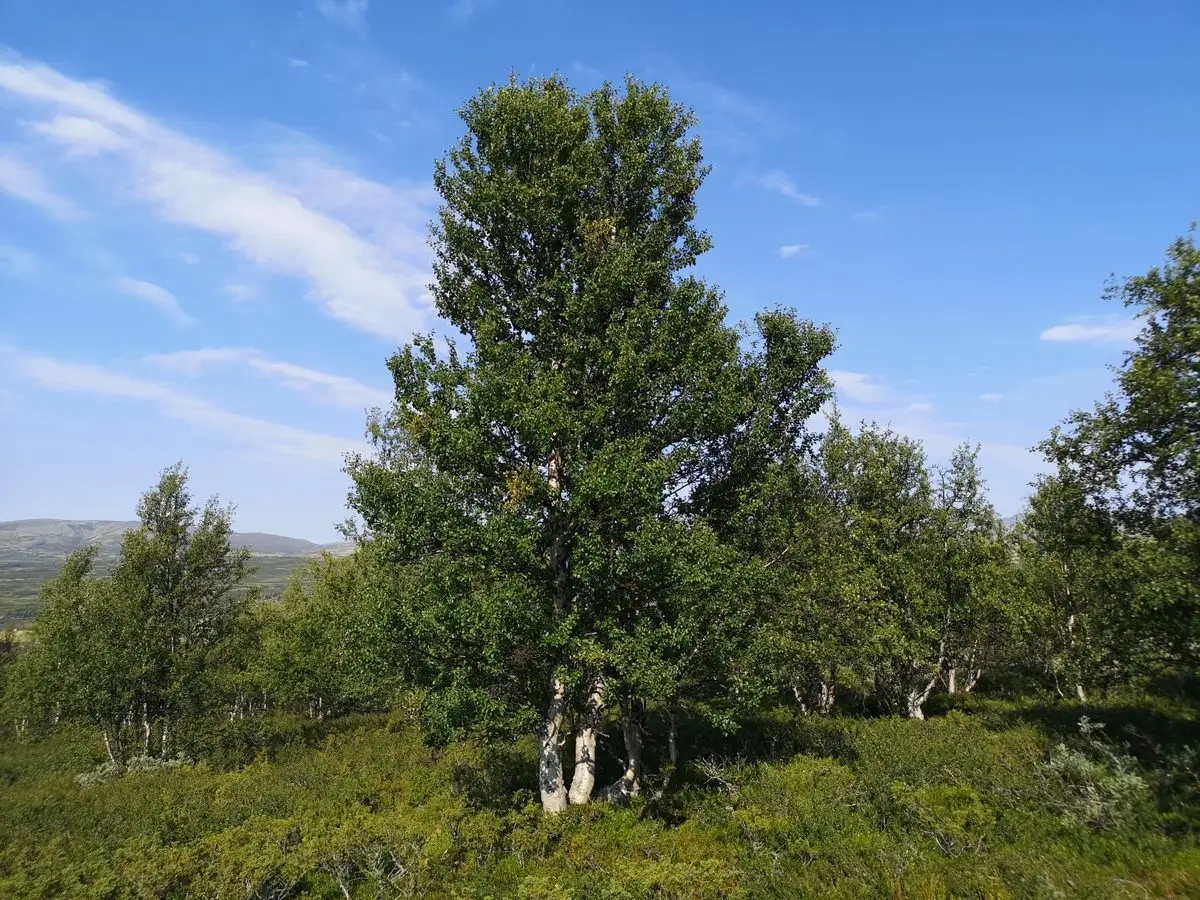 Jens-Christian Svenning, CC BY 4.0
In leaf: April to November · Catkins: November to May · Seed catkins: July to September
Every tree on the calendar · How to identify trees in winter
Common everywhere on poor or damp soils away from chalk. It grows on wet heavy clay and peat bog, in open woodland, and on heaths and moorland. It is often on damper soils than silver birch, and stands waterlogging.
Free to download.
Every fact on this page is checked against the Collins Tree Guide, last in November 2026. Spotted something that looks wrong in front of a real tree? Tell us. How we check.
Photographs: Jens-Christian Svenning (CC BY 4.0), bobwardell (CC0), Barry Walter (CC BY 4.0), Drepanostoma (CC BY 4.0), Thomas Gyselinck (CC BY 4.0), Helen Waterman (CC BY 4.0), Jan Sheppard (CC BY 4.0), steve_mcwilliam (CC0). With thanks to everyone who shares their photographs on iNaturalist and Wikimedia Commons.