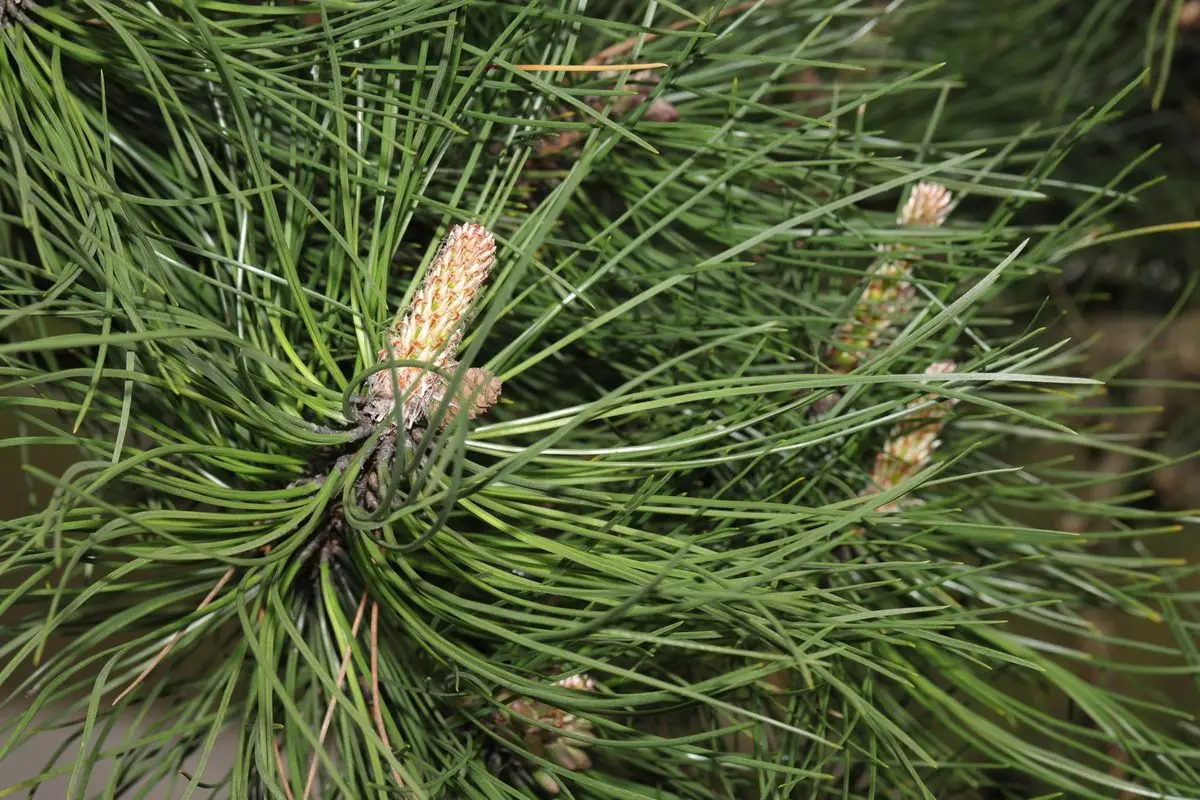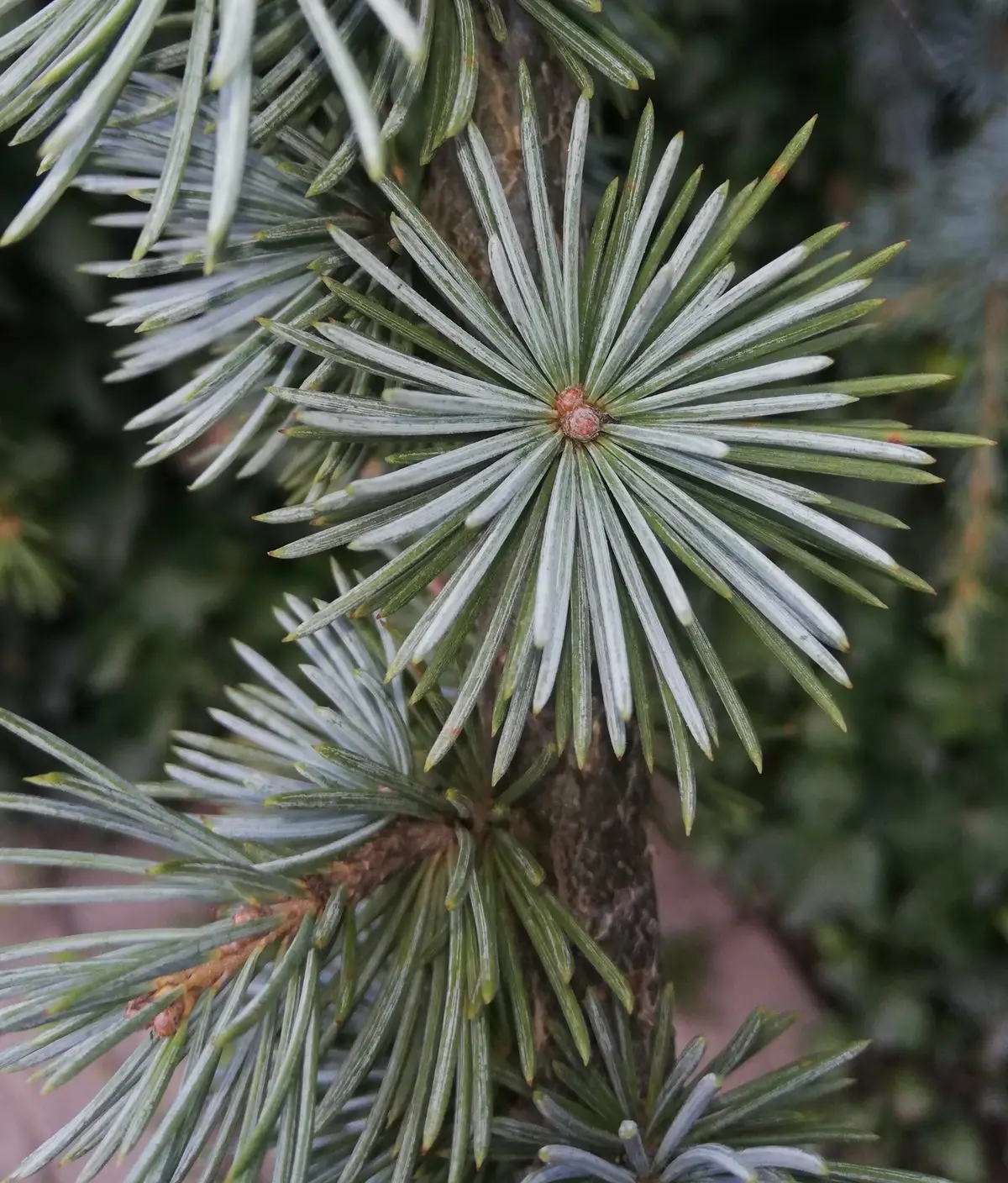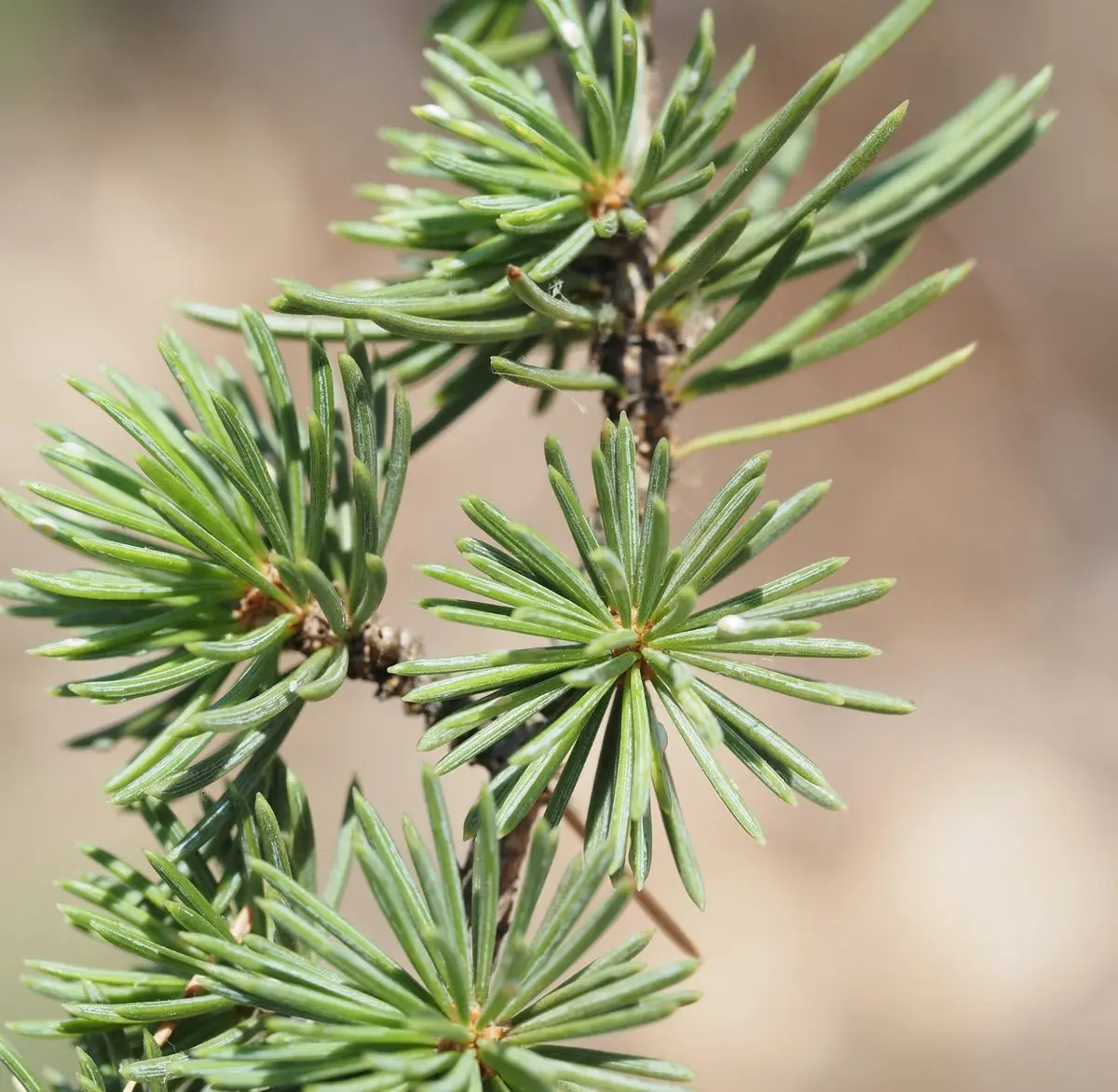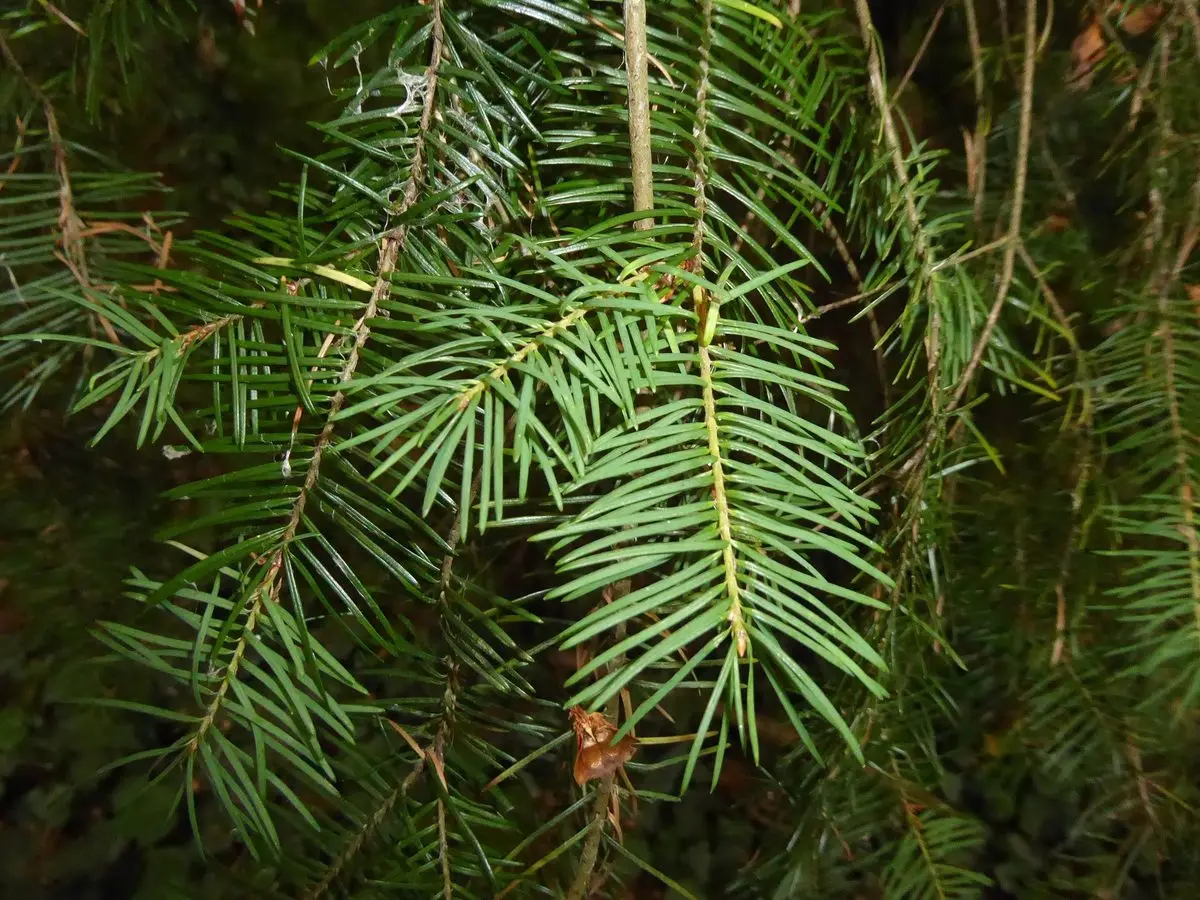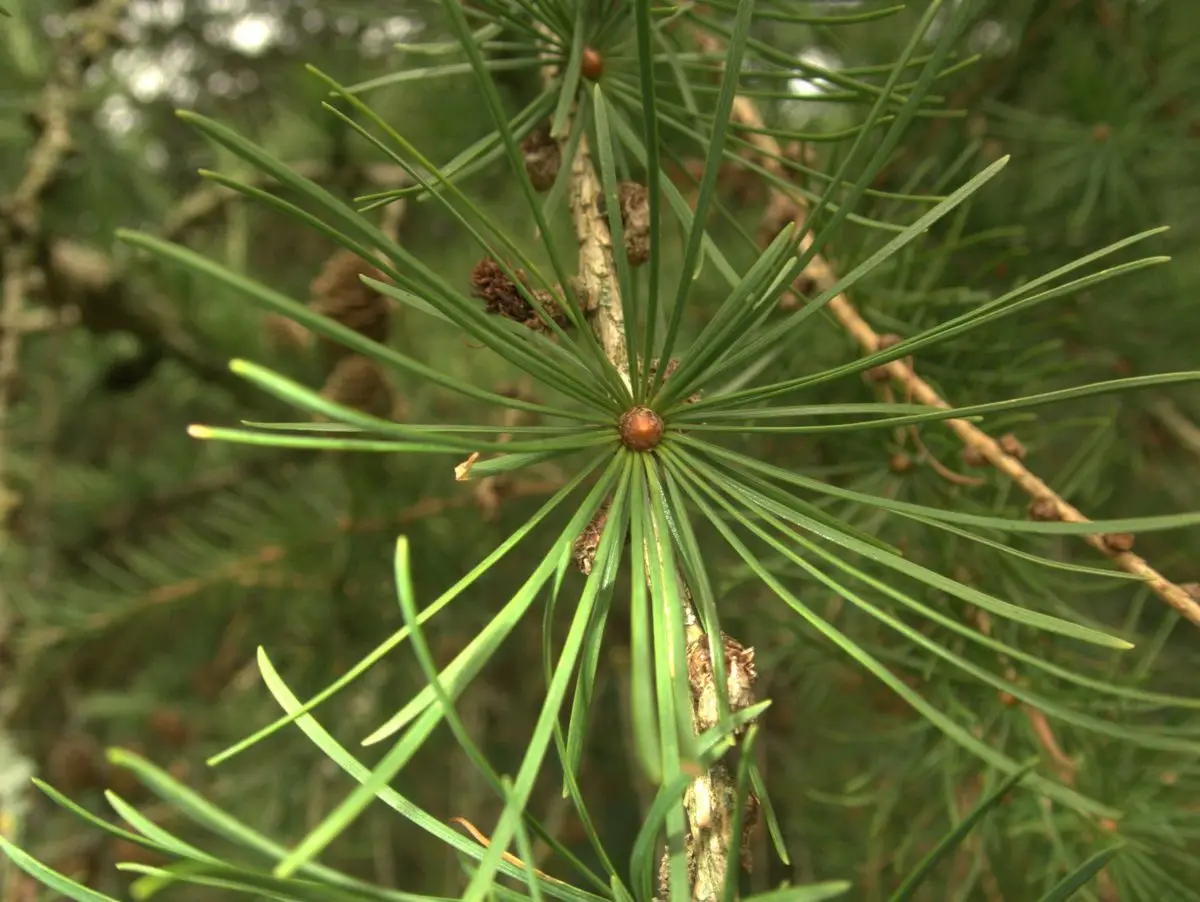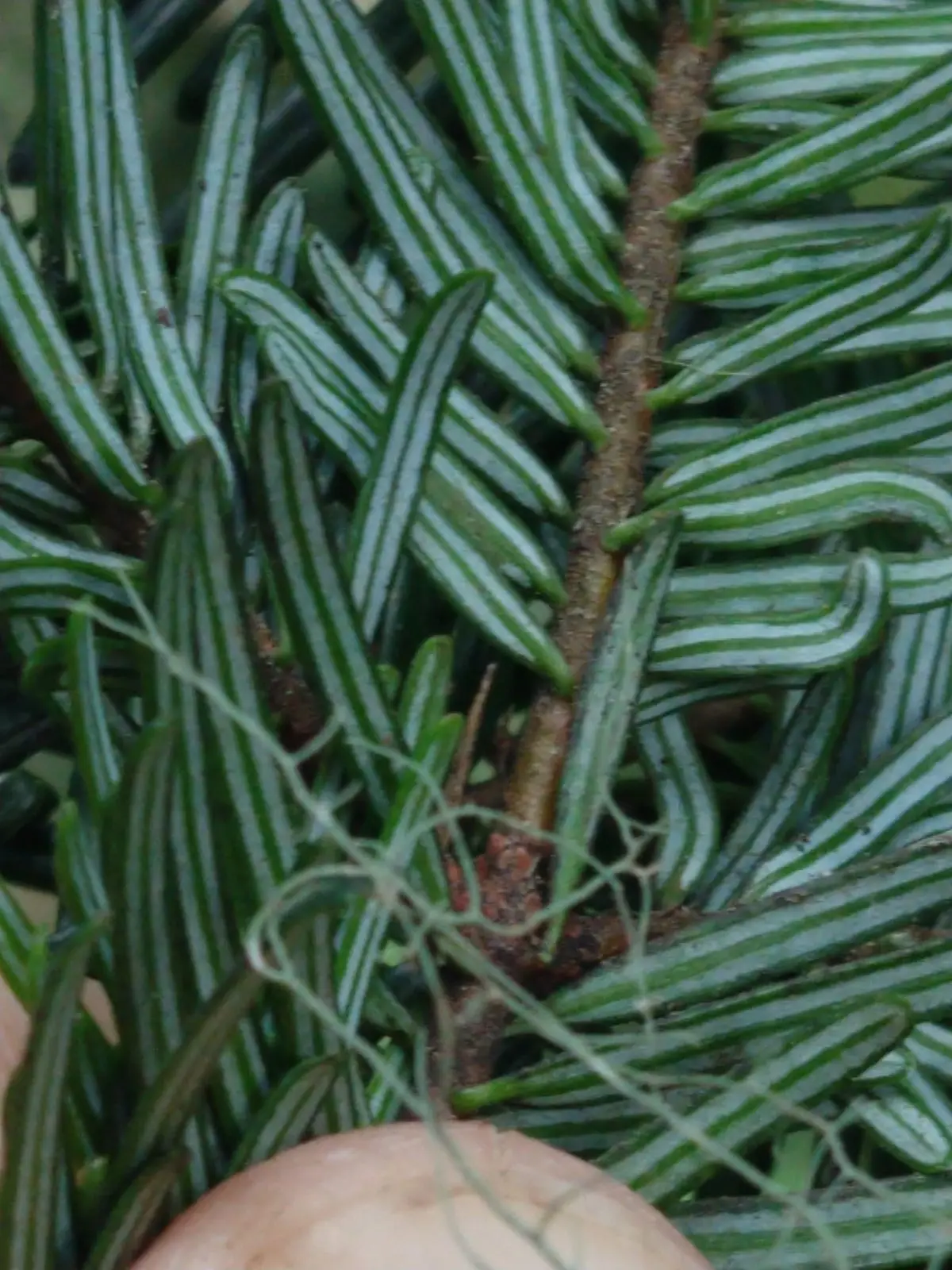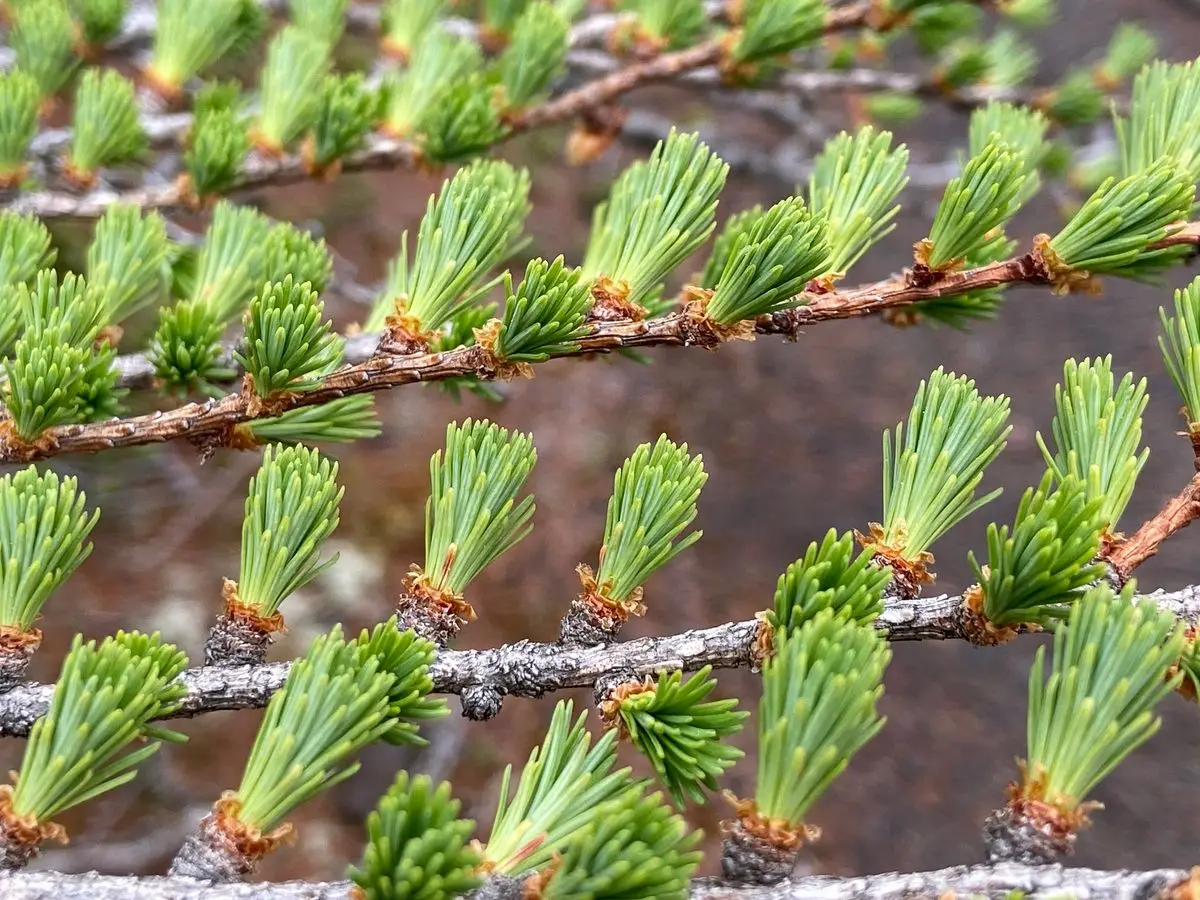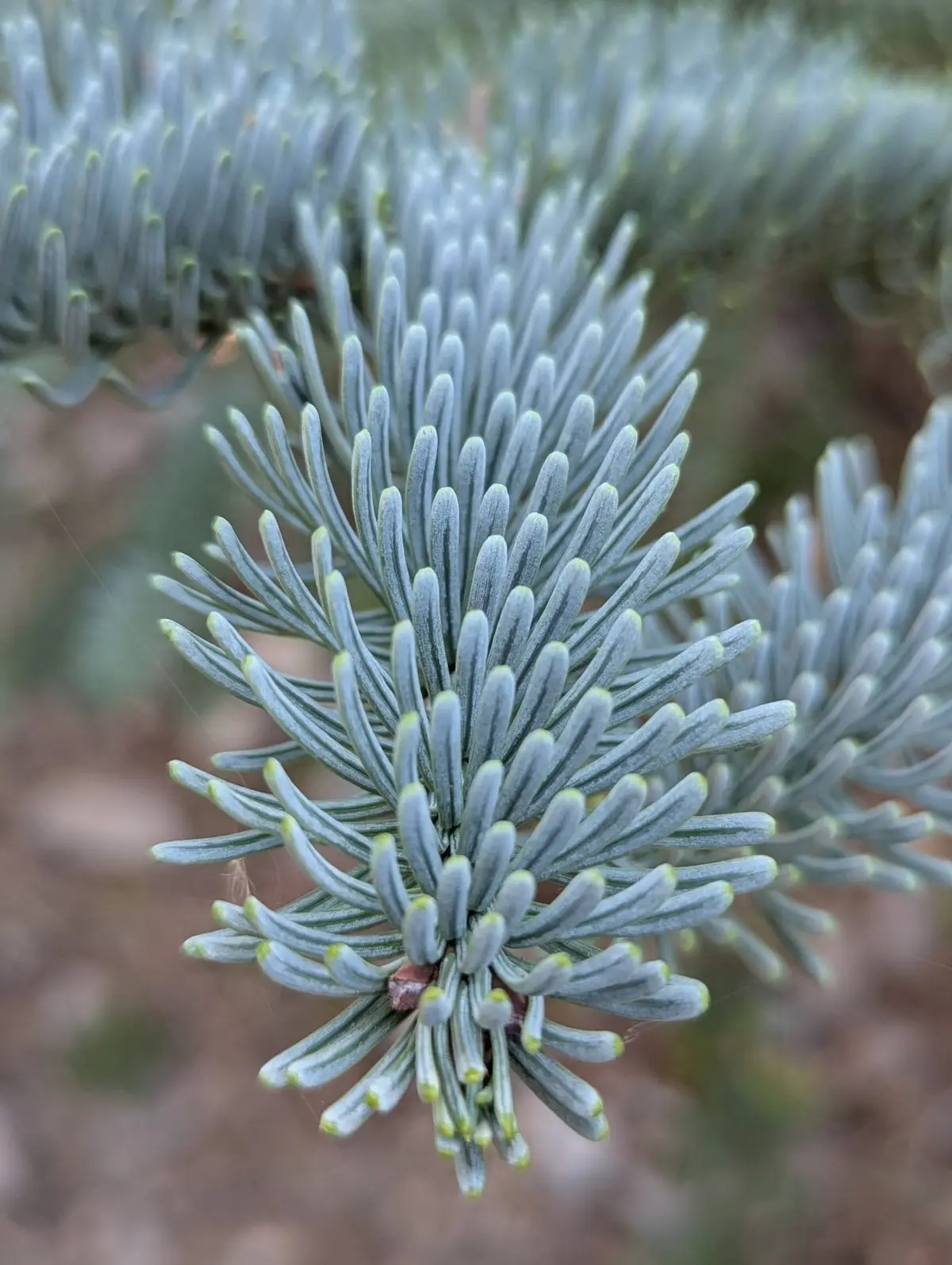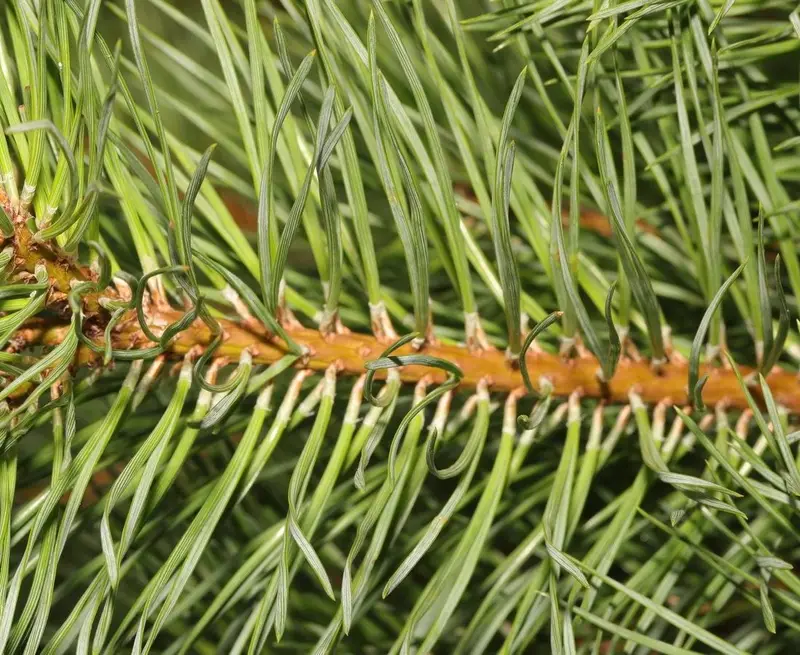
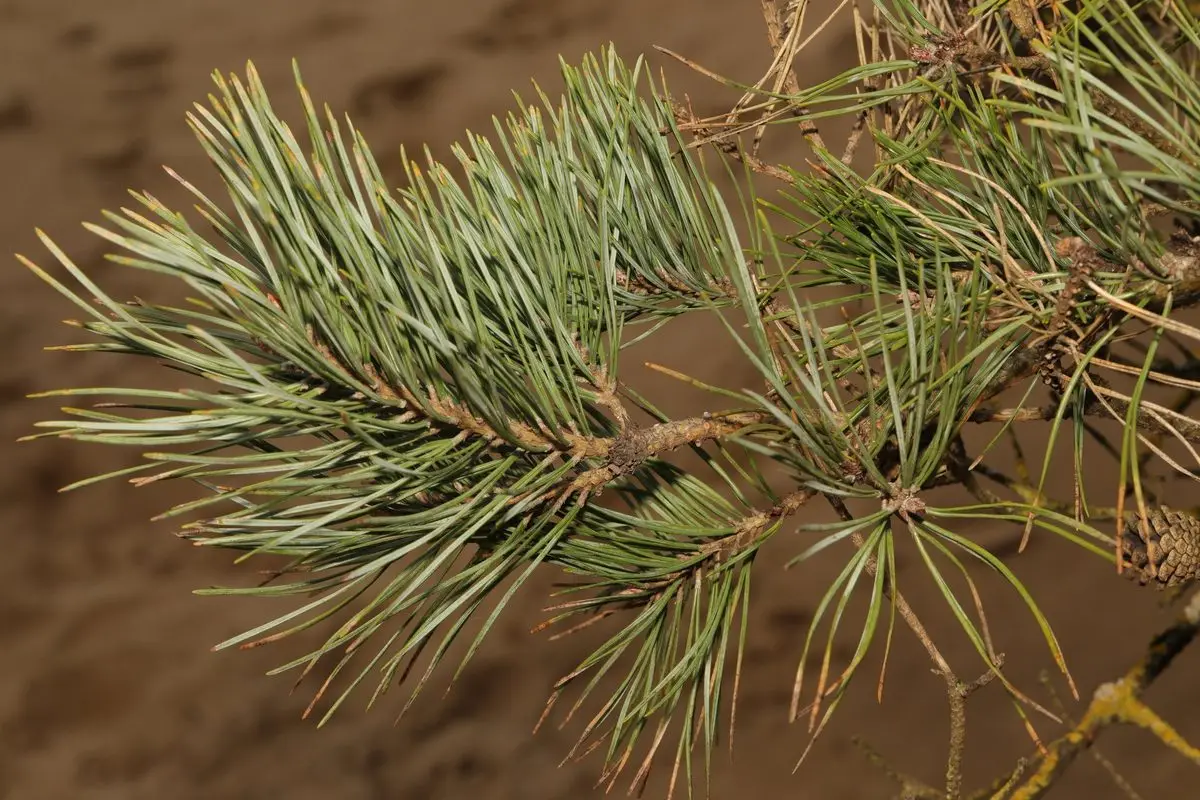
Scots pine needles grow in twos: short, slightly twisted and greyish green, each pair held together at the base by a tiny papery sheath.
Pinus sylvestris · Pinaceae
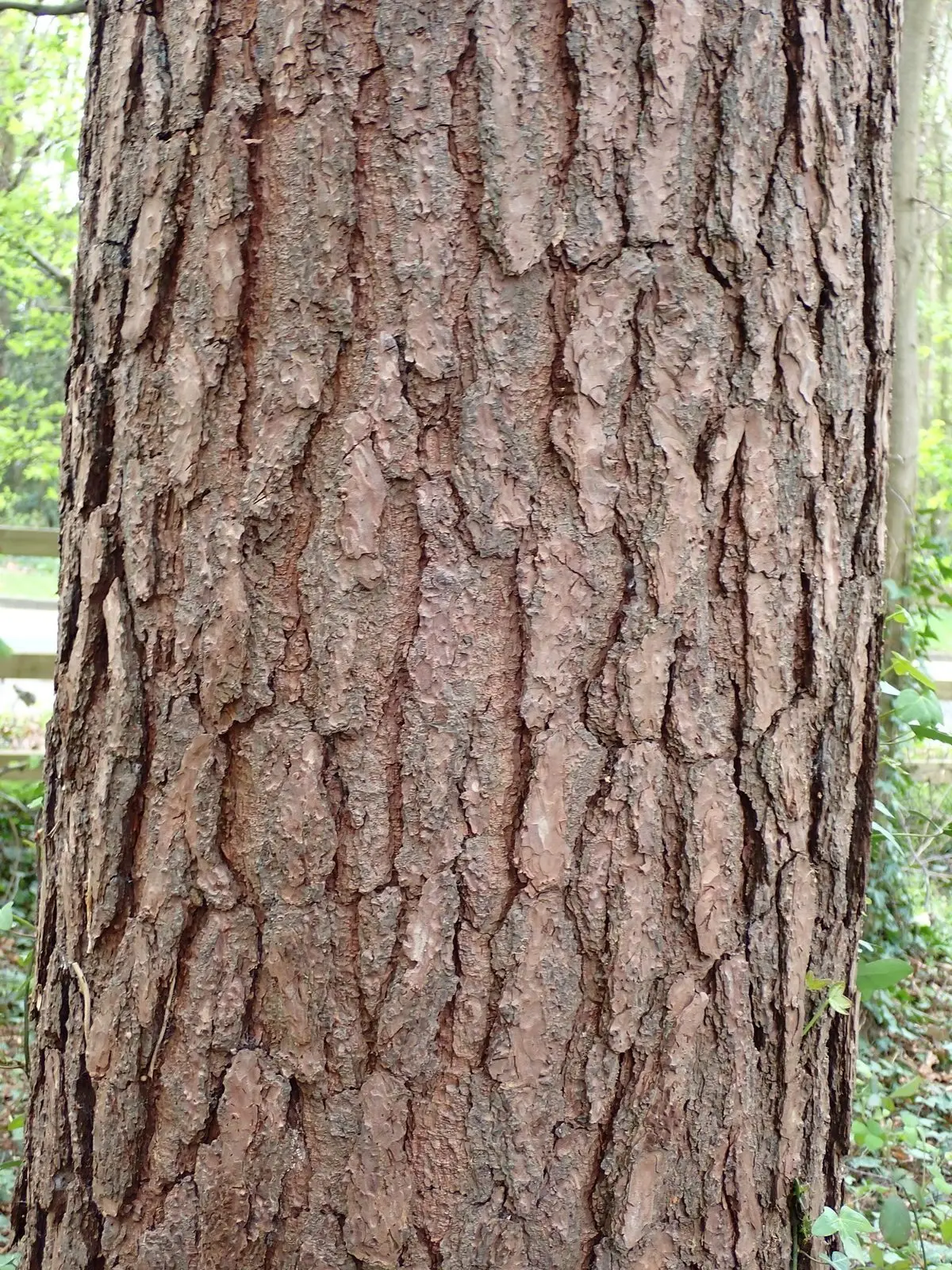
The trunk is greyish brown and plated low down, turning thin, papery and orange towards the top. The needles come in short, twisted pairs.
Often mistaken for Corsican pine. How to tell them apart →Needle pairsTwo short needles, joined at the base.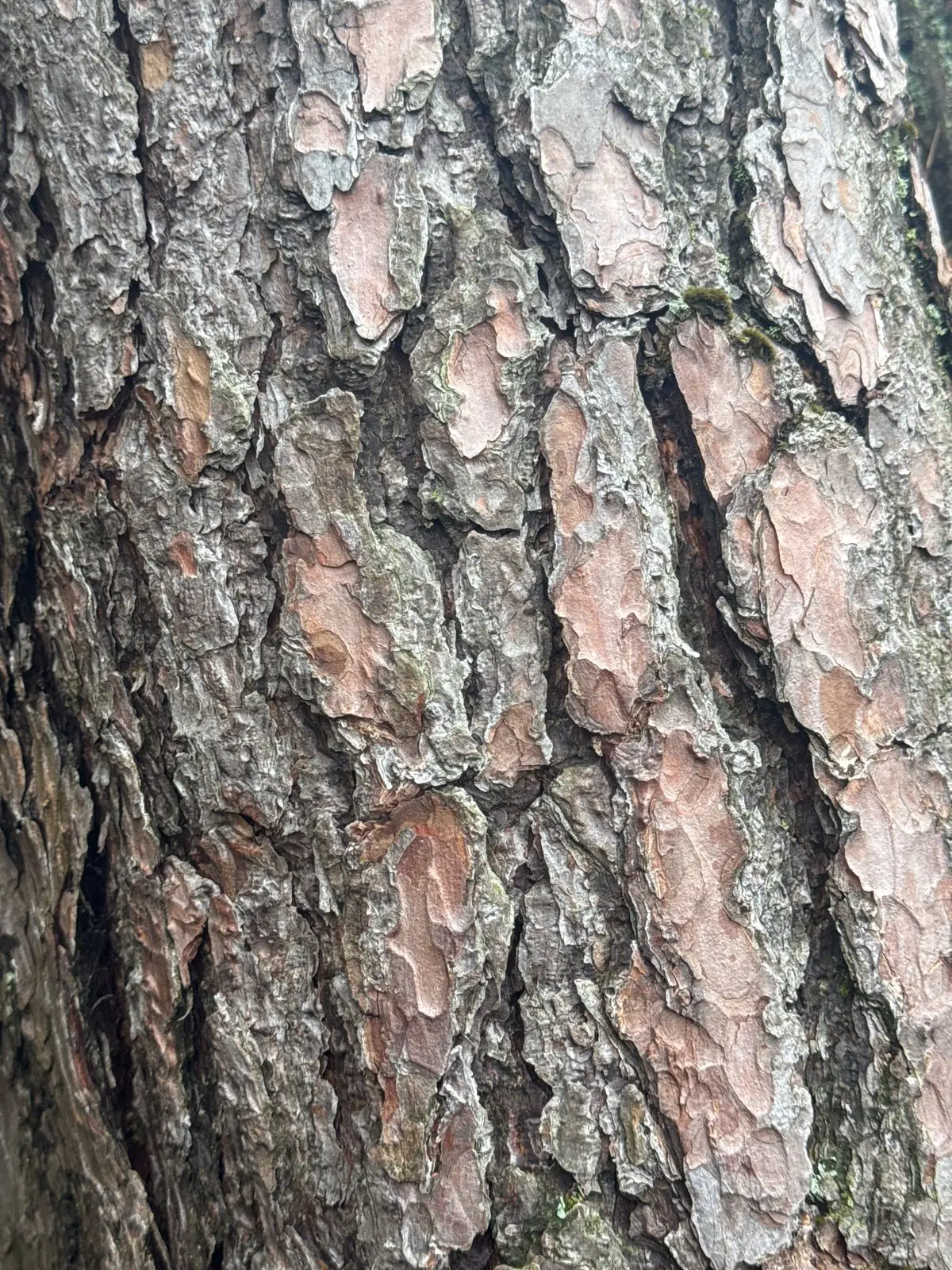 BarkOrange flakes up top, dark plates at eye level.
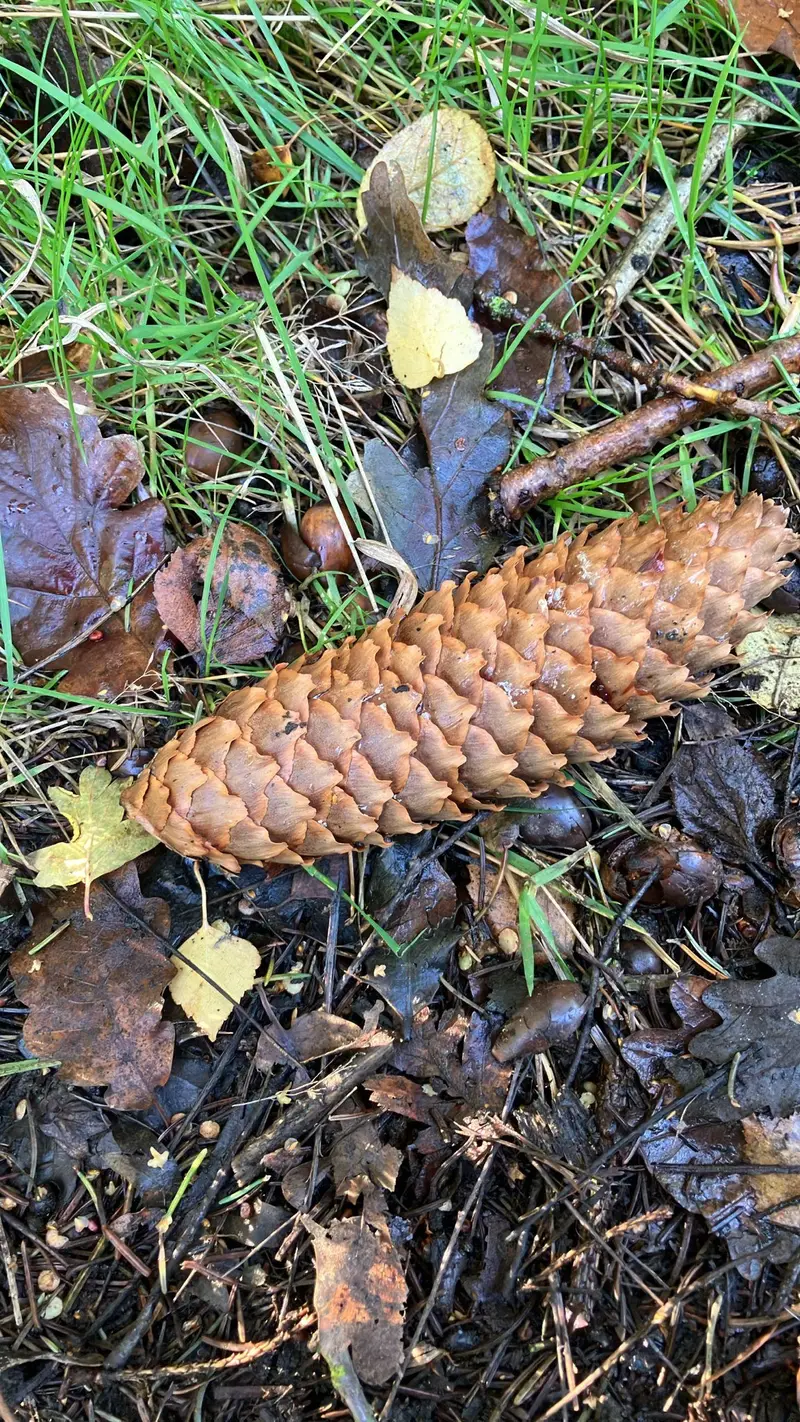
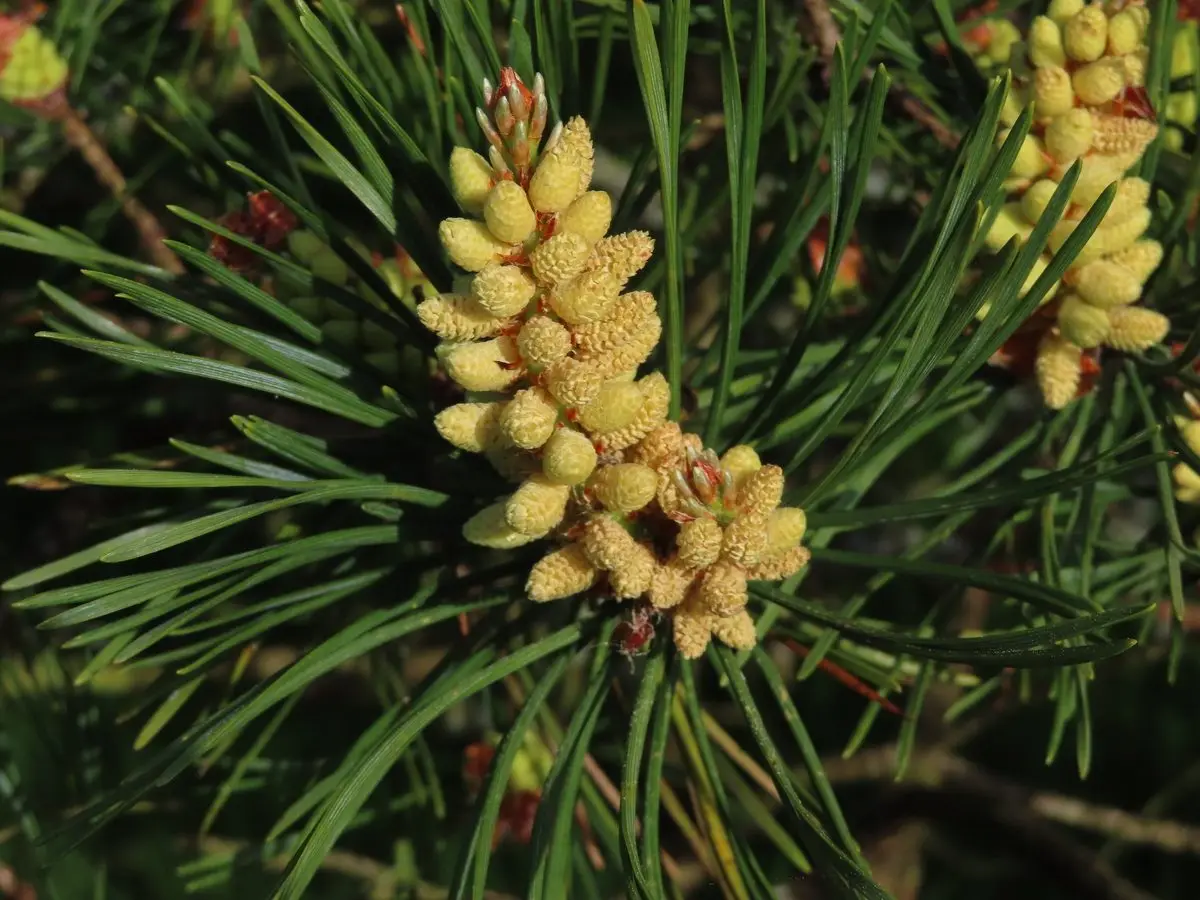
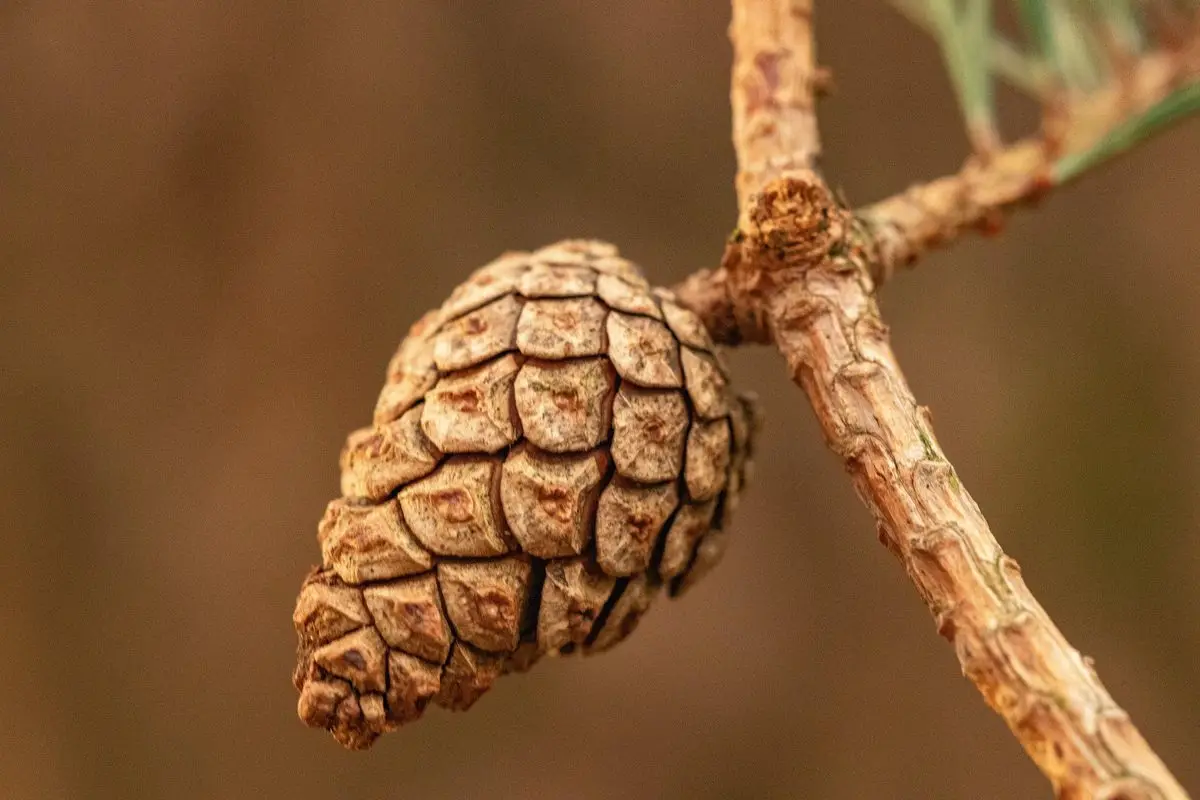
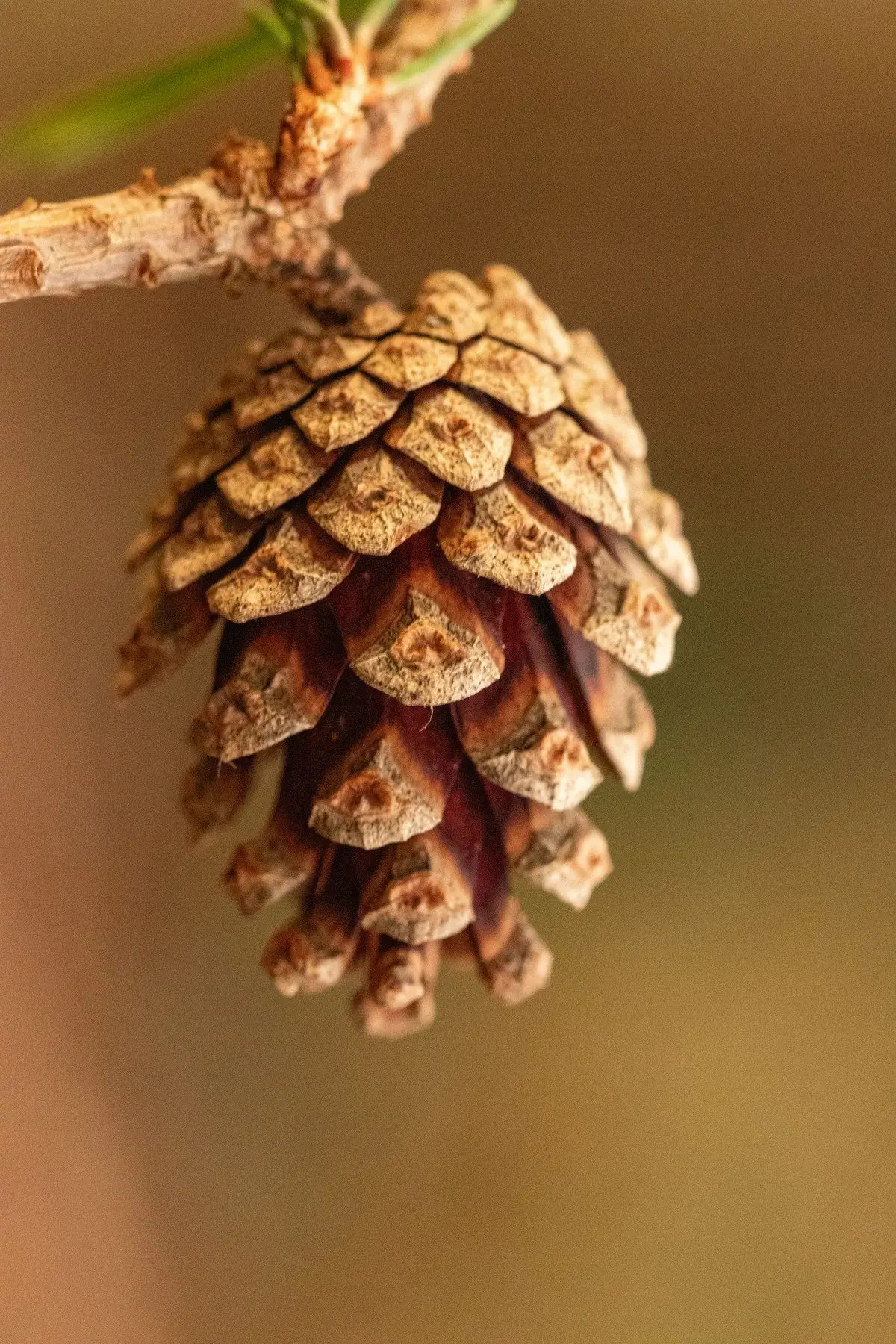 ConesSmall brown cones all year, yellow pollen cones in spring.
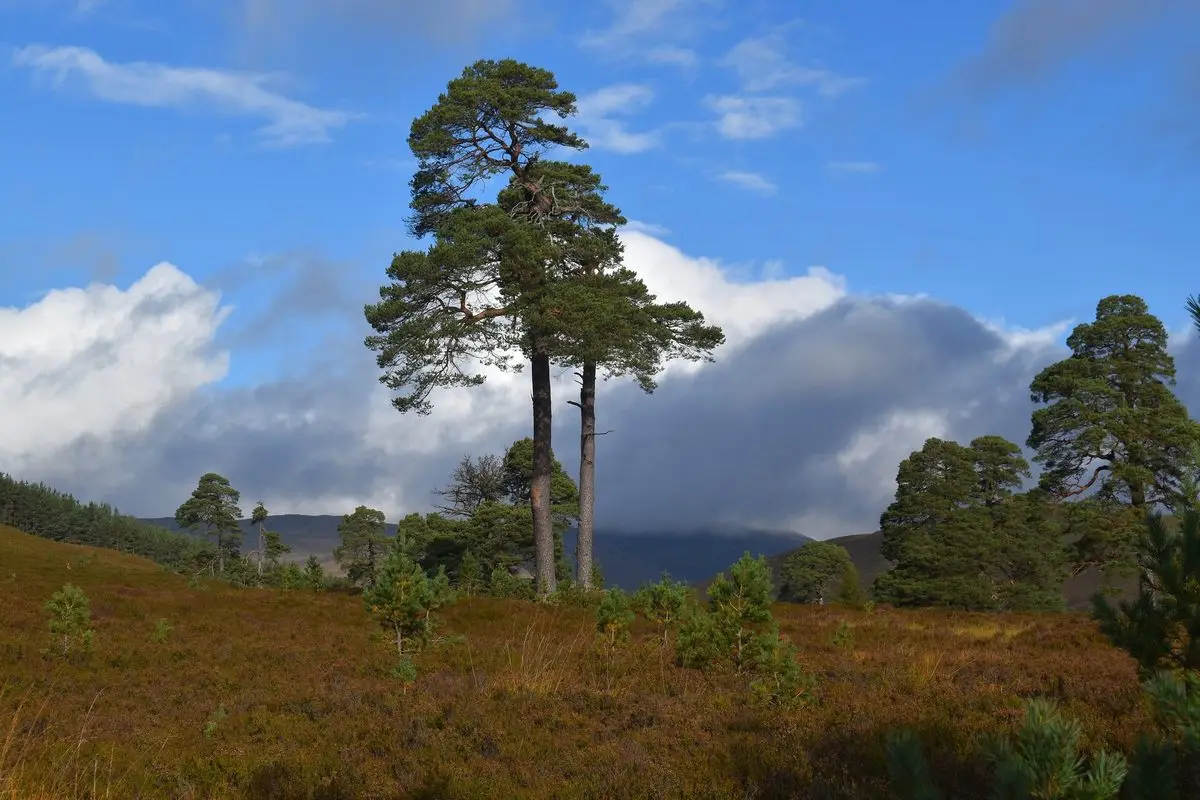
Then check · ShapeAn older tree carries all its foliage in a rounded or flat-topped head on a long, bare, straight trunk.
Scots pine needles grow in twos: short, slightly twisted and greyish green, each pair held together at the base by a tiny papery sheath.
Low on the trunk the bark is dark and broken into thick plates. Higher up it turns a warm orange and peels away in thin, papery flakes.
The woody cones are small and brown, and empty ones often lie under the tree. In spring, clusters of yellow pollen cones also appear at the base of the new shoots.
 Learn the Scots pine in TreelyEvery part through the year, and a short round each day until you know it.Get Treely
 Anne Thomson, CC BY 4.0
 dawn2022, CC BY 4.0
 Gail A Baker, CC BY 4.0
In leaf: all year · Flowers: April to June · Cones: all year
Native Caledonian pinewood in the Scottish Highlands, and planted or self-sown almost everywhere else: forestry plantation, lowland heath, sandy and gravelly ground, rocky outcrops. On chalk it turns yellow and struggles.
Free to download.
Every fact on this page is checked against the Collins Tree Guide, last in November 2026. Spotted something that looks wrong in front of a real tree? Tell us. How we check.
Photographs: Gail A Baker (CC BY 4.0), steve_mcwilliam (CC0), Leon Cross (CC BY 4.0), dawn2022 (CC BY 4.0), Anne Thomson (CC BY 4.0), bobwardell (CC0), dsykodave (CC0). With thanks to everyone who shares their photographs on iNaturalist and Wikimedia Commons.