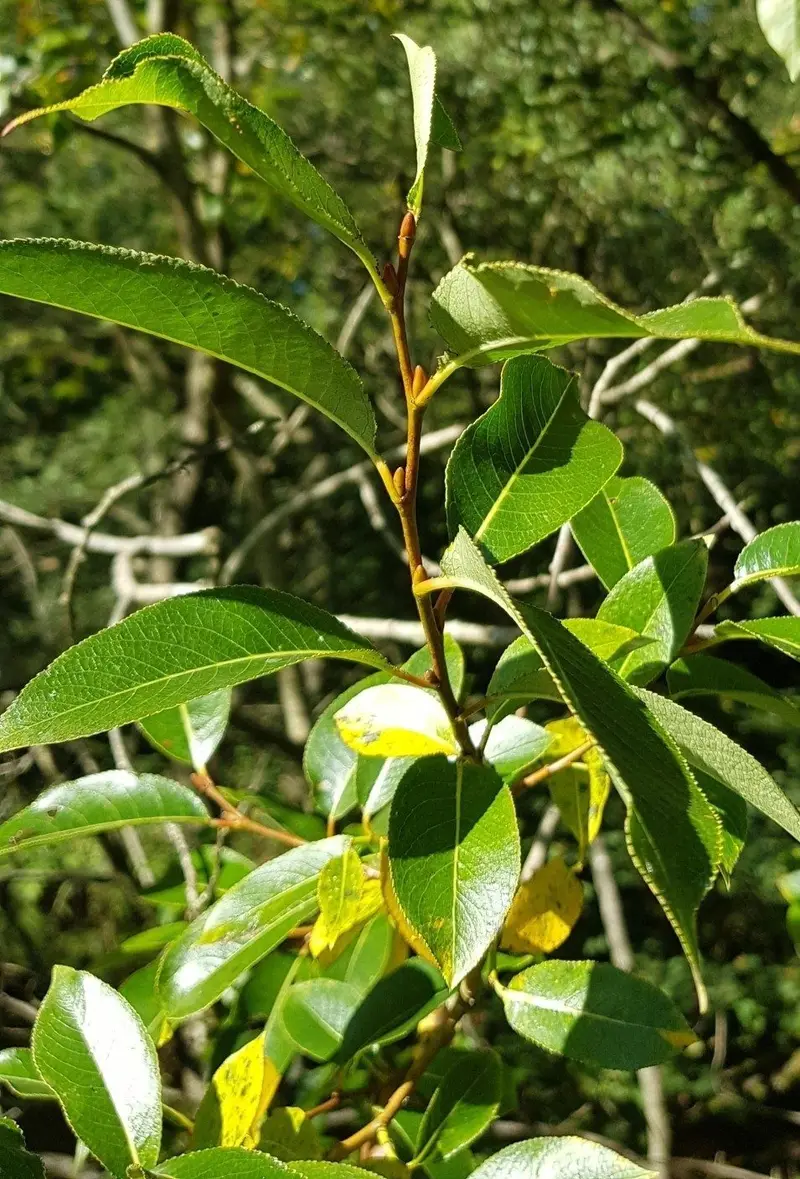
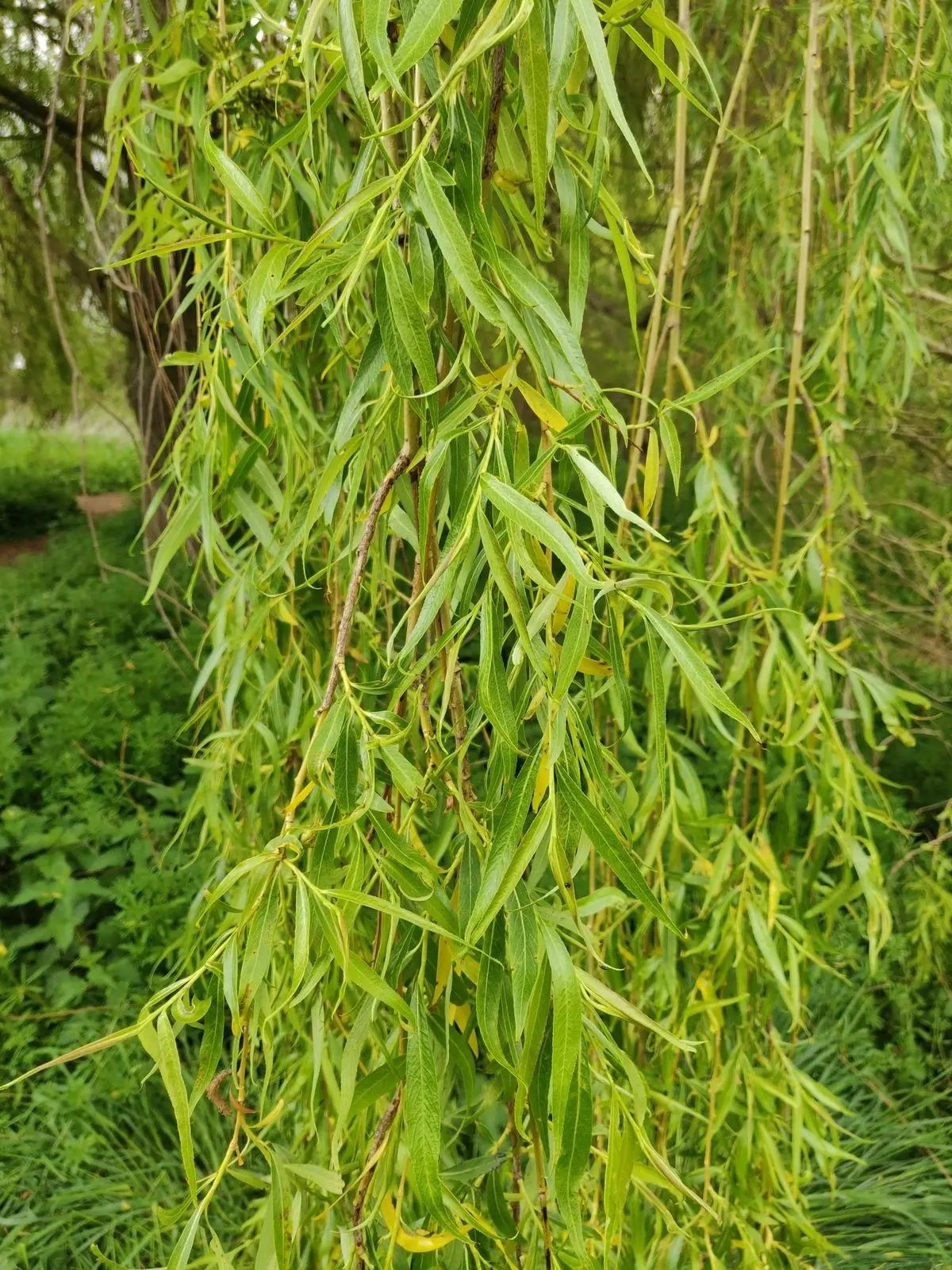
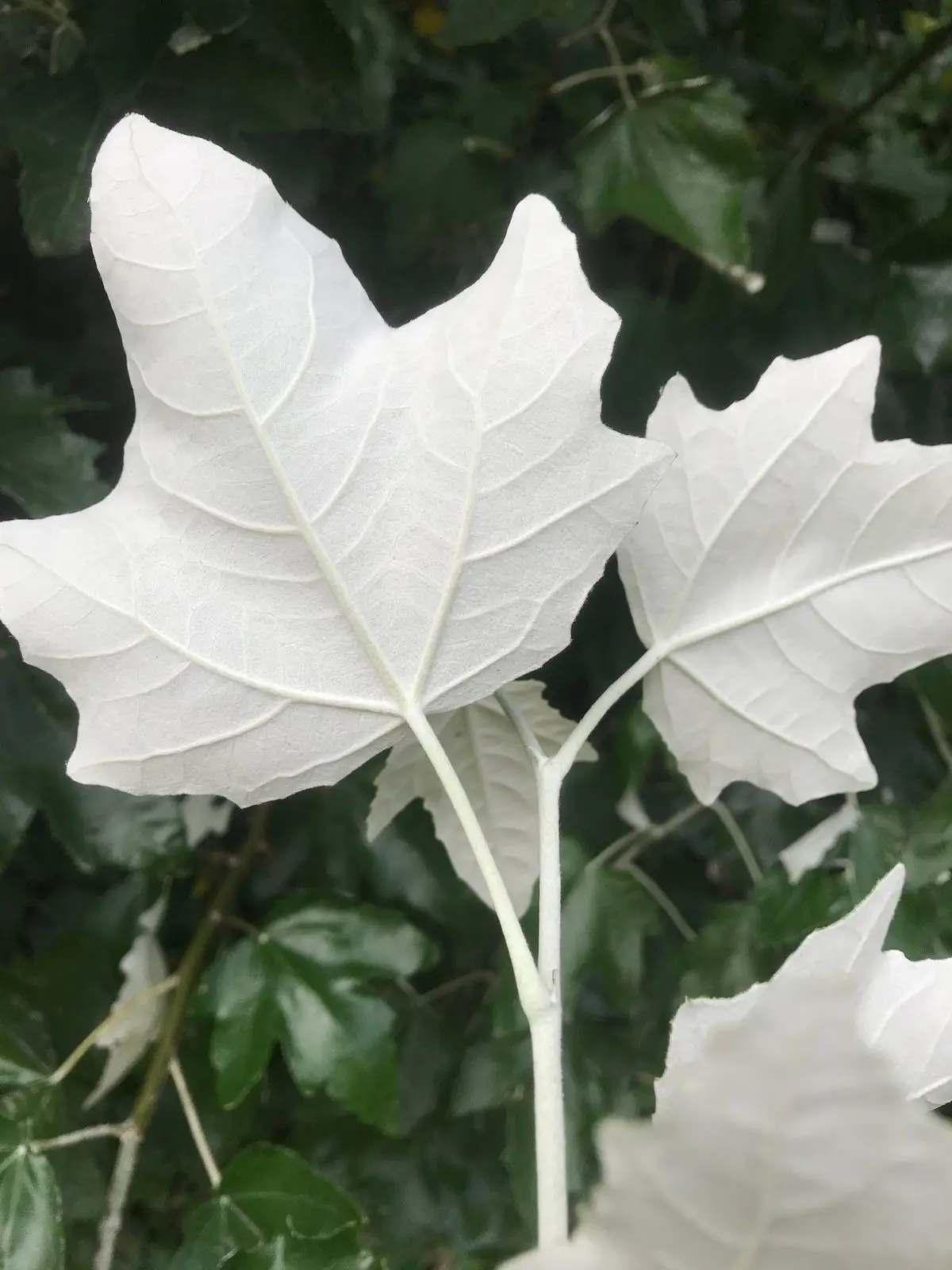
Long and narrow, 5 to 10 cm, tapering at both ends, with finely toothed edges and a fuzzy white underside.
Long established · Up to 30 m
White willow
Salix alba · Salicaceae
White willow is a big waterside tree that looks misty grey from across a field in summer. Its narrow leaves have a fuzzy white underside of silky hairs.
Know it by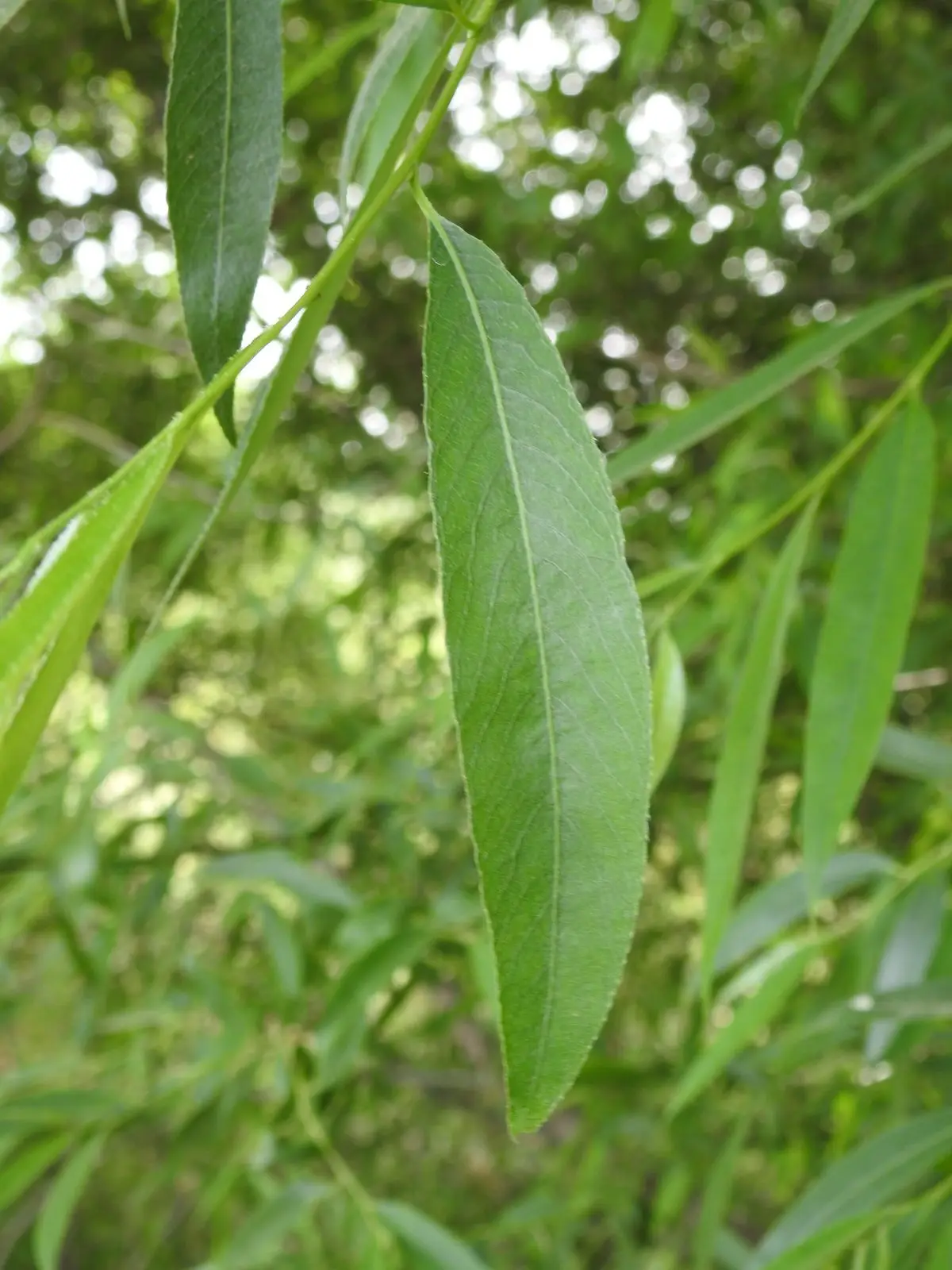 LeavesLong and narrow, 5 to 10 cm, finely toothed, tapering both ends.
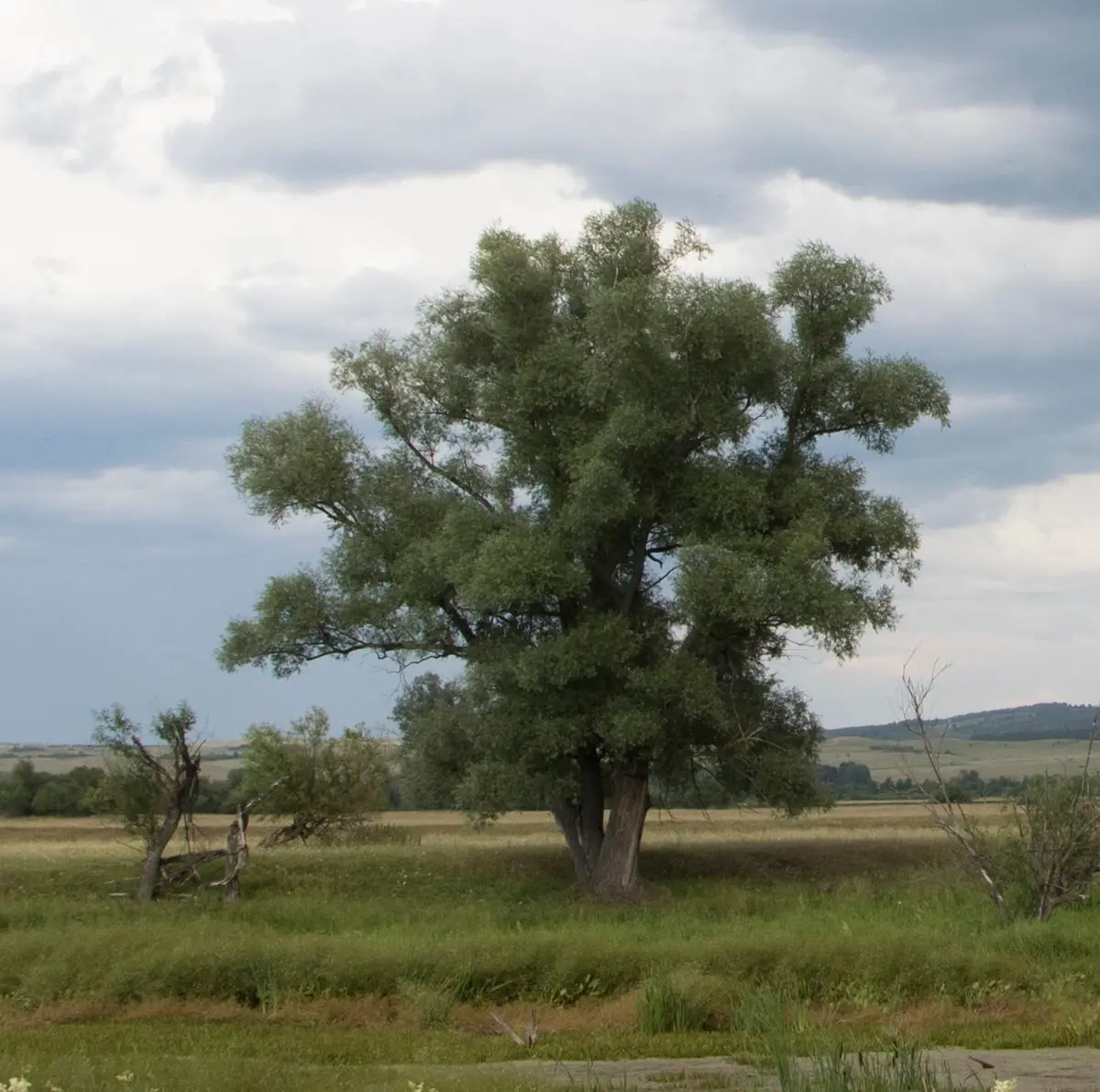 ShapeLarge, often leaning, short trunk, shoots drooping at the ends.
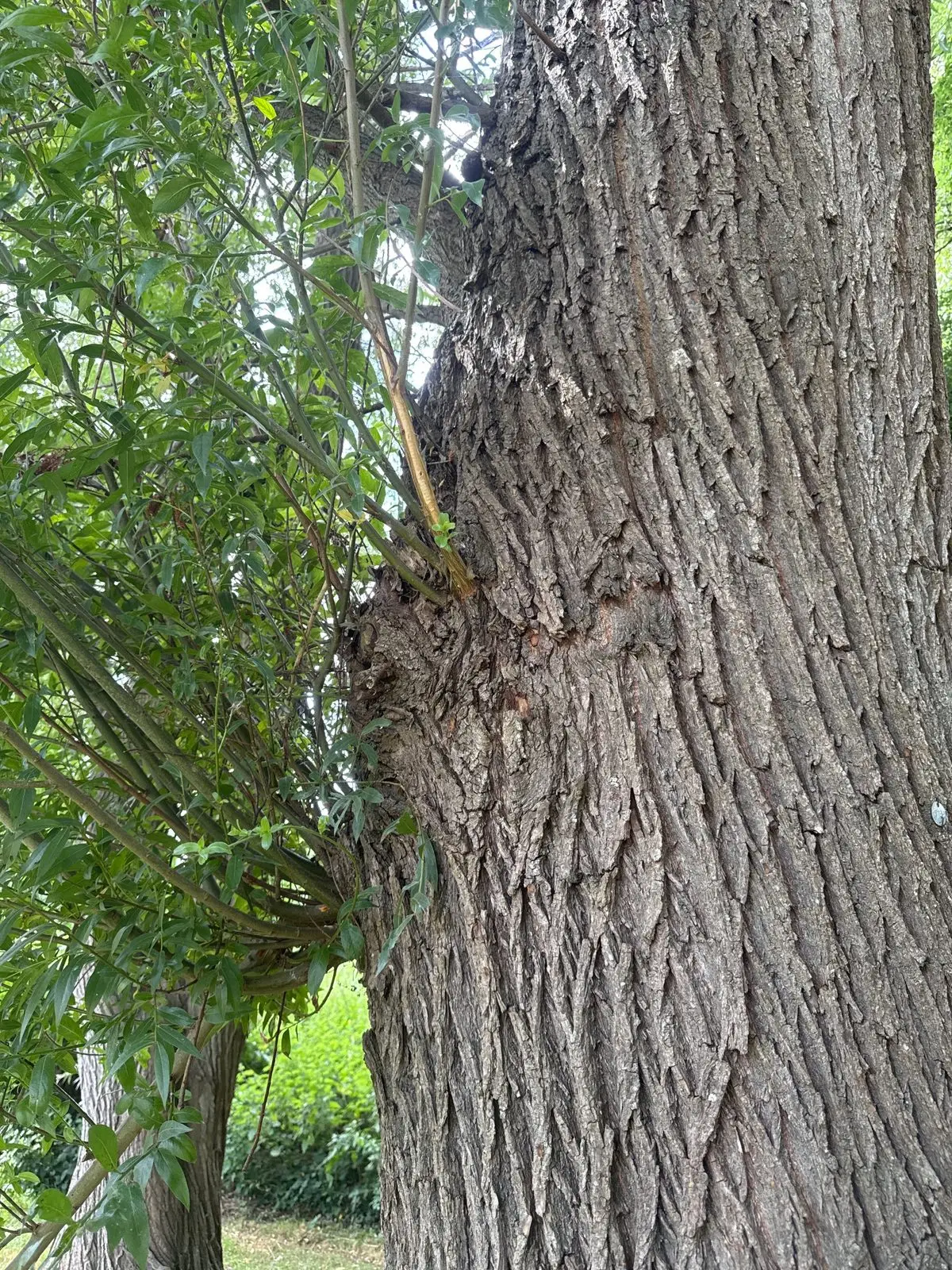 BarkDark grey and rough, over the whole trunk.
LeavesLong and narrow, 5 to 10 cm, finely toothed, tapering both ends.ShapeLarge, often leaning, short trunk, shoots drooping at the ends.BarkDark grey and rough, over the whole trunk.Then check · TwigsVery slender, flexible grey shoots, soft and fuzzy in their first year, with narrow flat buds pressed close along them.
How to identify a white willow
Large and often leaning, on a short trunk, with heavy limbs that sweep upward and thin shoots drooping at their ends.
Dark grey, with rough ridges that cross to form a net over the whole trunk.
 Learn the white willow in TreelyEvery part through the year, and a short round each day until you know it.Get Treely
Every part, in photographs
yvesbas, CC BY 4.0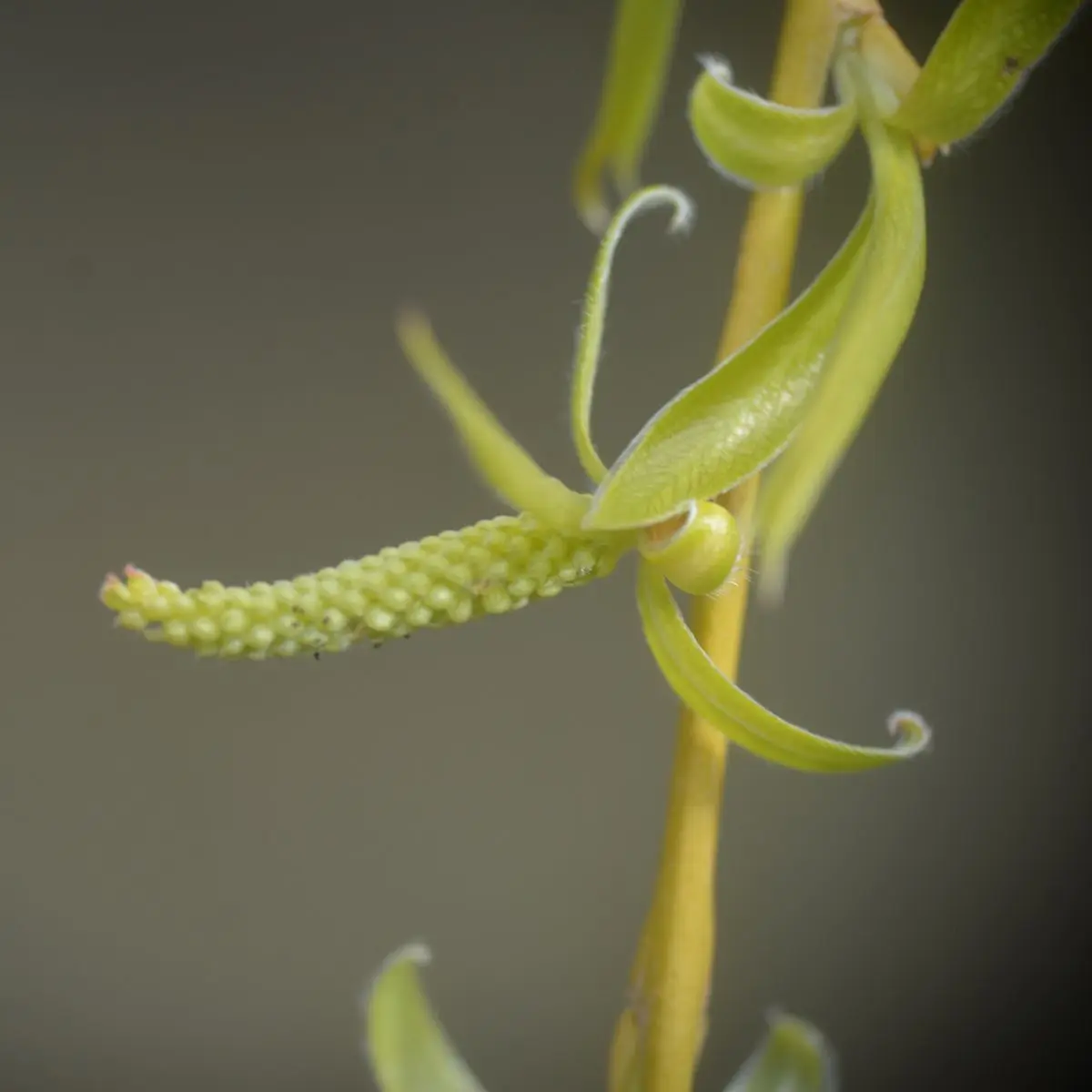 Matthew Vosper, CC BY 4.0Полина Полежанкина, CC BY 4.0
When to look
JFMAMJJASOND
In leaf
Catkins
Seed fluff
In leaf: April to November · Catkins: April to May · Seed fluff: June to August
Where you’ll find it
On wet, low-lying ground, by rivers and streams, at the edges of lakes and larger ponds, and in marsh ditches. It grows throughout the lowlands and is common in places, but scarcer to the north and west.
What it’s mistaken for
- Crack willowBoth are big willows of lowland rivers, and they cross so freely that many tall wild trees may be crosses of the two. Leaf. White willow: white with silky hairs, all season. Crack willow: bluish and smooth.
- Weeping willowBoth are big waterside willows with narrow leaves. Shape. White willow: limbs sweep up, only the tips droop. Weeping willow: shoots fall straight down, limb to tip.
- Goat willowBoth are common willows of damp ground. Leaf. White willow: long and narrow, tapered at both ends. Goat willow: a broad oval, the tip bent to one side.
- OsierBoth are narrow-leaved willows of wet ground. Shape. White willow: heavy limbs sweeping up off a short trunk. Osier: many long straight stems from one low base.
- Bay willowBoth are willows of wet ground, and both can stand by the same river. Leaf. White willow: pale silvery grey, thinly hairy. Bay willow: dark green, leathery and highly glossy.
- EucalyptusBoth are big trees with long, narrow, greyish leaves. Leaf. White willow: silvery grey above, white with hairs below. Eucalyptus: the same dull grey on both sides.
In the app
There’s more of the white willow in Treely
- Every part, through the yearLeaves, bark, buds, flowers and fruit, photographed in every season
- Its lookalikes, side by sideThe checks that settle it, part by part
- A short round each dayUntil you know the white willow on sight, from any side
- Name it from a photoA leaf, the bark or a flower, and Treely tells you which tree
Free to download.
Every fact on this page is checked against the Collins Tree Guide, last in November 2026. Spotted something that looks wrong in front of a real tree? Tell us. How we check.
Photographs: Полина Полежанкина (CC BY 4.0), yvesbas (CC BY 4.0), Leon Cross (CC BY 4.0), Matthew Vosper (CC BY 4.0). With thanks to everyone who shares their photographs on iNaturalist and Wikimedia Commons.