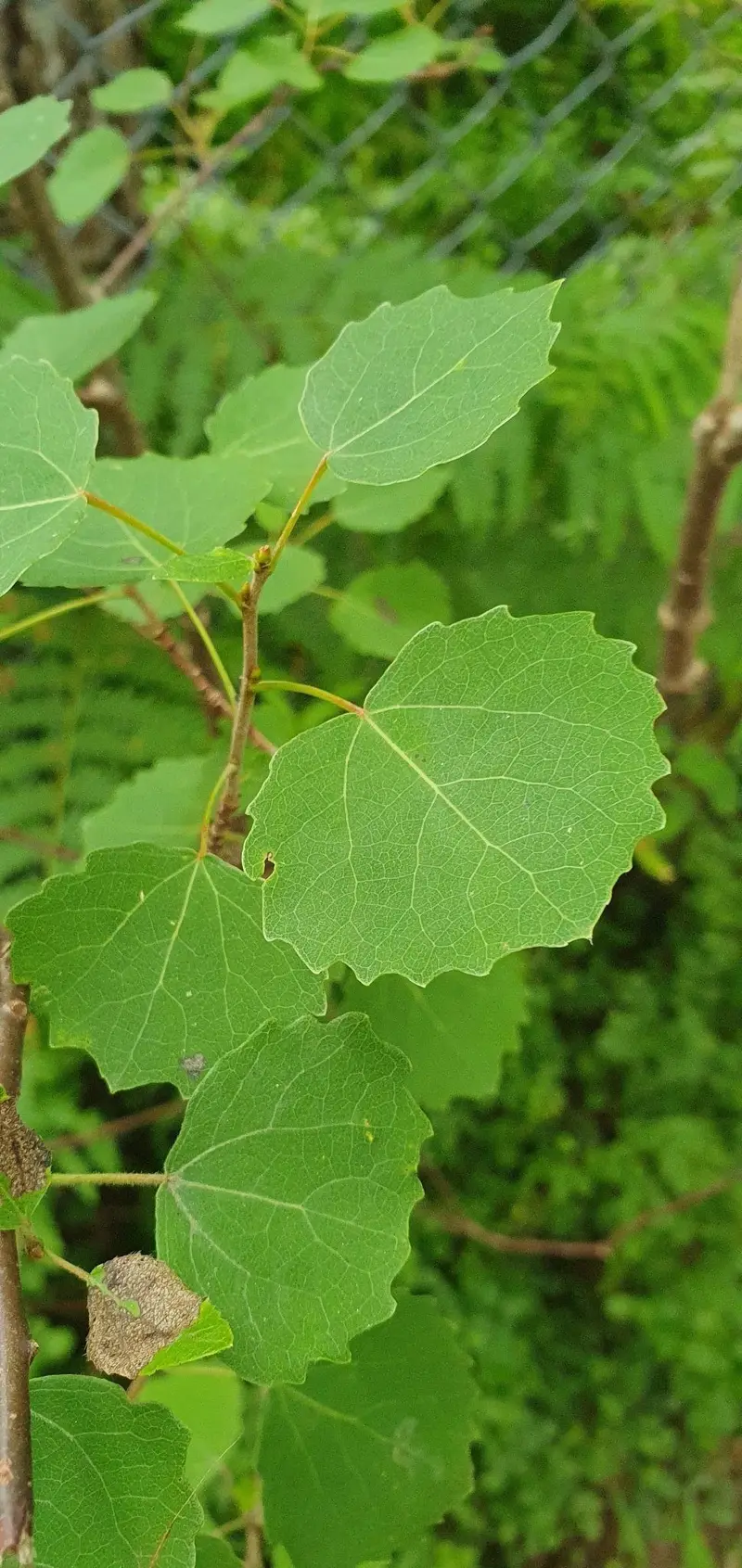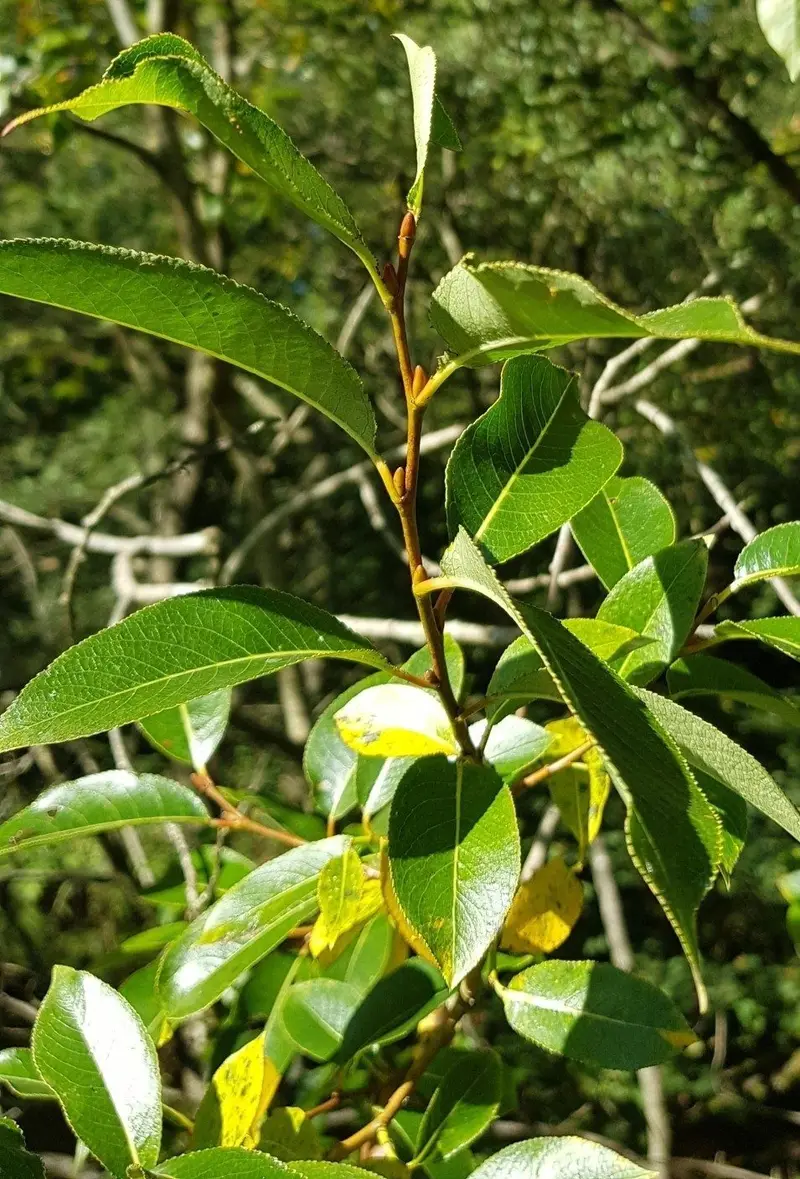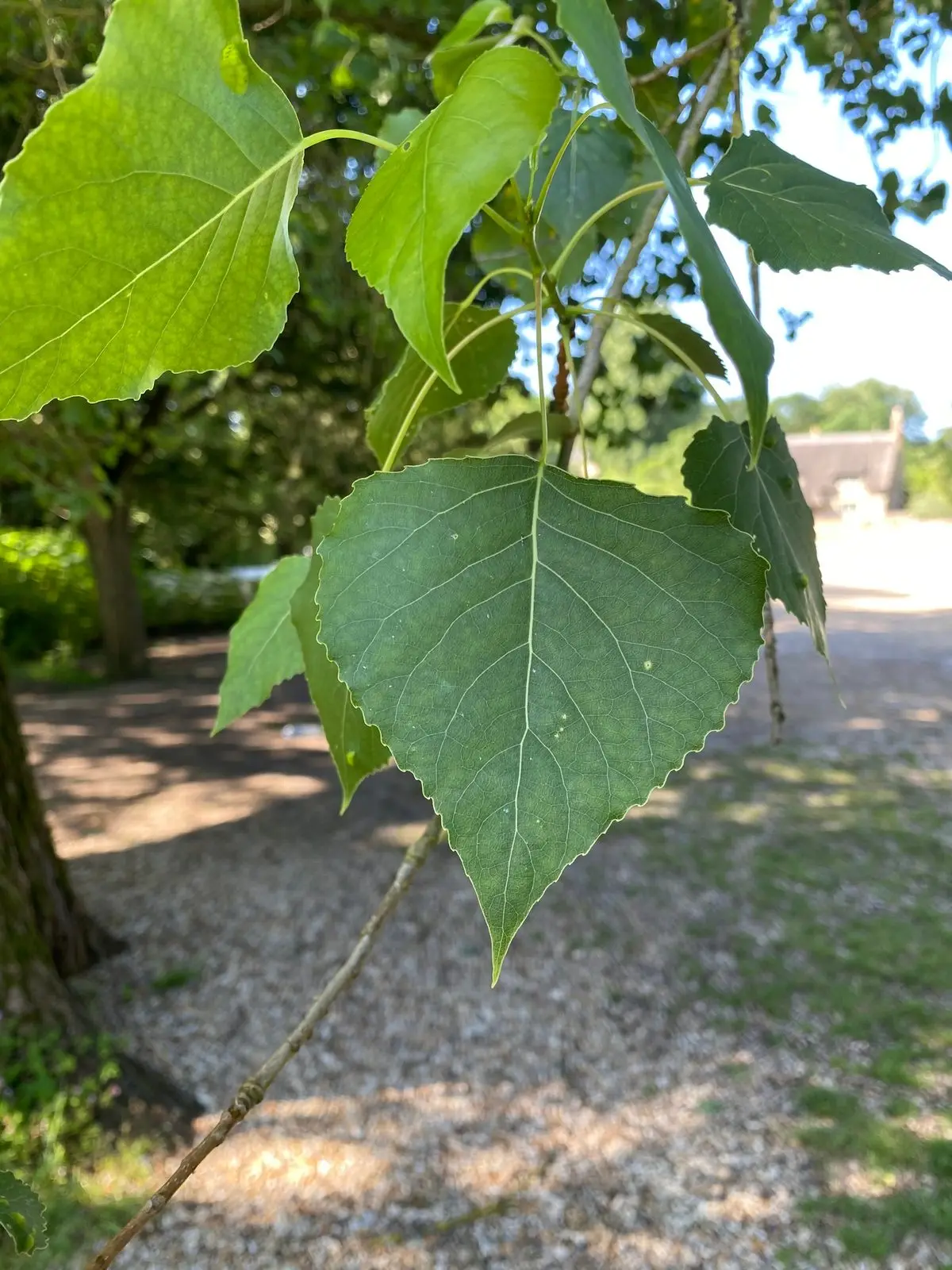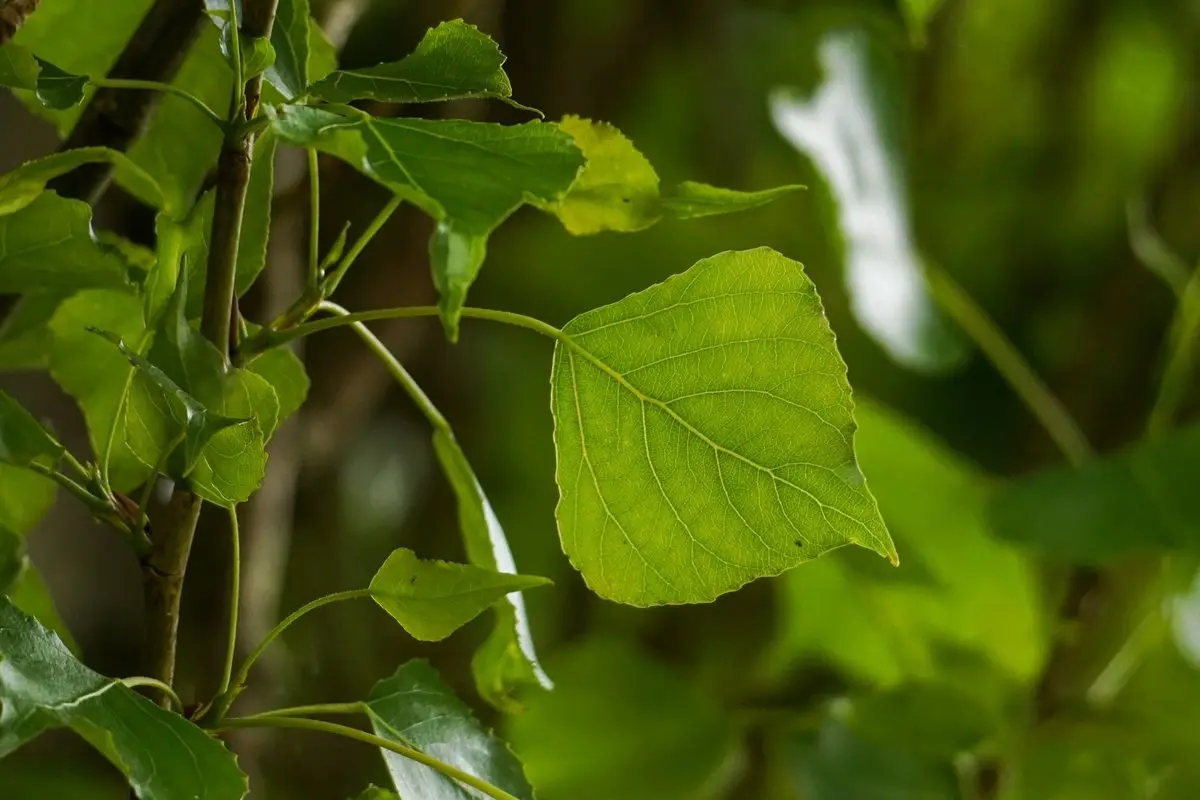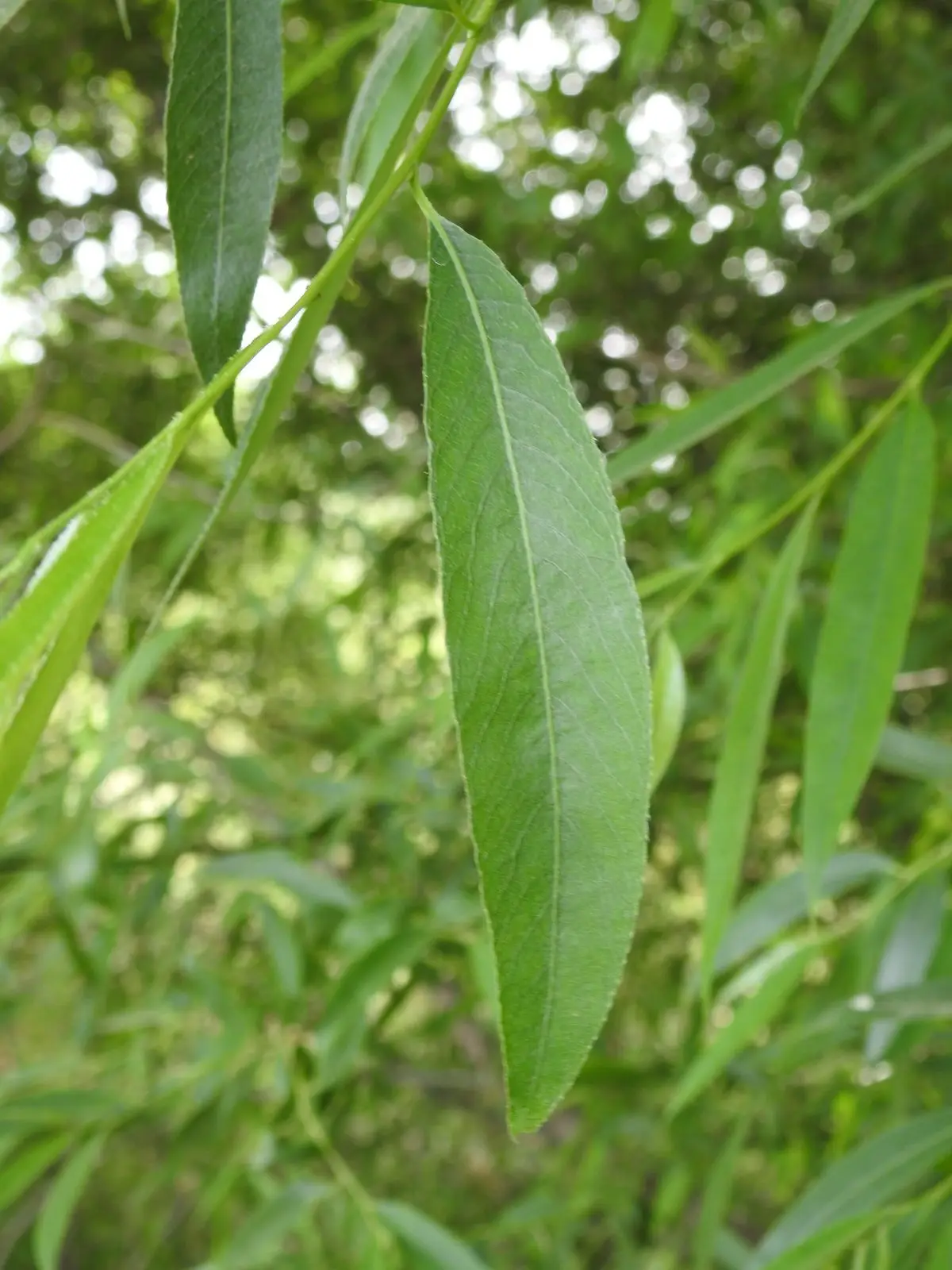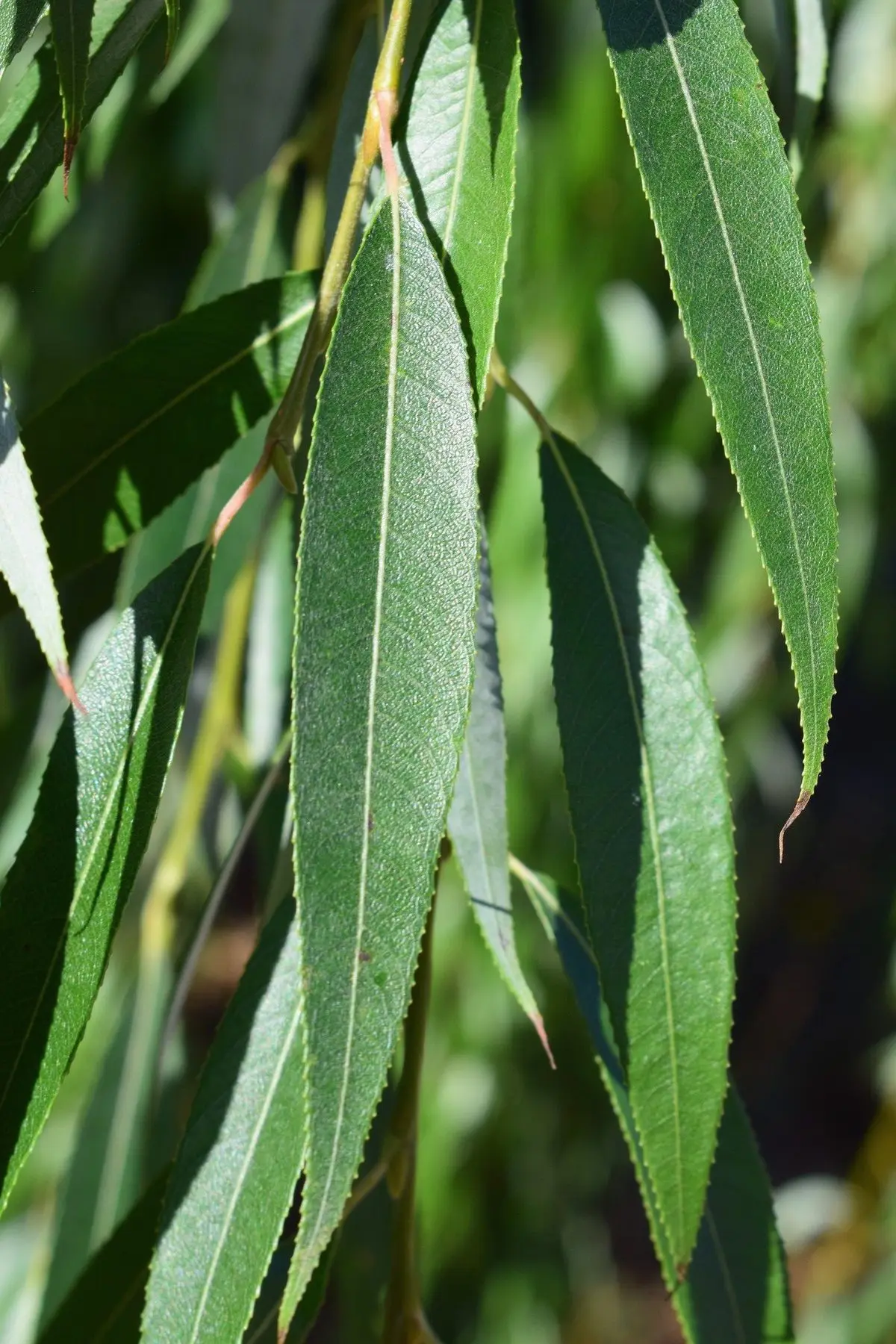
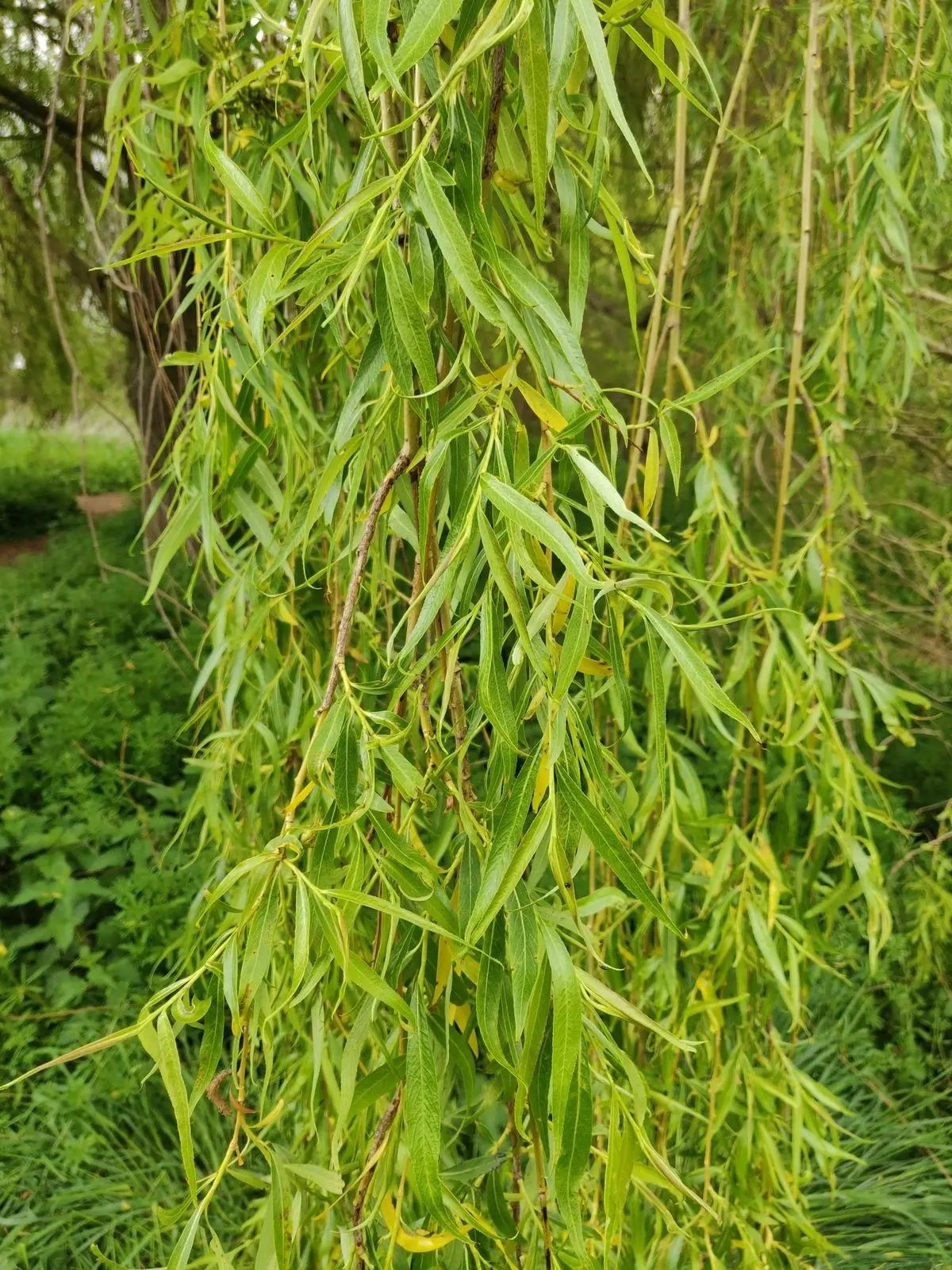
Weeping willow leaves are long and narrow, with tiny teeth along the whole edge and a tip drawn out into a long, thin point. They are light green on top and pale underneath.
Salix × sepulcralis 'Chrysocoma' · Salicaceae
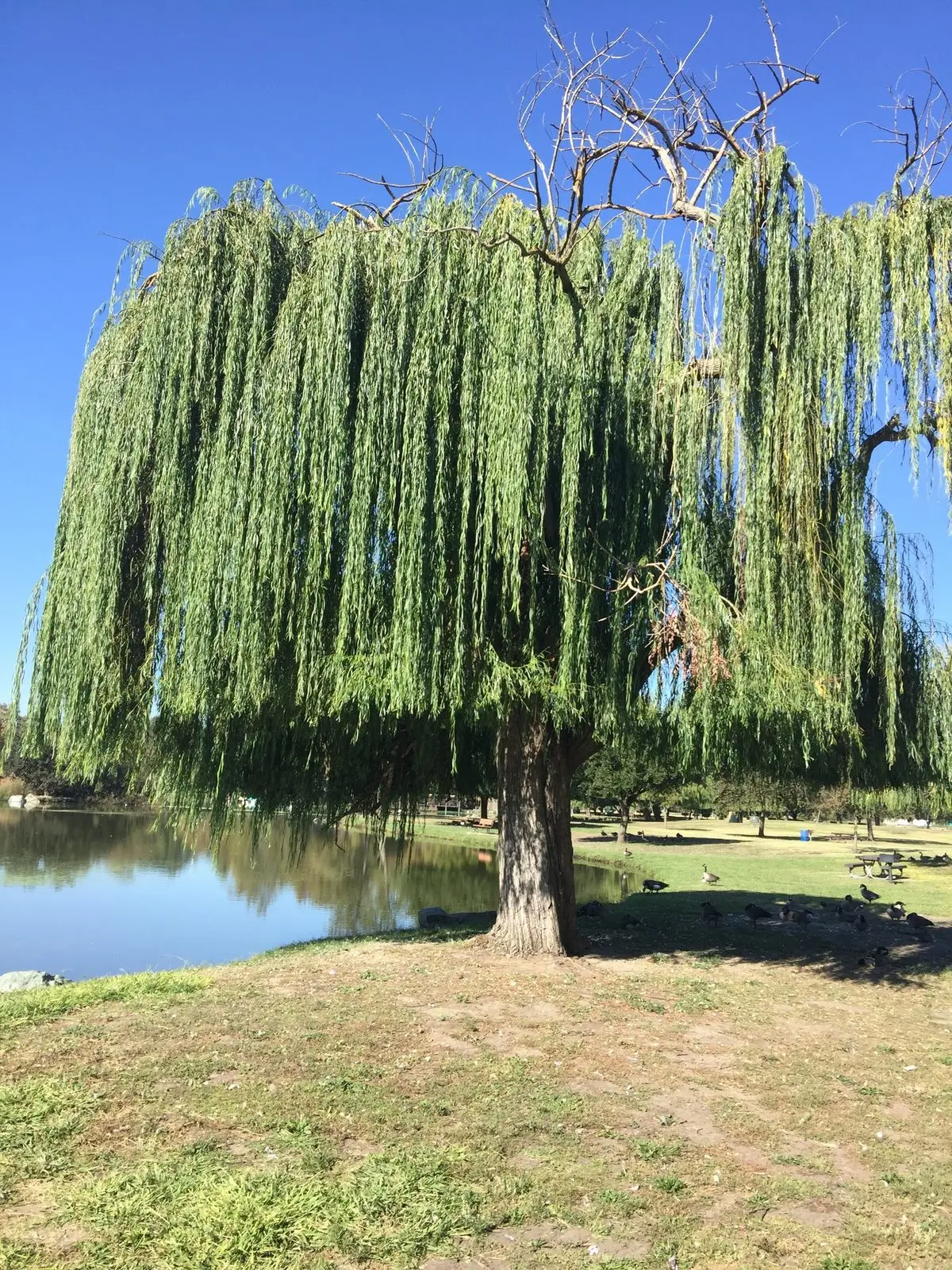
Weeping willow is a broad, domed tree planted in parks and gardens and beside water. Its long shoots hang straight down, all the way to their tips.
LeavesLong, narrow leaves with tiny teeth and a thin point.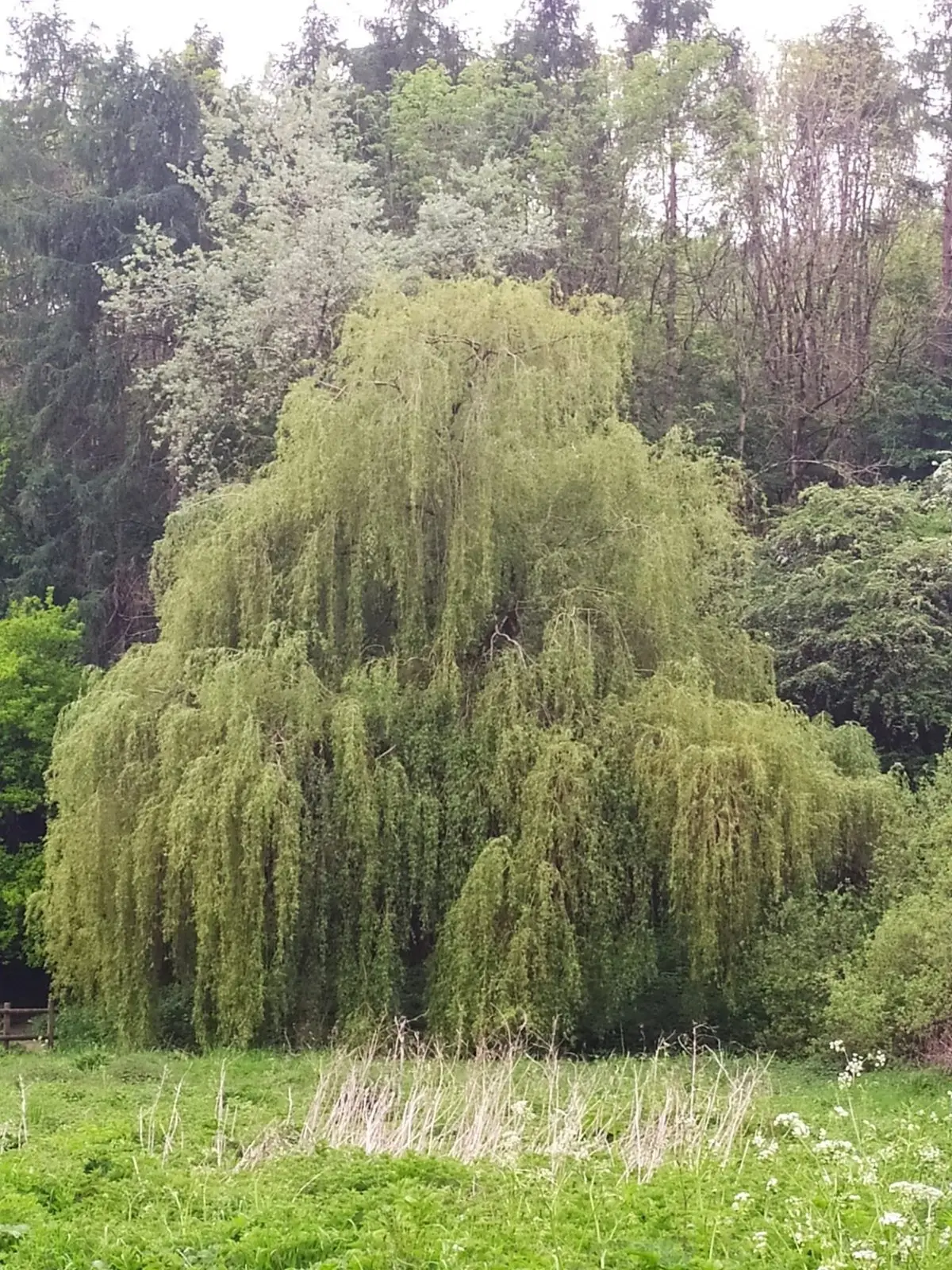 ShapeA broad, rounded crown, its twigs hanging straight down.
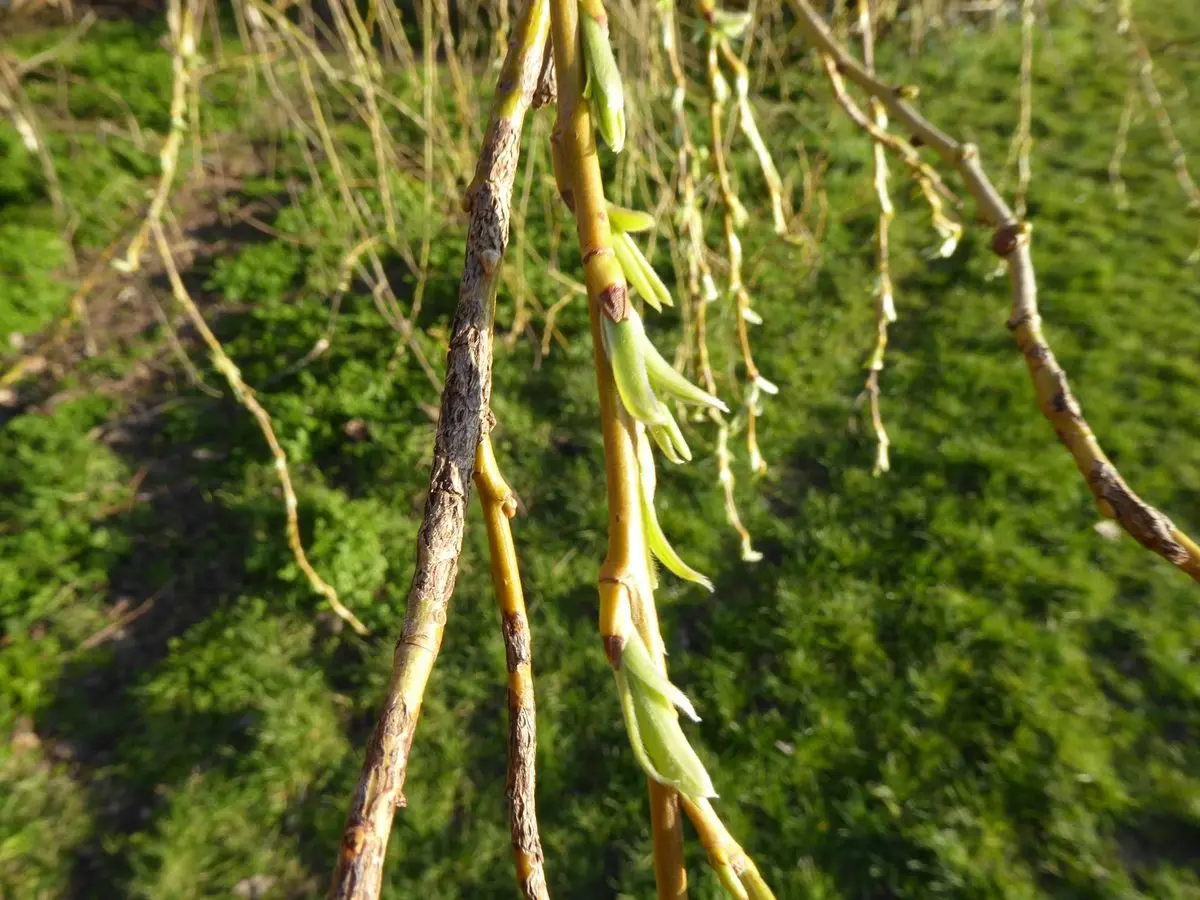
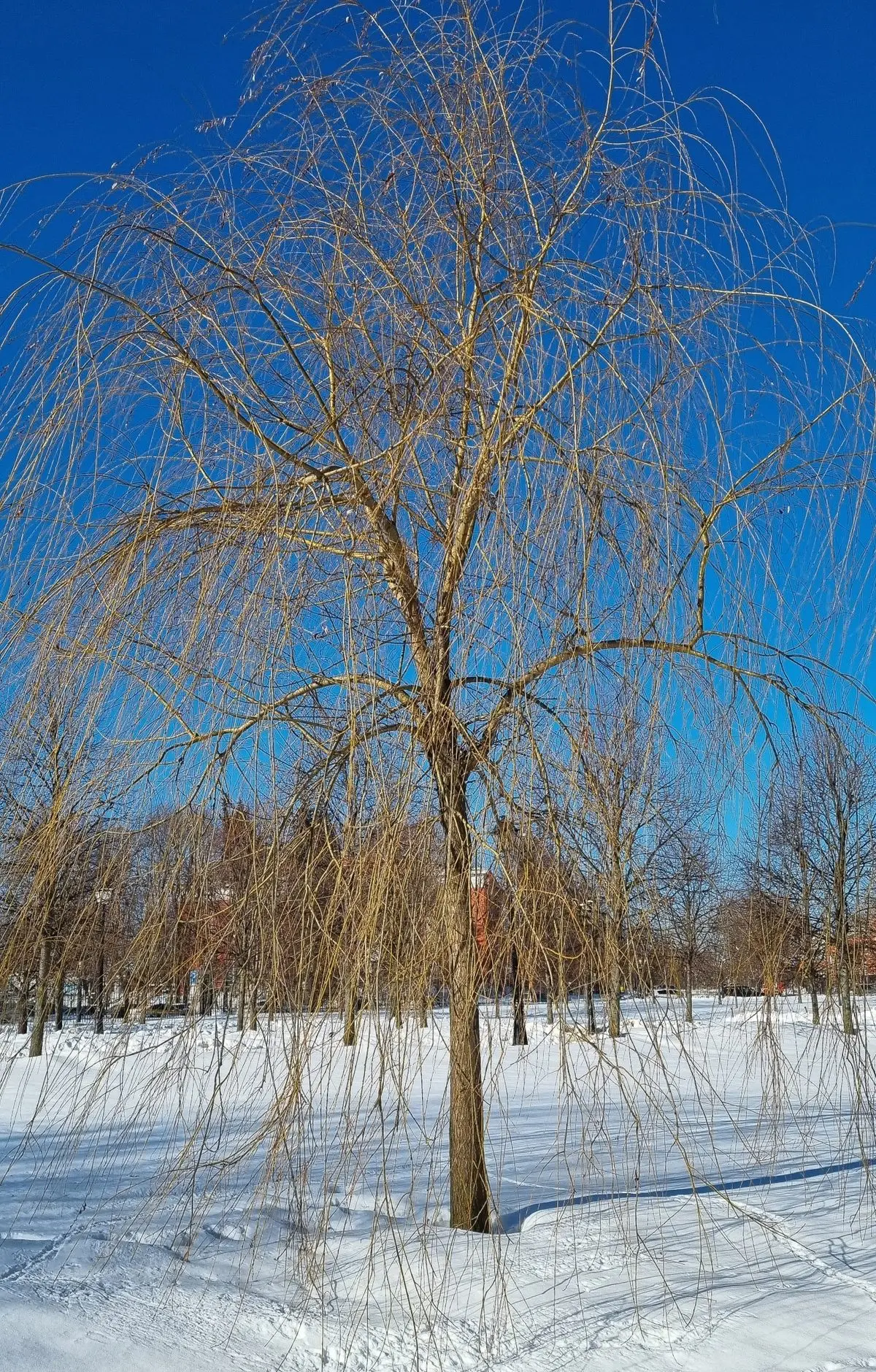 Winter twigsBare hanging twigs that show gold in winter sun.
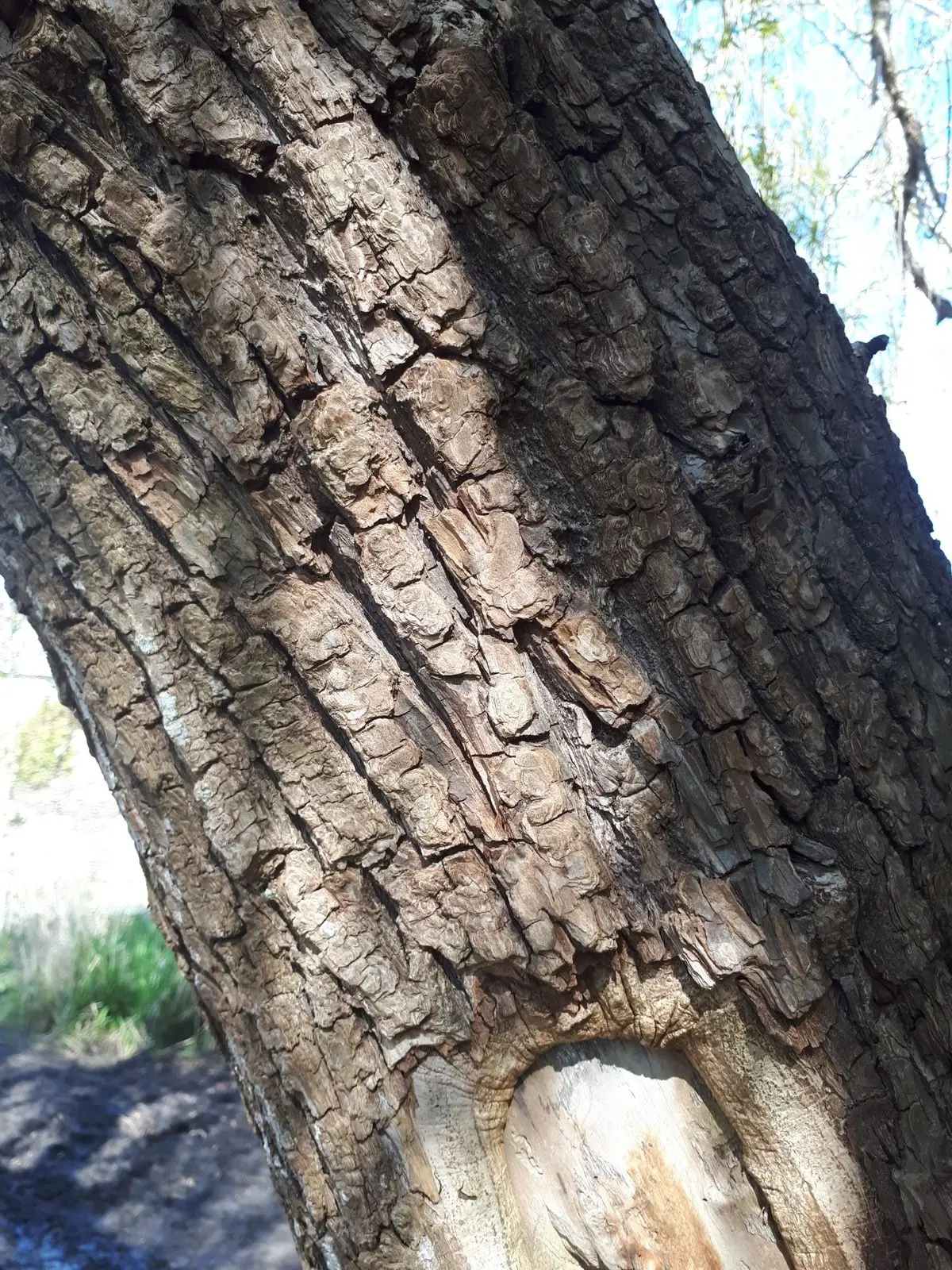
Then check · BarkPale greyish brown, with deep ridges that cross and join in a diamond pattern.
Weeping willow leaves are long and narrow, with tiny teeth along the whole edge and a tip drawn out into a long, thin point. They are light green on top and pale underneath.
Long, thin twigs hang straight down from the whole of a broad, rounded crown, all the way to their tips. In the open the tree is often wider than it is tall.
Once the leaves are off, the long hanging twigs show gold in the sun. The colour comes in on older wood and stays for years.
 Learn the weeping willow in TreelyEvery part through the year, and a short round each day until you know it.Get Treely
 Matthew Vosper, CC BY 4.0
 Michelle Norcéide, CC BY 4.0
 jamie-aa, CC BY 4.0
 ramarao, CC BY 4.0
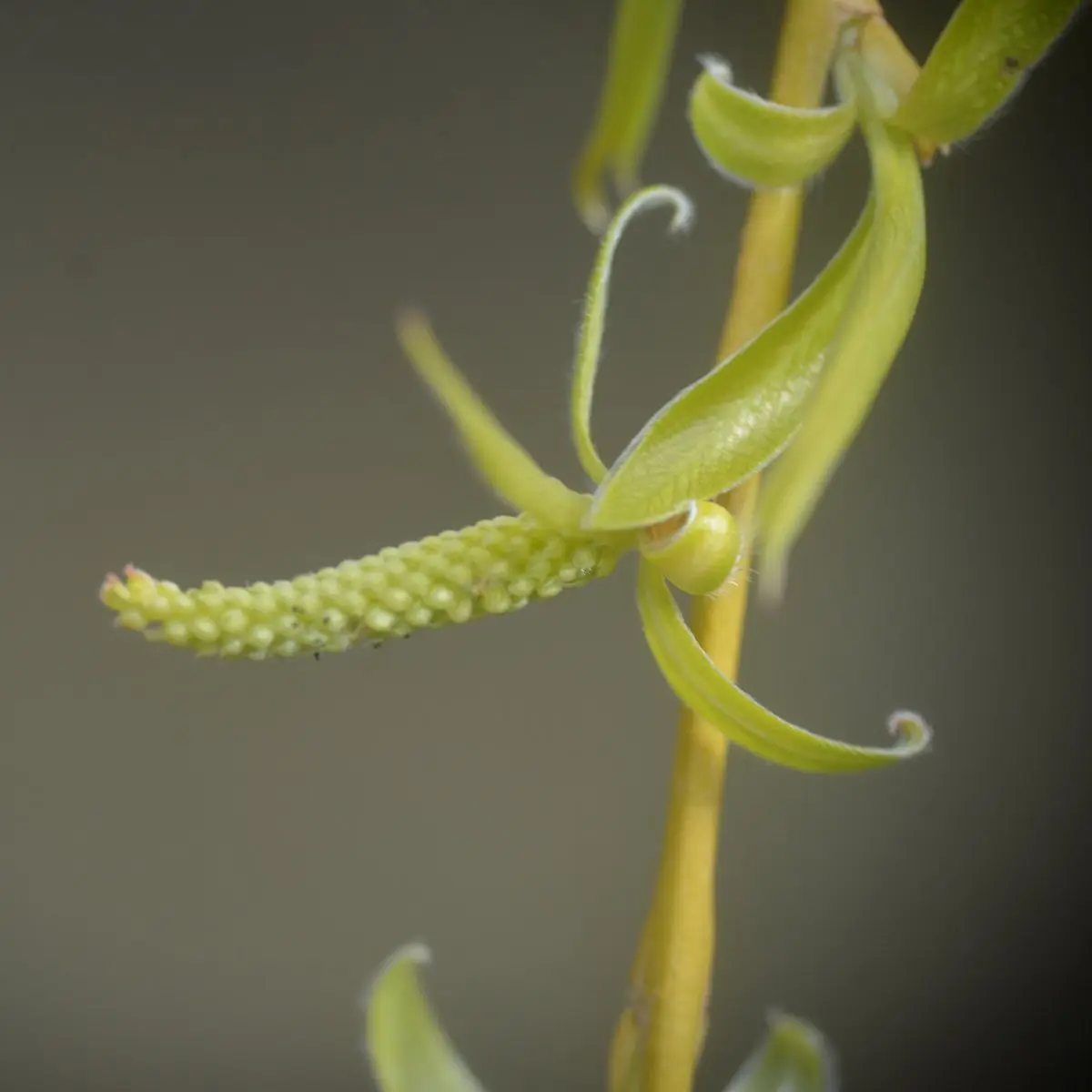
In leaf: March to December · Catkins: March to April
Every tree on the calendar · How to identify trees in winter
Parks and gardens, and the edges of lakes, ponds, rivers and canals. It is common in the warmer south, and scarcer in Scotland and northern England. Its roots can cause trouble in drains, so it is planted away from buildings.
Free to download.
Every fact on this page is checked against the Collins Tree Guide, last in November 2026. Spotted something that looks wrong in front of a real tree? Tell us. How we check.
Photographs: ramarao (CC BY 4.0), truthseqr (CC0), ellieandmaddie (CC0), Владимир Дворкин (CC BY 4.0), dan308 (CC0), Matthew Vosper (CC BY 4.0), Michelle Norcéide (CC BY 4.0), jamie-aa (CC BY 4.0). With thanks to everyone who shares their photographs on iNaturalist and Wikimedia Commons.