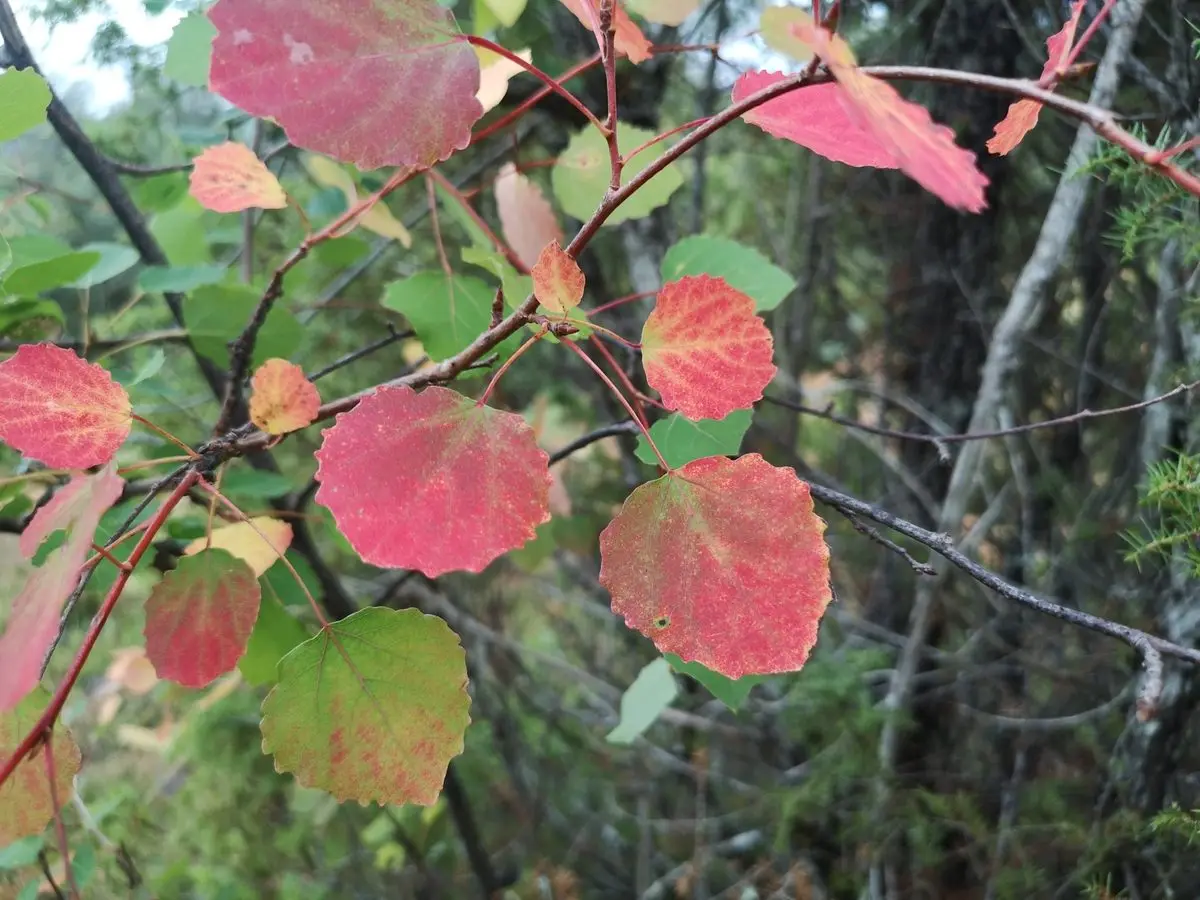
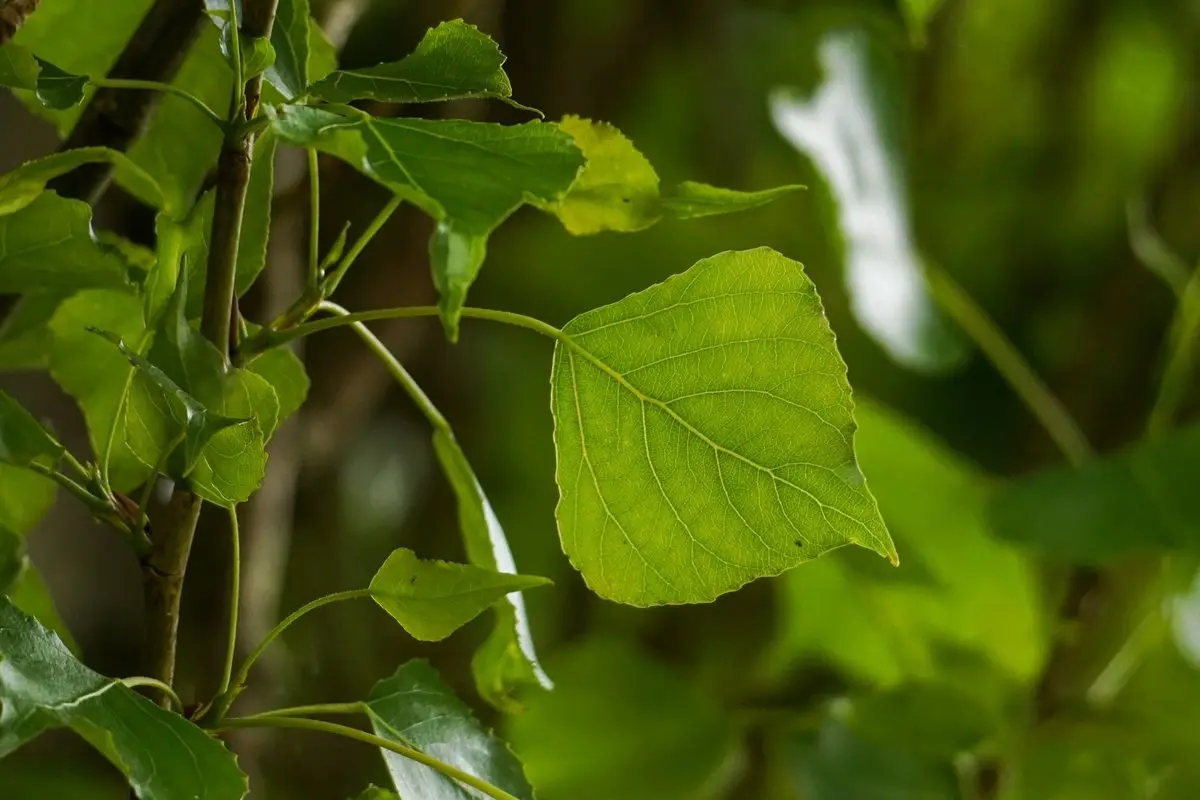
Aspen leaves are nearly round, with big, blunt, wavy teeth all along the edge. They are smooth on both sides, green on top and paler underneath.
Native · Up to 30 m
Aspen
Populus tremula · Salicaceae
Aspen is a slender tree that usually grows in a close group of stems from the same roots. Its nearly round leaves hang on flattened stalks and tremble in the lightest breeze.
Often mistaken for silver birch. How to tell them apart →Know it by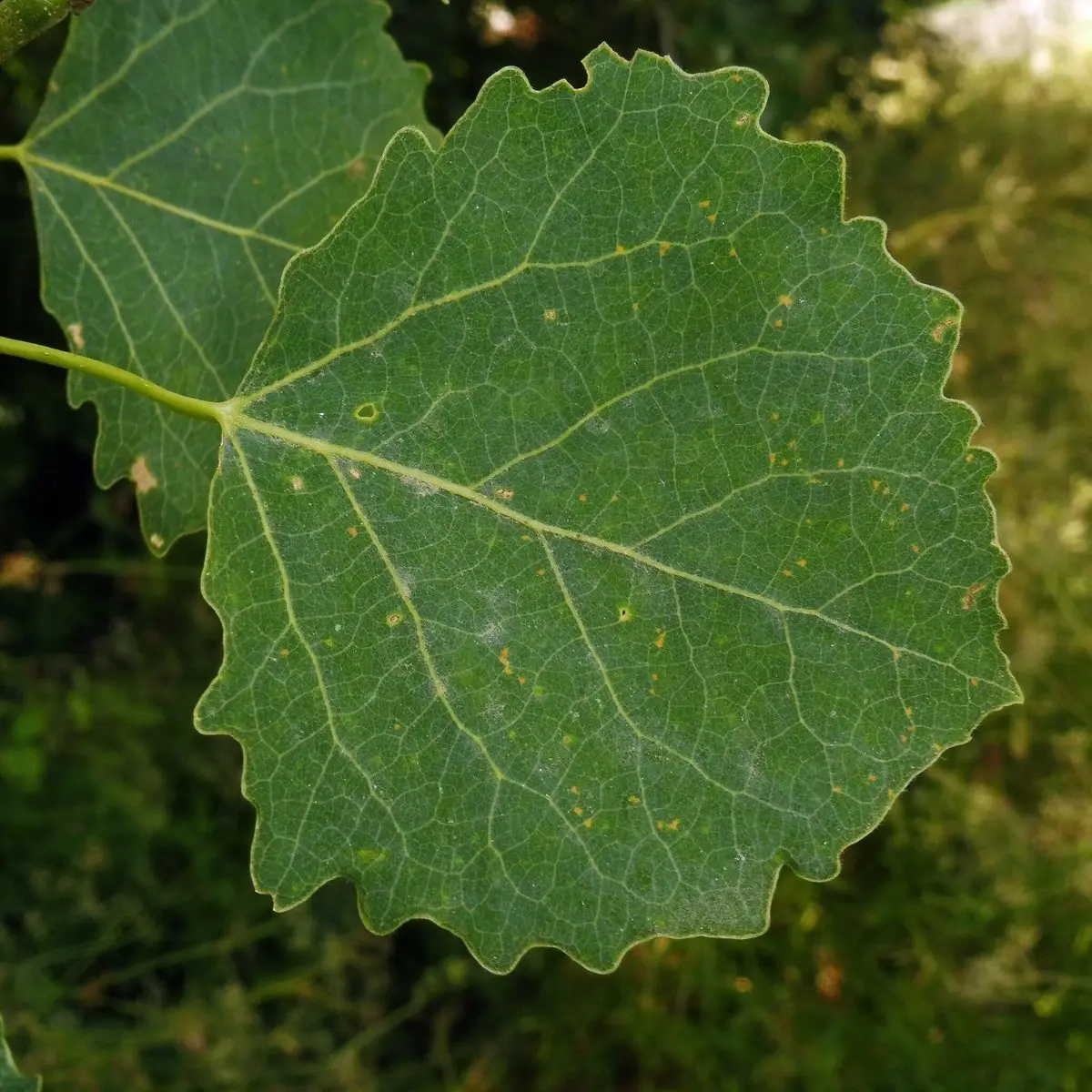 LeavesNearly round, with big, blunt, wavy teeth.
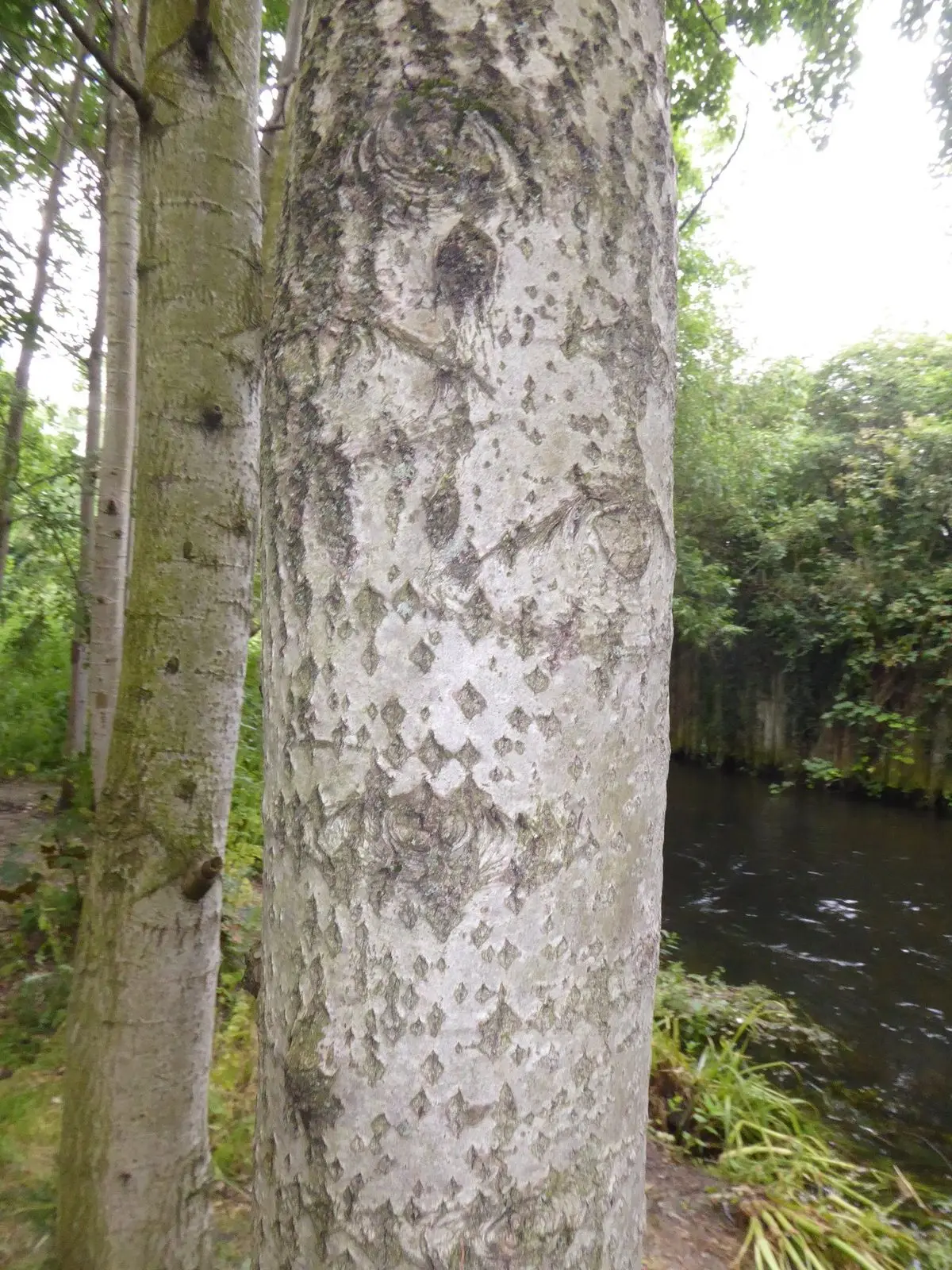 BarkSmooth and pale, with bands of small dark diamonds.
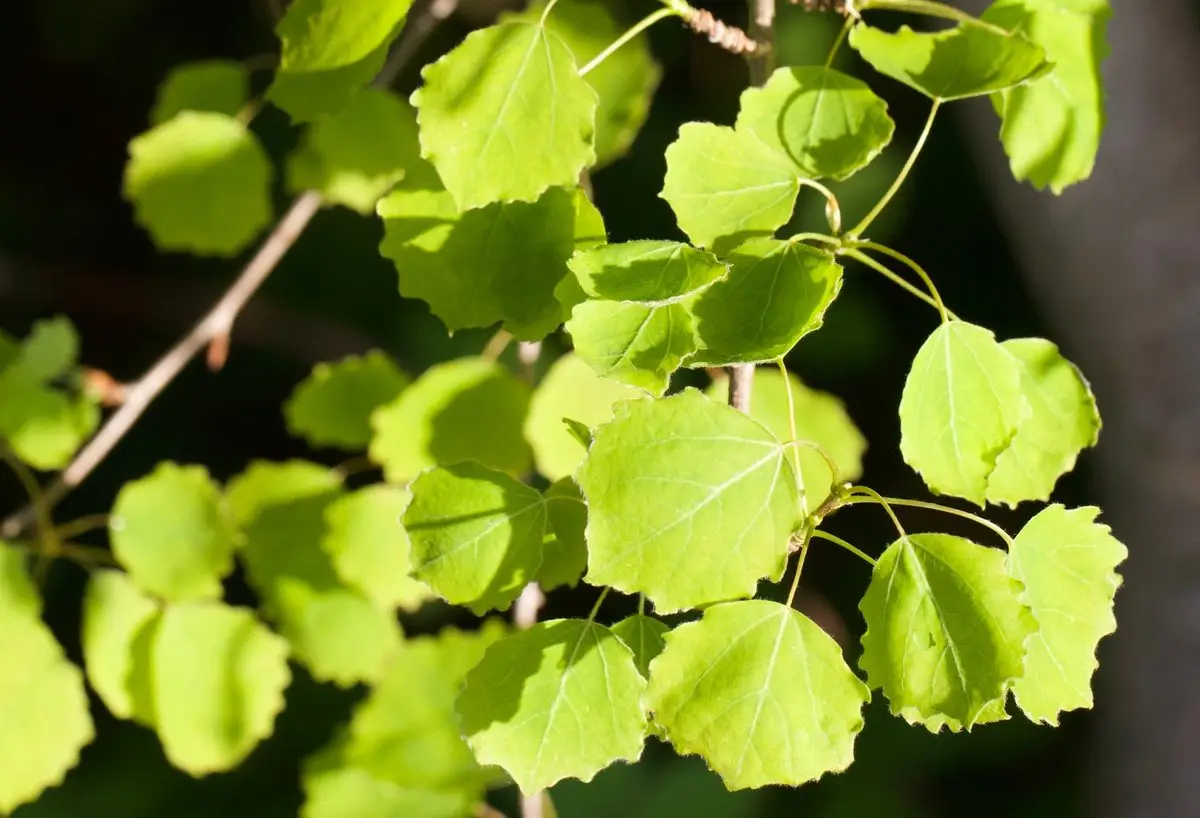 Trembling leavesRound leaves on flat stalks shiver in the slightest breeze.
LeavesNearly round, with big, blunt, wavy teeth.BarkSmooth and pale, with bands of small dark diamonds.Trembling leavesRound leaves on flat stalks shiver in the slightest breeze.Then check · TwigsLong, very sharp brown buds pressed close to a shiny shoot, with short side-shoots at right angles to it.
How to identify an aspen
The bark is smooth and cream, with bands of small dark diamonds pitted into it. At the foot of an old trunk it turns grey and rugged.
The round leaves hang on long stalks that are flattened side to side, so they shiver in the slightest breeze. An aspen is often heard rustling before it is seen.
 Learn the aspen in TreelyEvery part through the year, and a short round each day until you know it.Get Treely
Every part, in photographs
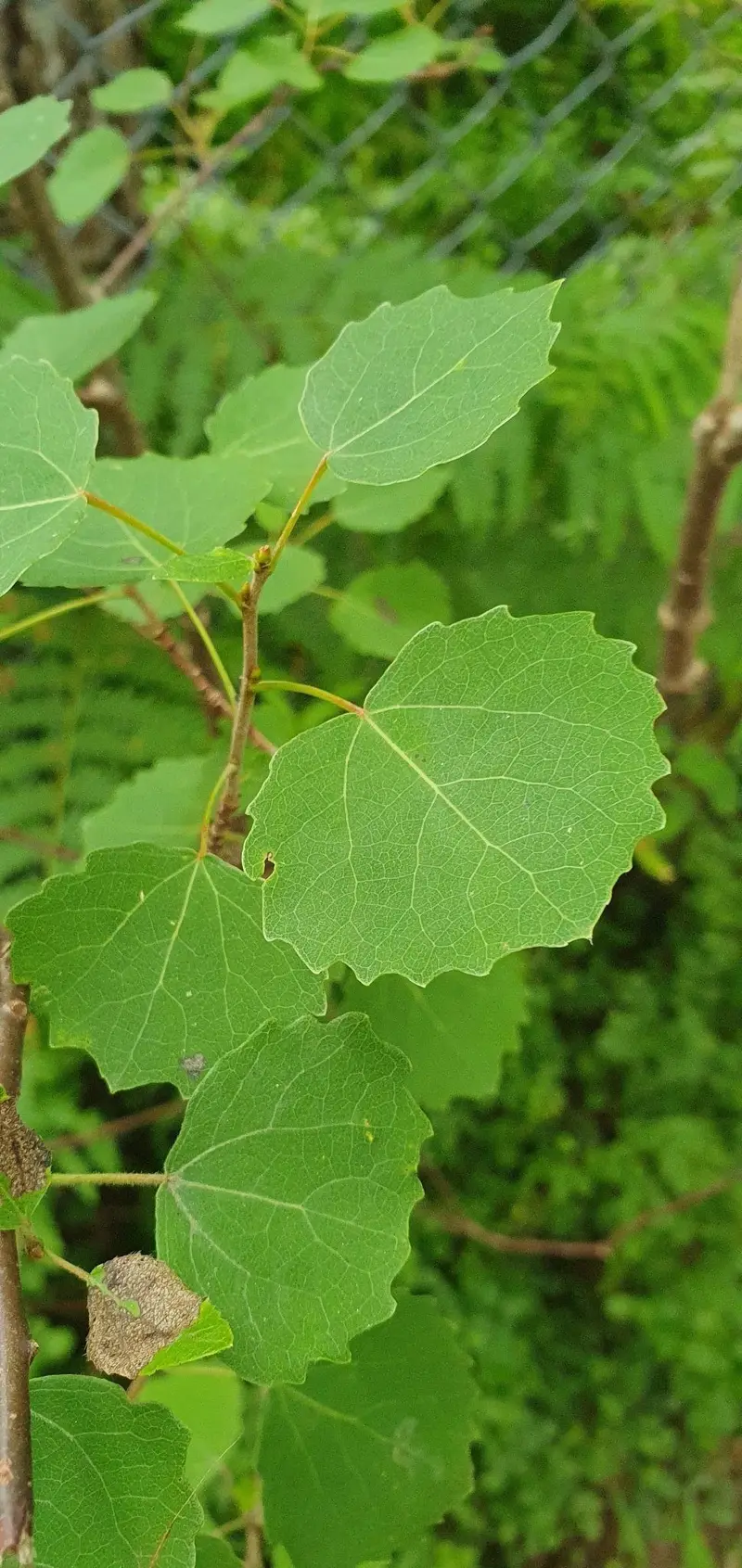 Dan McLaughlan, CC BY 4.0
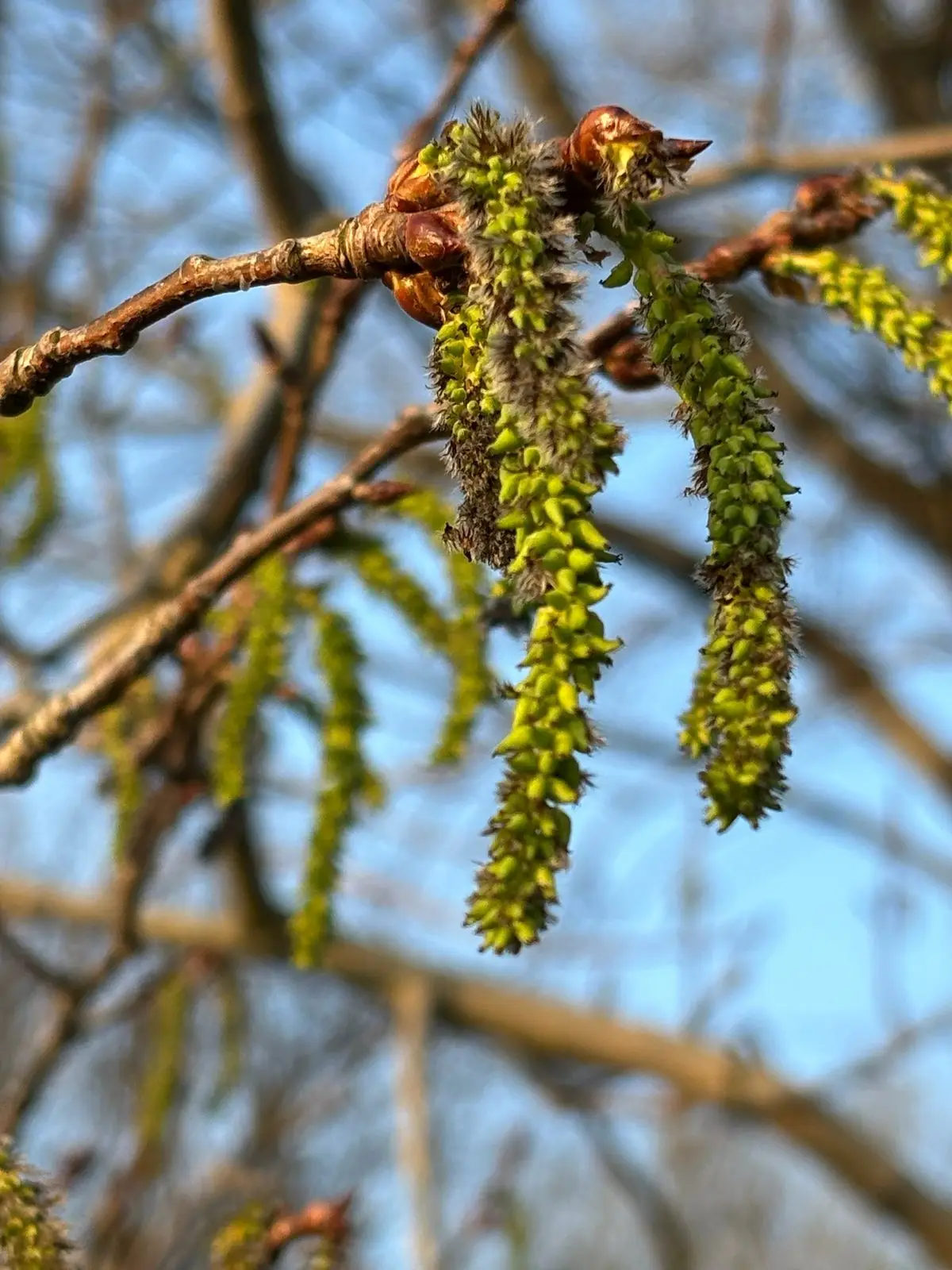 Jose Gutierrez Higa, CC BY 4.0
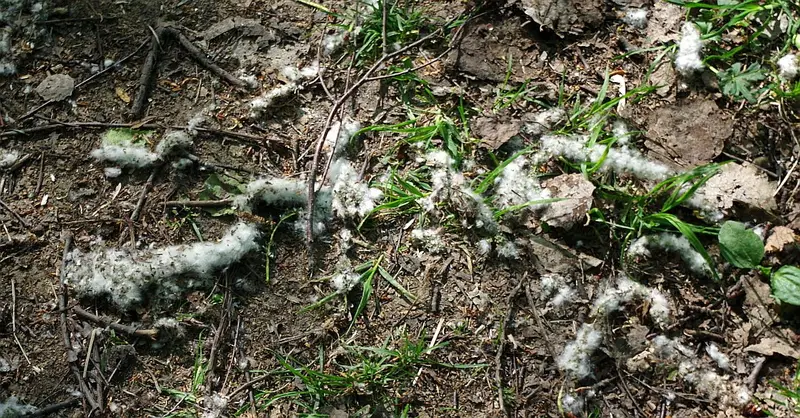 Георгий Виноградов (Georgy Vinogradov), CC BY 4.0
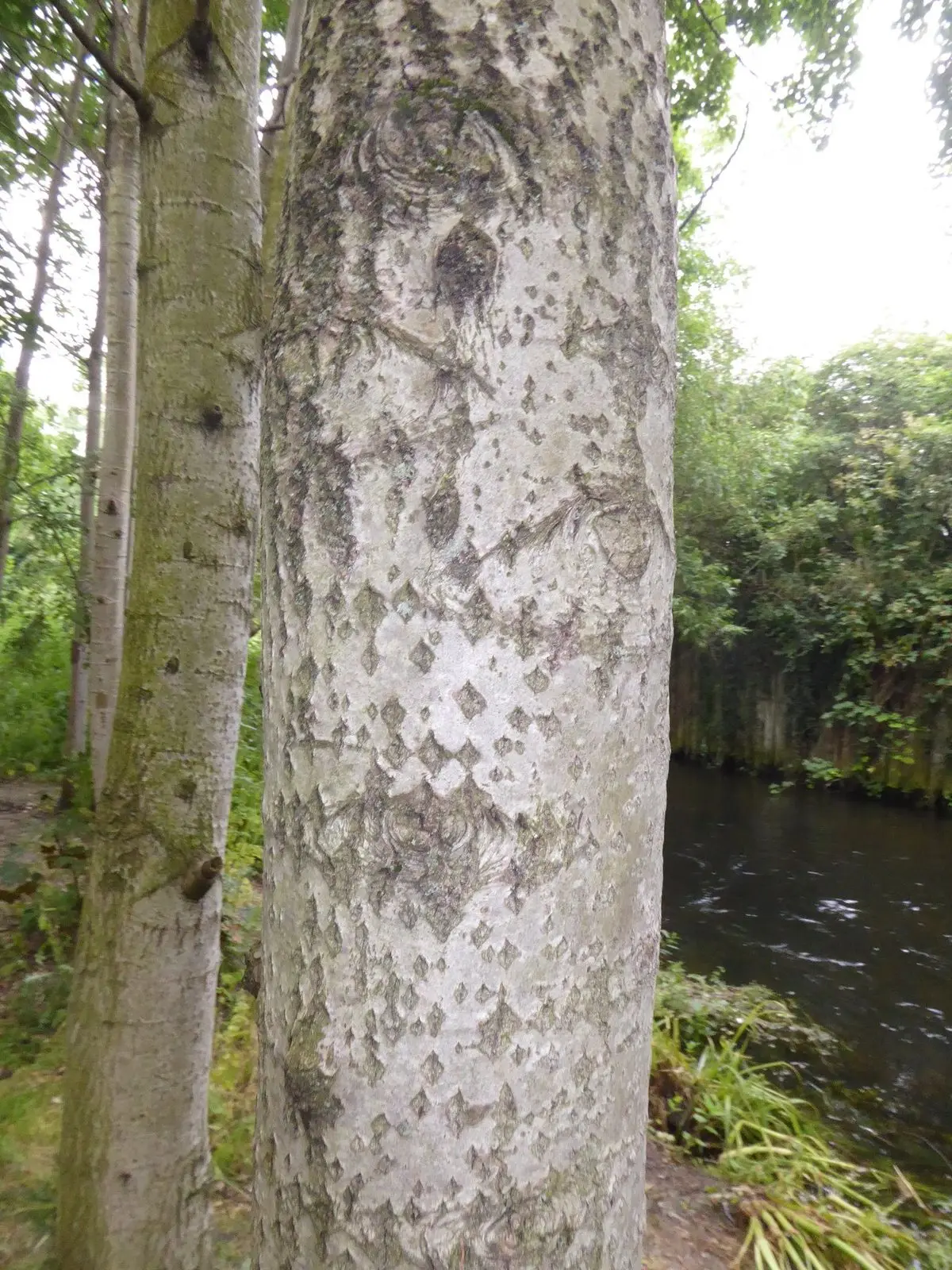 jamie-aa, CC BY 4.0
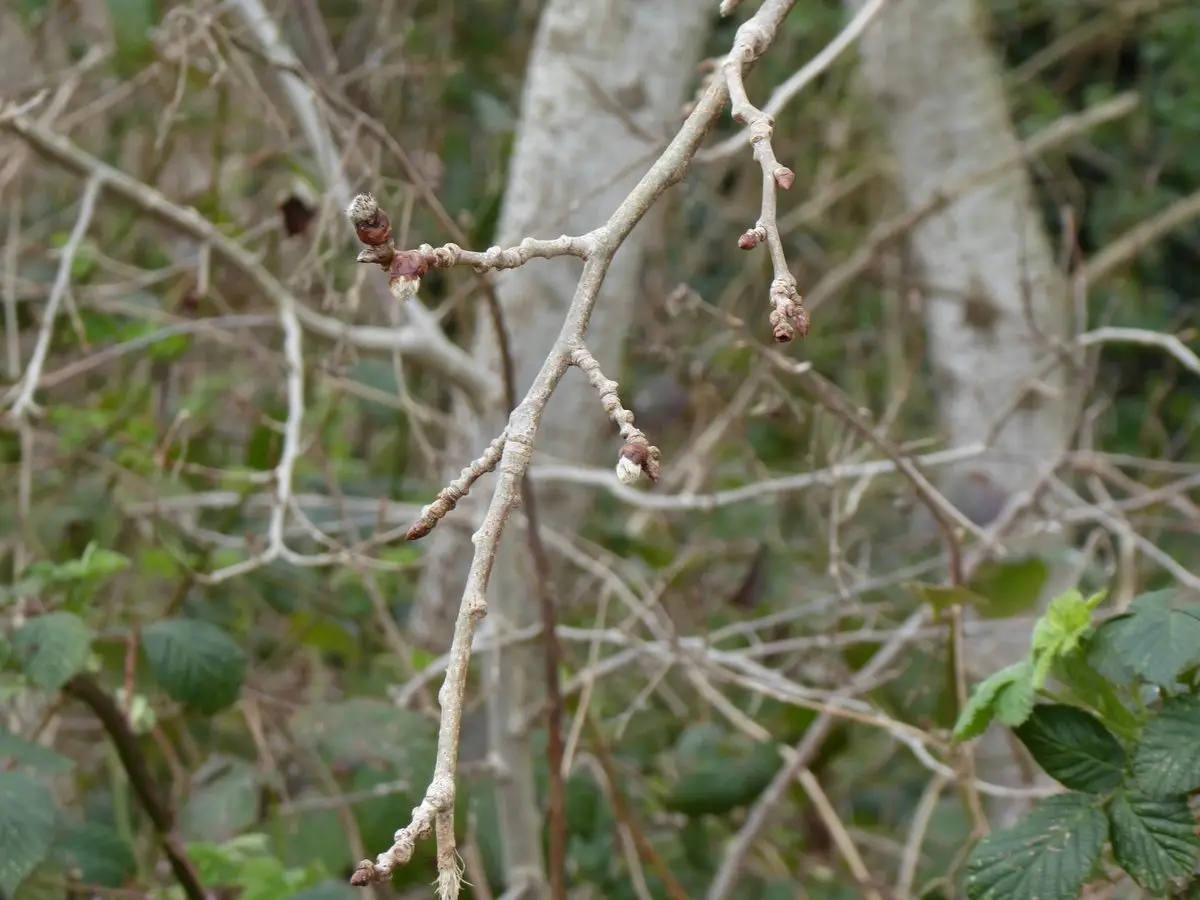 jamie-aa, CC BY 4.0
 Jens-Christian Svenning, CC BY 4.0
When to look
JFMAMJJASOND
In leaf
Catkins
Seed fluff
In leaf: April to November · Catkins: February to April · Seed fluff: May to June
Every tree on the calendar · How to identify trees in winter
Where you’ll find it
Scrub, coppiced woods and shingle banks, ancient woodland, heaths, moorland edges, rocky hillsides and well-drained ground near rivers. It is commonest in the north and west, and most of all in north-west Scotland.
What it’s mistaken for
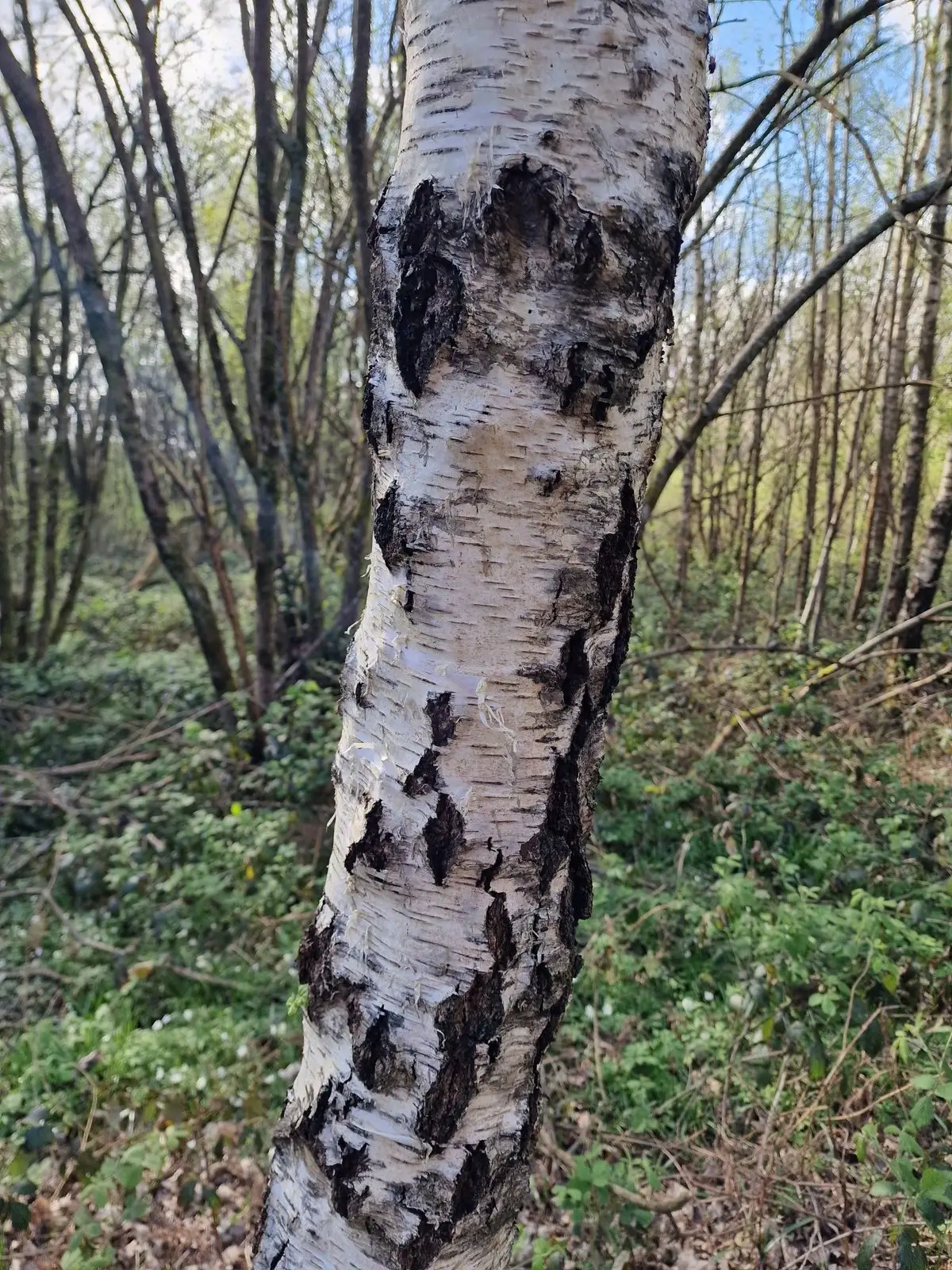 Aspen or silver birch?Both are pale-barked trees that spring up on open ground.Trunk→
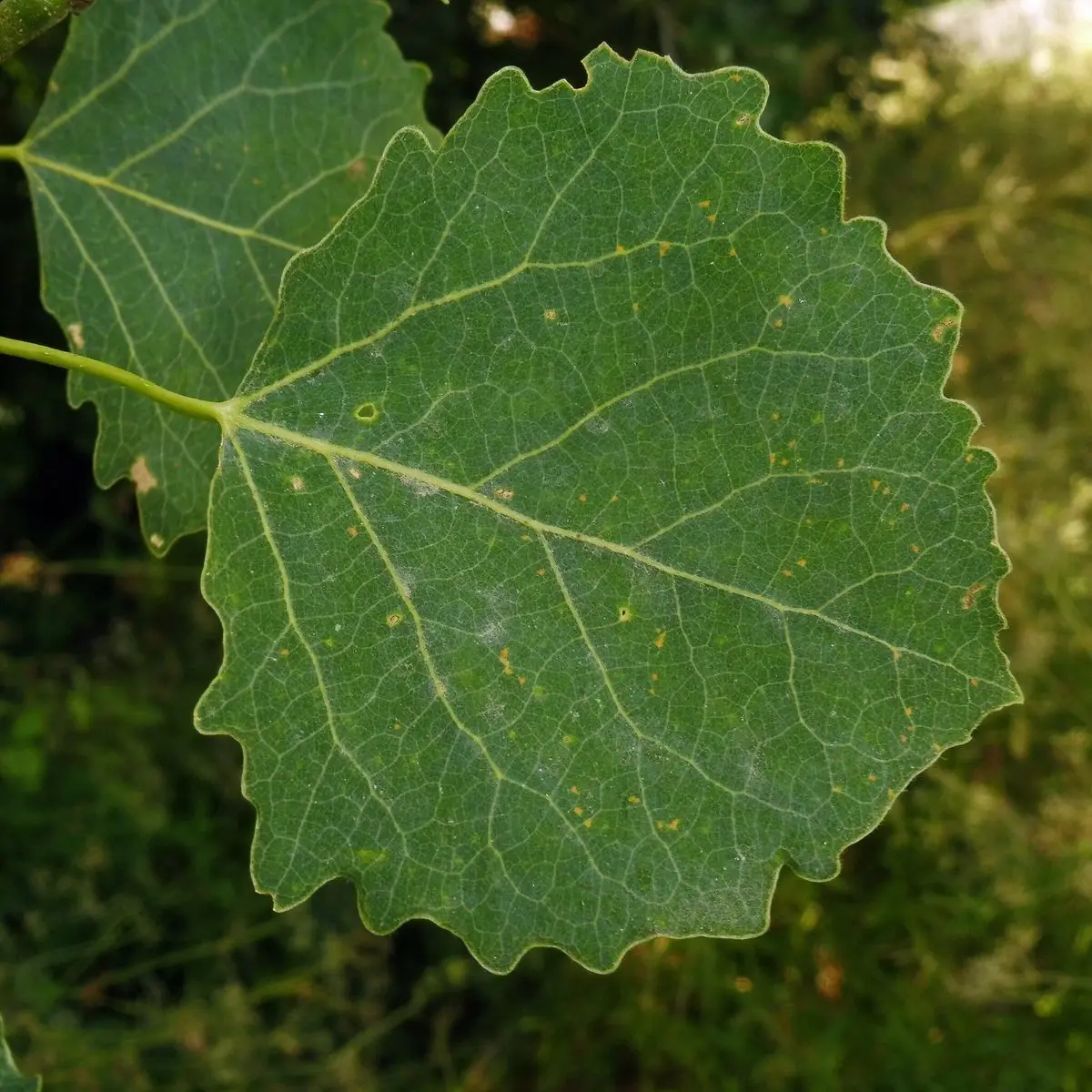
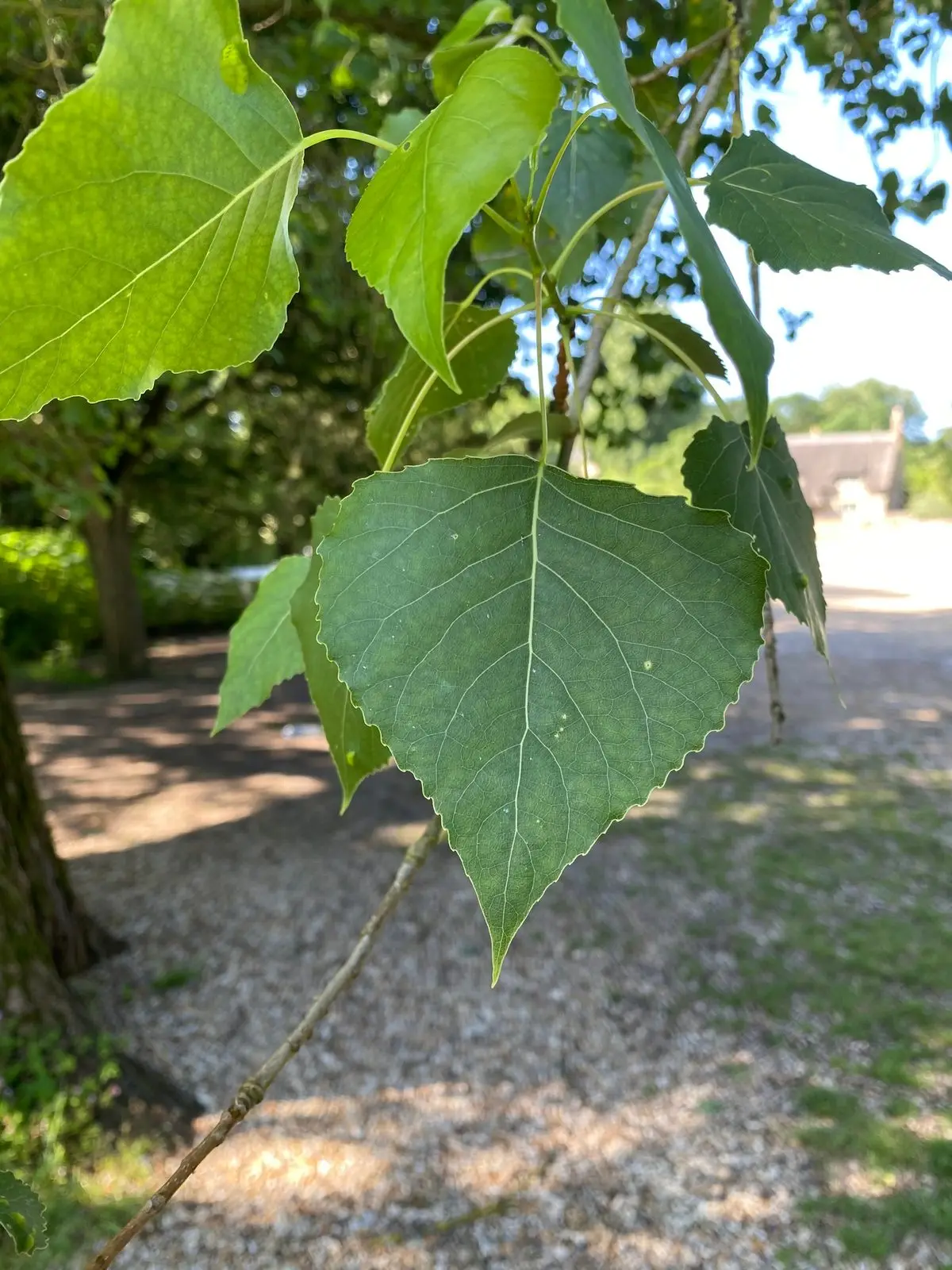
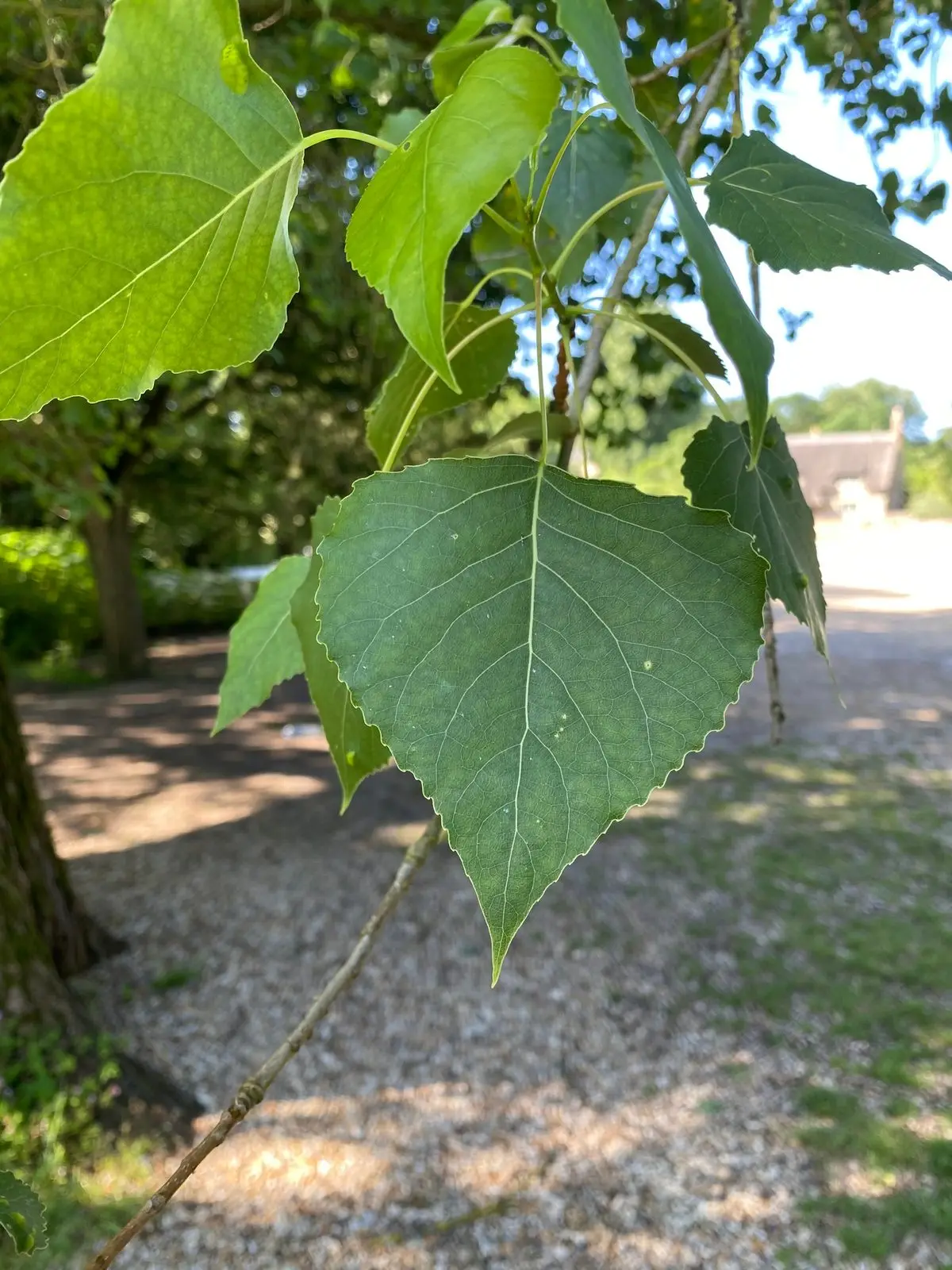 Aspen or black poplar?Both hang their leaves on a stalk flattened side to side, so both turn in a breeze.Leaf shape and tip→
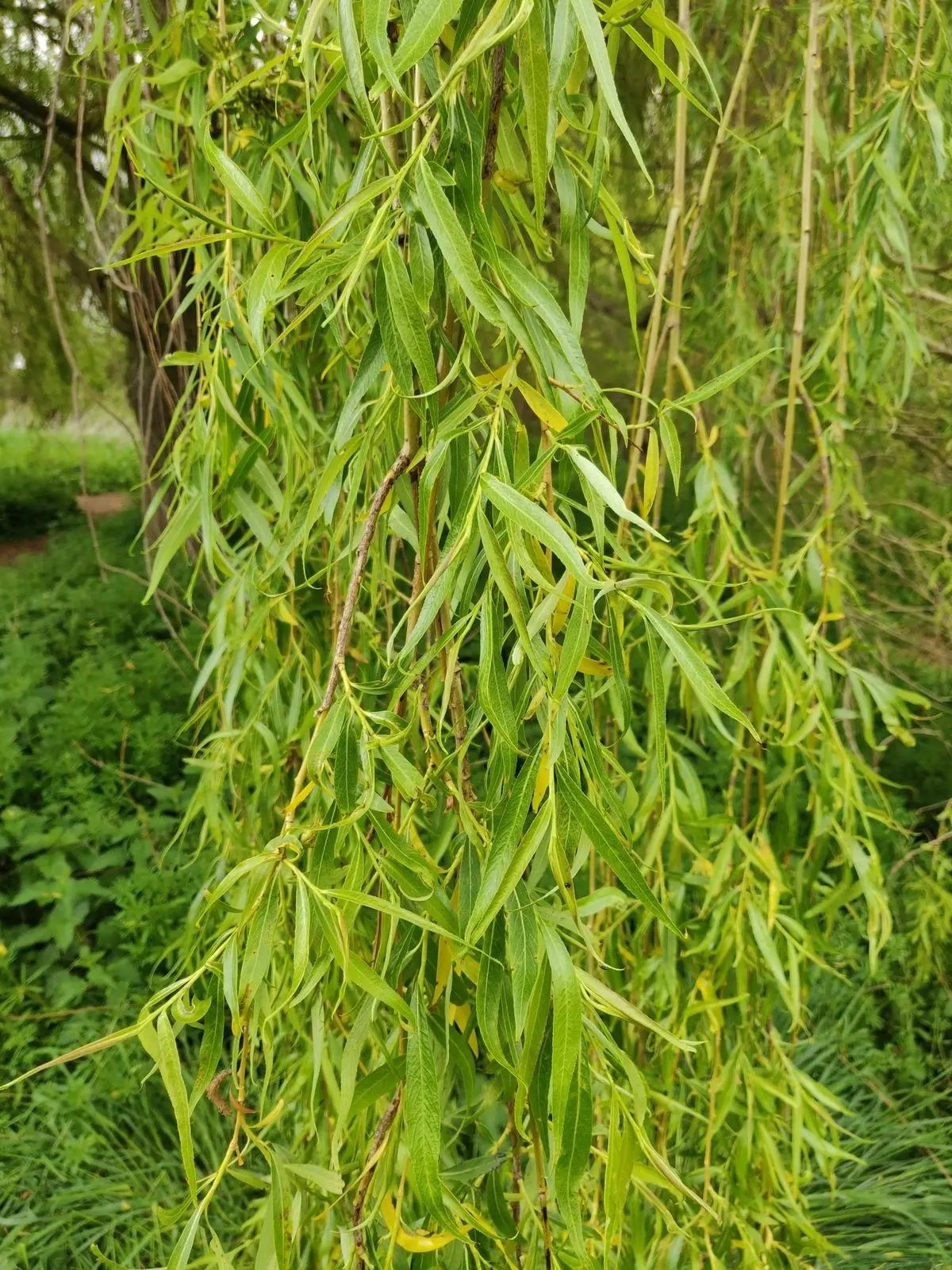
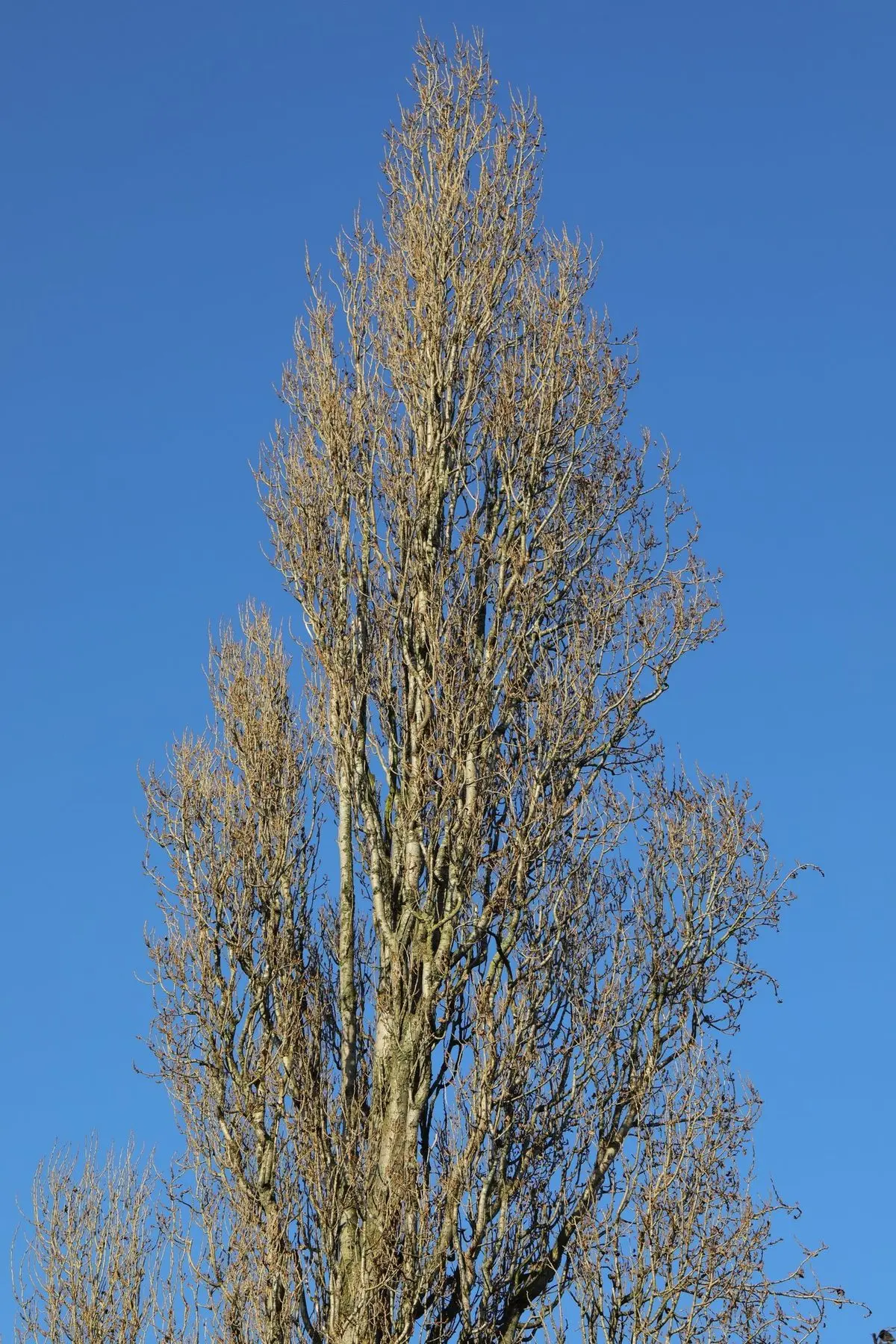 Aspen or Lombardy poplar?Both hang small leaves on flattened stalks that are rarely still.Outline→
- Grey poplarBoth have pale bark with dark diamonds, and rounded leaves with big blunt teeth. Leaf. Aspen: nearly round, up to 10 cm across. Grey poplar: maple-shaped, with big blunt teeth.
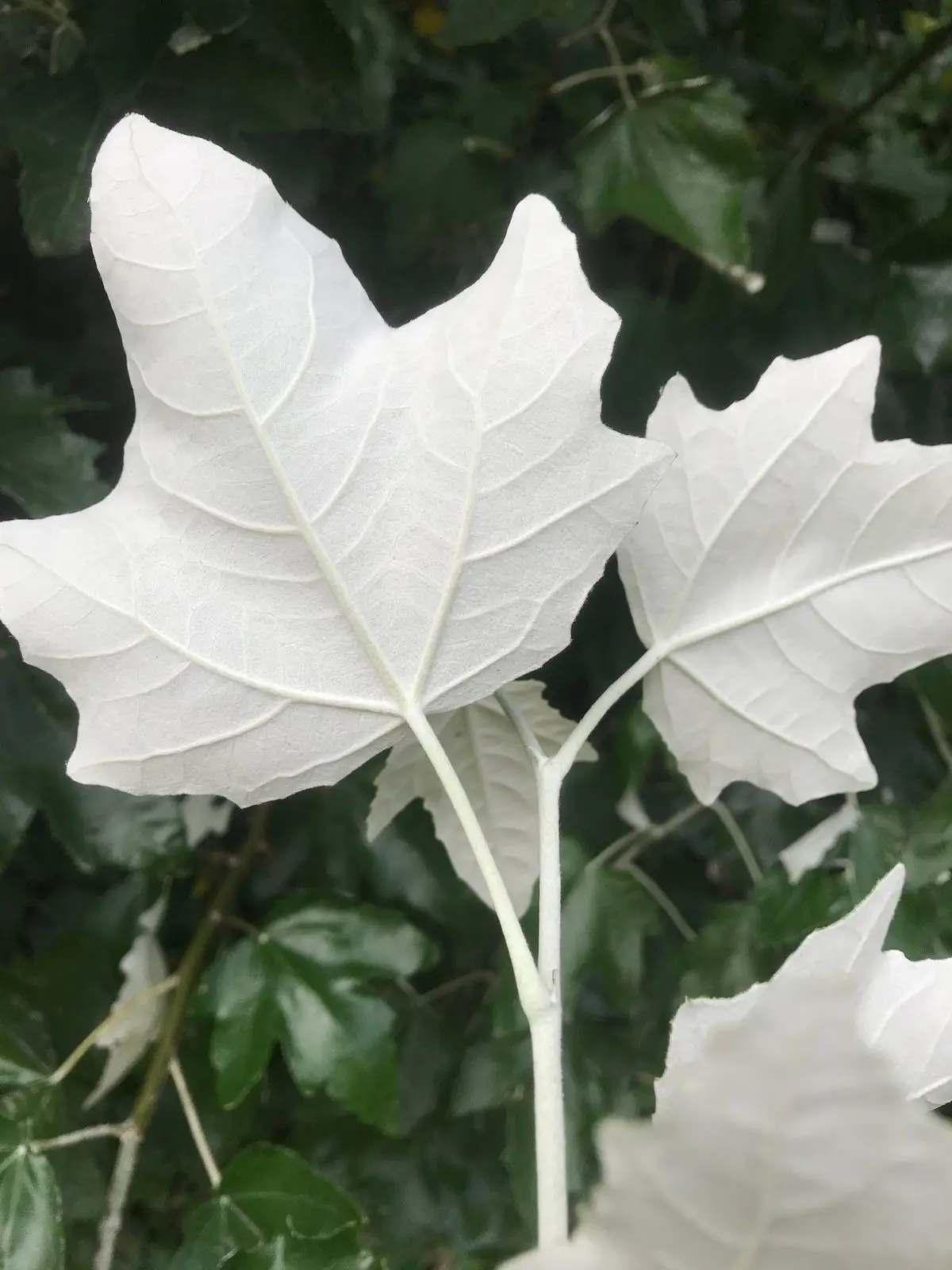
- White poplarBoth have pale bark, and leaves that hang on flattened stalks. Leaf. Aspen: paler than the top, and hairless. White poplar: thick white fuzz, kept until they fall.
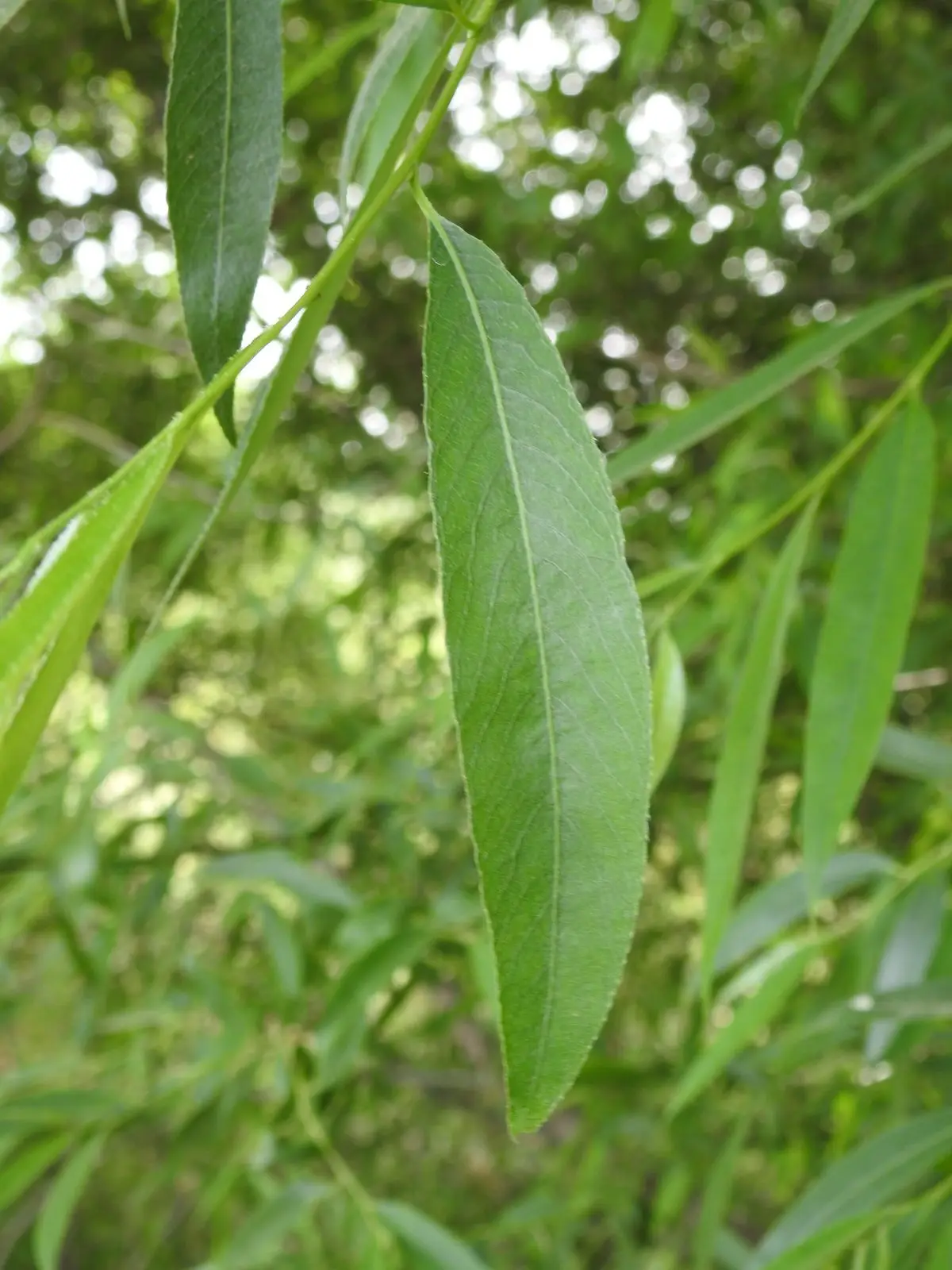
- Goat willowBoth grow in the same scrub, with much the same pale, dark-spotted bark. Leaf. Aspen: paler than the top, and hairless. Goat willow: a very fine grey felt.
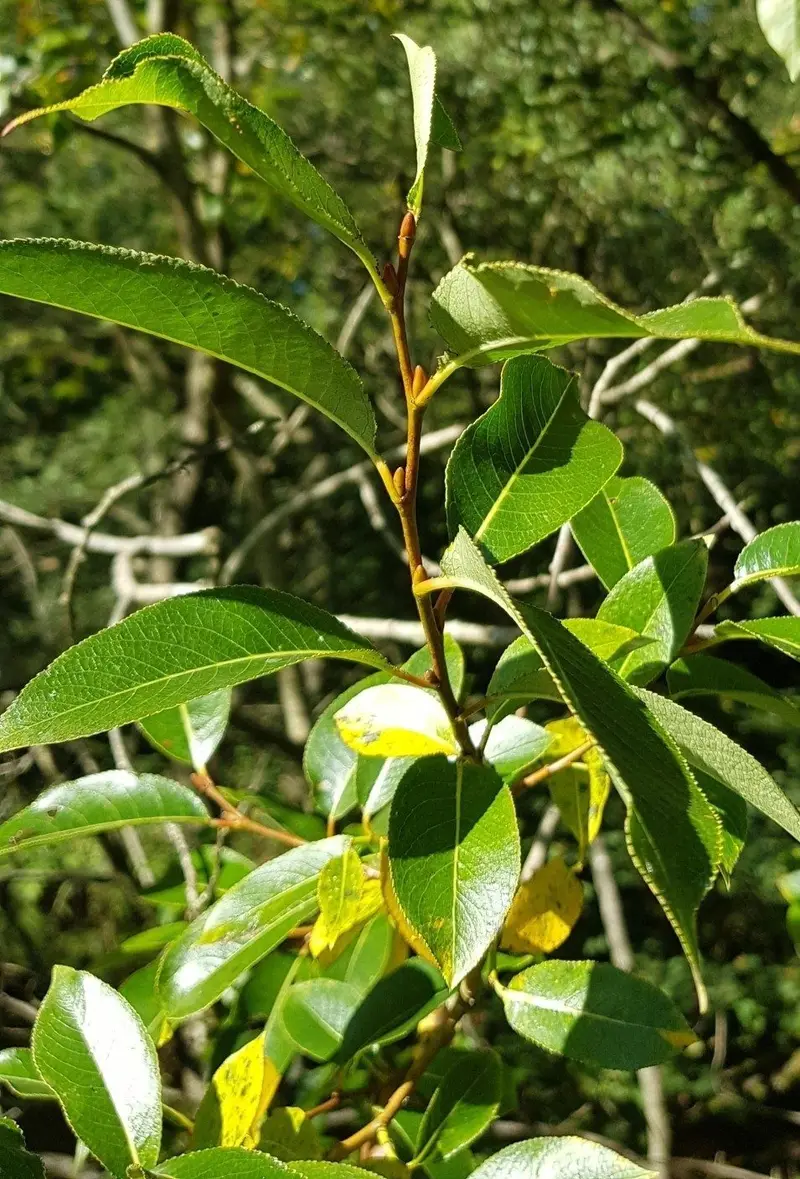
- Bird cherryBoth have long, sharp buds, so they are only confused in winter. Twig. Aspen: short side shoots at right angles. Bird cherry: no side shoots at right angles.
In the app
There’s more of the aspen in Treely
- Every part, through the yearLeaves, bark, buds, flowers and fruit, photographed in every season
- Its lookalikes, side by sideThe checks that settle it, part by part
- A short round each dayUntil you know the aspen on sight, from any side
- Name it from a photoA leaf, the bark or a flower, and Treely tells you which tree
Free to download.
Every fact on this page is checked against the Collins Tree Guide, last in November 2026. Spotted something that looks wrong in front of a real tree? Tell us. How we check.
Photographs: Jens-Christian Svenning (CC BY 4.0), Barry Walter (CC BY 4.0), jamie-aa (CC BY 4.0), nevwright (CC BY 4.0), Dan McLaughlan (CC BY 4.0), Jose Gutierrez Higa (CC BY 4.0), Георгий Виноградов (Georgy Vinogradov) (CC BY 4.0), sim_elliott (CC0), olly_morgan (CC0), steve_mcwilliam (CC0). With thanks to everyone who shares their photographs on iNaturalist and Wikimedia Commons.