Barrel-shaped, 5 to 8 cm long, standing upright on the branch, pale green ripening light brown, with a sunken top.
Introduced · Up to 38 m
Atlas cedar
Cedrus atlantica · Pinaceae
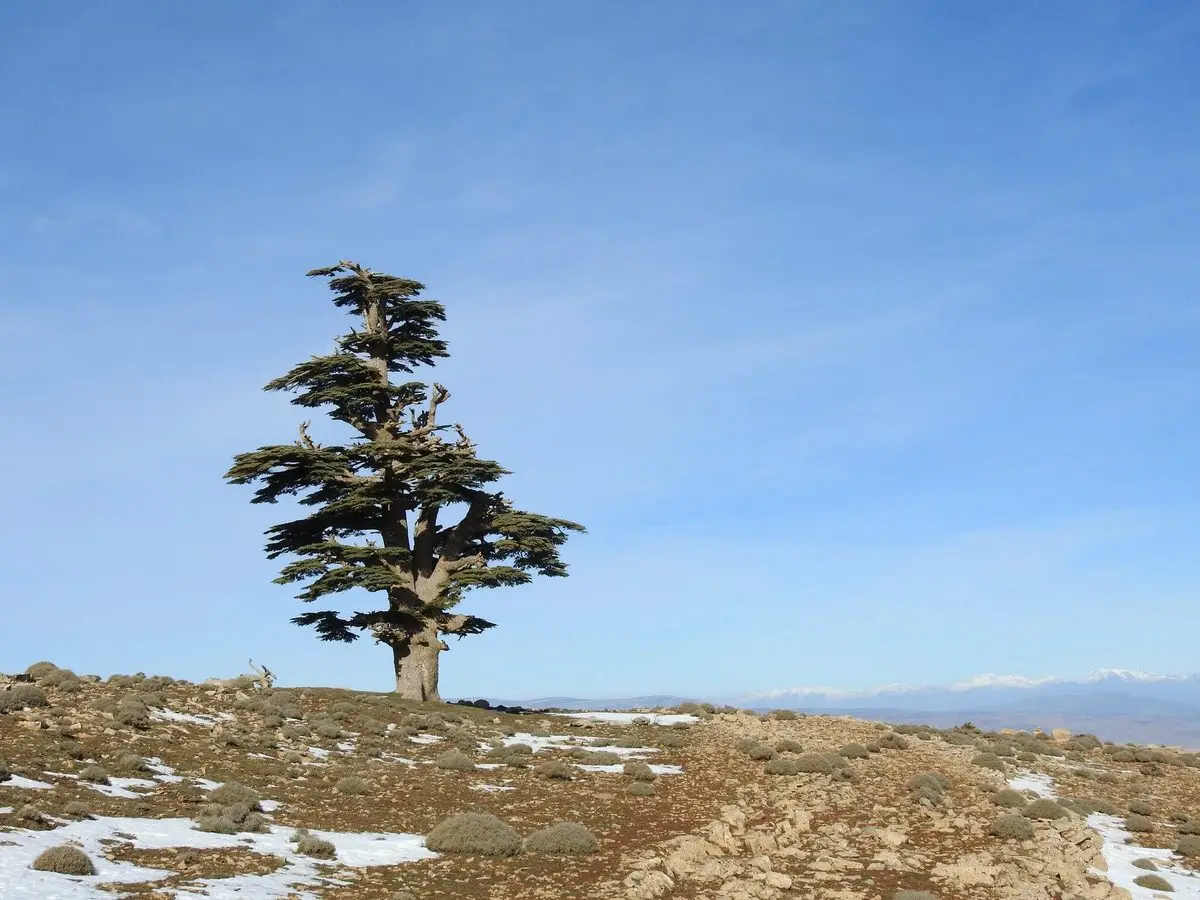
Atlas cedar is a big evergreen, most often silvery grey, planted in parks and large gardens. Its foliage grows in spiky-edged layers that tilt upwards. Barrel-shaped cones stand upright on the branches.
Often mistaken for cedar of Lebanon. How to tell them apart →Know it by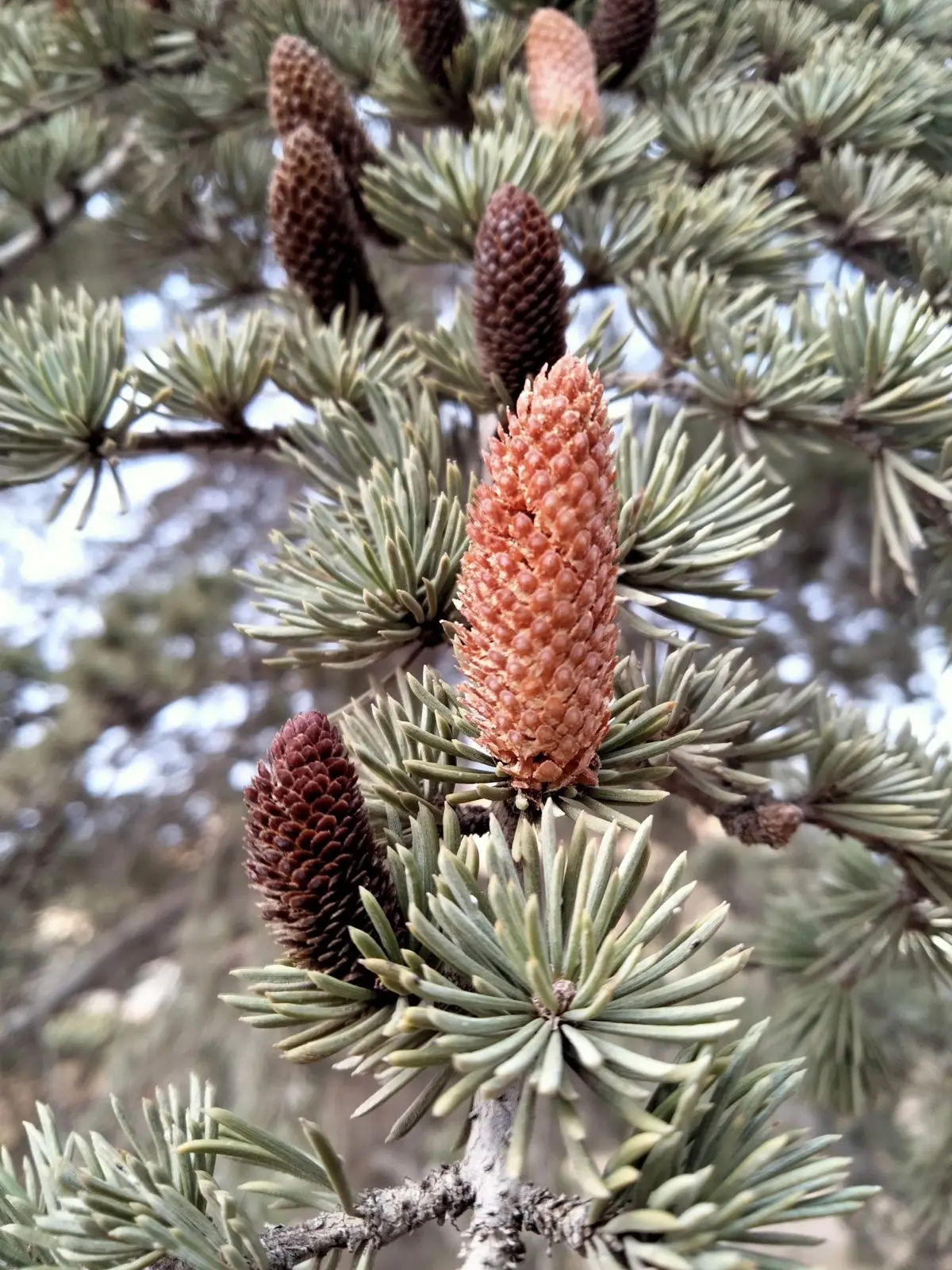 ConesBarrel-shaped, 5 to 8 cm long, pale green ripening light brown.
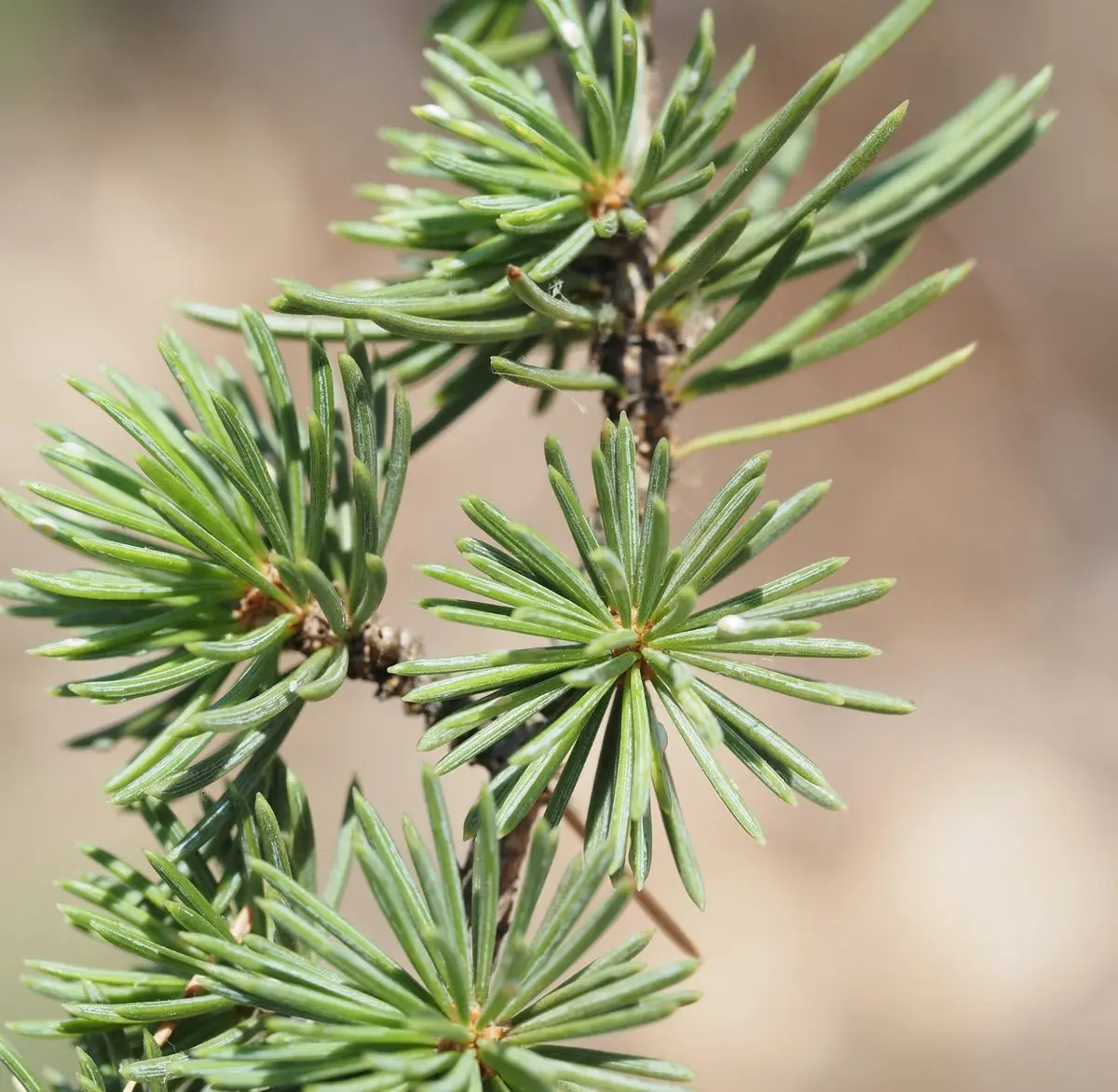
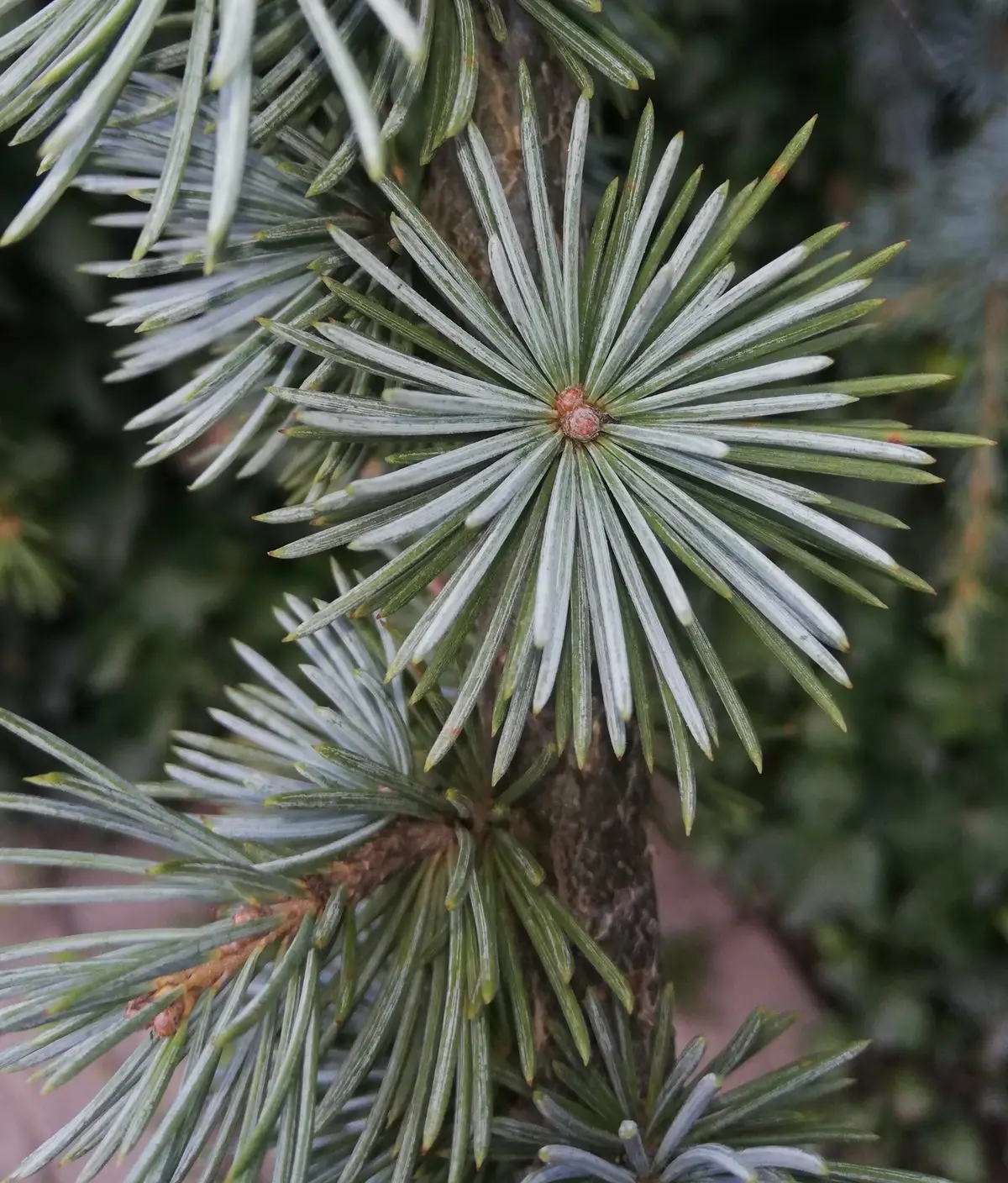 Needle tuftsShort, stiff, up to 20 mm, each tipped with a tiny clear spine.SpursStout, fuzzy grey spurs and slender new shoots.
ConesBarrel-shaped, 5 to 8 cm long, pale green ripening light brown.Needle tuftsShort, stiff, up to 20 mm, each tipped with a tiny clear spine.SpursStout, fuzzy grey spurs and slender new shoots.Then check · ShapeCone-shaped when young and domed later, with branch tips that turn up into spiky, tilted layers.
How to identify an Atlas cedar
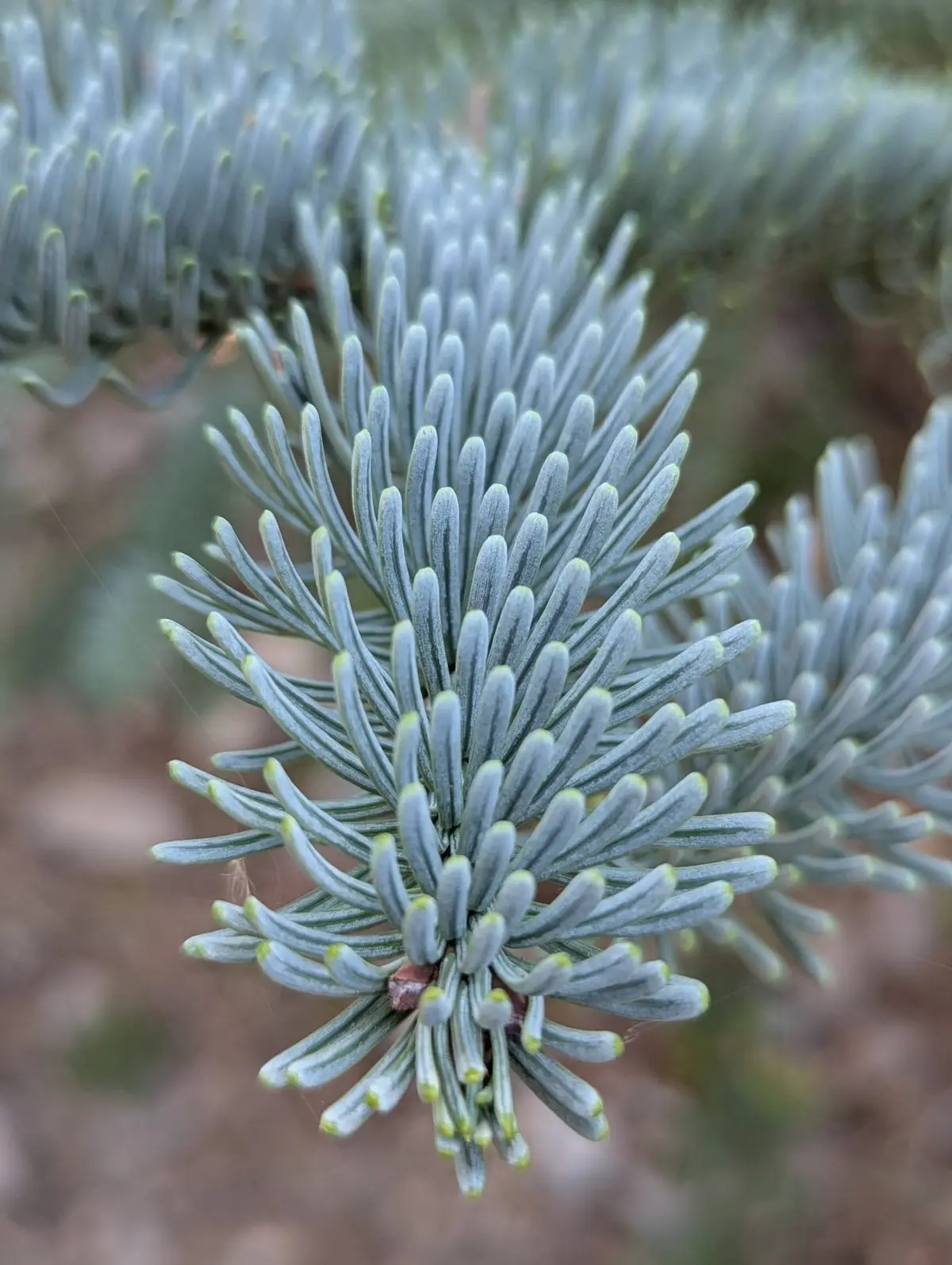
Short, stiff and often silvery grey, up to 20 mm long, in dense tufts, each tipped with a tiny clear spine.
The needle tufts sit on stout, fuzzy grey spurs. The slender new shoots are covered in short, dense, almost black hairs.
 Learn the Atlas cedar in TreelyEvery part through the year, and a short round each day until you know it.Get Treely
Every part, in photographs
Dyhia YOUSFI, CC BY 4.0
 Mourad Harzallah, CC BY 4.0
When to look
JFMAMJJASOND
In leaf
Flowers
Cones
In leaf: all year · Flowers: August to November · Cones: October to April
Where you’ll find it
Planted in parks, cemeteries and big gardens, often lining a drive, and now and then in a street. It grows wild only in the mountains of Morocco and Algeria. It does badly on exposed ground but copes with chalky soil, and a late frost does it little harm.
What it’s mistaken for
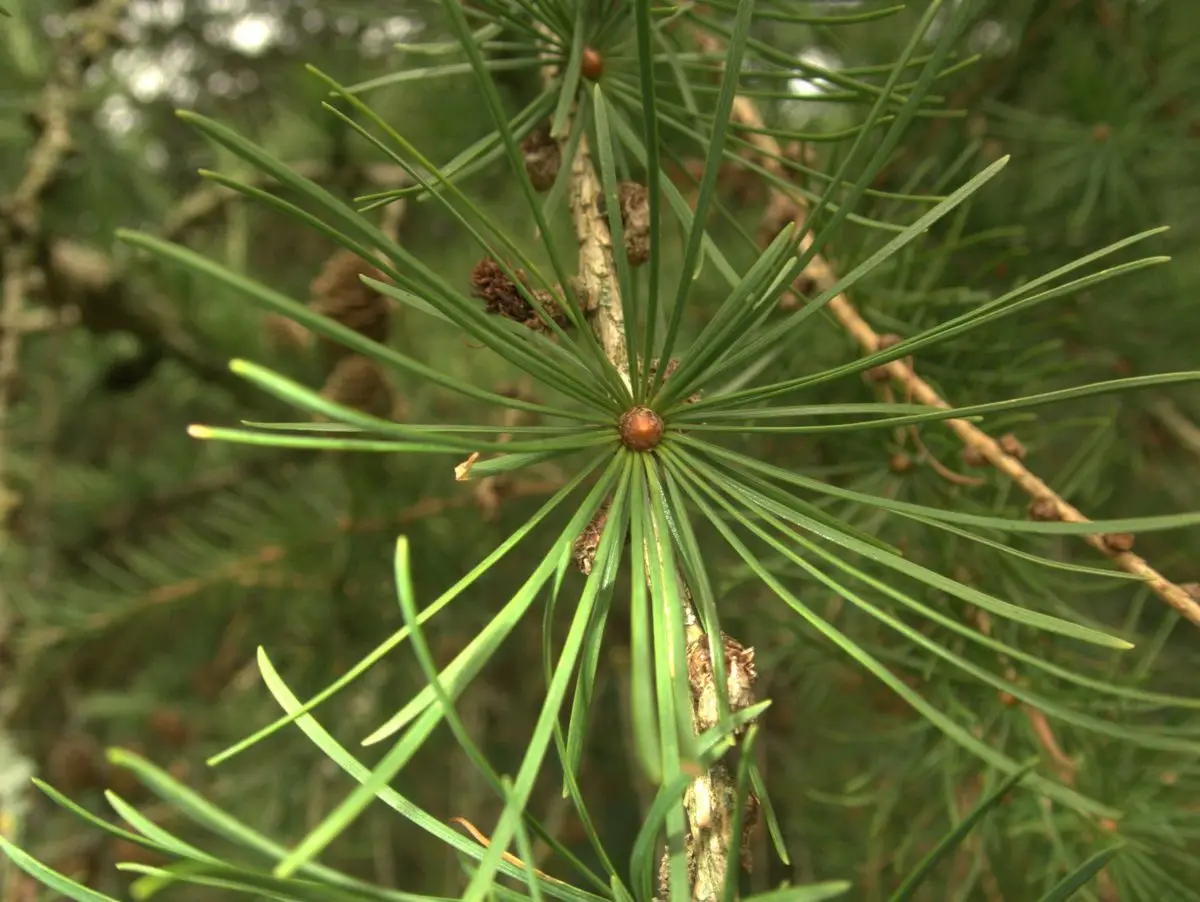
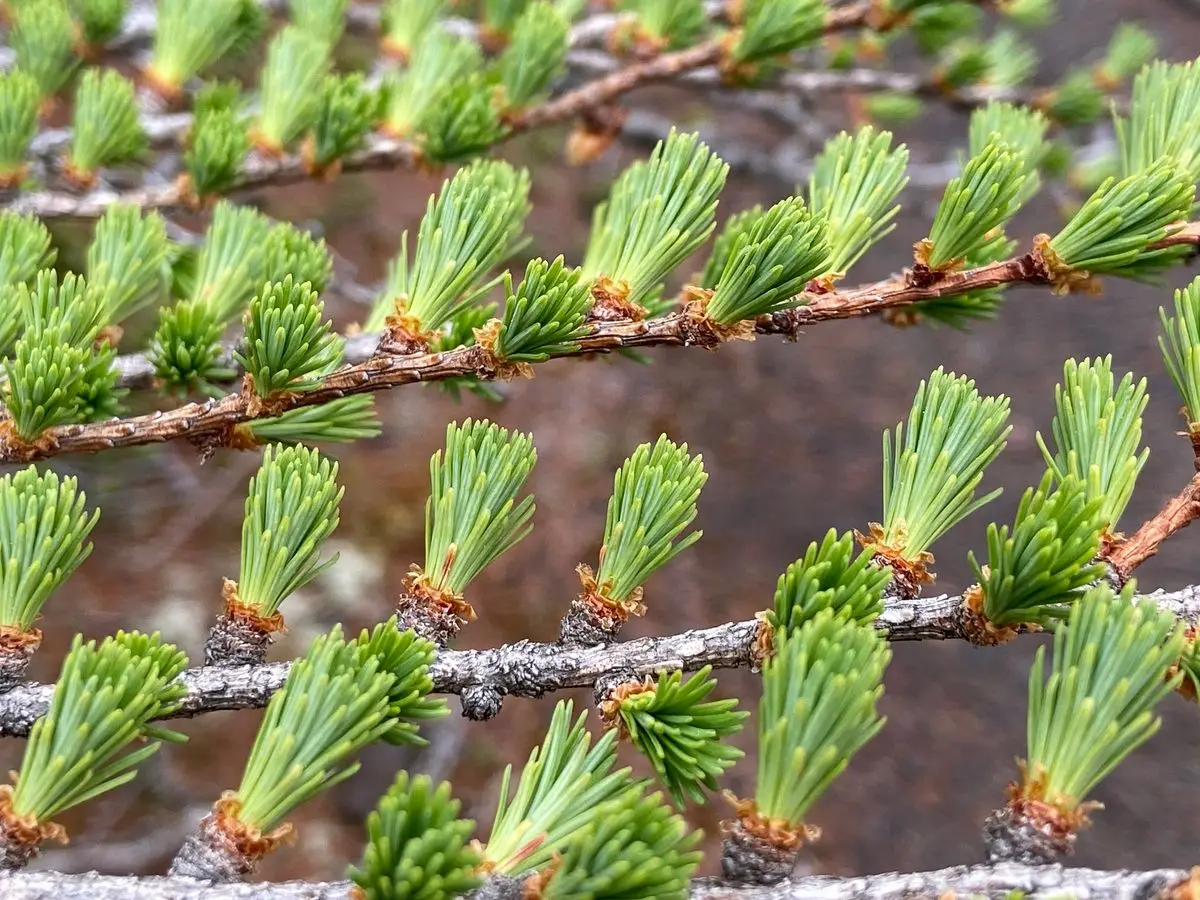
- European larchBoth hold their needles in rosettes on short woody spurs. Leaf. Atlas cedar: stiff and four-sided, each with a tiny spine. European larch: soft and slender, under 1 mm wide.
In the app
There’s more of the Atlas cedar in Treely
- Every part, through the yearLeaves, bark, buds, flowers and fruit, photographed in every season
- Its lookalikes, side by sideThe checks that settle it, part by part
- A short round each dayUntil you know the Atlas cedar on sight, from any side
- Name it from a photoA leaf, the bark or a flower, and Treely tells you which tree
Free to download.
Every fact on this page is checked against the Collins Tree Guide, last in November 2026. Spotted something that looks wrong in front of a real tree? Tell us. How we check.
Photographs: Mourad Harzallah (CC BY 4.0), Dyhia YOUSFI (CC BY 4.0), amigolimax (CC0), ametsak (CC0), Louis Aureglia (CC BY 4.0). With thanks to everyone who shares their photographs on iNaturalist and Wikimedia Commons.