A straight, clean trunk, often unforked to a great height, with a slender crown on short, level branches.
Introduced, naturalised · Up to 45 m
Corsican pine
Pinus nigra subsp. laricio · Pinaceae
Corsican pine is planted in forests for its timber. Its trunk is straight and clean, often with no fork until far up the tree. The needles come in pairs, 12 to 18 cm long and twisted.
Often mistaken for Scots pine. How to tell them apart →Know it by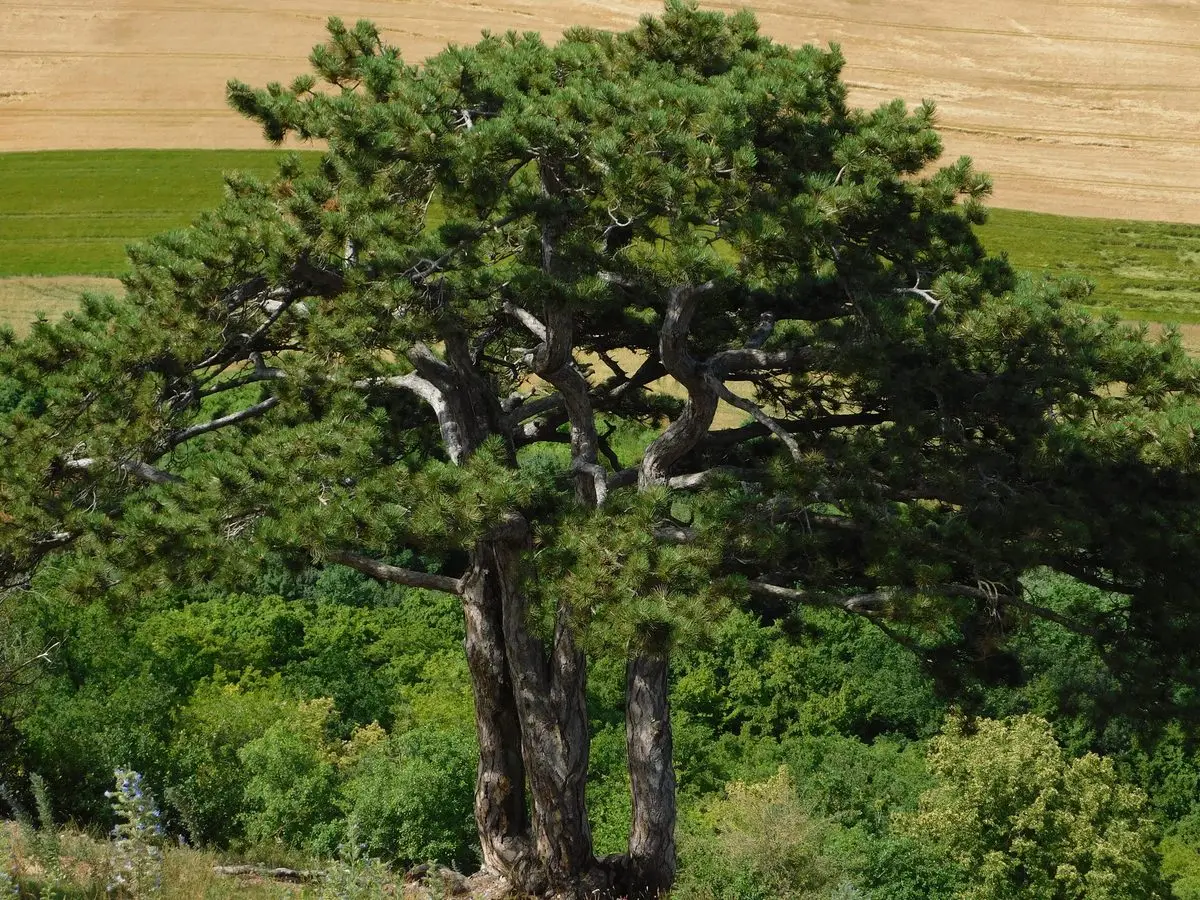 ShapeUnforked to a great height, a slender crown on short branches.
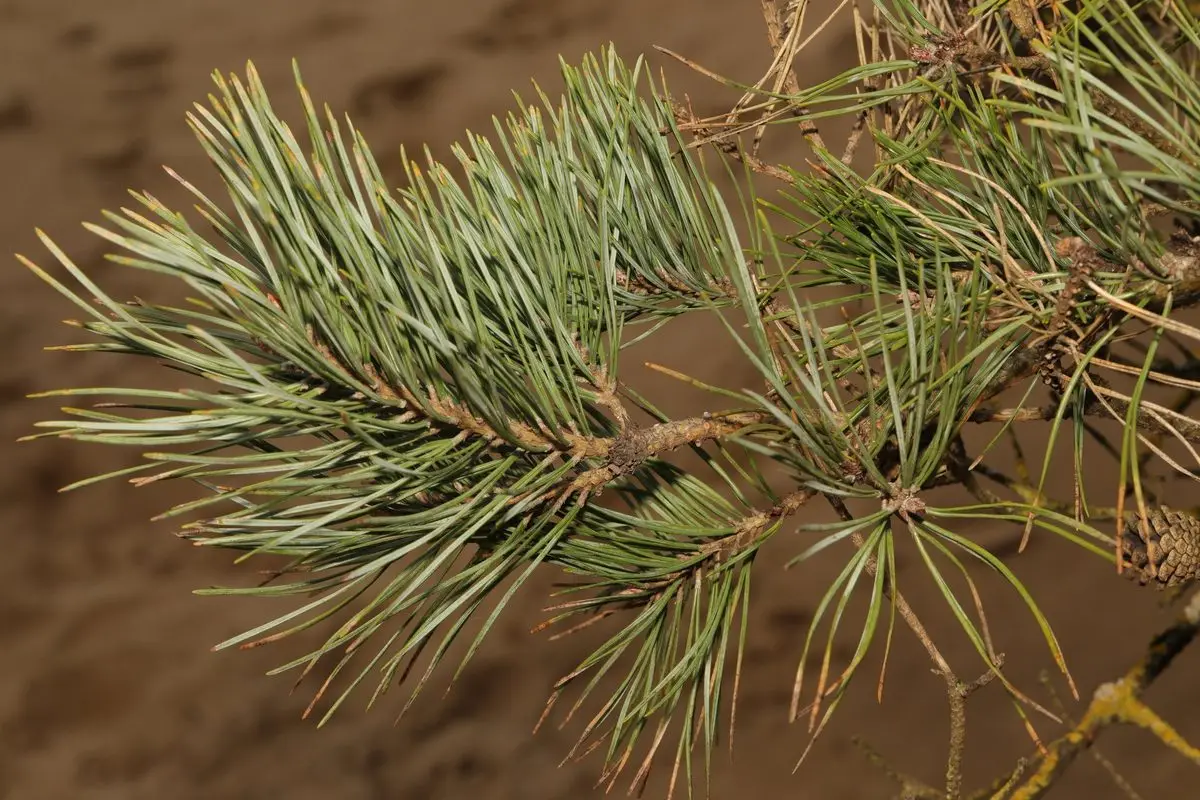
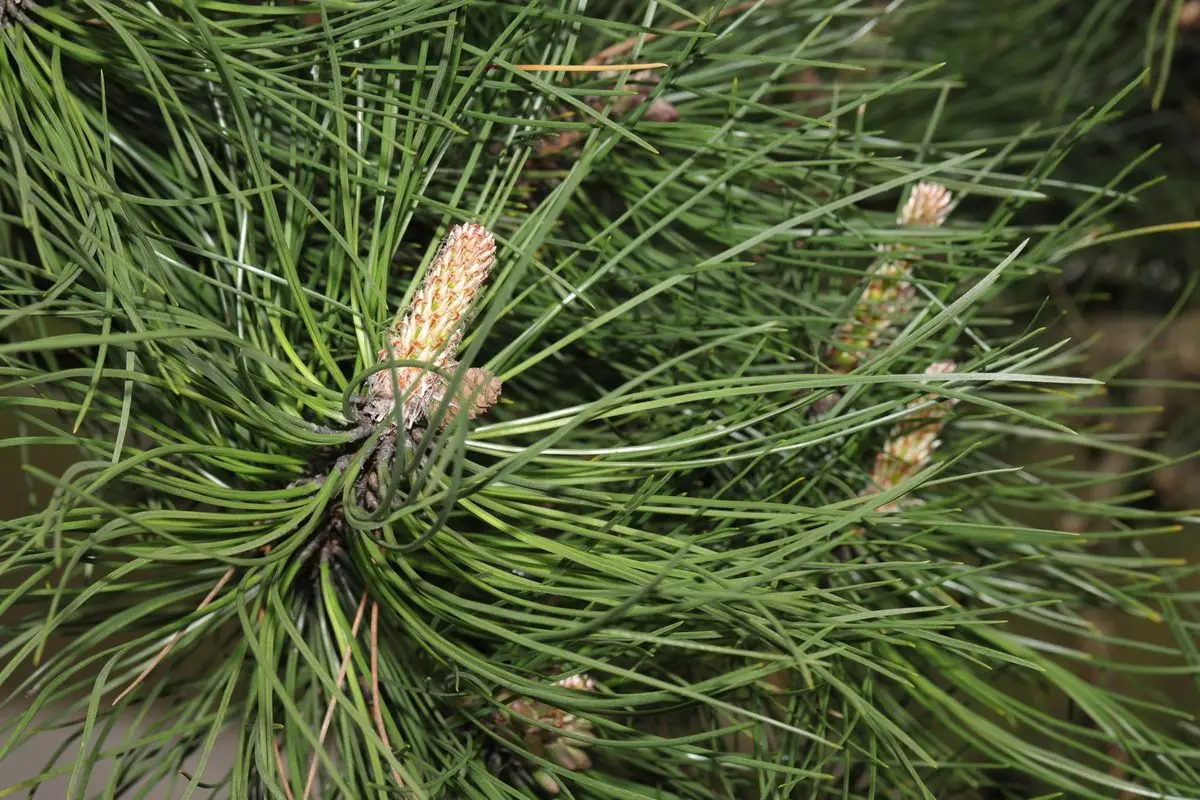 Needle pairsGreyish, 12 to 18 cm, and a bundle bends in a closed hand.BudsSmooth buds at the tips of stout, pale yellowish brown shoots.
ShapeUnforked to a great height, a slender crown on short branches.Needle pairsGreyish, 12 to 18 cm, and a bundle bends in a closed hand.BudsSmooth buds at the tips of stout, pale yellowish brown shoots.Then check · BarkGreyish mauve, split by wide cracks into big plates with finely scaly surfaces. A young trunk is smooth with a metallic sheen.
How to identify a Corsican pine
In pairs, greyish, twisted and 12 to 18 cm long, and a bundle bends when you close a hand round it.
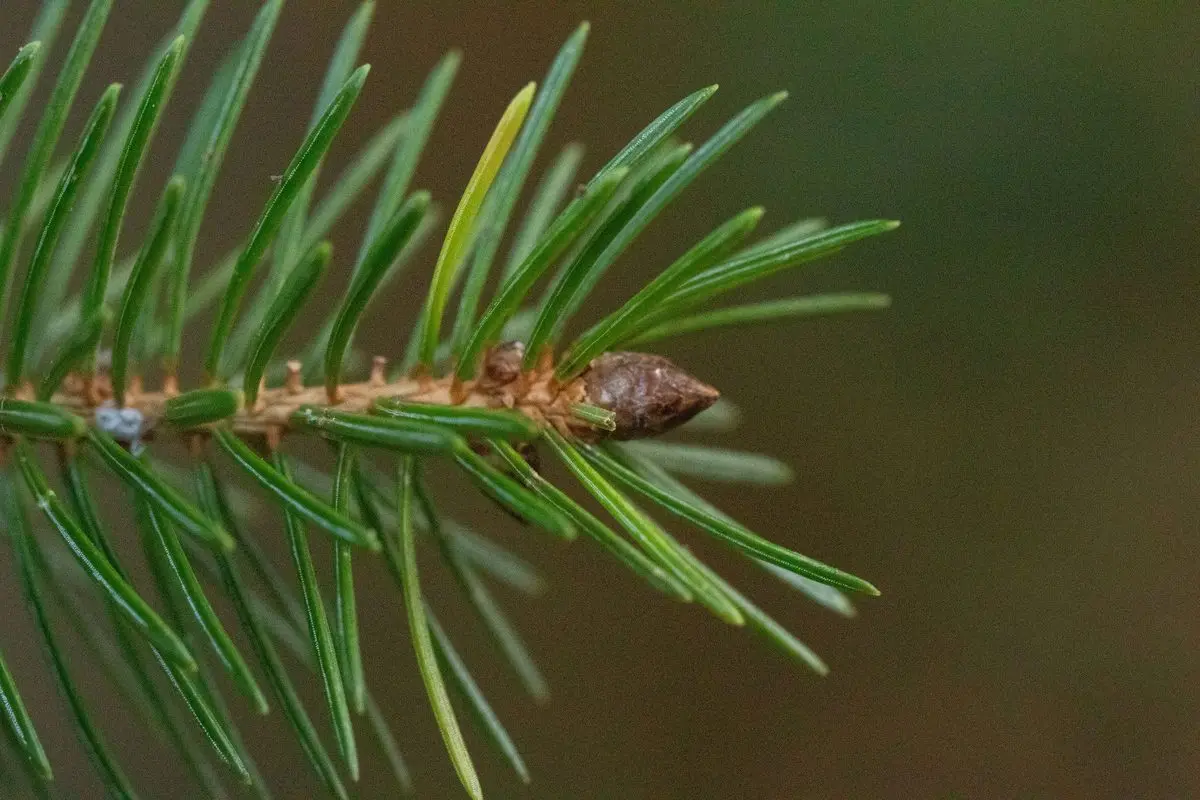
The bud at each shoot tip is smooth, with every scale lying flat against the next. The shoots are stout and pale yellowish brown.
 Learn the Corsican pine in TreelyEvery part through the year, and a short round each day until you know it.Get Treely
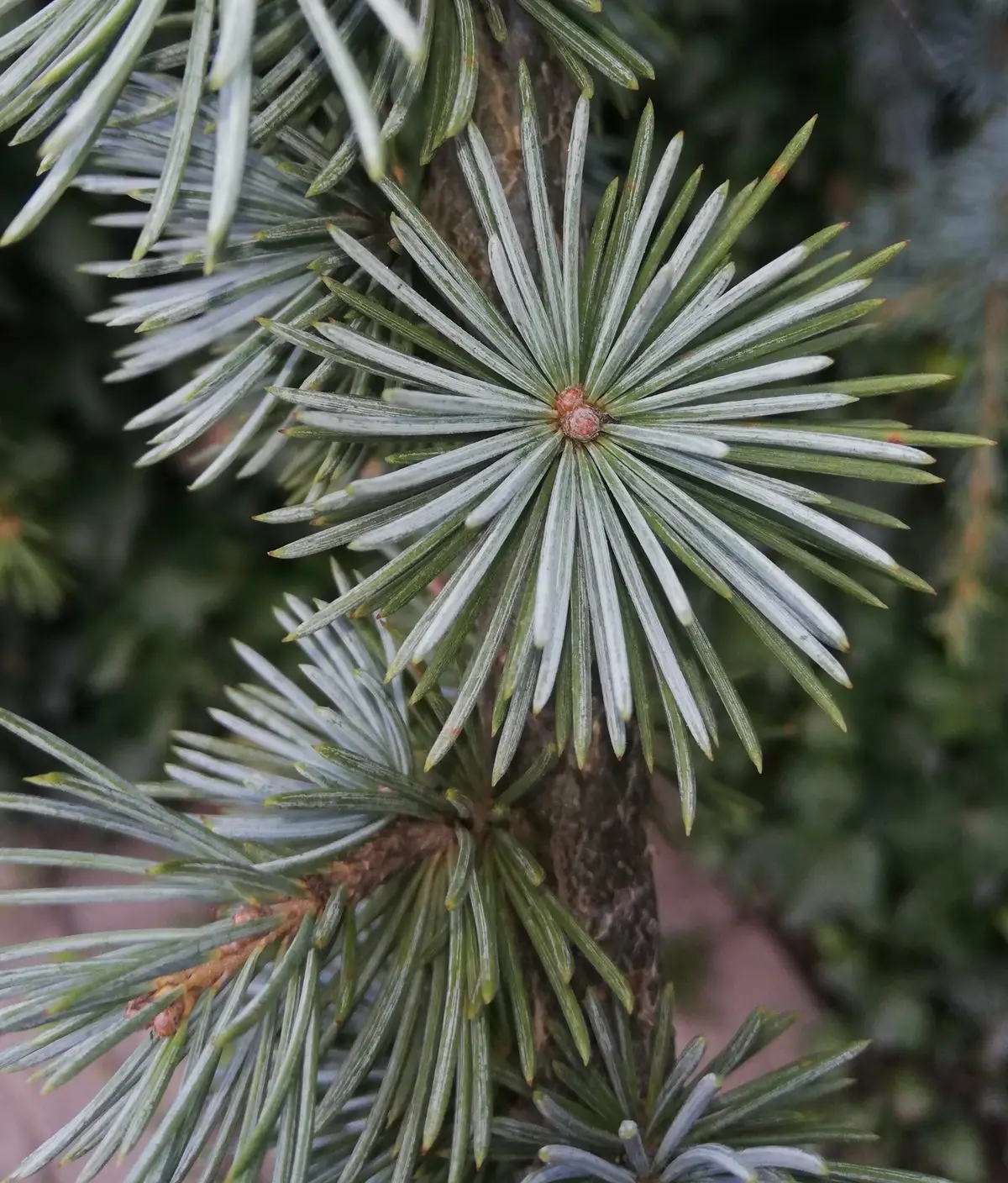
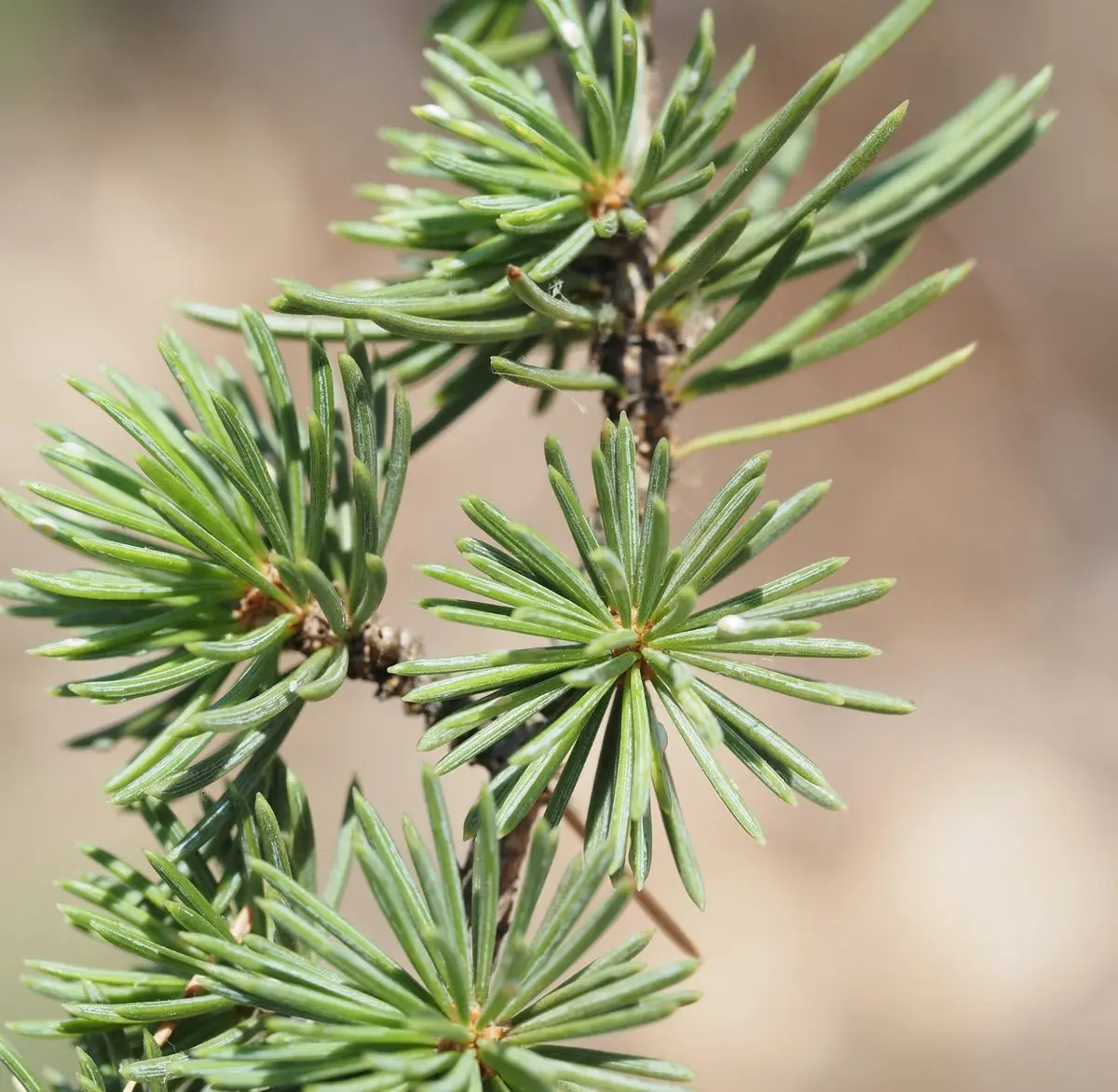
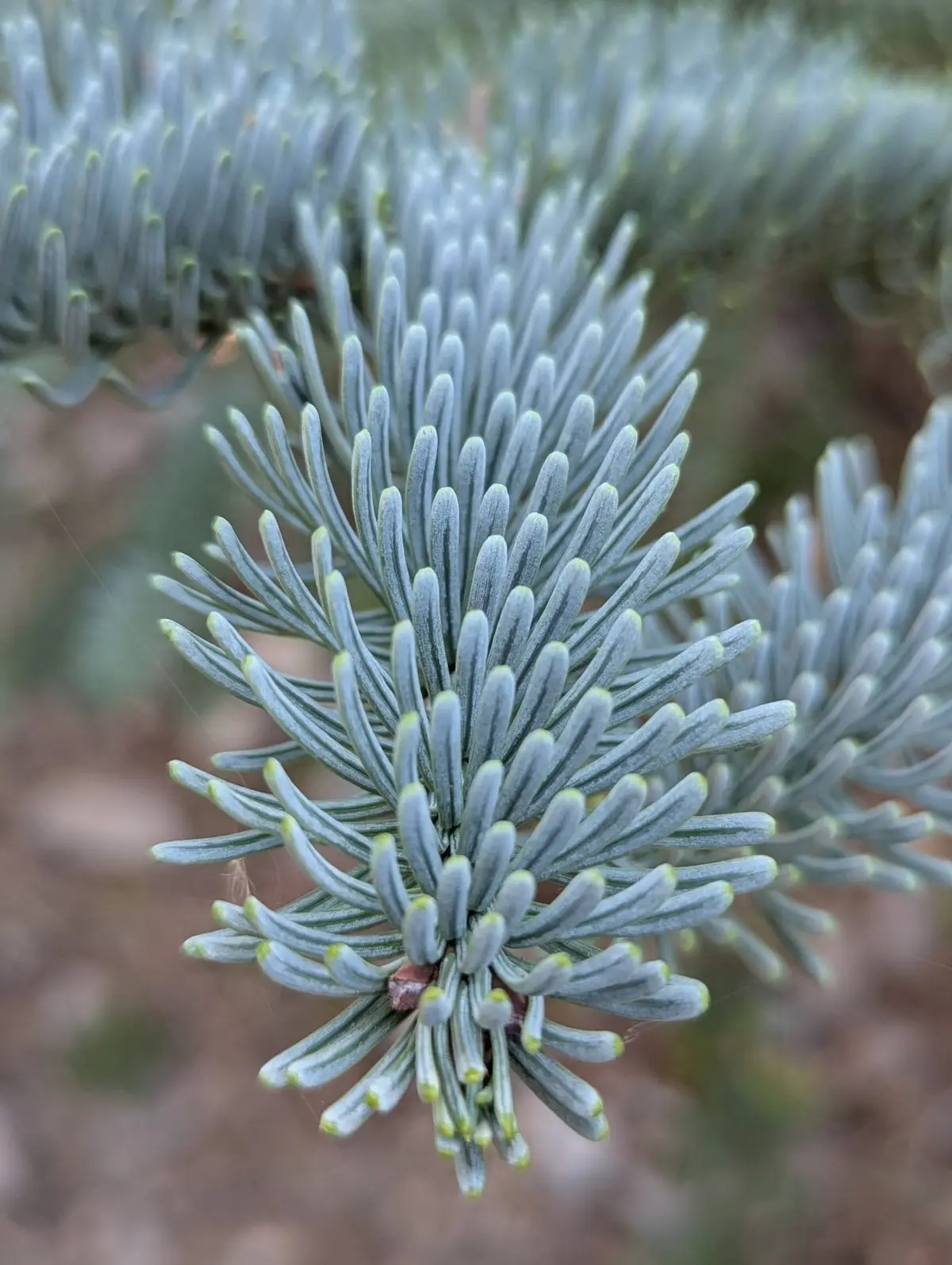
Every part, in photographs
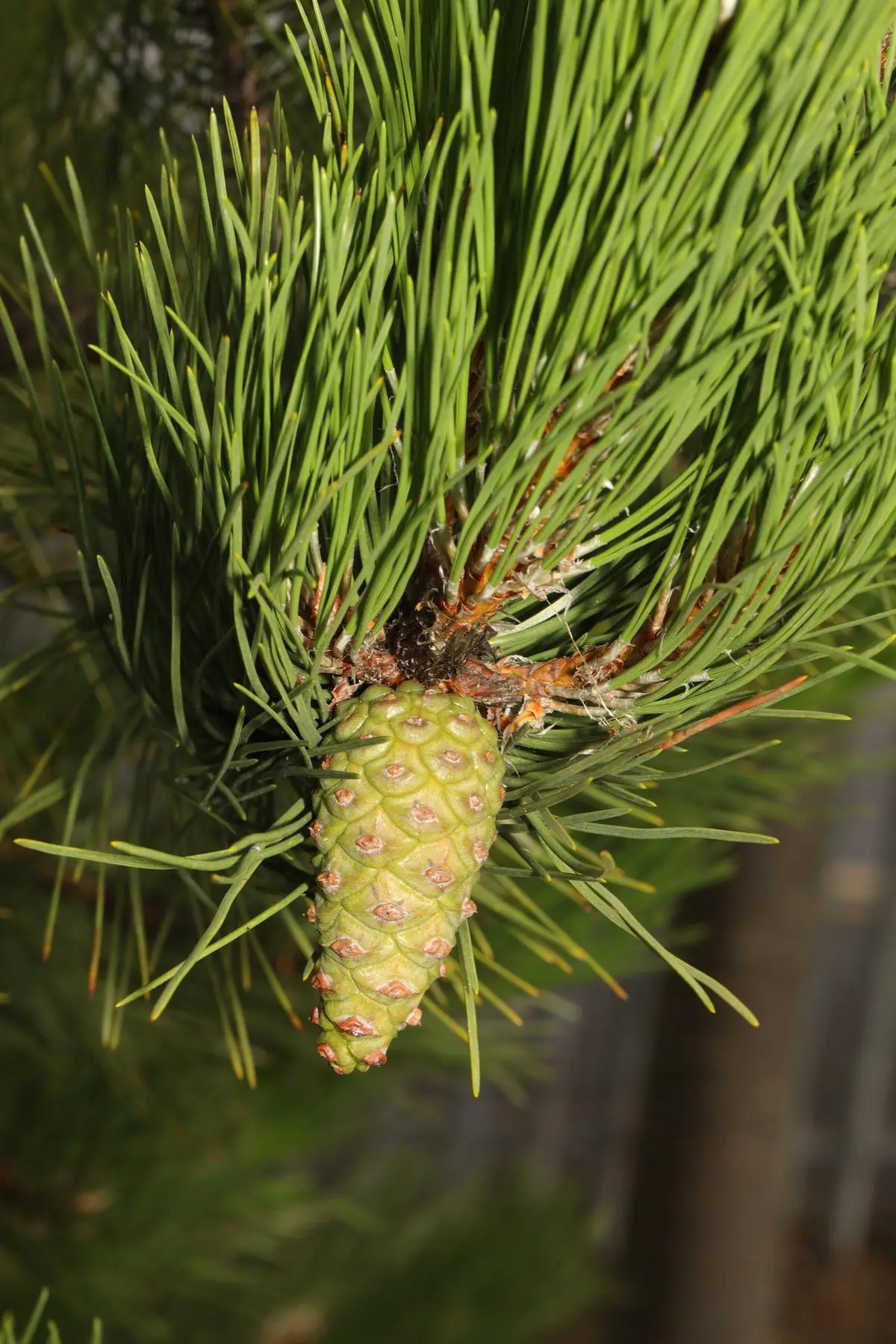
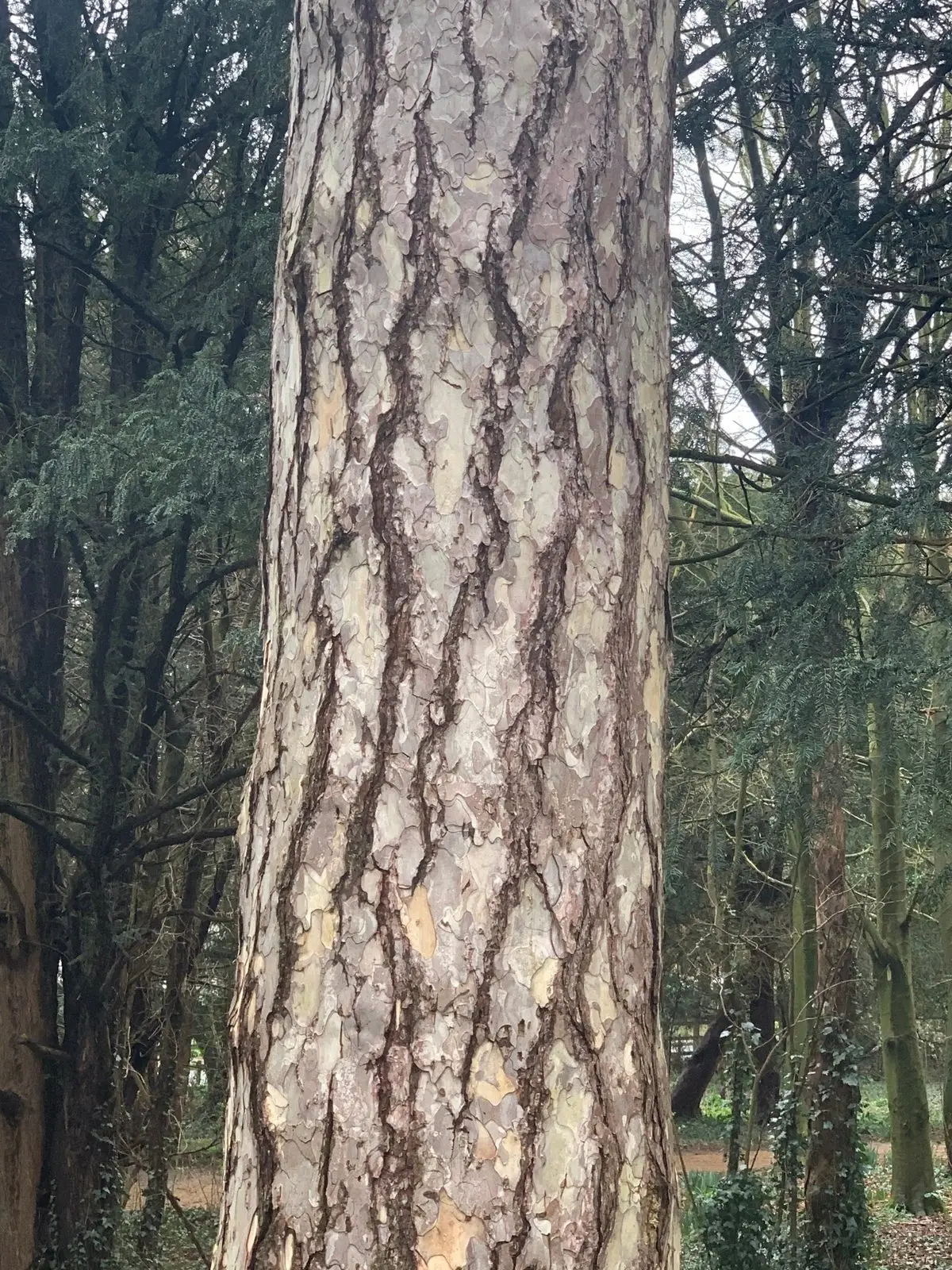 naturalist charlie, CC BY 4.0Pavel Kacl, CC BY 4.0
When to look
JFMAMJJASOND
In leaf
Flowers
Cones
In leaf: all year · Flowers: May to June · Cones: all year
Where you’ll find it
Forestry plantations and parks, on sandy soils that drain freely. It does best in the drier lowlands and the south-east. It holds sand dunes where salt spray cannot reach it, and has seeded itself on some lowland heaths.
In the app
There’s more of the Corsican pine in Treely
- Every part, through the yearLeaves, bark, buds, flowers and fruit, photographed in every season
- Its lookalikes, side by sideThe checks that settle it, part by part
- A short round each dayUntil you know the Corsican pine on sight, from any side
- Name it from a photoA leaf, the bark or a flower, and Treely tells you which tree
Free to download.
Every fact on this page is checked against the Collins Tree Guide, last in November 2026. Spotted something that looks wrong in front of a real tree? Tell us. How we check.
Photographs: Pavel Kacl (CC BY 4.0), steve_mcwilliam (CC0), naturalist charlie (CC BY 4.0). With thanks to everyone who shares their photographs on iNaturalist and Wikimedia Commons.