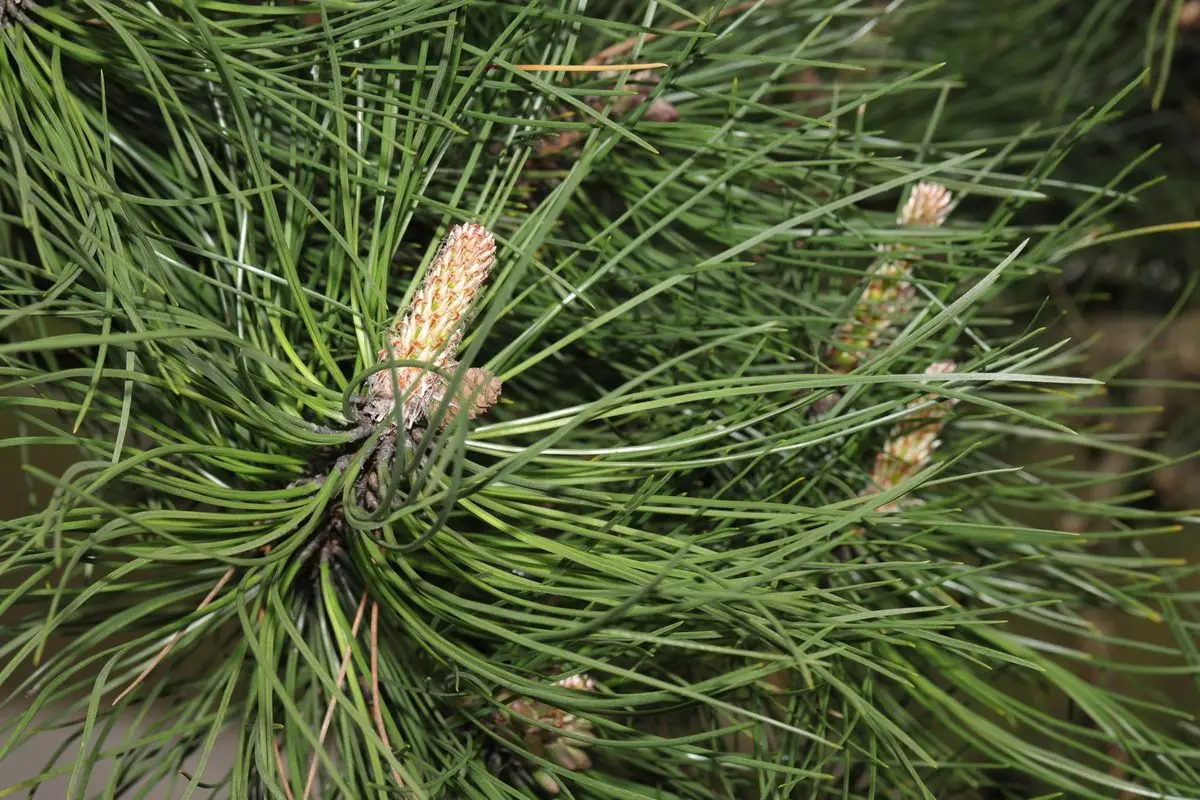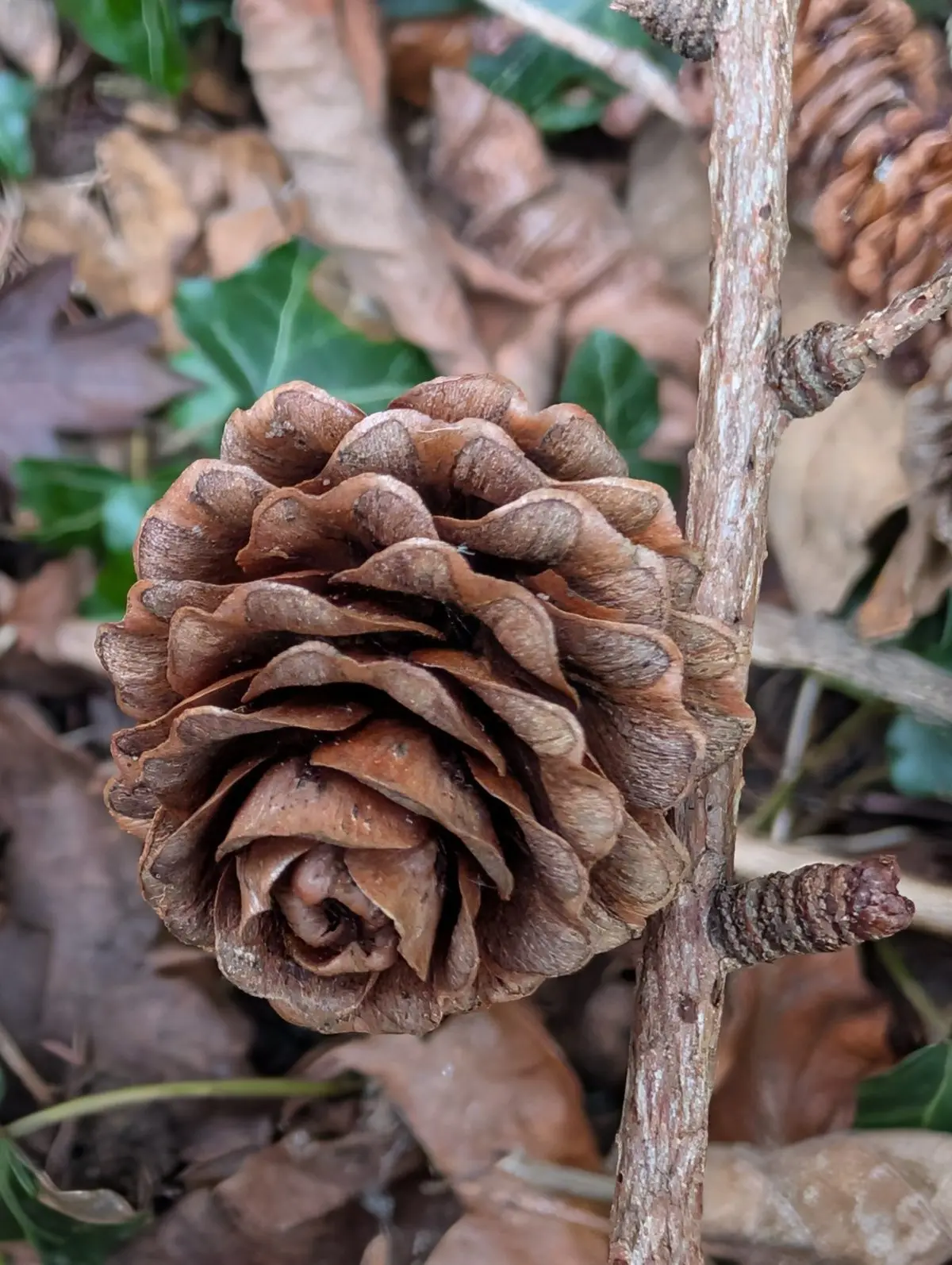
Nearly round and about 30 mm, standing upright on the twigs, with thin scales whose tips turn out and back.
Larix kaempferi · Pinaceae
Japanese larch is a conifer planted in forests across Britain. Its dark greyish green needles all fall in autumn. Its round cones have thin scales whose tips curl out and back.
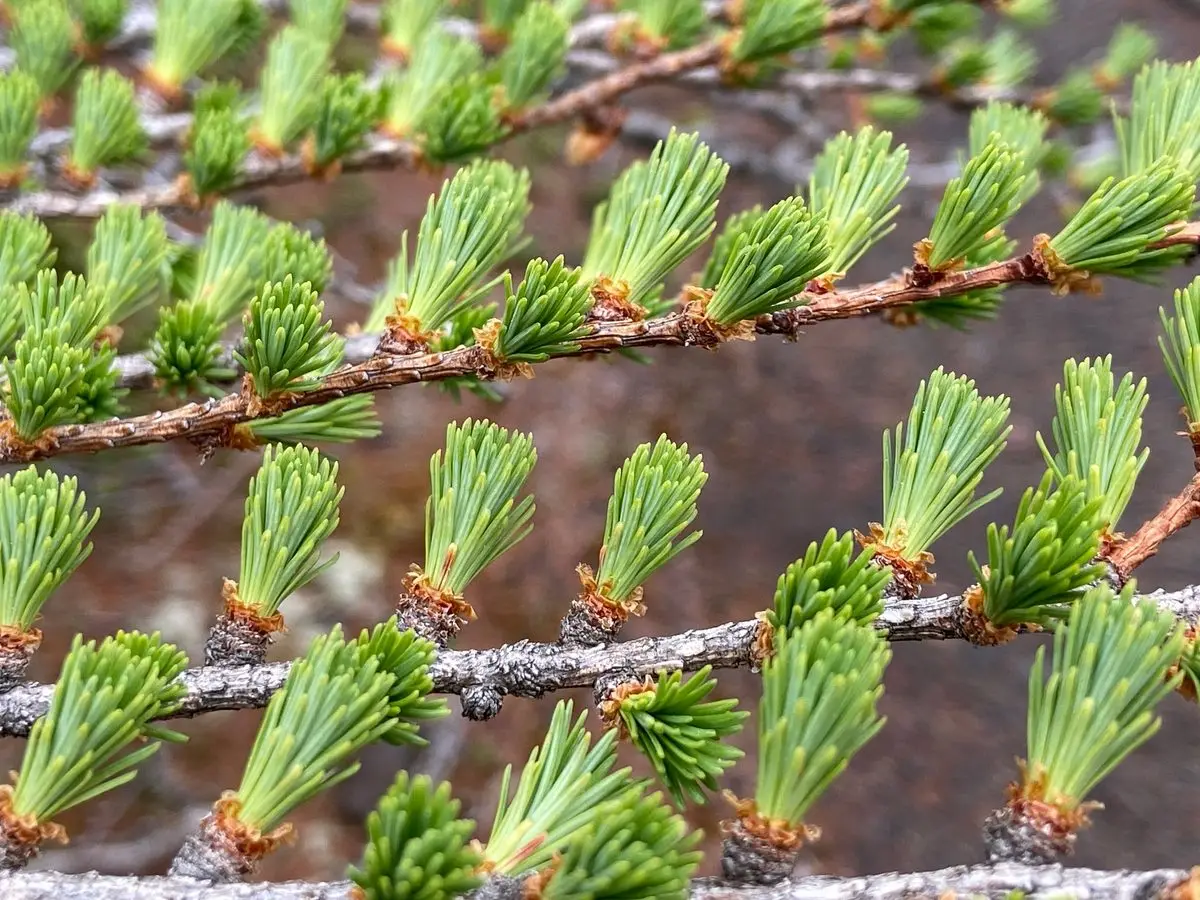
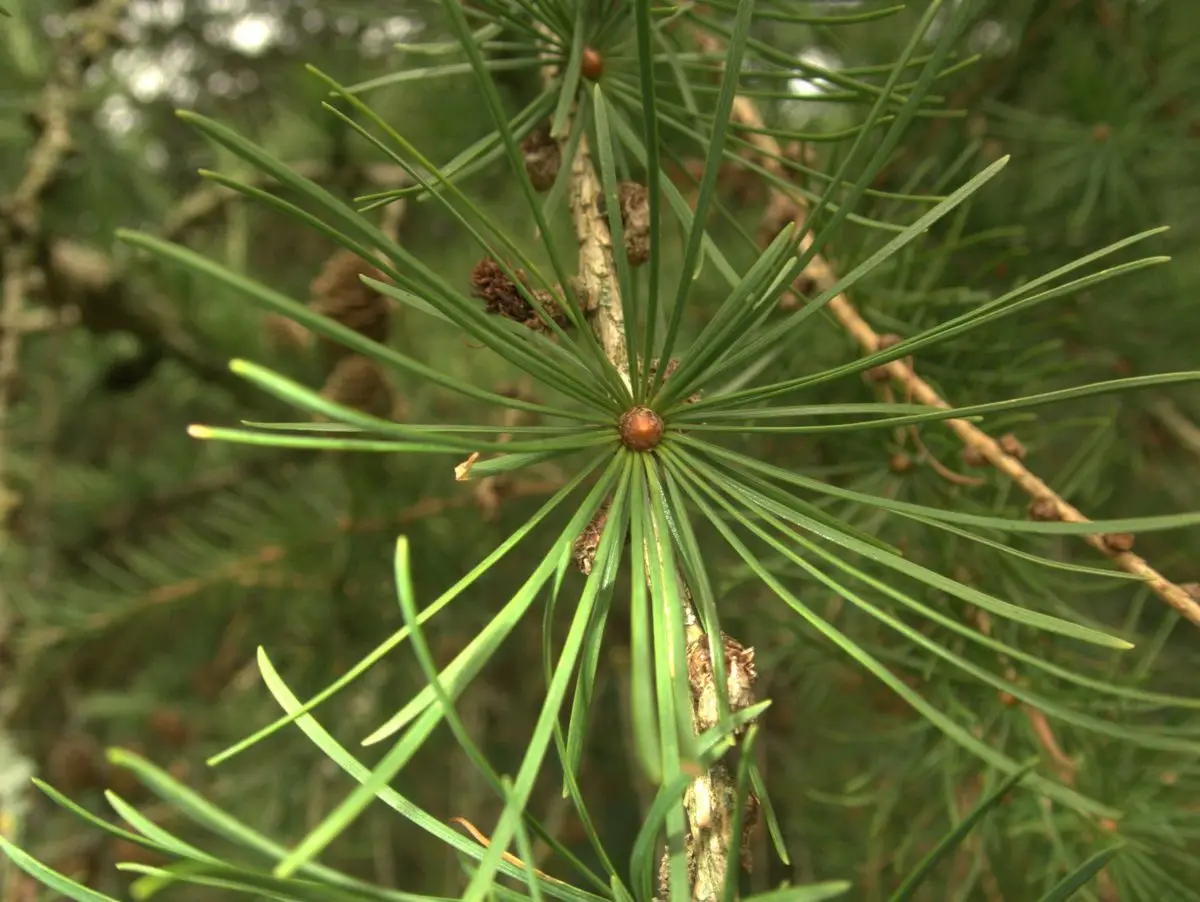
Often mistaken for Norway spruce. How to tell them apart →ConesNearly round, about 30 mm, standing upright on the twigs.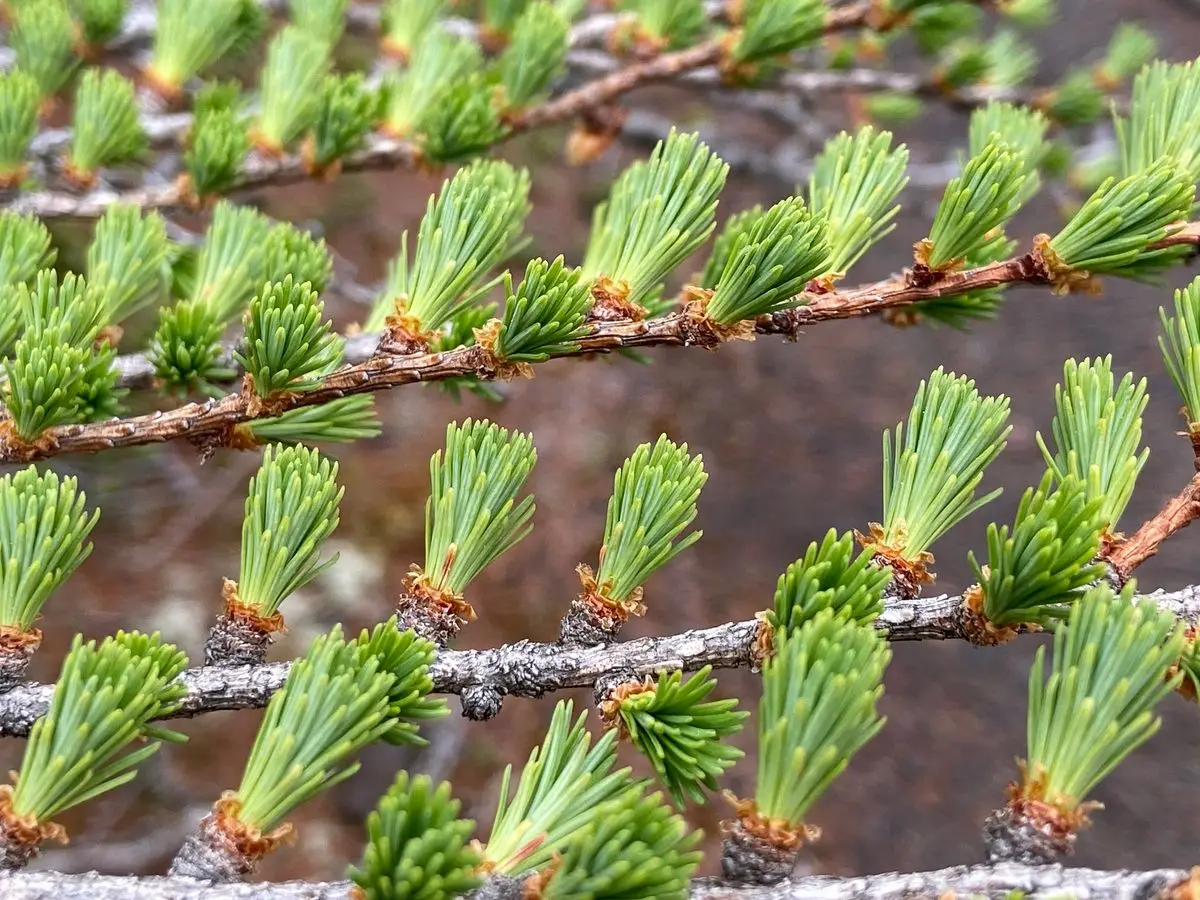 Needle tuftsSoft, dark greyish green, 2 to 5 cm, on short spurs.TwigsDark orange, brown or purplish grey, with small rounded buds and short spurs.
Then check · ShapeBroadly cone-shaped and densely twiggy on level branches, and the bare winter crown looks smoky red from far off.
Nearly round and about 30 mm, standing upright on the twigs, with thin scales whose tips turn out and back.
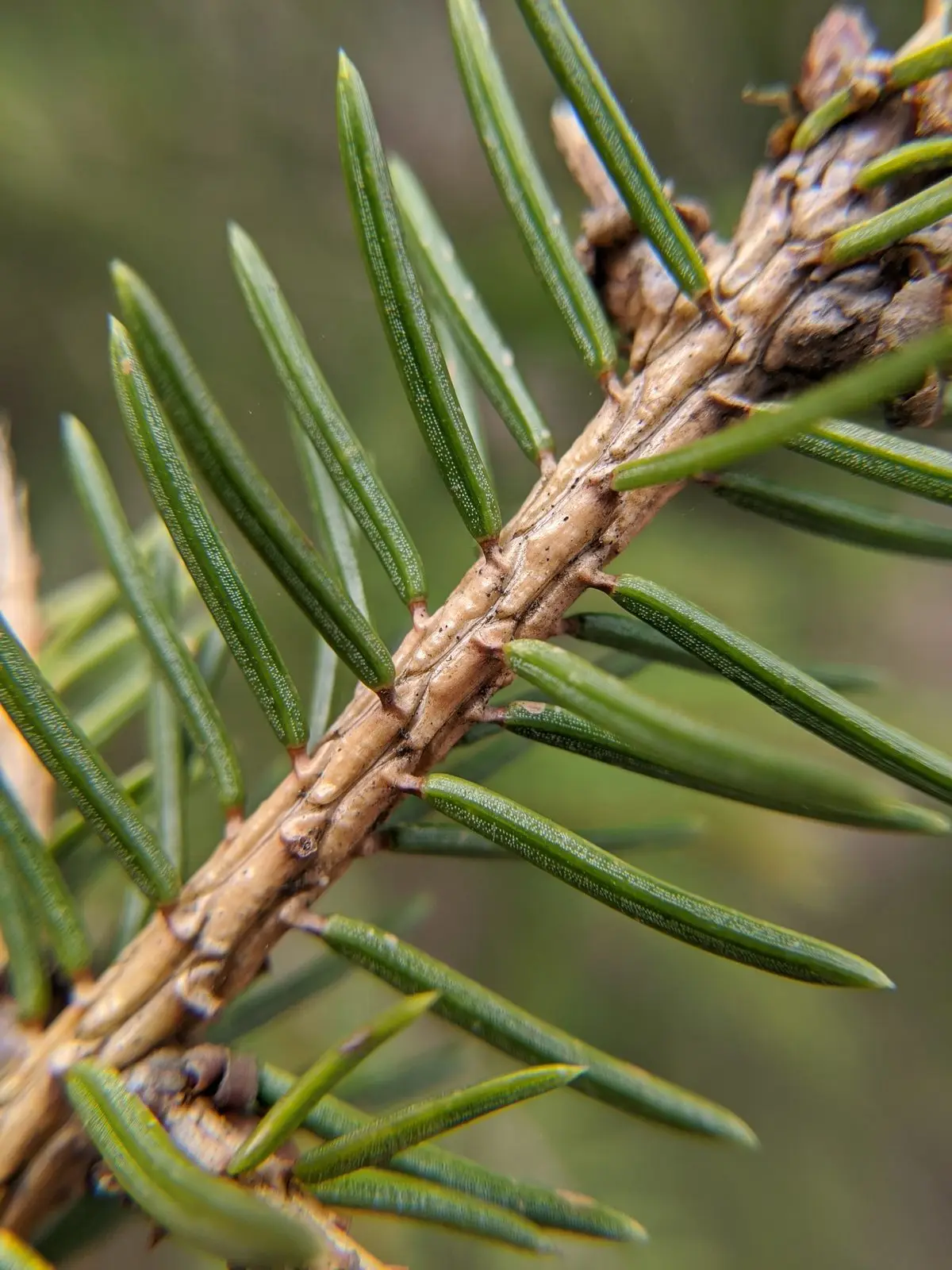
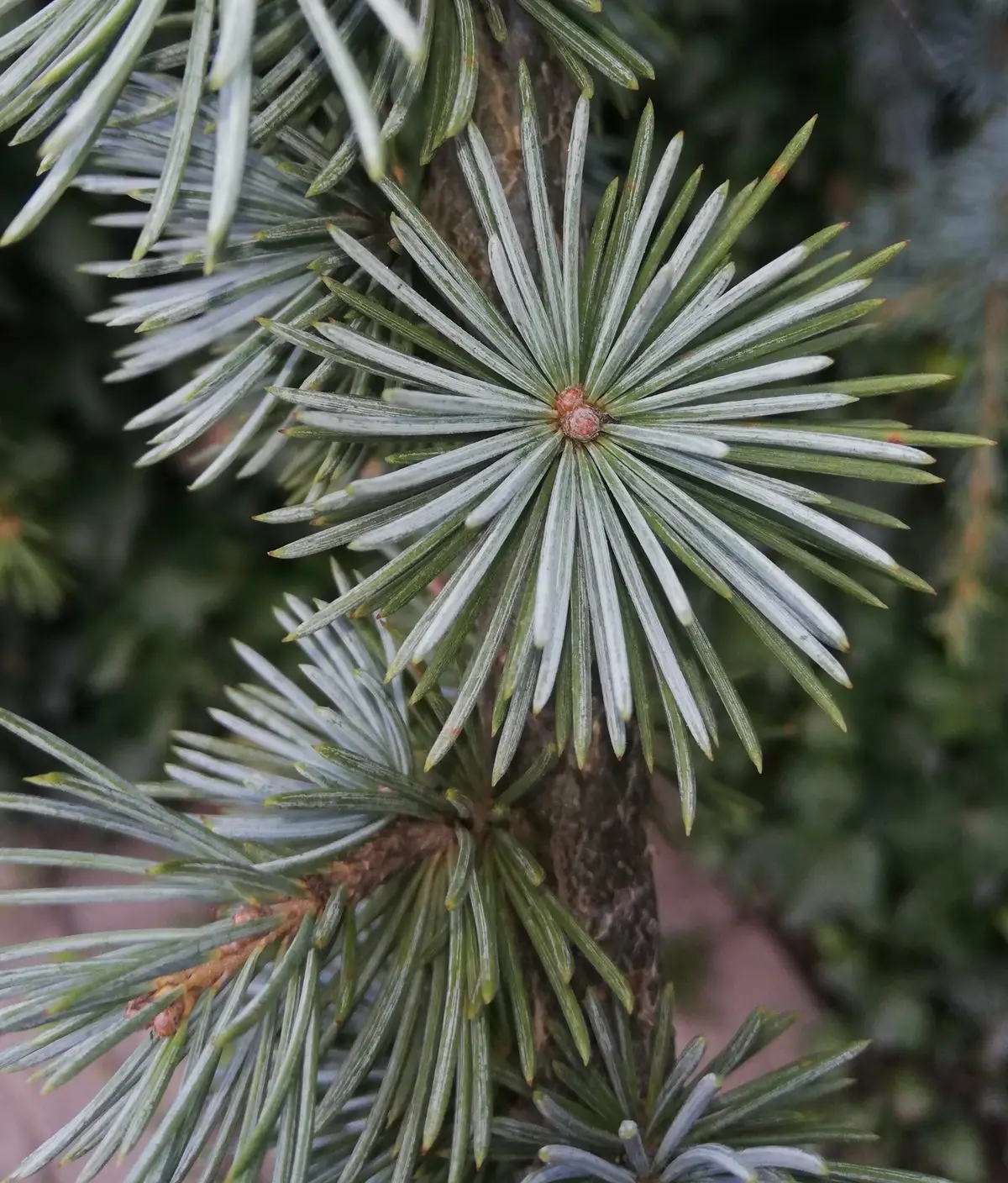
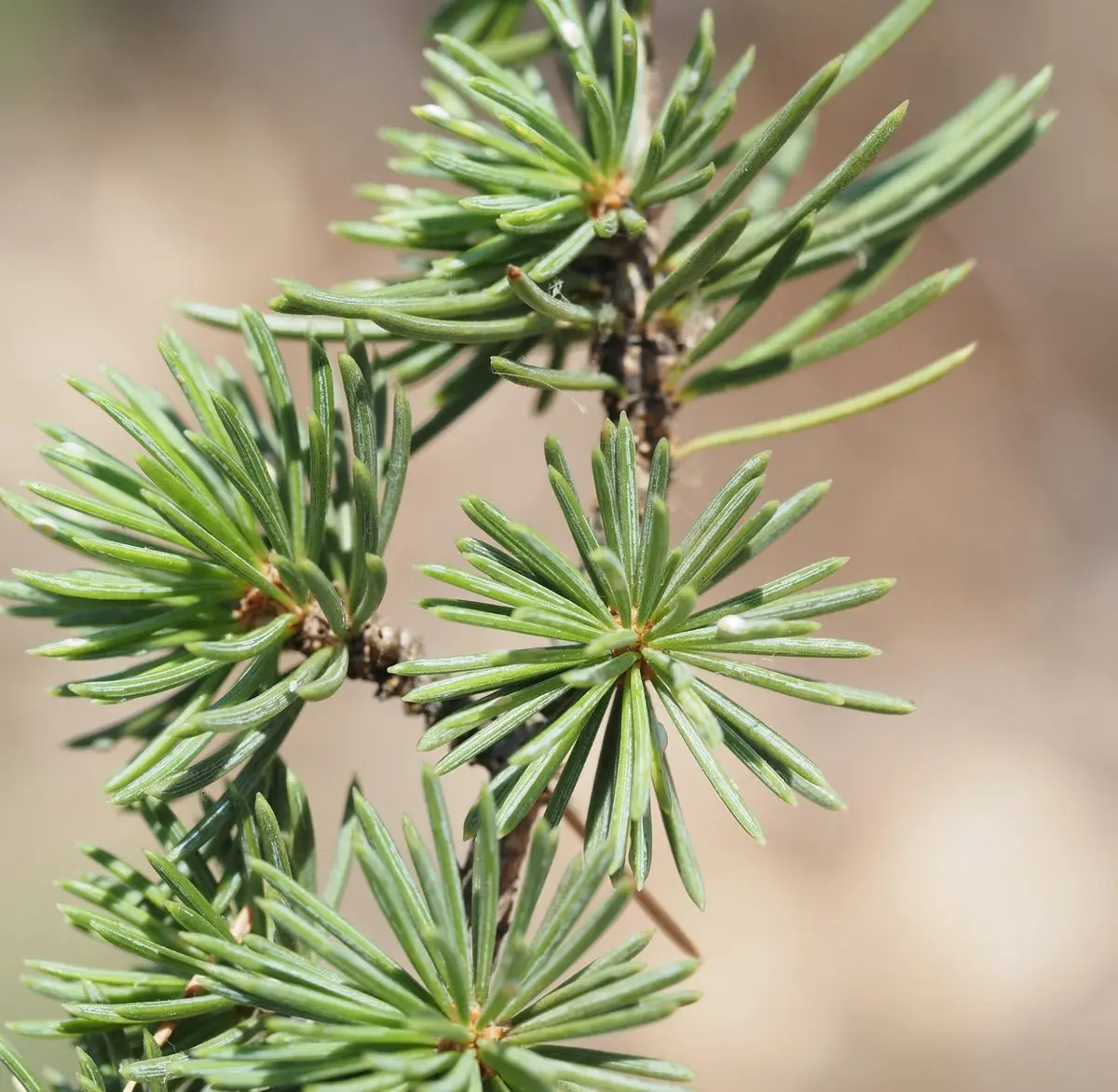
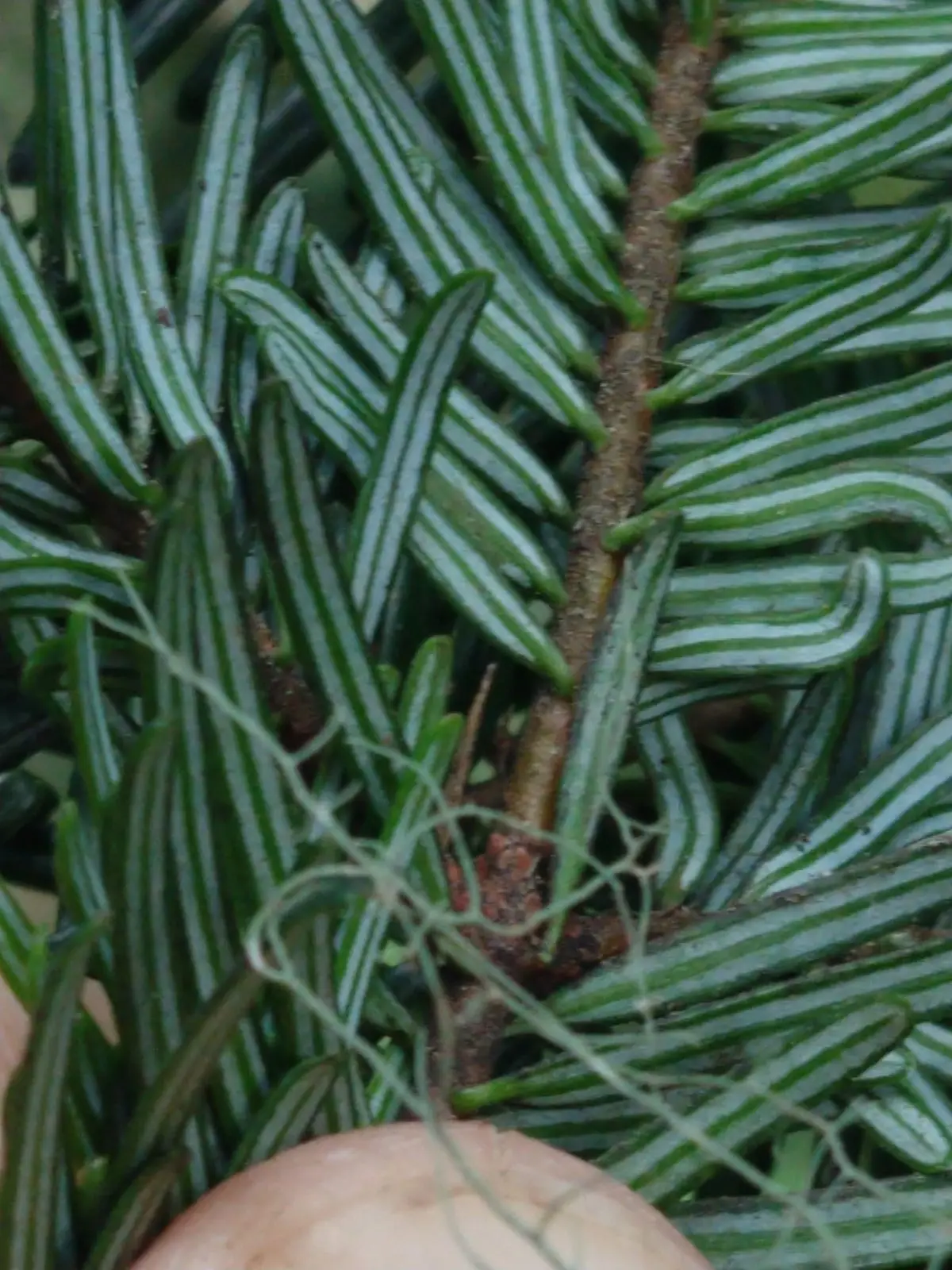
Soft, dark greyish green, 2 to 5 cm long, crowded in tufts on short spurs, with two broad grey bands underneath.
Dark orange, brown or purplish grey shoots under a waxy white bloom, with small, rounded buds, slightly sticky with resin, and short woody spurs.
 Learn the Japanese larch in TreelyEvery part through the year, and a short round each day until you know it.Get Treely
Simon Colenutt, CC BY 4.0
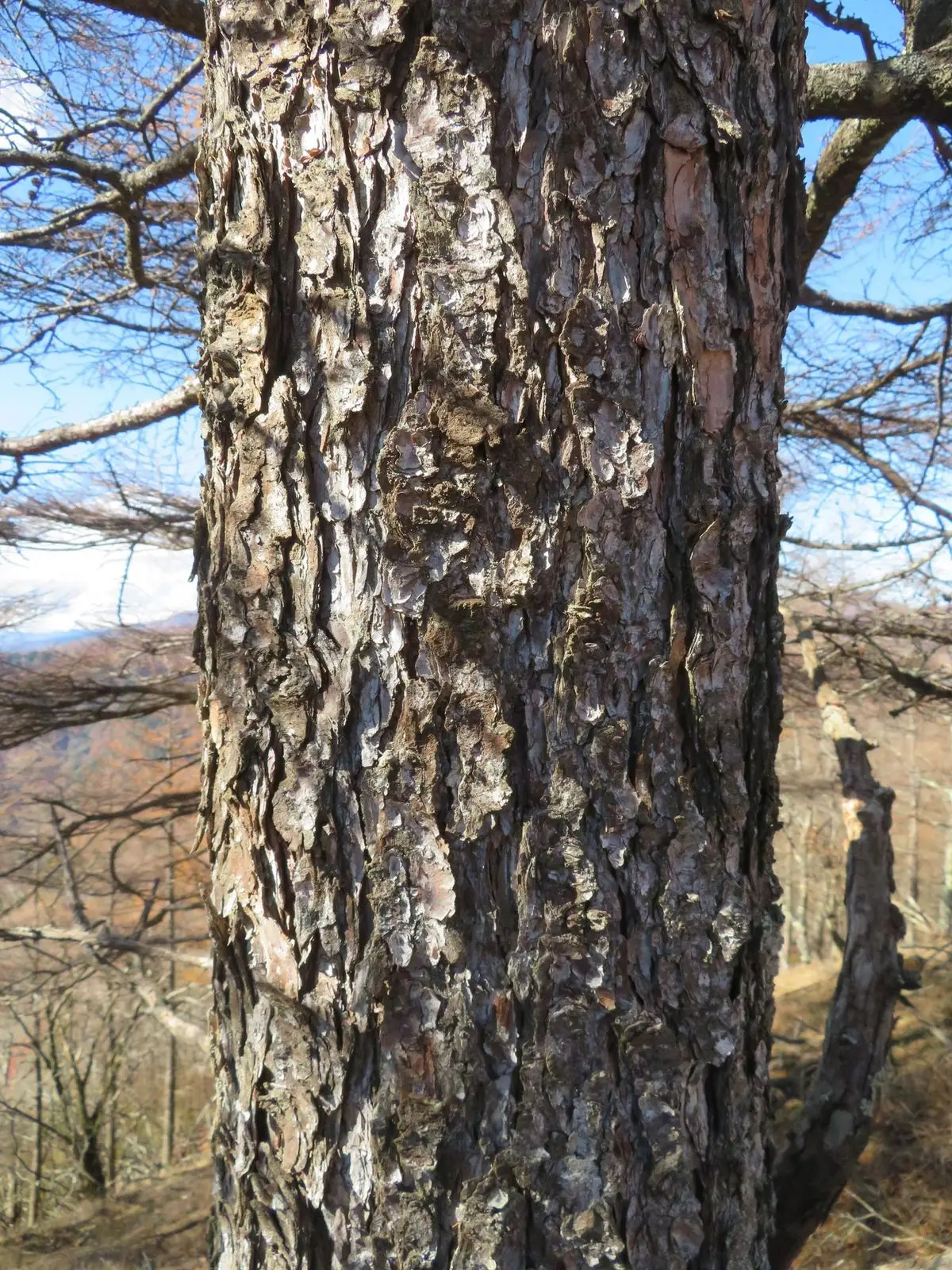 Marco Mussita, CC BY 4.0
In leaf: March to November · Flowers: March to May · Cones: all year
Forestry plantations across Britain, on the richer soils. It is rare in gardens. It usually needs more than 1000 mm of rain a year. Wild ones grow only in the mountains of central Japan.
Free to download.
Every fact on this page is checked against the Collins Tree Guide, last in November 2026. Spotted something that looks wrong in front of a real tree? Tell us. How we check.
Photographs: Simon Colenutt (CC BY 4.0), pilmar (CC0), Marco Mussita (CC BY 4.0), megachile (CC0). With thanks to everyone who shares their photographs on iNaturalist and Wikimedia Commons.